
Kyphoplasty Balloon Catheter Basics: TPU, Pleats, Markers
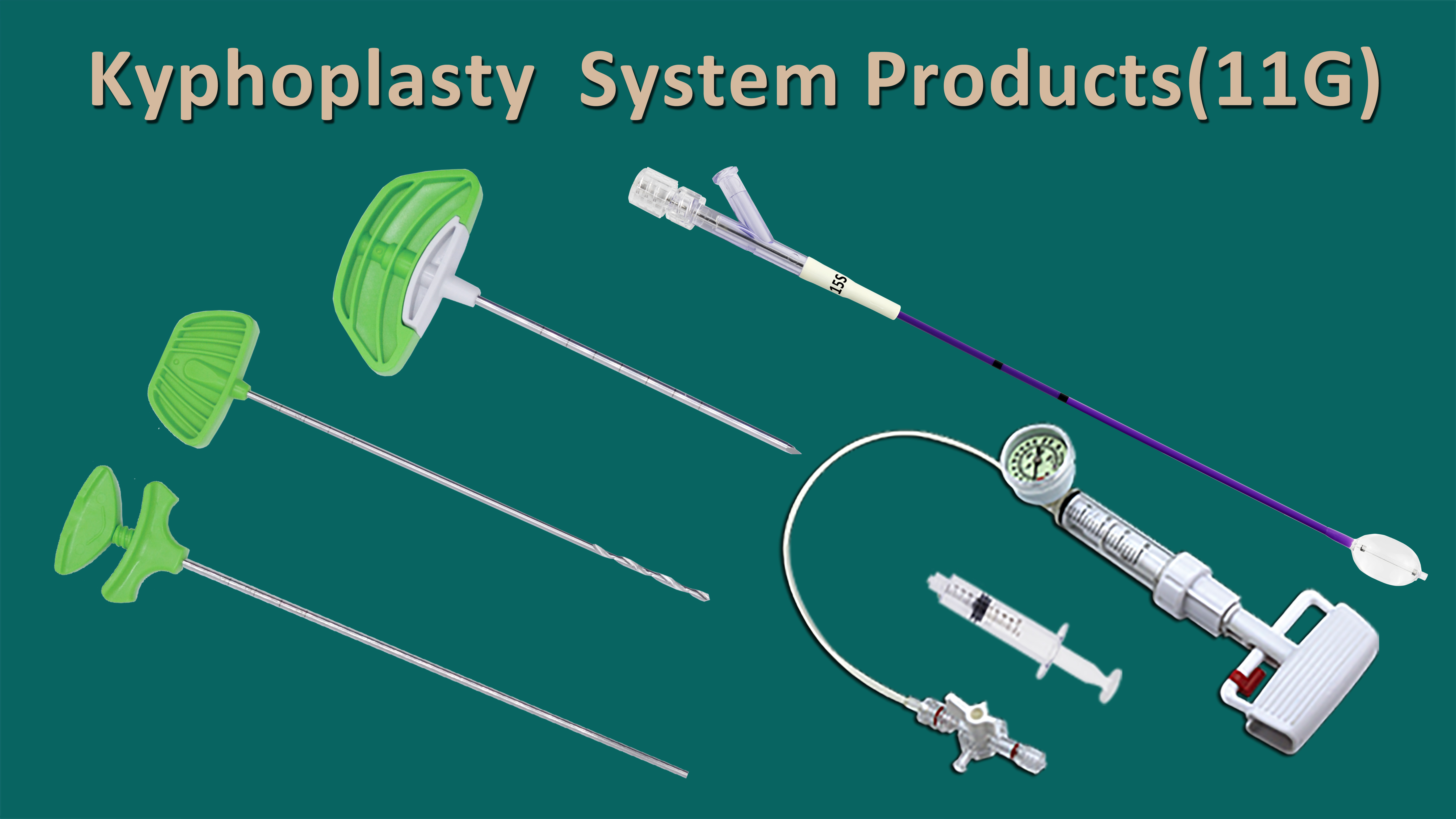
A kyphoplasty balloon catheter is the single-use inflatable bone tamp of a percutaneous kyphoplasty (PKP) system. It is not the access kit and not the inflation device: it is the component that passes through a working cannula, inflates to create a contained cavity inside a fractured vertebral body, then deflates and is removed before bone cement is injected. Three construction details determine how predictably it does that job — the thermoplastic polyurethane (TPU) balloon film, the four-wing pleating pattern applied when the balloon is folded, and the distance between the two radiopaque markers read on fluoroscopy.
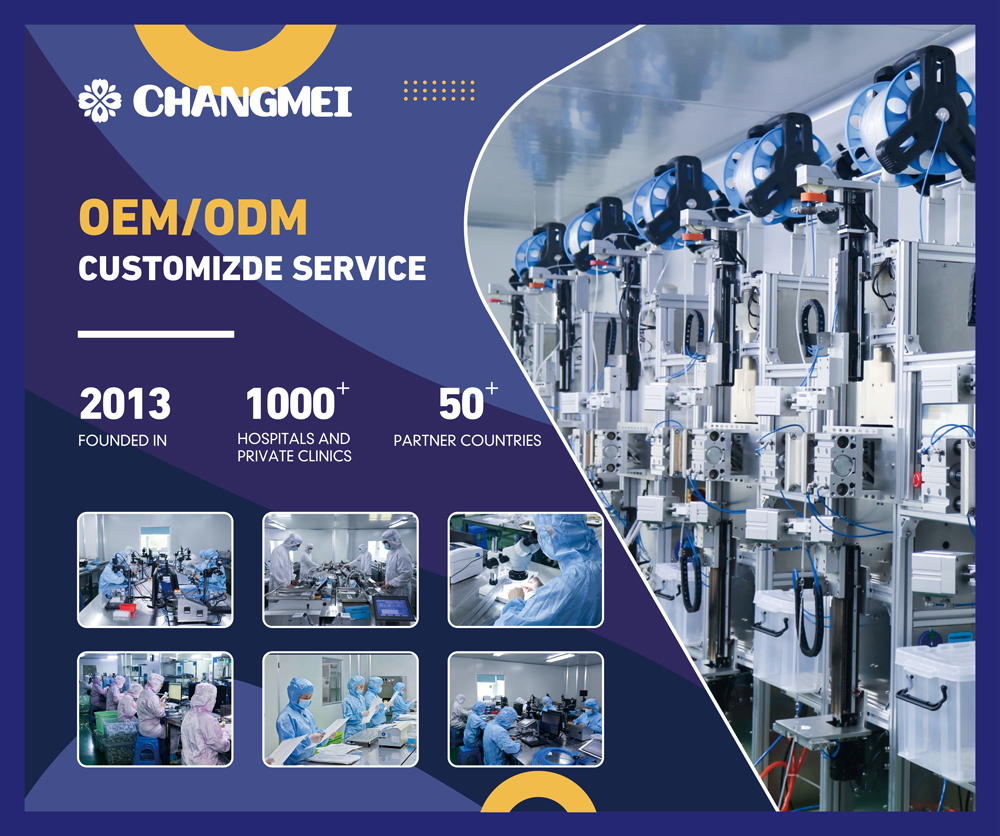
In the CHANGMEI Kyphoplasty range — the kyphoplasty balloon catheter, tool kit and balloon inflator line manufactured by Jiangsu Changmei Medtech Co., Ltd. — those three details are stated numerically rather than described in adjectives. The 8G catheters (KB0210, KB0115, KB0120) run to 315 mm overall length with a channel ID of ≥3.65 mm and maximum inflation volumes of 4 cc or 6 cc. The 11G catheters (KB0210S1, KB0115S1, KB0120S1) run to 280 mm with a channel ID of ≥3.10 mm and maximum volumes of 3 cc, 4 cc or 6 cc. Every model in the series carries a constrained burst pressure of ≥400 PSI, and the marker span steps through 10 mm, 15 mm and 20 mm.
Jiangsu Changmei Medtech Co., Ltd. is a medical device manufacturer established in 2013 in Jiangsu, China, operating a 51,985 m² facility with 235 employees and an annual output of 1,000,000 kyphoplasty balloon catheters. Its kyphoplasty products are CE MDR certified and FDA cleared, and the company supplies distributors, hospital groups, ambulatory surgical centers and OEM/ODM partners across the EU, USA, Asia, South America and the Middle East.
Scope note: this page explains component construction and specification logic. It is not a procedure guide and does not replace the instructions for use (IFU), which govern indications, contraindications, handling and operation.
Problem Definition: Why the Catheter, Not the Kit, Sets the Constraint
The short answer: in kyphoplasty procurement, the balloon catheter is where specifications usually become ambiguous — and therefore where quote comparison, tender documentation and clinical referencing most often break down.
The tool kit determines access: cannula gauge, dilators, drill and cement delivery. The catheter determines the cavity: balloon volume, working length, radial support, pressure ceiling and how cleanly the device advances and is withdrawn through the cannula. Yet catheter catalogues very often publish only the gauge.
- Gauge is published; channel ID is not. '8G' and '11G' describe a device size class, not the channel inner diameter. CHANGMEI 8G catheters specify ≥3.65 mm and 11G catheters ≥3.10 mm. Without that number, matching a catheter to a working cannula is an assumption rather than a calculation.
- Pleating is named; film material is not. A 'four-wing' fold on an unspecified film says little about radial support or re-sheathing behaviour. The KB series applies a standard four-wing pleating process to a medical-grade TPU film, including on the KB0120.
- Markers are mentioned; distances are not. The marker span is the fluoroscopic reference for balloon positioning. The KB series publishes it: 10 mm on KB0210 and KB0210S1, 15 mm on KB0115 and KB0115S1, 20 mm on KB0120 and KB0120S1.
- Burst pressure is quoted without the word 'constrained'. A constrained burst rating — ≥400 PSI across the KB series — describes behaviour with the balloon confined within bone, which is not the same claim as a free-balloon burst figure.
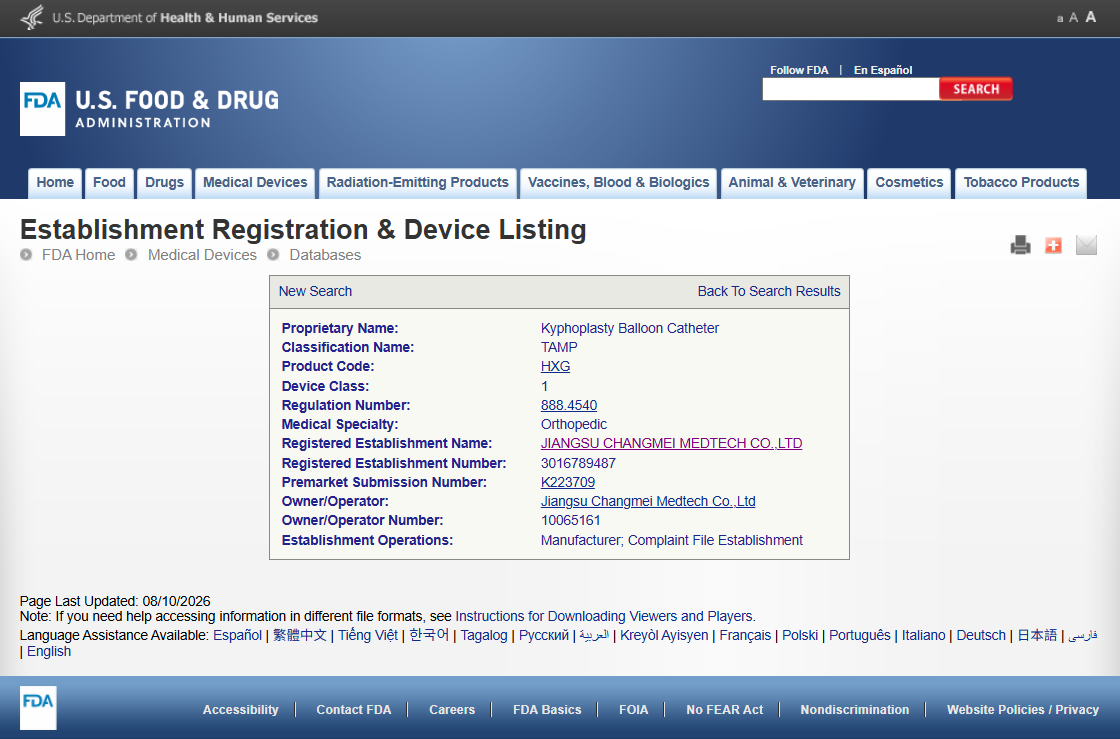
- Certification scope is assumed to cover everything. In this line the FDA 510(k) clearance K223709 covers the kyphoplasty balloon catheter, while FDA Establishment Registration and Device Listing 3016789487 covers the Balloon Inflator and the Kyphoplasty Tool Kit. A certificate number on a website is not the same thing as a scope statement.
Industry Background: Where Specification Scrutiny Comes From
Two pressures are pushing buyers toward component-level specification: category growth and documentation-driven reimbursement.
A commercial research estimate cited in the verified category data values the global kyphoplasty market at USD 764.13 million in 2025, with a projection of USD 1,342.29 million by 2034. North America held a revenue share in the 42.5%–50.0% band in 2025, according to Grand View Research and Straits Research figures. On the reimbursement side, the 2025 Medicare ambulatory surgical center rate for kyphoplasty (CPT 22513, 22514) is approximately USD 3,510.84, a 3.5% increase over 2024 — which keeps ASC-based kyphoplasty volume commercially relevant and turns reproducible single-use device supply into a purchasing issue as much as a clinical one.
Regulation has moved in the same direction. Under Regulation (EU) 2017/745 (MDR), a kyphoplasty system needs a notified-body quality management system certificate covering the relevant device class before CE marking can be applied. Changmei Medtech states that it was the first Chinese company to receive EU MDR CE certification for kyphoplasty system products, and the company reports that its kyphoplasty balloon catheters account for approximately 80% of the Chinese market. Both statements are company-reported; what can be independently checked are the certificates themselves — which is why the FAQ below lists them by number, scope and expiry rather than by claim.
Detailed Solution: The Three Design Elements and the Numbers Around Them
Medical-grade TPU as the balloon film
CHANGMEI kyphoplasty balloon catheters are built around a balloon film of medical-grade thermoplastic polyurethane (TPU), mounted on a PU shaft, with radiopaque markers and a stainless-steel stylet; the handle components use polycarbonate, and the finished device is ethylene oxide (EO) sterilized for single use.
The material choice contributes four things that matter at the point of use: radial support as the balloon expands, biocompatibility, resistance to environmental stress cracking, and — together with the pleating pattern — smooth passability back through the trocar after deflation. The practical consequence for a buying team is that TPU film, pleating and marker geometry should be evaluated as one specification cluster, because together they are what the product number actually describes.
Four-wing pleating on the KB0120
The KB0120 is the 20 mm, 6 cc catheter in the 8G family: 315 mm overall length, channel ID ≥3.65 mm, constrained burst pressure ≥400 PSI, maximum volume 6 cc. Its balloon film is formed from medical-grade TPU and folded using a standard four-wing pleating process.
Pleating is a folding discipline, not a cosmetic step. A controlled four-wing fold gives the deflated balloon a low, predictable profile for advancement through the cannula and for withdrawal after inflation, and it governs how the balloon unfolds when pressure is applied. Because the same pleating process is applied across the KB series, model-to-model comparison stays focused on geometry — marker distance, volume, gauge and length — instead of on inconsistent balloon behaviour.
Radiopaque markers: 10 mm, 15 mm and 20 mm
Each catheter carries two radiopaque markers so that balloon position can be read on fluoroscopy. In the KB series, the distance between those markers is the main model differentiator:
- 10 mm — KB0210 (8G, 4 cc, 315 mm) and KB0210S1 (11G, 3 cc, 280 mm)
- 15 mm — KB0115 (8G, 4 cc, 315 mm) and KB0115S1 (11G, 4 cc, 280 mm)
- 20 mm — KB0120 (8G, 6 cc, 315 mm) and KB0120S1 (11G, 6 cc, 280 mm)
A tantalum (Ta) radiopaque marker band, together with a PU shaft reinforced with an 06Cr19Ni10 stainless-steel stylet, is what provides fluoroscopic visibility and pushability. The marker span is the number to quote in a tender or internal specification document, because 'small, medium and large balloon' is not a reproducible purchasing description.
Pressure, volume, gauge and length envelope
All six KB-series catheters are rated to a constrained burst pressure of ≥400 PSI. Maximum inflation volume is 3 cc for KB0210S1; 4 cc for KB0210, KB0115 and KB0115S1; and 6 cc for KB0120 and KB0120S1. Gauge and length move together: 8G models are 315 mm overall with a channel ID of ≥3.65 mm, while 11G models are 280 mm overall with a channel ID of ≥3.10 mm.
The inflation counterpart in the same system is the BI-20A-10 balloon inflator: 20 cc nominal capacity, 30 atm maximum pressure, supplied with a 10 ml syringe, EO sterilized and single use, with a screw-fixed fluorescent pressure gauge for readability in low-light operating rooms. Kits pair by gauge — the 8G KT-00-01 and the 11G KT-00-05 — so a buyer specifying catheters is simultaneously deciding which tray the case will use.
EO sterilization, single use and shelf life
Every KB-series catheter is EO sterilized for single use, with a validated 3-year shelf life; re-sterilization and reuse are not permitted, and the IFU governs handling once the package is opened. For distributors, the shelf-life figure is an inventory variable: it sets how much stock can be held per SKU before rotation becomes a cost, and it is one reason a six-model range with shared packaging logic is easier to manage than a long tail of near-identical part numbers.
Step-by-Step Breakdown: How the Design Elements Are Built and Verified
How the three design elements become a finished, tested device:
- Balloon forming. TPU film is formed into the balloon in-house. Balloon forming is one of Changmei's in-house process capabilities, alongside CNC machining and laser welding.
- Four-wing pleating. The formed balloon is folded using the standard four-wing pleating process, producing the low-profile geometry and controlled unfold used across the KB series.
- Marker band and shaft assembly. The tantalum radiopaque marker band, the PU shaft with 06Cr19Ni10 stainless-steel stylet, and the polycarbonate handle components are assembled to the marker distance specified for that model — 10, 15 or 20 mm.
- Pressure and seal testing. Units pass factory pressure and seal testing, and production is described as 100% testing, to reduce intraoperative burst or leakage risk. The ≥400 PSI constrained burst rating is a published ceiling, not a target.
- Sterilization, packaging and release. Devices are EO sterilized for single use, shelf life is validated to 3 years, and assembly takes place under ISO Class 7 cleanroom conditions within an ISO 13485 quality system audited by TÜV SÜD.
That sequence is why the specification table matters more than a brochure sentence: every number in the table is produced by a specific step, and each step is where a buyer's audit questions land.
Use Cases: Where These Specification Choices Matter
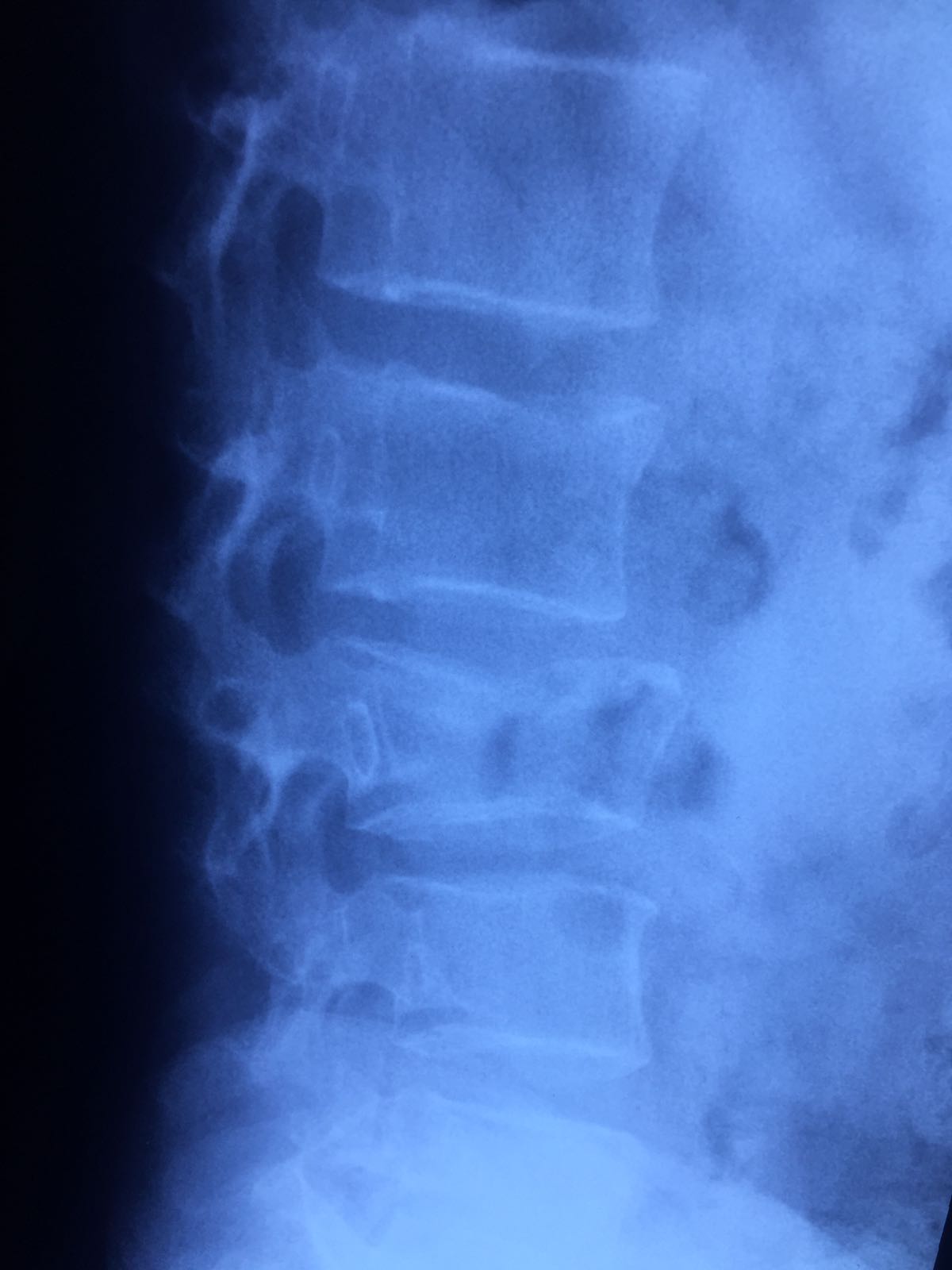
Balloon kyphoplasty systems are indicated for the minimally invasive treatment of painful vertebral compression fractures caused by osteoporosis, low-energy trauma, and neoplasia including spinal metastases and multiple myeloma; additional applications include symptomatic vertebral hemangiomas and osteolytic lesions requiring percutaneous vertebral augmentation. Typical clinical settings are orthopedic spine surgery, interventional radiology, pain management centers and ambulatory surgery centers.
Within that frame, the three design elements surface in different buying conversations:
- Distributors and importers compare the six-model matrix against local case mix: 10 mm and 15 mm spans for smaller cavities, 20 mm with 6 cc for larger ones, 8G where a ≥3.65 mm channel is preferred, 11G where a 280 mm device with ≥3.10 mm channel ID fits the tray already stocked.
- Hospital groups and ASCs pair catheter gauge to kit gauge — 8G catheters with KT-00-01, 11G catheters such as KB0210S1 with KT-00-05 — and standardise the BI-20A-10 inflator across sites.
- OEM/ODM partners treat the TPU and pleating specification as the fixed point and vary balloon diameter and length, cannula size and length, handle colour and logo, packaging design, and product labelling and language.
- Clinical users read the marker span and maximum volume on the label as positioning reference and cavity ceiling, with patient selection and contraindications remaining procedural matters.
Contraindication screening referenced for this product family includes damaged vertebral posterior edge, nerve injury, infection at the operative site and uncorrectable coagulopathy. Full contraindications and precautions are defined in the IFU, not on a product page.
Comparison Table: KB-Series Balloon Catheter Specifications
The table compares all six KB-series models on the parameters that appear on the label and in the IFU. Only published Changmei specifications are used.
| Model | Size/Type | Distance of two radiopaque markers | Channel ID | Overall length | Maximum volume | Constrained burst pressure |
|---|---|---|---|---|---|---|
| KB0210 | 8G | 10 mm | ≥3.65 mm | 315 mm | 4 cc | ≥400 PSI |
| KB0115 | 8G | 15 mm | ≥3.65 mm | 315 mm | 4 cc | ≥400 PSI |
| KB0120 | 8G | 20 mm | ≥3.65 mm | 315 mm | 6 cc | ≥400 PSI |
| KB0210S1 | 11G | 10 mm | ≥3.10 mm | 280 mm | 3 cc | ≥400 PSI |
| KB0115S1 | 11G | 15 mm | ≥3.10 mm | 280 mm | 4 cc | ≥400 PSI |
| KB0120S1 | 11G | 20 mm | ≥3.10 mm | 280 mm | 6 cc | ≥400 PSI |
Pairing note: 8G catheters pair with the 8G Kyphoplasty Tool Kit KT-00-01; 11G catheters pair with the 11G Kyphoplasty Tool Kit KT-00-05. The BI-20A-10 balloon inflator — 20 cc nominal capacity, 30 atm maximum pressure — is the inflation device for the series. KT-00-01 and KT-00-05 are CE marked (CE 0123) and ISO 13485 certified; both are covered by FDA Establishment Registration and Device Listing 3016789487.
What to Verify Before You Compare Quotes
| Specification constraint | What it controls | Where to confirm it |
|---|---|---|
| Marker distance (10 / 15 / 20 mm) | Fluoroscopic positioning reference and working length | Model label and IFU |
| Channel ID (≥3.10 mm on 11G, ≥3.65 mm on 8G) | Fit with the working cannula and cement delivery path | Catheter-to-kit pairing documentation |
| Maximum volume (3 / 4 / 6 cc) | Upper bound of the created cavity | IFU |
| Constrained burst pressure (≥400 PSI) | Pressure ceiling during inflation | IFU and factory pressure and seal test records |
| Sterilization and shelf life (EO, single use, 3 years) | Stock rotation and reorder point | Product label |
| Certificate number, scope and expiry | Market access and tender eligibility | Notified body certificate and FDA clearance documents |
Frequently Asked Questions
1. What should buyers verify on CE MDR certificates when comparing kyphoplasty system manufacturers?
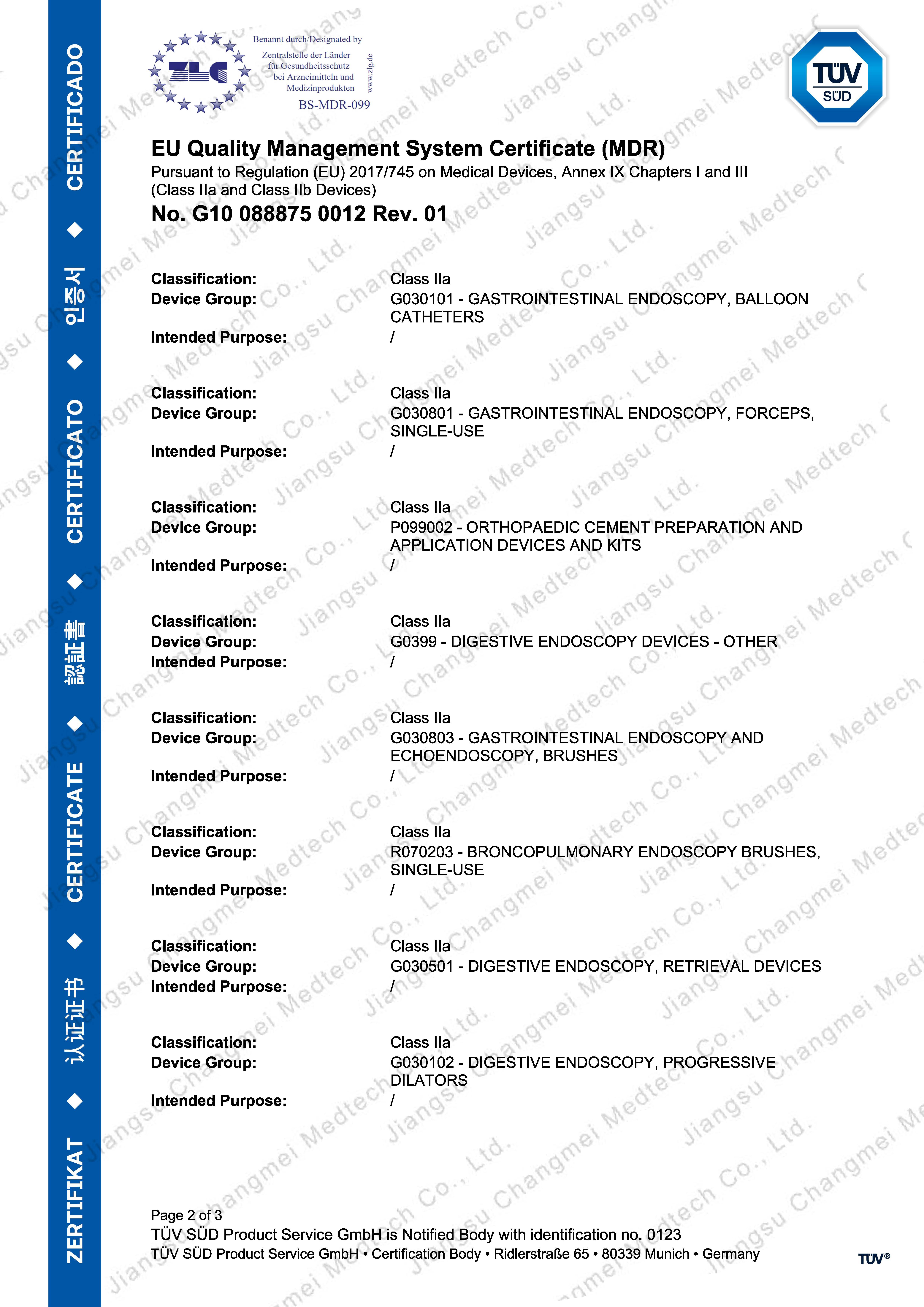
Verify the notified body, the certificate number with its revision, and the scope plus expiry date. For the CHANGMEI kyphoplasty line, the EU Quality Management System Certificate (MDR) is certificate number G10 088875 0012 Rev. 01, issued by TÜV SÜD Product Service GmbH, covering Class IIa and Class IIb medical devices under Regulation (EU) 2017/745 Annex IX Chapters I and III, with an expiry date of 2029-03-20. The quality management system certificate for design, development, production and distribution of disposable sterile medical devices is Q5 088875 0008 Rev. 05, certified to ISO 13485:2016. The Balloon Inflator is covered by a separate EU Quality Assurance Certificate (MDR), G21 088875 0011 Rev. 00, under Annex XI Part A, expiring 2029-03-20. For the US market, the kyphoplasty balloon catheter is cleared under FDA 510(k) K223709, while FDA Establishment Registration and Device Listing 3016789487 covers the Balloon Inflator and Kyphoplasty Tool Kit.
2. Do 10 mm, 15 mm and 20 mm marker distances change what the catheter can do?
They change the positioning reference and, in this range, the volume associated with it. KB0210 and KB0210S1 use a 10 mm marker distance with maximum volumes of 4 cc (8G) and 3 cc (11G). KB0115 and KB0115S1 use 15 mm with 4 cc on both gauges. KB0120 and KB0120S1 use 20 mm with 6 cc on both gauges. Gauge also changes the envelope: 8G models are 315 mm overall with a channel ID of ≥3.65 mm, while 11G models are 280 mm with ≥3.10 mm. Selection is therefore a combination of marker span, volume ceiling and the cannula gauge already in use.
3. What determines the commercial terms of a kyphoplasty balloon catheter order?
Configuration rather than a single generic figure drives the commercial terms. The variables named in Changmei's OEM/ODM scope are balloon diameter and length, cannula size and length, handle colour and logo, packaging design, and product labelling and language. Standard in-stock products have a minimum order quantity of 10 sets; OEM/ODM minimum quantities are negotiable against the specific requirement. Lead time is 30–45 days, and annual output is 1,000,000 kyphoplasty balloon catheters. A quotation should therefore be requested against a defined model mix and customisation scope, not as an open unit-price question.
4. Can a distributor evaluate the range before committing to volume?
The standard in-stock minimum order quantity of 10 sets is what makes an evaluation practical: a distributor can take a small mixed quantity across 8G and 11G models, confirm marker-distance and volume fit against actual case mix, and check kit pairing — KT-00-01 for 8G catheters, KT-00-05 for 11G catheters such as KB0210S1 — before scaling. The 8G/11G product brochure is available for download as the starting document for that evaluation.
5. What lead time, shelf life and documentation should be expected after ordering?
Lead time is 30–45 days. Devices ship EO sterilized for single use with a validated 3-year shelf life, so shelf life and storage conditions are confirmed at the point of order rather than assumed afterwards. To start a quotation, send the model mix (KB0210, KB0115, KB0120, KB0210S1, KB0115S1, KB0120S1), the required kit pairing, and any OEM/ODM customisation to cyz@czmed.com or WhatsApp +86 138-1368-7682 — the 8G/11G kyphoplasty system brochure lists the full specification matrix.
Conclusion
Three construction details define a kyphoplasty balloon catheter, and each of them is checkable before purchase. The medical-grade TPU balloon film determines radial support, biocompatibility, stress-crack resistance and post-deflation passability. The four-wing pleating process — applied to the KB0120 and the rest of the KB series — sets the deflated profile and the controlled unfold. The two radiopaque markers, spaced at 10 mm, 15 mm or 20 mm depending on model, provide the fluoroscopic reference that makes positioning reproducible.
Around those three elements sits a numeric envelope that turns a component into a purchasable specification: constrained burst pressure ≥400 PSI across the series, maximum volumes of 3 cc, 4 cc and 6 cc, overall lengths of 280 mm and 315 mm, channel IDs of ≥3.10 mm and ≥3.65 mm, 8G and 11G size classes, EO sterilization for single use with a validated 3-year shelf life, and gauge-matched tool kits (KT-00-01 for 8G, KT-00-05 for 11G) with the BI-20A-10 balloon inflator as the inflation device.
None of that replaces the IFU for clinical use, and none of it substitutes for checking certification scope and expiry. It does, however, make the balloon catheter comparable across suppliers — which is the point at which a component-level question becomes a defensible procurement decision.
Sample, Quotation and Specification Pack
CHANGMEI Kyphoplasty supplies kyphoplasty balloon catheters, tool kits and balloon inflators to distributors, hospital groups, ASCs and OEM/ODM partners. Standard in-stock minimum order quantity is 10 sets, lead time is 30–45 days, and annual output is 1,000,000 kyphoplasty balloon catheters.
Email: cyz@czmed.com | WhatsApp / Tel: +86 138-1368-7682 | Website: www.czmed.com
Download the Kyphoplasty System Products (8G & 11G) — CE and FDA brochure for the full model and certificate reference.

Have Questions or Need More Details?
Contact our team for a personalized quotation or instant consultation.
Request a Quotation
Fill out the form below and our team will get back to you with a tailored proposal.
WhatsApp Direct Chat
Prefer to chat in real-time? Message us on WhatsApp for instant assistance & quick answers.
- Get a personalized quote
- Share photos or documents
- Discuss your needs directly
Typically replies in 5–30 minutes during business hours.