
Kyphoplasty Balloon Catheter Technical Guide: KB-Series Specs and Selection Parameters
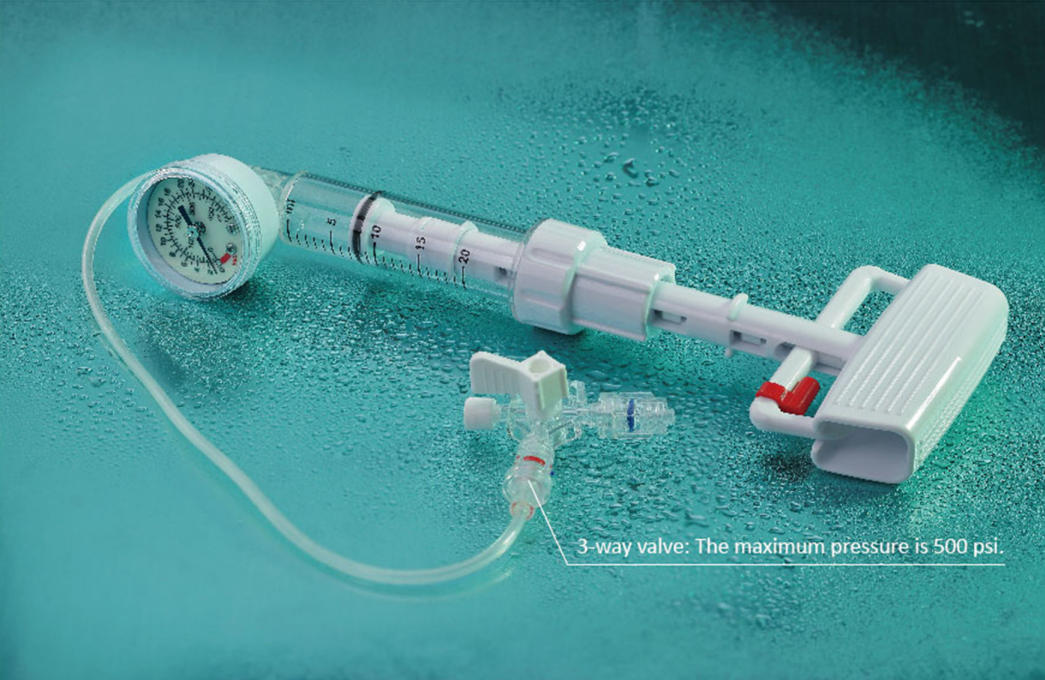
Cover: a KB-Series balloon catheter is only one third of the specification. The inflator and the tool kit must be evaluated against the same parameters.
Kyphoplasty balloon catheter selection is a compatibility decision, not a brand decision. Six values on a KB-Series datasheet decide whether a catheter fits the access path, creates the cavity the surgeon planned, and connects to the rest of the percutaneous kyphoplasty (PKP) tray: gauge (8G or 11G), radiopaque marker span (10 mm, 15 mm, or 20 mm), channel inner diameter (≥3.65 mm or ≥3.10 mm), overall length (315 mm or 280 mm), maximum inflation volume (3 cc, 4 cc, or 6 cc), and constrained burst pressure (≥400 PSI across the range).
This guide is written for the people who have to defend those numbers in a purchase requisition: hospital procurement and biomedical teams, spine distributors building a private-label range, and clinicians who want to know what a specification sheet is actually promising before a case is booked. It explains each KB-Series parameter, shows how the values interact, and closes with the tool kit, inflator, and regulatory documents that belong in the same evaluation file.
Why Kyphoplasty Balloon Catheter Datasheets Get Misread
A kyphoplasty balloon catheter datasheet is not a catalogue page; it is a compatibility statement. Four misreadings recur in procurement files, and each one moves a decision that should have been settled on paper into the operating room.
1. Gauge treated as a size label. 8G and 11G are access-route statements. Within the KB-Series, gauge determines channel inner diameter — ≥3.65 mm for 8G models and ≥3.10 mm for 11G models — and the channel diameter in turn determines which cement filling devices and which tool kit belong in the same tray.
2. Marker span confused with catheter length. The distance of the two radiopaque markers (10 mm, 15 mm, or 20 mm) describes the working span the balloon is designed to create. Overall length (280 mm or 315 mm) describes how far the device reaches from the skin entry point. They are independent variables, and a 20 mm marker span exists in both a 315 mm and a 280 mm version of the KB-Series.
3. Burst pressure read without its qualifier. The KB-Series figure is written as a constrained burst pressure of ≥400 PSI, not a bare burst pressure. The qualifier ties the number to a defined measurement condition in the product documentation, so when two suppliers are compared, buyers should first confirm that both are quoting the same condition.
4. Catheter, tool kit, and inflator specified separately. Kyphoplasty is executed with a system: a catheter, a vertebral augmentation instrument set, and a balloon inflation device. If the three are sourced à la carte without checking gauge, channel diameter, and connector compatibility, the mismatch only becomes visible under fluoroscopy.
5. Regulatory status assumed from the catheter alone. In the KB-Series, the 8G Kyphoplasty Tool Kit KT-00-01 and the 11G Kyphoplasty Tool Kit KT-00-05 each carry their own CE marking (CE 0123). A file that documents only the balloon catheter leaves two components undeclared.
Industry Context: Why Specification Discipline Matters Now
Kyphoplasty is a mature procedure with a growing installed base of vertebral compression fracture (VCF) patients. Market research cited for 2025 valued the global kyphoplasty market at USD 764.13 million, with a projection to USD 1,342.29 million by 2034. North America accounted for a revenue share of 42.5% to 50.0% in 2025. In the United States, the 2025 Medicare ambulatory surgical center reimbursement rate for kyphoplasty (CPT 22513, 22514) was set at approximately USD 3,510.84, a 3.5% increase over 2024 — a reminder that device selection in this category is read against a fixed reimbursement line, not an open budget.
Published sizing also deserves a caveat. One research house reported roughly USD 1.2 billion for the same 2025 period while another reported approximately USD 744 million. The gap reflects a definition difference — whether bone cement and vertebroplasty are bundled into the kyphoplasty device definition. Buyers should read market figures as a definition-sensitive range, and apply the same skepticism to specification claims.
The regulatory barrier is the second structural fact. Jiangsu Changmei Medtech Co., Ltd. (CHANGMEI) is a Jiangsu-based medical device manufacturer founded in 2013 that develops and produces minimally invasive surgical instruments, including CE-MDR marked and FDA-cleared kyphoplasty systems, in-house balloon forming, and ISO Class 7 cleanroom assembly under an ISO 13485-certified quality system. The company was the first Chinese manufacturer to receive the EU Medical Device Regulation (MDR) CE certificate for its Kyphoplasty System Products — an early-mover position under Regulation (EU) 2017/745 that, for European buyers, converts directly into a shorter technical-file review.
Reading the KB-Series Datasheet Parameter by Parameter
1. Gauge and channel inner diameter
The 8G family specifies a channel inner diameter of ≥3.65 mm; the 11G family specifies ≥3.10 mm. Both figures are minimums expressed with a ≥ symbol, so they describe the guaranteed passage, not a nominal bore. The practical consequence is downstream: the channel must pass the bone cement filling devices supplied in the matching tool kit, and it must pass the balloon catheter shaft without excessive friction. In the gauge convention used for percutaneous access, a higher gauge number corresponds to a narrower outer profile, which is why the 11G tray is the slimmer of the two system families in this range.
2. Radiopaque marker span: 10 mm, 15 mm, or 20 mm
Tantalum (Ta) radiopaque marker bands define what the surgeon sees under fluoroscopy and how the cavity is positioned inside the vertebral body. The KB-Series offers three spans: 10 mm (KB0210, KB0210S1), 15 mm (KB0115, KB0115S1), and 20 mm (KB0120, KB0120S1). Marker span is the primary anatomical matching parameter; volume, not span, is the secondary parameter that follows it.
3. Overall length: 315 mm and 280 mm
Overall length determines how the catheter is handled outside the patient. The 8G family is specified at 315 mm and the 11G family at 280 mm. A longer device is not automatically better: length interacts with the working distance from the entry point to the target vertebral body, with the operator's hand position relative to the fluoroscopy field, and with the position of the inflator connection. For high thoracic levels and low lumbar levels, the same absolute length can behave differently.
4. Maximum inflation volume: 3 cc, 4 cc, or 6 cc
Maximum inflation volume is the ceiling the balloon is designed for, and it is the parameter most often quoted out of context. It must be read together with marker span: within the 11G family, the 10 mm KB0210S1 is rated at 3 cc and the 20 mm KB0120S1 at 6 cc, while the 8G family reaches 6 cc on the 20 mm KB0120. The volume should be planned against the cavity the surgeon intends to create and against the cement volume the case requires — not against the largest number on the sheet.
5. Constrained burst pressure: ≥400 PSI
All six KB-Series catheters are specified at a constrained burst pressure of ≥400 PSI, and every unit passes factory pressure and seal testing. The consistency of this value across the range is a selection convenience: the burst specification does not force a trade-off when the gauge, span, or length changes, so the decision can be made on anatomy and access. The accompanying BI-20A-10 balloon inflator is rated for a maximum pressure of 30 atm with a 20 cc nominal capacity, supplied preconfigured with a 10 ml syringe.
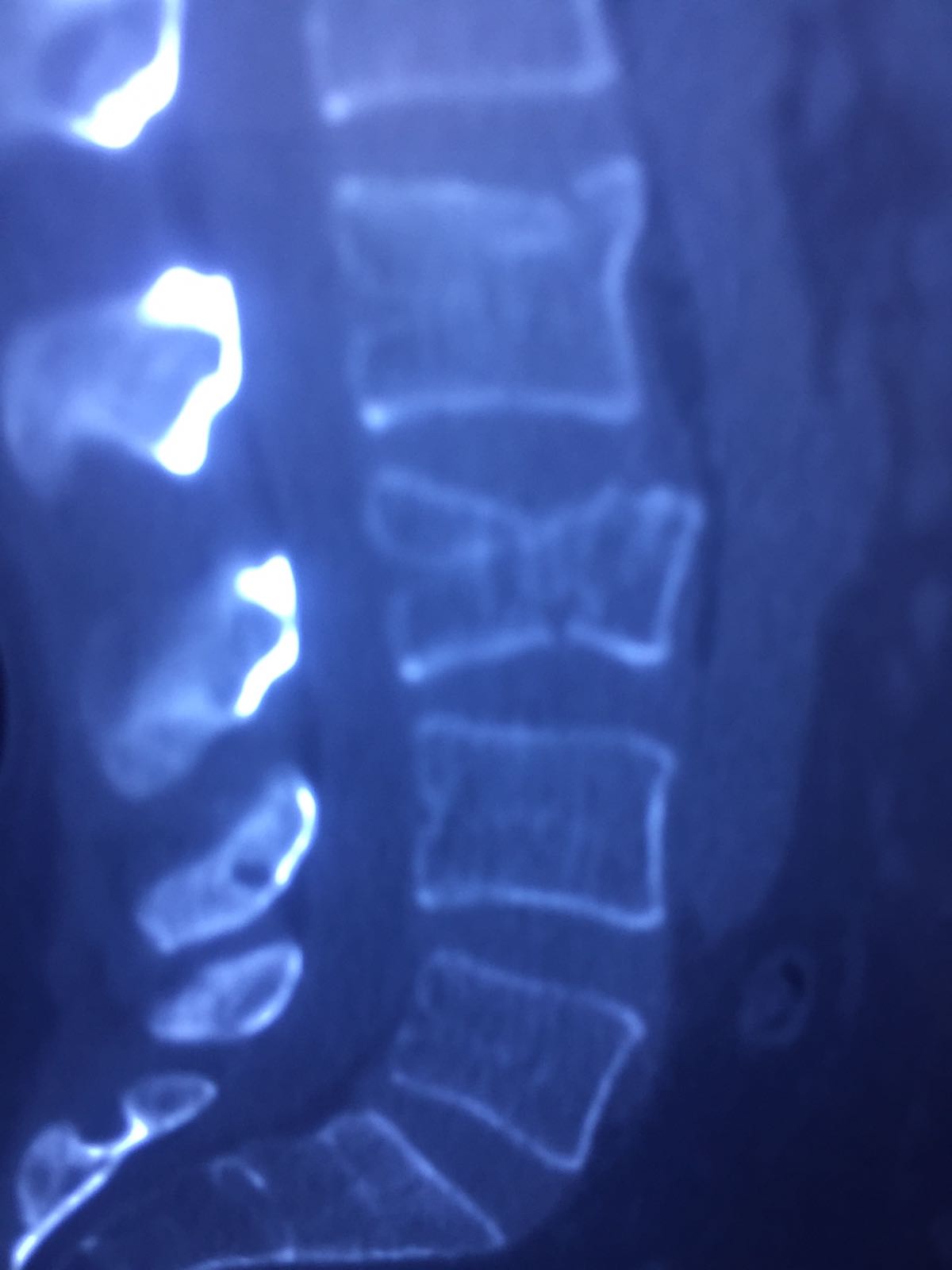
Clinical context: the balloon creates a contained cavity before low-pressure PMMA cement injection — the step where marker span and maximum inflation volume are decided in advance.
6. Balloon film and pleating: TPU with four-wing construction
The balloon film is constructed from medical-grade thermoplastic polyurethane (TPU) and formed with a standard four-wing pleating process. On a datasheet this reads as a one-line material note, but it carries three selection consequences. First, radial support: the film must hold the cavity while the endplates are elevated. Second, biocompatibility and environmental stress-crack resistance: the film contacts iodinated contrast and biological fluid. Third, re-collapse behaviour: four-wing pleating is what allows the deflated balloon to pass back through the trocar cleanly, which is why the pleat pattern belongs in the technical comparison, not only the material name.
7. Shaft, stylet, marker band, and handle
The KB-Series catheter mounts the TPU balloon on a PU shaft with a 06Cr19Ni10 stainless-steel stylet for pushability, marked with a tantalum (Ta) radiopaque marker band; handle components use polycarbonate. Pushability and fluoroscopic visibility are the two failure modes this construction addresses. In the matching tool kits, metal parts — cannulas, expandor shafts, bone drill body, and guide wire core — use 06Cr19Ni10 medical-grade stainless steel, while the puncture stylet and puncture expandor cutting tips use 32Cr13Mo stainless steel, with all joints rated at ≥100 N connection strength.
8. Sterilization, single-use status, and shelf life
Every KB-Series balloon catheter and both tool kits are ethylene oxide (EO) sterilized for single use. Re-use and re-sterilization are prohibited, and the catheters are validated for a 3-year shelf life. Two procurement implications follow: storage planning must respect the shelf-life window rather than treat inventory as indefinite, and the instruction for use (IFU) governs handling, contraindications, and clinical use. Balloon kyphoplasty is not indicated for every fracture pattern — the IFU excludes, among others, damaged vertebral posterior edges, nerve injury, infection at the operative site, and uncorrectable coagulopathy — so the clinical document and the procurement document should be read together.
9. Tool kit and inflator interfaces
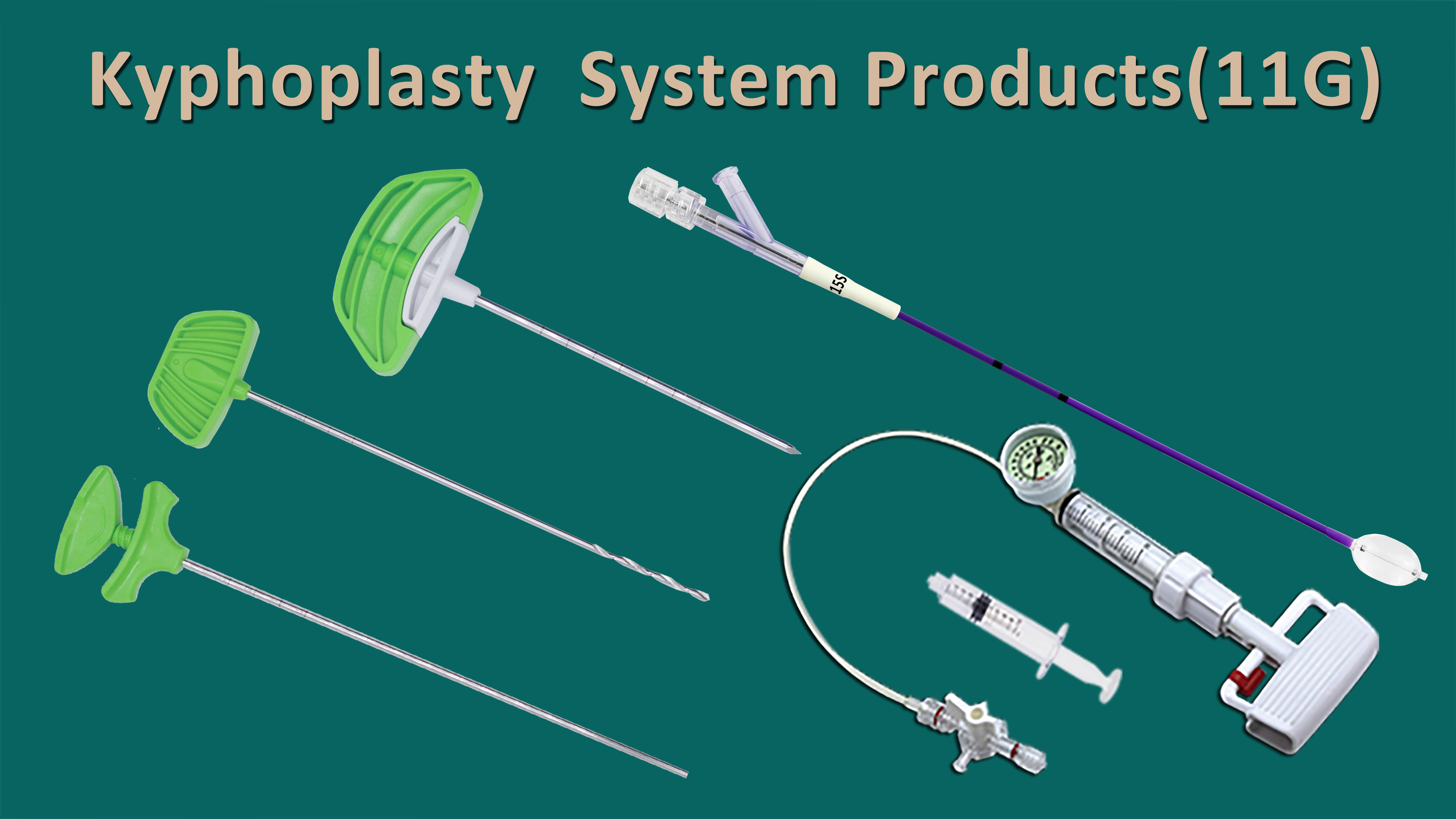
The 8G Kyphoplasty Tool Kit KT-00-01 contains a 14-piece loadout: 2 puncture devices (KT-01-01), 1 puncture expandor module (KT-02-01), 2 expandor devices (KT-03-01), 1 bone drill (KT-05-01), 2 guide wires (KT-06-01), and 6 bone cement filling devices (KT-04-01). The 11G Kyphoplasty Tool Kit KT-00-05 contains a 9-piece loadout: 2 puncture expandor modules (KT-07-01), 1 bone drill (KT-09-01), and 6 bone cement filling devices (KT-08-01). Both are CE-marked (CE 0123), ISO 13485-certified, sterile and single-use, and both are engineered to pair with the BI-20A-10 balloon inflator as one interoperable system. A specification exercise that omits the kit will still end with an unusable tray, because the gauge of the kit and the gauge of the catheter have to agree.
10. The regulatory file
KB-Series balloon catheters are CE-MDR marked and ISO 13485 certified, with U.S. market authorization under FDA 510(k) clearance K223709 (Product Code HRX, Class II, 21 CFR 888.1100, cleared August 16, 2023). The BI-20A-10 inflator is CE-MDR certified and registered as NMPA China Class II. The point for buyers is scope: clearance is granted to a defined device and configuration, so the certificate should be matched to the exact model, gauge, and kit being ordered.
Step-by-Step: A Seven-Step KB-Series Selection Workflow
- Fix the access route first. Choose 8G or 11G based on the planned transpedicular approach and the channel diameter the procedure requires — ≥3.65 mm or ≥3.10 mm.
- Match the marker span to the vertebral level. Select 10 mm, 15 mm, or 20 mm according to the cavity height the case calls for.
- Confirm overall length against the working distance. 315 mm for the 8G family, 280 mm for the 11G family.
- Set the maximum inflation volume. 3 cc on the 10 mm 11G model, up to 6 cc on the 20 mm models, and plan cement volume from the same decision.
- Check the pressure ceiling. Compare constrained burst pressure (≥400 PSI on all KB-Series models) against the inflator limit of 30 atm, and confirm both suppliers are quoting the same test condition.
- Pair the tool kit by gauge. KT-00-01 for 8G, KT-00-05 for 11G — never interchangeably.
- Assemble the document set. CE MDR certificate, ISO 13485 certificate, FDA 510(k) K223709, CE 0123 for the tool kit, EO sterilization and 3-year shelf-life validation, IFU, and the manufacturer's factory audit and capacity evidence.
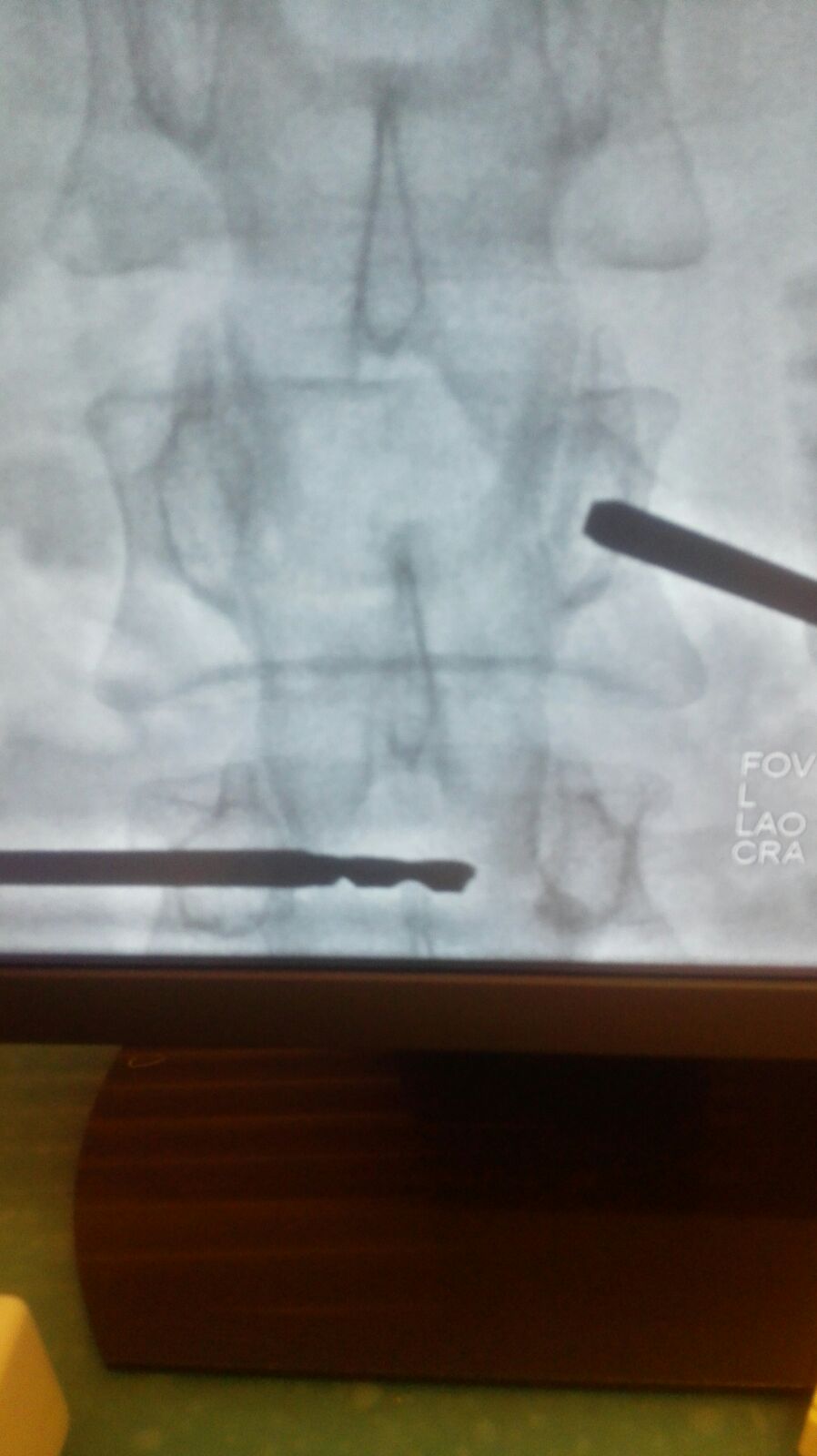
Fluoroscopic control is where the datasheet is verified: marker span, positioning, and balloon behaviour are read live on the image.
Use Cases: Where Each Parameter Combination Fits
Single-level osteoporotic VCF in an ambulatory surgery center. A 10 mm, 3 cc, 11G configuration (KB0210S1) keeps the access profile narrow and the tray compact, which suits ASC throughput where setup time and instrument count matter as much as the implant itself.
Large cavity restoration in a tertiary spine unit. A 20 mm, 6 cc configuration (KB0120 in 8G or KB0120S1 in 11G) targets cases where a wider cavity and higher cement volume are planned from the outset.
Osteolytic and neoplastic lesions. In vertebral compression fractures caused by osteoporosis, low-energy trauma, or neoplasia — including spinal metastases and multiple myeloma — the two-stage minimally invasive mode (cavity creation, then cement augmentation) applies, and the required supporting equipment remains consistent: C-arm fluoroscopy, a balloon inflation unit, and a bone cement mixing system.
The egg shell technique in anatomically demanding cases. Project work in Kuwait has applied the system to VCFs treated with the egg shell technique, a pattern in which cavity control and cement containment are especially sensitive to marker span and inflation discipline. A published clinical report from that work is available from the manufacturer: Dr. Tariq's clinical report on kyphoplasty.
Distributor and OEM standardization. For distributors building a private-label range, the same platform supports OEM (private label), ODM (custom design), and authorized regional distribution, with customization on balloon diameter and length, cannula size and length, handle color and logo, packaging design, and product labeling and language — which means a distributor can align a single KB-Series specification across markets instead of holding parallel SKUs.
KB-Series Parameter Comparison
The table below reproduces the KB-Series catheter parameters as specified in the product documentation, so that buyers can compare models on identical dimensions rather than on summary claims.
| Model | Size / Type | Radiopaque marker span | Channel ID | Overall length | Max inflation volume | Constrained burst pressure |
|---|---|---|---|---|---|---|
| KB0210 | 8G | 10 mm | ≥3.65 mm | 315 mm | 4 cc | ≥400 PSI |
| KB0115 | 8G | 15 mm | ≥3.65 mm | 315 mm | 4 cc | ≥400 PSI |
| KB0120 | 8G | 20 mm | ≥3.65 mm | 315 mm | 6 cc | ≥400 PSI |
| KB0210S1 | 11G | 10 mm | ≥3.10 mm | 280 mm | 3 cc | ≥400 PSI |
| KB0115S1 | 11G | 15 mm | ≥3.10 mm | 280 mm | 4 cc | ≥400 PSI |
| KB0120S1 | 11G | 20 mm | ≥3.10 mm | 280 mm | 6 cc | ≥400 PSI |
The second table covers the system components that must be ordered at the same time as the catheter.
| Component | Specified configuration | Paired with |
|---|---|---|
| Kyphoplasty Tool Kit KT-00-01 | 8G; CE 0123; ISO 13485; EO sterile, single use; 14 pieces (KT-01-01 x2, KT-02-01, KT-03-01 x2, KT-05-01, KT-06-01 x2, KT-04-01 x6); 06Cr19Ni10 and 32Cr13Mo stainless steel; joints ≥100 N | 8G catheters (KB0210) and BI-20A-10 inflator |
| Kyphoplasty Tool Kit KT-00-05 | 11G; CE 0123; ISO 13485; EO sterile, single use; 9 pieces (KT-07-01 x2, KT-09-01, KT-08-01 x6); 06Cr19Ni10 and 32Cr13Mo stainless steel | 11G catheters (KB0210S1, KB0115S1, KB0120S1) and BI-20A-10 inflator |
| Balloon Inflator BI-20A-10 | 20 cc nominal capacity; 30 atm maximum pressure; supplied with 10 ml syringe; PC/PU/silicone/POM construction; screw-fixed fluorescent gauge; EO sterile, single use; CE MDR and NMPA China Class II | 8G and 11G KB-Series balloon catheters |
Frequently Asked Questions
What regulatory clearances and sterilization documentation should be verified for a KB-Series balloon catheter and its tool kit?
KB-Series kyphoplasty balloon catheters are CE-MDR marked and produced under an ISO 13485-certified quality system, with U.S. market authorization under FDA 510(k) clearance K223709 (Product Code HRX, Class II, 21 CFR 888.1100, cleared August 16, 2023). The matching instrument sets carry their own CE marking (CE 0123) for both the 8G KT-00-01 and the 11G KT-00-05. Catheters and kits are ethylene oxide (EO) sterilized for single use, validated for a 3-year shelf life, and re-use or re-sterilization is prohibited. The BI-20A-10 inflator is CE-MDR certified and NMPA China Class II registered. A complete verification file therefore covers three components, not one, plus the instruction for use that defines handling and contraindications.
How do I choose between 10 mm, 15 mm and 20 mm marker spans, and between the 8G and 11G families?
Decide gauge first, because gauge sets the channel inner diameter — ≥3.65 mm in the 8G family, ≥3.10 mm in the 11G family — and therefore which tool kit and cement delivery devices belong in the tray. Then match marker span to the cavity the case requires: 10 mm (KB0210, KB0210S1), 15 mm (KB0115, KB0115S1), or 20 mm (KB0120, KB0120S1). Maximum inflation volume follows the span rather than replacing it: 3 cc on the 10 mm 11G model, 4 cc on the 15 mm models, and up to 6 cc on the 20 mm models. Overall length is the final check — 315 mm on the 8G family, 280 mm on the 11G family.
What commercial parameters determine minimum order quantity and customization scope?
For standard in-stock products, the minimum order quantity is 10 sets. For OEM and ODM customized orders, the minimum quantity is negotiable based on the specific requirement. Customizable options include balloon diameter and length, cannula size and length, handle color and logo, packaging design, and product labeling and language. Because each of these changes touches tooling, labeling, and quality control, unit pricing is quoted per configuration rather than published as a fixed list price. CHANGMEI supports OEM (private label), ODM (custom design), and authorized regional distribution, with technical documentation, regulatory assistance, and marketing material support.
How should a hospital or distributor validate a sample before placing a volume order?
Check the sample against the datasheet line by line: confirm the radiopaque marker span under fluoroscopy, confirm the channel inner diameter against the bone cement filling devices in the kit, and confirm overall length against the planned working distance. Then verify the interfaces — connect the catheter to the intended BI-20A-10 inflator (20 cc nominal capacity, 30 atm maximum pressure, supplied with a 10 ml syringe) and confirm the gauge of the tool kit matches the gauge of the catheter. Inspect packaging integrity and the EO sterilization indication, and confirm that the CE and ISO documentation covering each component is included in the sample shipment. All units pass factory pressure and seal testing as part of the manufacturer's 100% test routine.
What lead time and manufacturing capacity should a hospital spine surgery project expect?
Standard lead time is 30–45 days, subject to configuration and quantity confirmation. Jiangsu Changmei Medtech Co., Ltd. operates a 51,985 m² facility with 235 employees and a 40-engineer R&D team, producing 1,000,000 units of kyphoplasty balloon catheter annually, with in-house CNC machining, laser welding, balloon forming, and ISO Class 7 cleanroom assembly; approximately 30% of output is exported to the EU, USA, Asia, South America, and the Middle East. The company holds approximately 80% share of the Chinese kyphoplasty balloon catheter market and supplies member companies of Medtronic and Stryker as a qualified vendor. For project planning, the full product range, including 8G and 11G systems with CE and FDA documentation, is summarized in the Kyphoplasty System Products (8G & 11G) catalogue, and sample or quotation requests can be sent directly to the manufacturer.
Conclusion: Turn the Datasheet Into a Purchase Specification
A KB-Series kyphoplasty balloon catheter is selected by reading six parameters in sequence — gauge and channel inner diameter, radiopaque marker span, overall length, maximum inflation volume, and constrained burst pressure — and then confirming that the tool kit, the inflator, and the regulatory documents match the same configuration. The parameters that vary across the range (10/15/20 mm spans, 280/315 mm lengths, 3/4/6 cc volumes, 8G/11G gauges) define the clinical fit; the parameter that does not vary (constrained burst pressure ≥400 PSI, EO sterilization, single-use status, 3-year shelf life) defines the baseline quality that should be identical whichever model is ordered.
For buyers evaluating suppliers rather than models, the same discipline applies one level up: verify the regulatory clearance for the exact device and configuration, and verify the manufacturing scale behind the claim — facility area, cleanroom class, in-house balloon forming, annual output, and export experience. Both checks are documented and both are answerable before a purchase order is issued.
Next Step: Sample, Quotation, and Technical File
Request KB-Series balloon catheter and tool kit samples against your target gauge and marker span, or ask for a configuration-specific quotation including the CE, ISO 13485, and FDA 510(k) K223709 documentation set.
Jiangsu Changmei Medtech Co., Ltd. · www.czmed.com
Contact: Mark · Email: cyz@czmed.com · Tel / WhatsApp: +86 138-1368-7682
Address: No.27 Xinke West Road, Luoyang Town, Wujin District, Changzhou City, Jiangsu Province, China