
Kyphoplasty Balloon Catheter vs. Full Kyphoplasty System: A Clinical Guide
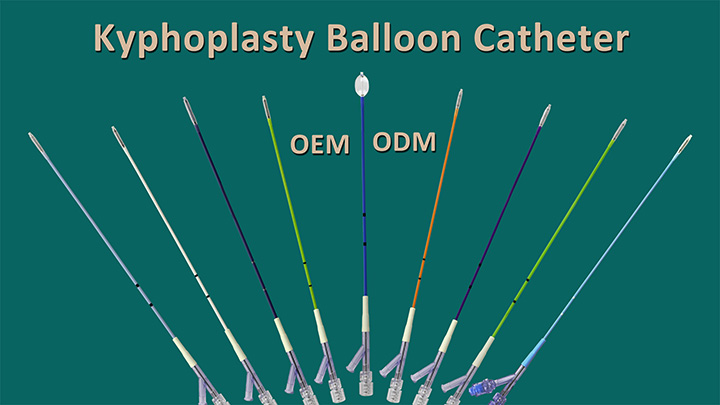
For surgical teams and procurement specialists, the phrase 'kyphoplasty balloon catheter' can create confusion because the device and the procedure share the same name. A kyphoplasty balloon catheter is an inflatable bone tamp used inside a fractured vertebral body. Balloon kyphoplasty, also called percutaneous kyphoplasty or PKP, is the complete surgical workflow in which that balloon is inserted, inflated to create a cavity, deflated, removed, and replaced with bone cement. The two are not interchangeable options for the same purchase. This guide compares the single-use Kyphoplasty Balloon Catheter KB0210S1 against a complete 11G balloon kyphoplasty system built around the KT-00-05 Kyphoplasty Tool Kit, and it explains how procedural goals, device specifications, and clinical scenarios affect the choice.
In short, the KB0210S1 balloon catheter is the functional core that restores vertebral height and creates a contained cavity. However, the catheter alone does not provide the access instruments, cortical drill, or cement-filling devices needed to complete percutaneous vertebral augmentation. A full balloon kyphoplasty system adds those tools so the procedure can be performed safely from skin entry to cement delivery.
Clinical decision point: if your hospital already owns a validated compatible 11G access platform, replacing only the balloon catheter may be sufficient. If you are starting a new PKP service or standardizing an instrument tray, the complete KT-00-05-based system is the more reproducible choice.
Why the Distinction Matters in Procurement
When a surgeon requests a 'kyphoplasty balloon catheter,' the purchasing team may order only the balloon. In many hospitals that is correct because the working-channel instruments are reusable or already stocked. In other settings, particularly ambulatory surgery centers and new spine programs, the team needs a full sterile kit that contains every instrument required for the case.
The practical risk is buying a high-quality balloon catheter that cannot be used because the center has no compatible 11G trocar, dilator, drill, or cement-filling device. This is why device specifications must be checked against an existing system before a catheter-only order is placed.
Balloon Kyphoplasty Market and Technology Context
Balloon kyphoplasty is used to treat painful vertebral compression fractures caused by osteoporosis, low-energy trauma, and certain neoplastic conditions such as spinal metastases and multiple myeloma. The procedure is performed through a percutaneous approach under fluoroscopic guidance, usually under local or general anesthesia. Published case documentation linked to Changmei kyphoplasty systems also describes use of eggshell technique in vertebral compression fracture treatment.
Market research cited in 2026 estimates the global kyphoplasty device market at roughly USD 764 million in 2025, with projected growth to about USD 1,342 million by 2034. This growth is consistent with the broader shift toward smaller, less invasive vertebral augmentation systems. In Europe, the regulatory transition from the MDD to the EU Medical Device Regulation 2017/745 has raised the evidence and quality-system bar for kyphoplasty products. In the United States, balloon catheters for vertebral augmentation are regulated as Class II devices under product code HRX and 21 CFR 888.1100.
Device Option 1: KB0210S1 Kyphoplasty Balloon Catheter as a Single Device
The Changmei Kyphoplasty Balloon Catheter KB0210S1 is a single-use, CE-MDR marked and ISO 13485-certified inflatable bone tamp in the Balloon Kyphoplasty (PKP) Products category. It carries FDA 510(k) clearance K223709 with a clearance dated August 16, 2023. The intended setting is orthopedic surgery, spine surgery, pain management, and interventional pain clinics.
The key specifications of the KB0210S1 are: distance between two radiopaque markers of 10 mm; channel inner diameter of at least 3.10 mm; overall length of 280 mm; maximum inflation volume of 3 cc; and constrained burst pressure of at least 400 PSI. The balloon film is made from medical-grade thermoplastic polyurethane (TPU) using a four-wing pleating process. The device also includes a tantalum radiopaque marker band, a PU shaft with a 06Cr19Ni10 stainless-steel stylet for pushability, and polycarbonate handle components. It is ethylene-oxide sterilized for single use with a validated three-year shelf life.
What this device does clinically is inflate inside cancellous bone to compact bone outward, create a contained cavity, elevate the endplate where possible, and partially restore lost vertebral height. The KB0210S1 is specifically positioned as the 10 mm balloon in Changmei's 11G catheter family, alongside the 15 mm KB0115S1 and the 20 mm KB0120S1.
Device Option 2: KT-00-05 Kyphoplasty Tool Kit as Part of a Complete PKP System
The Changmei Kyphoplasty Tool Kit KT-00-05 is an 11G, CE-marked (CE 0123) and ISO 13485-certified vertebral augmentation instrument set. It is designed for percutaneous vertebral augmentation procedures, giving the surgical team the instruments needed to establish a working channel and deliver bone cement during balloon kyphoplasty or vertebroplasty. The kit is EO-sterilized and intended for single use only.
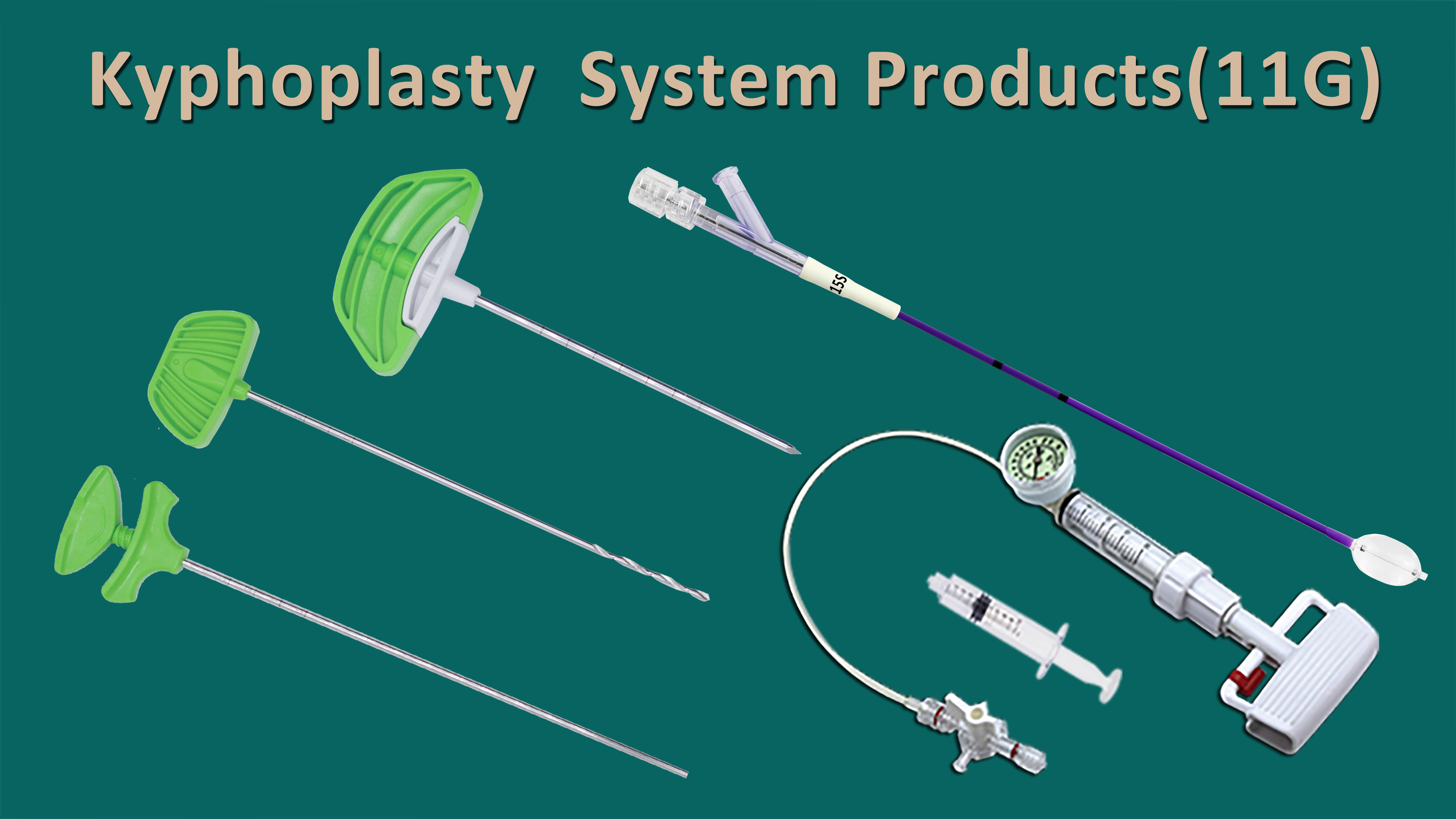
The KT-00-05 contains a defined set of instruments: 2 puncture expandor modules (model KT-07-01) for controlled tract dilation, 1 bone drill (model KT-09-01) for cortical penetration, and 6 bone cement filling devices (model KT-08-01) for PMMA cement delivery. Most metal parts are made of 06Cr19Ni10 medical-grade stainless steel, while the bone drill cutting tip and puncture-style cutting surfaces use 32Cr13Mo stainless steel. The kit also uses ABS or polymer handle components, with connection strength of all joints rated at no less than 100 N.
In a full kyphoplasty system, the KT-00-05 works as one interoperable platform with the 11G KB0210S1 balloon catheter and the BI-20A-10 Balloon Inflator. The manufacturer designs these components to be used together: the tool kit opens and prepares the vertebral access route, the balloon catheter creates and expands the cavity, and the inflator provides controlled hydraulic pressure.
The Supporting Device: BI-20A-10 Balloon Inflator
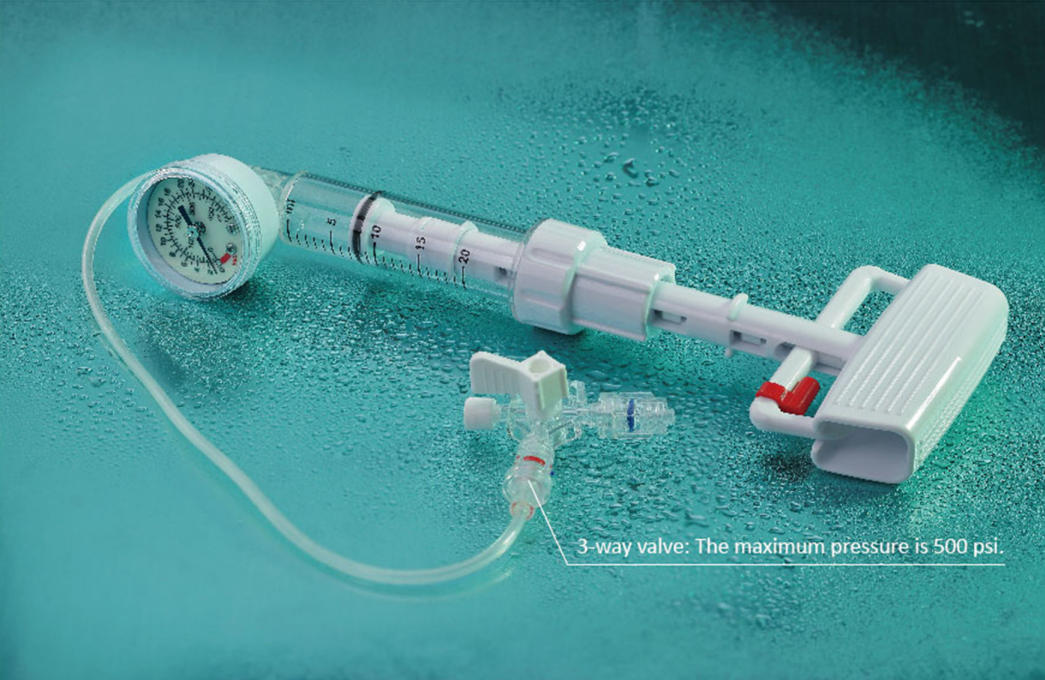
The Balloon Inflator BI-20A-10 is a single-use, EO-sterilized accessory intended for hydraulic pressurization of kyphoplasty balloon catheters. It has a 20 cc nominal capacity and a maximum pressure of 30 atm. Its clinical purpose is to inflate the balloon inside the vertebral body, dilate the bone, and form a cavity for cement injection in PKP or PVP procedures. The inflator is part of the same Changmei PKP ecosystem and is required in a complete kit-based kyphoplasty workflow.
Step-by-Step: What the Catheter Does vs. What the Tool Kit Does
Balloon kyphoplasty is best understood as a sequence of surgical tasks. Each task maps to a specific instrument in the 11G system.
Step 1: Access and tract preparation. The surgical team establishes a percutaneous path through the pedicle or parapedicular approach. The KT-00-05 puncture expandor modules are used for controlled dilation of the tract. This step belongs entirely to the tool kit, not to the balloon catheter.
Step 2: Cortical entry. The bone drill (KT-09-01) penetrates the cortical bone to create a channel large enough for the balloon catheter. The drill tip is made from 32Cr13Mo stainless steel. Again, the catheter is not involved in this step.
Step 3: Balloon insertion. After the working channel is established, the KB0210S1 balloon catheter is advanced through the channel into the vertebral body. The 280 mm overall length and 10 mm radiopaque marker span help the surgeon position the balloon under fluoroscopy.
Step 4: Inflation and cavity creation. The BI-20A-10 inflator delivers controlled pressure to expand the balloon. The balloon compacts cancellous bone outward, creating a contained cavity and partially restoring vertebral height. The KB0210S1 has a maximum volume of 3 cc and a constrained burst pressure of at least 400 PSI.
Step 5: Balloon removal. The balloon is deflated and withdrawn through the same working channel. The cavity that remains is the space that will receive bone cement.
Step 6: Cement delivery. The KT-00-05 provides 6 bone cement filling devices for controlled, low-pressure injection of PMMA cement into the cavity. This final step is performed by the tool kit components, not by the balloon catheter.
This sequence makes the division of labor clear. The balloon catheter performs the vertebral body expansion and height-restoration function. The tool kit performs access, dilation, drilling, and cement delivery. A catheter-only purchase cannot replace the complete system when those supporting functions are absent.
Clinical Scenarios and Selection Logic
Scenario 1: Hospital with an existing compatible 11G PKP platform
If the hospital already owns a validated 11G working-channel system with reusable or stocked access instruments, drill, and cement-delivery tools that are compatible with the KB0210S1 specifications, then replenishing the balloon catheter alone is a normal inventory decision. The team should verify channel inner diameter, length compatibility, and sterilization workflow before ordering catheter-only units.
Scenario 2: New PKP program or new surgical site
A spine center, ambulatory surgery center, or interventional radiology suite starting a new kyphoplasty program typically does not have an existing compatible tray. In this situation, the KT-00-05 tool kit combined with the KB0210S1 catheter and BI-20A-10 inflator provides one interoperable, sterile, single-use system. This avoids mixing instruments from different sources without confirmed compatibility.
Scenario 3: OEM and distributor inventory planning
Distributors and OEM buyers often stock both configurations. Catheter-only SKUs address replacement demand from hospitals that already use a PKP tray. Complete kit-based system SKUs address new tenders, hospital projects, and markets where clinicians prefer a fully standardized sterile set. Changmei, as the original manufacturer, supports OEM and ODM customization of gauge, length, and kit composition.
Side-by-Side Comparison: KB0210S1 Catheter vs. KT-00-05-Based System
| Decision point | KB0210S1 balloon catheter (single device) | KT-00-05-based 11G balloon kyphoplasty system |
|---|---|---|
| Primary role | Create a cavity inside cancellous bone and attempt vertebral height restoration | Provide the complete sterile platform for access, dilation, drilling, balloon support, and cement delivery |
| Kit contents | One single-use balloon catheter | 2 puncture expandor modules (KT-07-01), 1 bone drill (KT-09-01), 6 bone cement filling devices (KT-08-01) |
| Gauge and size | 11G; 10 mm marker distance; ≥3.10 mm channel ID; 280 mm overall length; 3 cc max volume | 11G instrument set designed to pair with the KB0210S1 catheter |
| Pressure rating | Constrained burst pressure ≥400 PSI | Connection strength of joints rated ≥100 N |
| Materials | Medical-grade TPU balloon, PU shaft, tantalum marker, stainless-steel stylet | 06Cr19Ni10 and 32Cr13Mo medical-grade stainless steel with ABS/polymer handles |
| Sterilization | EO sterilized, single-use, 3-year shelf life | EO sterilized, single-use |
| Regulatory status | CE-MDR, ISO 13485, FDA 510(k) K223709 | CE 0123 marked, ISO 13485-certified |
| Best suited for | Replacement inventory for hospitals with a compatible 11G working-channel system | New PKP programs, standardized trays, and complete-system procurement |
Regulatory Notes for Both Options
Changmei's kyphoplasty system documentation states that the EU CE certificate is issued under MDR 2017/745 as Class IIa by TÜV SÜD and was obtained in 2024. This is the current MDR pathway rather than the older MDD 93/42/EEC framework. The same regulatory documentation covers the balloon catheter, tool kit, and balloon inflator as a system. The company announced in 2024 that it became the first Chinese manufacturer to receive EU MDR certification for its kyphoplasty system products.
For the U.S. market, the KB0210S1 balloon catheter is supported by FDA 510(k) clearance K223709 under product code HRX, Class II, 21 CFR 888.1100. The KT-00-05 tool kit is described in Changmei product documentation with CE 0123 marking and ISO 13485 certification under a TÜV SÜD-audited quality system.
Both configurations are manufactured at Changmei's 51,985 m² facility with GMP-class cleanroom production. The company reports an annual production capacity of 1,000,000 kyphoplasty balloon catheter units and approximately 80% domestic share of the Chinese PKP balloon catheter market. Changmei also reports supply relationships with member companies of Stryker and Medtronic.
FAQ
Is the kyphoplasty balloon catheter single-use? What is the sterilization method and shelf life?
The kyphoplasty balloon catheter is a single-use sterile medical device. Re-use is prohibited. It is sterilized by ethylene oxide (EO) and has a three-year shelf life. The device should be used immediately once the package is opened. Do not re-sterilize or reuse. Always follow the official Instructions for Use.
What regulatory clearances does Changmei hold for the kyphoplasty balloon catheter, tool kit, and inflator?
Changmei's kyphoplasty system is certified under EU MDR 2017/745 as Class IIa, issued by TÜV SÜD in 2024, covering the balloon catheter, tool kit, and balloon inflator as a system. The U.S. FDA 510(k) clearance K223709, dated August 16, 2023, covers the balloon catheter as a Class II device under product code HRX. The quality system is certified to EN ISO 13485:2016 and audited by TÜV SÜD. The system is also registered with NMPA in China.
Is the KB0210S1 balloon catheter compatible with the KT-00-05 tool kit?
Yes. The KB0210S1 11G balloon catheter is designed by Changmei to pair with the KT-00-05 11G tool kit and the BI-20A-10 balloon inflator as one interoperable vertebral augmentation system. The KT-00-05 tool kit is also documented as pairing natively with the KB0210S1 catheter. The intended use is a complete 11G PKP procedure.
What are the contraindications for kyphoplasty balloon catheter use?
The kyphoplasty balloon catheter is not applicable for patients with a damaged vertebral posterior edge, nerve injury, infection at the operative site, or uncorrectable coagulopathy. The full list of contraindications is provided in the official Instructions for Use and should be reviewed before clinical use.
How should a buyer choose between the 8G and 11G kyphoplasty system platforms?
Both 8G and 11G platforms share the same Changmei manufacturing platform, including four-wing pleating, constrained burst pressure of at least 400 PSI, and 100% pressure-seal testing. The 8G family offers a channel inner diameter of at least 3.65 mm, an overall length of 315 mm, and larger cavity volumes of 4 cc at 10 mm or 15 mm balloon sizes and 6 cc at 20 mm. The 11G family uses a channel inner diameter of at least 3.10 mm, an overall length of 280 mm, and cavity volumes of 3 cc at 10 mm, 4 cc at 15 mm, and 6 cc at 20 mm. The 8G platform remains common in markets where surgeons were trained on classic Kyphon-style trays. The 11G platform is often preferred for less invasive outpatient and upper-thoracic procedures and is suitable for buyers competing in the smaller-profile segment.
To verify whether the KB0210S1 catheter or the complete KT-00-05-based 11G system matches your hospital or distribution project, Jiangsu Changmei Medtech Co., Ltd. provides the full CE and FDA product brochure for public download.
Download Kyphoplasty System Brochure
Contact: Mark · Email: cyz@czmed.com · Tel/WhatsApp: +86 138-1368-7682 · Address: No.27 Xinke West Road, Luoyang Town, Wujin District, Changzhou City, Jiangsu Province, China