Kyphoplasty Compliance Guide: Reading CE 0123 Scope
A CE 0123 statement on a kyphoplasty device tells you one thing only: a notified body identified by the four-digit number 0123 carried out the conformity assessment behind the CE mark. It does not tell you that the balloon catheter, tool kit or inflator on your purchase order sits inside the scope of that certificate. The number identifies the assessor. The certificate, its annex reference and its product list identify what was actually assessed.
That distinction decides whether a tender file, an import registration or a hospital vendor qualification survives review. This guide works through the document set behind CHANGMEI kyphoplasty products, using the Kyphoplasty Tool Kit KT-00-05 and the KB-series balloon catheters KB0115, KB0115S1, KB0120, KB0120S1 and KB0210S1 as the reference case, and shows how to match a declared certificate to an exact model and component before you commit to an order.
Jiangsu Changmei Medtech Co., Ltd. (CHANGMEI) is a medical device manufacturer established in 2013 in Jiangsu, China, producing kyphoplasty balloon catheters, kyphoplasty tool kits and balloon inflators, with products distributed in the EU, USA, Asia, South America and the Middle East. Its website is www.czmed.com.
Short answer. Ask for the certificate number, not the claim. Read the regulation and annex reference, confirm the device class, find your exact model in the product scope, then check the revision and validity dates. For CHANGMEI, the balloon catheters and the kyphoplasty tool kits sit under EU certificate G100888750012 Rev. 01 (MDR Annex IX, Class IIa and IIb), while the Balloon Inflator BI-20A-10 sits under a separate Class I sterile certificate, G21 088875 0011 Rev. 00 (MDR Annex XI Part A).
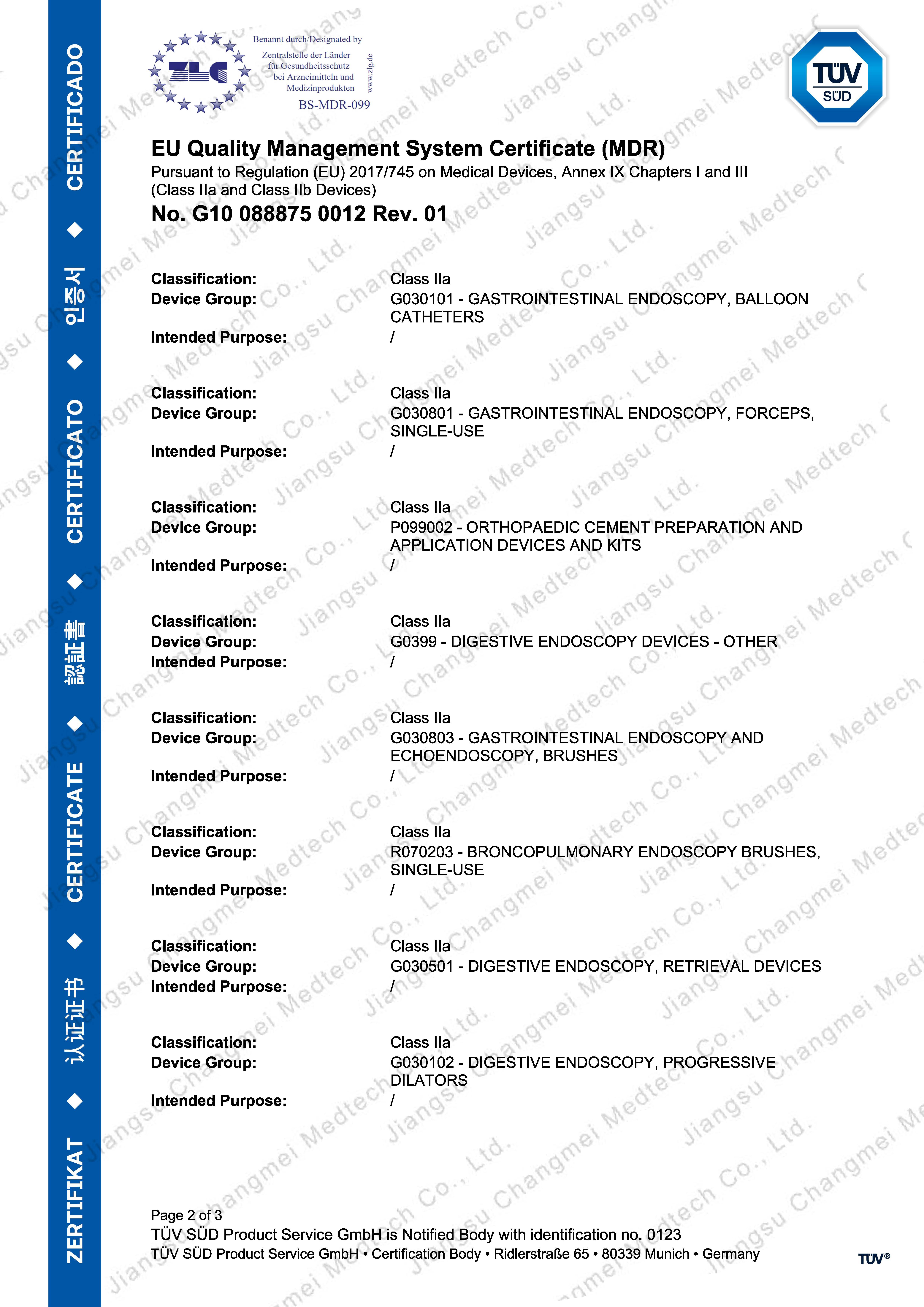
Cover: EU Quality Management System Certificate G100888750012 Rev. 01, issued by TUV SUD Product Service GmbH under Regulation (EU) 2017/745 Annex IX Chapters I and III.
The Problem: One Number, Three Different Evidence Chains
A kyphoplasty procedure is not bought as a single device. A typical order bundles a balloon catheter, a tool kit for access and preparation, and a balloon inflator. Each of those components can be regulated differently, carry a different annex reference, and be evidenced by a different certificate. A supplier that replies we are CE 0123 has answered the question of who assessed the manufacturer. It has not answered the question of what is covered.
In practice, review failures cluster into five recognisable patterns:
- Model not in scope. The certificate names a product family, but the specific model or size on the purchase order appears nowhere in the scope list.
- Certificate type mismatch. A quality management system certificate is presented as a product certificate, or a Class I sterile certificate is presented as if it covered Class IIa catheters.
- Component gap. The catheter is covered but the tool kit is not, or the inflator is covered under a different certificate that nobody requested.
- Superseded revision. The tender file still holds an older revision letter, or a certificate that has passed its expiry date.
- Identifier mismatch. The four-digit number printed on the label does not correspond to the notified body named on the certificate in the file.
Every one of these is a documentary failure rather than a product failure, which is exactly why it is worth controlling. A distributor can hold a fully compliant, correctly certified product and still lose the file review because the paperwork was assembled from claims instead of from scope text.
Industry Background: Why Scope Language Became the Deciding Detail
Regulation (EU) 2017/745, the Medical Device Regulation, replaced the earlier directive framework and pushed notified body scrutiny of technical documentation and quality systems substantially higher. For a kyphoplasty portfolio, two conformity assessment routes matter:
- Annex IX, Chapters I and III — the route applied to Class IIa and Class IIb devices, where the notified body assesses the quality management system and the technical documentation of the devices concerned.
- Annex XI Part A — the quality assurance route applied to Class I devices placed on the market in a sterile condition, where notified body involvement is required because of the sterile state.
The consequence is that one kyphoplasty supplier can legitimately hold more than one CE certificate, each resting on a different annex and each covering a different subset of products. ISO 13485:2016 certification sits underneath as the quality system baseline, but it is not a product clearance and should never be filed as one.
The market context explains why buyers now read scope text instead of skimming it. The global kyphoplasty market was valued at USD 764.13 million in 2025 and is projected to reach USD 1,342.29 million by 2034, according to market research summarised in Vertex AI Search / Market Research Analysis data, with North America holding a revenue share of 42.5% to 50.0% in 2025 per Grand View Research and Straits Research. As tender volumes rise across the EU, North America, Asia, South America and the Middle East, documentation review has shifted from formality to gate.
CHANGMEI states that it was the first Chinese company to receive an EU MDR CE certificate for kyphoplasty system products, per the company announcement dated April 2024. Whether or not a buyer leans on that positioning, the verifiable part is the certificate set itself — numbers, annexes, classes and dates — and that is what the rest of this guide works through.
The Certificates That Matter for a Kyphoplasty Portfolio
What the four-digit number actually verifies
The four-digit identifier that follows the CE mark on a device label identifies the notified body that performed the conformity assessment. In this document set the identifier is 0123, and the issuing body named on every EU certificate is TUV SUD Product Service GmbH. That single correspondence is worth checking first because it is the cheapest check available: the number on the label and the body named on the certificate must agree before any deeper reading is useful.
What the number does not verify is scope. It does not confirm the device class, the annex, the validity period, or whether your model is listed. Those four items live in the certificate body and its annexes, and they are the items a regulatory affairs reviewer reads line by line.
Two EU certificate types, two different legal bases
CHANGMEI's EU documentation separates the sterile Class I inflator from the Class IIa and Class IIb catheter and kit portfolio. That is not an administrative detail. It changes which certificate a buyer must request for which component.
| Certificate | Number | Issuing body | Regulatory basis | Class | Issued | Valid to | Product scope |
|---|---|---|---|---|---|---|---|
| EU Quality Management System Certificate (MDR) | G100888750012 Rev. 01 | TUV SUD Product Service GmbH | Regulation (EU) 2017/745 Annex IX Chapters I and III | Class IIa and IIb | 2026-06-18 | 2029-03-20 | Kyphoplasty balloon catheters KB0115, KB0115S1, KB0120, KB0120S1, KB0210, KB0210S1; Kyphoplasty Tool Kits KT-00-01, KT-00-05 |
| EU Quality Assurance Certificate (MDR) | G21 088875 0011 Rev. 00 | TUV SUD Product Service GmbH | Regulation (EU) 2017/745 Annex XI Part A | Class I sterile | 2024-03-21 | 2029-03-20 | Balloon Inflator BI-20A-10 |
| Quality Management System Certificate | Q5 088875 0008 Rev. 05 | TUV SUD Product Service GmbH | ISO 13485:2016 (EN ISO 13485:2016/AC:2018, EN ISO 13485:2016/A11:2021) | Quality system | 2026-06-28 | 2027-01-07 | Design, development, production and distribution of disposable sterile medical devices |
| 510(k) Premarket Notification | K223709 | FDA | US premarket notification | Device clearance | 2023-07-31 | 2029-12-31 | Kyphoplasty balloon catheters KB0115, KB0115S1, KB0120, KB0120S1, KB0210, KB0210S1 |
| FDA Establishment Registration and Device Listing | 3016789487 | FDA | US establishment registration and listing | Establishment and listing | 2023-07-31 | 2029-12-31 | Balloon Inflator BI-20A-10; Kyphoplasty Tool Kits KT-00-01, KT-00-05 |
The practical reading is this. If you are buying KB0115, KB0115S1, KB0120, KB0120S1, KB0210S1 or a Kyphoplasty Tool Kit, the certificate to file is G100888750012 Rev. 01, issued 18 June 2026 and valid to 20 March 2029. If you are buying the Balloon Inflator BI-20A-10, the certificate to file is G21 088875 0011 Rev. 00, issued 21 March 2024 and valid to 20 March 2029. Filing the wrong one is the most common scope error in this category, and it is visible immediately to a reviewer who reads the annex reference.
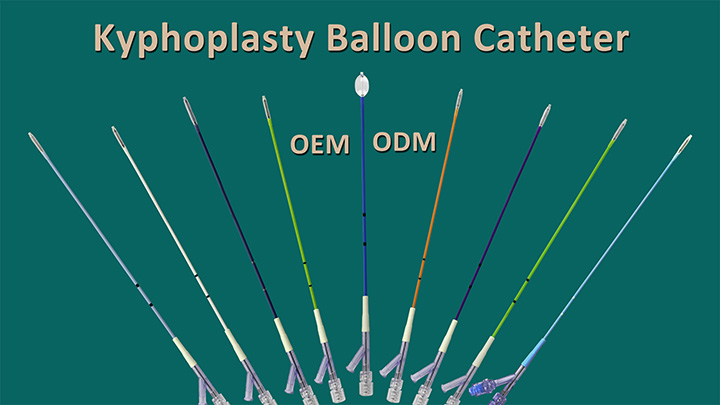
Component-level review: the catheter, tool kit and inflator in a kyphoplasty procedure pack can each rest on a different certificate and annex.
Matching a declared certificate to an exact model
Scope matching is a name-by-name exercise. A certificate that lists a product family does not automatically extend to every variant, and a certificate that lists a kit does not automatically extend to the individual instruments inside that kit. The comparison table further down maps each verified model to the certificate that names it.
Two details make the matching easier for reviewers. First, product names on the certificate should be read together with the intended-use statements in the technical file: KB0115, KB0115S1, KB0120, KB0120S1 and KB0210S1 are kyphoplasty balloon catheters intended for orthopedic surgery, spine surgery, pain management and interventional pain clinics, while KT-00-05 is a Kyphoplasty Tool Kit intended for orthopedic surgery. Catheter and kit are different device types and are listed as such. Second, model-level engineering data must line up with the cleared scope rather than replace it. KB0115 uses medical-grade thermoplastic polyurethane on a PU shaft, with radiopaque markers 15 mm apart and a stainless-steel stylet. KB0115S1 is an 11G catheter sterilized by ethylene oxide for single use. KB0210S1 has a maximum inflation volume of 3 cc. CHANGMEI balloon catheters withstand burst pressure of at least 400 psi and are available in 10, 15 and 20 mm diameters. None of those specifications is a regulatory clearance; they are the engineering facts that a reviewer cross-checks against the scope.
Why kit-level and catheter-level clearance can differ
In the EU set the difference is one of annex rather than of product coverage. The Class IIa and Class IIb quality management system certificate lists both balloon catheters and tool kits, because both families were assessed under Annex IX. The sterile inflator follows Annex XI Part A. A buyer assembling a complete procedure pack therefore holds two EU certificates, not one.
In the US set the difference is one of legal basis, and it is more often misunderstood. K223709, a 510(k) premarket notification issued 31 July 2023, covers the Kyphoplasty Balloon Catheter models KB0115, KB0115S1, KB0120, KB0120S1, KB0210 and KB0210S1. The Kyphoplasty Tool Kit KT-00-05 and the Balloon Inflator BI-20A-10 fall outside that 510(k) scope; they appear instead under FDA Establishment Registration and Device Listing 3016789487, which also lists KT-00-01 and BI-20A-10.
That single fact changes how a purchase order should be described. A US buyer ordering catheters is buying a 510(k)-cleared device from a registered establishment. A US buyer ordering the tool kit is buying a listed device from a registered establishment and should request the listing evidence rather than a 510(k) clearance letter that does not name the kit. Describing the whole bundle as 510(k) cleared is the kind of overstatement that surfaces during an audit and is difficult to unwind afterwards.
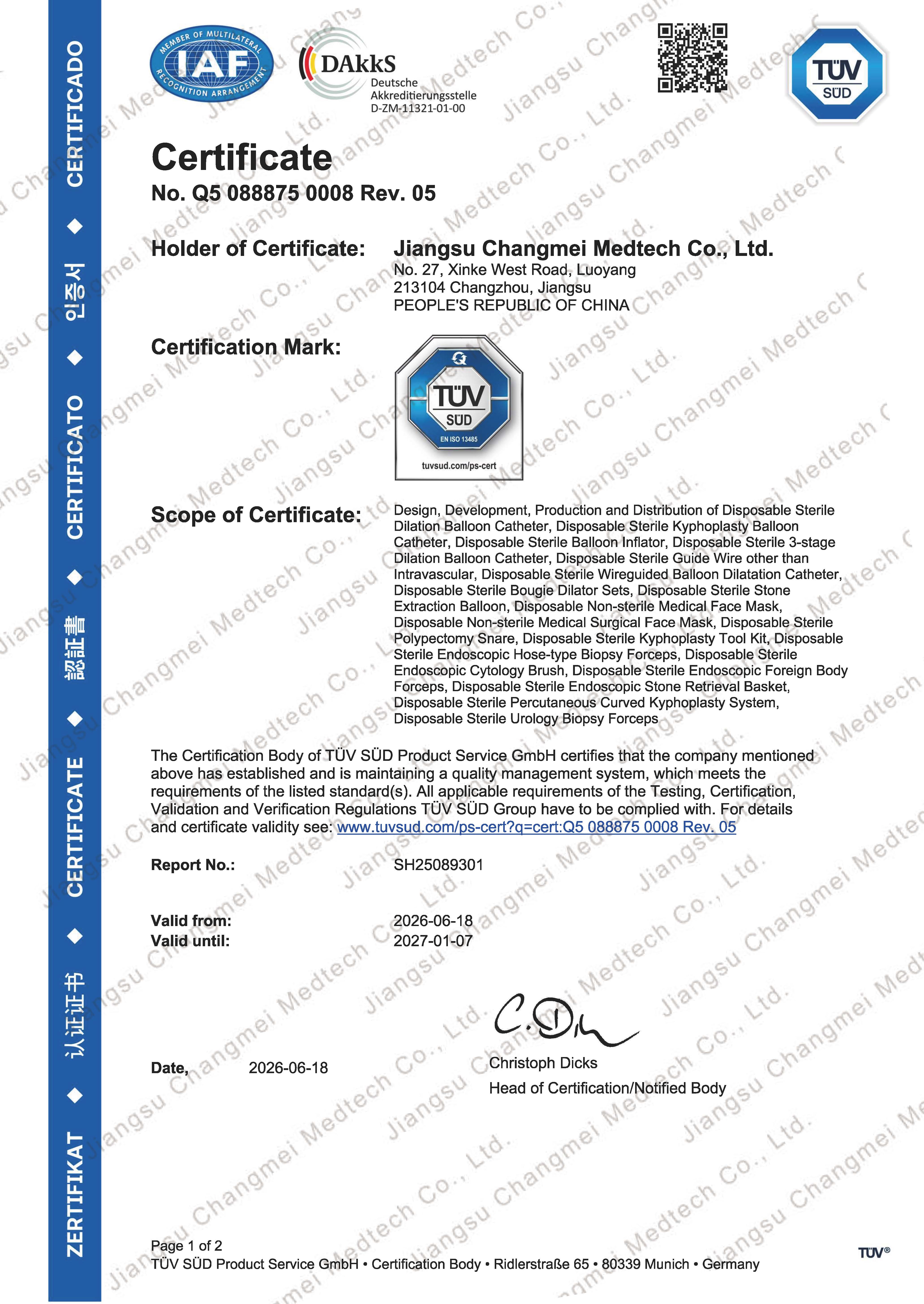
Quality system evidence: ISO 13485:2016 certificate Q5 088875 0008 Rev. 05, valid to 7 January 2027.
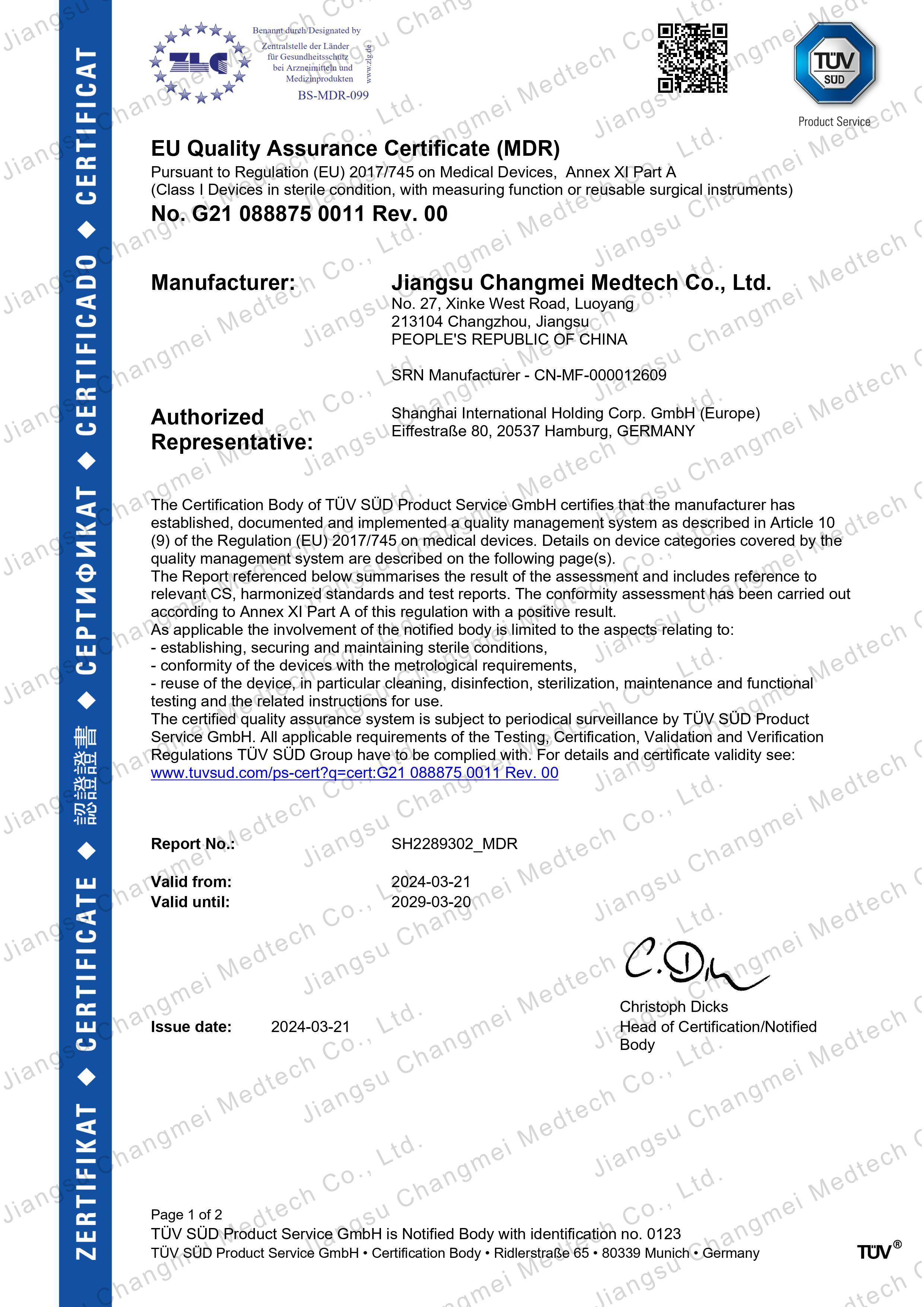
Separate legal basis: the Balloon Inflator BI-20A-10 is evidenced by the Class I sterile quality assurance certificate G21 088875 0011 Rev. 00, not by the Class IIa and IIb certificate.
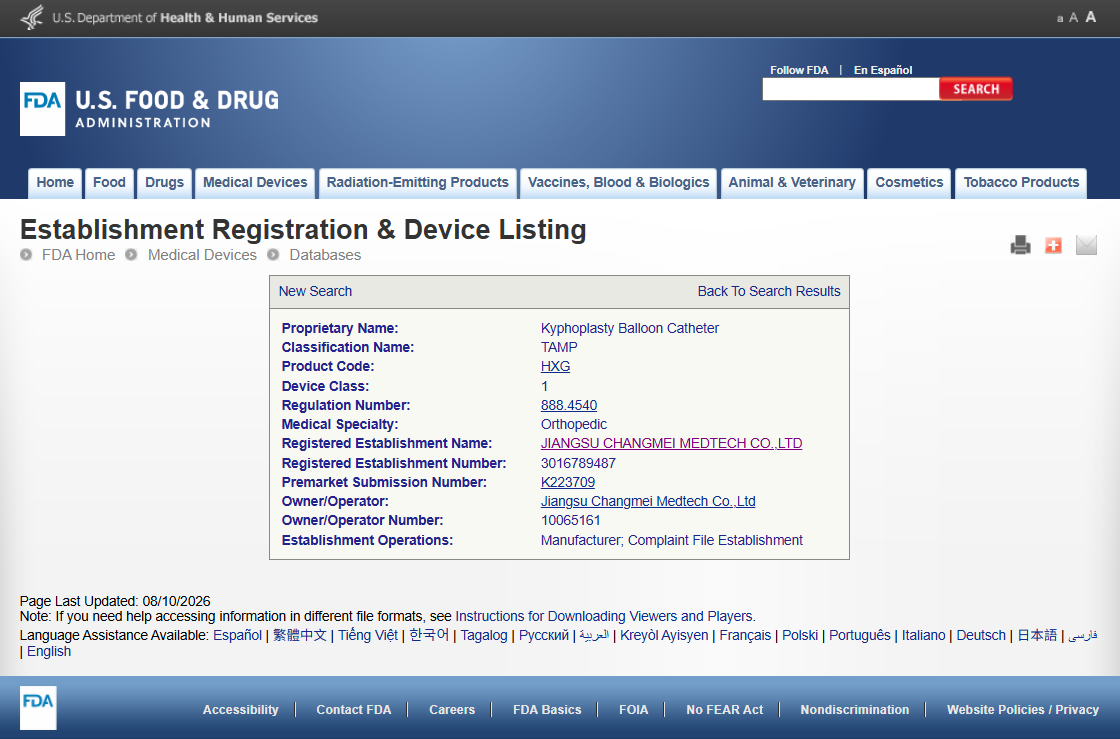
US pathway: 510(k) K223709 lists balloon catheter models only; tool kits and the inflator sit under establishment registration and device listing 3016789487.
A Seven-Step Verification Workflow
The workflow below can be run by a distributor, an importer or a hospital procurement team in a single review cycle. Each step produces one document or one line of written confirmation, which makes the outcome auditable later.
- Freeze the model list first. Write down every model and component on the purchase order: catheter models, kit model, inflator model and any accessories. Scope review cannot start from a category name such as kyphoplasty system.
- Request certificates by number. Ask for certificate numbers and revision letters instead of a generic compliance statement. For CHANGMEI that means G100888750012 Rev. 01, G21 088875 0011 Rev. 00, Q5 088875 0008 Rev. 05, K223709 and 3016789487, depending on market and component.
- Check the notified body identifier. Confirm that the four-digit number on the label corresponds to the body named on the certificate. Where they disagree, stop and request the current label artwork.
- Read the annex and the class. Annex IX Chapters I and III with Class IIa and IIb means one thing; Annex XI Part A with Class I sterile means another. The class must match the device type you are buying.
- Locate your model in the scope. Every model on the purchase order should be findable by name in the certificate scope or its annexes. If a model is absent, request the certificate that names it or reconsider the order configuration.
- Confirm revision and validity. Match the revision letter and check expiry dates against your delivery and shelf-life timelines. For reference: the Class IIa and IIb certificate runs to 20 March 2029, the Class I sterile certificate to 20 March 2029, the ISO 13485 certificate to 7 January 2027, and both FDA records to 31 December 2029.
- Cross-check label, IFU and listing. The label, the instructions for use and the listing record should describe the same device from the same manufacturer. Sterilization and shelf-life statements belong in this check: CHANGMEI kyphoplasty balloon catheters are single-use devices sterilized by ethylene oxide with a three-year shelf life, must not be re-sterilized or reused, and are handled according to the IFU once the package is opened.
Three Buyer Scenarios
EU distributor responding to a hospital tender
A European distributor assembling a tender file usually needs three things aligned: the MDR certificate covering the specific models offered, the ISO 13485 certificate as quality system evidence, and the IFU in the required language. The common failure is submitting G21 088875 0011 Rev. 00 for a catheter line because it is the certificate that arrived first. Reading the annex reference resolves it: Annex XI Part A belongs with the sterile inflator, Annex IX with the catheters and kits.
US importer or ambulatory surgery center group
A US buyer reviewing catheters and kits together needs two records, not one. K223709 supports the catheter models; 3016789487 supports the tool kit and the inflator. Procedure economics make documentation speed matter, because the 2025 Medicare ASC final rate for kyphoplasty under CPT 22513 and 22514 is approximately USD 3,510.84, a 3.5% increase over 2024, per ASIPP and CMS data. A documentation hold delays case scheduling regardless of the reimbursement level attached to the procedure.
Middle East, Asia and South America tenders, plus private-label partners
Tenders in these markets typically accept CE and ISO 13485 evidence as the baseline, sometimes with additional local registration. An OEM or private-label partner has a further need: confirming that the models to be relabelled already sit inside the certificate scope, so the private-label version does not require a new assessment route. CHANGMEI's customization options include balloon diameter and length, cannula size and length, handle color and logo, packaging design, and product labeling and language. Each of those changes should be checked against scope before artwork is approved.
Comparison Table: Which Certificate Covers Which Model
| Model / component | Component type | EU QMS G100888750012 Rev. 01 (Annex IX, IIa and IIb) | EU QA G21 088875 0011 Rev. 00 (Annex XI Part A, I sterile) | FDA 510(k) K223709 | FDA registration and listing 3016789487 |
|---|---|---|---|---|---|
| KB0115 | Kyphoplasty balloon catheter | Listed | Not listed | Listed | Not listed |
| KB0115S1 | Kyphoplasty balloon catheter | Listed | Not listed | Listed | Not listed |
| KB0120 | Kyphoplasty balloon catheter | Listed | Not listed | Listed | Not listed |
| KB0120S1 | Kyphoplasty balloon catheter | Listed | Not listed | Listed | Not listed |
| KB0210S1 | Kyphoplasty balloon catheter | Listed | Not listed | Listed | Not listed |
| KT-00-05 | Kyphoplasty Tool Kit | Listed | Not listed | Not listed | Listed |
| BI-20A-10 | Balloon Inflator | Not listed | Listed | Not listed | Listed |
Read the table by column, not by row. A tick in the EU quality management system column is not evidence of a US clearance, and a tick under device listing is not the same as a 510(k) clearance. CE marking, 510(k) clearance, and establishment registration and listing answer three separate regulatory questions, and a complete file needs the right answer to each one.
Frequently Asked Questions
What does CE 0123 actually prove about a kyphoplasty device?
It proves that a notified body identified by the number 0123 performed the conformity assessment behind the CE mark. It does not prove that a specific model is covered. Verification means reading the certificate body: the regulation and annex reference, the device class, the product scope list, and the issue and expiry dates. For CHANGMEI, Regulation (EU) 2017/745 Annex IX Chapters I and III applies to the Class IIa and IIb catheters and kits, and Annex XI Part A applies to the sterile Class I inflator. The issuing body named on the certificates is TUV SUD Product Service GmbH.
Does one CE certificate cover both the kyphoplasty balloon catheters and the tool kit?
In the EU set, yes, within a defined boundary. G100888750012 Rev. 01 lists balloon catheter models KB0115, KB0115S1, KB0120, KB0120S1, KB0210 and KB0210S1 together with Kyphoplasty Tool Kits KT-00-01 and KT-00-05. The Balloon Inflator BI-20A-10 is not on that certificate and is covered by G21 088875 0011 Rev. 00. In the US set the split falls differently: K223709 lists catheters only, and KT-00-05 appears under establishment registration and device listing 3016789487.
Which quality system and sterilization documents should be in the file?
File ISO 13485:2016 certificate Q5 088875 0008 Rev. 05, issued by TUV SUD Product Service GmbH on 28 June 2026 and valid to 7 January 2027, covering design, development, production and distribution of disposable sterile medical devices. Add the sterilization statement: CHANGMEI kyphoplasty balloon catheters are single-use devices sterilized by ethylene oxide with a three-year shelf life, not to be re-sterilized or reused, and always handled according to the IFU.
Can we review certificates and validation samples before placing a bulk order?
Yes. Standard in-stock products carry a minimum order quantity of 10 sets, and OEM or ODM customized orders are negotiated against the specific requirement, so a documentation review and sample evaluation can both be completed before a volume commitment. Technical documentation and regulatory assistance are part of the supported OEM, ODM and distribution cooperation. To start, send the model list and target market to cyz@czmed.com or WhatsApp +86 138-1368-7682 and request the matching certificate package.
What lead time should be planned once documentation is approved?
Plan 30 to 45 days for production after documentation and order confirmation. CHANGMEI operates an annual production capacity of 1,000,000 balloon catheters with 100% product testing, which supports high-volume and repeat procurement. Certificate validity usually extends beyond the delivery cycle, but buyers running multi-year tenders should diarise the ISO 13485 expiry of 7 January 2027 and request the renewed certificate ahead of that date. For a quotation against a specific model mix, use the contact details above or download the product catalogue linked at the end of this guide.
Conclusion
CE 0123 is a starting point, not a conclusion. The number tells you which notified body assessed the manufacturer; the certificate, its annex reference, its class and its product list tell you what was assessed and whether your model is inside it. For a kyphoplasty portfolio, that means two EU certificates rather than one, and two US records rather than one, because the catheters, the tool kits and the inflator do not share a single legal basis.
The verification habit worth building is simple: freeze the model list, request certificate numbers instead of claims, read the annex and the class, find each model by name, then confirm revision and expiry. Buyers who run those five moves once will spot a scope gap in minutes, and will hold a file that survives a hospital regulatory review without a correction cycle.
Next step: request the certificate package for your model mix
Send the exact models and target market — for example KB0120S1 plus KT-00-05 for an EU tender, or KB0115 with the Balloon Inflator for a US listing file — and CHANGMEI will return the matching certificate set, IFU and technical documentation. Validation samples and OEM or ODM discussions can run in parallel.
Email: cyz@czmed.com · WhatsApp and Tel: +86 138-1368-7682 · Website: www.czmed.com
Address: No.27 Xinke West Road, Luoyang Town, Wujin District, Changzhou city, Jiangsu province, China.
Download the product catalogue covering the 8G and 11G kyphoplasty systems with CE and FDA documentation: Kyphoplasty System Products (8G and 11G) — CE and FDA.
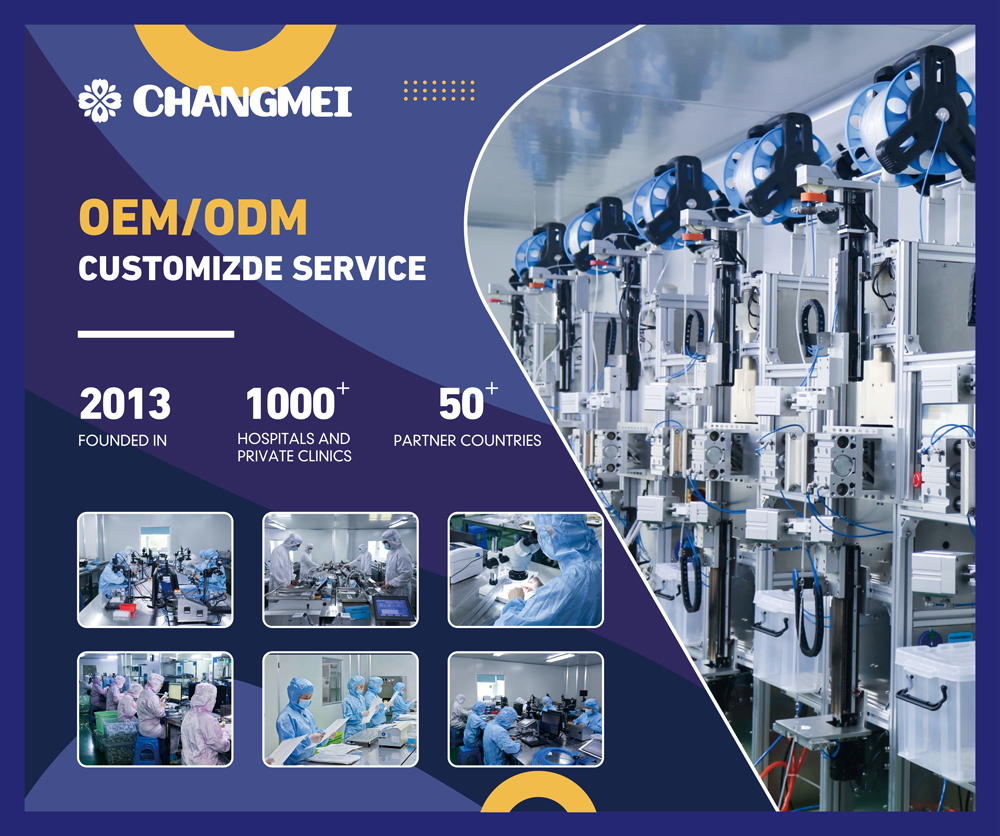
Sample and documentation requests can be combined: confirm scope for the exact models, then evaluate the components before a volume order.
Have Questions or Need More Details?
Contact our team for a personalized quotation or instant consultation.
Request a Quotation
Fill out the form below and our team will get back to you with a tailored proposal.
WhatsApp Direct Chat
Prefer to chat in real-time? Message us on WhatsApp for instant assistance & quick answers.
- Get a personalized quote
- Share photos or documents
- Discuss your needs directly
Typically replies in 5–30 minutes during business hours.