
Kyphoplasty Explained: The Science Behind Balloon Catheters and TPU
Balloon kyphoplasty (PKP) is a minimally invasive procedure for painful vertebral compression fractures. A working cannula is placed into the fractured vertebral body, an inflatable bone tamp — the kyphoplasty balloon catheter — is advanced through it and inflated to create an intravertebral cavity and partially restore vertebral height, and the resulting void is then filled with low-viscosity PMMA bone cement. The balloon is the only component in that sequence that deliberately deforms bone, which is why its material and geometry are clinical variables rather than design details.
This explainer treats the balloon catheter as an engineered device. It walks through the medical-grade thermoplastic polyurethane (TPU) balloon film, the four-wing pleating process, the tantalum radiopaque markers, the polyurethane shaft with stainless-steel stylet, and the matched inflation hardware — using the published specifications of the CHANGMEI Kyphoplasty Balloon Catheter models KB0115 (8G, 15 mm marker span) and KB0120 (8G, 20 mm marker span).
Why a Balloon? The Problem Kyphoplasty Is Solving
A vertebral compression fracture collapses the cancellous interior of a vertebral body. As the trabeculae compact, the endplates depress, the vertebral body loses height, and the local kyphotic angle increases. Pain in this setting is largely mechanical: micromotion at the fracture line. For a patient with an osteoporotic, low-energy traumatic, or neoplastic fracture, the clinical goals are height restoration and deformity correction, immediate mechanical stabilization against re-collapse, rapid pain reduction, and a low risk of cement extravasation.
Vertebroplasty addresses the same fractures by injecting bone cement directly into the fractured body. Balloon kyphoplasty inserts an additional step: an inflatable bone tamp first displaces cancellous bone outward toward the cortex, generating a centrally located, contained cavity. Because that cavity exists before cement is injected, the cement can be delivered at low pressure into a defined void instead of being forced into unmodified trabeculae. That difference is the mechanism behind the reduced risk of cement extravasation associated with PKP compared with direct vertebroplasty injection.
The extra step is also what makes the balloon a demanding component. It has to expand under fluoroscopic control to a controlled pressure without rupturing, stay visible while it moves, and then deflate back into a profile low enough to be withdrawn through the same cannula that delivered it. Each requirement maps onto a specific design decision: film material, pleat geometry, marker bands, and shaft construction.
Industry Background: Where Kyphoplasty Stands in 2026
Market research published in 2026 values the global kyphoplasty market at USD 764.13 million in 2025, with a projection of USD 1,342.29 million by 2034. North America accounted for a revenue share of 42.5% to 50.0% in 2025, making it the largest regional market. In the United States, the 2025 Medicare ambulatory surgical center (ASC) final payment rate for kyphoplasty (CPT 22513, 22514) is approximately USD 3,510.84 — a 3.5% increase over 2024, based on CMS rates as published by the American Society of Interventional Pain Physicians (ASIPP).
The regulatory layer is equally structural. Kyphoplasty systems sold in the European Union fall under Regulation (EU) 2017/745 (MDR). Jiangsu Changmei Medtech was the first Chinese company to receive an EU MDR CE certificate for its kyphoplasty system products. In the United States, CHANGMEI kyphoplasty balloon catheters hold FDA 510(k) clearance K223709 (Product Code HRX, Class II, 21 CFR 888.1100, cleared August 16, 2023), in addition to CE-MDR marking and ISO 13485 certification.
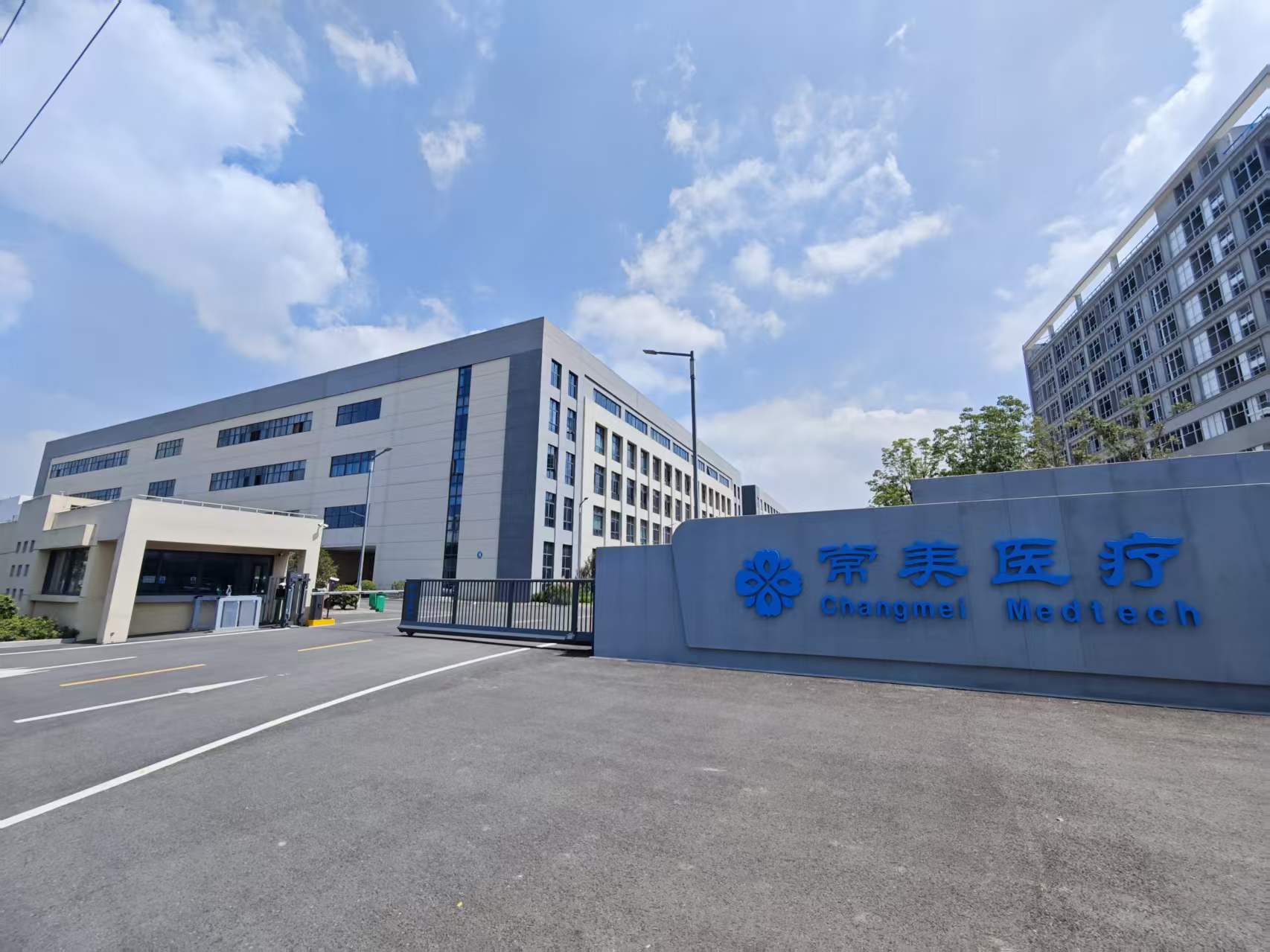
Manufacturing concentration is part of the picture for readers at the discovery stage. Jiangsu Changmei Medtech Co., Ltd., established in 2013 and headquartered in Jiangsu, China, operates a 51,985 m² facility with GMP-class cleanroom production and reports annual kyphoplasty balloon catheter capacity of 1,000,000 units, supported by a 40-engineer R&D team and approximately 235 employees. The company states that its kyphoplasty balloon catheters account for approximately 80% of the Chinese domestic market, and that it supplies member companies of Stryker and Medtronic. Products reach the EU, USA, Asia, South America, and Middle East, with export business representing 30% of sales.
The Device Science Behind a Kyphoplasty Balloon Catheter
Medical-grade TPU as the balloon film
The balloon film in a CHANGMEI kyphoplasty balloon catheter is constructed from medical-grade thermoplastic polyurethane (TPU). TPU is used here because several properties must coexist in one material: radial support when pressurised, biocompatibility in tissue contact, resistance to environmental stress cracking, and enough compliance to refold after deflation. A film stiff enough to lift an endplate that will not relax back into a low profile leaves the clinician working against the device during withdrawal; a film that folds easily but cannot hold pressure cannot generate a contained cavity in the first place.
The four-wing pleating process
Before packaging, the TPU film is folded in a defined pattern. CHANGMEI uses a standard four-wing pleating process. Pleating converts a large-diameter film into a small-diameter insertion profile, and the fold count determines how the film collapses and re-collapses. With four wings, the deflated balloon refolds along predictable crease lines rather than randomly, which supports smooth passability through the trocar after deflation — the moment in the procedure when a poorly folded balloon can catch on the cannula edge.
Radiopaque markers and the 15 mm / 20 mm marker span
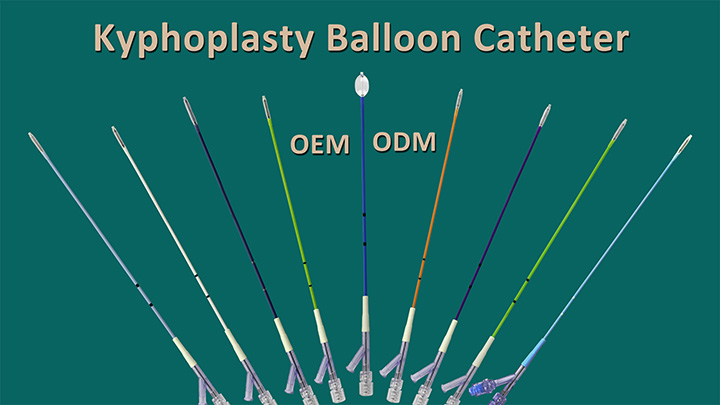
Radiopaque markers are how the balloon becomes visible under fluoroscopy. In this design, a tantalum (Ta) radiopaque marker band provides that visibility. The distance between the two radiopaque markers defines the working length that can be seen and positioned: 15 mm on the KB0115 and 20 mm on the KB0120. Marker span also tracks inflation volume — the 15 mm KB0115 has a maximum volume of 4 cc, while the 20 mm KB0120 has 6 cc. For the operator, the marker pair is what makes balloon position verifiable before and during inflation, and what makes endplate elevation observable rather than inferred.
Shaft, stylet, and handle
Behind the balloon, the KB0115 and KB0120 use a polyurethane (PU) shaft with radiopaque markers and a 06Cr19Ni10 stainless-steel stylet. The stylet supplies pushability: it is what allows the deflated catheter to be advanced through the working cannula along the intended trajectory instead of buckling. Handle components use polycarbonate, and the device is EO-sterilized for single use.
The inflation interface
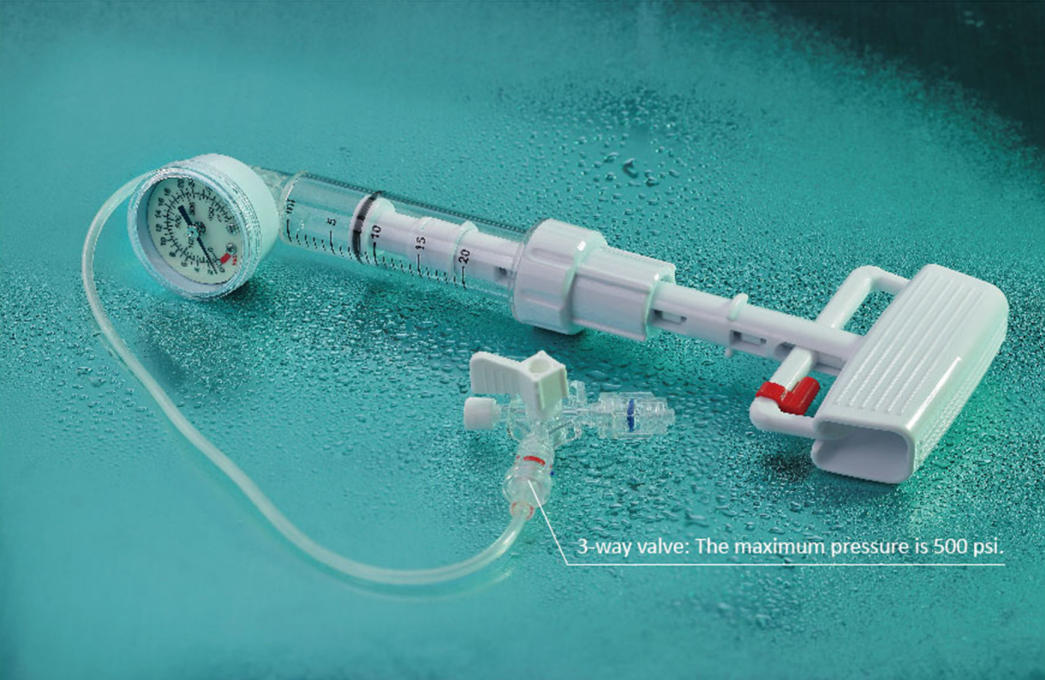
Inflation is a separate device decision. The CHANGMEI Balloon Inflator BI-20A-10 is a single-use, EO-sterilized kyphoplasty balloon inflation device with a 20 cc nominal capacity and a 30 atm maximum pressure, supplied with a preconfigured 10 ml syringe. The barrel, threaded sleeve, three-way valve, and joint are molded from polycarbonate; the connecting tube from polyurethane; the piston from silicone rubber; the pull rod from polyoxymethylene (POM); and the push rod from PC/ABS. A screw-fixed fluorescent pressure gauge supports readability in low-light operating rooms, and the O-type low-friction plunger plus ergonomic handle are intended to let the user build and hold pressure steadily while dilating the vertebral body under fluoroscopy. The BI-20A-10 is CE MDR certified and NMPA China Class II, and both the KB0115 and KB0120 are engineered to pair with it.
The matched 8G tool kit
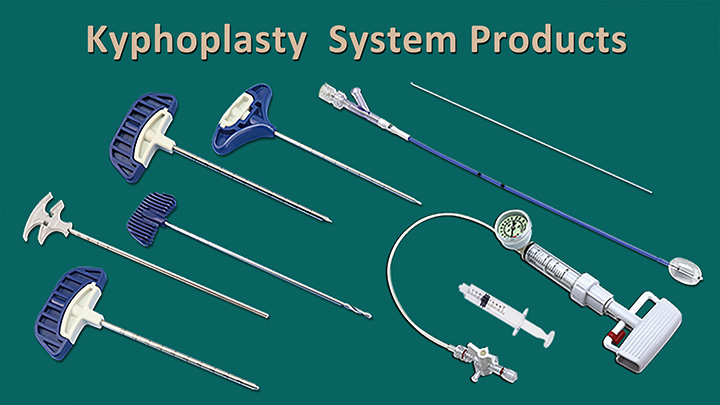
A balloon catheter is only one part of an interoperable system. Both the KB0115 and the KB0120 pair with the CHANGMEI Kyphoplasty Tool Kit KT-00-01, an 8G, CE-marked (CE 0123) and ISO 13485-certified instrument set for percutaneous vertebral augmentation. Each sterile, single-use KT-00-01 kit carries a 14-piece loadout: 2 puncture devices (KT-01-01) for initial transpedicular access, 1 puncture expandor module (KT-02-01) for first-stage tract dilation, 2 expandor devices (KT-03-01) for stepwise working-channel enlargement, 1 bone drill (KT-05-01) for cortical penetration, 2 guide wires (KT-06-01) for trajectory maintenance, and 6 bone cement filling devices (KT-04-01) for controlled PMMA delivery. Most metal parts use 06Cr19Ni10 medical-grade stainless steel, the puncture stylet and puncture expandor cutting tips use 32Cr13Mo stainless steel, and joints are rated at not less than 100 N connection strength. Components are produced under a TÜV SÜD-audited quality system at Changmei's 51,985 m² facility with GMP-class cleanroom production.
Sterility, shelf life, and factory testing
Balloon catheters in this series are ethylene oxide (EO) sterilized, single-use devices with a validated 3-year shelf life. Every unit passes factory pressure and seal testing, which targets the two device-level failure modes that matter intraoperatively: burst and leakage. Re-sterilization and reuse are prohibited; the device should be used immediately once the package is opened, and the official IFU instruction manual governs use.
Step by Step: How the Balloon Behaves During a PKP Procedure
Balloon kyphoplasty runs on a two-stage minimally invasive principle — cavity creation, then cement augmentation. The device-level sequence below shows where the balloon catheter's material science becomes visible in the operating room.
- Patient selection and pre-operative planning. PKP is indicated for painful vertebral compression fractures (osteoporotic, low-energy traumatic, or neoplastic). Cross-sectional imaging (CT or MRI) is required to evaluate posterior wall integrity, canal diameter, and the presence of neural compression before any device is opened.
- Transpedicular access. Under fluoroscopy, a working cannula is introduced transpedicularly or parapedicularly into the anterior two-thirds of the fractured vertebral body, using the puncture devices in the KT-00-01 kit.
- Working-channel formation. The puncture expandor module and expandor devices dilate the tract in controlled steps, the bone drill penetrates the cortical bone, and guide wires maintain the trajectory.
- Balloon insertion. The deflated balloon catheter is advanced over its stylet, through the cannula, using PU shaft pushability and stainless-steel stylet reinforcement to hold the intended path.
- Controlled inflation. Iodinated contrast is injected through the BI-20A-10 inflator. Inflation pressure is typically 50–300 psi depending on vertebral body resistance, while the catheter itself is rated to a constrained burst pressure of ≥400 PSI. The expanding balloon displaces cancellous bone outward toward the cortex and generates a centrally located, contained cavity; endplate elevation concurrently produces partial restoration of vertebral height and reduction of the local kyphotic angle.
- Position and progress verification. Because the balloon carries two tantalum radiopaque markers, its working length and position remain readable under fluoroscopy throughout inflation, and elevation of the endplate can be observed directly.
- Deflation and removal. The balloon is deflated and withdrawn. The four-wing pleat pattern is what allows the film to return to a low profile and pass smoothly back through the trocar.
- Cement augmentation. Low-viscosity PMMA bone cement is hand-injected into the pre-formed cavity through the six bone cement filling devices. Because the cavity is contained and injection pressure is low, cement flows into a defined void and locks into the surrounding trabecular bone, forming an internal cast. This is the step where the earlier cavity creation pays off in reduced extravasation risk.
Reading the two pressure numbers correctly. The 50–300 psi figure describes a procedural inflation range that varies with vertebral body resistance. The ≥400 PSI figure is a device rating — the constrained burst pressure of the KB0115 and KB0120 balloon catheters. They describe different things and should not be used interchangeably when comparing specifications.
Where Balloon Kyphoplasty Is Used
Clinical indications for balloon kyphoplasty cover painful vertebral compression fractures caused by osteoporosis, low-energy trauma, and neoplasia including spinal metastases and multiple myeloma. Additional applications include symptomatic vertebral hemangiomas and osteolytic lesions that require percutaneous vertebral augmentation.
The procedure is performed under local or general anesthesia, and the typical clinical settings are orthopedic spine surgery, interventional radiology, pain management centers, and ambulatory surgery centers (ASC). Tier hospitals, spine ASCs, and interventional radiology suites performing regular PKP volume are the environments that CHANGMEI builds its 8G and 11G systems for. Changmei's application documentation also records vertebral compression fracture work using an egg shell technique in Kuwait, a setting where controlled cavity creation and cement containment are particularly relevant.
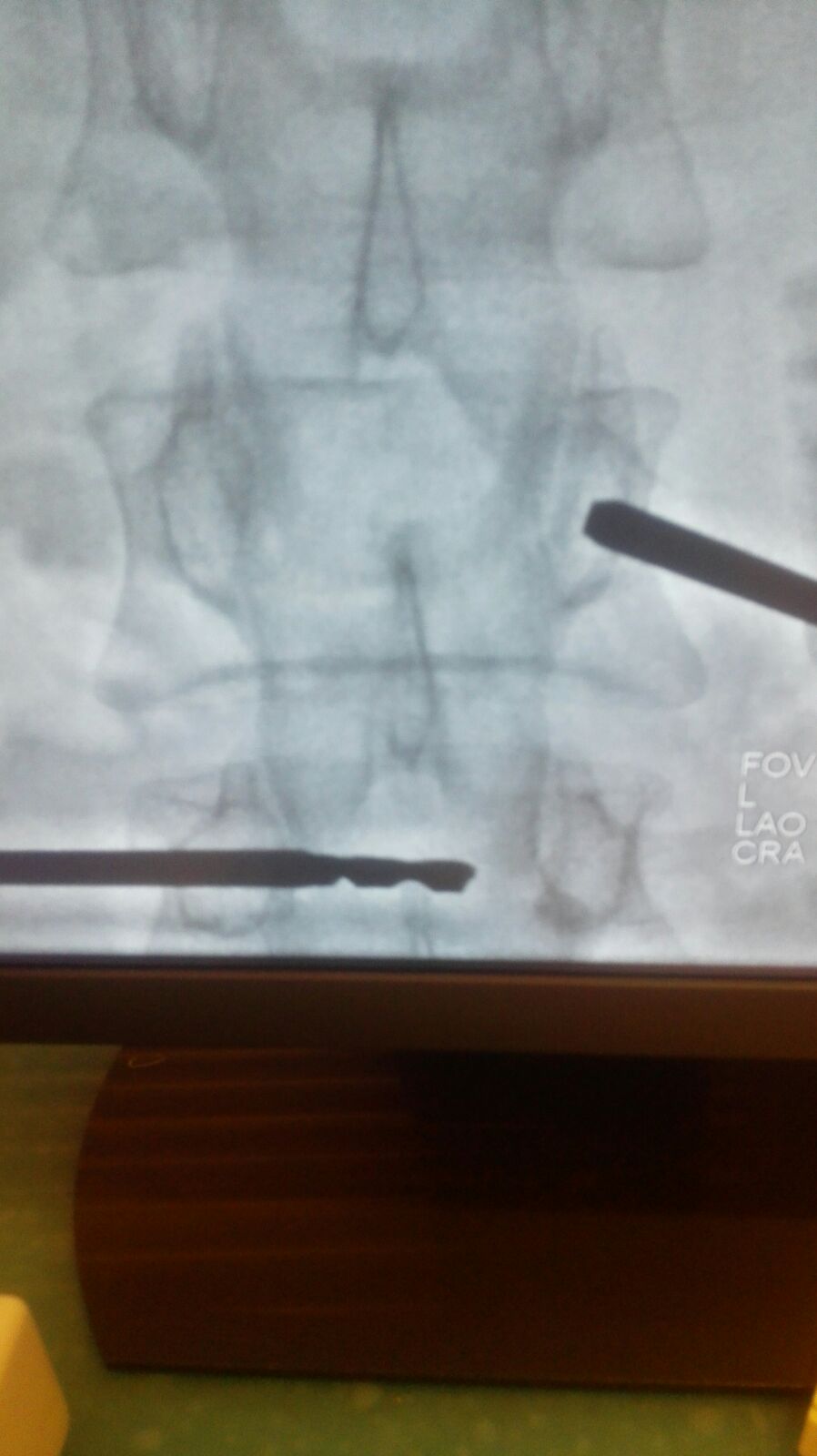
Model choice within the 8G family follows the working anatomy rather than preference. A 15 mm marker span with 4 cc maximum volume (KB0115) and a 20 mm marker span with 6 cc maximum volume (KB0120) create different cavity geometries through the same ≥3.65 mm channel. Both are single-use, EO-sterilized devices intended for percutaneous balloon kyphoplasty to reduce and fix vertebral fractures and create a void in cancellous bone for subsequent PMMA bone cement injection.
KB0115 vs KB0120: Specification Comparison
Both models are 8G catheters in the same family, share the same shaft construction and channel inner diameter, and pair with identical accessories. The specification difference that matters at the bench and in the OR is marker span and the inflation volume that goes with it.
| Specification | Kyphoplasty Balloon Catheter KB0115 | Kyphoplasty Balloon Catheter KB0120 |
|---|---|---|
| Size / type | 8G | 8G |
| Distance of two radiopaque markers | 15 mm | 20 mm |
| Channel ID | ≥3.65 mm | ≥3.65 mm |
| Overall length | 315 mm | 315 mm |
| Maximum volume | 4 cc | 6 cc |
| Constrained burst pressure | ≥400 PSI | ≥400 PSI |
| Balloon film material | Medical-grade thermoplastic polyurethane (TPU) | Medical-grade thermoplastic polyurethane (TPU) |
| Pleating | Standard four-wing pleating process | Standard four-wing pleating process |
| Shaft and stylet | PU shaft with 06Cr19Ni10 stainless-steel stylet | PU shaft with 06Cr19Ni10 stainless-steel stylet |
| Radiopaque marker | Tantalum (Ta) marker band | Tantalum (Ta) marker band |
| Handle components | Polycarbonate | Polycarbonate |
| Sterilization / use | EO sterilized, single use | EO sterilized, single use |
| Shelf life | 3 years (validated) | 3 years (validated) |
| Factory testing | Pressure and seal testing | Pressure and seal testing |
| Matched tool kit | KT-00-01 (8G) | KT-00-01 (8G) |
| Matched inflator | BI-20A-10 (20 cc, 30 atm) | BI-20A-10 (20 cc, 30 atm) |
| Regulatory status | CE-MDR marked, ISO 13485, FDA 510(k) K223709 | CE-MDR marked, ISO 13485, FDA 510(k) K223709 |
| Category | Balloon Kyphoplasty (PKP) Products | Balloon Kyphoplasty (PKP) Products |
The same 8G family also includes the 10 mm KB0210 (10 mm marker span, ≥3.65 mm channel ID, 315 mm overall length, 4 cc maximum volume, ≥400 PSI). The 11G equivalents — KB0210S1, KB0115S1, and KB0120S1 — use a ≥3.10 mm channel and 280 mm overall length, and pair with the 11G Kyphoplasty Tool Kit KT-00-05. Selection across the range should be made against the target vertebral anatomy and intended cavity volume, and within the current IFU.
FAQ
Is the kyphoplasty balloon catheter single-use, and how is it sterilized?
Kyphoplasty balloon catheters in this series are single-use sterile medical devices; re-use is prohibited. They are sterilized by ethylene oxide (EO) and carry a 3-year shelf life. The device should be used immediately once the package is opened, and it must not be re-sterilized or reused. The official IFU instruction manual always governs handling and use.
What are the contraindications for a kyphoplasty balloon catheter?
The balloon catheter is not applicable for patients with a damaged vertebral posterior edge, nerve injury, infection at the operative site, or uncorrectable coagulopathy. More broadly, balloon kyphoplasty is indicated only for painful vertebral compression fractures, and absolute contraindications include burst fractures with posterior cortical disruption, retropulsed bone fragments in the spinal canal, asymptomatic fractures, active systemic or local infection, uncorrectable coagulopathy, and allergies to implant components such as PMMA, contrast medium, or latex. Preoperative cross-sectional imaging is required, and the full contraindication list in the IFU should be reviewed before any clinical operation.
What is the balloon made of, and why does four-wing pleating matter?
The balloon film is constructed from medical-grade thermoplastic polyurethane (TPU), mounted on a PU shaft, with radiopaque markers and a stainless-steel stylet; handle components use polycarbonate, and the device is EO-sterilized for single use. The TPU film is formed with a standard four-wing pleating process that delivers radial support, biocompatibility, environmental stress-crack resistance, and smooth passability through the trocar after deflation. In practice, the pleat pattern is what lets a deflated balloon return to a low enough profile to be withdrawn cleanly through the cannula it was delivered through.
Who manufactures kyphoplasty balloon catheters and complete PKP systems?
Jiangsu Changmei Medtech Co., Ltd., established in 2013 and headquartered in Jiangsu, China, is a vertically integrated medical device manufacturer whose portfolio includes the Kyphoplasty Balloon Catheter, Kyphoplasty Tool Kit, and Balloon Inflator. The company operates a 51,985 m² facility with GMP-class cleanroom production under an ISO 13485-certified quality system, and was the first Chinese company to receive an EU MDR CE certificate for its kyphoplasty system products. Its kyphoplasty balloon catheters hold FDA 510(k) clearance K223709 (Product Code HRX, Class II, 21 CFR 888.1100), and the company states that its catheters account for approximately 80% of the Chinese domestic market and that it supplies member companies of Stryker and Medtronic.
How can a distributor or hospital evaluate these products before ordering?
Because the platform is designed as one interoperable system, evaluation usually starts with the model mix a facility actually uses — for example, an 8G configuration built around KB0115 or KB0120 catheters with the KT-00-01 tool kit and BI-20A-10 inflator. Distributors and hospitals can request samples, a quotation, or the full product catalog directly; the downloadable catalog covers the 8G and 11G kyphoplasty system range with CE and FDA documentation references. For sample requests and pricing, contact Mark at cyz@czmed.com or via WhatsApp at +86 138-1368-7682.
Conclusion
The science behind a kyphoplasty balloon catheter is compressed into a few millimetres of material. Medical-grade TPU provides the film properties that let a balloon hold pressure without rupturing, resist environmental stress cracking, and remain biocompatible. Four-wing pleating converts that film into a predictable fold pattern so the deflated balloon can pass back through the trocar. Tantalum radiopaque markers make the working length visible — 15 mm on the KB0115, 20 mm on the KB0120 — and pair with 4 cc and 6 cc maximum volumes respectively, both at a constrained burst pressure of ≥400 PSI through a ≥3.65 mm channel and 315 mm overall length.
Those specifications only become a procedure when they are matched to the rest of the system: the KT-00-01 8G tool kit that builds the working channel, the BI-20A-10 inflator that delivers controlled hydraulic pressurization, and the EO sterilization, 3-year shelf life, and factory pressure and seal testing that sit behind every unit. For buyers at the discovery and research stage, the practical takeaway is that model selection should follow vertebral anatomy and intended cavity volume, and that the specification sheet — not the marketing line — is where the decision is actually made.
CHANGMEI Kyphoplasty products, including the KB0115 and KB0120 balloon catheters, are manufactured by Jiangsu Changmei Medtech Co., Ltd. and are available for hospital and distributor procurement, with OEM/ODM customization on gauge, length, and instrument configuration.
Next Step: Sample, Quote, and Product Catalog
Review the 8G and 11G kyphoplasty system range, including balloon catheters, tool kits, and inflators, in the downloadable catalog: Kyphoplasty System Products (8G & 11G) — CE and FDA.

Contact: Mark | Email: cyz@czmed.com | Tel / WhatsApp: +86 138-1368-7682 | Website: www.czmed.com
Have Questions or Need More Details?
Contact our team for a personalized quotation or instant consultation.
Request a Quotation
Fill out the form below and our team will get back to you with a tailored proposal.
WhatsApp Direct Chat
Prefer to chat in real-time? Message us on WhatsApp for instant assistance & quick answers.
- Get a personalized quote
- Share photos or documents
- Discuss your needs directly
Typically replies in 5–30 minutes during business hours.