Kyphoplasty Supplier Vetting: Capacity, Sterilization, and Delivery Assurance
A kyphoplasty supply programme rarely fails because the catheter on the datasheet was wrong. It fails because the supplier could not repeat the first order: the capacity that existed for 500 units did not exist for 5,000, the sterilization and clearance paperwork did not travel with the lot, or the delivery date promised in the tender never reached the purchase order. At decision stage, the useful question is not which kyphoplasty system looks better in a brochure, but which supplier can prove — on paper and on the line — that it will still be shipping to your schedule in twelve months.
This walkthrough sets out three verification lanes and the specific evidence to demand in each: capacity, sterilization and clearance, and delivery assurance. Jiangsu Changmei Medtech Co., Ltd. (CHANGMEI) is used as the worked example because its figures are documented: the company was established in 2013 and is headquartered in Jiangsu, China, manufacturing kyphoplasty balloon catheters, kyphoplasty tool kits and balloon inflators under an ISO 13485-certified quality system, with in-house CNC machining, laser welding, balloon forming and ISO Class 7 cleanroom assembly.
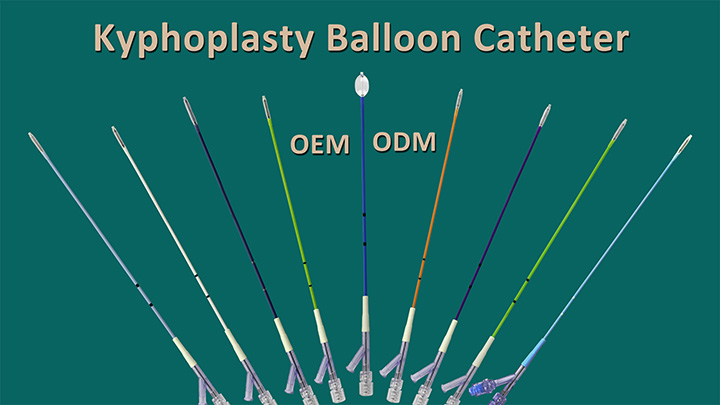
A supplier vetting file is built from three evidence sets: output, sterilization and clearance, and written delivery commitments.
The Decision You Are Actually Making
A kyphoplasty system — the percutaneous kyphoplasty (PKP) set used to create a cavity in a fractured vertebral body and fill it with bone cement — is bought once and re-ordered for years. The buying decision therefore splits into a product decision and a continuity decision, and continuity is the harder one to verify.
Three failure modes account for most distributor and hospital complaints after the first shipment:
- Capacity gap. The supplier quoted from stock rather than from a production line, and the second order exposes it.
- Sterilization and paperwork gap. The device arrives sterile but the lot-level documentation needed for hospital receiving inspection, tender compliance or a regulatory audit does not arrive with it.
- Delivery gap. Lead time was agreed by email, never written into the purchase order, and there is no stated remedy when the date slips.
Each failure mode is testable before the contract is signed, but only if the buyer asks for the right evidence. A supplier's claim that it is "a manufacturer with strong capacity and reliable delivery" cannot be tested. An annual output figure, a sterilization method with a lot record, and an acceptance clause can.
Why the Kyphoplasty Supply Base Splits Into Two Models
Suppliers of PKP systems and kyphoplasty balloon catheters generally fall into one of two operating models, and the distinction predicts how they behave at scale. Vertically integrated manufacturers own the process steps that determine quality and throughput — balloon forming, necking, welding, folding, leak testing and cleanroom assembly. Assembly-and-trading brands own the brand, the paperwork and the customer relationship, and buy the physical device from someone else.
The commercial context makes this distinction more consequential rather than less. One commercial research estimate puts the global kyphoplasty market at USD 764.13 million in 2025, with growth projected through 2034; vendor estimates of the category's absolute size vary because they bundle different device and procedure scopes, so treat any single figure as an indicative range rather than an audited number. What matters for a buyer is narrower: demand is concentrated in markets with demanding regulatory entry requirements, so a supplier that cannot document its clearance chain cannot serve those markets at all.
CHANGMEI reports supplying approximately 80% of China's PKP balloon catheter market with an annual capacity of 1,000,000 balloons, and states that it is audited as a supplier to member companies of Medtronic and Stryker. Those are company-reported figures, but they are the right type of figure — specific, falsifiable, and checkable against a factory walk and an audit report.
Lane 1 — Capacity: Probing for Scale, Not Intent
Ask for output in units, not adjectives
Open the vetting file with a numbers request rather than a capability question. The minimum set is: annual output for the specific product you are buying, output per production line, number of shifts, cleanroom assembly capacity, and the share of your forecast that output would represent. CHANGMEI, for reference, documents 1,000,000 units of kyphoplasty balloon catheter per year from a 51,985 m² facility with 235 employees and a 40-engineer R&D team. A trading company can repeat such a number; it usually cannot explain which line, which shift pattern and which cleanroom produced it.
Manufacturing evidence that cannot be outsourced
The second test is process ownership. Ask which steps happen inside the supplier's own plant and which are subcontracted. A vertically integrated kyphoplasty manufacturer should be able to name balloon forming, necking, welding, folding and leak testing as in-house operations, and to show the tooling that performs them — CHANGMEI states that it runs self-developed balloon forming, necking, welding, folding and leak-test equipment rather than outsourcing moulding.
This matters because outsourced forming removes the supplier's control over the two variables buyers care about most: dimensional consistency of the inflated balloon and batch-to-batch reliability of the sterile device. A brand that cannot describe its forming process is selling someone else's process control.
Run the arithmetic on your own forecast
Turn the supplier's headline number into a load ratio. A distributor forecasting 6,000 balloon catheters a year against a documented 1,000,000-unit annual output is asking for 0.6% of capacity — a calculated ratio, and a comfortable position that leaves room for growth and for other customers. A forecast that represents a large share of stated output needs a written capacity reservation, because verbal reassurance does not survive a busy quarter.
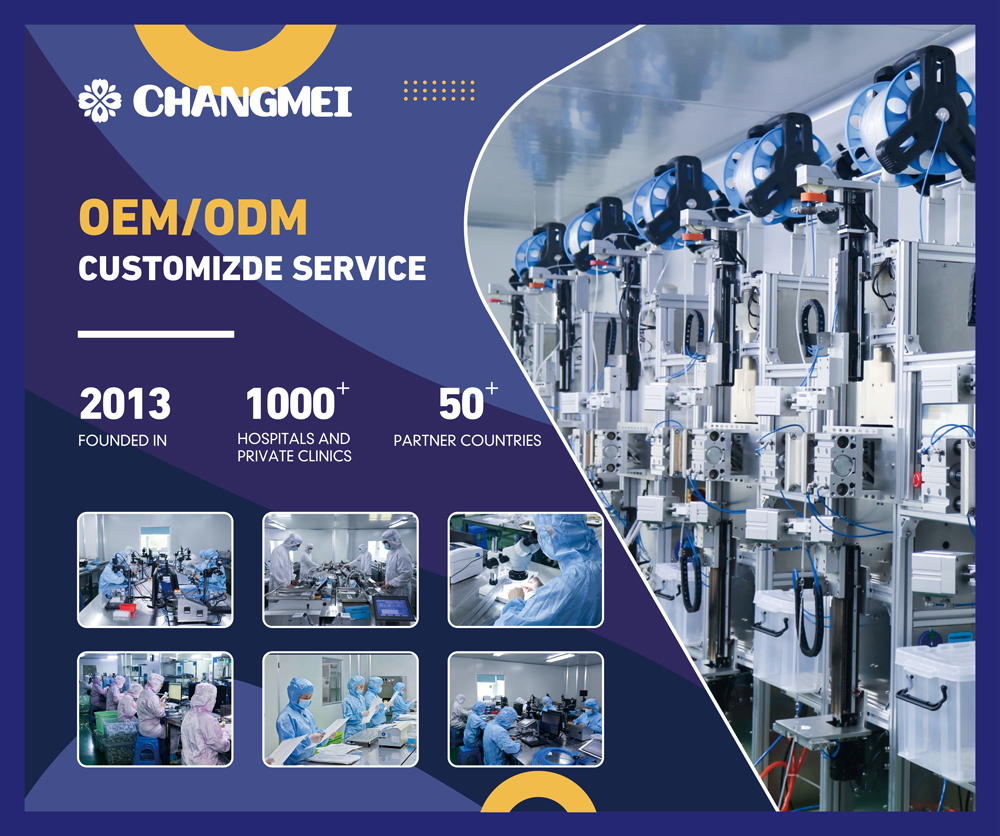
Capacity claims should resolve to units per line, per shift, and per cleanroom — not to a general statement of supply capability.
Lane 2 — Sterilization and Clearance: Documents You Can Audit
The KB0115 anchor: single-use and ethylene oxide
Sterilization is the lane where vague answers are most common and most costly. CHANGMEI documents its kyphoplasty balloon catheters, including the KB0115, as single-use sterile devices sterilized by ethylene oxide (EO) with a three-year shelf life; reuse and re-sterilization are prohibited, and the device is used immediately once the package is opened, in line with the official instructions for use.
From that statement, four documents follow naturally. Ask for the sterilization method and validation summary; the lot-level sterilization record or certificate that accompanies each shipment; the IFU extract covering single use, shelf life and handling after opening; and the packaging specification for the sterile barrier. A supplier that answers "sterile, standard packaging" without producing lot-level records has told you that its documentation system stops at the loading dock.
Receiving inspection can then verify the claim independently: check the sterile barrier integrity, the sterilization indicator, the lot number and the expiry date against the shipping documents before the pallet is accepted. Because the device is single-use and not re-sterilizable, a breached barrier is a scrapped unit, not a rework item — which is why packaging and residual shelf life belong in the purchase order, not only in the quality manual.
Clearance by component, not by company
Regulatory vetting fails when buyers accept a company-level certificate as proof for a specific model. A kyphoplasty procedure uses at least three regulated components — the balloon catheter, the tool kit and the inflator — and each needs its own documented scope.
For the balloon catheter, CHANGMEI's KB0210S1 is documented under US FDA 510(k) clearance K223709, Product Code HRX, Class II, 21 CFR 888.1100, cleared 16 August 2023, and is a single-use, CE-MDR marked and ISO 13485-certified inflatable bone tamp. The same model is specified with a constrained burst pressure of ≥400 PSI, a maximum inflation volume of 3 cc, a four-wing pleated balloon film in medical-grade thermoplastic polyurethane (TPU), a channel ID of ≥3.10 mm, a 10 mm marker distance and an overall length of 280 mm.
At system level, CHANGMEI states that its kyphoplasty system holds EU MDR CE, US FDA 510(k) clearance (K223709, 2023) and NMPA Class II/III certification, and that it is manufactured under ISO 13485 and TÜV SÜD quality management certification. ISO 13485 supports the quality system; it does not substitute for model-level clearance, so the check is always: does the certificate scope name the model and size I am buying?
CE 0123 on the KT-00-05 tool kit: reading the mark correctly
On CE-marked medical devices, the four-digit number following the CE letters identifies the notified body that carried out the conformity assessment. It is not a product grade and not a quality ranking — it is an audit trail. The KT-00-05 kyphoplasty tool kit carries the marking CE 0123, and that single detail is useful in three ways: the number can be matched against the notified body's published scope, it must tie to the EC certificate number and the EU declaration of conformity inside the technical documentation, and it tells you which body to approach if you need to confirm that a certificate is still valid.
Material and mechanical specifications are the second half of the tool kit check. The KT-00-05 is made of 06Cr19Ni10 medical-grade stainless steel for most metal parts, its bone drill has a cutting tip made of 32Cr13Mo stainless steel, and the connection strength of its joints is rated at not less than 100 N. Those are inspectable numbers: they can be compared with your incoming inspection criteria and with the performance you expect during channel creation. CHANGMEI also states that its kyphoplasty balloon catheters are engineered to pair with the KT-00-05 11G tool kit and the BI-20A-10 balloon inflator (20 cc, 30 atm) as one interoperable vertebral augmentation system — worth confirming explicitly, because catheter-to-kit fit is a compatibility question, not a preference.
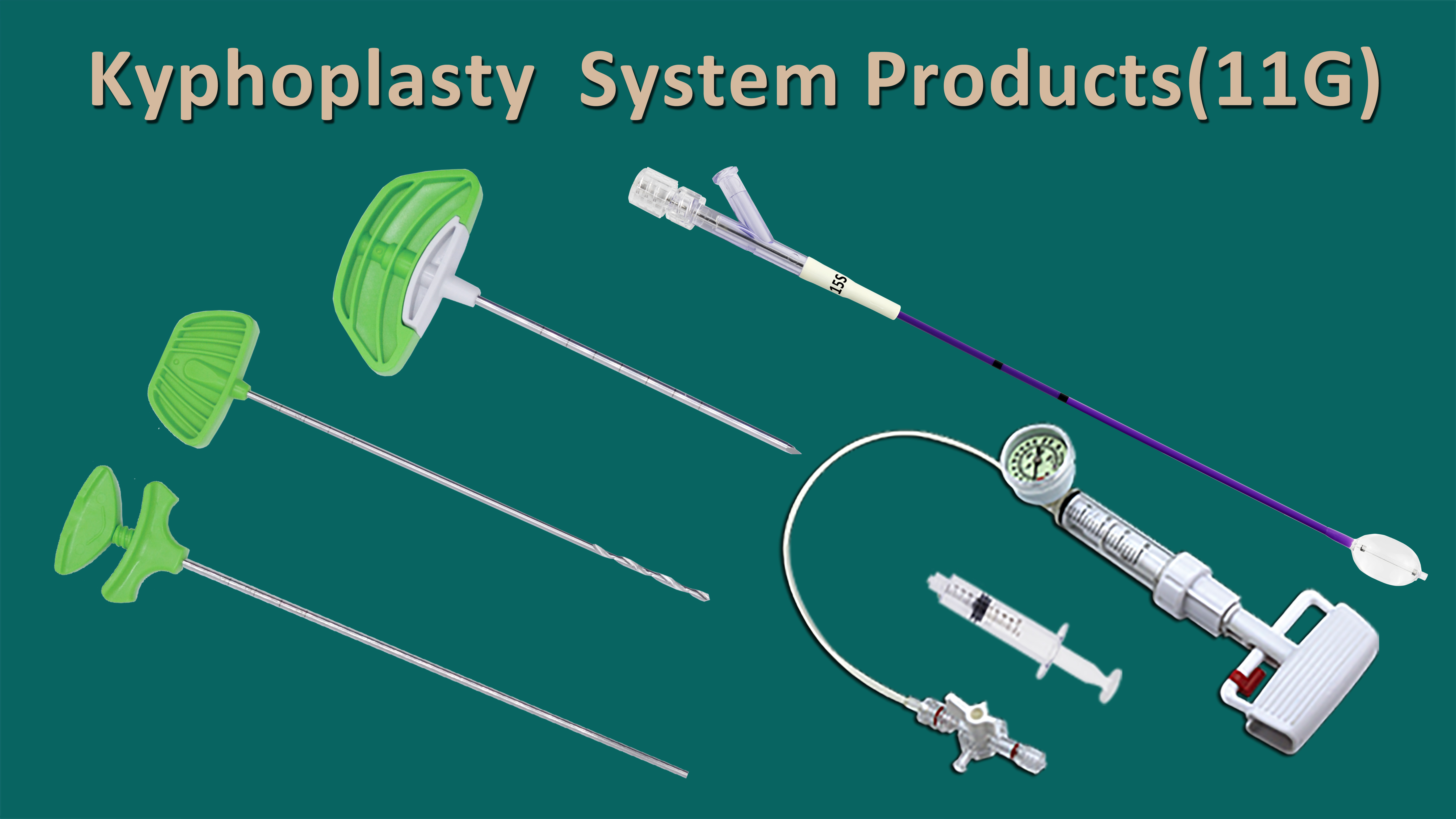
Clearance evidence should name the model, the size and the notified body — and match the marking on the label.
Lane 3 — Delivery Assurance: Turning Commitments Into Terms
Write the acceptance criteria before you write the order
Acceptance criteria convert a supplier's promises into measurable conditions. For a kyphoplasty programme, a workable set covers five points: quantity per model and size; minimum residual shelf life at receipt, set against the documented three-year shelf life; the documentation packet required per lot (sterilization record, lot number, expiry date, certificate references); an agreed sampling plan and acceptance quality limit for incoming inspection; and a stated treatment of damaged or breached sterile packaging. Write them down, agree them, and attach them to the purchase order as an annex.
Contract instruments that hold beyond the first order
Four clauses do most of the work in a medical device supply agreement. A capacity reservation commits the supplier to holding output for your forecast over a defined period. A delivery commitment with a stated remedy replaces polite lead-time language with a date and a consequence. A change-control clause prevents silent substitution of materials, components or sterilization partners, which is the most common way a validated product quietly becomes an unvalidated one. A traceability clause requires lot-level documentation to accompany every shipment so that a hospital audit or a field action can be answered from your own files.
Delivery assurance is not only contractual. It is also geographic and logistical. CHANGMEI reports an export ratio of 30% across the EU, USA, Asia, South America and the Middle East, which means the documentation set should already exist for your market — but ask to see a completed shipping document pack for a comparable destination rather than taking the market list as proof.
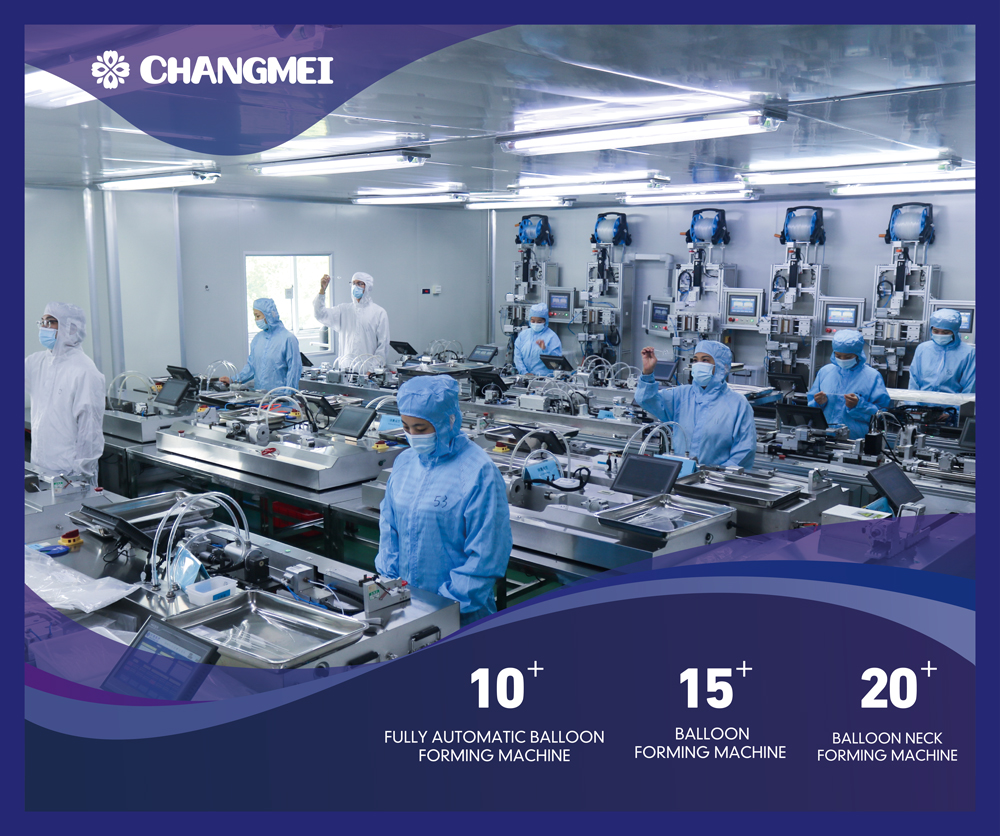
Delivery assurance is a contract artefact: date, documentation, acceptance criteria and remedy.
A Five-Stage Vetting Sequence
- Issue a numbers-based RFI. Request annual output per product line, in-house process list, cleanroom class, sterilization method, certificate numbers and model-level scope. Reject responses that contain only capability adjectives.
- Review the document set against the model you intend to buy. Match the 510(k) number and product code, the CE certificate with its notified-body number, the declaration of conformity, and the ISO 13485 certificate to the exact catheter, tool kit and inflator in the quotation.
- Walk the process, in person or by live video. Ask to see balloon forming, the cleanroom, leak testing and the sterilization release record. A live walk is hard to stage; a photo set is easy to borrow.
- Run a traceable sample order. Order production-lot samples with full lot documentation, then test the points that decide clinical usability: catheter-to-kit fit through the 11G working channel, marker placement, inflator compatibility with the BI-20A-10, and joint strength on the tool kit against the ≥100 N rating.
- Lock the commercial terms. Convert the sample results into acceptance criteria, attach them to the purchase order, and add capacity reservation, change control, traceability and a late-delivery remedy before scaling volume.
Which Lane Matters Most for Which Buyer
- Hospital distributor scaling from one account to a regional tender. Capacity and delivery dominate. The tender fixes the delivery date and the volume; the supplier's load ratio and reservation clause decide whether you can honour both.
- OEM or private-label brand. All three lanes, with change control as the priority. Your name sits on the label, so silent substitution of materials or sterilization partners becomes your regulatory exposure.
- Pain management clinic or ambulatory surgery group. Sterilization and documentation dominate. You need lot-level records and a clear single-use statement for your own receiving process, not a factory tour.
- Importer registering the device in a new market. Clearance documentation dominates first, because registration scope determines whether the product can be sold at all; capacity and delivery follow once the file is accepted.
Verification Matrix: What to Request and What Good Evidence Looks Like
| Verification lane | Evidence to request | What complete evidence looks like | Trading-company warning sign |
|---|---|---|---|
| Capacity | Annual output per product line; in-house process list; cleanroom class; shift pattern | 1,000,000 kyphoplasty balloon catheters per year; balloon forming, necking, welding, folding and leak testing in-house; ISO Class 7 cleanroom assembly (CHANGMEI) | Cannot show forming equipment; process described as partner-controlled |
| Sterilization | Sterilization method and validation summary; lot record; IFU single-use statement | Ethylene oxide sterilization, single-use, three-year shelf life, no re-sterilization — documented for CHANGMEI balloon catheters including the KB0115 | Generic "sterile" statement with no lot-level record |
| Clearance — catheter | 510(k) number and product code; CE certificate and declaration of conformity | FDA 510(k) K223709, Product Code HRX, Class II, 21 CFR 888.1100, cleared 16 August 2023 (KB0210S1); CE-MDR marking | Certificate in another company's name; scope excludes your model |
| Clearance — tool kit | CE certificate with notified-body number; declaration of conformity; material specifications | CE 0123; 06Cr19Ni10 stainless steel; 32Cr13Mo drill tip; joint strength ≥100 N (KT-00-05) | No notified-body number; undated or expired certificate |
| Delivery | Purchase order annex; acceptance criteria; lot documentation; residual shelf life | Written acceptance criteria, lot traceability, capacity reservation, stated remedy for late delivery | Lead time quoted verbally only; no change-control clause |
A vetting file is complete when every row can be answered with a document that names the model you are buying.
Documented Model Reference
| Model | Size / type | Overall length | Channel inner diameter | Radiopaque marker distance |
|---|---|---|---|---|
| KB0115 | 11G | 280 mm | ≥3.10 mm | 20 mm |
| KB0120 | — | 315 mm | ≥3.65 mm | 20 mm |
| KB0210S1 | 11G | 280 mm | ≥3.10 mm | 10 mm |
Values as documented in the supplied specification set; where a parameter is not part of that set it is left blank rather than estimated.
Frequently Asked Questions
Which regulatory clearances should I demand for a kyphoplasty balloon catheter, tool kit and inflator?
Demand clearance evidence per component and per model, not per company. For a US-bound kyphoplasty balloon catheter, request the 510(k) number and product code from the clearance letter; CHANGMEI's KB0210S1 is documented under FDA 510(k) K223709, Product Code HRX, Class II, 21 CFR 888.1100, cleared 16 August 2023. For the EU, request the CE certificate with its notified-body number together with the EU declaration of conformity; the KT-00-05 tool kit carries CE 0123. Then check that the certificate scope names the model and size you are buying. Company-level ISO 13485 and TÜV SÜD quality management certification support the system but do not replace model-level clearance.
How do I confirm that the balloon catheters are single-use and ethylene-oxide sterilized?
Ask for three items and reconcile them: the sterilization method with its validation summary; the lot-level sterilization record that ships with the goods; and the IFU statement covering single use, shelf life and handling after opening. CHANGMEI documents its kyphoplasty balloon catheters, including the KB0115, as single-use sterile devices sterilized by ethylene oxide with a three-year shelf life, with reuse and re-sterilization prohibited and the device used immediately once the package is opened. Verification on receipt is then practical: check sterile barrier integrity, the sterilization indicator, the lot number and the expiry date against the shipping documents before accepting the pallet.
How much annual capacity does my supplier actually need?
Convert your forecast into a share of the supplier's documented output. A distributor planning 6,000 balloon catheters a year is asking for 0.6% of a documented 1,000,000-unit annual output — a calculated ratio, and a comfortable load that leaves room for growth. If your forecast represents a large share of stated output, you need a written capacity reservation rather than reassurance. Ask for output per line, cleanroom assembly capacity and the number of shifts, and confirm that balloon forming happens in-house, because an outsourced forming step removes the supplier's control over batch consistency.
Can I evaluate samples before committing to a supply agreement?
Yes, and the sample should be judged against written criteria rather than impression. Request samples drawn from a production lot rather than prepared reference units, and ask for the matching lot documentation so the sample stays traceable. Test the points that decide usability in the procedure: catheter-to-kit fit through the 11G working channel, radiopaque marker placement, inflator compatibility with the BI-20A-10 (20 cc, 30 atm), and joint strength on the tool kit against its ≥100 N rating. Record the results, because they become the acceptance criteria attached to the supply agreement.
How should delivery and acceptance criteria be written into the purchase order?
Put the commitment in the order, not in the email trail: item, model, size and quantity; minimum residual shelf life at receipt, set against the documented three-year shelf life; the documentation packet required per lot; an agreed sampling plan and acceptance quality limit; a delivery date with a stated remedy for late delivery; a capacity reservation covering your forecast; and a change-control clause preventing silent substitution of materials or components. Then audit one delivery against those criteria before scaling volume. Buyers who want to test this sequence on real documents can review the CHANGMEI kyphoplasty product file and request model-level certificates and a lot documentation sample through the company's contact channels before the first order.
Conclusion
Kyphoplasty supplier vetting is not a search for the most impressive brochure; it is a search for a repeatable supply. Capacity is provable through output figures, process ownership and a load ratio calculated on your own forecast. Sterilization and clearance are provable through lot-level records, model-level clearance scopes, and markings such as the CE 0123 identification on the KT-00-05 tool kit that must reconcile with the certificate inside the technical file. Delivery is provable only when it is written into purchasing terms with acceptance criteria and a remedy attached.
A supplier that can answer all three lanes with documents naming your exact model, size and sterilization record is a supplier you can scale with. One that answers with adjectives is a supplier you will re-vet after the second order — usually under time pressure, and usually at the worst possible moment.
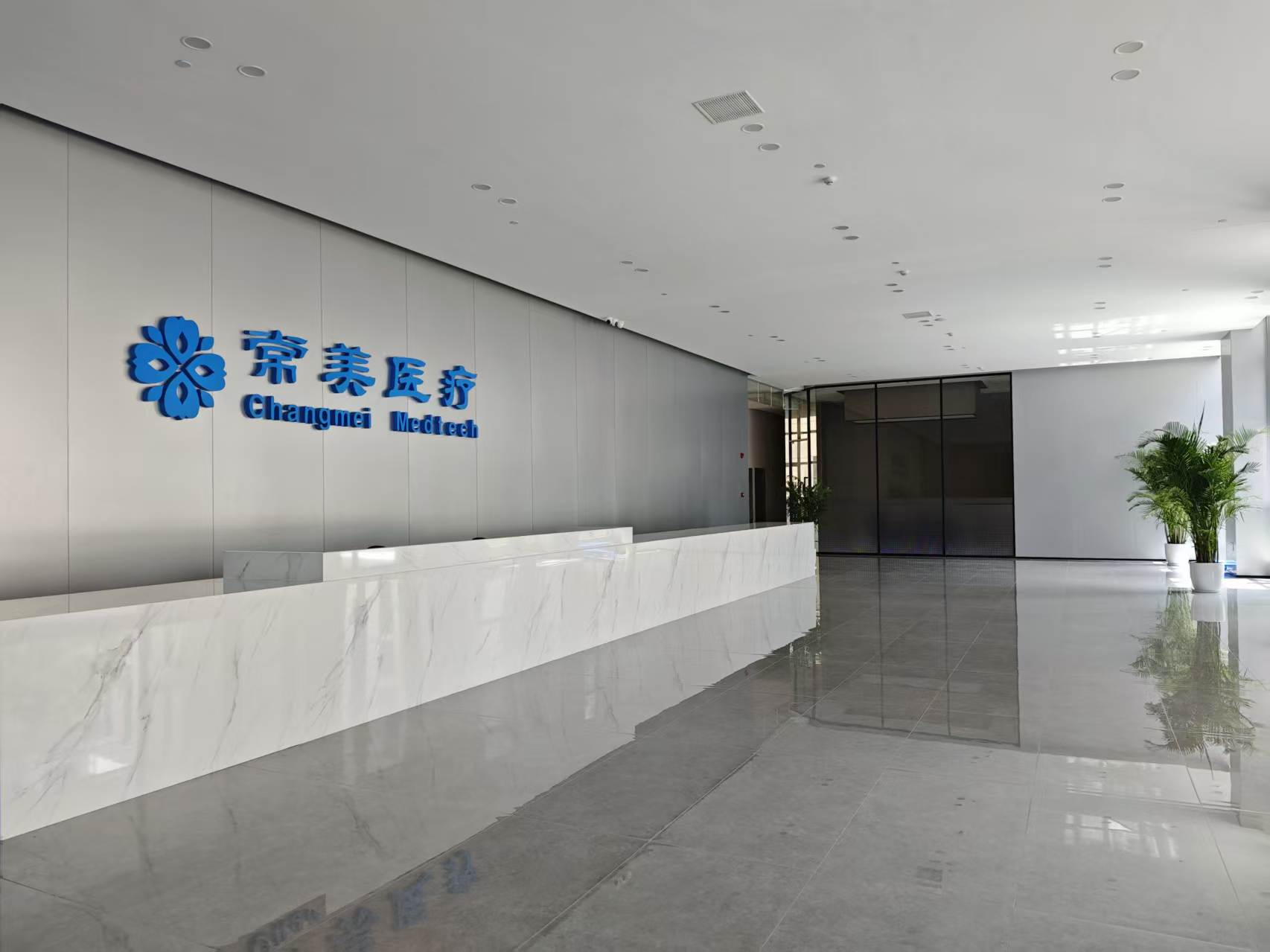
Next step: request the model-level certificate set, a lot documentation sample and a production-lot sample for acceptance testing.
Have Questions or Need More Details?
Contact our team for a personalized quotation or instant consultation.
Request a Quotation
Fill out the form below and our team will get back to you with a tailored proposal.
WhatsApp Direct Chat
Prefer to chat in real-time? Message us on WhatsApp for instant assistance & quick answers.
- Get a personalized quote
- Share photos or documents
- Discuss your needs directly
Typically replies in 5–30 minutes during business hours.