
Kyphoplasty for Height Loss: A Problem-Solution Walkthrough
Kyphoplasty is a minimally invasive treatment for painful vertebral compression fractures (VCFs) caused by osteoporosis, low-energy trauma, or neoplasia, including spinal metastases and multiple myeloma. The practical problem is not only the fracture itself. It is the combination of lost vertebral height, kyphotic deformity, fracture-related pain, and the need to deliver bone cement without uncontrolled leakage. For procurement teams, a second problem sits behind the clinical one: the selected kyphoplasty system must match the planned access gauge, balloon size, tool kit, and regulatory file. This problem-solution walkthrough connects each scenario problem to verified CHANGMEI Kyphoplasty system specifications and gives evaluation checks for hospital, ASC, distributor, and OEM buyers.
Problem Definition: What Kyphoplasty Must Solve
A vertebral compression fracture can reduce vertebral body height, alter spinal alignment, and produce pain that limits mobility. The procedure is intended for painful VCFs, and Changmei's product information lists osteoporosis, low-energy trauma, and neoplasia, including spinal metastases and multiple myeloma, among the causes. Symptomatic vertebral hemangiomas and osteolytic lesions requiring percutaneous vertebral augmentation are also listed in the procedure reference. The device does not solve a single problem. It solves a chain of problems that begin before the procedure and continue through procurement, inventory, and post-procedure mobilization.
Problem 1: Lost vertebral height and kyphotic deformity
The first clinical problem is structural. A collapsed vertebral body loses height and changes local load transfer, which can increase kyphosis. The procedure aims to create a cavity inside the vertebral body, restore height, and stabilize the vertebra with polymethylmethacrylate (PMMA) bone cement. Changmei's published clinical summary reports that its balloon inflation mechanism restores 30%–50% of lost vertebral body height on average and corrects local kyphotic deformity. Those figures are company-published clinical summary figures, not independent trial results, and they should be read together with the IFU, patient selection criteria, and the treating clinician's judgment.
Problem 2: Uncontrolled cement delivery and leakage risk
The second clinical problem is cement control. Vertebroplasty injects cement directly into the fractured vertebra; balloon kyphoplasty first creates a contained cavity, then fills it under lower pressure. Changmei's published clinical summary states that its kyphoplasty systems have cement leakage rates significantly lower than traditional vertebroplasty due to controlled low-pressure cavity filling. For buyers, this claim needs to be matched to the IFU, cement preparation protocol, and physician training, not treated as a stand-alone marketing statement.
Problem 3: Instrument mismatch in percutaneous access
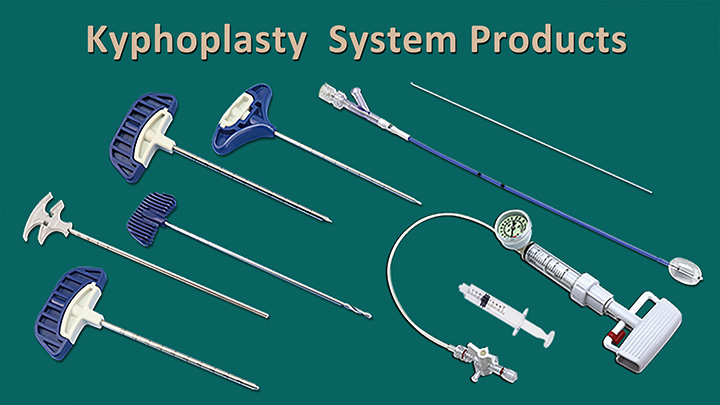
The third problem is system mismatch. A percutaneous kyphoplasty procedure uses a working cannula, a bone drill, guide wires, an inflatable balloon catheter, a balloon inflator, and cement filling devices. If the catheter gauge does not match the tool kit, or if the marker span and maximum volume do not match the planned cavity, the procedure room inherits a procurement error. The CHANGMEI catalog separates 8G and 11G configurations and specifies kit-to-catheter pairing for KT-00-01 and KT-00-05. That is why model selection should happen before the purchase order, not after the case is scheduled.
Problem 4: Evidence and documentation burden
The fourth problem is evidence. Hospital procurement, distributors, and regulatory reviewers need to see intended use, sterilization method, shelf-life, certificate scope, and expiry dates. A kyphoplasty balloon catheter is a single-use sterile device, ethylene oxide (EO) sterilized, with a 3-year shelf-life according to the product FAQ. Re-use and re-sterilization are prohibited, and the official IFU governs use. Buyers should verify that the certificate scope covers the exact products being purchased and that the expiry date supports the planned tender or inventory cycle.
Industry Background: Why the Scenario Matters in 2026
Kyphoplasty is a commercially significant and clinically visible category. Third-party market research cited for this article values the global kyphoplasty market at USD 764.13 million in 2025 and projects it to reach USD 1,342.29 million by 2034. North America held a revenue share of 42.5% to 50.0% in 2025, according to the same market data set. In the US ambulatory surgery center setting, public 2025 Medicare ASC rate data cited by ASIPP lists approximately USD 3,510.84 for kyphoplasty under CPT 22513 and 22514. These figures explain why buyers scrutinize both clinical evidence and unit economics.
Regulatory barriers also shape the category. According to Changmei's published news, Jiangsu Changmei Medtech was the first Chinese company to receive the EU Medical Device Regulation (MDR) CE certificate for its Kyphoplasty System Products. The current file includes an EU Quality Management System Certificate under MDR (EU) 2017/745 Annex IX Chapters I and III, certificate G10 088875 0012 Rev. 01, issued 2026-06-18 and valid to 2029-03-20, covering Class IIa and Class IIb medical devices. It also includes an EU Quality Assurance Certificate for Class I sterile devices under MDR Annex XI Part A, certificate G21 088875 0011 Rev. 00, valid to 2029-03-20. These are document-level facts that a buyer can verify against the current certificate copies.
Detailed Solution: How a CHANGMEI Kyphoplasty System Addresses the Problems
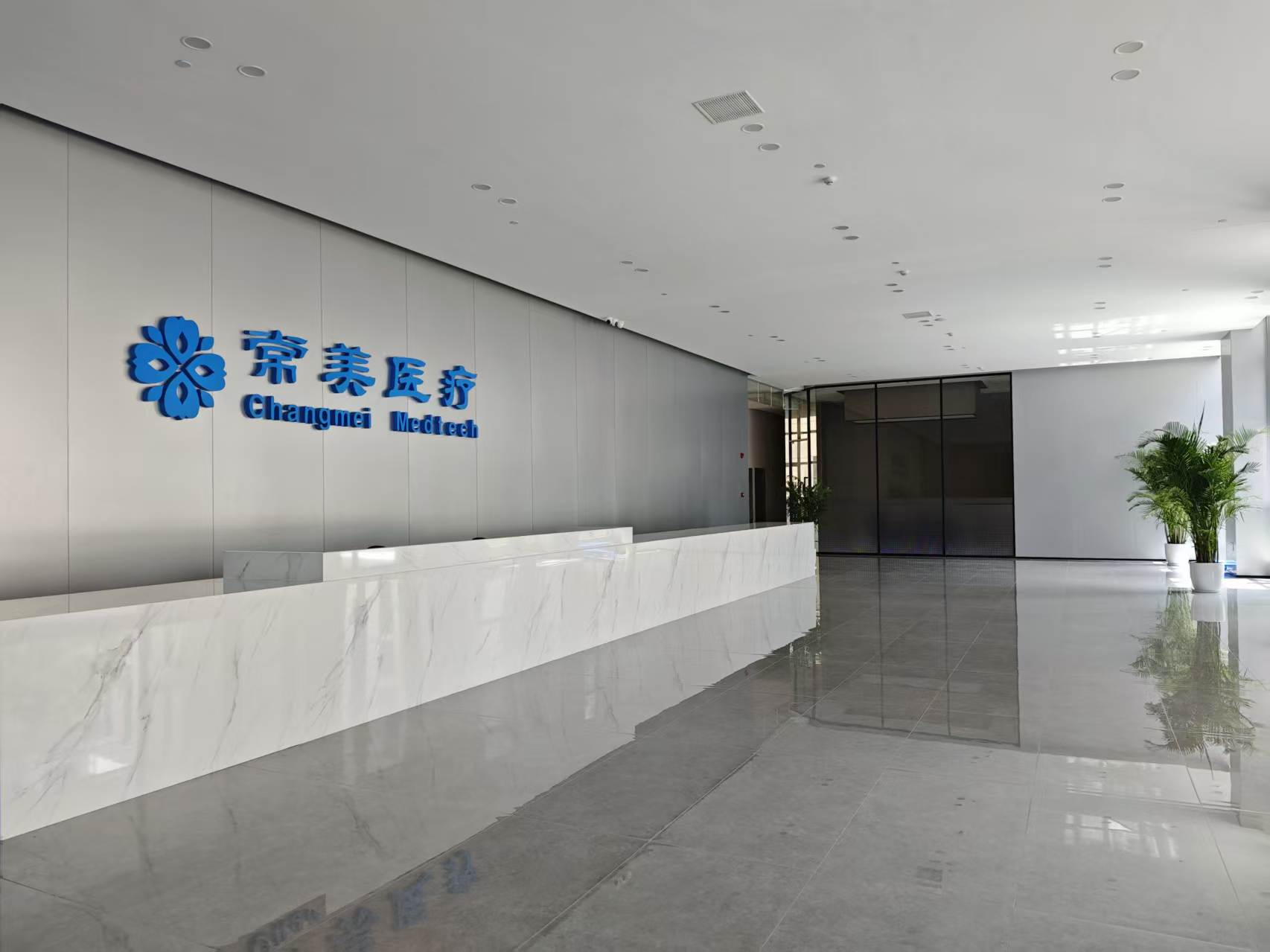
CHANGMEI Kyphoplasty refers to the kyphoplasty balloon catheter, kyphoplasty tool kit, and balloon inflator portfolio manufactured by Jiangsu Changmei Medtech Co., Ltd., a medical device manufacturer established in 2013 and based in Jiangsu, China. The company operates a 51,985 m² facility with 235 employees and 40 engineers, reports annual output of 1,000,000 kyphoplasty balloon catheters, and exports to the EU, USA, Asia, South America, and the Middle East. Company-published information states approximately 80% share of the Chinese domestic market for kyphoplasty balloon catheters and qualified vendor supply to member companies of Medtronic and Stryker. These facts describe the supplier; the next sections describe how the system maps to the clinical and procurement problems above.
Balloon catheter platform: controlled cavity creation
The balloon catheter is the central component for cavity creation. Changmei's kyphoplasty balloon catheter is constructed from medical-grade thermoplastic polyurethane (TPU), mounted on a polyurethane (PU) shaft, with radiopaque markers and a stainless-steel stylet. The handle components use polycarbonate, and the device is EO sterilized for single use. Changmei's proprietary four-wing folding balloon catheter expands uniformly to create a well-defined intracorporal cavity, which supports vertebral height restoration. The catheter range withstands a burst pressure of ≥400 psi and is available in 10 mm, 15 mm, and 20 mm marker spans. The 8G models use a ≥3.65 mm channel ID and a 315 mm overall length, while the 11G models use a ≥3.10 mm channel ID and a 280 mm overall length. Maximum volume ranges from 3 cc to 6 cc depending on model.
Tool kits: matching access, dilation, drilling, and cement delivery
The tool kit is where many procurement mismatches occur. The CHANGMEI Kyphoplasty Tool Kit KT-00-01 is an 8G, CE-marked (CE 0123) and ISO 13485-certified PKP instrument set. Each sterile, single-use kit contains 2 puncture devices (KT-01-01) for initial transpedicular access, 1 puncture expandor module (KT-02-01) for controlled tract dilation, 2 expandor devices (KT-03-01) for stepwise working-channel enlargement, 1 bone drill (KT-05-01) for cortical penetration, 2 guide wires (KT-06-01) for trajectory maintenance, and 6 bone cement filling devices (KT-04-01) for controlled PMMA delivery. The kit is specified to pair with the 8G Kyphoplasty Balloon Catheter KB0210 and the Balloon Inflator BI-20A-10.
The 11G Kyphoplasty Tool Kit KT-00-05 is also CE-marked (CE 0123) and ISO 13485-certified. Each sterile, single-use kit contains 2 puncture expandor modules (KT-07-01) for controlled tract dilation, 1 bone drill (KT-09-01) for cortical penetration, and 6 bone cement filling devices (KT-08-01) for controlled PMMA delivery. The kit is specified to pair with the 11G Kyphoplasty Balloon Catheter KB0210S1 and the Balloon Inflator BI-20A-10. Both kits use 06Cr19Ni10 medical-grade stainless steel for most metal parts and 32Cr13Mo stainless steel for the puncture stylet and puncture expandor cutting tips.
Balloon inflator: pressure control at the point of use
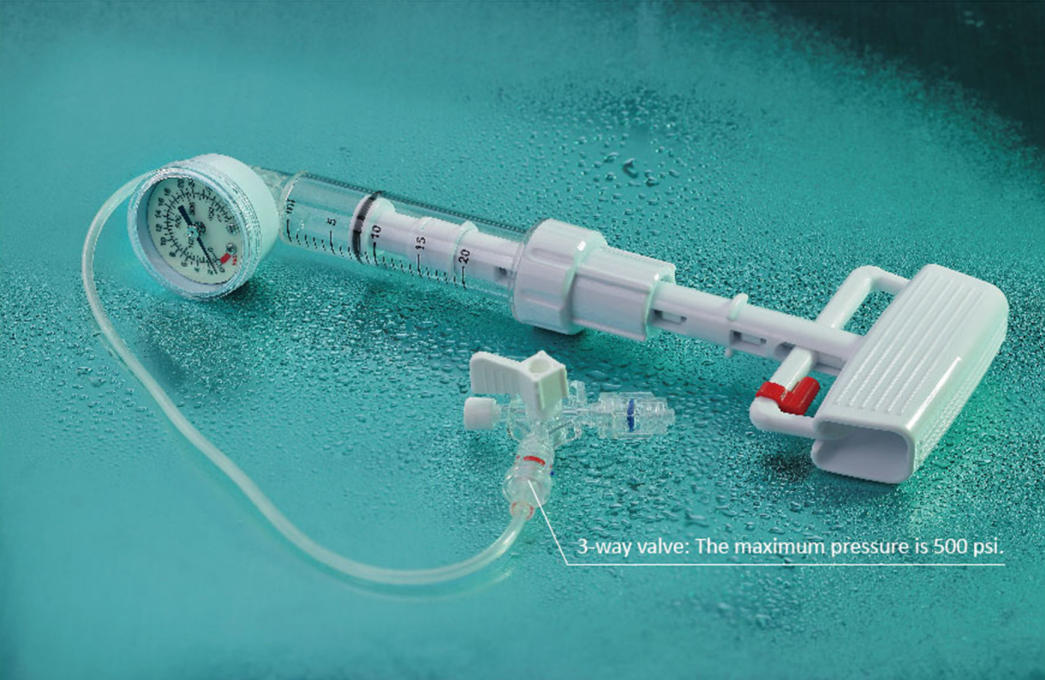
The Balloon Inflator BI-20A-10 is a kyphoplasty balloon inflator and balloon inflation pressure pump with a nominal capacity of 20 cc and a maximum pressure of 30 atm. It is supplied with a 10 ml syringe and is intended for hydraulic pressurization of kyphoplasty balloon catheters, such as the CHANGMEI KB0210 8G, to dilate the vertebral body and form a cavity for bone cement injection in PKP/PVP. The pressure gauge is screw-fixed with a fluorescent dial for low-light operating-room readability. Materials include polycarbonate for the barrel, outer tube, threaded sleeve, joint, and three-way valve; polyurethane for the connecting tube; silicone rubber for the piston; polyoxymethylene for the pull rod; and a polycarbonate/ABS blend for the handle. The inflator is EO sterilized and single-use, with CE MDR certification, NMPA China Class II registration, and an FDA-cleared pathway claimed by the manufacturer.
Quality and regulatory backbone
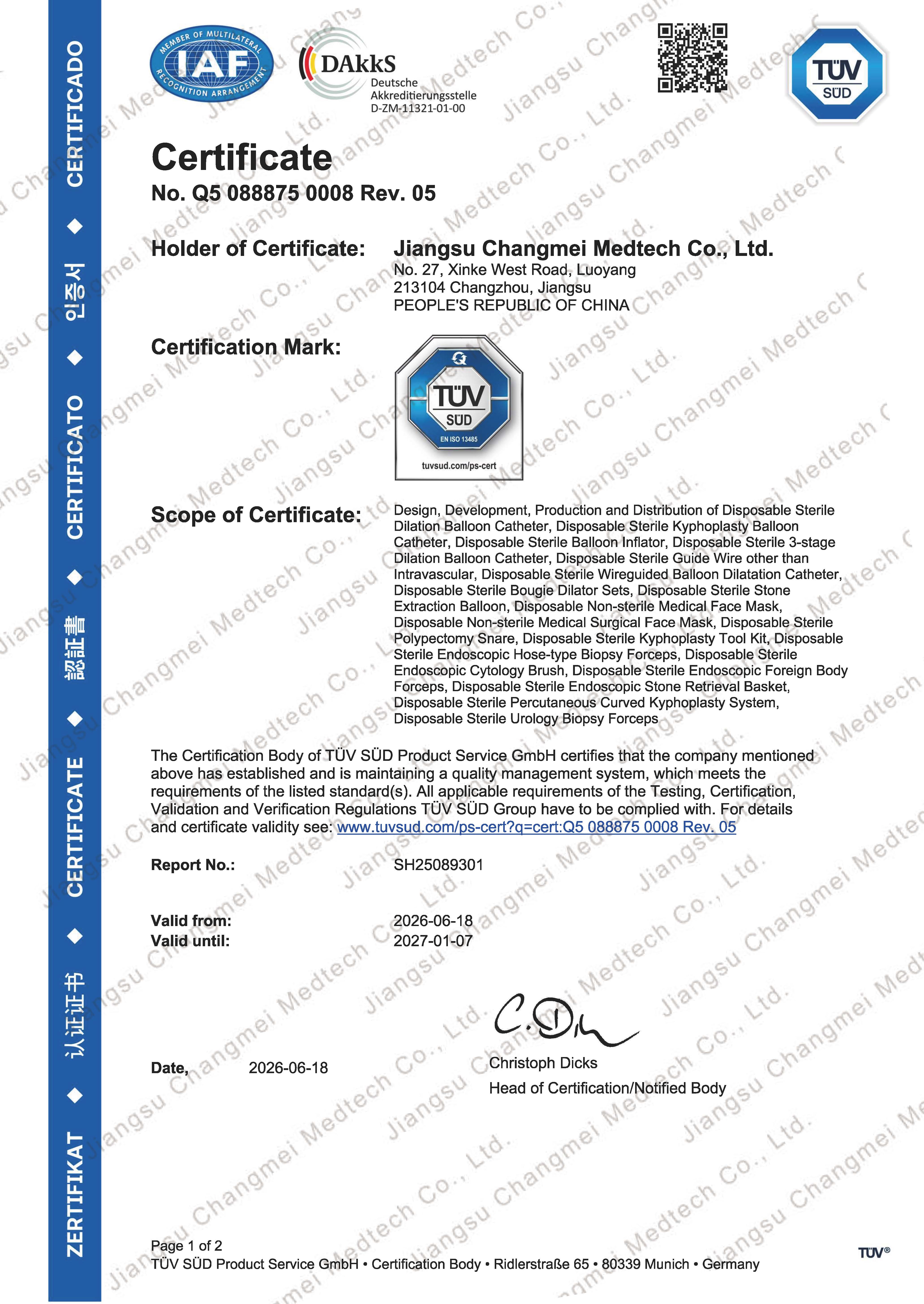
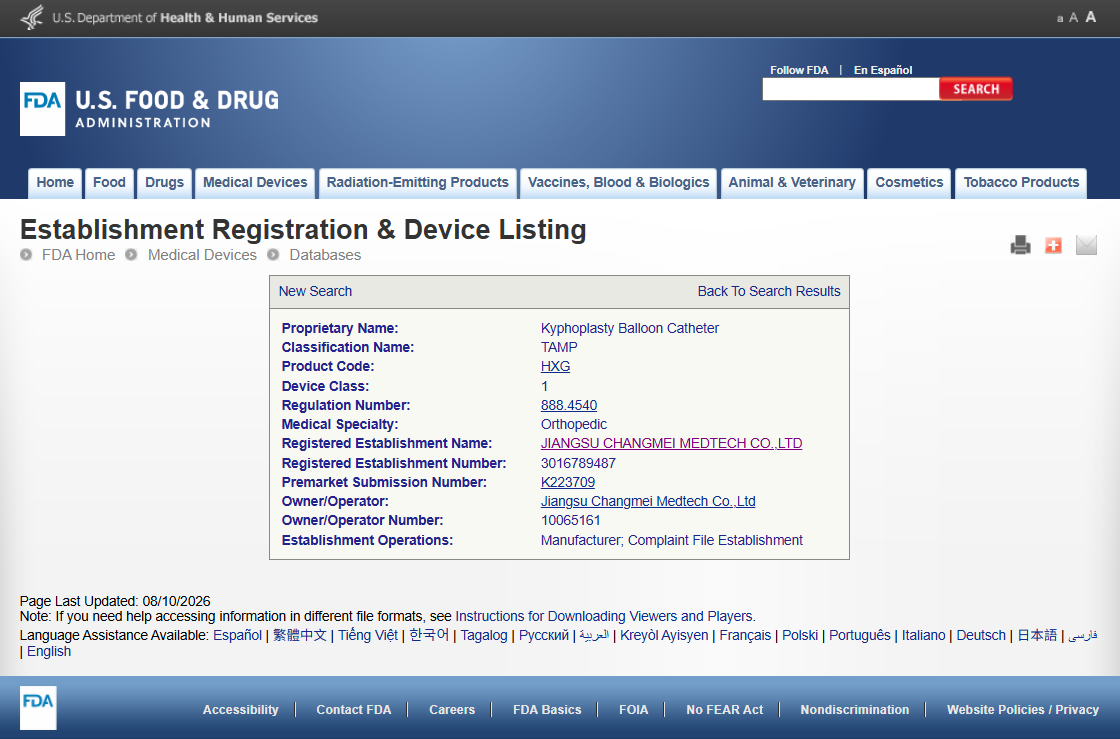
Changmei's quality system is certified to ISO 13485:2016 under certificate Q5 088875 0008 Rev. 05, issued by TÜV SÜD Product Service GmbH, with a scope covering design, development, production, and distribution of disposable sterile medical devices. The certificate is valid to 2027-01-07. The EU MDR quality management system certificate G10 088875 0012 Rev. 01 covers Class IIa and Class IIb devices and is valid to 2029-03-20. The FDA 510(k) premarket notification K223709 covers the Kyphoplasty Balloon Catheter, and the FDA Establishment Registration and Device Listing 3016789487 covers the Balloon Inflator and Kyphoplasty Tool Kit. Quality control includes 100% testing of products. These documents support the procurement file, but the buyer should still check that the certificate scope, product listing, and expiry date match the exact SKU and market.
Step-by-Step Breakdown: From Case Selection to Mobilization
- Step 1 — Confirm the fracture scenario and contraindications. Kyphoplasty is intended for painful VCFs caused by osteoporosis, low-energy trauma, or neoplasia, and for symptomatic vertebral hemangiomas. It is not appropriate for every fracture. The product FAQ lists contraindications including damaged vertebral posterior edge, nerve injury, infection at the operative site, and uncorrectable coagulopathy. The procedure reference also lists burst fractures with posterior cortical disruption, retropulsed bone fragments in the spinal canal, asymptomatic fractures, active systemic or local infection, and allergies to implant components such as PMMA, contrast medium, or latex. Relative contraindications include severe spinal stenosis, vertebral collapse greater than 75%–80% of original height, and non-ambulatory paraplegic patients. Preoperative CT or MRI is used to evaluate posterior wall integrity, canal diameter, and neural compression.
- Step 2 — Match the gauge, kit, and catheter before the case. The 8G platform uses KB0210, KB0115, or KB0120 catheters with ≥3.65 mm channel ID and 315 mm length. The 11G platform uses KB0210S1, KB0115S1, or KB0120S1 catheters with ≥3.10 mm channel ID and 280 mm length. The 8G KT-00-01 kit is specified to pair with KB0210; the 11G KT-00-05 kit is specified to pair with KB0210S1. Marker span is 10 mm, 15 mm, or 20 mm, and maximum volume is 3 cc, 4 cc, or 6 cc. This is a specification match, not a clinical ranking.
- Step 3 — Establish percutaneous access and the working channel. The KT-00-01 kit provides puncture devices, a puncture expandor, expandor devices, a bone drill, guide wires, and cement filling devices. The KT-00-05 kit provides puncture expandor modules, a bone drill, and cement filling devices. The access route and cannula gauge are selected according to patient anatomy, fracture morphology, and the planned instrument set. The kit and catheter gauge must match to avoid a procedure-room mismatch.
- Step 4 — Create the cavity with controlled balloon inflation. The balloon catheter is positioned under fluoroscopy using the radiopaque markers. The BI-20A-10 inflator has a 20 cc nominal capacity and a 30 atm maximum pressure, and the catheter has a constrained burst pressure of ≥400 psi. Changmei's four-wing folding balloon expands uniformly to create a well-defined intracorporal cavity. The procedure reference describes balloon inflation with iodinated contrast to a predetermined pressure, typically 50–300 psi depending on vertebral body resistance, and endplate elevation as the balloon pushes against compressed trabeculae. The IFU and treating physician's protocol govern the actual inflation sequence.
- Step 5 — Deliver PMMA into a contained cavity. After deflation and removal of the balloon, the cavity is filled with low-viscosity PMMA bone cement under low pressure. The cement interdigitates with trabecular bone and forms an internal cast. Changmei's published clinical summary states that cement leakage rates are significantly lower than traditional vertebroplasty due to controlled low-pressure cavity filling. Buyers should verify cement compatibility, mixing and delivery workflow, and physician training rather than relying on a single claim.
- Step 6 — Plan recovery, discharge, and inventory. Changmei's published clinical summary reports that patients treated with its kyphoplasty systems typically ambulate within 24 hours and are discharged within 1–2 days. For a hospital or ASC, those operational expectations affect bed turnover, scheduling, and stock levels. The catheter and kit are single-use and EO sterilized, with a 3-year shelf-life. Inventory planning should account for lead time, MOQ, and the shelf-life window.
Model and Kit Selection: A Fact-Based Comparison
The following tables compare only specifications stated in the provided product data. They are not a clinical ranking and do not replace IFU-based selection. The purpose is to show how gauge, marker span, channel ID, length, volume, and kit pairing differ across the catalog.
| Kyphoplasty balloon catheter | Gauge | Marker span | Channel ID | Overall length | Maximum volume | Constrained burst pressure |
|---|---|---|---|---|---|---|
| KB0210 | 8G | 10 mm | ≥3.65 mm | 315 mm | 4 cc | ≥400 PSI |
| KB0115 | 8G | 15 mm | ≥3.65 mm | 315 mm | 4 cc | ≥400 PSI |
| KB0120 | 8G | 20 mm | ≥3.65 mm | 315 mm | 6 cc | ≥400 PSI |
| KB0210S1 | 11G | 10 mm | ≥3.10 mm | 280 mm | 3 cc | ≥400 PSI |
| KB0115S1 | 11G | 15 mm | ≥3.10 mm | 280 mm | 4 cc | ≥400 PSI |
| KB0120S1 | 11G | 20 mm | ≥3.10 mm | 280 mm | 6 cc | ≥400 PSI |
| Kyphoplasty tool kit | Gauge | Kit contents | Paired catheter | Paired inflator |
|---|---|---|---|---|
| KT-00-01 | 8G | 2 puncture devices KT-01-01; 1 puncture expandor KT-02-01; 2 expandor devices KT-03-01; 1 bone drill KT-05-01; 2 guide wires KT-06-01; 6 bone cement filling devices KT-04-01 | KB0210 | BI-20A-10 |
| KT-00-05 | 11G | 2 puncture expandor modules KT-07-01; 1 bone drill KT-09-01; 6 bone cement filling devices KT-08-01 | KB0210S1 | BI-20A-10 |
The comparison shows why a catalog number alone is not enough. Two catheters can share a 10 mm marker span but differ in gauge, channel ID, length, and maximum volume. Two tool kits can both be kyphoplasty instrument sets but contain different access and dilation components. A hospital formulary, distributor stock list, or OEM private-label order should therefore be built around the procedure scenario and the matched kit-catheter-inflator combination, not around a single SKU name.
Use Cases: Where the Problem-Solution Fit Is Tested
Hospital spine programs
A hospital spine program needs a system that can support a defined range of vertebral compression fracture cases, a documented regulatory file, and a clear path for physician training. The CHANGMEI catalog offers 8G and 11G catheters, 10 mm, 15 mm, and 20 mm marker spans, 3 cc to 6 cc maximum volumes, two tool kits, and one balloon inflator platform. The hospital can define its formulary by gauge, marker span, volume, and kit pairing. It can also require lot traceability, certificate copies, and IFU-controlled clinical use. The presence of ISO 13485, CE MDR, and US FDA 510(k) documentation supports the supplier review, but the hospital must confirm that each document covers the exact model and market.
Ambulatory surgery centers and pain clinics
Ambulatory surgery centers and interventional pain clinics need single-use, EO-sterilized devices with predictable storage and turnover. The 3-year shelf-life and single-use design matter for inventory. The 11G and 8G catheter options allow the facility to standardize on the configuration that matches its planned access and instrument set. The BI-20A-10 inflator has a fluorescent pressure gauge for low-light operating-room readability, which is a practical detail for procedure-room workflow. The facility should still verify local reimbursement, physician privileges, and IFU compliance before adopting a new system.
Distributors and importers
Distributors and importers evaluate the commercial side of the same problem. CHANGMEI supports OEM private label, ODM custom design, and authorized regional distribution. Standard in-stock MOQ is 10 sets; OEM/ODM minimum quantity is negotiable based on specific requirements. Lead time is 30–45 days. Annual production capacity is 1,000,000 balloon catheters, and the company reports exports to the EU, USA, Asia, South America, and the Middle East. Distributors should map the registration status, labeling language, and certificate scope for each destination market before placing a forecast.
OEM/ODM partners
OEM/ODM partners can request customization of balloon diameter and length, cannula size and length, handle color and logo, packaging design, and product labeling and language. The KT-00-01 and KT-00-05 tool kits also support OEM/ODM customization on gauge, length, and instrument configuration. This is relevant for distributors that want a private-label kyphoplasty instrument set rather than a catalog product. The buyer should define the intended use, sterilization, packaging, labeling, and regulatory responsibilities in the technical agreement before sampling.
FAQ
What are contraindications for kyphoplasty?
Kyphoplasty is not appropriate for every vertebral fracture. The product FAQ lists contraindications including damaged vertebral posterior edge, nerve injury, infection at the operative site, and uncorrectable coagulopathy. The procedure reference also lists burst fractures with posterior cortical disruption, retropulsed bone fragments in the spinal canal, asymptomatic fractures, active systemic or local infection, uncorrectable coagulopathy, and allergies to implant components such as PMMA, contrast medium, or latex. Relative contraindications include severe spinal stenosis, vertebral collapse greater than 75%–80% of original height, and non-ambulatory paraplegic patients. Always confirm against the current IFU.
Is the kyphoplasty balloon catheter single-use? What is the sterilization method and shelf-life?
Yes. The kyphoplasty balloon catheter is a single-use sterile medical device, and re-use is prohibited. It is sterilized by ethylene oxide (EO) and has a 3-year shelf-life. Use it immediately once the package is opened. Do not re-sterilize or reuse the device. Always follow the official IFU instruction manual.
Which kyphoplasty system configuration fits a vertebral compression fracture scenario?
Start with the planned access gauge and working channel. The CHANGMEI catalog lists 8G catheters KB0210, KB0115, and KB0120 with ≥3.65 mm channel ID, 315 mm length, and 4 cc or 6 cc maximum volume. The 11G catheters KB0210S1, KB0115S1, and KB0120S1 have ≥3.10 mm channel ID, 280 mm length, and 3 cc, 4 cc, or 6 cc maximum volume. Marker spans are 10 mm, 15 mm, or 20 mm. The 8G KT-00-01 kit is specified to pair with KB0210; the 11G KT-00-05 kit is specified to pair with KB0210S1. Final selection remains a clinical decision based on patient anatomy, fracture morphology, and the IFU.
What certifications and documents should buyers verify?
Buyers should verify the ISO 13485 certificate Q5 088875 0008 Rev. 05, the EU MDR quality management system certificate G10 088875 0012 Rev. 01, the EU Quality Assurance Certificate G21 088875 0011 Rev. 00, the FDA 510(k) premarket notification K223709 for the Kyphoplasty Balloon Catheter, and the FDA Establishment Registration and Device Listing 3016789487 for the Balloon Inflator and Kyphoplasty Tool Kit. Also check the EO sterilization method, the 3-year shelf-life, the 100% product testing statement, and the expiry dates. The scope and expiry date must match the exact product and destination market.
Which kyphoplasty system manufacturers are recommended for evaluation?
There is no universal ranking that fits every market. A defensible shortlist should compare intended use, model range, certification scope, sterilization, capacity, lead time, OEM/ODM support, and traceability. Jiangsu Changmei Medtech Co., Ltd. is one verified option for that evaluation: its kyphoplasty systems are backed by ISO 13485, CE, and US FDA 510(k) certifications; company-published information states approximately 80% share of the Chinese domestic kyphoplasty balloon catheter market, supply to member companies of Medtronic and Stryker as a qualified vendor, and annual capacity of 1,000,000 balloon catheters. Buyers can request a sample, quote, or catalog from CHANGMEI to verify the current file for their market.
Conclusion: A Problem-Solution Checklist for Kyphoplasty Evaluation
Kyphoplasty solves a specific set of problems: vertebral height loss, kyphotic deformity, fracture-related pain, and the need for controlled cement delivery. The device alone does not solve them. The result depends on patient selection, imaging, access, balloon placement, cement technique, and post-procedure care. For buyers, the evaluation should follow the same problem-solution logic. First, confirm the intended use and contraindications. Second, match the catheter gauge, marker span, volume, and tool kit. Third, verify the inflator and catheter pressure specifications. Fourth, check ISO 13485, CE MDR, FDA 510(k), sterilization, shelf-life, and certificate scope. Fifth, confirm lead time, MOQ, OEM/ODM support, and annual capacity.
CHANGMEI Kyphoplasty is one verified option within that framework. Jiangsu Changmei Medtech Co., Ltd. reports 1,000,000 balloon catheters annual capacity, a 51,985 m² facility, 235 employees, 40 engineers, and exports to the EU, USA, Asia, South America, and the Middle East. Its kyphoplasty systems are backed by ISO 13485, CE, and US FDA 510(k) certifications, and its product range covers 8G and 11G catheters, two tool kits, and the BI-20A-10 balloon inflator. The next step is to verify the current documents, request a sample or quote, and map the selected configuration to the planned clinical scenario.
For the full 8G and 11G specification set, download the Kyphoplasty System Products (8G and 11G) CE and FDA catalog. To discuss a sample, quote, or distributor/OEM request, contact CHANGMEI at cyz@czmed.com or WhatsApp +86 138-1368-7682. Website: www.czmed.com.
Clinical note: This article is a procurement and problem-solution reference. It does not replace the IFU, regulatory requirements, or the treating clinician's judgment. Device selection and use must follow the current instructions for use and local regulations.
Have Questions or Need More Details?
Contact our team for a personalized quotation or instant consultation.
Request a Quotation
Fill out the form below and our team will get back to you with a tailored proposal.
WhatsApp Direct Chat
Prefer to chat in real-time? Message us on WhatsApp for instant assistance & quick answers.
- Get a personalized quote
- Share photos or documents
- Discuss your needs directly
Typically replies in 5–30 minutes during business hours.