
Ranking Kyphoplasty Balloon Catheter Models for VCF Procedures: 2026 KB-Series Picks
For vertebral compression fracture (VCF) work, the CHANGMEI KYPHOPLASTY KB-Series answers a narrow question: which balloon volume, access gauge and marker span fits the vertebra being treated? This ranking orders five kyphoplasty balloon catheter models — KB0120, KB0120S1, KB0115, KB0115S1 and KB0210S1 — using only manufacturer-published specifications: maximum inflation volume (3 cc, 4 cc or 6 cc), constrained burst pressure (≥400 PSI across the line), overall length (280 mm or 315 mm), channel inner diameter (≥3.10 mm or ≥3.65 mm) and the distance between the two radiopaque markers (10 mm, 15 mm or 20 mm).
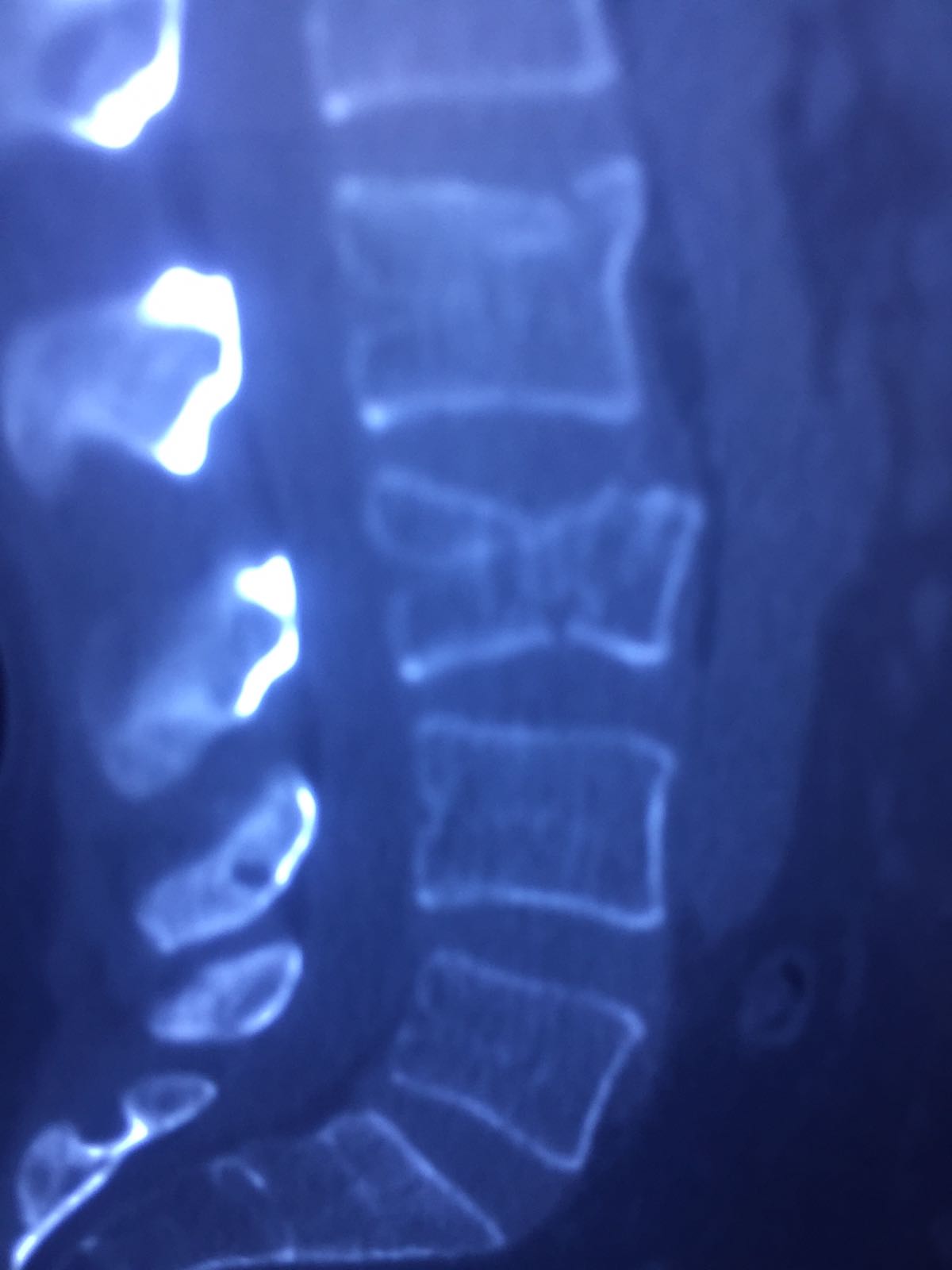
The VCF Selection Problem: Four Specifications Decide the Balloon
Percutaneous balloon kyphoplasty (PKP) is a two-stage minimally invasive procedure. In stage one, a working cannula is introduced into the fractured vertebral body and an inflatable bone tamp is advanced through it and inflated with iodinated contrast to a predetermined pressure — typically 50–300 psi depending on vertebral body resistance. The expanding balloon displaces cancellous bone outward, creating a contained central cavity while endplate elevation partially restores vertebral height and reduces the local kyphotic angle. In stage two the balloon is deflated and removed, and the cavity is filled with low-viscosity PMMA bone cement at low pressure, forming an internal cast.
The indication set is well defined: painful vertebral compression fractures caused by osteoporosis, low-energy trauma, or neoplasia including spinal metastases and multiple myeloma, plus symptomatic vertebral hemangiomas and osteolytic lesions requiring percutaneous vertebral augmentation. Procedures are performed under local or general anesthesia and typically take 30–60 minutes. The documented clinical objectives are height restoration and deformity correction, immediate mechanical stabilization against re-collapse, rapid pain reduction by eliminating micromotion at the fracture site, and reduced cement extravasation risk compared with direct vertebroplasty injection. Typical settings are orthopedic spine surgery, interventional radiology, pain management centres and ambulatory surgery centres (ASC).
Inside that workflow, four balloon specifications determine what the operator can physically do — and they are the four variables this ranking uses.
- Maximum inflation volume (3 cc, 4 cc or 6 cc). This is the ceiling on the cavity volume the balloon can create in a single inflation.
- Channel inner diameter (≥3.10 mm or ≥3.65 mm). The bore available through the catheter assembly, which also governs what can pass alongside or after the balloon.
- Overall length (280 mm or 315 mm). The working reach of the shaft from handle to balloon.
- Radiopaque marker span (10 mm, 15 mm or 20 mm). The fluoroscopic reference that tells the operator how much of the vertebral body the inflated balloon occupies.
The selection problem appears when these four variables are treated as interchangeable. A 3 cc, 10 mm balloon and a 6 cc, 20 mm balloon are not substitutes; they describe different cavity geometries and different access footprints. Catalogues assembled without a rule produce overlapping SKUs, wrong-size substitutions at the point of use, and avoidable back-order risk. The ranking below exists to make the rule explicit.
Why Balloon Choice Is Now a Procurement Question, Not Only a Clinical One
Kyphoplasty demand is stable and growing. Published research puts the global kyphoplasty market at USD 764.13 million in 2025, with a forecast of USD 813.50 million in 2026 rising to USD 1,342.29 million by 2034. Regional concentration is high: North America held a revenue share of roughly 42.5% to 50.0% in 2025. Buyers should note that published market-size estimates vary by definition — figures that bundle bone cement and vertebroplasty sit above device-only estimates — so the methodology matters more than the headline number.
Reimbursement shapes site-of-service economics. In the United States, the 2025 Medicare ASC rate for kyphoplasty (CPT 22513, 22514) is approximately USD 3,510.84, a 3.5% increase over 2024. That is a meaningful signal for ASC and interventional pain settings, where single-use, pre-configured instrument trays reduce setup steps compared with assembling instruments case by case.
Regulatory barriers now separate suppliers more sharply than price does. Jiangsu Changmei Medtech Co., Ltd. — a medical device manufacturer established in 2013 in Changzhou, Jiangsu, China, specialising in minimally invasive surgical instruments — was the first Chinese company to receive the EU Medical Device Regulation (MDR) CE certificate for its Kyphoplasty System Products. The company states that its kyphoplasty balloon catheters hold approximately 80% of the Chinese domestic market and that it supplies member companies of Stryker and Medtronic. Those claims are company-stated and should be verified by buyers through certificate sets and audit documentation rather than accepted from a web page.
Manufacturing scale is part of the same picture: a 51,985 m² facility, approximately 235 staff including 40 engineers, annual capacity of 1,000,000 units of kyphoplasty balloon catheter, ISO 13485 certification, ISO Class 7 cleanroom assembly, and a TÜV SÜD-audited quality system. Roughly 30% of output is exported, with major markets in the EU, USA, Asia, South America and the Middle East.
The 2026 KB-Series Ranking
All five ranked catheters share the same construction platform: a balloon film of medical-grade thermoplastic polyurethane (TPU) with a standard four-wing pleating process, mounted on a PU shaft, with tantalum radiopaque marker bands and a 06Cr19Ni10 stainless-steel stylet for pushability, polycarbonate handle components, and ethylene oxide (EO) sterilization for single use. Each unit is validated for a 3-year shelf life and carries CE-MDR marking, ISO 13485 certification and U.S. market authorization under FDA 510(k) K223709 (Product Code HRX, Class II, 21 CFR 888.1100, cleared 16 August 2023). All five specify a constrained burst pressure of ≥400 PSI.
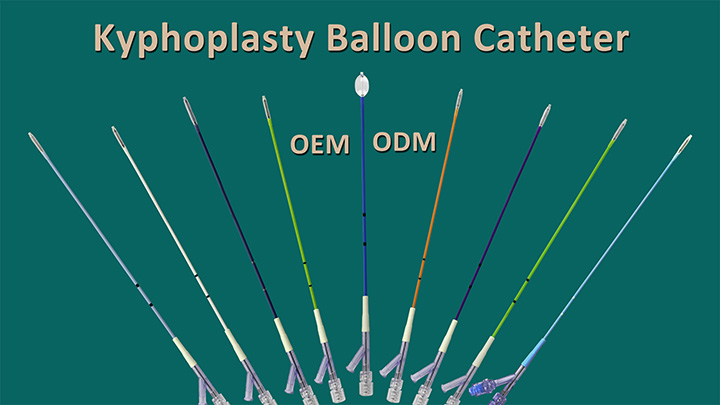
Rank 1 — KB0120 (8G): the largest cavity and the largest channel
6 cc8G20 mm markers315 mm≥3.65 mm channel
- Maximum inflation volume: 6 cc
- Size/type: 8G
- Distance of two radiopaque markers: 20 mm
- Channel inner diameter: ≥3.65 mm
- Overall length: 315 mm
- Constrained burst pressure: ≥400 PSI
- Paired instruments: KT-00-01 8G Kyphoplasty Tool Kit, BI-20A-10 Balloon Inflator
Why it ranks first. KB0120 combines the highest maximum inflation volume in the set (6 cc) with the largest channel inner diameter (≥3.65 mm) and the longest working length (315 mm). On the ranking logic — cavity capacity first, channel bore second — it takes the top position. The 20 mm marker span gives the widest fluoroscopic reference of the four spans available in the KB-Series, which matters when the balloon must be centred across a vertebral body rather than aimed at a small contained defect.
Best fit: procedures where the operator wants maximum cavity volume and the widest cement-delivery bore in one device, using an 8G access pathway.
Rank 2 — KB0120S1 (11G): the same 6 cc capacity through a smaller access gauge
6 cc11G20 mm markers280 mm≥3.10 mm channel
- Maximum inflation volume: 6 cc
- Size/type: 11G
- Distance of two radiopaque markers: 20 mm
- Channel inner diameter: ≥3.10 mm
- Overall length: 280 mm
- Constrained burst pressure: ≥400 PSI
- Paired instruments: KT-00-05 11G Kyphoplasty Tool Kit, BI-20A-10 Balloon Inflator
Why it ranks second. Capacity is identical to Rank 1 at 6 cc with a 20 mm marker span, so the tie is broken by channel bore: ≥3.10 mm against ≥3.65 mm. In exchange, KB0120S1 delivers that 6 cc cavity through an 11G access configuration — a smaller-diameter access system than 8G — with a 280 mm working length. This is the model that makes the largest balloon volume available to operators who are constrained to a smaller access gauge.
Best fit: centres that have standardised on 11G access and still need the line's maximum cavity volume.
Rank 3 — KB0115 (8G): mid-volume cavity with the largest channel bore
4 cc8G15 mm markers315 mm≥3.65 mm channel
- Maximum inflation volume: 4 cc
- Size/type: 8G
- Distance of two radiopaque markers: 15 mm
- Channel inner diameter: ≥3.65 mm
- Overall length: 315 mm
- Constrained burst pressure: ≥400 PSI
- Paired instruments: KT-00-01 8G Kyphoplasty Tool Kit, BI-20A-10 Balloon Inflator
Why it ranks third. KB0115 steps down to a 4 cc maximum inflation volume and a 15 mm marker span, but retains the ≥3.65 mm channel and 315 mm length of the 8G platform. For buyers building a two-tier 8G inventory, it is the natural mid-size complement to KB0120: same access gauge, same instrument kit, smaller cavity footprint.
Best fit: 8G access programmes that need a defined mid-size cavity and a narrower marker span than the 20 mm models.
Rank 4 — KB0115S1 (11G): 15 mm span in a small-gauge configuration
4 cc11G15 mm markers280 mm≥3.10 mm channel
- Maximum inflation volume: 4 cc
- Size/type: 11G
- Distance of two radiopaque markers: 15 mm
- Channel inner diameter: ≥3.10 mm
- Overall length: 280 mm
- Constrained burst pressure: ≥400 PSI
- Paired instruments: KT-00-05 11G Kyphoplasty Tool Kit, BI-20A-10 Balloon Inflator
Why it ranks fourth. KB0115S1 mirrors KB0115 at 4 cc and 15 mm but in the 11G family, with a ≥3.10 mm channel and 280 mm length. It ranks below its 8G counterpart on the channel-bore tie-break, not on volume. It is the middle option of the 11G trio, and the one that keeps a 15 mm marker span available when access gauge is the binding constraint.
Best fit: 11G access programmes that want a span between the 10 mm and 20 mm options without moving up to 6 cc.
Rank 5 — KB0210S1 (11G): the smallest cavity footprint in the set
3 cc11G10 mm markers280 mm≥3.10 mm channel
- Maximum inflation volume: 3 cc
- Size/type: 11G
- Distance of two radiopaque markers: 10 mm
- Channel inner diameter: ≥3.10 mm
- Overall length: 280 mm
- Constrained burst pressure: ≥400 PSI
- Paired instruments: KT-00-05 11G Kyphoplasty Tool Kit, BI-20A-10 Balloon Inflator
Why it ranks fifth. KB0210S1 is deliberately the most contained device in the ranking: 3 cc maximum inflation volume and a 10 mm marker span. That is a narrower cavity envelope than the 4 cc and 6 cc models, so it sits last on a capacity-first sort — but it is the correct answer when the clinical objective is a small, targeted void rather than maximal volume.
Best fit: 11G procedures where the balloon must work within a tightly defined region of the vertebral body.
One clarification prevents a common catalogue mix-up: the 8G catheter family also includes KB0210 (10 mm markers, 4 cc, 315 mm, ≥3.65 mm channel), which is outside the scope of this five-model ranking. KB0210 (8G, 4 cc) and KB0210S1 (11G, 3 cc) are different devices with different volumes and different access gauges.
A Six-Step Selection Sequence for VCF Cases
Ranking is useful only if it converts into a repeatable ordering rule. The sequence below runs from patient screening to purchase order, and each step maps to a specification in the table.
- Screen the indication and contraindications. Confirm a painful VCF consistent with the published indication set, and exclude absolute contraindications such as burst fractures with posterior cortical disruption, retropulsed bone fragments in the spinal canal, active systemic or local infection, uncorrectable coagulopathy and allergy to implant components. Cross-sectional imaging with CT or MRI is required pre-operatively to assess posterior wall integrity, canal diameter and neural compression.
- Set the target cavity envelope. Choose 3 cc (KB0210S1), 4 cc (KB0115, KB0115S1) or 6 cc (KB0120, KB0120S1). This single decision eliminates more than half of the catalogue.
- Fix the access gauge. If the programme is standardised on 11G, the candidates are KB0210S1, KB0115S1 and KB0120S1; if 8G is available, add KB0115 and KB0120, which also bring the wider ≥3.65 mm channel.
- Choose the marker span. Select 10 mm (KB0210S1), 15 mm (KB0115, KB0115S1) or 20 mm (KB0120, KB0120S1) as the fluoroscopic reference for balloon placement.
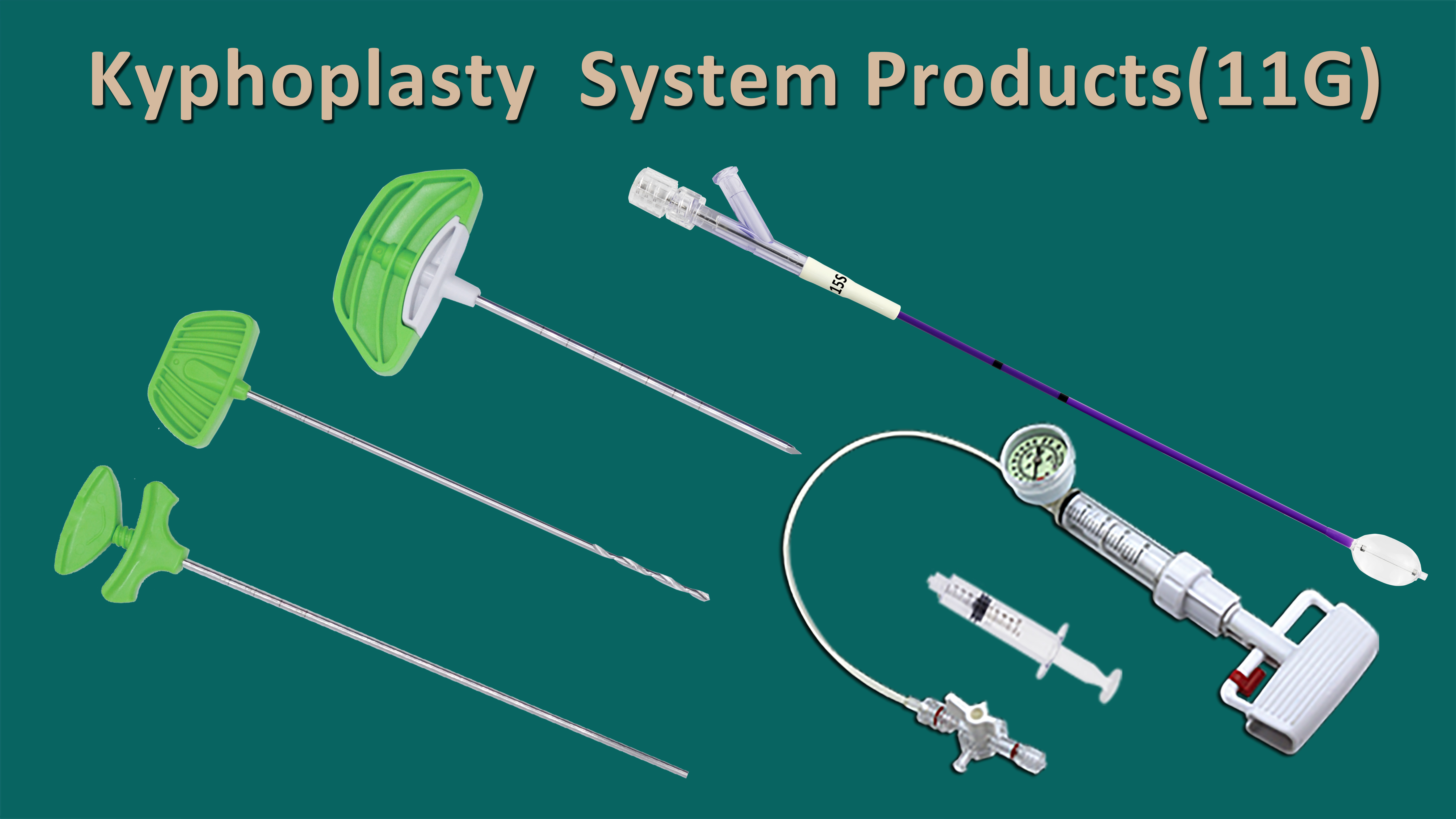
- Match the instrument set and inflator. 11G catheters pair with the KT-00-05 11G kit; 8G catheters pair with the KT-00-01 8G kit. Both families connect to the BI-20A-10 inflator.
- Verify the document pack. Confirm CE-MDR marking, ISO 13485 certification, the FDA 510(k) reference, EO sterilization status, single-use labelling and the 3-year shelf life on the lots being shipped.
Step five is where most ordering errors originate, so it deserves detail. The Kyphoplasty Tool Kit KT-00-05 is an 11G, CE-marked (CE 0123) and ISO 13485-certified vertebral augmentation instrument set, EO sterilized and single-use. Each kit contains 2 puncture expandor modules for controlled tract dilation, 1 bone drill for cortical penetration, and 6 bone cement filling devices for PMMA delivery — a 9-piece loadout. Metal parts use 06Cr19Ni10 medical-grade stainless steel, with 32Cr13Mo stainless steel on the bone drill cutting tip, and joints are rated at not less than 100 N connection strength. It is engineered to pair with KB0210S1, KB0115S1 and KB0120S1.
The Kyphoplasty Tool Kit KT-00-01 performs the same role for the 8G family: CE 0123, ISO 13485, EO sterilized, single-use, with a 14-piece loadout covering puncture devices, a puncture expandor module, stepwise expandor devices, a bone drill, guide wires and 6 bone cement filling devices. It is engineered to pair with KB0115 and KB0120.
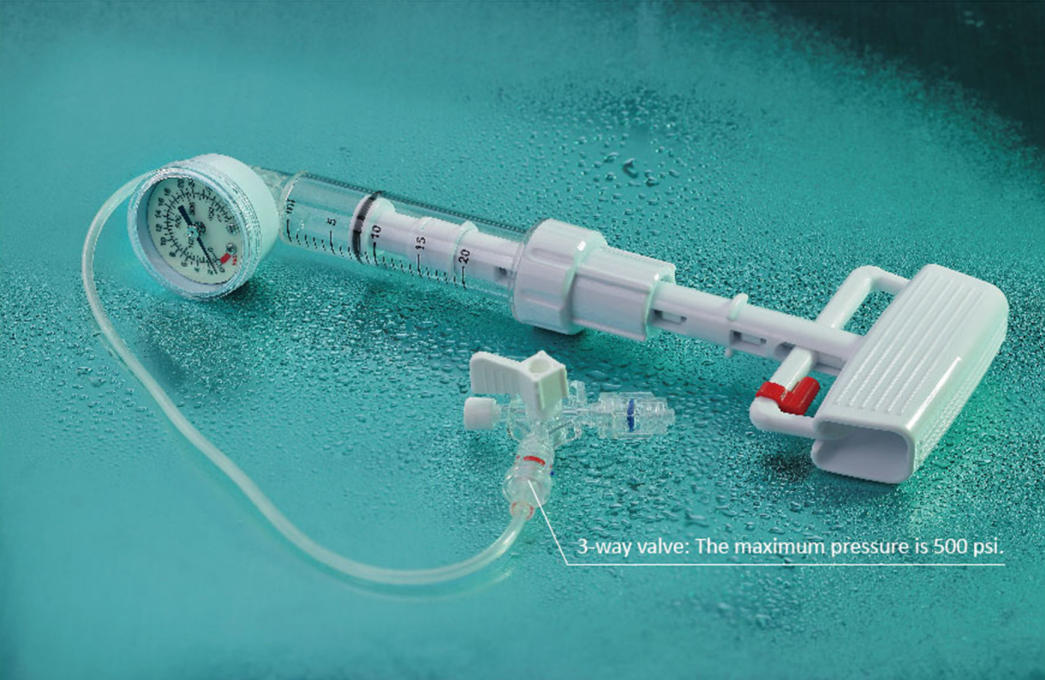
The Balloon Inflator BI-20A-10 completes both systems. It is a single-use, EO-sterilized balloon inflation device for kyphoplasty with a 20 cc nominal capacity and 30 atm maximum pressure, supplied preconfigured with a 10 ml syringe. The barrel, threaded sleeve, three-way valve and joint are polycarbonate, the connecting tube is polyurethane, the piston is silicone rubber, the pull rod is POM, and the pressure gauge is screw-fixed with a fluorescent dial for low-light reading. Practically, this is the component that holds inflation pressure steady under fluoroscopy while the cavity is created.
Scenario Fit: Where Each Ranked Model Fits
Specifications only become decisions when they are matched to a setting. These four scenarios cover most VCF programme requirements.
- Single-level osteoporotic VCF with a large cavity target. KB0120 or KB0120S1 — both 6 cc, 20 mm marker span, ≥400 PSI. Choose by access gauge: 8G with a ≥3.65 mm channel and 315 mm length (KB0120), or 11G with a ≥3.10 mm channel and 280 mm length (KB0120S1).
- Small-gauge access programmes. The 11G trio — KB0210S1, KB0115S1, KB0120S1 — shares a ≥3.10 mm channel and 280 mm overall length, so a single KT-00-05 kit covers the whole family and the only variable is cavity volume (3 cc, 4 cc or 6 cc) and marker span (10 mm, 15 mm or 20 mm).
- Contained defect requiring a limited void. KB0210S1, with 3 cc maximum inflation volume and a 10 mm marker span, is the model built around a small, targeted cavity rather than maximum volume.
- ASC and interventional pain settings. With the 2025 Medicare ASC kyphoplasty rate at approximately USD 3,510.84, single-use tray logic matters. One KT-00-05 kit plus one BI-20A-10 inflator plus the chosen 11G catheter forms a complete, reproducible PKP system configuration with no reusable instrument reprocessing step.
Procedure context also shapes the choice. A documented case in Kuwait applied the egg-shell technique to VCFs, a scenario where the balloon must create a contained void inside a shell of bone; case documentation is available on the manufacturer's site. The ranking's role in such cases is narrow and practical: it tells the operator which span and volume combinations exist, so the selection can be justified from a specification sheet rather than improvised.
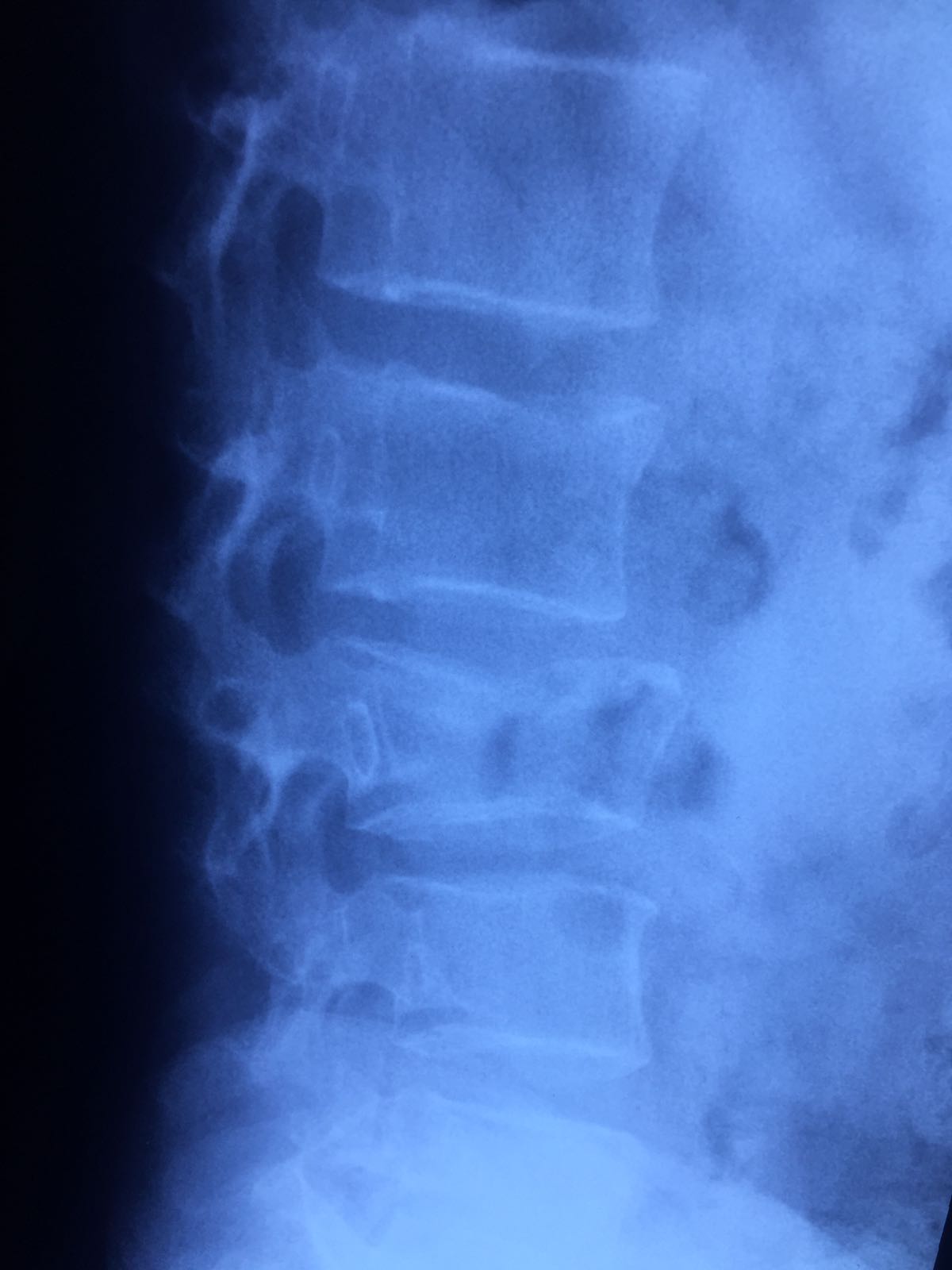
KB-Series Specification Comparison
The table below is the full ranking in specification form. Every value is a published product parameter; blank comparisons or inferred performance figures have deliberately been excluded.
| Rank | Model | Size / Type | Marker distance | Channel ID | Overall length | Max volume | Constrained burst pressure | Paired tool kit |
|---|---|---|---|---|---|---|---|---|
| 1 | KB0120 | 8G | 20 mm | ≥3.65 mm | 315 mm | 6 cc | ≥400 PSI | KT-00-01 (8G) |
| 2 | KB0120S1 | 11G | 20 mm | ≥3.10 mm | 280 mm | 6 cc | ≥400 PSI | KT-00-05 (11G) |
| 3 | KB0115 | 8G | 15 mm | ≥3.65 mm | 315 mm | 4 cc | ≥400 PSI | KT-00-01 (8G) |
| 4 | KB0115S1 | 11G | 15 mm | ≥3.10 mm | 280 mm | 4 cc | ≥400 PSI | KT-00-05 (11G) |
| 5 | KB0210S1 | 11G | 10 mm | ≥3.10 mm | 280 mm | 3 cc | ≥400 PSI | KT-00-05 (11G) |
Two patterns are visible in the table. First, burst pressure does not vary: all five models specify ≥400 PSI, so it is a constant rather than a differentiator, and the working inflation range described in PKP technique guidance (typically 50–300 psi) sits below that constrained limit. Second, the 11G and 8G families are parallel ladders — 10/15/20 mm spans exist at 3 cc, 4 cc and 6 cc volumes — so the real buying decision is which ladder to standardise on, not which individual model to add.
Frequently Asked Questions
What clearances, sterilization and shelf-life apply to the ranked KB-Series catheters?
All five ranked models are single-use, ethylene oxide (EO) sterilized inflatable bone tamps validated for a 3-year shelf life. They are CE-MDR marked and ISO 13485 certified, with U.S. market authorization under FDA 510(k) K223709 (Product Code HRX, Class II, 21 CFR 888.1100, cleared 16 August 2023). Units must not be re-sterilized or reused; the official instructions for use govern handling, storage and disposal.
When is a kyphoplasty balloon catheter not appropriate?
Published contraindications include a damaged vertebral posterior edge, nerve injury, infection at the operative site and uncorrectable coagulopathy. Wider PKP guidance also lists burst fractures with posterior cortical disruption, retropulsed bone fragments in the spinal canal, asymptomatic fractures, allergy to implant components such as PMMA, contrast medium or latex, and — as relative contraindications — severe spinal stenosis and vertebral collapse of more than 75–80% of original height. CT or MRI is required before the procedure.
Which KB-Series model creates the largest cavity?
KB0120 (8G) and KB0120S1 (11G) each specify a maximum inflation volume of 6 cc, a 20 mm distance between the two radiopaque markers and a constrained burst pressure of ≥400 PSI. They differ in access: KB0120 has a channel inner diameter of ≥3.65 mm and an overall length of 315 mm, while KB0120S1 has a channel inner diameter of ≥3.10 mm and an overall length of 280 mm.
Do the 11G catheters need a different access and delivery set?
Yes. KB0115S1, KB0120S1 and KB0210S1 are engineered to pair with the KT-00-05 11G Kyphoplasty Tool Kit — CE 0123, ISO 13485, EO sterilized, with 2 puncture expandor modules, 1 bone drill and 6 bone cement filling devices — plus the BI-20A-10 balloon inflator (20 cc nominal capacity, 30 atm maximum pressure). KB0115 and KB0120 pair with the KT-00-01 8G kit (CE 0123, 14-piece loadout) and the same BI-20A-10 inflator.
How can a distributor verify supply capacity and request KB-Series documentation?
Jiangsu Changmei Medtech reports an annual capacity of 1,000,000 units of kyphoplasty balloon catheter, approximately 235 staff including 40 engineers, and a 51,985 m² facility with GMP-class cleanroom production under an ISO 13485 system audited by TÜV SÜD; about 30% of output is exported, with major markets in the EU, USA, Asia, South America and the Middle East. Certificate sets, IFU and quotations can be requested at cyz@czmed.com or +86 138-1368-7682 (WhatsApp available), and the 8G & 11G product brochure can be downloaded directly using the link at the end of this article.
Conclusion: Decide by Ladder First, Model Second
The KB-Series ranking resolves into a rule that survives contact with a purchase order. Decide the access ladder first — 8G (KB0115, KB0120, with the wider ≥3.65 mm channel and 315 mm length) or 11G (KB0210S1, KB0115S1, KB0120S1, with ≥3.10 mm channel and 280 mm length). Then choose the cavity volume: 3 cc for a contained 10 mm-span void, 4 cc for a 15 mm-span mid-size cavity, 6 cc for the largest cavity and widest 20 mm span. Burst pressure, sterilization method, shelf life and material platform are constant across the line, so they do not drive the decision — but they do drive the documentation you should verify before ordering.
For teams standardising a full kyphoplasty instrument set, the practical configuration is one tool kit per gauge plus one inflator: KT-00-05 with the 11G catheters, KT-00-01 with the 8G catheters, and BI-20A-10 for both. That structure keeps SKU counts low while covering the 3 cc, 4 cc and 6 cc cavity envelopes and the 10 mm, 15 mm and 20 mm marker spans.
Next Step: Documentation, Specifications and Quotation
Comparing KB-Series configurations for a spine programme, distributor portfolio or hospital tender? Jiangsu Changmei Medtech Co., Ltd. supplies the full Kyphoplasty System — balloon catheters, tool kits and balloon inflators — with CE-MDR marking, ISO 13485 certification and FDA 510(k) K223709 authorization on the catheter line.
Download the 8G & 11G product brochure: Kyphoplasty System Products (8G & 11G) — CE and FDA
Technical specifications and quotations: www.czmed.com · Email cyz@czmed.com · Tel / WhatsApp +86 138-1368-7682 · No.27 Xinke West Road, Luoyang Town, Wujin District, Changzhou, Jiangsu, China.
Have Questions or Need More Details?
Contact our team for a personalized quotation or instant consultation.
Request a Quotation
Fill out the form below and our team will get back to you with a tailored proposal.
WhatsApp Direct Chat
Prefer to chat in real-time? Message us on WhatsApp for instant assistance & quick answers.
- Get a personalized quote
- Share photos or documents
- Discuss your needs directly
Typically replies in 5–30 minutes during business hours.