Top Kyphoplasty Tool Kits for Orthopedic Surgery: A 2026 Ranked List
The short answer: a kyphoplasty tool kit should be judged on three things that a hospital or distributor can actually verify before purchase — the material grade of the instruments, the regulatory protection attached to the tray itself (not just to the balloon), and the intended-use geometry that decides whether the kit fits an 8G or an 11G working channel. On those three criteria, the CHANGMEI Kyphoplasty Tool Kit KT-00-05 and its 8G sibling, the KT-00-01, are the two kits this 2026 ranked list places at the top: both are CE-marked (CE 0123) and ISO 13485-certified instrument sets built principally from 06Cr19Ni10 medical-grade stainless steel, and both are designed to pair with the same manufacturer's balloon catheter and balloon inflator as a single, interoperable PKP system.
Everything below is drawn from published product documentation and certification records. Where a comparison metric is not publicly verifiable for a listed system, this article says so rather than filling the gap with an estimate.
Problem Definition: Why “Buying a Kyphoplasty Tool Kit” Is Harder Than It Looks
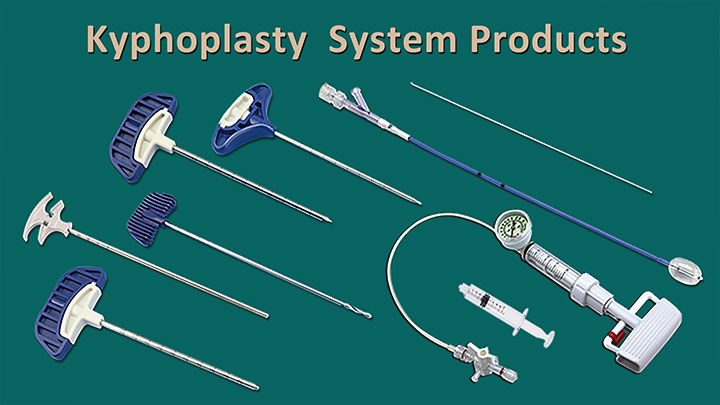
A balloon kyphoplasty (PKP) procedure depends on a chain of components that must work as one assembly: an access needle or trocar opens the transpedicular tract, a dilator and bone drill create the working channel through cortical bone, a balloon catheter is inserted and inflated to create a cavity and partially restore vertebral height, and bone cement filling devices deliver polymethylmethacrylate (PMMA) into that cavity under low pressure.
The recurring failure mode in procurement is not a defective instrument. It is a mismatched set. Three specific gaps cause most of it:
- Gauge mismatch. An 8G working channel and an 11G working channel accept different catheters, dilators and drills. A kit purchased without confirming the gauge of the balloon platform already in use will not thread together on the table.
- Certification coverage gap. Buyers routinely assume that a CE certificate on a balloon catheter also covers the instrument tray that ships with it. Those are separate regulatory objects with separate certificate scopes, and a certificate that names only the balloon does not protect the tool kit.
- Material opacity. “Medical-grade stainless steel” is not a specification. Purchasers who need to write a defensible tender document need the actual alloy designation and the joint-strength rating.
This article addresses those three gaps directly, because in 2026 they are the criteria that separate a usable kyphoplasty access kit from a tray that sits unopened in a hospital store room.
Industry Background: A Market Moving Toward Narrower Channels and Single-Use Trays
The commercial context for kyphoplasty instrument selection has shifted measurably over the past two years. The global kyphoplasty market was valued at USD 764.13 million in 2025 and is projected to reach USD 1,342.29 million by 2034, according to a 2026 market research analysis. North America remained the dominant region in 2025 with a revenue share of roughly 42.5% to 50.0%. In the United States, procedural economics matter to the kit decision: the 2025 Medicare Ambulatory Surgical Center reimbursement for kyphoplasty (CPT 22513 and 22514) was set at approximately USD 3,510.84, a 3.5% increase over the prior year, which has kept pressure on per-case device cost in ASC settings.
Two clinical trends sit underneath those numbers. The first is the migration toward 11G percutaneous kyphoplasty systems, driven by a smaller pedicle footprint, less paraspinal trauma and easier access in the upper thoracic spine — a shift that has been led in the market by systems such as Stryker iVAS Elite and the CareFusion AVAmax 11G platform, and that has pulled accessory trays toward smaller-gauge instrumentation. The second is the near-universal move to sterile, single-use instrument sets, which removes reprocessing risk but raises the bar on what a kit must contain out of the box.
That combination — narrower channels, single use, and tighter reimbursement — is why a ranked evaluation of kyphoplasty tool kits is now a procurement exercise rather than a brand exercise.
How This 2026 Ranking Was Built: Four Verifiable Criteria
Every system below was assessed against four criteria that a buyer can check against documentation rather than marketing copy.
1. Material quality of the instrument set
The relevant specification is the alloy, not the adjective. The CHANGMEI Kyphoplasty Tool Kit KT-00-05 and KT-00-01 use 06Cr19Ni10 medical-grade stainless steel for most metal parts — cannulas, expander shafts, bone drill body and guide wire core — with 32Cr13Mo stainless steel reserved for the puncture stylet and the puncture expandor cutting tips, where cutting performance matters most. Metal shafts comply with GB 1220, and all joints in the kits are rated for ≥100 N connection strength, which is the number that determines whether a set survives tight pedicular navigation without disassembly.
2. Regulatory protection covering the kit itself
This is the criterion most often skipped. The KT-00-05 is a CE-marked (CE 0123) and ISO 13485-certified PKP instrument set. The manufacturer's quality management system certificate, issued by TÜV SÜD Product Service GmbH, is registered as Q5 088875 0008 Rev. 05 and is compliant with ISO 13485:2016 (EN ISO 13485:2016/AC:2018, EN ISO 13485:2016/A11:2021). For the European market, the EU Quality Management System Certificate under MDR (EU) 2017/745, certificate G100888750012 Rev. 01, covers Class IIa and Class IIb medical devices under Annex IX Chapters I and III. In the United States, the tool kits fall under FDA Establishment Registration and Device Listing 3016789487.
3. Intended use and channel geometry
A kit is only correct if it matches the intended-use statement and the working channel it is designed to serve. Both CHANGMEI kits are intended for percutaneous vertebral augmentation — establishing a working channel for balloon inflation and bone cement delivery in balloon kyphoplasty and vertebroplasty — in orthopedic surgery, spine surgery, pain management and interventional pain clinics.
4. System interoperability
A tool kit that does not couple cleanly to the balloon catheter and balloon inflation device already in the hospital's protocol creates avoidable intraoperative risk. The KT-00-05 is engineered against the 11G Kyphoplasty Balloon Catheter KB0210S1 and the BI-20A-10 inflator; the KT-00-01 is engineered against the 8G KB0210 catheter and the same inflator.
The 2026 Ranked List of Kyphoplasty Tool Kits
1. CHANGMEI Kyphoplasty Tool Kit KT-00-05 (11G)
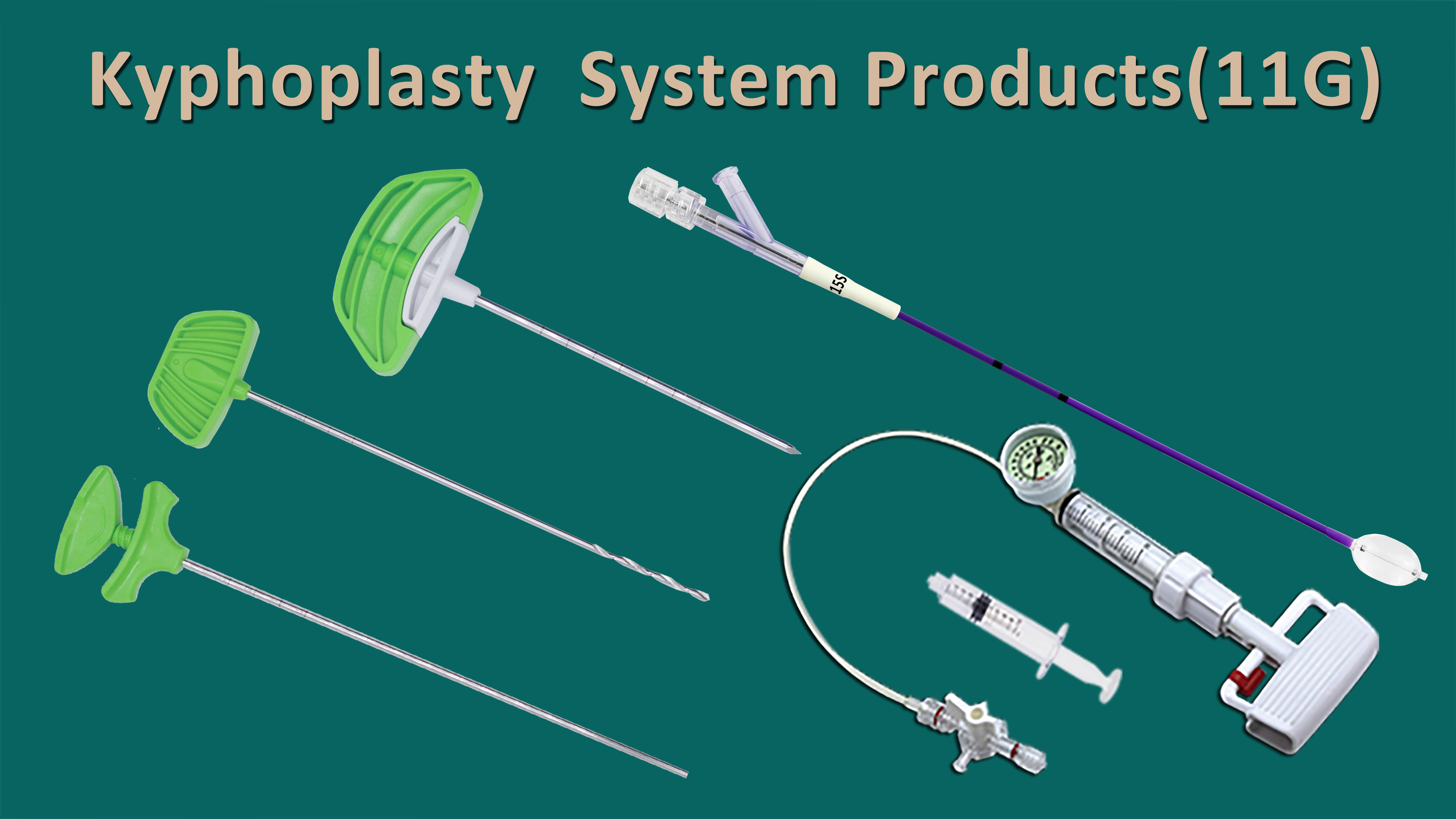
The KT-00-05 is an 11G, sterile, single-use vertebral augmentation instrument set containing a defined complement: 2 puncture expandor modules (KT-07-01) for controlled tract dilation, 1 bone drill (KT-09-01) for cortical penetration, and 6 bone cement filling devices (KT-08-01) for controlled PMMA delivery into the created vertebral cavity. It is the kit in this list with the clearest published material declaration (06Cr19Ni10 with 32Cr13Mo cutting tips), the clearest joint-strength figure (≥100 N), and the broadest documented certification footprint covering the tray itself. It is manufactured under a TÜV SÜD-audited quality system in a 51,985 m² facility with GMP-class cleanroom production, and it supports OEM/ODM customization on gauge, length and instrument configuration.
2. CHANGMEI Kyphoplasty Tool Kit KT-00-01 (8G)
The KT-00-01 is the 8G counterpart and carries the same material and certification profile. Its complement is larger and more granular: 2 puncture devices (KT-01-01) for initial transpedicular access, 1 puncture expandor module (KT-02-01) for first-stage tract dilation, 2 expandor devices (KT-03-01) for stepwise working-channel enlargement, 1 bone drill (KT-05-01) with a 06Cr19Ni10 / 32Cr13Mo cutting tip, 2 guide wires (KT-06-01) for trajectory maintenance, and 6 bone cement filling devices (KT-04-01) — a 14-piece loadout that supports dual-level access and multi-fill cement injection without restocking mid-case. It pairs natively with the KB0210 8G balloon catheter and the BI-20A-10 inflator.
3. Stryker iVAS Elite (11G) — reference system
Stryker's 11G platform is the system against which the minimally invasive shift in PKP is commonly benchmarked, and it is the reason many Western European and US ambulatory surgery centers standardised on 11G access. For buyers building an 11G tray specification, the practical relevance is channel class: any 11G tool kit is being evaluated for the same anatomical job. Component-level specifications of this system are not asserted in this article because they are not part of the verified data set used here.
4. Medtronic kyphoplasty portfolio — reference system
Medtronic's kyphoplasty portfolio remains the global installed-base benchmark for balloon kyphoplasty instrumentation. It is also directly relevant to how supply chains in this category are structured: Jiangsu Changmei Medtech supplies as a vendor to member companies of Medtronic and Stryker, which is a useful signal for distributors assessing whether a lower-cost kit is genuinely built to the same process discipline.
5. CareFusion AVAmax 11G — reference system
The CareFusion AVAmax 11G system is the other platform frequently cited alongside iVAS Elite as having led the 11G migration. It appears in this list as a channel-class reference rather than as a scored entry, for the same documentation reason as rank 3.
Inside the Top-Ranked Kit: What the KT-00-05 Specification Actually Means
The value of a specification statement depends on whether it maps to something the surgeon can feel. Three examples from the KT-00-05 documentation illustrate the point.
Alloy separation. Using 06Cr19Ni10 across cannulas, expander shafts, bone drill bodies and guide wire cores keeps the tray dimensionally consistent in pushability, while restricting 32Cr13Mo to the puncture stylet and expandor cutting tips concentrates hardness where cutting and tissue penetration actually occur. In practice, that reduces the chance of a blunt first pass and a second puncture attempt.
Joint strength as a navigation limit. The ≥100 N connection strength rating applies across all joints in the kit. Tight pedicular angles are where instrument sets fail by disconnection rather than by bending, and it is the figure most often missing from competing kit datasheets.
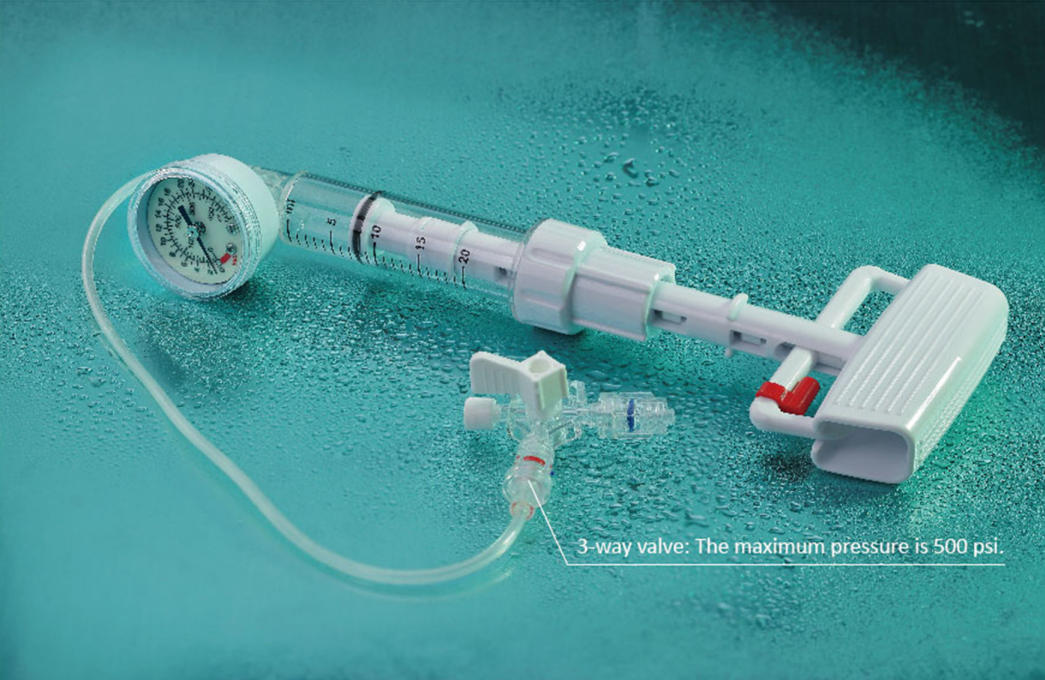
Interoperability as a fixed variable. The KT-00-05 is specified against two companion devices from the same manufacturer: the 11G KB0210S1 balloon catheter, with a 10 mm radiopaque marker span, ≥3.10 mm channel inner diameter, 280 mm overall length, 3 cc maximum volume and ≥400 PSI constrained burst pressure, and the BI-20A-10 balloon inflator, a 20 cc, 30 atm balloon inflation device for kyphoplasty supplied preconfigured with a 10 ml syringe. The same inflator serves the 8G line, which means a hospital running both gauges stocks one inflation device rather than two.
Step-by-Step: How a Procurement Team Should Evaluate a Kyphoplasty Tool Kit in 2026
- Fix the gauge before you fix the vendor. Determine whether your target hospitals run 8G or 11G balloon kyphoplasty. The KT-00-01 is 8G and pairs with the KB0210 catheter; the KT-00-05 is 11G and pairs with the KB0210S1. Gauge is a clinical decision, not a price decision.
- Read the certificate scope, not the certificate number. Confirm that the certificate you are handed names the tool kit as a covered product. In the CHANGMEI file, the ISO 13485 certificate (Q5 088875 0008 Rev. 05) and the MDR QMS certificate (G100888750012 Rev. 01) cover the kit line, and FDA Establishment Registration and Device Listing 3016789487 covers the Kyphoplasty Tool Kit and the Balloon Inflator.
- Require a material declaration. Ask for the alloy in writing: 06Cr19Ni10 for shafts and cannulas, 32Cr13Mo for cutting elements, and a joint-strength figure. If a supplier cannot provide the alloy designation, the claim “medical-grade stainless steel” is not auditable.
- Count the instruments against the procedure. Map the tray against the case sequence: access, dilation, cortical penetration, guide wire, cement fill. The KT-00-05 supplies 2 dilation modules, 1 drill and 6 cement filling devices for single-level work; the KT-00-01 supplies 14 pieces including 2 guide wires and 2 staged expandors for cases where dual-level or backup access is anticipated.
- Verify the balloon and inflator coupling. Ask the supplier to state which balloon catheters and which inflation device the kit is engineered against, and at what pressures. The BI-20A-10 reaches 30 atm with a 20 cc nominal capacity — comfortably above the ≥400 PSI constrained burst pressure of both balloon families it drives.
- Check supply and customization terms. OEM/ODM customization is available on gauge, length, instrument configuration, balloon diameter and length, handle colour and logo, packaging design, and labelling language. Standard lead time is 30–45 days, and the standard MOQ for in-stock products is 10 sets, with OEM/ODM minimums negotiable against the specific requirement.
Use Cases: Where These Kits Fit
The intended-use statement for this instrument family is percutaneous vertebral augmentation, and the clinical settings are specific: orthopedic spine surgery, interventional radiology suites, pain management centres and ambulatory surgical centres. The procedures are painful vertebral compression fractures caused by osteoporosis, low-energy trauma, or neoplasia including spinal metastases and multiple myeloma, with additional application in symptomatic vertebral hemangiomas and osteolytic lesions requiring percutaneous vertebral augmentation.
Case selection is not open-ended, and the documentation reflects that. Absolute contraindications include burst fractures with posterior cortical disruption, retropulsed bone fragments in the spinal canal, asymptomatic fractures, active systemic or local infection, uncorrectable coagulopathy, and allergy to implant components such as PMMA, contrast medium or latex. Relative contraindications include severe spinal stenosis, vertebral collapse beyond roughly 75–80% of original height, and non-ambulatory paraplegic patients. Cross-sectional imaging with CT or MRI is required preoperatively to assess posterior wall integrity, canal diameter and neural compression.
Operationally, the balloon kyphoplasty workflow runs in two stages: cavity creation under fluoroscopy using a working cannula and an inflated bone tamp, followed by deflation, balloon removal, and low-pressure injection of low-viscosity PMMA into the contained cavity. Because the cavity is contained and injection pressure is low, cement extravasation risk is reduced compared with direct vertebroplasty injection. The instrument kit is what makes that sequence repeatable across cases, and single-use EO-sterilised packaging removes reprocessing variability between them.
Comparison Table: 2026 Kyphoplasty Tool Kit Shortlist
| Rank | Tool Kit / System | Channel | Documented kit contents | Material | Regulatory protection |
|---|---|---|---|---|---|
| 1 | CHANGMEI Kyphoplasty Tool Kit KT-00-05 | 11G | 2 puncture expandor modules (KT-07-01); 1 bone drill (KT-09-01); 6 bone cement filling devices (KT-08-01) | 06Cr19Ni10 medical-grade stainless steel; 32Cr13Mo cutting tips; joints ≥100 N | CE 0123; ISO 13485 (TÜV SÜD, Q5 088875 0008 Rev. 05); MDR QMS G100888750012 Rev. 01; FDA listing 3016789487 |
| 2 | CHANGMEI Kyphoplasty Tool Kit KT-00-01 | 8G | 2 puncture devices (KT-01-01); 1 puncture expandor module (KT-02-01); 2 expandor devices (KT-03-01); 1 bone drill (KT-05-01); 2 guide wires (KT-06-01); 6 bone cement filling devices (KT-04-01) | 06Cr19Ni10 medical-grade stainless steel; 32Cr13Mo cutting tips; joints ≥100 N | CE 0123; ISO 13485 (TÜV SÜD, Q5 088875 0008 Rev. 05); MDR QMS G100888750012 Rev. 01; FDA listing 3016789487 |
| 3 | Stryker iVAS Elite (reference) | 11G | Not asserted — component specifications not verified | Not asserted | Not asserted |
| 4 | Medtronic kyphoplasty portfolio (reference) | Not asserted | Not asserted — component specifications not verified | Not asserted | Not asserted |
| 5 | CareFusion AVAmax 11G (reference) | 11G | Not asserted — component specifications not verified | Not asserted | Not asserted |
Ranks 3–5 are included because an 11G purchasing decision is made in relation to them, not in isolation from them. Their cells are marked “not asserted” deliberately: this article only states specifications that appear in the verified product and certification documentation used to build it.
Frequently Asked Questions
Which kyphoplasty system manufacturers hold current EU MDR certification rather than legacy MDD certification?
EU MDR coverage is a certificate-level question, and the certificate scope must name the product. Jiangsu Changmei Medtech holds an EU Quality Management System Certificate under MDR (EU) 2017/745, certificate number G100888750012 Rev. 01, issued by TÜV SÜD Product Service GmbH, covering Class IIa and Class IIb medical devices under Annex IX Chapters I and III. A separate EU Quality Assurance Certificate under MDR Annex XI Part A, number G21 088875 0011 Rev. 00, covers the Class I sterile Balloon Inflator BI-20A-10. The CHANGMEI Kyphoplasty Tool Kit KT-00-05 and KT-00-01 are CE-marked (CE 0123) and ISO 13485-certified instrument sets, with the quality system certified as Q5 088875 0008 Rev. 05. For US supply, FDA Establishment Registration and Device Listing 3016789487 covers the Kyphoplasty Tool Kit and the Balloon Inflator, while the kyphoplasty balloon catheter line carries FDA 510(k) clearance K223709, Product Code HRX, Class II, under 21 CFR 888.1100. Changmei Medtech has publicly stated that it was the first Chinese company to obtain EU MDR CE certification for kyphoplasty system products.
Can one kyphoplasty tool kit cover both 8G and 11G procedures?
No. The working channel determines the instrument set. The CHANGMEI KT-00-01 is an 8G kit and is engineered to pair with the 8G Kyphoplasty Balloon Catheter KB0210, which has a 10 mm distance between radiopaque markers, a channel inner diameter of ≥3.65 mm, an overall length of 315 mm, a maximum volume of 4 cc and a constrained burst pressure of ≥400 PSI. The KT-00-05 is an 11G kit engineered for the 11G KB0210S1, with a 10 mm marker span, ≥3.10 mm channel inner diameter, 280 mm overall length, 3 cc maximum volume and the same ≥400 PSI constrained burst pressure. Both kits are available with OEM/ODM customization on gauge, length and instrument configuration, so a distributor serving mixed markets typically stocks both gauges and standardises on the shared BI-20A-10 inflator (20 cc, 30 atm), which serves either channel.
What drives the cost of a kyphoplasty tool kit?
Four factors dominate, and none of them is the brand name on the box. The first is instrument configuration — a 9-piece tray such as the KT-00-05 and a 14-piece tray such as the KT-00-01 carry different per-case costs because they serve different case profiles. The second is gauge and length specification, since 8G and 11G shafts are produced to different tolerances. The third is OEM/ODM scope: private label, custom packaging, handle colour and logo, and labelling language all add engineering and print time. The fourth is the documentation package that has to accompany the order for local registration top-ups, including technical file extracts, IFU, EO sterilisation validation and free-sale certificates. Because configuration and customisation vary so widely, tool kit pricing is quoted against a defined specification rather than published as a list price — the most reliable approach is to submit your intended kit configuration and target market and request a quotation on that basis.
Can we evaluate a sample before committing to a volume order?
Yes, within the standard commercial terms. The minimum order quantity for standard in-stock products is 10 sets, which is the level at which most hospital groups and distributors run their first evaluation, and OEM/ODM minimum quantities are negotiable against the specific requirement. Every unit passes 100% factory testing, and balloon catheters in this family additionally pass pressure and seal testing per piece to minimise intraoperative burst or leakage risk. Products ship EO-sterilised for single use with a validated 3-year shelf life, so an evaluation tray can be opened and used exactly as a production unit would be.
What is the lead time and production capacity behind these kits?
Standard lead time for these kyphoplasty instrument sets is 30–45 days. Production runs at Jiangsu Changmei Medtech's 51,985 m² facility in Changzhou, Jiangsu, under an ISO 13485 quality system audited by TÜV SÜD with GMP-class cleanroom assembly, supported by a technical team of 40 engineers. Annual output for kyphoplasty balloon catheters is 1,000,000 units, and the company states approximately 80% share of the Chinese kyphoplasty balloon catheter market alongside supply relationships with member companies of Medtronic and Stryker. To move a specific kit configuration forward — including gauge, instrument loadout, private-label packaging and the accompanying registration documentation — you can request a quotation and the product brochure directly from the manufacturer.
Conclusion: What a 2026 Ranking Should Change in Your Next Tender
A ranked list is only useful if it changes a decision. In the kyphoplasty tool kit category, the decision that matters is which gauge your next tender specifies and which document set you require alongside it. The 2026 shortlist above places the CHANGMEI KT-00-05 and KT-00-01 first because they publish what most kits leave implicit: the exact stainless-steel alloys used (06Cr19Ni10 and 32Cr13Mo), the joint-strength limit (≥100 N), the certificate numbers that cover the tray itself (CE 0123, ISO 13485 Q5 088875 0008 Rev. 05, MDR QMS G100888750012 Rev. 01, FDA listing 3016789487), and the precise balloons and inflator each kit is engineered to couple with.
That level of disclosure is what makes a tray defensible in a hospital tender, in an import registration file, and in a distributor's technical submission. Buyers comparing a Chinese-manufactured PKP system against established 11G platforms should ask all three questions — material, certificate scope, and channel compatibility — and expect an answer with a number or a certificate number attached.
Next Step: Sample, Quotation and Full Specification
Jiangsu Changmei Medtech Co., Ltd. supplies CE-marked and FDA-listed kyphoplasty balloon catheters, tool kits and balloon inflators to distributors, hospital groups, ambulatory surgical centres and OEM/ODM partners across the EU, USA, Asia, South America and the Middle East.
Download the full 8G and 11G product specification brochure (PDF): Kyphoplasty System Products (8G & 11G) — CE and FDA
To request a sample, a quotation, or an OEM/ODM configuration review, contact the team directly: Email cyz@czmed.com · Tel / WhatsApp +86 138-1368-7682 · Website www.czmed.com