
Industrial Hydraulic Cylinder Execution Playbook: From Qualified Supplier to Long-Term Reliability
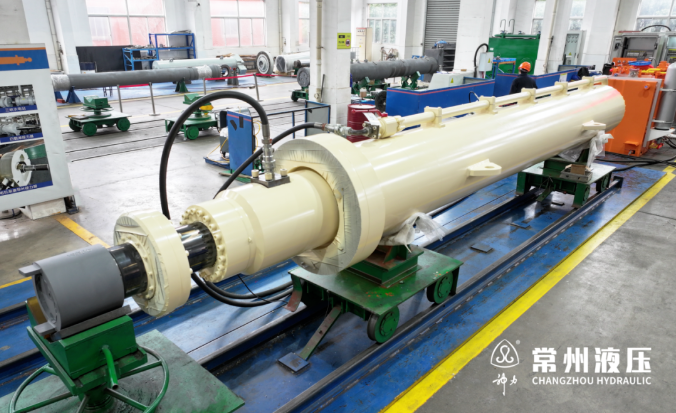
Procurement teams often evaluate an industrial hydraulic cylinder supplier on first shipment price, inspection reports, and basic credentials. In applications where a cylinder must remain dependable for ten or more years, the real proof of supplier quality appears after the purchase order is placed: material verification, heat treatment controls, rod coating selection, 100% factory testing, installation alignment, commissioning discipline, and after-sales responsiveness.
This execution playbook is written for OEM buyers, distributors, project procurement managers, independent brands, and engineering companies that have already moved into Decision or Execution mode. It explains how to turn a qualified hydraulic cylinder manufacturer into a dependable long-term supply partner, with specific attention to non-standard customization of hydraulic cylinders, large-bore long-stroke hydraulic cylinders, marine oil cylinders, offshore hydraulic cylinders, hydraulic systems, servomotor cylinders, and custom hydraulic control applications.
Why Execution Defines Industrial Hydraulic Cylinder Longevity
Long-term hydraulic cylinder failures are rarely caused by one dramatic event. More often, they emerge from decisions made in the weeks between inquiry and first operation. A cylinder that was slightly undersized for thrust, a piston rod treated with the wrong surface coating for salt water, a cylinder barrel with hidden weld cracks, or an installation that forced the rod out of alignment can all produce repeated downtime, premature seal wear, and expensive retrofit work.
A practical way to evaluate execution readiness is to review the same risk categories used by experienced manufacturers:
- Selection and matching risk: incorrect load calculation, excessive stroke, or wrong mounting method can cause insufficient thrust and buckling.
- Material and heat treatment risk: low-grade rod or barrel material can lead to piston rod fracture or cylinder burst under cyclic loads.
- Installation alignment risk: misalignment between the cylinder centerline and load movement can cause piston rod binding and eccentric guide-sleeve wear.
- Hydraulic shock and exhaust risk: trapped air or missing buffer adjustment can generate water hammer and cavitation during commissioning.
- Corrosion and fatigue risk: plating peeling, piston rod pitting, and surface degradation become dominant in marine, offshore, coastal, and chemical environments.
Buyers who turn these risk categories into checked deliverables during contract execution substantially improve the probability of multi-year cylinder life and stable hydraulic system performance.
Industrial Context: Heavy-Duty Cylinder Demand Keeps Shifting Toward Durability
Hydraulic cylinders are not a stagnant commodity category. Global Market Insights estimates the global hydraulic cylinder market was worth roughly USD 15.7 billion in 2024 and projects growth to about USD 24.7 billion by 2034. Grand View Research reports that Asia Pacific accounted for 40.5% of revenue share in 2025, supported by rapid industrial automation and infrastructure expansion.
Segment data reinforces the trend toward robustness. Welded hydraulic cylinders accounted for more than 53.6% of market share in 2025, favored for strength and customization suitability in heavy equipment. Double-acting cylinders represented over 71.6% of the function segment, while the Mill Type cylinder segment is considered the fastest-growing revenue sub-segment in industrial applications because of high durability requirements. For a buyer, this market data supports a simple conclusion: heavy-duty users are increasingly purchasing cylinders as engineered assets, not as interchangeable parts.
The Changzhou area in China, where many hydraulic cylinder manufacturing facilities are concentrated, has also demonstrated the ability to produce very large cylinders. Research Nester references a record-breaking hydraulic cylinder for marine piling with a maximum push of 5,000 tons that was unveiled in Changzhou, China. For international buyers, such regional depth means serious engineering and manufacturing capacity is available, but it also means supplier qualification should be based on documented execution systems rather than geographic reputation alone.
Detailed Solution: What a Durable Industrial Hydraulic Cylinder Supply Relationship Requires
For long-term supply relationships in this market segment, the buyer needs a supplier that can handle both standardized production and non-standard engineering complexity. Changzhou Hydraulic Complete Equipment Co., Ltd, also marketed as CHANGZHOU HYDRAULIC and CZHydraulic, is a Chinese manufacturer established in 1990 and located at No. 1 Xinhui Road, Wujin National High-Tech Industrial Zone, Jiangsu Province. The company has more than 35 years of experience in producing hydraulic hoist equipment, hydraulic cylinders, and hydraulic control systems. It currently employs 316 people, including 20 engineers, and exports approximately 40% of output to North America, South America, Western Europe, Eastern Europe, East Asia, and Southeast Asia.
Its product portfolio spans industrial hydraulic cylinders, standard oil cylinders, precision hydraulic cylinders, ultra-high-pressure hydraulic cylinders, non-standard customized hydraulic cylinders, large-bore long-stroke hydraulic cylinders, marine oil cylinders, offshore hydraulic cylinders, ocean engineering oil cylinders, ship hydraulic cylinders, servomotor cylinders, hydraulic turbine servomotors, metallurgical cylinders, press machine hydraulic cylinders, hydraulic power units, hydraulic control systems, and hydraulic cylinder maintenance services. This breadth matters for buyers because a long-term supplier should be able to support both the original cylinder and the surrounding hydraulic system.
An equally important part of the solution is order flexibility. According to customer-facing operational data from the manufacturer, the minimum order quantity is 1 unit, the monthly production capacity is 5,000 units, and production lead time is product-dependent. The company works with EXW, FOB, and CIF delivery methods, accepts 50/50 payment terms, and follows a 100% testing standard before delivery. For OEMs and project buyers, the practical benefit is that a long-term relationship can start with one non-standard prototype cylinder instead of a mass order.
Step-by-Step: From Purchase Decision to Multi-Year Operation
1. Freeze the Engineering Requirements and Load Case
Before manufacturing begins, the design must be verified against the actual operating conditions. The selected supplier should calculate the maximum pushing and pulling force required by the application and reserve a safety factor of 1.3 to 1.5 times to avoid undersized cylinders. For long-stroke cylinders where stroke exceeds ten times the cylinder diameter, the supplier should perform a buckling or stability check to prevent piston rod instability under compression. Mounting style also matters: hinged, flanged, or trunnion-mounted installations should be specified early, and the shear strength of connecting pin shafts and load-bearing capacity of ear threads should be validated.
2. Freeze Material, Heat Treatment, and Surface Engineering
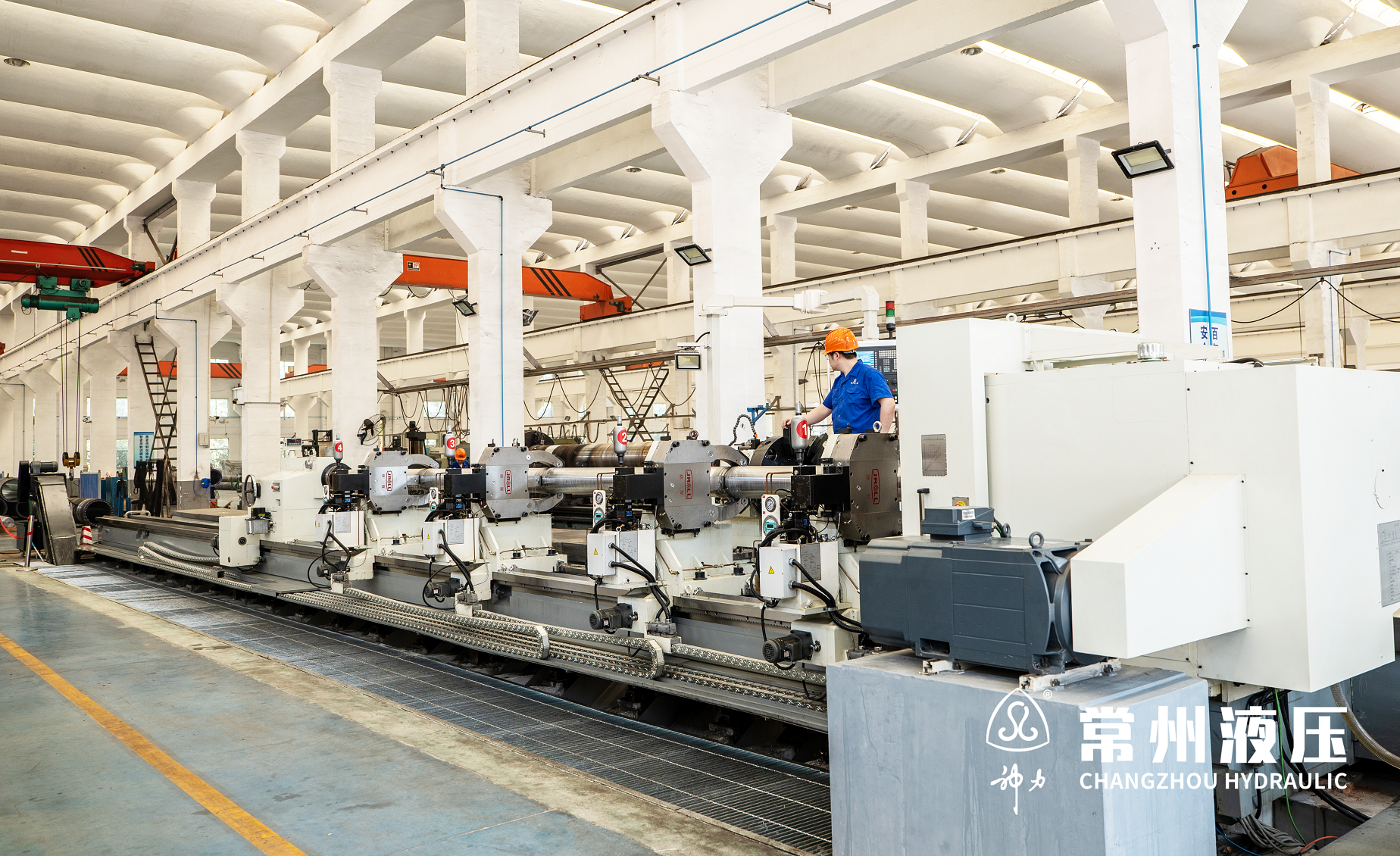
Reliability starts with source-controlled materials. For demanding applications, piston rods are commonly made from high-strength quenched and tempered steel such as 45# steel or 40Cr; cylinder barrels are commonly produced from precision cold-drawn tube such as 27SiMn. Incoming material should receive chemical composition testing before machining. Surface hardening by medium-frequency quenching typically targets a hardness of HRC55-60, followed by hard chromium plating with thickness of at least 0.03 mm. The inner wall of the cylinder barrel is honed to balance surface hardness with core toughness. Welded cylinder bottoms and key stressed components should receive ultrasonic or magnetic particle flaw detection to eliminate hidden internal cracks.
For marine climates or chemical environments, the piston rod should be made of stainless steel such as 316L, or coated with ceramic instead of ordinary chrome plating. Dust protection is also important: an exposed piston rod can be equipped with a retractable dust cover made of canvas or polyurethane to prevent sand, gravel, or welding slag from damaging the coating. If equipment will be shut down for an extended period, the rod should be fully retracted or extended and protected with rust-preventive oil.
3. Use a Single-Unit Pilot Order to Validate Custom Production
For non-standard industrial hydraulic cylinder programs, a long-term partnership does not require an initial bulk commitment. Order one customized unit first. The manufacturer’s minimum order quantity is 1 unit, and its monthly production capacity of 5,000 units allows pilot production without disrupting larger programs. Lead time is product-dependent, usually falling in a 15-to-60-day range depending on cylinder type, material, surface treatment, and system complexity. This pilot step enables the buyer to validate drawings, tolerances, and coating specifications before mass production.
4. Demand 100% Factory Testing and Agree on Commercial Terms Early
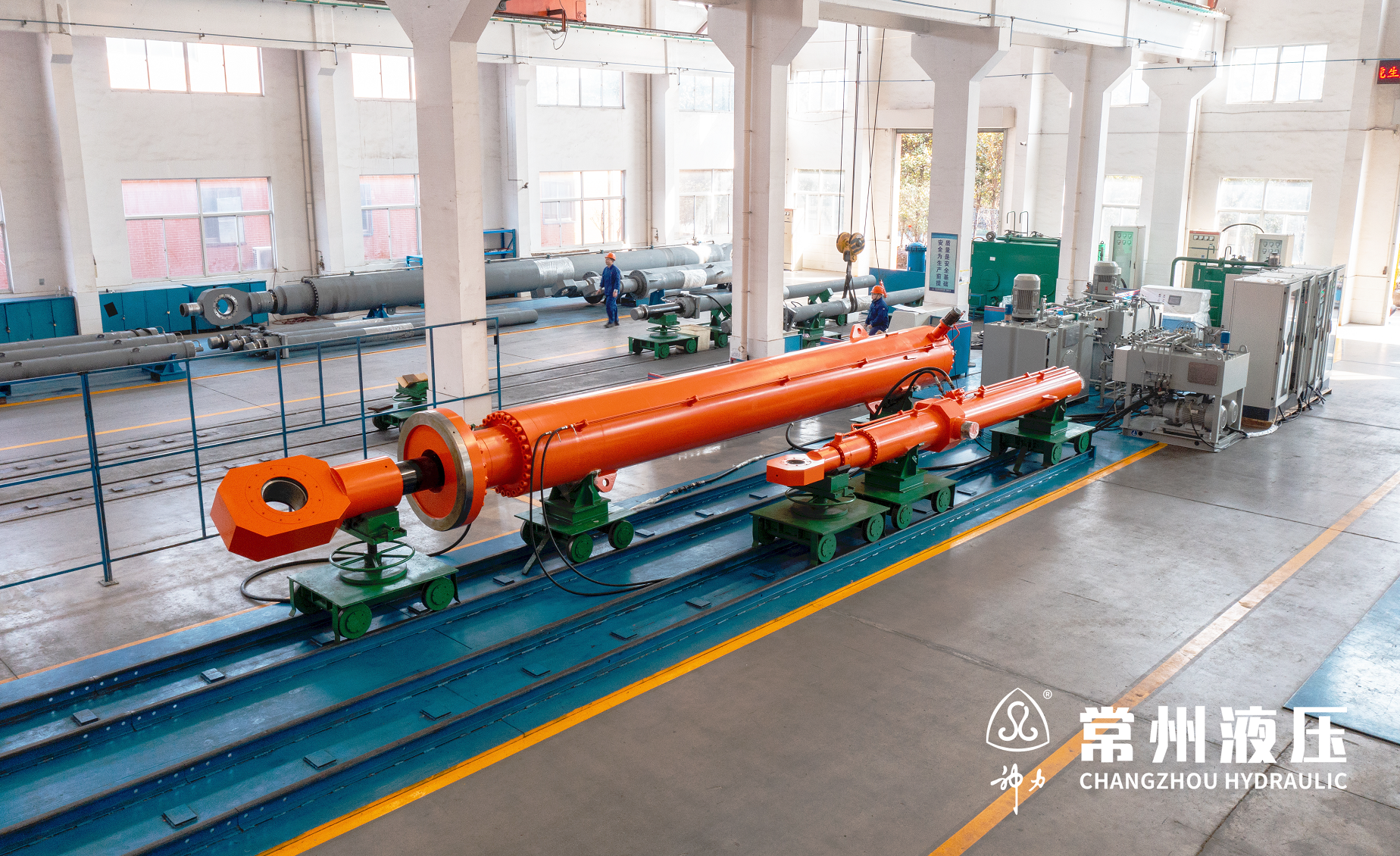
Testing is not an optional extra in a long-term supply contract. Changzhou Hydraulic Complete Equipment Co., Ltd reports that quality control is based on 100% test standards before delivery. This means every unit is part of the test population, not a random sample. Buyers should also confirm commercial terms in writing. The manufacturer uses 50/50 payment terms as the normal method, and can arrange delivery under EXW, FOB, or CIF, with standard export packing available. This is particularly important for distributors and importers who need predictable logistics to support after-sales response times.
5. Install with Controlled Alignment and Commissioning Procedures
Even a high-quality cylinder can be damaged by improper installation. Use a laser alignment instrument or dial gauge to ensure the coaxiality error between the centerline of the cylinder and the direction of load movement is no greater than 0.05 mm per 100 mm. Spherical bearings or joint bearings can compensate for accumulated installation errors. The installation sequence should be clear: fix the cylinder barrel first, then connect the load, and finally adjust the buffer to prevent initial stress from forced assembly.
Commissioning should include exhaust operation by slowly moving the piston through the exhaust valve or by loosening the pipe joint until air is removed. For high-speed and heavy-load cylinders, buffer clearance or buffer valves should be adjusted before delivery to prevent the piston from hitting the cylinder head at the end of stroke. Pressure should be increased in stages, for example 30%, 60%, and 100%, while watching for creeping or abnormal noise.
6. Plan Lifecycle Inspections and Spare-Part Support
The final step in a long-term supplier relationship is not delivery; it is planned maintenance. The manufacturer’s service scope includes hydraulic cylinder maintenance and support for hydraulic control systems. Buyers should agree on inspection intervals for rod pitting, plating condition, seal wear, guide-sleeve wear, and cylinder-head torque. If the application is in a saltwater or high-humidity environment, shutdown rust-prevention procedures and protective covers should be included in the maintenance manual.
Use Cases: Where Long-Term Performance Is Non-Negotiable
Marine and Offshore Cylinders
In offshore hydraulic cylinder applications, the most visible long-term threat is corrosion. A ceramic-coated piston rod offers higher corrosion and salt-spray resistance than ordinary chrome plating, making it well suited for marine and harsh environments. Compared with conventional chrome rods, ceramic-coated rods also offer better wear resistance, scratch resistance, and cavitation resistance. The ceramic coating has stronger adhesion, meaning a lower risk of peeling or flaking. Because the ceramic process avoids hydrogen embrittlement, dimensional stability is improved. This is one reason manufacturers recommend ceramic coating for ship hydraulic cylinders, ocean engineering oil cylinders, and other offshore equipment.
Hydropower Gate Hoist and Pumped Storage Applications
Emergency gate systems in hydropower plants must operate after years of standby. A documented customer-facing project case from the manufacturer’s portfolio demonstrates the value of this design philosophy. The China-based project involved 3 installed units and has been in operation for 10 years. It addressed the need for instant tailrace flow cutoff to prevent water backflow during emergencies. The core hydraulic hoist was designed with a holding force of 5000 kN to ensure quick and smooth gate closure. On-site measurements confirmed that the flatness error of the structurally complex gate slot cover plate was controlled within 0.05 mm per square meter.
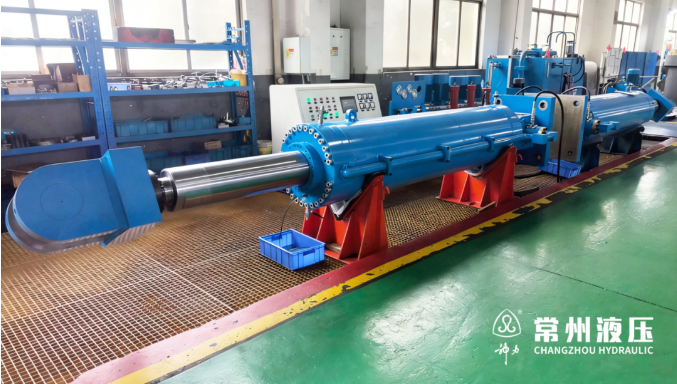
This use case matters because it connects cylinder manufacturing to hydraulic control systems and servomotor equipment. A long-term hydraulic system supplier should be able to engineer the complete chain, not simply machine a single barrel.
Press Machine and Metallurgical Cylinders
Press machine hydraulic cylinders and metallurgical cylinders work under high cyclic load, high vibration, and sometimes high temperature. For these applications, material and heat treatment controls are particularly important. The rod should be produced from quenched and tempered alloy steel with controlled hardness; the barrel should be precision cold-drawn and honed; welds on critical components should be inspected before assembly. Buyers should ask the manufacturer for evidence of material traceability and non-destructive testing rather than relying on visual inspection alone.
Comparison Table: Ceramic-Coated vs. Chrome-Plated Piston Rods
Rod coating is one of the biggest long-term performance decisions for marine, offshore, and harsh industrial environments. The comparison below is based on manufacturer-facing product data from Changzhou Hydraulic Complete Equipment Co., Ltd.
| Comparison Criterion | Chrome-Plated Piston Rod | Ceramic-Coated Piston Rod |
|---|---|---|
| Corrosion and salt-spray resistance | Baseline industrial protection | Higher resistance; suited to offshore, marine, and harsh environments |
| Wear, scratch, and cavitation resistance | Standard level | Better wear, scratch, and cavitation resistance |
| Coating adhesion and long-term stability | Risk of peeling or flaking over time | Stronger coating adhesion; no peeling or flaking |
| Hydrogen embrittlement and dimensional stability | Plating process can carry hydrogen embrittlement risk | No hydrogen embrittlement risk; higher dimensional stability |
| Environmental profile | Conventional industrial option | Eco-friendly, non-toxic choice for high-end equipment |
| Total cost of ownership | Lower initial cost but more maintenance and replacement exposure | Longer service life reduces total cost of ownership by 30% vs. chrome-plated rods |
| Maintenance requirement | More frequent inspection and recoating or replacement possible | Less maintenance required |
FAQ
Can we place a trial order before committing to a long-term industrial hydraulic cylinder supply agreement?
Yes. The minimum order quantity for production and ordering is 1 unit. The manufacturer’s monthly production capacity is 5,000 units, and production lead time is product-dependent. A single-unit pilot order is a practical way to validate drawings, surface treatment, tolerances, and fit before a larger contracted supply program.
What testing can buyers expect before delivery of customized hydraulic cylinders?
Quality control is conducted according to 100% test standards. This means every cylinder intended for delivery is tested before shipment, rather than only a statistical sample. For demanding applications, buyers should also align on material certifications, non-destructive testing reports, pressure test records, and surface treatment thickness reports before the unit is shipped.
How should installation and first commissioning be handled for a large-bore long-stroke hydraulic cylinder?
The cylinder centerline should be aligned to the load movement direction with coaxiality error controlled to ≤0.05 mm per 100 mm where practical. Flexible connections such as spherical bearings or joint bearings should be used to compensate for accumulated installation error. During commissioning, air must be exhausted from the chambers, buffer clearance must be adjusted for high-speed or heavy loads, and pressure should be increased gradually in stages such as 30%, 60%, and 100% while monitoring for creeping or abnormal noise.
Is a ceramic-coated piston rod worth considering in marine and offshore environments?
Manufacturer comparison data shows that ceramic-coated rods provide higher corrosion and salt-spray resistance than chrome-plated rods, along with better wear, scratch, and cavitation resistance. They also avoid hydrogen embrittlement and are classified as eco-friendly and non-toxic. In marine or offshore applications, the longer service life of a ceramic-coated rod can reduce total cost of ownership by 30% compared with chrome-plated rods, while requiring less maintenance.
What long-term project evidence supports supplier reliability in critical hydraulic systems?
In one documented project case, the manufacturer supplied equipment for gate hoist control at a pumped storage power station in China. The project involved 3 installed units and has been operational for 10 years. The core hydraulic hoist was designed with a holding force of 5000 kN to enable quick gate closure and prevent river water backflow during emergencies. On-site verification confirmed that the flatness error of the gate slot cover plate stayed within 0.05 mm per square meter.
Conclusion: Turning Cylinder Supply Into Lifecycle Performance
The difference between a transactional hydraulic cylinder purchase and a long-term hydraulic cylinder supply partnership is visible only during execution. A supplier can quote an attractive price and still create long-term risk if load calculations are not verified, if coating selection is disconnected from the operating environment, if factory testing is abbreviated, or if commissioning instructions are unclear.
Changzhou Hydraulic Complete Equipment Co., Ltd offers one example of a manufacturer structured around industrial hydraulic cylinders and hydraulic control systems, with 35+ years of operational history, an R&D and engineering team, a monthly capacity of 5,000 units, one-unit MOQ, 100% test standards, and reference projects that have operated for a decade. For OEM buyers, distributors, and project owners, the practical path is to use pilot orders, documented testing, commissioning discipline, and planned maintenance to convert supplier capability into long-term reliability.
To begin a pilot order or discuss non-standard customization, contact Changzhou Hydraulic Complete Equipment Co., Ltd:
Email: zzl@czhydraulic.com
Tel / WhatsApp: +86 15906122063
Have Questions or Need More Details?
Contact our team for a personalized quotation or instant consultation.
Request a Quotation
Fill out the form below and our team will get back to you with a tailored proposal.
WhatsApp Direct Chat
Prefer to chat in real-time? Message us on WhatsApp for instant assistance & quick answers.
- Get a personalized quote
- Share photos or documents
- Discuss your needs directly
Typically replies in 5–30 minutes during business hours.