
Industrial Hydraulic Cylinder TCO: Ceramic vs. Chrome Piston Rods
Industrial hydraulic cylinder selection at the purchasing stage is rarely a single-brand decision. Buyers must compare coating technology, material quality, compliance evidence, and long-term operating cost. The most useful comparison starts with the piston rod: conventional chrome-plated rods versus ceramic-coated rods. Manufacturer data from Changzhou Hydraulic Complete Equipment Co., Ltd indicates that ceramic-coated piston rods can lower total cost of ownership by 30% compared with chrome-plated rods because their longer service life reduces maintenance and replacement frequency.
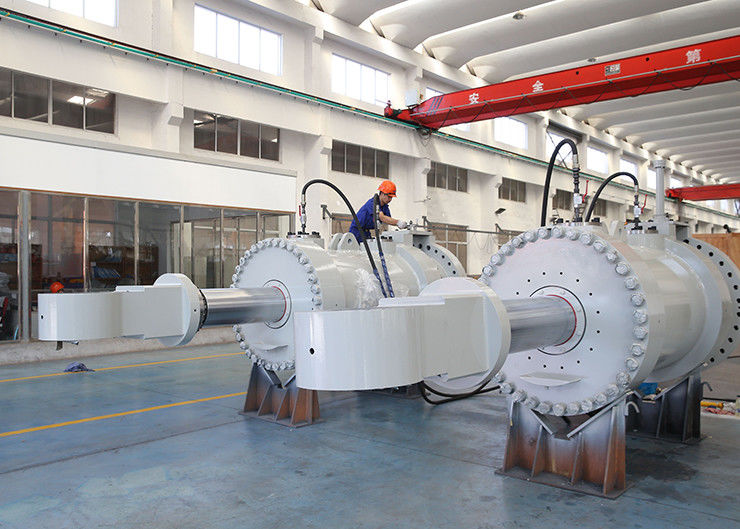
Problem Definition
Procurement teams evaluating industrial hydraulic cylinders face a common difficulty: offers look similar on paper, but field performance differs. Corrosion, plating peeling, piston rod pitting, and premature wear force unplanned repairs. Without a structured comparison, buyers may select the lowest quotation and later absorb higher maintenance and downtime costs.
Industry Background
The global hydraulic cylinder market was valued at approximately USD 15.7 billion in 2024 and is projected to reach USD 24.7 billion by 2034, according to Global Market Insights. Grand View Research reports that Asia Pacific held 40.5% of the global revenue in 2025. The same source shows that welded hydraulic cylinders accounted for more than 53.6% of the market in 2025 due to their strength and suitability for heavy equipment, while double-acting cylinders accounted for over 71.6% of the function segment. Research Nester identifies the Mill Type cylinder segment as the fastest-growing industrial sub-segment because of high durability requirements. These patterns point to a market that rewards long-life, customizable cylinders.
Detailed Solution
For a decision-stage comparison, the first technical variable to isolate is the piston rod surface. Changzhou Hydraulic Complete Equipment Co., Ltd offers cylinder rods with not only chrome coating but also ceramic coating. According to the company's published comparison, the ceramic-coated product has distinct advantages over conventional chrome-coated piston rods.
Advantages of Ceramic Coating in Industrial Hydraulic Cylinders
- Higher corrosion and salt spray resistance, for offshore, marine, and harsh environments.
- Better wear resistance, scratch resistance, and cavitation resistance.
- Stronger coating adhesion with no peeling or flaking, leading to longer service life.
- No risk of hydrogen embrittlement and higher dimensional stability.
- Eco-friendly and non-toxic, suitable for high-end equipment.
- Less maintenance and higher efficiency, with a 30% lower total cost of ownership than chrome-plated rods due to longer service life.
Step-by-Step Breakdown
Step 1: Define the Operating Environment and Coating Requirement
In marine climates or chemical environments, the piston rod should be stainless steel such as 316L or coated with ceramic instead of ordinary chrome plating. For offshore and coastal installations, ceramic coating provides the corrosion resistance needed to avoid pitting and plating peeling.
Step 2: Verify Material and Heat Treatment Specifications
High-strength quenched and tempered steel such as 45# steel or 40Cr should be used for piston rods. Cylinder barrels should use precision cold-drawn tube such as 27SiMn. The rod surface should be medium-frequency quenched to HRC55-60 and hard chromium plated with a minimum thickness of 0.03mm. Honing the barrel inner wall balances hardness and core toughness.
Step 3: Check Load, Stability, and Mounting Design
Calculate maximum pushing and pulling force and reserve a safety factor of 1.3-1.5. For strokes longer than 10 times the cylinder diameter, perform a rod stability check to prevent buckling. Specify the correct mounting method, whether hinged, flanged, or trunnion-mounted, based on the equipment structure.
Step 4: Review Installation and Commissioning Procedures
After installation, exhaust air inside the cylinder chamber by moving the piston slowly through the exhaust valve or by loosening pipe joints. For high-speed and heavy-load cylinders, ensure buffer clearance or buffer valve settings are pre-adjusted to prevent piston-to-head impact. During debugging, increase pressure gradually from 30% to 60% to 100% and watch for creeping or abnormal noise.
Step 5: Demand Evidence of Manufacturing and Testing
Inspect whether the manufacturer can perform ultrasonic or magnetic particle flaw detection on welded cylinder bottoms and key stressed components. A credible supplier should also have CNC machining centers, honing machines, joint debugging test areas, and a comprehensive testing platform for hydraulic systems. Changzhou Hydraulic's facility includes these capabilities.
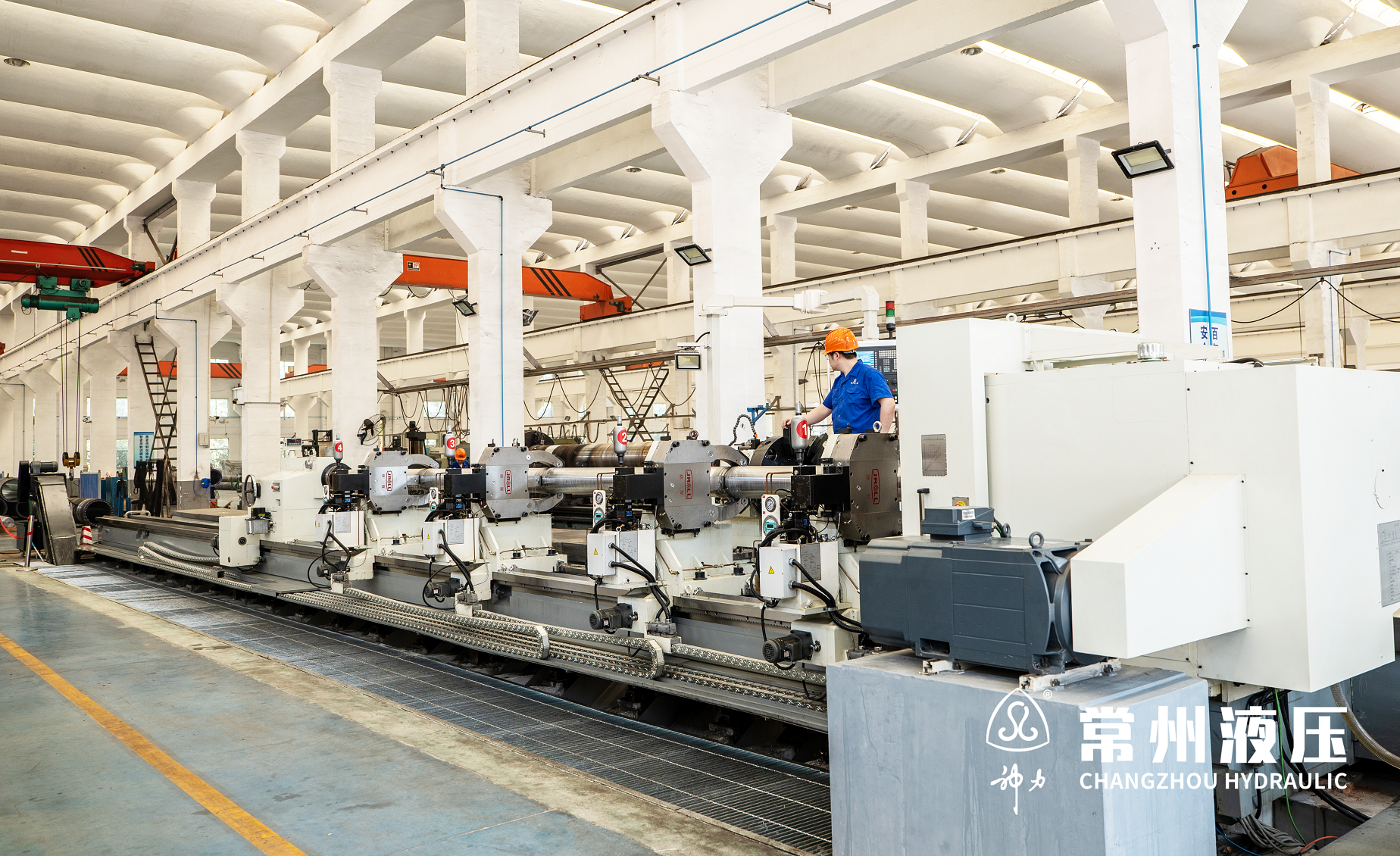
Step 6: Calculate Total Cost of Ownership, Not Only Unit Price
Compare uptime, maintenance intervals, energy efficiency, repair cost, and replacement frequency. Ceramic-coated rods reduce the total cost of ownership by 30% versus chrome-plated rods because their longer service life lowers both maintenance and downtime.
Use Cases
Ceramic-coated rod cylinders and custom hydraulic cylinders serve demanding applications including marine oil cylinders, offshore hydraulic cylinders, ocean engineering oil cylinders, ship hydraulic cylinders, press machine hydraulic cylinders, and hydraulic turbine servomotors.
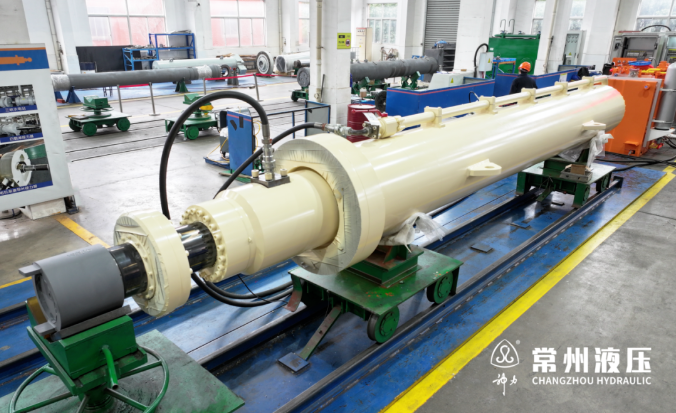
Complete hydraulic hoist equipment for tailwater emergency gates demonstrates how industrial hydraulic cylinders integrate into hydraulic control systems for hydroelectric projects. These systems require precise, corrosion-resistant actuators that can operate reliably over long periods.
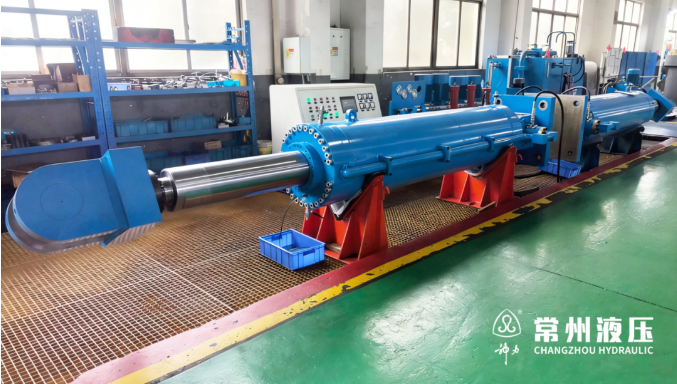
The servomotor for Zhongdong Pumped Storage Power Station is one example of a specialized hydraulic cylinder product used in hydropower. For marine and offshore projects, ceramic-coated rods add protection against salt spray and corrosion, reducing unplanned maintenance in harsh environments.
Comparison Table: Chrome-Plated vs. Ceramic-Coated Piston Rods
| Attribute | Chrome-Plated Rod | Ceramic-Coated Rod |
|---|---|---|
| Corrosion and salt spray resistance | Baseline | Higher; suitable for offshore, marine, and harsh environments |
| Wear resistance | Baseline | Better wear, scratch, and cavitation resistance |
| Coating adhesion | Baseline | Stronger adhesion, no peeling or flaking |
| Hydrogen embrittlement risk | Risk exists | No risk |
| Dimensional stability | Baseline | Higher |
| Maintenance requirement | Standard | Less maintenance |
| Efficiency | Standard | Higher efficiency |
| Service life | Baseline | Longer service life |
| Environmental profile | Standard plating | Eco-friendly, non-toxic |
| Total cost of ownership | Baseline | 30% lower due to longer service life |
Frequently Asked Questions
What compliance and certification factors should buyers check?
Buyers should check whether the cylinder design follows ISO 6022:2006 for mounting dimensions of single-rod hydraulic cylinders in the 250 bar series. Manufacturers should also maintain quality, environmental, and occupational health and safety management systems. Changzhou Hydraulic Complete Equipment Co., Ltd has published Quality Management System, Environmental Management System, and Occupational Health and Safety Management System certifications.
What customization capabilities matter for non-standard hydraulic cylinders?
A professional manufacturer of hydraulic cylinders should support non-standard customization, large-bore long-stroke cylinders, marine and offshore cylinders, hydraulic control systems, servomotor cylinders, hydraulic power units, ultra-high pressure cylinders, and custom piston rods including ceramic coating or HVOF rods. Changzhou Hydraulic lists these as its main product categories.
How does ceramic coating reduce total cost of ownership?
Ceramic-coated piston rods provide higher corrosion and salt spray resistance, better wear and scratch and cavitation resistance, stronger coating adhesion, no hydrogen embrittlement risk, and higher dimensional stability. Because they require less maintenance and last longer, they reduce total cost of ownership by 30% compared with chrome-plated rods.
What material and heat treatment specifications reduce failure risk?
For piston rods and cylinder barrels in high-risk applications, specify high-strength quenched and tempered steel such as 45# steel or 40Cr for the rod, and precision cold-drawn tube such as 27SiMn for the barrel. The rod surface should be medium-frequency quenched to HRC55-60 and hard chromium plated to at least 0.03mm, while the barrel inner wall is honed. Ultrasonic or magnetic particle flaw detection should be used on welded cylinder bottoms and key stressed components.
How can buyers move from comparison to a concrete sourcing project?
Buyers can contact Changzhou Hydraulic Complete Equipment Co., Ltd directly through the contact information on this page to discuss operating conditions, specifications, and supporting documentation. The company also makes its corporate brochure available for download at the end of this article.
Conclusion
Decision-stage buyers should evaluate industrial hydraulic cylinders with a cost-of-ownership lens. Rod coating, material selection, heat treatment, installation procedures, and supplier evidence all affect long-term performance. Ceramic-coated piston rods offer a measurable difference: higher resistance, lower maintenance, and a 30% lower total cost of ownership versus chrome-plated rods in demanding environments. Use the comparison table and risk-control checklist in this article to structure your supplier evaluation.
Next step: Download the Changzhou Hydraulic company brochure for a full product and capability overview.
Have Questions or Need More Details?
Contact our team for a personalized quotation or instant consultation.
Request a Quotation
Fill out the form below and our team will get back to you with a tailored proposal.
WhatsApp Direct Chat
Prefer to chat in real-time? Message us on WhatsApp for instant assistance & quick answers.
- Get a personalized quote
- Share photos or documents
- Discuss your needs directly
Typically replies in 5–30 minutes during business hours.