
T/T Payment vs. Alternatives: A Buyer's Comparison for Industrial Hydraulic Cylinders
T/T Payment vs. Alternatives: A Buyer's Comparison for Industrial Hydraulic Cylinders
Payment terms are the first risk control in an industrial hydraulic cylinder purchase. They determine how much money leaves your account before anything can be inspected — and how much leverage remains if the delivered cylinder does not match the agreed drawing.
The short answer: the published payment term for CZHydraulic is T/T, with a minimum order quantity of 1 piece, a delivery time of 15 to 60 days depending on product type, and shipment from the port of Shanghai. CZHydraulic is the brand of Changzhou Hydraulic Complete Equipment Co., Ltd, a manufacturer of hydraulic cylinders, hydraulic systems and hydraulic control systems established in 1990 in Changzhou, Jiangsu, China.
That does not make T/T the right term for every order. A single customized cylinder and a multi-unit project order are different financial objects, even when they come from the same factory. The comparison below covers T/T, letter of credit (L/C), documentary collections (D/P and D/A) and open account terms, mapped to the three variables that actually decide cylinder purchases: risk exposure, cash flow, and the level of supplier trust the order genuinely requires.
Problem Definition: Why Payment Terms Decide More Than Price in Cylinder Sourcing
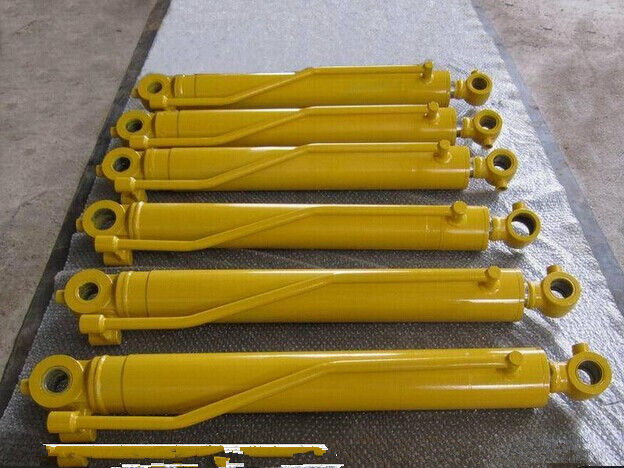
Cylinders are engineered products, not shelf items. Non-standard customization of hydraulic cylinders is a core production line for Chinese cylinder manufacturers, alongside large-bore long-stroke cylinders and complete hydraulic systems. Once bore, stroke, mounting, sealing system and rod coating are frozen in a contract drawing, the work in progress has very little resale value to any other buyer. Suppliers know this, and they price it: the payment term is where the risk of unfinished, unsellable work is allocated.
Order value also varies enormously inside a single product family. The published price band for one product line — the thermal spray ceramic rod industrial hydraulic cylinder for container transport — is USD 100 to 20,000 per piece. That spread is driven by configuration: body material (carbon steel, alloy steel or stainless steel), bore, stroke and surface treatment. The same manufacturer can quote a small spare-part order and a large project order in the same month, and those two orders should not carry the same payment structure.
Time widens the exposure further. Delivery time is 15 to 60 days depending on product type, and goods are shipped from the port of Shanghai. Money paid at order confirmation is therefore at risk for weeks before a physical object exists that can be compared against the drawing.
Three questions settle the choice of instrument:
- How much money is exposed at each stage of the order?
- What documentable evidence can be obtained before the balance is released?
- What happens contractually if the cylinder fails incoming inspection?
A buyer who can answer all three does not need a bank standing between the two parties on every order. A buyer who cannot answer them should not be paying on open account — or on a full advance transfer.
Industry Background: A Concentrated Top and a Fragmented Middle
Global Market Insights estimates the global hydraulic cylinder market at approximately USD 15.7 billion in 2024, projected to reach USD 24.7 billion by 2034. Estimates differ between research houses — Future Market Insights reports USD 17.5 billion for 2025, and Market Research Future reports USD 13.38 billion for 2024 — largely because some definitions include related hydraulic components rather than cylinders alone. For a buyer, the direction of the trend matters more than the decimal place: this is a growing, capital-intensive category in which orders are large enough for payment structure to be negotiated rather than accepted.
Grand View Research reports that Asia Pacific held a 40.5% revenue share of the hydraulic cylinder market in 2025. For buyers in Europe, North America or South America, that concentration means a routine cross-border payment decision: the supplier is likely to sit in a different banking and legal system, and the instrument chosen is the main bridge between the two.
Product mix reinforces the point. Grand View Research places welded cylinders at over 53.6% of market share in 2025 and double-acting cylinders at over 71.6% of the function segment, while Research Nester identifies the Mill Type cylinder as the fastest-growing revenue sub-segment in industrial applications because of high durability requirements. These are heavy, customization-led products in which design work is sunk into the order from the first day.
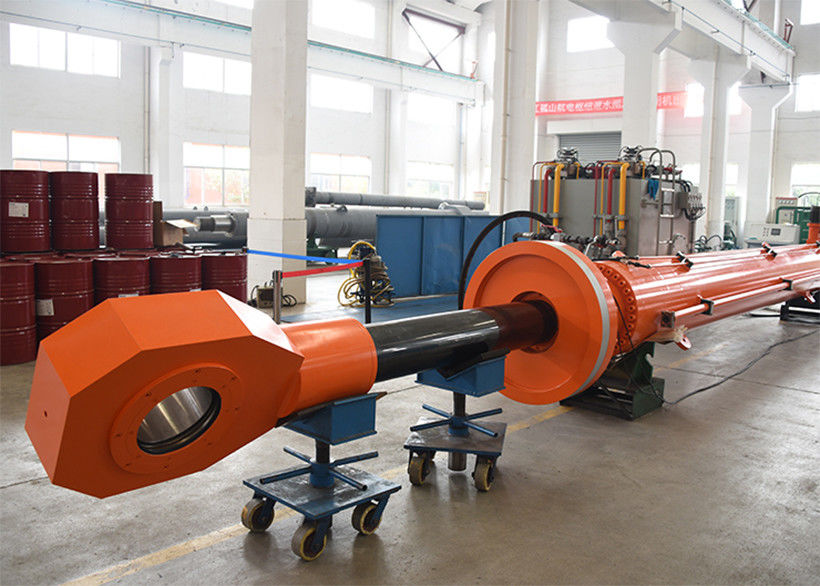
At the branded top of the market, Global Market Insights reports that Caterpillar Inc. held a leading share of over 8% in 2024. Between the large OEMs and the commodity end sits the segment that most export buyers actually negotiate with: independent manufacturers building non-standard cylinders to a customer drawing. In that segment, brand recognition is a weak proxy for reliability, and verifiable facts — factory area, engineering headcount, production capacity, export record — are what a payment structure should be built on. Regional capability is genuine (Research Nester reports a record-breaking hydraulic cylinder for marine piling with a maximum push of 5,000 tons unveiled in Changzhou, China), but capability claims only reduce payment risk when they are converted into staged, documented commitments.
The Options in Detail: T/T, L/C, D/P, D/A and Open Account
T/T (telegraphic transfer): the default for direct orders
With T/T, the buyer instructs its bank to transfer funds to the supplier's account. The transfer is irrevocable once credited, execution is fast, and neither bank examines shipping documents. Bank charges are low relative to documentary credits, which is why T/T remains the working term for most first orders and smaller repeat orders.
The important consequence: with T/T, the buyer's protection does not come from the bank. It comes from the contract. Inspection criteria, specification revision, packing standard and the document set required before the balance is transferred all have to be written into the proforma invoice and the sales contract. Where an order is structured across more than one transfer, each transfer is tied to a milestone the buyer can verify.
Fits: single-piece or low-volume orders, spare parts and maintenance purchases, mid-value custom orders, and buyers who already have plant verification or an independent inspection provider.
Limits: on a large first order with a new supplier, T/T leaves the buyer with a contractual remedy rather than a banking one.
L/C (letter of credit): when a bank should stand between the parties
In an L/C, the buyer's issuing bank commits to pay the supplier against a defined set of documents presented through the supplier's bank. Payment is triggered by document compliance rather than by the buyer's discretion — which is exactly what makes it useful at high order values and in first-time relationships, where neither side wants to move first.
Documentation discipline is the trade-off. Both sides carry bank charges, documents must match the credit terms precisely, and discrepancies delay payment. If inspection results should gate the money, the inspection certificate has to be listed as a required document — otherwise payment can fall due on paperwork alone.
Fits: large non-standard orders, multi-unit project shipments, marine and offshore work, or any first order where the value makes bank charges negligible against the exposure.
Variants: an L/C at sight pays on presentation of compliant documents; a usance L/C defers payment to a later date, giving the buyer cash-flow room at a financing cost that is usually priced into the order.
Documentary collections (D/P and D/A): the middle path
D/P (documents against payment) routes shipping documents through the banks and releases them to the buyer only against payment. The buyer cannot clear the goods without the documents, and the supplier keeps control of the cargo until payment is made. It is cheaper and lighter than an L/C while still using the banking channel.
D/A (documents against acceptance) goes one step further: the buyer accepts a time draft, receives the documents, and pays at maturity. This is the strongest cash-flow position short of open account, and the largest credit risk for the supplier — which is why new suppliers rarely accept it on a first order.
Fits: mid-value orders inside an established relationship, or buyers who want a bank channel without L/C cost and complexity.
Open account: a result of trust, not a starting position
On open account, goods ship first and the invoice is settled after delivery on agreed credit days. It requires a verified counterparty, a payment history, and a supplier with enough working capital to carry receivables. In cylinder sourcing it is normally granted after repeat orders, not before them.
Fits: recurring maintenance programs, long-term supply agreements, and buyers who have already proven a clean payment and acceptance record.
What CZHydraulic's Stated Terms Mean for the Buyer's Position
The published commercial terms for CZHydraulic products are T/T payment, a minimum order quantity of 1 piece, a delivery time of 15 to 60 days depending on product type, standard export packaging, and shipment from the port of Shanghai, with manufacturing in Changzhou, Jiangsu, China. As a buyer, four of those points change the calculation directly:
- Minimum order quantity of 1 piece. The first order can be a single cylinder. That is the lowest-cost supplier verification available in this category — cheaper than a factory audit, and it produces a physical result that can be measured: dimensions, rod finish, sealing performance, documentation quality, export packing.
- T/T as the stated term. No L/C issuance cost or document-examination delay, which keeps small and mid-value orders economically viable. The trade-off is that protection must be built into the contract: drawing revision, material specification, inspection criteria, packing standard, and the documents released before the balance.
- 15 to 60 day delivery time. Milestones should be attached to production events — specification sign-off, production completion, pre-shipment documentation — rather than to fixed calendar dates.
- Changzhou origin, Shanghai shipment, standard export package. The logistics chain is defined and can be written into the contract, so both parties know where the goods are at each payment stage.
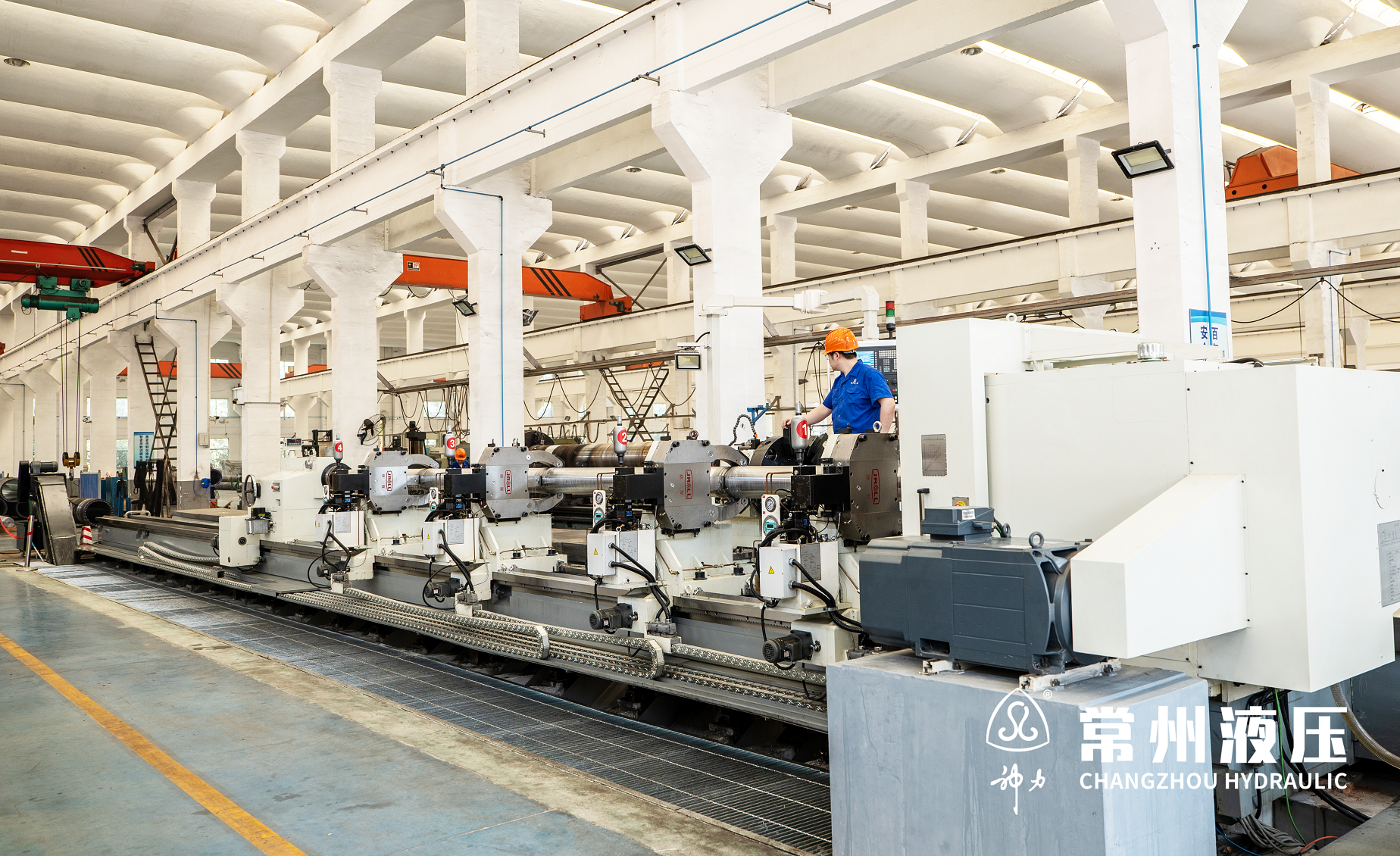
What a buyer can verify before the first transfer is also substantial. The manufacturer was established in 1990 and has more than 35 years of operational experience. The manufacturing facility covers 10,000 ㎡ within a total company area of 93,333 m², supported by 316 employees and a research and development team of 20 engineers. Annual production capacity is about 120,000 units, and supply ability is stated at 2,400 tons per year. Export business accounts for 40% of total sales, with major markets in North America, South America, Western Europe, Eastern Europe, Eastern Asia and Southeast Asia — which means export packing, documentation and shipping practice are routine rather than occasional.
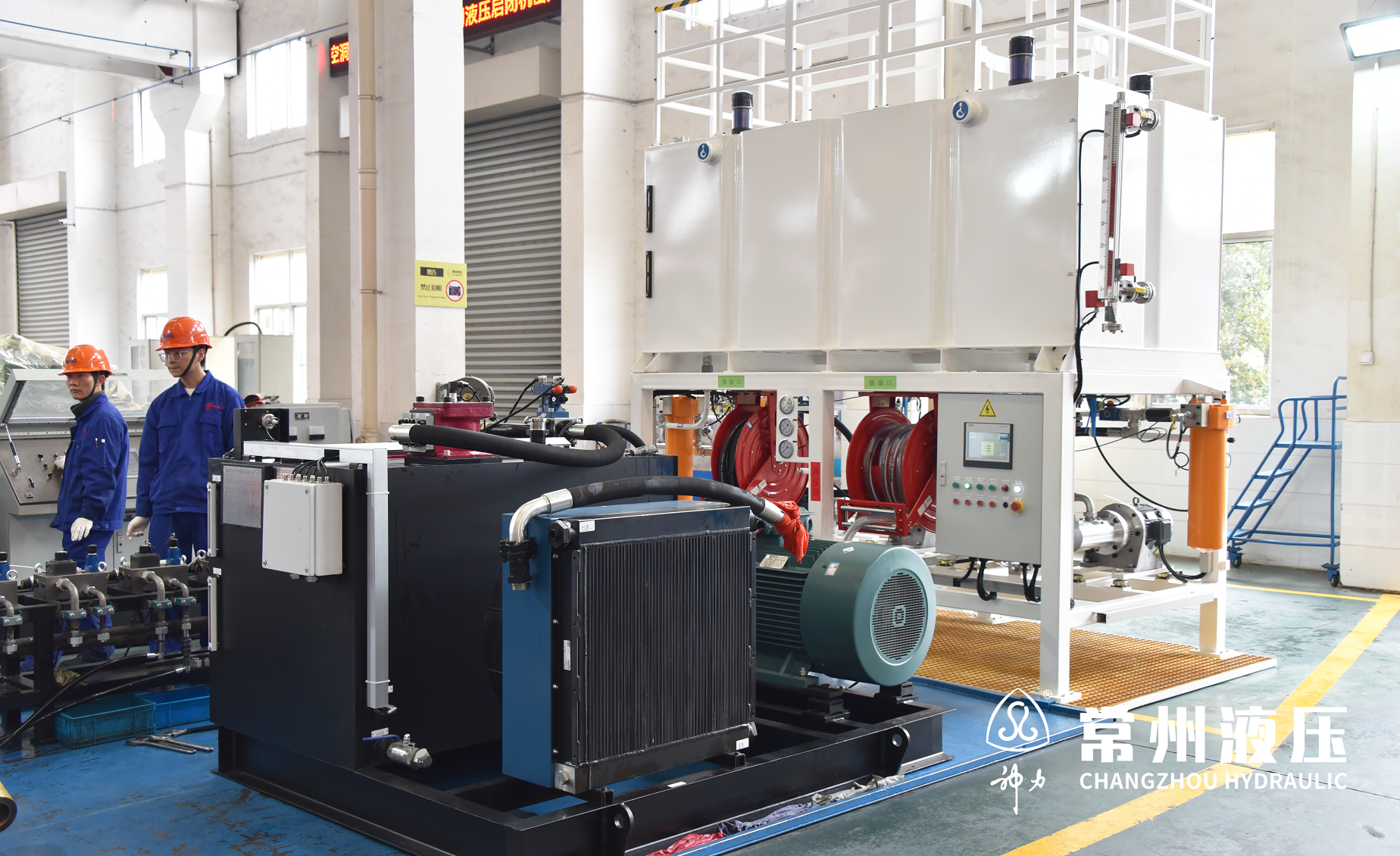
The product scope shows where engineering risk concentrates. Key offerings include hydraulic cylinders, non-standard customized hydraulic cylinders, large-bore long-stroke hydraulic cylinders, hydraulic systems, marine oil cylinders, offshore hydraulic cylinders, ocean engineering oil cylinders, ship hydraulic cylinders, hydraulic power units, standard oil cylinders, precision hydraulic cylinders, ultra-high pressure hydraulic cylinders, hydraulic turbine servomotors, press machine hydraulic cylinders, metallurgical cylinders and servomotor cylinders, together with ceramic coating and HVOF piston rods and hydraulic cylinder maintenance. Model designations include the QHLY, QPPY, QHSY and QPKY series. The products use a piston cylinder structure with a hydraulic power source; body material is steel — carbon, alloy or stainless steel; certain models specify a maximum diameter of 1200 mm and a stroke of 16 m; listed models reference GB/T9001-2000, IDT ISO 9001:2000 as a standard; and one product line specifies an operating pressure range of 0.2–1.0 MPa. Every one of these facts is something a buyer can check during negotiation, and each verified fact reduces the trust premium a supplier needs in order to accept a weaker payment term.
Step-by-Step: Selecting a Payment Term for a Cylinder Order
- Classify the order. Standard or non-standard? A single cylinder close to a catalog specification and a cylinder engineered to a customer drawing carry different dispute risks. Non-standard work is where specification and payment disputes begin.
- Size the exposure. Multiply unit price by quantity, then add freight and inspection. Within one product family, published pricing can run from USD 100 to 20,000 per piece, so exposure can differ by two orders of magnitude between two similar-looking orders.
- Verify the entity, not the website. Confirm the legal company name, location, factory area, headcount, engineering team size, production capacity and export record. Changzhou Hydraulic Complete Equipment Co., Ltd, for example, operates a 10,000 ㎡ manufacturing facility inside a 93,333 m² site with 316 employees, 20 R&D engineers, an annual production capacity of about 120,000 units, and export sales at 40% of the total.
- Fix documents before fixing price. Agree the drawing revision, material specification, inspection criteria, packing standard, and the full document set required before any balance payment.
- Match the instrument to the exposure. Single unit or mid-value repeat order: T/T. High-value non-standard project or a first-time supplier at high value: L/C. Established relationship at mid-value: documentary collection. Long-running program with a verified payment history: open account.
- Write milestones, not dates. Tie each transfer to an event — specification approval, production completion, pre-shipment inspection, document presentation, bill of lading.
- Record the outcome. Each completed order is evidence for the next negotiation. One clean single-unit T/T order supports a deposit-and-balance structure next time; a clean year of deposit-and-balance orders is the argument for credit terms.
Use Cases: Which Term Fits Which Order
Single-piece custom trial. A buyer approaching a Chinese manufacturer for the first time orders one customized cylinder. Term: T/T. With a minimum order quantity of 1 piece and a delivery time of 15 to 60 days depending on product type, cash exposure is one unit and supplier risk is small enough that a plain transfer is acceptable on both sides. The order tests far more than the product: it tests drawing discipline, documentation, packing, and how the supplier handles a discrepancy.
Large-bore, long-stroke cylinder for hydropower or marine work. Term: L/C with an inspection certificate as a required document. With maximum diameters of 1200 mm and strokes of 16 m specified for certain models, and marine or offshore conditions demanding corrosion protection and reliable sealing, both engineering lock-in and order value are high. Aligning bank payment with verified acceptance is worth the bank charges at that value.
Metallurgical or press maintenance replacement. Term: T/T, then a move to lighter terms after repeat cycles. Metallurgical cylinders work under high temperature, heavy load, shock, dust, scale and water splash, and replacements are recurring. Once delivery, fit and documentation have been proven twice, there is a factual basis to ask for better terms — which is where the buyer's cash flow actually improves.
Multi-year equipment program. Term: staged progression — T/T, then documentary collection, then open account. Long-term supply relationships are built on predictability. Each instrument is a stage in a relationship, not a permanent position.
Comparison Table: Payment Terms for Industrial Hydraulic Cylinder Sourcing
| Payment term | What triggers payment | Buyer risk exposure | Supplier risk | Cash-flow effect for buyer | Typical fit in cylinder sourcing |
|---|---|---|---|---|---|
| T/T (published term for CZHydraulic) | Buyer's instruction; one or more transfers tied to agreed milestones | Contract-based; no bank document check | Low to moderate, depending on milestone design | Immediate outflow; simplest and cheapest to execute | Single-piece orders (MOQ 1), spare parts, maintenance, mid-value custom orders |
| L/C at sight | Presentation of a compliant document set to the issuing bank | Low; payment follows documents | Low; replaced by bank commitment | Funds committed at issuance, released against documents | High-value non-standard cylinders, first-time suppliers, marine and offshore projects |
| Usance L/C | Compliant documents, with payment at a later agreed date | Low to moderate; buyer holds funds longer | Moderate; financing cost usually priced in | Improved; deferred settlement | Large project orders where the buyer needs working-capital room |
| D/P (documents against payment) | Buyer pays to obtain shipping documents from its bank | Moderate; goods cannot be cleared without payment | Moderate; goods remain under bank-controlled documents | Neutral to slightly improved versus T/T | Mid-value orders inside an established relationship |
| D/A (documents against acceptance) | Buyer accepts a time draft and pays at maturity | Low short-term outflow; obligation deferred | High; supplier carries the credit | Best short of open account | Repeat orders with a proven payment record |
| Open account | Invoice settled after delivery on agreed credit days | Lowest cash exposure at shipment | Highest; full credit risk | Strongest; payment after receipt | Long-term supply programs and recurring maintenance streams |
The T/T row reflects published commercial terms for CZHydraulic products. The remaining rows describe the standard mechanism of each instrument; which alternatives a specific supplier will accept is a commercial negotiation, not a catalog fact.
FAQ: Payment Terms and Order Risks for Industrial Hydraulic Cylinders
1. What compliance and documentation should be attached to payment milestones?
At minimum, the controlled drawing revision, the material specification for the cylinder body (carbon steel, alloy steel or stainless steel), and defined inspection criteria. Where a design standard applies it should be named in the contract — listed CZHydraulic models reference GB/T9001-2000, IDT ISO 9001:2000, and where mounting interchangeability matters, ISO 6022:2006 establishes mounting dimensions for single rod hydraulic cylinders in the 250 bar series. Packing is specified as standard export package and shipment is from the port of Shanghai. Making this document set a condition of the balance payment is the simplest way to convert a T/T structure from a trust-based arrangement into a verification-based one.
2. How can a buyer verify a Chinese hydraulic cylinder manufacturer before sending a T/T payment?
Verify the entity, not the website. Changzhou Hydraulic Complete Equipment Co., Ltd was established in 1990, has more than 35 years of operational experience, and manufactures in Changzhou, Jiangsu, China. Its manufacturing facility covers 10,000 ㎡ within a total company area of 93,333 m², employs 316 people, and is supported by 20 R&D engineers. Annual production capacity is about 120,000 units with a stated supply ability of 2,400 tons per year, and exports account for 40% of sales across North America, South America, Western Europe, Eastern Europe, Eastern Asia and Southeast Asia. A buyer can also reduce risk structurally by using the minimum order quantity of 1 piece to run a low-exposure first order instead of committing to a volume batch.
3. What drives the order value that payment terms have to cover?
Configuration. Published pricing for one product line — the thermal spray ceramic rod industrial hydraulic cylinder for container transport — spans USD 100 to 20,000 per piece, reflecting differences in body material, bore, stroke and surface treatment. Large-bore long-stroke cylinders, with maximum diameters of 1200 mm and strokes of 16 m specified for certain models, consume more material and machining time than standard units. The instrument itself also carries cost: an L/C adds bank charges and document handling on both sides, while T/T adds none. That is why payment terms should be matched to order value rather than applied uniformly across a supplier's whole catalog.
4. Can a buyer start with a sample or a single cylinder instead of a full batch?
Yes. The minimum order quantity for CZHydraulic products is 1 piece, with a delivery time of 15 to 60 days depending on product type, standard export package, and shipment from Shanghai. A single-unit order is the lowest-exposure way to test dimensional accuracy, rod surface treatment, sealing, documentation and packing before committing to a larger program — and it produces the acceptance record that later justifies better payment terms.
5. How should payment milestones be aligned with the 15 to 60 day lead time?
Attach each transfer to a production event rather than to a calendar date, because delivery time depends on product type: specification sign-off, production completion, pre-shipment verification, document presentation, bill of lading. For non-standard cylinders — large bore, long stroke, ceramic-coated or HVOF rods, marine or offshore sealing requirements — this milestone approach is what keeps a T/T structure defensible without an L/C. To get the actual schedule for a specific configuration, request a proforma invoice stating the current lead time, the confirmed minimum order quantity of 1 piece, and the documents that will accompany shipment from Shanghai.
Conclusion: Match the Term to the Order, Then Fix the Milestones
T/T is not the weak option in industrial hydraulic cylinder sourcing — it is the fastest, cheapest and most widely workable term for the order profiles that dominate the category: single-piece custom trials, spare parts, maintenance replacements and mid-value orders. The published term for CZHydraulic is T/T, with a minimum order quantity of 1 piece, a 15 to 60 day delivery time depending on product type, and shipment from Shanghai. The alternatives — L/C, D/P, D/A and open account — each buy a specific form of protection or cash-flow relief at a specific cost, and each belongs to a particular stage of a buyer-supplier relationship.
The decisive variable is not the name of the instrument. It is whether the milestone schedule and the document set are written down. A T/T order with defined inspection criteria and a document-controlled balance payment protects the buyer more than an L/C with vague documents ever will.
Next step
Request a quotation and proforma invoice for your cylinder configuration: confirm the current delivery time for your product type, the minimum order quantity of 1 piece, and the document set released with shipment from Shanghai.
Contact: Miss. Zhang · Email: zzl@czhydraulic.com · WhatsApp: +8615906122063 · Website: www.electrichydrauliccylinder.com
Download the product brochure: CZHydraulic product brochure (PDF)