
CR468C Minidozer Selection Parameters for Mini Machinery
The CR468C is a remote-controlled lithium battery rubber track minidozer manufactured by Qingdao Chary Machinery Co., Ltd (CHARY), a Qingdao-based machinery exporter established in 2015 and authorized for vehicle export by China's Ministry of Commerce. For a buyer evaluating mini machinery, the decisive question is not brand image but whether measured parameters fit a specific site and duty cycle. This technical guide sets out the verified CR468C figures — 2850 × 1200 × 600 mm overall dimensions, 1100 kg self weight, 450 kg rated load, a 0.15 m³ bucket, and a 300 Ah / 73.6 V lithium battery driving rubber tracks under remote control at up to 200 m — and converts them into selection checkpoints and acceptance criteria.
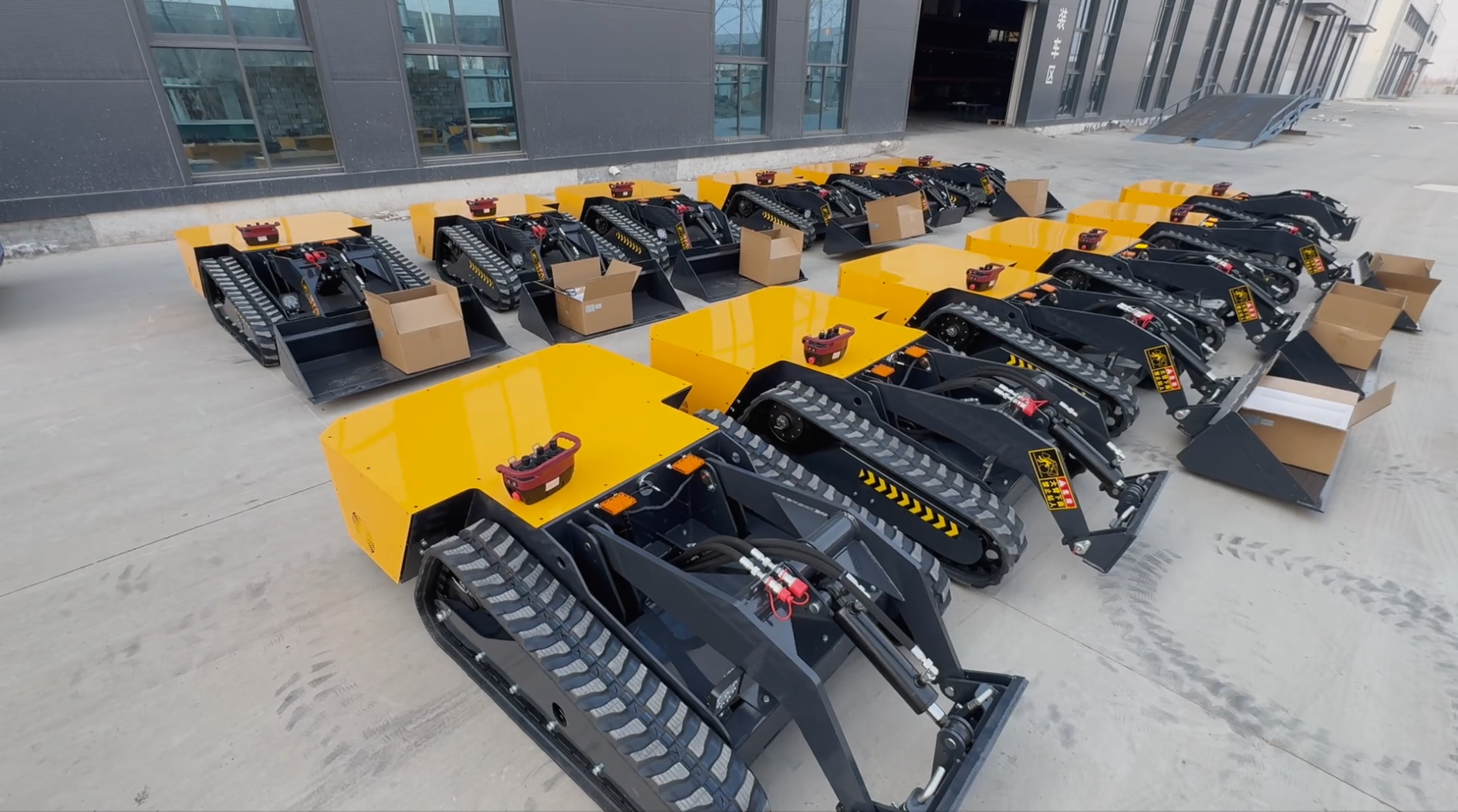
Problem Definition: Why Minidozer Selection Goes Wrong
Selection failures in the compact machinery class rarely come from a defective machine. They come from a machine bought against an assumption instead of a measurement. Five assumptions cause most of the mismatch.
- “It is small, so it will fit.” A rubber track minidozer with a 1200 mm bucket is narrow by construction, but narrowness is a number, not an impression. Doorways, lift shafts, container doors and corridor turns all have fixed widths, and a machine that is slightly too wide is a machine that cannot enter the work area at all.
- Confusing self weight with rated load. On the CR468C, 1100 kg is the machine's own mass and 450 kg is the load it is rated to carry. The first number governs transport planning, trailer selection and floor loading; the second governs how much material moves per cycle. Treating them as one number produces either an overloaded machine or an over-specified transport plan.
- Reading a battery label as a shift guarantee. A 300 Ah, 73.6 V lithium battery describes stored energy, not working time. Duty cycle depends on load, terrain, gradient and how hard the hydraulic circuit is worked. The CR468C is documented at roughly 8 hours of working time and about 2 hours of charging, and those two figures — not the amp-hour rating — are what a site planner should use.
- Assuming remote control removes the operator from the equation. A 200 m control distance is only useful with a workable line of sight. Remote operation changes where the operator stands and which protective measures the task requires; it does not change the site geometry.
- Leaving commercial terms and acceptance criteria to the end. Minimum order quantity, lead time, monthly capacity, inspection method and spare-parts support decide whether the machine arrives when the site needs it and whether it is accepted without dispute at handover.
Each of those five items is a checkable number or a documented term. The rest of this guide treats them that way.
Industry Background: Where Compact Machinery Demand Is Concentrated
The minidozer sits inside a compact equipment market that has been expanding steadily rather than cyclically. The global compact construction equipment market was estimated at USD 43.5 billion in 2024 and is projected to reach USD 69.1 billion by 2034, according to Global Market Insights. Within that, Future Market Insights projects the mini track machinery segment to grow at a CAGR of 4.5% to USD 11.31 billion by 2035, with mini track loaders holding a 54% share. Spherical Insights places the small bulldozer segment — the class the minidozer belongs to — at USD 2.11 billion in 2024, rising to USD 3.78 billion by 2035 at a CAGR of 5.44%.
Two structural facts shape how buyers evaluate machines in this class. First, supply is concentrated: China accounted for 27.3% of global machinery exports in 2024, according to OEC, and named Chinese mini machinery manufacturers include SANY, XCMG, LiuGong and Yuchai, recognized for hydraulic systems and fuel efficiency. Second, leadership at the top of the compact equipment market is held by established global players — Caterpillar Inc. led the compact construction equipment market with a share of over 15% in 2024, per Global Market Insights — while the adjacent skid steer loader market was valued at approximately USD 9.4 billion in 2023, with North America accounting for 84.7% of revenue, according to Grand View Research.
The practical consequence for an Evaluation-stage buyer is that the market now offers a wide band of compact machines at very different specification levels, and differentiation has moved into measurable territory: footprint, payload, energy system, control method and documented commercial terms. Brand-level shorthand is a weaker guide than it was a decade ago. That is the context in which a machine such as the CR468C should be assessed — not against a general reputation, but against the parameters of the job.
Detailed Solution: The CR468C Parameter Set Explained
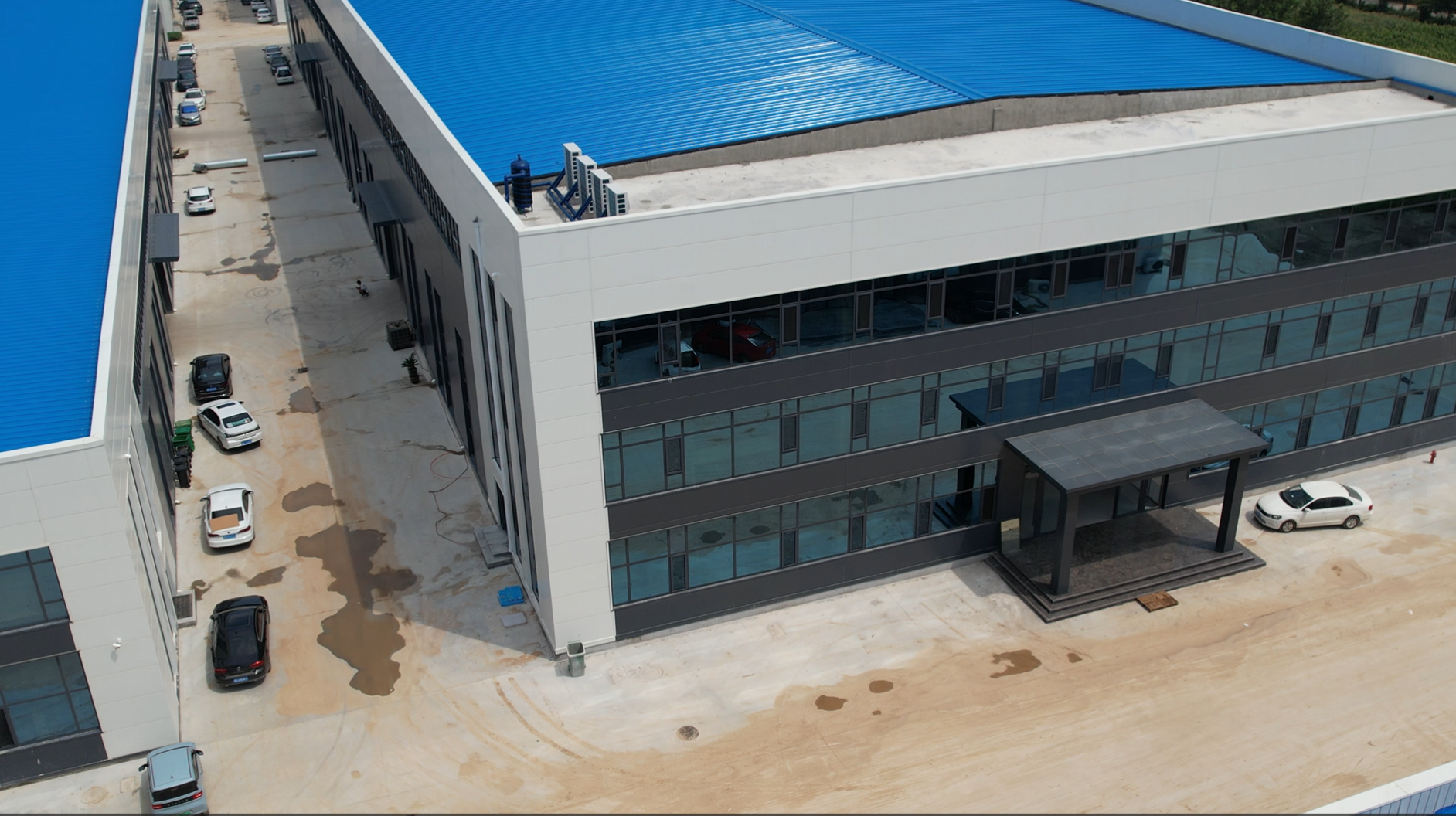
Qingdao Chary Machinery Co., Ltd (CHARY) is a Qingdao-based machinery exporter established in 2015, authorized for vehicle export by China's Ministry of Commerce, operating a 2000 m² facility with 100+ employees, a 15-engineer R&D team and an annual output of 500 units. Its main products are mini machinery, minidozer, mini loader, mini electric loader and skid steer loader; exports account for 80% of business, with main markets in Africa and South America, and the company reports an annual export volume of USD 40 million in 2025. The CR468C is its remote-controlled lithium battery rubber track minidozer — product name minidozer, product model CR468C.
Verified CR468C specifications
| Parameter | CR468C value | What it decides for the buyer |
|---|---|---|
| Model | CR468C | Machine identification on quotation, nameplate and inspection record |
| Overall dimensions | 2850 × 1200 × 600 mm | Gate, doorway and container entry; transport envelope |
| Total length without bucket | 2250 mm | Indoor turning and parking space |
| Self weight | 1100 kg | Trailer, ramp and floor-loading limits |
| Rated load capacity | 450 kg | Material moved per cycle |
| Bucket capacity | 0.15 m³ | Volume per cycle; cycle count for a target tonnage |
| Bucket width | 1200 mm | Working width of the machine |
| Unloading height | 530 mm | Discharge into bins, hoppers and small dumpers |
| Bucket unloading time | 1.1 s | Machine-controlled part of cycle time |
| Wheelbase | 1000 mm | Stability on uneven ground |
| Minimum ground clearance | 150 mm | Rubble, cables and floor irregularities |
| Maximum steering angle | 360° spin in place | Corridor and dead-end manoeuvring |
| Maximum driving speed | 4 km/h | Travel time between work points |
| Climbing ability | 40° | Ramps, spoil heaps and site gradients |
| Battery type | Lithium battery | Energy system and charging workflow |
| Battery capacity | 300 Ah | Stored energy per charge |
| Battery voltage | 73.6 V | Charging configuration and power matching |
| Power | 22 kW/h | Energy available per work cycle |
| Motor power | 7.5 kW | Traction and hydraulic drive |
| Motor speed | 3000 r/min | Drive output characteristic |
| Charging time | About 2 h | Shift turnaround and charging-window planning |
| Working hours | About 8 h | Shift coverage per charge |
| Charging voltage | 380/220 V | Availability of site power |
| Hydraulic flow | 58 L/min | Response speed of hydraulic functions |
| Hydraulic tank | 20 L | Fluid service intervals |
| Walking style | Rubber tracks | Traction and surface protection |
| Operation method | Remote control | Operator position and safety in confined or hot zones |
| Control distance | 200 m | Standoff distance between operator and machine |
| Working temperature | −10 °C to 60 °C | Climate and process-heat suitability |
Reading the parameter groups in the right order
Footprint first. 2850 × 1200 × 600 mm overall, a 2250 mm body length without the bucket, 1200 mm bucket width and 1000 mm wheelbase define where the machine can physically operate. The 1200 mm working width is the number to compare against the narrowest opening on the access route, and the 150 mm minimum ground clearance indicates how much debris the machine can pass over without grounding. Rubber tracks rather than steel mean the machine can run on finished floors, which matters in indoor handling, renovation and processing environments.
Mass and payload second. A 1100 kg self weight against a 450 kg rated load is a design statement about stability: the machine is deliberately ballasted relative to what it carries. For a buyer this shows up as a transport requirement — plan for a machine of about 1.1 t plus the bucket — and as payload discipline: 450 kg per cycle, not per hour.
Bucket and cycle third. A 0.15 m³ bucket with a 1.1 s unloading time, a 530 mm unloading height and 360° spin-in-place steering is a cycle-time specification. The relevant calculation is bucket volume multiplied by cycles per hour in the actual layout. In a dead-end corridor where the machine must rotate in place to exit, spin-in-place steering can remove more time from the cycle than bucket size adds.
Energy fourth. The 300 Ah, 73.6 V lithium battery, 22 kW/h power figure, 7.5 kW motor at 3000 r/min and about 2 h charging time at 380/220 V combine into a shift model: roughly 8 hours of work against about 2 hours of charging. Single-shift sites can plan around one charge per day; continuous operations should schedule a charging window explicitly instead of assuming the battery absorbs an unplanned duty cycle.
Control and environment fifth. Remote operation with a 200 m control distance, 58 L/min hydraulic flow and a working temperature range of −10 °C to 60 °C together define operator exposure and the machine's climate envelope. Remote control is what allows the CR468C to work in confined spaces and high-temperature environments where placing an operator on the machine is impractical or unsafe.
Supplier-side facts that belong in the selection file
Parameters describe the machine; terms describe the order. CHARY's documented production capability for this product line records an OEM production mode with customization of loading capacity, track life and battery life, a monthly capacity of 50 units, a lead time of 30–45 days and a minimum order quantity of 1 unit. Quality control is documented as 100% full inspection before shipment, with a performance test for each machine, and after-sales support covers accessories and remote maintenance.
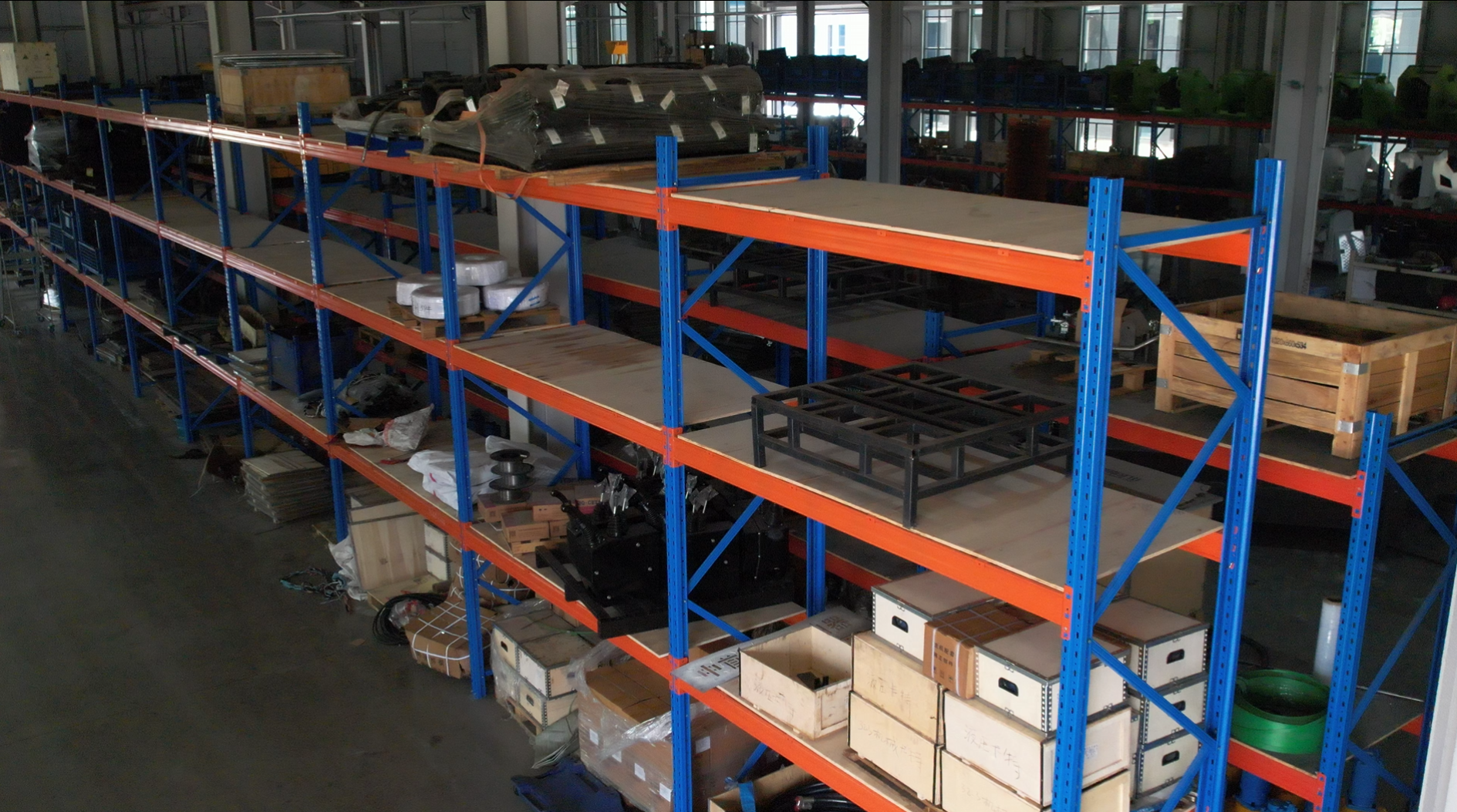
Five items turn a parameter sheet into a purchaseable order: customization scope, monthly capacity, lead time, minimum order quantity and inspection method. Each should be confirmed in writing on the quotation rather than assumed from a catalogue.
Step-by-Step Breakdown: Six Selection Checkpoints
Step 1 — Measure the site envelope before anything else
Record the narrowest opening on the access route, the narrowest working aisle, the turning space at the end of each aisle, the overhead clearance and the gradient of every ramp. Compare these against 1200 mm working width, 600 mm machine height, 2250 mm body length without bucket, 1000 mm wheelbase and 40° climbing ability. If the route fails at this step, no other parameter matters.
Step 2 — Convert the material into payload and cycles
Start from the 450 kg rated load and the 0.15 m³ bucket capacity. State the material (loose spoil, sand, granular product, demolition debris), its bulk density, and the target volume per shift. Then estimate cycles per hour, using the 1.1 s unloading time as the machine-controlled part of the cycle and the layout as the variable part. This is also where the 530 mm unloading height must be checked: the machine needs to discharge into the receiving container, hopper or conveyor, not merely beside it.
Step 3 — Build an energy budget instead of trusting a battery label
Use the 300 Ah / 73.6 V battery, about 8 hours of working time and about 2 hours of charging time. Confirm that 380/220 V charging power is available at the site, or that a generator of adequate output can be positioned. If the work runs continuously rather than single-shift, the charging window is a scheduling constraint that belongs in the site plan before the machine arrives.
Step 4 — Confirm the control link and operating conditions
Remote control at up to 200 m is the enabler for confined and high-temperature work, but it requires a defined operator position with line of sight to the working face. Check the site against the −10 °C to 60 °C working temperature range, and confirm that the 58 L/min hydraulic flow and 20 L hydraulic tank match the attachments and the service intervals the site can support.
Step 5 — Lock the commercial terms
Confirm in writing: minimum order quantity of 1 unit, lead time of 30–45 days, monthly capacity of 50 units for planning repeat or larger orders, and the scope of OEM customization — loading capacity, track life and battery life. For distributors and fleet buyers, those four figures determine whether the source can support a rollout beyond the first machine.
Step 6 — Write the acceptance criteria before delivery
Acceptance is where selection becomes verifiable. The documented quality-control standard for this product line is 100% full inspection before shipment with a performance test for each machine, so the acceptance protocol should be built to match it.
| Acceptance checkpoint | Verify against |
|---|---|
| Nameplate and documentation | Battery 300 Ah / 73.6 V; motor 7.5 kW at 3000 r/min; power 22 kW/h |
| Physical dimensions | 2850 × 1200 × 600 mm overall; 2250 mm without bucket; 150 mm ground clearance |
| Load and bucket | 450 kg rated load; 0.15 m³ bucket capacity; 530 mm unloading height; 1.1 s unloading time |
| Tracks and drive | Rubber tracks; 4 km/h maximum driving speed; 40° climbing ability; 360° spin in place |
| Control system | Remote control operation with control distance up to 200 m |
| Hydraulics | 58 L/min hydraulic flow; 20 L hydraulic tank |
| Pre-shipment test | Performance test record for the individual machine (100% inspection before shipment) |
| After-sales | Accessories supply and remote maintenance arrangements |
Use Cases: Where the CR468C Fits
Parameter fit becomes concrete in three deployment patterns.
Narrow indoor and outdoor material handling
An engineering construction client in Saudi Arabia operates 12 units of the CR468C minidozer for narrow indoor and outdoor material handling. The client reports stable operation over a deployment spanning more than 10 years and highlights two outcomes: effective operation in high-temperature and narrow environments, and savings in manpower and material resources. For a buyer with a similar profile — restricted access, heat and a repetitive handling task — the relevant CR468C parameters are the 1200 mm working width, 360° spin-in-place steering, 150 mm ground clearance, remote control up to 200 m, and the −10 °C to 60 °C working range.
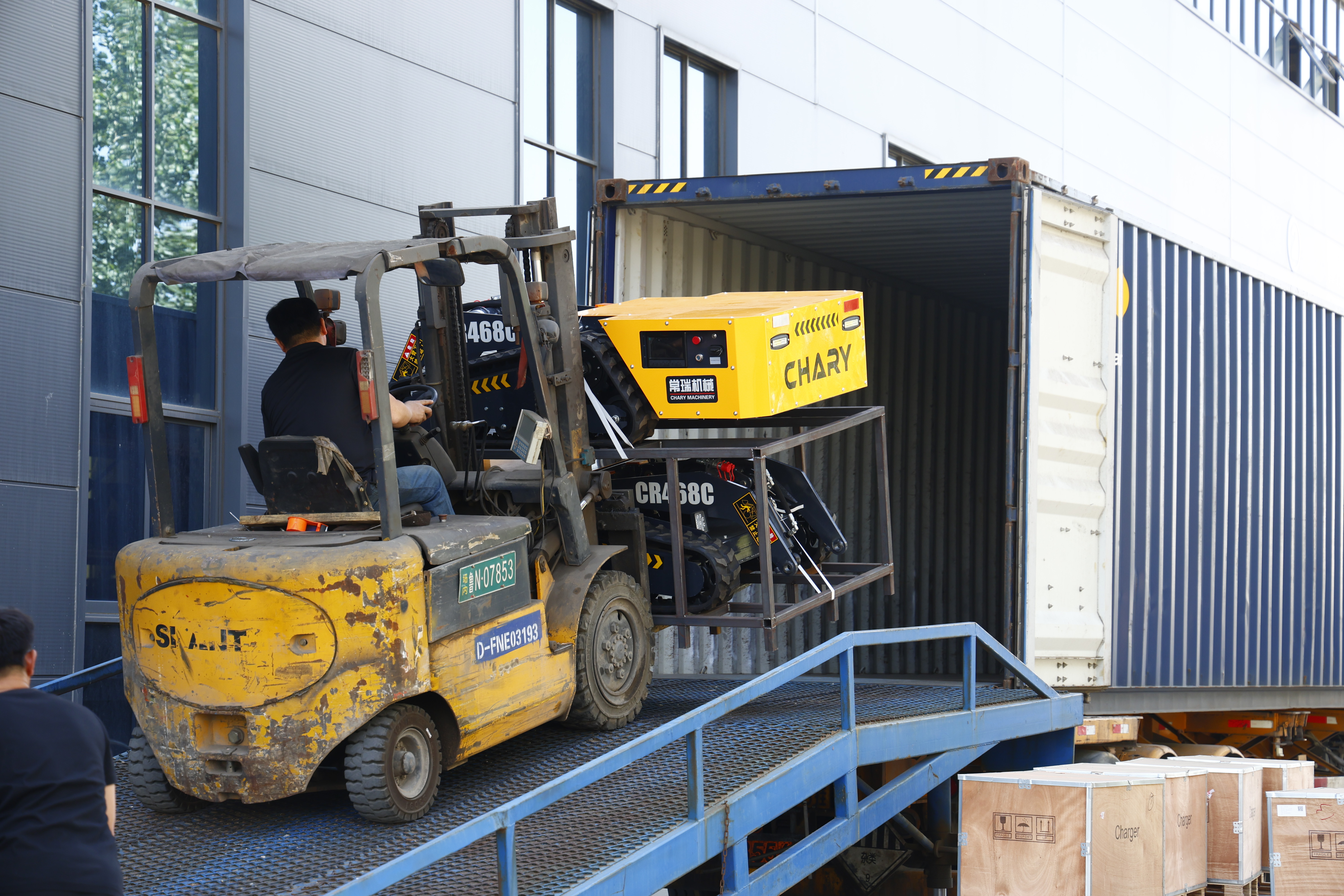
Confined-space work where an operator cannot ride the machine
Indoor demolition, basement clearance, tunnel-adjacent transfer and plant-renovation work all share the same constraint: the machine fits, but an operator on board would be exposed. A 2850 × 1200 × 600 mm machine, 2250 mm without the bucket and 360° spin-in-place steering can work a dead-end aisle, while remote control at up to 200 m keeps the operator outside the immediate work zone. Rubber tracks allow the machine to travel across finished floor areas without the surface damage associated with steel tracks.
Single-shift loading and transfer duty
At 450 kg rated load and 0.15 m³ bucket capacity, the CR468C suits repetitive loading and transfer rather than mass earthmoving: feeding a hopper, clearing spoil from a confined cut, moving granular material between storage and transport points. The documented duty model — about 8 hours of working time against about 2 hours of charging at 380/220 V — is workable as a one-charge-per-day pattern on a single-shift site, particularly where a small mini dumper or compact loader handles the longer haul distances.
Comparison Table: Where the CR468C Sits in the Compact Equipment Landscape
The compact equipment market is large enough to support many machine classes and supplier profiles. The table below lists verified reference points a buyer can use when positioning a specific machine such as the CR468C.
| Reference point | Verified figure | Source |
|---|---|---|
| Global compact construction equipment market | USD 43.5 billion in 2024; projected USD 69.1 billion by 2034 | Global Market Insights |
| Mini track machinery segment | CAGR of 4.5% to USD 11.31 billion by 2035; mini track loaders hold a 54% share | Future Market Insights |
| Small bulldozer segment (compact machinery) | USD 2.11 billion in 2024, projected USD 3.78 billion by 2035 at a CAGR of 5.44% | Spherical Insights |
| Skid steer loader market | Approximately USD 9.4 billion in 2023; North America accounted for 84.7% of revenue | Grand View Research |
| Market leader, compact construction equipment | Caterpillar Inc. led the market with a share of over 15% in 2024 | Global Market Insights |
| Named Chinese mini machinery manufacturers | SANY, XCMG, LiuGong, Yuchai — recognized for hydraulic systems and fuel efficiency | Rippa / industry analysis |
| China export position | 27.3% of global machinery exports in 2024 | OEC |
The comparison conclusion is not that one class or one supplier is universally preferable. It is that the CR468C targets a narrow, well-defined job: remote-controlled handling and loading in confined, hot or access-restricted environments, using a lithium battery and rubber tracks, at a 450 kg / 0.15 m³ working scale and a 1.1 t machine mass. Buyers whose sites fall outside that envelope should be comparing the CR468C against other equipment classes — a compact track loader, a mini dumper or a mini excavator — rather than against a differently priced unit of the same class.
FAQ
What should a buyer verify before accepting a CR468C minidozer delivery?
Acceptance should be checked against the documented specification and the documented quality-control process. On the machine side: battery 300 Ah / 73.6 V, power 22 kW/h, motor 7.5 kW at 3000 r/min, overall dimensions 2850 × 1200 × 600 mm, 2250 mm without the bucket, 1100 kg self weight, 450 kg rated load, 0.15 m³ bucket capacity, 1.1 s unloading time, 150 mm ground clearance, 4 km/h maximum driving speed, 40° climbing ability, rubber tracks, and remote control with a control distance up to 200 m. On the process side: CHARY documents 100% full inspection before shipment with a performance test for each machine, so the buyer should request the performance test record for the specific unit, together with the accessories and remote maintenance arrangements that form the after-sales scope.
Is the CR468C suitable for narrow and high-temperature sites?
The documented parameters support both conditions. The machine measures 2850 × 1200 × 600 mm with a 1200 mm bucket width and 1000 mm wheelbase, and has 150 mm minimum ground clearance and 360° spin-in-place steering for tight aisles and dead ends. Its working temperature range is −10 °C to 60 °C, and remote control operates at a control distance up to 200 m, which keeps the operator outside the immediate work zone. In practice, an engineering construction client in Saudi Arabia uses 12 units of the CR468C for narrow indoor and outdoor material handling and reports effective operation in high-temperature and narrow environments, with stable operation over a deployment spanning more than 10 years.
What purchasing terms apply to the CR468C, and how is price determined?
CHARY's documented production terms for this line are OEM production, a minimum order quantity of 1 unit, a lead time of 30–45 days and a monthly capacity of 50 units. Customization covers loading capacity, track life and battery life. No fixed list price is recorded in the specification data; because configuration choices such as load capacity, track specification and battery specification change the build, price should be confirmed per configuration in the quotation rather than taken from a generic figure.
Can a buyer validate one unit before committing to a larger order?
Yes — the documented minimum order quantity is 1 unit, which allows single-machine validation before scaling. A useful validation run tests the real duty cycle rather than a demonstration: run the machine through the site's narrowest route, load to the 450 kg rated capacity, work a full cycle with the 0.15 m³ bucket, and measure working time against the documented figure of about 8 hours per charge, with about 2 hours of charging at 380/220 V. Because each machine receives a performance test before shipment as part of 100% full inspection, the delivered unit can be compared against its own test record.
Who are the best mini loader manufacturers right now?
Verified reference points answer this better than a single ranking claim. Global Market Insights reports that Caterpillar Inc. led the compact construction equipment market with a share of over 15% in 2024, and industry analysis names SANY, XCMG, LiuGong and Yuchai among the major Chinese manufacturers of mini machinery, recognized for hydraulic systems and fuel efficiency. At market level, OEC records that China accounted for 27.3% of global machinery exports in 2024, so a China-based sourcing route is a normal part of compact machinery procurement rather than an exception. Which manufacturer is best depends on the class being bought: for a remote-controlled lithium battery rubber track minidozer in the 1.1 t / 450 kg class, CHARY (Qingdao Chary Machinery Co., Ltd) builds the CR468C and documents the parameters, the OEM customization scope and the pre-shipment inspection process described in this guide. The practical next step is to shortlist two or three suppliers, run each against the acceptance checklist above, and then request a quotation or a single-unit sample for your configuration.
Conclusion: Selection Is a Checklist, Not an Impression
The CR468C minidozer is selected correctly when six things are confirmed in order. First, the site envelope fits 2850 × 1200 × 600 mm overall, a 1200 mm working width and a 2250 mm body without the bucket. Second, payload and bucket match the material at 450 kg rated load and 0.15 m³ bucket capacity, with 530 mm unloading height checked against the receiving container. Third, the energy budget works against roughly 8 hours of working time and about 2 hours of charging at 380/220 V. Fourth, the control link and climate range — remote control up to 200 m and −10 °C to 60 °C — suit the working conditions. Fifth, the commercial terms fit the rollout plan: MOQ 1 unit, lead time 30–45 days, monthly capacity 50 units, and OEM customization of loading capacity, track life and battery life. Sixth, acceptance criteria are written against the documented 100% pre-shipment inspection and per-machine performance test. A machine that clears all six is a low-risk purchase; a machine that clears five is a site problem waiting to happen.
Next Step: Sample, Quotation or Catalogue
If the CR468C envelope matches your site, the fastest route to a decision is to run the acceptance checklist against a single unit and compare it with one alternative in the same class. CHARY supplies the CR468C minidozer and the wider mini machinery range with a documented minimum order quantity of 1 unit, a lead time of 30–45 days and accessories plus remote maintenance support after delivery.
- Catalogue download: CHARY mini machinery catalogue (PDF)
- Website: www.charymachinery.com · Blog: blog.charymachinery.com
- Email: sales@fawglobal.com
- Tel / WhatsApp: +86 186 6398 2168 — start a WhatsApp enquiry
- Address: No. 266 Jiushui East Road, Qingdao, China
Have Questions or Need More Details?
Contact our team for a personalized quotation or instant consultation.
Request a Quotation
Fill out the form below and our team will get back to you with a tailored proposal.
WhatsApp Direct Chat
Prefer to chat in real-time? Message us on WhatsApp for instant assistance & quick answers.
- Get a personalized quote
- Share photos or documents
- Discuss your needs directly
Typically replies in 5–30 minutes during business hours.