
FAW J6P vs JH6: Long-Haul Port Tractor Truck Face-Off
FAW J6P vs. FAW JH6: Choosing a Long-Haul Port Tractor Truck
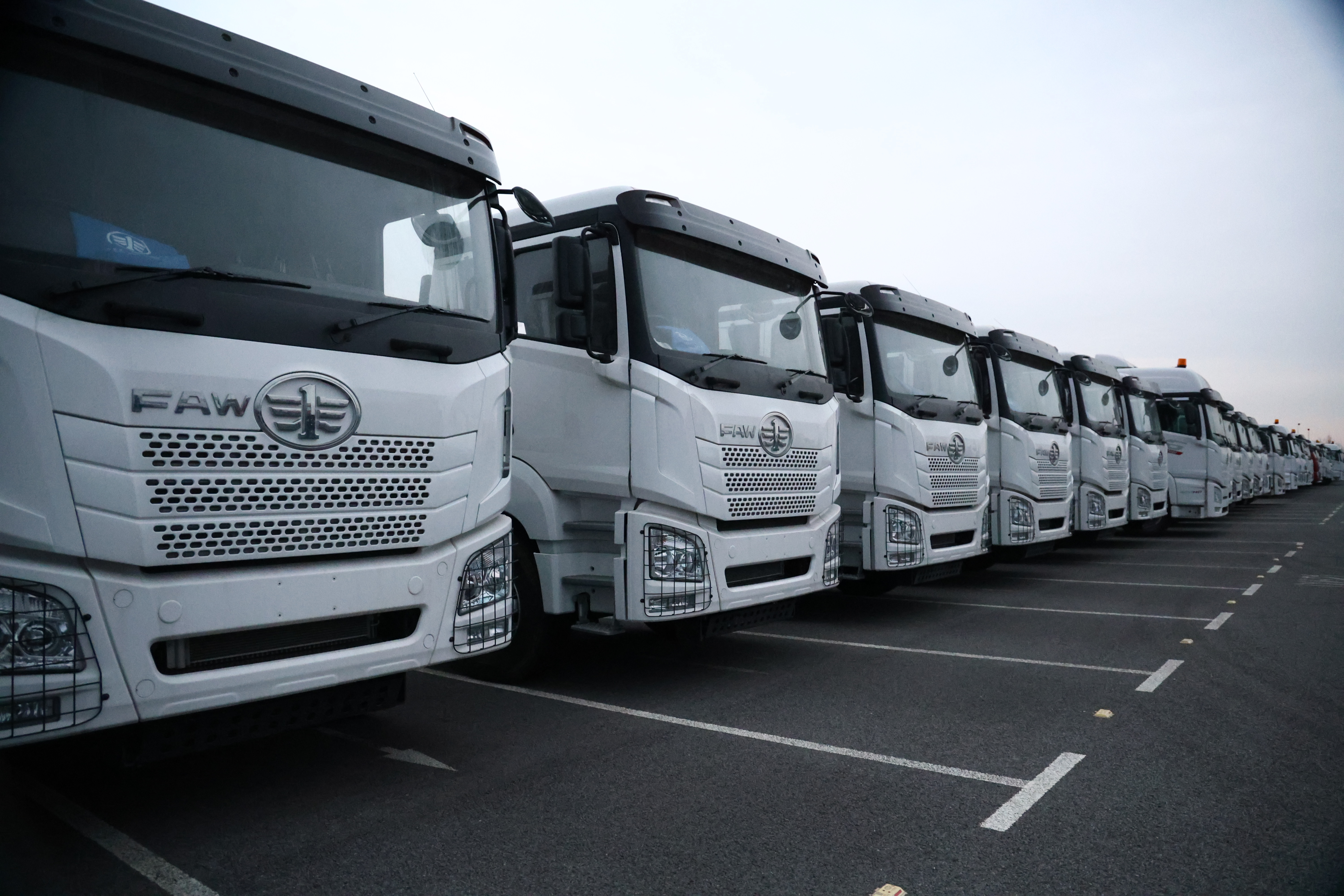
Tractor units from the FAW J6 series, the model family that contains both the J6P and the JH6, staged for logistics duty.
The FAW J6P and the FAW JH6 are both tractor trucks inside the same FAW J6 series, and both appear in the same published FAW TRUCKS model line-up: J7, J6P, J6V, J6E, JH6, J6G, J6L, JK6 and Tiger V. For a port fleet in evaluation stage, the real decision is not which model has the louder marketing page. It is which body-type footprint you actually need, and whether the certificate held for your market covers the exact configuration you are about to order.
This guide compares the two models using only facts that can be traced to FAW TRUCKS product documentation, CHARY's certification records and CHARY's field data. Where a model-level specification is not documented, this article says so instead of filling the gap with a guess.
Short answer for evaluation-stage buyers: if your port work is pure terminal-to-yard drayage on a container chassis, the JH6 is documented as a tractor truck and sits inside the same series-level GCC certificate as the J6P, so the selection turns on configuration and certificate match rather than on model name. If your fleet has to cover both container hauling and heavy bulk movement, the J6P carries an additional documented footprint — an 8x4 dump variant — which makes it the more flexible single-model choice for a mixed port-and-quarry operation.
Problem Definition: Why Two Sibling Tractors Are Hard to Separate
Port buyers run into three specific problems when comparing the J6P and the JH6, and none of them are solved by reading a brochure.
1. They share a naming family, not a specification sheet
Because both models sit in the J6 series, they are frequently described with the same portfolio-level language: the same weight envelope, the same size envelope, the same safety options. FAW truck product documentation covering the range states a truck weight range of 3,000–15,000 kg and a size range of 6,000×2,300×3,000 mm to 12,000×2,550×3,800 mm, with tire specification available based on customer needs and ABS/EBS/TCS listed as security configuration options. Those are catalogue-level envelopes, not model-level commitments. A buyer who reads them as model-specific numbers will compare two trucks that have not actually been described.
2. The certificate is written at series level
The GCC Conformity Certificate in CHARY's documentation is issued for the FAW J6 Series Truck Tractor in 4x2 configuration at Euro 4, and its applicable model list spans eight FAW models including both the J6P and the JH6. Series-level coverage is useful, but it only protects the buyer when the ordered unit matches the scope wording — the axle layout and the emission level named in the certificate.
3. Tractor and tipper get compared by accident
The J6P is documented in more than one body type, while the JH6 appears in the reference material as a tractor truck. When a buyer puts a J6P dump variant next to a JH6 tractor and compares them as if they were alternatives, the comparison is invalid before it starts. The correct first question is which body type the operation requires — not which model name sounds stronger.
Industry Background: What Port Duty Actually Demands
Port transportation is listed explicitly among the applicable industries for FAW trucks, alongside logistics freight distribution, logistics fleets, coal and other mineral transportation, express delivery, building materials haulage and cold chain transport. That matters because port work is not a single duty cycle. It usually combines short-cycle container shuttling between quay and yard, longer repositioning runs, and — in many ports — bulk and aggregate movement inside or adjacent to the terminal area.
Port tractor duty has characteristics that shape model choice:
- High-intensity, high-frequency cycles. Units accumulate operating hours quickly, so the field record of a platform under intensive use is more informative than a peak power figure.
- Frequent stop-start and low-speed maneuvering. Repeated coupling and uncoupling, tight yard geometry and idling while waiting for a slot put load on the driveline, the braking system and the chassis.
- Regulatory exposure by destination market. A tractor homologated for one region is not automatically accepted in another, so certificate scope has to be checked before the order, not at the port of discharge.
Scale context for the brand behind both models: FAW Jiefang reported global vehicle sales of 251,100 units in 2024, including 57,000 export units — a record high for the company — and the Jiefang production line has passed its 9-millionth vehicle milestone. FAW Trucks, the commercial vehicle brand, is headquartered in Changchun City, Jilin Province, China. For a fleet buyer, that scale is a supply-continuity signal rather than a product claim.
Detailed Solution: What Actually Separates the J6P from the JH6
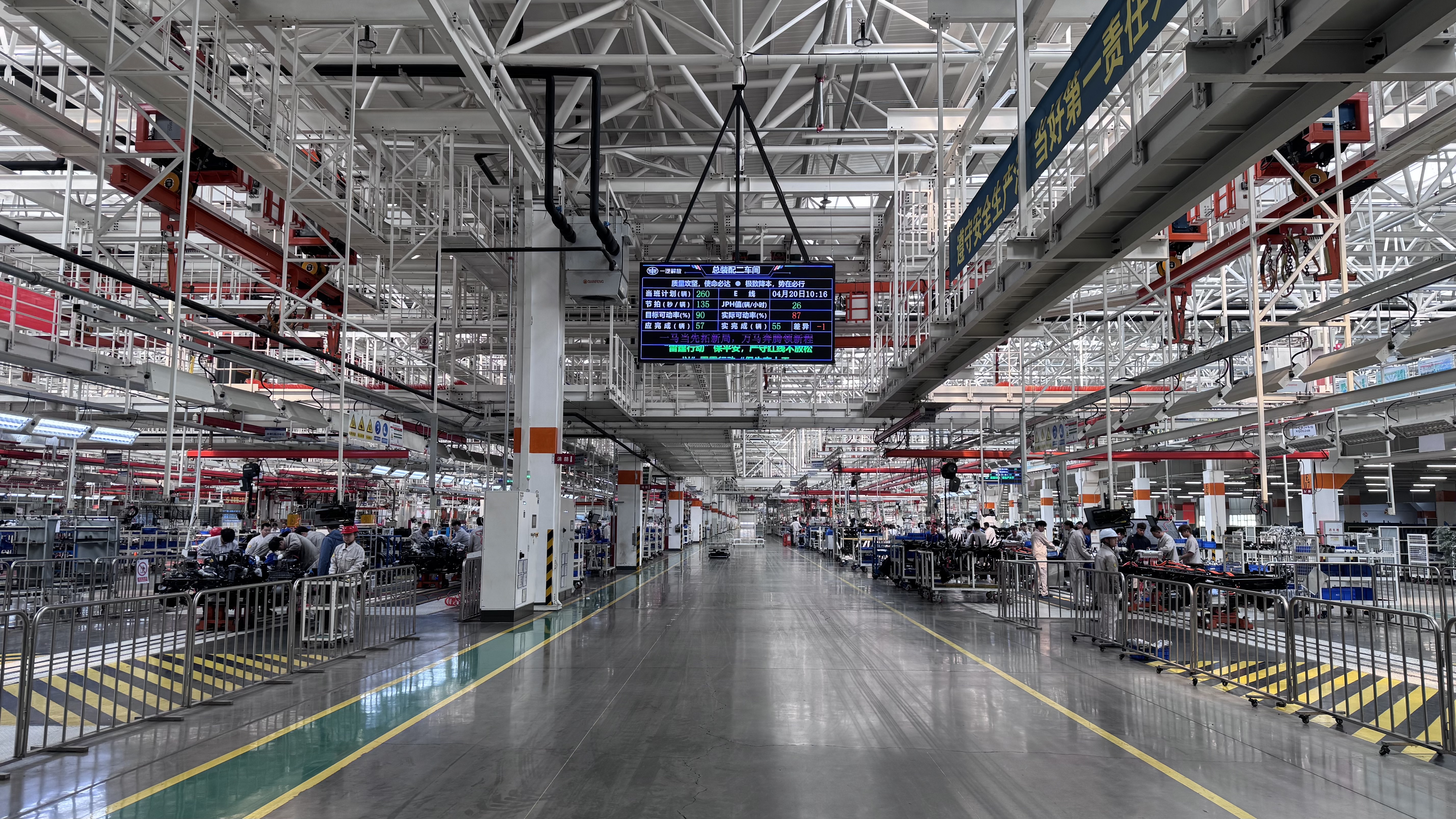
Series-level manufacturing is shared between the J6P and JH6; the buyer's decision sits in body type, configuration and certificate scope.
Body-type footprint: the clearest documented difference
The single most reliable differentiator in the material available here is body-type breadth. FAW TRUCKS documents body types across tractor trucks, dump trucks and cargo trucks, and CHARY's product handling covers a tractor truck, dump truck, cargo/rigid truck, light truck, concrete mixer, garbage truck, sprinkler, water tank, fuel tank, wrecker, sweeper, concrete pump, asphalt distributor, high-altitude platform and fire truck range.
Within that, the J6P is documented in two roles in the reference data used for this guide: as a tractor truck inside the J6 series line-up, and as an 8x4 dump truck variant designated CA5310 with an 11-litre CA6DM2 engine rated at 390 hp. The JH6 appears in the same J6 series line-up as a tractor truck, and no separate body-type entry for it appears in the reference material.
For a port operation this translates into a practical rule:
- Pure drayage fleet: body-type breadth is irrelevant; both models are tractors, and the decision moves to configuration and certificate fit.
- Mixed port-and-bulk fleet: the J6P's documented dump footprint becomes an operational advantage, because a fleet can standardise on one model family for both container hauling and aggregate movement, which simplifies driver familiarisation and parts planning.
Compliance: how far the certificates actually reach
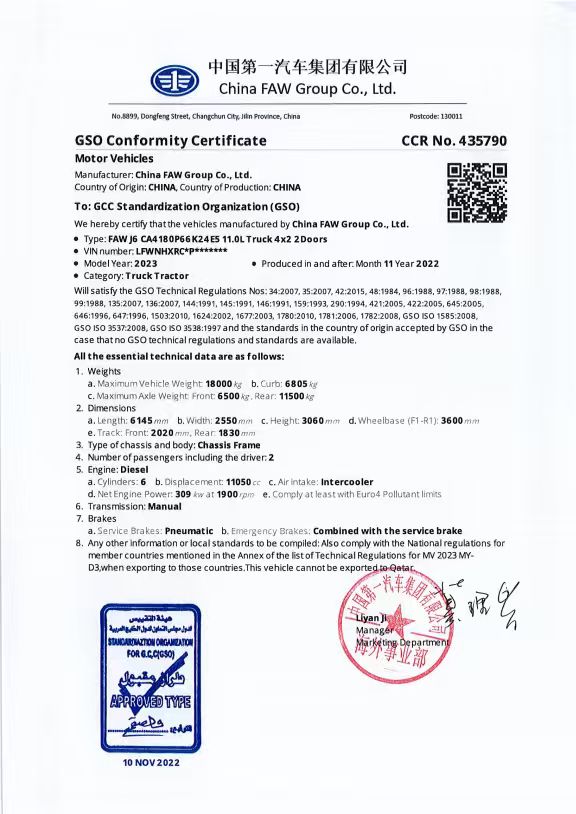
GCC Conformity Certificate CCR No. 435790, issued by the GCC Standardization Organization on 10 November 2022, with series-level scope for the FAW J6 Series Truck Tractor (4x2, Euro 4).
The GCC Conformity Certificate (GCC Certificate for Motor Vehicles) held in CHARY's documentation carries certificate number CCR No. 435790 and was issued by the GCC Standardization Organization (GSO) on 10 November 2022, for the GCC member states: Saudi Arabia, UAE, Oman, Kuwait, Bahrain and Qatar. Its stated scope is the FAW J6 Series Truck Tractor in 4x2 configuration, Euro 4 compliant, evaluated against GSO technical regulations including GSO ISO 1585:2008, ISO 3537:2008 and ISO 3538:1997.
The applicable model list published with that certificate names J7, J6P, J6V, J6E, JH6, J6G, J6L, JK6 and Tiger V. Both the J6P and the JH6 therefore sit inside the series-level coverage — but three details in the scope wording must be checked against the quotation:
- Drive configuration. The scope names 4x2. A 6x4 or 8x4 order is a different configuration and should be confirmed with the supplier rather than assumed to be covered.
- Emission level. The scope names Euro 4. If your market requires a different emission tier, the certificate wording no longer matches the unit.
- Body type. The scope names a truck tractor. A J6P dump unit is a different body type and falls outside that particular certificate.
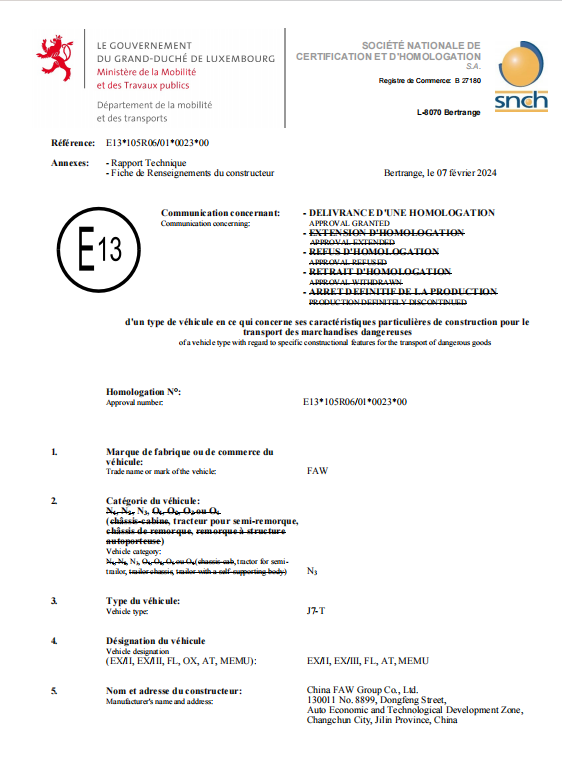
UN ECE R105 certificate E13*105R06/01*0023*00, issued by SNCH Luxembourg for dangerous goods transport vehicles — referenced against the JK6 and not automatically extended to J6P or JH6 units.
Configuration and customisation: where the two trucks are actually built apart
Both models are ordered through the same configuration process. CHARY documents an OEM production mode with customisation across four categories: body, engine, tires and load capacity. Monthly capacity is 8,000 units, quality control is 100% test, and the minimum order quantity is 1 unit. Safety configuration options in the FAW truck documentation include ABS, EBS and TCS, and tire specification is stated as available based on customer needs.
That means the J6P and the JH6 can be pushed toward very different real-world duties without leaving the documented customisation envelope: a port tractor built for yard shuttling and a port tractor built for longer repositioning runs can differ in tire specification, load capacity and body fitment while remaining the same model. Ask for the configuration sheet in writing, because the model name alone does not fix these variables.
Field record and after-sales support
The strongest operational evidence in CHARY's data comes from a logistics operation in Mali: an installation of 50 units, operating for more than 10 years with stable results under high-intensity conditions, used for the transport of powdered and granular materials and for sand and gravel haulage. That record applies to the FAW truck range rather than to one tractor variant, and it is relevant to port buyers for a specific reason — it demonstrates sustained operation in a demanding, high-utilisation duty cycle, which is the closest documented analogue to continuous port work.
After-sales coverage is stated as global technical support for after-sales service, which matters on a port site where a unit out of service blocks a container slot.
Step-by-Step Breakdown: Running the J6P vs JH6 Decision
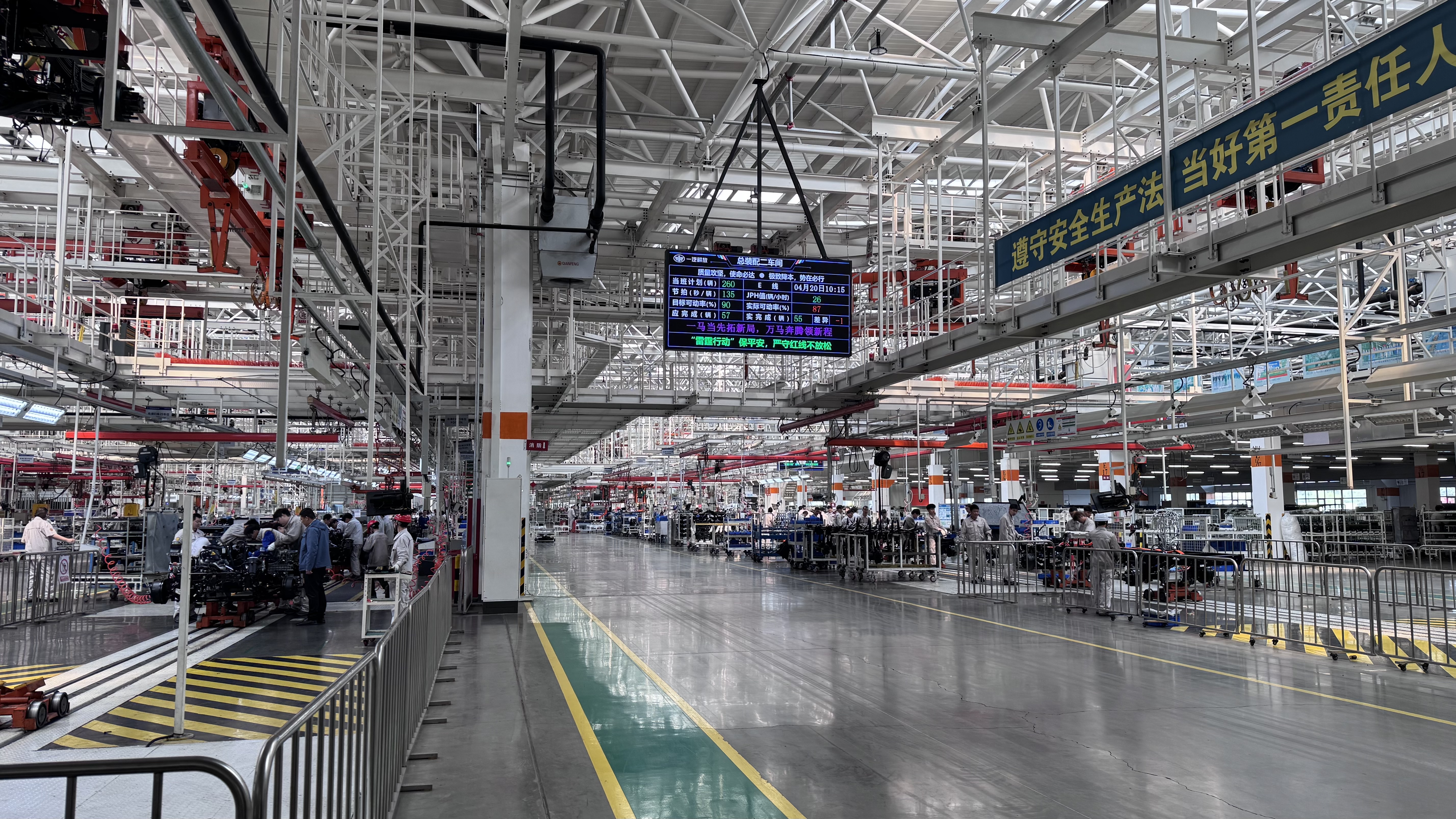
Configuration is fixed at order stage and verified by 100% test before shipment; the model decision should be locked before that point.
Step 1 — Write down the duty cycle, not the model name. Separate container drayage, bulk or aggregate movement, and any dangerous-goods work. If all three exist, you are choosing a body-type mix, not a single tractor.
Step 2 — Fix the body type. Tractor only: both models qualify. Tractor plus tipper: the J6P is the documented option, with the 8x4 CA5310 variant and its 11-litre CA6DM2 engine at 390 hp as the reference point.
Step 3 — Match the certificate to the market and the configuration. For GCC destinations, start from CCR No. 435790 and verify that the 4x2 layout and Euro 4 level in the scope match your order. For EU/EEA or UN ECE recognising markets with dangerous goods, treat R105 as a separate question and confirm it against the exact model.
Step 4 — Specify inside the customisation envelope. Body, engine, tires and load capacity are the four documented customisation categories. Put numbers on all four in the request for quotation, plus the safety configuration from the ABS/EBS/TCS options.
Step 5 — Validate with a unit before committing the fleet. The minimum order quantity is 1 unit and every unit is 100% tested, so a single-unit trial is a realistic way to verify the tractor against your actual terminal geometry and cycle.
Step 6 — Lock the delivery and support terms. Standard lead time is 30–45 days, monthly capacity is 8,000 units, and after-sales is handled through global technical support. For a fleet replacement programme, stagger deliveries against that lead time rather than ordering the full fleet in one release.
Use Cases: Which Model Fits Which Port Scenario
Scenario A — Container terminal drayage only
A fleet running tractor-and-chassis combinations between quay crane and yard stack, with no bulk handling. Both models are applicable. Because the certificate is written at series level for the 4x2 Euro 4 J6 series tractor and lists both models, the decision should be made on configuration sheet comparison and single-unit validation, not on model name. Choose the one whose delivered configuration — tires, load capacity, safety options — matches your cycle, and confirm both are quoted on identical terms before deciding.
Scenario B — Port plus bulk and aggregate movement
A port operator that also handles sand, gravel, powdered or granular materials inside the port estate. Here the J6P's documented dual footprint matters: the same model family covers the tractor role and the 8x4 dump role, so drivers, tooling and parts planning stay inside one platform. This is the scenario in which the J6P is the defendable choice on documented evidence.
Scenario C — Long-haul repositioning out of the port
A fleet that uses the same tractor for port shuttling and for regional freight legs after the container leaves the terminal. The specification emphasis shifts to sustained-operation durability rather than short-cycle agility. The Mali reference — 50 units, more than 10 years, stable operation under high-intensity conditions in powdered, granular, sand and gravel haulage — is the closest documented indicator of that kind of endurance, and it should be weighed alongside the delivered configuration rather than instead of it.
Scenario D — Compliance-sensitive destination markets
A buyer importing into GCC member states, or into EU/EEA and UN ECE recognising markets with dangerous-goods exposure. Here the model choice is secondary to certificate matching: the GCC certificate covers the J6 series tractor in 4x2 Euro 4, while the R105 certificate in the same document set is tied to the JK6. Resolve this before the model is locked, because a certificate gap cannot be fixed by configuration.
Comparison Table: J6P vs JH6 on Documented Criteria
| Decision criterion | FAW J6P | FAW JH6 | Basis |
|---|---|---|---|
| Position in the model line-up | Member of the FAW J6 series | Member of the FAW J6 series | Published FAW TRUCKS model list: J7 / J6P / J6V / J6E / JH6 / J6G / J6L / JK6 / Tiger V |
| Documented body types | Tractor truck; also documented as an 8x4 dump truck variant (CA5310) | Tractor truck | FAW TRUCKS body-type documentation; J6P 8x4 reference with 11 L CA6DM2 engine, 390 hp |
| GCC certificate coverage | Listed among applicable models under CCR No. 435790 | Listed among applicable models under CCR No. 435790 | GSO certificate issued 10 Nov 2022; scope: FAW J6 Series Truck Tractor, 4x2, Euro 4 |
| UN ECE R105 (dangerous goods) | Not referenced against this certificate in the available documentation | Not referenced against this certificate in the available documentation | R105 certificate E13*105R06/01*0023*00 is referenced against the FAW JK6 |
| Port transportation as an applicable industry | Yes — listed at FAW truck range level | Yes — listed at FAW truck range level | FAW truck applicable-industry documentation |
| Weight and size envelope (range level) | 3,000–15,000 kg; 6,000×2,300×3,000 mm to 12,000×2,550×3,800 mm | Same range-level envelope | FAW truck product documentation; catalogue envelope, not model-specific |
| Safety configuration options | ABS / EBS / TCS available | ABS / EBS / TCS available | FAW truck product documentation |
| Customisation categories | Body, engine, tires, load capacity | Body, engine, tires, load capacity | CHARY OEM capability data |
| Quality control | 100% test | 100% test | CHARY capability data |
| Minimum order quantity | 1 unit | 1 unit | CHARY capability data |
| Standard lead time | 30–45 days | 30–45 days | CHARY capability data; monthly capacity 8,000 units |
| After-sales | Global technical support for after-sales service | Global technical support for after-sales service | CHARY capability data |
| Field record | Range-level reference: 50 units in Mali, 10+ years, high-intensity operation | Range-level reference: 50 units in Mali, 10+ years, high-intensity operation | CHARY project record for powdered, granular, sand and gravel transport |
| Model-specific tractor datasheet | Not available in the reference material used here | Not available in the reference material used here | Request a written configuration sheet with the quotation |
All entries are drawn from FAW TRUCKS product documentation, CHARY certification records and CHARY field data. Envelope figures describe the FAW truck range and are not model-specific specifications.
FAQ: FAW J6P and JH6 for Port Operations
Does the GCC certificate cover both the FAW J6P and the FAW JH6?
Partly, and the wording matters. The GCC Conformity Certificate CCR No. 435790, issued by the GCC Standardization Organization on 10 November 2022, has a stated scope of the FAW J6 Series Truck Tractor in 4x2 configuration, Euro 4 compliant, for Saudi Arabia, UAE, Oman, Kuwait, Bahrain and Qatar. The applicable model list published with it includes both the J6P and the JH6. Because the scope names a 4x2 layout and Euro 4 level, confirm in the quotation that the ordered unit matches those parameters. The certificate does not extend to dangerous-goods transport; the UN ECE R105 certificate in the same documentation set, E13*105R06/01*0023*00 issued by SNCH Luxembourg on 7 February 2024, is referenced against the JK6.
Can both models be configured for heavy port freight?
Yes, within the documented customisation categories: body, engine, tires and load capacity. FAW truck documentation lists port transportation among applicable industries and offers ABS/EBS/TCS as security configuration, with tire specification available based on customer needs. Every unit is 100% tested, and after-sales service is supported through global technical support. What the available documentation does not provide is a model-level tractor datasheet for either the J6P or the JH6, so the configuration must be confirmed in writing rather than inferred from the model name.
What drives the price difference between a J6P and a JH6?
CHARY's published materials do not include model-specific prices for these two tractors, so no figure is quoted here — a number invented for this page would be worse than no number. On documented variables, the cost drivers are the body fitment, the engine selection, the tire specification and the rated load capacity, on top of destination market, freight, duties and order volume. Because the minimum order quantity is 1 unit, a single-unit quotation is a practical way to establish a real baseline before negotiating a fleet price.
Can I test one unit before placing a fleet order?
Yes. The minimum order quantity is 1 unit and each unit undergoes 100% test before shipment, so a trial unit is a workable validation step for a port fleet. Run it through your actual cycle — coupling and uncoupling, yard geometry, idling pattern and loaded runs — and compare the delivered configuration sheet against the quotation. For reference on long-term behaviour under demanding conditions, CHARY's project record includes an installation of 50 units in Mali operating for more than 10 years with stable results under high-intensity conditions in powdered, granular, sand and gravel transport.
What is the lead time for a J6P or JH6 order?
Standard lead time is 30–45 days, supported by a monthly capacity of 8,000 units. For a fleet replacement programme, that lead time is best used as a scheduling constraint: sequence deliveries against your port operating calendar rather than releasing the whole order at once. To confirm a specific configuration, request a quotation with your body type, engine, tire and load-capacity requirements — email sales@fawglobal.com or message +86 186 6398 2168 on WhatsApp, and Qingdao Chary Machinery Co., Ltd will return a configuration-matched offer.
Conclusion: Decide on Body Type and Certificate, Not on Model Name
The FAW J6P and the FAW JH6 are siblings inside the same J6 series, covered by the same series-level GCC certificate for the 4x2 Euro 4 tractor and built through the same configuration and testing process. That symmetry is the point: for a pure container drayage fleet, there is no documented evidence in the material used here that separates them on capability, so the decision belongs to the delivered configuration, the certificate match for your market and the result of a single-unit trial.
The J6P becomes the clearer choice in one specific situation — when the port operation also moves bulk material and needs a documented dump footprint inside the same model family, with the 8x4 CA5310 variant and its 11-litre CA6DM2 engine at 390 hp as the reference. The JH6 remains a documented tractor inside the same certified series, which is exactly what a dedicated drayage fleet needs.
Two checks should precede any order, regardless of model: confirm that the ordered axle configuration and emission level fall inside the certificate scope for your destination, and confirm dangerous-goods coverage separately if that traffic exists in your terminal. Both are resolved in writing, before production, and neither is resolved by choosing a model name.
Next Step: Get a Configuration-Matched Quotation
Qingdao Chary Machinery Co., Ltd is a first-level distributor and authorised exporter of FAW TRUCKS, supplying tractor, dump, cargo and specialised units with OEM customisation across body, engine, tires and load capacity, a 1-unit minimum order and 30–45 day lead times.
Send your port duty cycle, destination market and required body type to sales@fawglobal.com or WhatsApp +86 186 6398 2168, and request a sample-unit quotation. The full product and specification range is available at www.charymachinery.com, and the downloadable catalogue is here: FAW TRUCKS product brochure (PDF).
Qingdao Chary Machinery Co., Ltd · No. 266 Jiushui East Road, Qingdao, China · Established 2015 · Export markets include Africa, the Middle East, Southeast Asia, Central Asia and Eastern Europe, and Latin America.
Have Questions or Need More Details?
Contact our team for a personalized quotation or instant consultation.
Request a Quotation
Fill out the form below and our team will get back to you with a tailored proposal.
WhatsApp Direct Chat
Prefer to chat in real-time? Message us on WhatsApp for instant assistance & quick answers.
- Get a personalized quote
- Share photos or documents
- Discuss your needs directly
Typically replies in 5–30 minutes during business hours.