
FAW Truck Body Types & Safety Systems: A Fleet Tech Guide
FAW Truck Body Types & Safety Systems: A Fleet Tech Guide
Four decisions define a FAW truck: the body type, the weight class inside the documented 3,000–15,000 kg truck weight range, the dimension envelope between 6,000 × 2,300 × 3,000 mm and 12,000 × 2,550 × 3,800 mm, and the safety configuration — ABS, EBS and TCS, the three systems listed as the security configuration for the FAW TRUCK range. Fleets that lock these parameters in the wrong order pay for the mistake in payload, cycle time and rework.
This guide is written for the people who sign the specification sheet: fleet engineers, procurement managers and import buyers building or renewing a mixed fleet. It follows the order in which the parameters should actually be fixed — duty cycle, weight class, dimension envelope, body type, material specification, safety configuration, then commercial terms.
Qingdao Chary Machinery Co., Ltd is a Qingdao-based commercial vehicle exporter founded in 2015, a first-level distributor of FAW TRUCKS and an export distributor of SINOTRUK, SHACMAN and BEIBEN. The company recorded USD 40 million in export volume in 2025 and serves more than 50 countries and regions across Africa, the Middle East, Southeast Asia, Central Asia, Eastern Europe and Latin America.
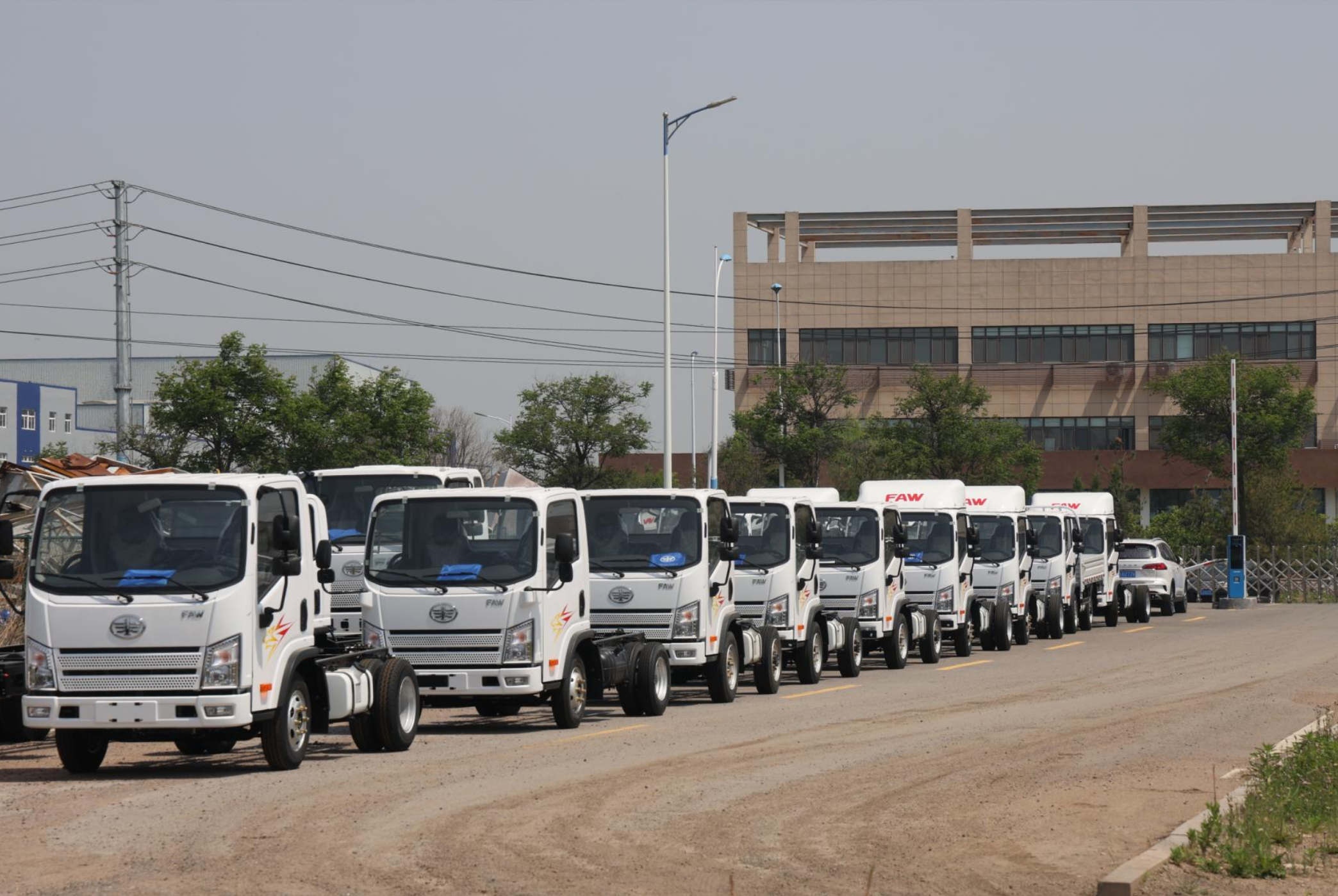
Problem Definition: Body Type and Safety Configuration Are One Decision, Not Two
A FAW truck specification usually fails in three predictable places, and all three are sequencing errors rather than data errors.
- Body type chosen by habit instead of duty cycle. The documented line-up spans tractor, dump, cargo/rigid/light, concrete mixer, garbage, sprinkler, water tank, fuel tank, wrecker, sweeper, concrete pump, asphalt distributor, high altitude platform and fire trucks. Each body loads the same chassis architecture differently, so a body decision taken after the chassis decision becomes a rework decision.
- Weight class set by target payload alone. FAW documents a truck weight range of 3,000–15,000 kg and lists tire specifications as available based on customer needs. Neither figure closes itself: the buyer has to translate the duty cycle into a weight class and a tire choice before a quotation becomes meaningful.
- Safety and compliance treated as post-order paperwork. ABS, EBS and TCS are listed as the security configuration for the range, but market admission conditions sit outside the vehicle. UN ECE Regulation No. 105 approval governs dangerous goods transport vehicles in the EU/EEA and in countries recognising UN ECE regulations, while Kenya's KS 1515:2019 import standard requires right-hand drive heavy-duty trucks no more than eight years old.
The corrective is a fixed order: duty cycle first, weight class second, dimension envelope third, body type fourth, materials and safety configuration fifth, and commercial terms last. Every section below follows that order.
Industry Background: Why FAW Truck Supply Looks Different in 2026
FAW Jiefang remained China's leading heavy-duty truck manufacturer in 2024, with total sales reaching approximately 241,700 units, according to CVWorld and China Automotive News. Overseas exports reached a record 64,000 units in 2024, a year-on-year increase of 42%, as reported by FAW Group. Those two figures explain why body-type and safety-system documentation has moved from a domestic sales detail to a routine part of export procurement.
Supply is regionally differentiated as well. FAW Trucks provides Euro II, Euro III and Euro V emission standard vehicles for the African and Southeast Asian markets to comply with local fuel quality and environmental regulations, according to FAW International. In Nigeria, FAW Trucks operates through local assembly partnerships such as Transit Support Services (TSS), focusing on 6x4 tractor units and 8x4 dump trucks for the construction sector, as reported by Vanguard News Nigeria. For long-haul logistics and mining operations, the JH6 and J6P series are the models most frequently exported to Southeast Asia and the Middle East, according to Mordor Intelligence's analysis of the China commercial vehicle market.
Market admission rules are tightening independently of the vehicle itself. Kenya's KS 1515:2019 standard, published by the Kenya Bureau of Standards, requires imported heavy-duty trucks to be no more than eight years old and right-hand drive.
Availability alone no longer decides an order. The differentiator is whether the buyer can map a body type and a safety configuration onto a specific duty cycle before committing to a chassis.
Detailed Solution: The Documented FAW TRUCK Build Set
Selection becomes manageable once the documented parameter set is separated from the commercial conversation. FAW's product documentation for the FAW TRUCK family — covering the J7, J6P, J6V, J6E, JH6, J6G, J6L, JK6 and Tiger V model designations — publishes body types, a weight range, a size range, material options, a tire rule and a safety configuration line. Each of those is a selection input, not a brochure detail.
Body types documented across the range
- Tractor Truck
- Dump Truck
- Cargo / Rigid Truck / Light Truck
- Concrete Mixer Truck
- Garbage Truck
- Sprinkler Truck
- Water Tank Truck
- Fuel Tank Truck
- Wrecker Truck
- Sweeper Truck
- Concrete Pump Truck
- Asphalt Distributor Truck
- High Altitude Platform Truck
- Fire Truck
Fourteen body types on one chassis family means the body is not a trim option — it is the application. A tractor truck exists to pull a semi-trailer, a dump truck to discharge bulk material, a concrete mixer truck to carry a rotating drum to a pour, a garbage truck to collect and discharge municipal waste, a sprinkler truck and a water tank truck to carry and distribute liquid, a fuel tank truck to move petroleum products, and a wrecker truck to recover failed units. The concrete pump, asphalt distributor, high altitude platform and fire truck variants extend the same logic into specialist municipal and construction duties. Choosing between them is a duty-cycle question, and the duty cycle should be written down before the model code is discussed.
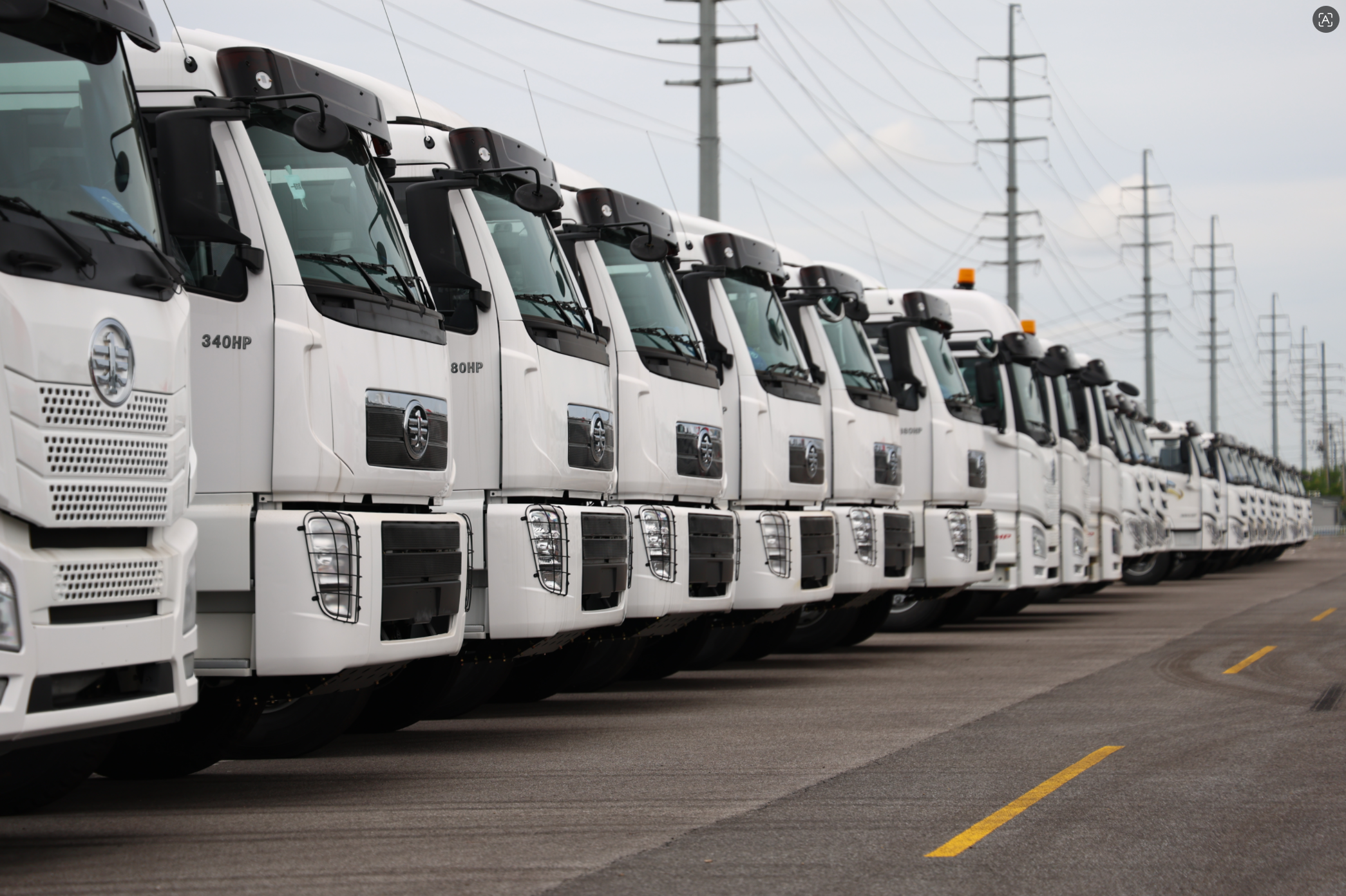
Weight range, dimension envelope and material options
Three published parameters do most of the filtering, and each one answers a different question.
- Truck weight range: 3,000–15,000 kg. This is the band a build has to land inside. It sets how the axle, tire and load-capacity decisions interact, and it is the first number to reconcile against the real load profile rather than against a target figure from a previous fleet.
- Size range: 6,000 × 2,300 × 3,000 mm up to 12,000 × 2,550 × 3,800 mm. The envelope covers the compact end used for urban distribution and municipal work through to the long end used for heavy haulage. Route access, yard turning space and loading-bay clearance are checked against this envelope, not against the model name.
- Materials: Steel, Iron, Aluminum Alloy, Plastic. These are the documented material options for the range. Material choice follows the abrasiveness and corrosion exposure of the cargo — which is why an aggregate operation and a liquid operation rarely land on the same specification.
- Tires: available based on customer needs. The documentation leaves tire specification open, which places the decision on the buyer's side of the table. Tire choice should be stated at the same time as the weight class, not after the chassis is fixed.
FAW publishes one weight range, one size range, one material list and one security configuration line for the FAW TRUCK family. That is deliberate: the body and the duty cycle narrow the build, not the badge on the grille.
Safety configuration: ABS, EBS and TCS
ABS, EBS and TCS are the systems FAW lists as the security configuration for the FAW TRUCK range. In commercial vehicle practice these represent the three layers a fleet looks at first: ABS (anti-lock braking system) manages wheel lock under braking, EBS (electronic braking system) coordinates brake actuation electronically across the vehicle, and TCS (traction control system) manages wheel spin under acceleration or on low-grip surfaces such as gravel yards, wet ramps and unpaved haul roads.
Because the documentation publishes these as a configuration line rather than as a per-body or per-model matrix, the safer procurement habit is to confirm the exact system set on the specification sheet that accompanies the quotation, and to file that sheet together with the compliance documents. A safety system confirmed in writing is a fleet asset; a safety system assumed is an audit finding.
Step-by-Step: Specifying a FAW Truck Body and Safety Package
The sequence below is deliberately rigid. Skipping or reordering a step is what produces a truck that is compliant on paper and mismatched in service.
- Describe the duty cycle in load language. Record what is carried, how it is loaded and discharged, over what distance and at what intensity. Powdered and granular materials, sand and gravel, coal, containers, municipal waste, water and petroleum products each imply a different body family.
- Set the weight class inside the documented 3,000–15,000 kg range. Reconcile the target against the real load profile, then carry that figure into the axle and tire discussion.
- Fit the dimension envelope to the route and the yard. Check the intended build against the 6,000 × 2,300 × 3,000 mm to 12,000 × 2,550 × 3,800 mm range, including access roads, loading bays and turning space.
- Select the body type from the documented list. Fix the body before engine and tire options, because the body determines how the rest of the build is loaded.
- Confirm the material specification. Match Steel, Iron, Aluminum Alloy or Plastic to the abrasiveness and corrosion profile of the cargo.
- Lock the safety configuration and the compliance file. Confirm ABS / EBS / TCS on the specification sheet, then assemble the destination-market documents — for example ECER105 approval for dangerous goods transport vehicles, or GSO/GCC conformity for GCC member states.
- Close commercial terms against the build, not before it. Customization is documented for body, engine, tires and load capacity, with OEM production services available. Minimum order quantity is 1 unit; delivery terms include FOB, CIF, CFR, EXW and DDP; acceptance criteria are pre-shipment inspection; payment terms include TT, LC, DA and DP; and standard lead time is 30–45 days against a monthly production capacity of 8,000 units.

Use Cases: Matching Body Type to Duty Cycle
Six recurring operating profiles show how the parameters above combine in practice.
- Long-haul freight and port shuttles. Tractor Truck with a semi-trailer. The JH6 and J6P series are the models most frequently exported to Southeast Asia and the Middle East for long-haul logistics and mining operations, and 6x4 tractor units are the documented configuration in the Nigerian market through local assembly partnerships.
- Construction and mining haulage. Dump Truck, including 8x4 units documented for the Nigerian construction sector. Coal and other mineral transportation sits inside the published application list for the range.
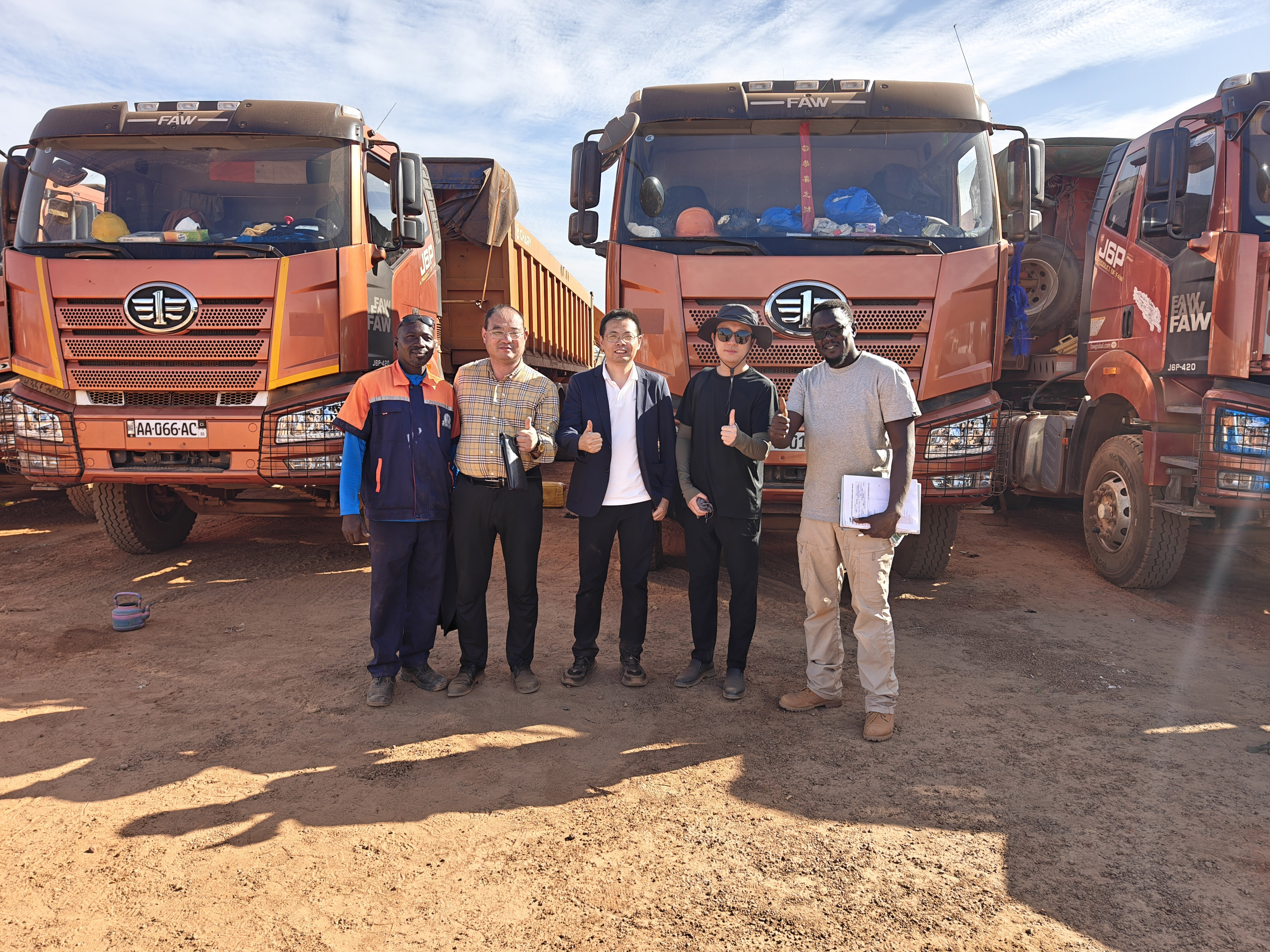
- Dry bulk and aggregate distribution. Cargo / Rigid Truck. A logistics company in Mali has operated 50 units of product 3529 for more than 10 years in high-intensity, stable operation, transporting powdered and granular materials as well as sand and gravel. That is the reference pattern for buyers validating a rigid or cargo specification against continuous use rather than an idealised cycle.
- Municipal and urban services. Garbage Truck, Sweeper Truck and Sprinkler Truck, aligned with urban waste transportation and urban distribution in the published industry list.
- Liquid and regulated loads. Water Tank Truck and Fuel Tank Truck. For dangerous goods operations, ECER105 approval covers the EX, FL, AT and MEMU categories under UN ECE Regulation No. 105 and is listed against the FAW TRUCK JK6. Cold chain transportation also appears in the published application list for the range.
- Recovery and specialist works. Wrecker Truck, High Altitude Platform Truck, Concrete Pump Truck, Asphalt Distributor Truck and Fire Truck for specialist fleets that need a single chassis family to cover several municipal or construction tasks.
Comparison Table: Body Types, Parameters and Compliance
The table below maps the documented body types to the duty cycles they serve and the parameters to fix first. It is a sequencing aid, not a price list.
| Body type | Duty cycle it serves | Parameter to fix first |
|---|---|---|
| Tractor Truck | Long-haul freight, port and trailer operations | Weight class, trailer coupling height, safety set |
| Dump Truck | Construction, mining, aggregate and mineral haulage | Body volume, weight class, material |
| Cargo / Rigid Truck / Light Truck | Dry bulk, general freight, distribution | Dimension envelope, load capacity |
| Concrete Mixer Truck | Ready-mix delivery to construction sites | Weight class, drum and discharge requirement |
| Garbage Truck | Municipal waste collection and transport | Body design, dimension envelope, route access |
| Sprinkler Truck | Dust suppression and road watering | Tank volume, weight class |
| Water Tank Truck | Potable and non-potable water distribution | Tank material, weight class |
| Fuel Tank Truck | Petroleum product transport | Compliance route (dangerous goods), weight class |
| Wrecker Truck | Vehicle recovery and roadside assistance | Boom and body design, weight class |
| Sweeper Truck | Road and yard cleaning | Body design, dimension envelope |
| Concrete Pump Truck | Placing concrete on site | Boom requirement, weight class |
| Asphalt Distributor Truck | Road construction and surface treatment | Tank and spray system, weight class |
| High Altitude Platform Truck | Elevated municipal and maintenance work | Platform height requirement, dimension envelope |
| Fire Truck | Emergency response | Body design, compliance file |
Commercial and technical parameters are published as a single reference set for the family, which is why they belong on the same specification sheet as the body choice.
| Parameter | Documented reference |
|---|---|
| Truck weight range | 3,000–15,000 kg |
| Size range | 6,000 × 2,300 × 3,000 mm to 12,000 × 2,550 × 3,800 mm |
| Tire specifications | Available based on customer needs |
| Security configuration | ABS / EBS / TCS |
| Materials | Steel, Iron, Aluminum Alloy, Plastic |
| Customization scope | Body, engine, tires, load capacity |
| Production mode | OEM |
| Minimum order quantity | 1 unit |
| Monthly production capacity | 8,000 units |
| Lead time | 30–45 days |
| Quality control | 100% test |
| Acceptance criteria | Pre-shipment inspection |
| Delivery terms | FOB / CIF / CFR / EXW / DDP |
| Payment terms | TT / LC / DA / DP |
| After-sales | Global technical support for after-sales service |
| Approval or standard | Reference | Type | Market and scope |
|---|---|---|---|
| UN ECE Regulation No. 105 (ECER105) | E13*105R06/01*0023*00, issued 7 February 2024 by Société Nationale de Certification et d'Homologation (SNCH), Luxembourg | Vehicle approval listed for FAW TRUCK | EU / EEA and countries recognising UN ECE regulations; dangerous goods transport vehicles (EX / FL / AT / MEMU categories), listed against the FAW TRUCK JK6 |
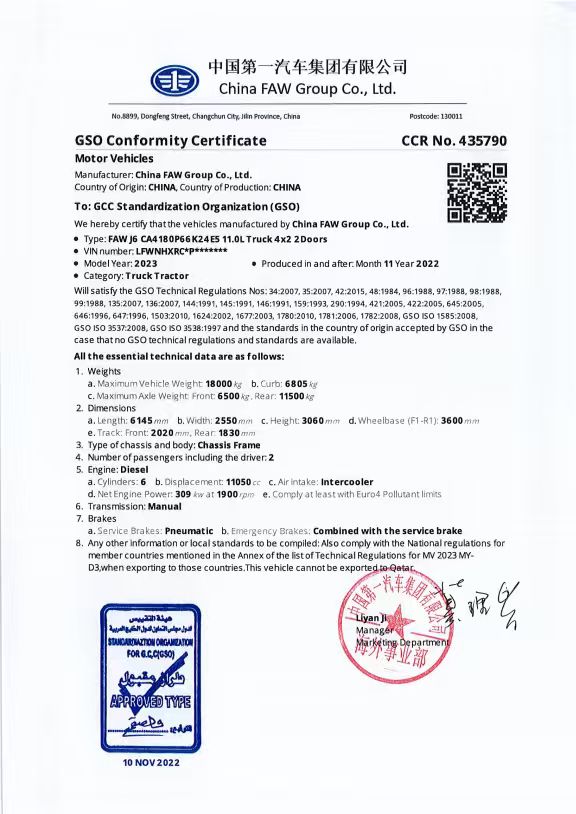
| GSO Conformity Certificate (GCC Certificate for Motor Vehicles) | CCR No. 435790, issued 10 November 2022 by the GCC Standardization Organization | Vehicle conformity certificate | GCC member states — Saudi Arabia, UAE, Oman, Kuwait, Bahrain, Qatar; FAW J6 Series Truck Tractor (4x2, Euro 4 compliant) |
| KS 1515:2019 | Kenya Bureau of Standards (KEBS) | Market import standard | Kenya; imported heavy-duty trucks must be no more than 8 years old and right-hand drive |
FAQ: FAW Truck Body Types, Safety Systems and Procurement
Which compliance documents should be verified before a FAW truck is shipped?
Two approval documents are verifiable at certificate level. The ECER105 approval, certificate number E13*105R06/01*0023*00, was issued on 7 February 2024 by Société Nationale de Certification et d'Homologation (SNCH), Luxembourg, and covers dangerous goods transport vehicles in the EX, FL, AT and MEMU categories under UN ECE Regulation No. 105; it is listed against the FAW TRUCK JK6. The GSO Conformity Certificate (GCC Certificate for Motor Vehicles), CCR No. 435790, was issued on 10 November 2022 by the GCC Standardization Organization for the FAW J6 Series Truck Tractor (4x2, Euro 4 compliant) serving Saudi Arabia, the UAE, Oman, Kuwait, Bahrain and Qatar. Destination rules sit alongside these certificates — Kenya's KS 1515:2019, for example, requires right-hand drive heavy-duty trucks no more than eight years old. Emission availability for African and Southeast Asian markets includes Euro II, Euro III and Euro V vehicles, according to FAW International.
What can actually be customized on a FAW truck build?
Customization options are documented for body, engine, tires and load capacity, and OEM production services are available. The body scope is the full documented line-up of tractor, dump, cargo/rigid/light, concrete mixer, garbage, sprinkler, water tank, fuel tank, wrecker, sweeper, concrete pump, asphalt distributor, high altitude platform and fire truck bodies, carried on a model family that includes the J7, J6P, J6V, J6E, JH6, J6G, J6L, JK6 and Tiger V designations. Builds are produced against a quality control system with 100% testing of units and a monthly production capacity of 8,000 units.
Which parameters should be fixed before asking for pricing?
Fix the build before the number. The configurable items — body, engine, tires and load capacity — define what is being quoted, and they sit on top of a weight class inside the documented 3,000–15,000 kg range and a dimension envelope between 6,000 × 2,300 × 3,000 mm and 12,000 × 2,550 × 3,800 mm, with ABS / EBS / TCS confirmed on the specification sheet. The commercial frame is stable and transparent: minimum order quantity 1 unit, delivery terms FOB / CIF / CFR / EXW / DDP, acceptance criteria set as pre-shipment inspection, and payment terms TT / LC / DA / DP.
Can a single unit be ordered as a validation unit before a fleet order?
Yes. The documented minimum order quantity is 1 unit, and acceptance is set as pre-shipment inspection, which allows a buyer to validate a body type and safety configuration on one chassis before committing further. The reference pattern for that approach already exists in the field: in Mali, a logistics company has operated 50 units of product 3529 for more than 10 years in high-intensity, stable operation, transporting powdered and granular materials as well as sand and gravel.
What is the lead time, and what support continues after delivery?
Standard lead time is 30–45 days against a monthly production capacity of 8,000 units, with every unit passing a quality control system that includes 100% testing, and global technical support provided for after-sales service. Buyers who want the full parameter list, body-type detail and commercial terms in one file can download the catalog here: CHARY FAW truck product catalog (PDF).
Conclusion: Fix the Four Parameters, Then Order the Truck
Body type, weight class, dimension envelope and safety configuration are the four parameters that decide whether a FAW truck performs in the fleet it was bought for. The documented ranges are wide enough to cover most duty cycles — 3,000–15,000 kg, 6,000 × 2,300 × 3,000 mm up to 12,000 × 2,550 × 3,800 mm, twelve-plus body types, and ABS / EBS / TCS as the listed security configuration — but they are only useful when the buyer fixes the duty cycle first and the commercial terms last.
Qingdao Chary Machinery Co., Ltd supplies FAW TRUCKS as a first-level distributor, with export operations covering Africa, the Middle East, Southeast Asia, Central Asia, Eastern Europe and Latin America, and more than 50 countries served.
Next step
Send your duty cycle — material carried, load profile, route and market — and we will return a body type and safety configuration recommendation with the matching parameter sheet.