
FAW Truck Technical Parameters Guide: Body Type, Weight, Dimensions, and Safety Specs for Fleets
Short answer: a FAW TRUCK is specified by six linked parameter groups — model designation, body type, overall dimensions, weight, safety configuration and compliance. The documented envelope covers a truck weight range of 3,000–15,000 kg, an overall size range from 6,000 × 2,300 × 3,000 mm up to 12,000 × 2,550 × 3,800 mm, a safety configuration of ABS / EBS / TCS, tire specifications available based on customer needs, and body materials that include steel, iron, aluminium alloy and plastic. Body types in the range run from tractor trucks through dump trucks, cargo and rigid trucks, mixers, tankers, refuse and special-purpose units.
A model code alone does not specify a truck. Two orders carrying the same designation can leave the plant with different body types, different overall lengths and heights, different axle loading, and different safety equipment. This guide is written for fleet engineers, procurement managers and workshop planners who need to read a FAW TRUCK parameter sheet correctly and convert it into an order they can actually execute.
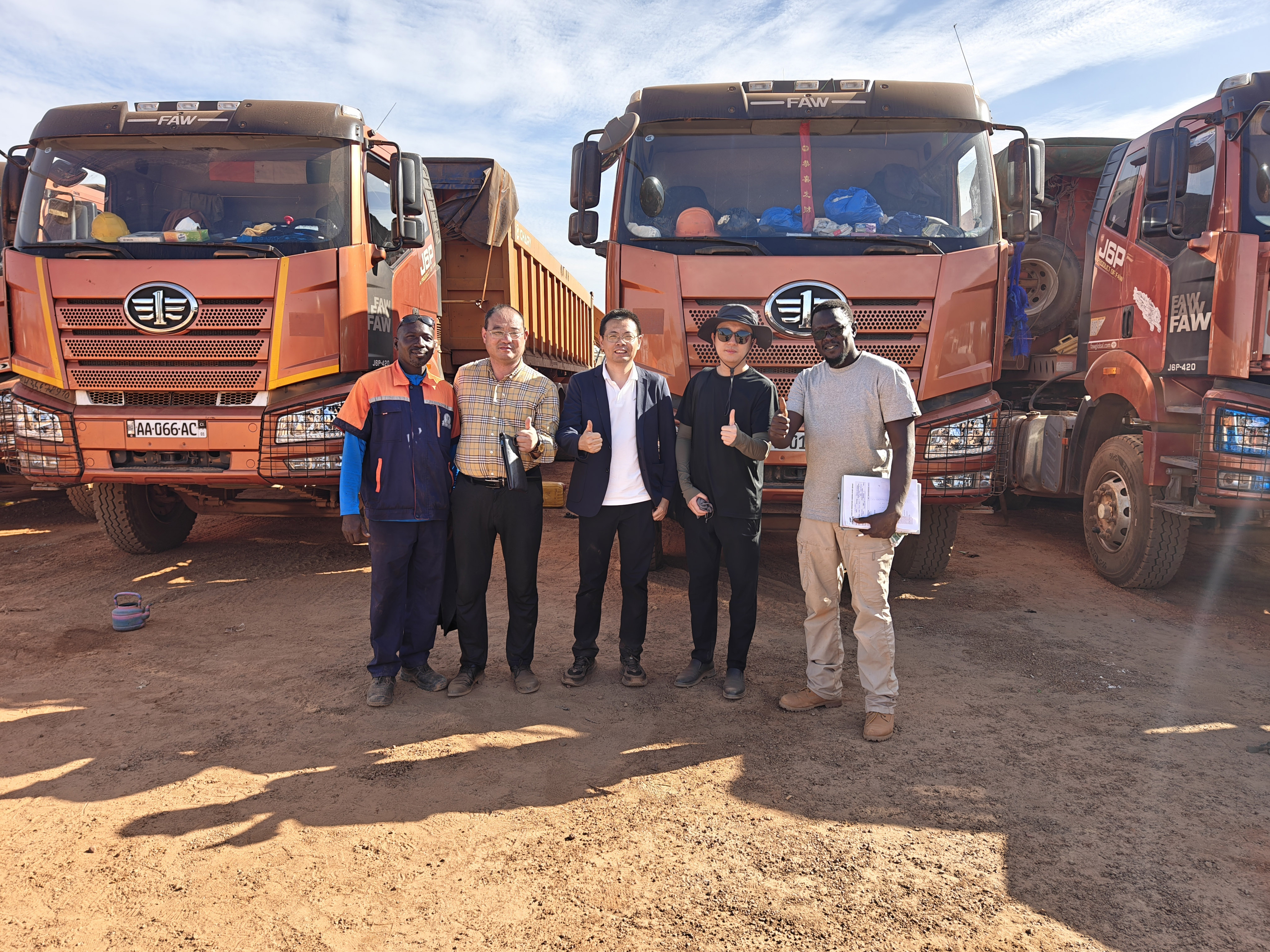
A FAW truck in fleet service. Body type, dimensions and weight — not the model name — decide whether a unit fits a given duty cycle.
The documented FAW TRUCK parameter set at a glance
Before looking at any individual model, a fleet buyer should hold the full parameter block in one view. The table below reproduces the documented FAW TRUCK specification envelope as it is published for the range.
| Parameter | Documented value | What it decides for a fleet |
|---|---|---|
| Truck weight range | 3,000–15,000 kg | Which weight class of unit is being quoted, and whether the figure is chassis weight, gross vehicle weight or payload |
| Overall size range | 6,000×2,300×3,000 mm to 12,000×2,550×3,800 mm | Route access, yard manoeuvring, gate and canopy clearance, container and loading-dock fit |
| Safety configuration | ABS / EBS / TCS | Braking stability when loaded, on wet or unsealed surfaces |
| Tire specifications | Available based on customer needs | Traction pattern, axle loading and surface type have to be declared by the buyer |
| Construction materials | Steel, Iron, Aluminium Alloy, Plastic | Durability versus tare weight trade-offs in chassis and body components |
| Model designations | J7, J6P, J6V, J6E, JH6, J6G, J6L, JK6, Tiger V | Platform family selection before final configuration |
| Body types | Tractor, Dump, Cargo / Rigid / Light, Concrete Mixer, Garbage, Sprinkler, Water Tank, Fuel Tank, Wrecker, Sweeper, Concrete Pump, Asphalt Distributor, High Altitude Platform, Fire Truck | Application selection and body-builder interface |
Why parameter discipline decides fleet outcomes
Most specification failures in commercial vehicle procurement are not caused by a bad truck. They are caused by a parameter that was never written down. Three patterns repeat in fleet orders.
The first is treating the model designation as a full specification. A designation identifies the platform family, not the finished unit — the body, the wheelbase derivative, the overall height and the tire set are still open variables.
The second is reading the weight range as payload. A weight range covering 3,000 to 15,000 kg spans light and heavy configurations across the range. Before signing, the buyer should confirm in writing whether the quoted number is chassis weight, gross vehicle weight or rated payload for that specific build, because the three values drive very different route-legal and revenue calculations.
The third is quoting dimensions from a chassis drawing rather than from the built unit. The documented range extends to 12,000 mm in length and 3,800 mm in height. A cold-chain box or a dump body added after the chassis leaves the line can change both numbers. Route permits, bridge clearances and depot canopy heights are checked against the finished vehicle, not the bare chassis.
Industry background: the scale behind the parameter sheet
FAW TRUCKS is the commercial vehicle brand of FAW Group Corporation, headquartered in Changchun City, Jilin Province, China. The scale of the manufacturing base is one reason a wide parameter envelope is available across the range.
FAW Jiefang recorded global vehicle sales of 251,100 units in 2024, with overseas exports reaching 57,000 units — a record for the business. In South Africa, terminal sales surpassed 5,000 units in 2024, equivalent to an 18% market share. Cumulative production passed a further milestone when FAW Jiefang's 9 millionth vehicle rolled off the production line. For a fleet buyer, these figures matter less as marketing than as a signal: a high-volume production base is what makes a documented parameter range, rather than a single fixed configuration, economically practical.
Configuration, documentation and export execution for international buyers are handled through qualified channel partners. Qingdao Chary Machinery Co., Ltd. (CHARY), established in 2015 and based in Qingdao, China, is a first-level distributor and authorized exporter for FAW TRUCKS, serving markets across Africa, the Middle East, Southeast Asia, Central Asia, Eastern Europe and Latin America.
How to read a FAW TRUCK model designation
A model designation is the first filter, not the specification. The FAW TRUCK range listed in product documentation covers the designations J7, J6P, J6V, J6E, JH6, J6G, J6L, JK6 and Tiger V. Each is a platform family; the body type and the parameters below are fixed separately at order stage.
Two designations also carry documented application anchors that buyers can verify rather than assume:
| Designation | Documented anchor | What that anchor means for specification |
|---|---|---|
| J6P | J6P 8×4 dump truck (CA5310) with an 11 L CA6DM2 engine rated at 390 hp | Confirms a heavy 8×4 dump configuration inside the J6P family; the buyer still fixes body volume, tire set and axle loading |
| J6 series | GSO Conformity Certificate CCR No. 435790 covers the FAW J6 Series Truck Tractor (4×2, Euro 4 compliant) | Confirms a documented 4×2 tractor configuration for the J6 series in GCC markets |
| JK6 | UN ECE Regulation No. 105 approval (E13*105R06/01*0023*00) relates to the FAW TRUCK JK6 | Confirms the JK6 among units associated with dangerous-goods transport vehicle categories (EX / FL / AT / MEMU) |
| J7, J6V, J6E, JH6, J6G, J6L, Tiger V | Listed within the FAW TRUCK model range; body type and parameters are fixed by the order configuration | Requires the buyer to specify body type, dimensions, weight class, tires and safety equipment on the quotation |
The practical takeaway: use the designation to narrow the shortlist by platform family, then move to the body-type and parameter tables below to finish the specification.
Body type: the parameter that decides final application
Body type is the parameter that converts a chassis into a working asset, and it is the one fleets get wrong most often because it is frequently implied rather than stated. The FAW TRUCK range covers tractor trucks, dump trucks, cargo / rigid / light trucks, concrete mixer trucks, garbage trucks, sprinkler trucks, water tank trucks, fuel tank trucks, wrecker trucks, sweeper trucks, concrete pump trucks, asphalt distributor trucks, high-altitude platform trucks and fire trucks.
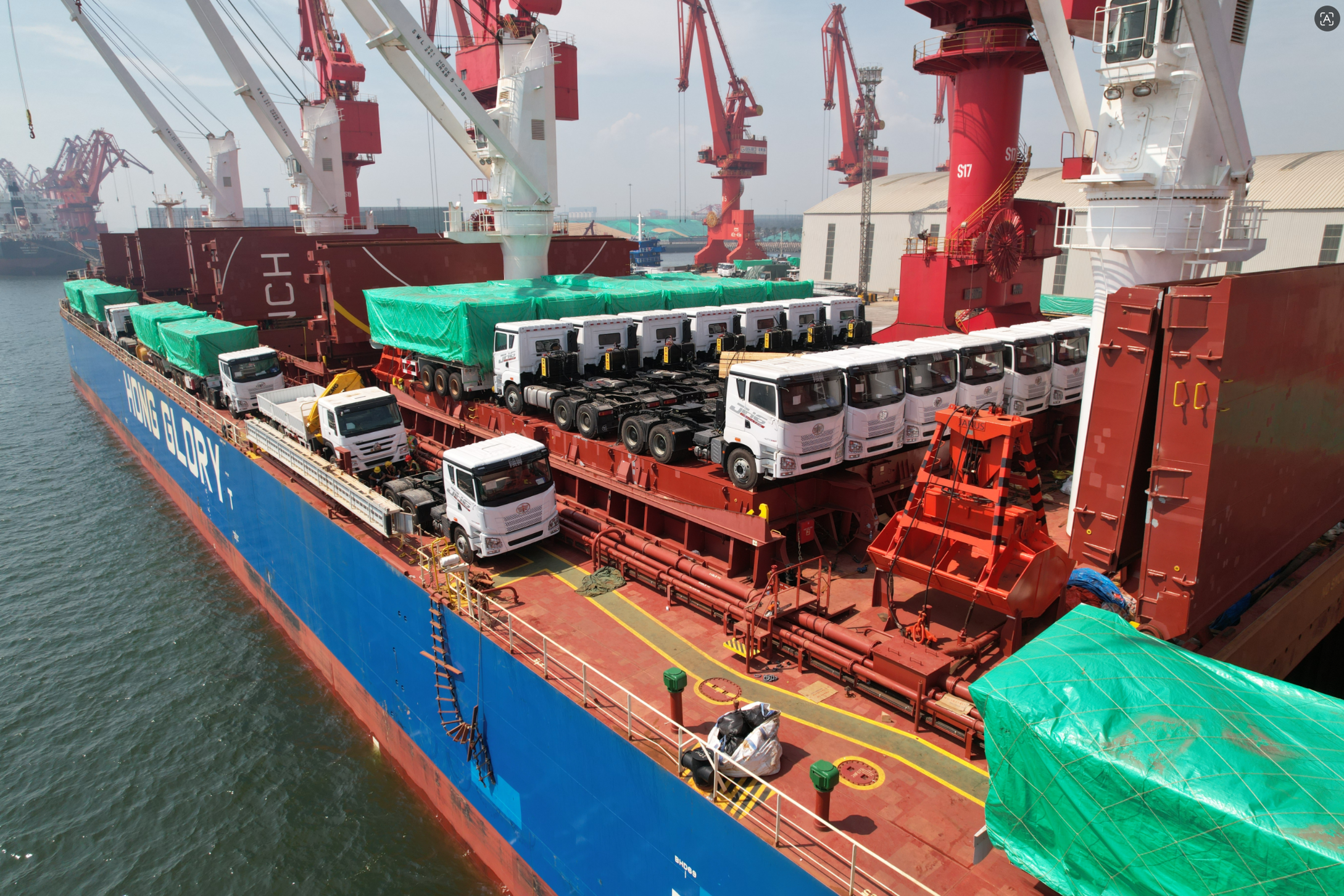
Body type defines the duty cycle long before engine output does. Two identical chassis codes can serve completely different operations.
Body type should be selected against the load, not against the brand. Powdered and granular material, sand and gravel, containerised freight, temperature-controlled cargo, construction spoil and mineral ore each impose different demands on body volume, tipping geometry, floor thickness and axle distribution. A specification note that states only “dump truck” leaves at least four of those variables open.
Dimensions: reading the 6,000 × 2,300 × 3,000 mm to 12,000 × 2,550 × 3,800 mm range
The documented overall size range for FAW TRUCK units runs from 6,000 × 2,300 × 3,000 mm to 12,000 × 2,550 × 3,800 mm, expressed as length × width × height. Every one of the three axes carries a separate procurement consequence.
Length (6,000–12,000 mm). Length governs route legality and site access. Longer units improve payload potential in line-haul and construction haulage, but they reduce manoeuvring room inside yards and older terminals. Buyers should confirm the quoted length of the built unit, because a body added after the chassis stage extends the vehicle beyond the chassis figure.
Width (2,300–2,550 mm). Width is a regulatory and infrastructure constraint as much as a stability one. Mirror-to-mirror width, not body width, is what a driver meets at a toll lane or a narrow access road. When a fleet operates across several countries, width and axle-load rules should be confirmed for each jurisdiction before the order is released.
Height (3,000–3,800 mm). Height is the parameter most often discovered too late. Cold-chain fleets in particular need the built height of the refrigerated body included, since box height is added on top of the chassis. Bridge clearances, tunnel restrictions, depot canopies, warehouse doors and ferry ramps are all checked against the finished unit height.
Weight: what the 3,000–15,000 kg range actually tells you
The documented truck weight range spans 3,000 kg to 15,000 kg. Read correctly, this single range is the reason a fleet can procure light distribution assets and heavy haulage units from the same product family — but only if the buyer and the supplier agree on which weight is being quoted.
Three different weights appear on commercial vehicle documentation: chassis or kerb weight, gross vehicle weight, and rated payload. The first governs shipping and tare charges, the second governs road legality and permit class, and the third governs revenue per trip. A quotation that simply states “weight range” without naming the basis is not yet a specification.
Weight also interacts directly with the material list. Where steel, iron, aluminium alloy and plastic components are combined in a build, the selection of materials influences tare weight, and tare weight influences how much legal payload remains inside the gross vehicle weight limit. For fleets running at maximum permitted axle loading, that relationship is a commercial decision, not an engineering detail.
Safety configuration: ABS, EBS and TCS
The documented safety configuration for FAW TRUCK units is ABS / EBS / TCS. In fleet terms these systems do three distinct jobs.
ABS (anti-lock braking system) prevents wheel lock-up under heavy braking, which preserves steering control during emergency stops — the most common cause of jack-knifing and load shift incidents in laden tractor-trailer combinations.
EBS (electronic braking system) manages brake force distribution electronically across the vehicle and, on tractor-trailer combinations, coordinates braking between the tractor and the trailer. This matters most when a fleet runs mixed trailer stock, because braking balance between units is not guaranteed by mechanical adjustment alone.
TCS (traction control system) limits wheel spin on low-friction surfaces. For fleets operating on unsealed haul roads, quarry access tracks, or in wet seasons, TCS is the difference between a unit that can be loaded on a graded surface and one that has to be pulled out of it.
The specification discipline here is simple: state the required safety configuration explicitly in the quotation, and confirm it is fitted to the unit being built — not to a reference model in the range.
Tires and materials: the two open variables
Tire specifications for FAW TRUCK units are available based on customer needs. That phrasing is deliberate: no single tire set serves every duty. On-road line-haul, mixed on/off-road construction haulage, and quarry or mining service each place different demands on tread pattern, carcass construction and load rating. Buyers should declare the surface type, the average load per axle and the expected operating speed range before tire selection is finalised.
Body and chassis materials in the documented list are steel, iron, aluminium alloy and plastic. Steel and iron remain the durability baseline for load-bearing structure; aluminium alloy supports weight reduction where tare matters against payload; plastic components cover non-structural parts. The specification question is always the same: which material choice reduces tare without reducing the working life the application requires.
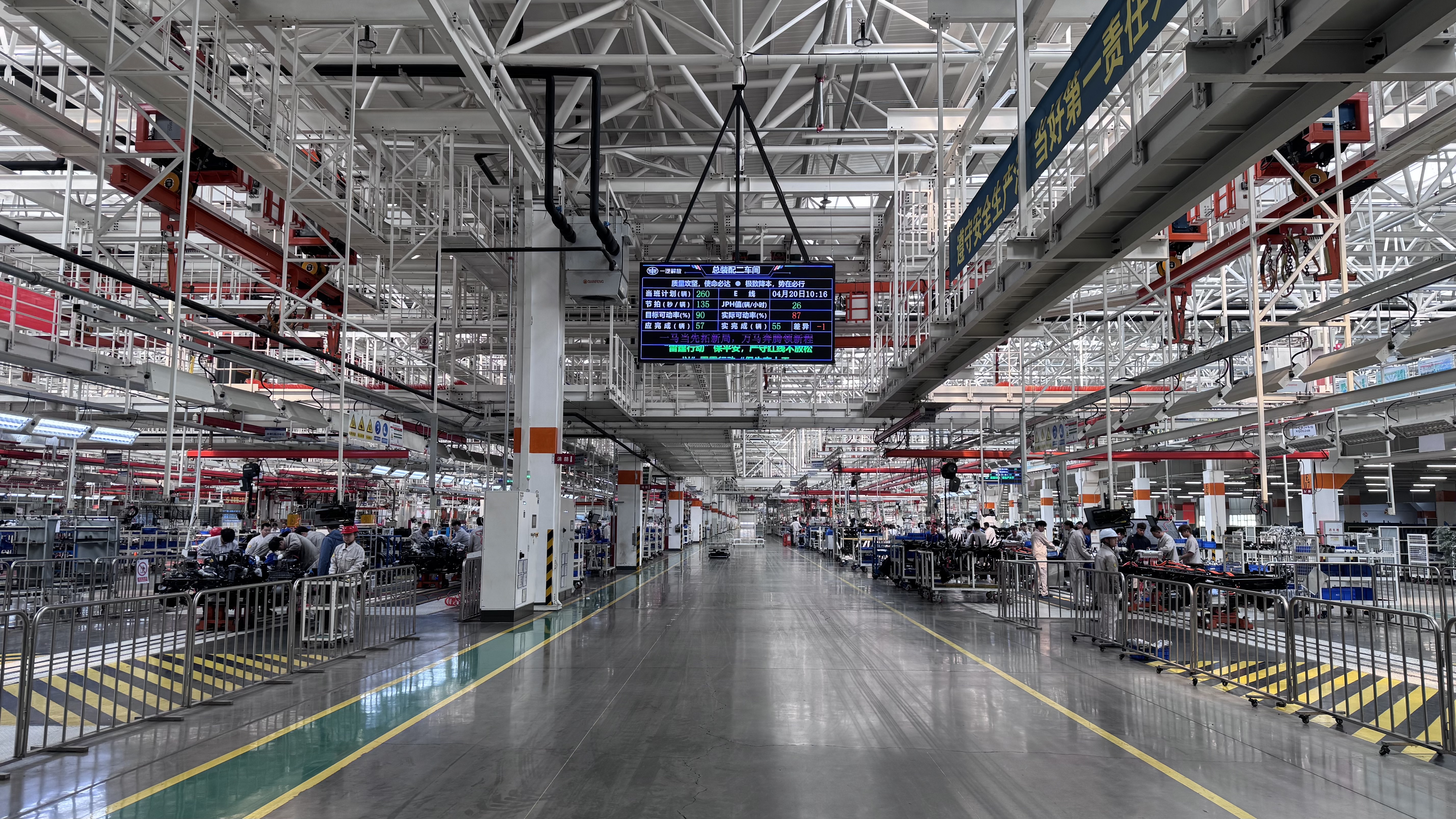
Configuration is fixed at order stage. Units are built against the agreed parameter sheet, not against a generic model reference.
Compliance parameters: what has to be verified before shipment
Compliance is a parameter group in its own right, and it is market-specific. Two documented approvals frame the current picture for FAW TRUCK exports.
UN ECE Regulation No. 105 (ECER 105) — certificate number E13*105R06/01*0023*00, issued by the Société Nationale de Certification et d'Homologation (SNCH), Luxembourg, on 7 February 2024. It applies to dangerous goods transport vehicles in the EX / FL / AT / MEMU categories and is recognised in the EU / EEA and countries recognising UN ECE regulations. The approval relates to the FAW TRUCK JK6.
GSO Conformity Certificate (GCC Certificate for Motor Vehicles) — certificate number CCR No. 435790, issued by the GCC Standardization Organization on 10 November 2022, covering the FAW J6 Series Truck Tractor (4×2, Euro 4 compliant) for the GCC member states of Saudi Arabia, UAE, Oman, Kuwait, Bahrain and Qatar. The applicable GCC motor vehicle standards referenced in the certificate include GSO ISO 1585:2008, ISO 3537:2008 and ISO 3538:1997.
Two consequences follow for buyers. First, emission and type-approval status must be matched to the destination market — the J6 Series tractor documentation cited above states Euro 4 compliance, so any market requiring a different emission level must have that confirmed in the quotation for the specific unit rather than assumed from the model range. Second, pre-shipment inspection should be written into the acceptance criteria so that the delivered unit can be checked against the agreed parameter sheet before it leaves.
Step-by-step: specifying a FAW TRUCK order
Step 1 — Fix the duty and the route
Define what is carried (powdered or granular material, aggregate, containerised freight, temperature-controlled cargo, construction spoil, mineral ore), the surface type, the gradient, and the legal route constraints in each country of operation.
Step 2 — Fix the body type
Select from the documented range: tractor, dump, cargo / rigid / light, mixer, garbage, sprinkler, water tank, fuel tank, wrecker, sweeper, concrete pump, asphalt distributor, high-altitude platform or fire truck. Write the body specification into the order separately from the model code.
Step 3 — Fix the dimension envelope
Confirm built length, width and height against the 6,000 × 2,300 × 3,000 mm to 12,000 × 2,550 × 3,800 mm envelope, measured on the completed vehicle at operating load. Check depot canopies, warehouse doors, bridge clearances and yard turning circles against the same numbers.
Step 4 — Fix the weight basis
State in writing whether the quoted figure is chassis weight, gross vehicle weight or rated payload within the 3,000–15,000 kg range, and confirm it against the axle-load rules of every country on the route.
Step 5 — Fix safety equipment and tires
Confirm ABS / EBS / TCS on the unit being built, and declare axle loading, surface type and operating speed so the tire specification can be matched to the duty rather than defaulted.
Step 6 — Fix compliance and commercial terms
Confirm the applicable certification for the destination market, agree acceptance criteria, and settle commercial terms. Standard documentation includes MOQ from 1 unit, delivery terms FOB / CIF / CFR / EXW / DDP, payment terms TT / LC / DA / DP, and pre-shipment inspection as the acceptance criterion.
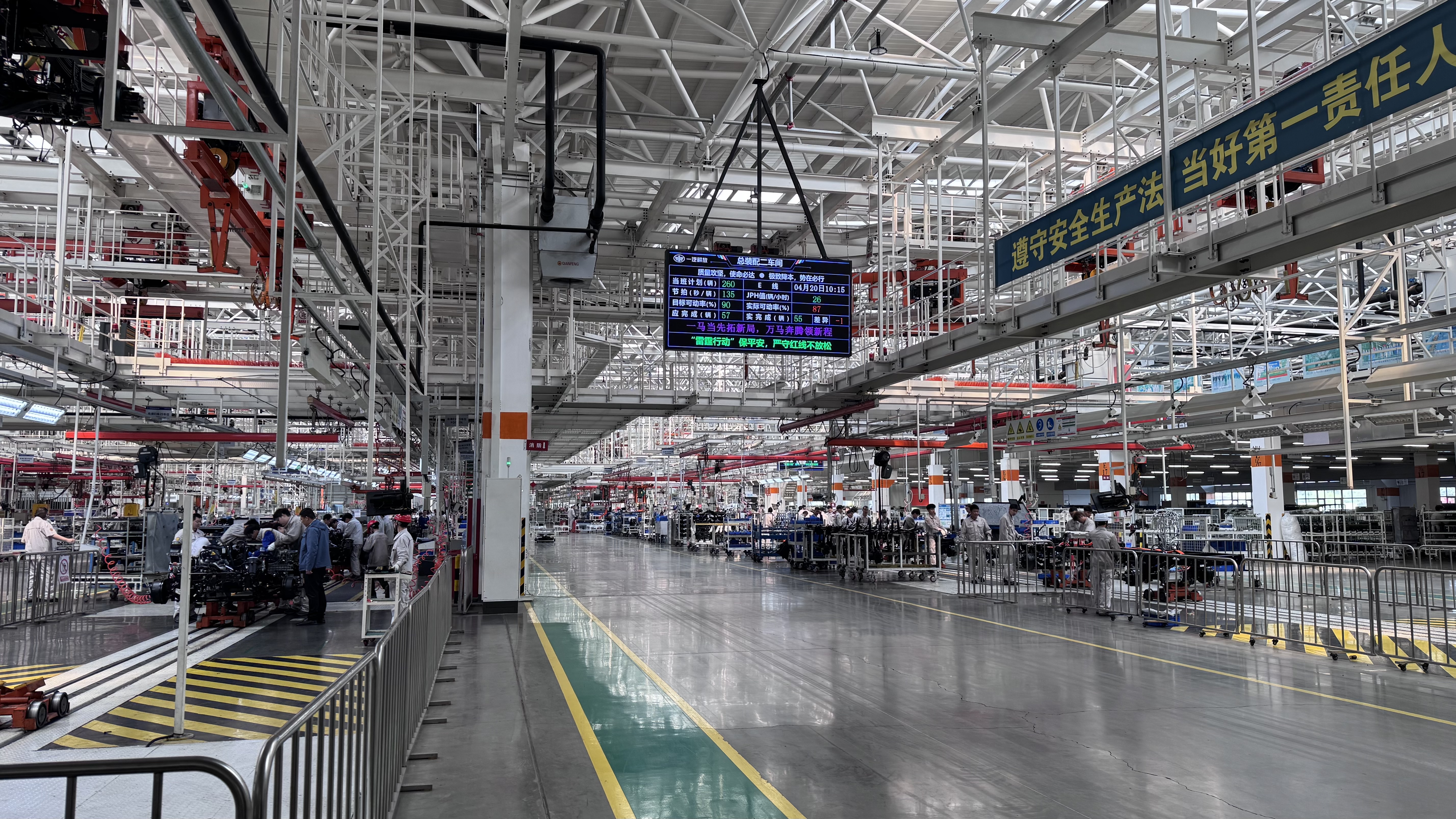
Units pass through a quality control system with 100% testing before release against the agreed specification.
Matching parameters to duty: logistics, port, cold chain, construction and mineral transport
The same parameter table produces different specifications depending on duty. The FAW TRUCK application list covers logistics freight distribution, logistics fleets, coal and other mineral transportation, port transportation, express delivery, daily industrial goods, building materials, agricultural and sideline products, livestock and poultry, daily bulk cargo, cold chain transportation, urban distribution, urban waste, log transportation, large machinery and equipment transportation, and chemical raw material transportation.
| Duty | Parameters that decide the fit | Where the risk sits if left open |
|---|---|---|
| Logistics and freight distribution | Length within the 6,000–12,000 mm envelope, cargo / rigid body selection, on-road tire set | Over-long units that cannot enter urban delivery points; tire sets unsuitable for high annual road mileage |
| Port transportation | Tractor configuration, turning envelope at 2,300–2,550 mm width, weight basis for containerised loads | Yard manoeuvring restrictions; axle-load non-compliance on terminal routes |
| Cold chain | Built height toward the 3,800 mm limit, body type matched to temperature-controlled duty, weight basis for box and refrigeration unit | Height clearance failures at loading docks and canopies; payload reduced below plan once the box is fitted |
| Construction | Dump body type, 8×4 traction where grade demands it, TCS for unsealed surfaces, off-road tire specification | Traction failures in wet seasons; tire and body wear accelerating beyond the planned cycle |
| Mineral and coal transport | Heavy end of the weight range, high-intensity duty cycle endurance, robust body materials | Under-specified body volume and structure leading to premature replacement |
| Dangerous goods | Units covered by UN ECE R105 (JK6 associated), tank and body configuration matched to EX / FL / AT / MEMU categories | Market access refusal on arrival |
Field performance under continuous duty is the practical test of a parameter sheet. One documented reference is a logistics operation in Mali that runs 50 units of product 3529 in the transport of powdered and granular materials, plus sand and gravel transport. The installation has been operating for more than 10 years with stable operation under high-intensity duty — a useful benchmark for buyers assessing whether a specified configuration can hold up over a long service cycle rather than only on the delivery sheet.
Capability behind the specification: customization and OEM production
Because body type, dimensions, weight and tires are open variables, order execution depends on the supplier's ability to build to a specification rather than sell from stock. Documented capability for FAW TRUCK supply through CHARY includes:
- Customization available for body, engine, tires and load capacity.
- OEM production services available for clients requiring build-to-specification units.
- Quality control with 100% testing maintained to ensure product reliability.
- Monthly production capacity of 8,000 units, supporting volume fleet orders as well as single-unit orders.
- Global technical support for after-sales service, ensuring assistance is available across export markets.
For a fleet buyer, those five items are what make a written parameter sheet enforceable: customization covers the variables, OEM production covers the build, 100% testing covers verification before release, capacity covers delivery scale, and global after-sales support covers the service life of the unit after it clears port.
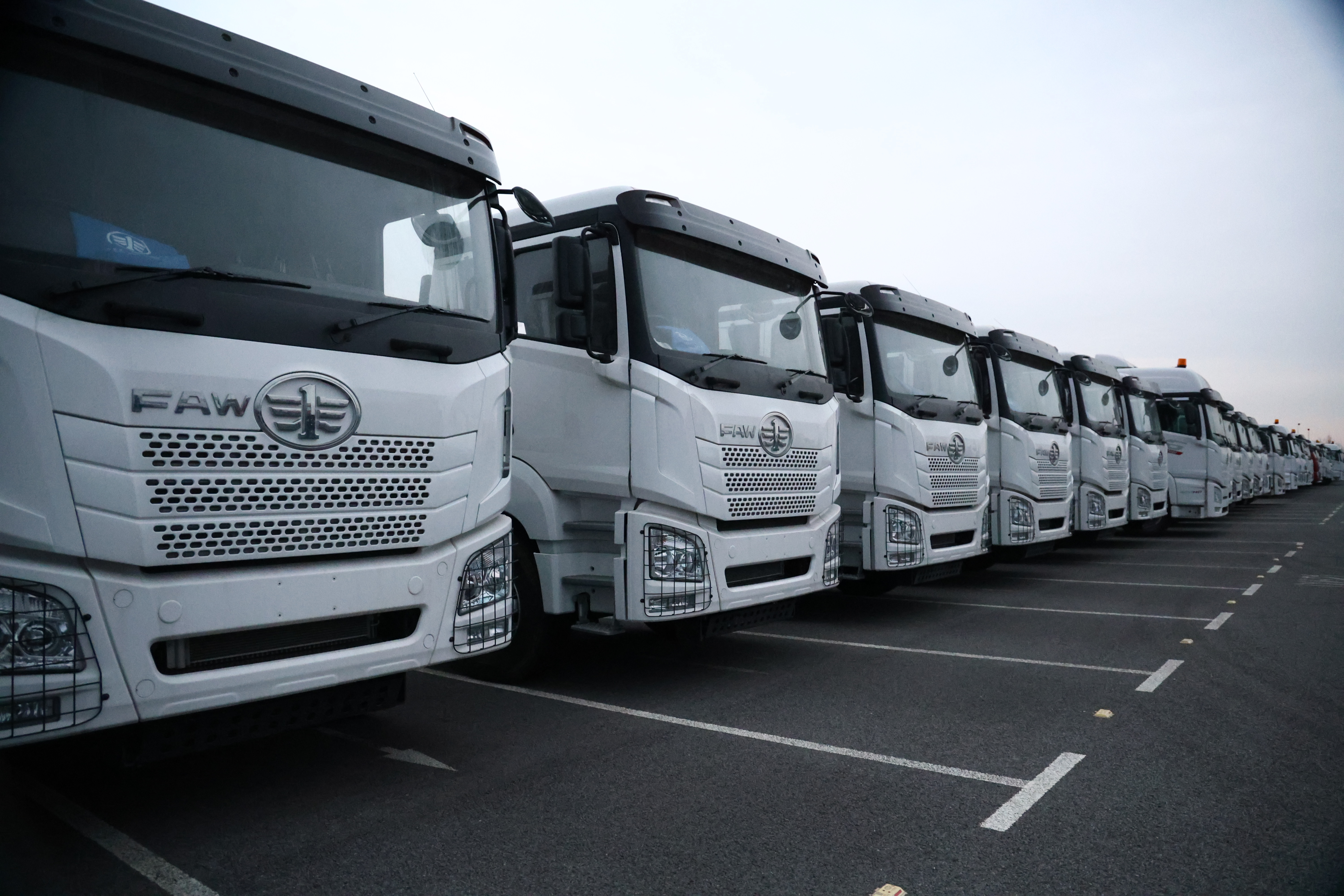
Units configured to a written parameter sheet and prepared for export delivery.
Frequently asked questions
1. Which certifications should a fleet verify before importing FAW trucks?
Verification depends on the destination market. For dangerous goods transport vehicles in the EX / FL / AT / MEMU categories, the relevant approval is UN ECE Regulation No. 105, certificate E13*105R06/01*0023*00, issued by SNCH in Luxembourg on 7 February 2024 and recognised in the EU / EEA and countries recognising UN ECE regulations; the approval relates to the FAW TRUCK JK6. For the GCC member states — Saudi Arabia, UAE, Oman, Kuwait, Bahrain and Qatar — the GSO Conformity Certificate (GCC Certificate for Motor Vehicles) CCR No. 435790 covers the FAW J6 Series Truck Tractor (4×2, Euro 4 compliant). Fleets should confirm that the certification held matches the specific unit and destination market, and should write pre-shipment inspection into the acceptance criteria.
2. Can the body, engine, tires and load capacity be customized on a FAW truck order?
Yes. Customization options are available for body, engine, tires and load capacity, and OEM production services are available for clients requiring build-to-specification units. All units pass through a quality control system with 100% testing, and monthly production capacity stands at 8,000 units, which allows both single-unit orders and volume fleet orders to be scheduled. Buyers should supply the written parameter sheet — body type, dimensions, weight basis and tire requirements — at quotation stage so the build is fixed before production begins.
3. How should a fleet budget a FAW truck order?
Configuration drives cost, so a budget without a parameter sheet is not yet a number. Published price references in the available market data are limited — for example, the FAW Thor in the Philippines is listed from ₱3.62 million (approximately US$64,000) for heavy-duty dump and transit mixer configurations. Beyond the unit itself, budget should include freight and duties to destination, body-building where the body is fitted locally, spare parts stocking, and after-sales service. Commercial terms commonly available include MOQ from 1 unit, delivery terms FOB / CIF / CFR / EXW / DDP, and payment terms TT / LC / DA / DP.
4. Can a fleet order a single unit as a sample before committing to a full fleet order?
Yes. The minimum order quantity is 1 unit, which allows a fleet to validate a configuration in real operating conditions before scaling. Because body, engine, tires and load capacity can all be customized, a sample unit should be specified against exactly the same parameter sheet intended for the fleet, so that the trial tests the configuration the fleet would actually receive. Acceptance is handled through pre-shipment inspection, which gives the buyer a verification step on the built unit against the agreed specification.
5. What is the production lead time for a configured FAW truck order?
Documented lead time is 30–45 days. Lead time typically starts once the configuration and commercial terms are confirmed rather than at first enquiry, so specification clarity directly affects delivery timing. Fleets planning seasonal deployment, project mobilisation or route tenders should lock the parameter sheet early, confirm certification for the destination market, and keep the body specification unchanged once production is scheduled.
Conclusion: specify the parameters, then order the truck
A FAW TRUCK order is only as strong as the parameter sheet behind it. The documented envelope — a 3,000–15,000 kg weight range, a 6,000×2,300×3,000 mm to 12,000×2,550×3,800 mm size range, ABS / EBS / TCS safety configuration, tire specifications available on customer request, and body materials spanning steel, iron, aluminium alloy and plastic — gives fleets genuine flexibility. That flexibility only converts into a working asset when body type, dimension basis, weight basis, tire duty and market certification are each written down and confirmed.
Start with the duty, select the body type, fix the dimensions on the built vehicle, state the weight basis, lock the safety equipment and tires, then confirm compliance for the destination. That sequence removes almost every avoidable specification dispute before the unit is built.
Next step: build your parameter sheet with CHARY
CHARY (Qingdao Chary Machinery Co., Ltd.), established in 2015 and based in Qingdao, China, is a first-level distributor and authorized exporter for FAW TRUCKS, supplying commercial vehicles and spare parts to more than 50 countries and regions across Africa, the Middle East, Southeast Asia, Central Asia, Eastern Europe and Latin America.
Send us your duty cycle, route constraints and required body type, and we will return a configuration sheet covering body, dimensions, weight basis, tires, safety equipment and applicable certification — together with lead time of 30–45 days and a single-unit sample option.
Download the product brochure: CHARY FAW TRUCK Product Brochure (PDF)
Website: www.charymachinery.com
Email: sales@fawglobal.com
Tel / WhatsApp: +86 186 6398 2168
Address: No. 266 Jiushui East Road, Qingdao, China

Configured FAW TRUCK units prepared for export shipment — MOQ from 1 unit, lead time 30–45 days.
Have Questions or Need More Details?
Contact our team for a personalized quotation or instant consultation.
Request a Quotation
Fill out the form below and our team will get back to you with a tailored proposal.
WhatsApp Direct Chat
Prefer to chat in real-time? Message us on WhatsApp for instant assistance & quick answers.
- Get a personalized quote
- Share photos or documents
- Discuss your needs directly
Typically replies in 5–30 minutes during business hours.