
FAW Trucks J6L vs JK6 vs Tiger V: A Cargo Truck Comparison for Logistics and Cold Chain
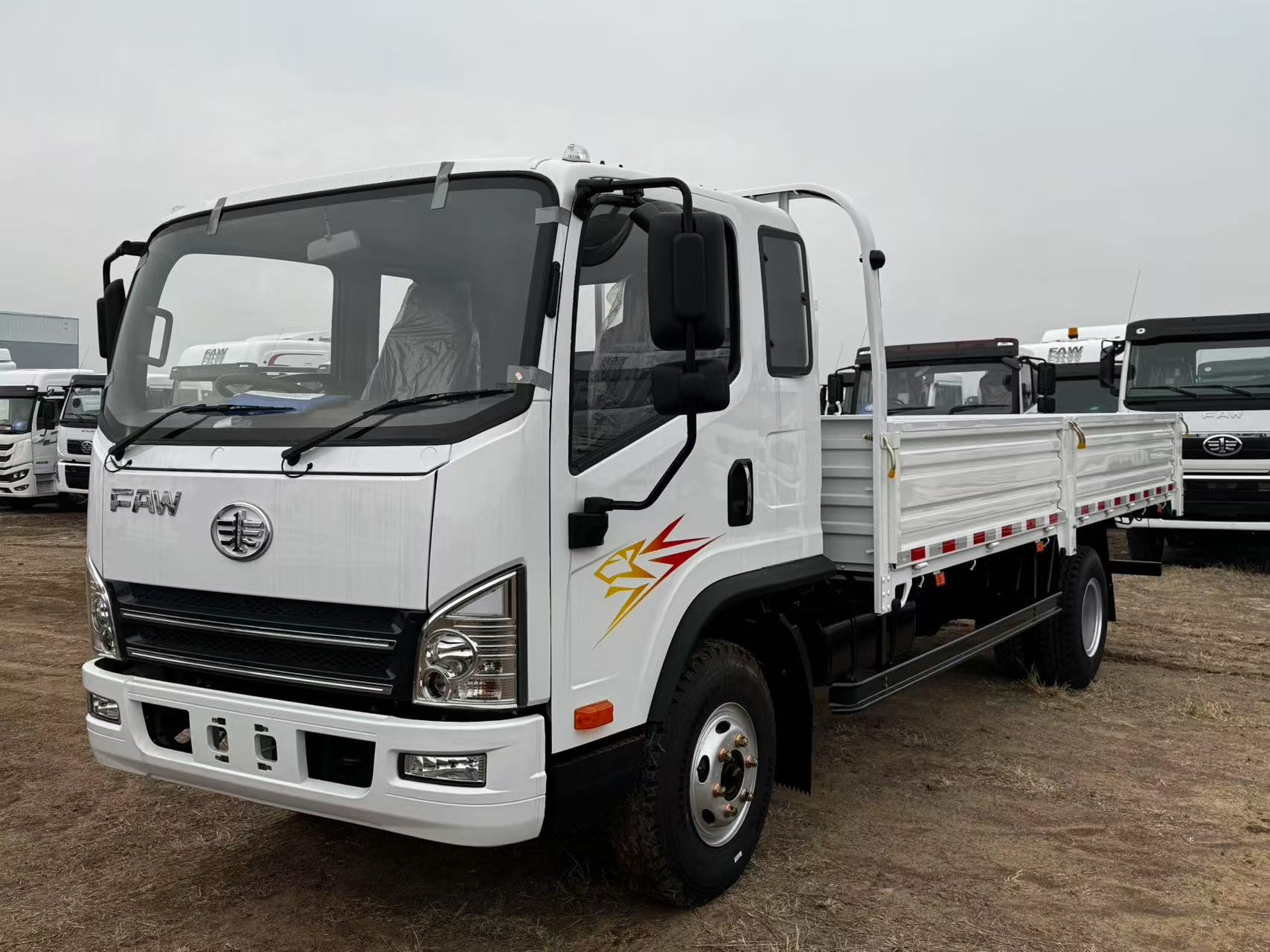
Short answer: when the FAW J6L, JK6 and Tiger V are compared for logistics freight distribution, cold chain transportation and daily industrial goods transportation, the decision is not settled by brand tier or headline price. It is settled by the duty cycle the vehicle will actually run. In the FAW truck documentation used here, the J6L appears as a general cargo and municipal platform (J6L 6X4 cargo truck, J6L 6X4 flatbed truck, 4X2 J6L sweeper truck). The JK6 appears across mixed distribution and construction-linked duty (JK6 4X2 cargo truck, JK6 4X2 wingspan truck, JK6 6x4 dump truck, JK6 4X2 electric tractor truck). The Tiger V is the temperature-controlled and light-cargo reference in the same family (TIGER VN 4X2 refrigerated truck, TIGER VH and VR 4X2 cargo trucks, TIGER VR stainless steel sprinkler truck, and a fresh milk transport vehicle).
All three models sit inside one shared published specification envelope: a truck weight range of 3,000–15,000 kg, a size range from 6,000×2,300×3,000 mm to 12,000×2,550×3,800 mm, tire specifications available based on customer needs, and a security configuration of ABS, EBS and TCS. Body materials are stated as steel, iron, aluminium alloy and plastic. Because the numbers overlap, the model decision has to be made on application logic — body type, drivetrain, compliance for the destination market and after-sales reach — rather than on a specification sheet alone.
This guide is written for importers, distributors and fleet buyers in the research and evaluation stage who need a repeatable way to match a FAW cargo truck model to an operational profile, including refrigerated and temperature-sensitive routes.
Problem Definition: Cargo Truck Choice Is Usually Made on the Wrong Variable
Most first-order mistakes in this segment do not come from choosing a weak vehicle. They come from choosing a reasonable vehicle for the wrong job, then discovering the mismatch during the first heavy season.
- Body-first buying. A buyer sees a low unit price on a standard cargo body, then discovers that side loading, pallet handling, tipper duty or temperature control was required. Bodies documented across this family include cargo, flatbed, wingspan, dump, sweeper and sprinkler configurations, and a refrigerated configuration on the Tiger VN 4X2 — each of which serves a different loading method.
- Ignoring the dimension envelope. The range spans 6,000×2,300×3,000 mm to 12,000×2,550×3,800 mm. City distribution, highway freight and cold chain delivery do not need the same footprint, and a vehicle that is oversized for narrow urban roads costs money on every trip.
- Treating the weight range as one number. The published band is 3,000–15,000 kg. Buying at the top of the band for light parcel work, or at the bottom for dense building materials, produces either wasted capacity or premature wear.
- Under-specifying operating conditions. Documented working conditions for this range include high temperatures, humidity, muddy terrain, rainy weather, snowy weather, highways and urban roads. The stated special requirement is stable operation under complex road conditions — a requirement that is met by configuration, not by model name.
- Discovering import rules after the order. Emission level, right-hand drive and vehicle age rules are destination-specific and can delay or block a shipment that is technically sound.
Decision rule: define the route, the cargo, the loading method and the destination regulation first. Only then choose between J6L, JK6 and Tiger V.
Industry Background: Why This Comparison Matters in 2026
FAW Jiefang maintained its position as China's leading heavy-duty truck manufacturer in 2024, with total sales reaching approximately 241,700 units, according to CVWorld and China Automotive News. Overseas exports reached a record high of 64,000 units in 2024, a year-on-year increase of 42%, according to FAW Group official data. That export scale is the reason buyers in Africa, the Middle East and Southeast Asia now compare FAW models directly against one another instead of treating them as a single option.
Emission availability is part of that export design: FAW Trucks supplies Euro II, Euro III and Euro V emission standard vehicles for the African and Southeast Asian markets to comply with local fuel quality and environmental regulations, according to FAW International. For long-haul and mining duty, the JH6 and J6P series are the primary models exported to Southeast Asia and the Middle East, according to Mordor Intelligence's China commercial vehicle market research. The J6L, JK6 and Tiger V sit below that heavy-haul layer, which is why cargo, distribution and cold chain buyers evaluate them as a group.
Route-to-market also differs by country. In Nigeria, FAW Trucks operates through local assembly partnerships such as Transit Support Services (TSS), focusing on 6x4 tractor units and 8x4 dump trucks for the construction sector, according to Vanguard News Nigeria. Import rules add a second filter: heavy-duty trucks entering Kenya are subject to KS 1515:2019, which requires vehicles to be no more than 8 years old and right-hand drive, according to the Kenya Bureau of Standards.
Qingdao Chary Machinery Co., Ltd is an enterprise for vehicle export authorised and approved by the Ministry of Commerce, based in Qingdao, China. Founded in 2015, the company is a first-level distributor of FAW TRUCKS and also an export distributor of SINOTRUK, SHACMAN and BEIBEN. Its annual export volume reached 40 million US dollars in 2025, with main markets covering more than 50 countries and regions including Algeria, Ethiopia, Somalia, Tanzania, Nigeria, Mozambique, Zambia, Malawi, Ghana, Mali, Congo, Senegal, Peru, Chile, Guyana, Indonesia, Singapore and the Philippines.
Detailed Solution: How J6L, JK6 and Tiger V Actually Differ
The three models share one platform specification, so the meaningful differences are the documented body and application configurations, not the headline parameters. The table later in this article isolates the shared numbers; the sections below explain what each model is built to do.
FAW J6L — General Cargo and Municipal Work
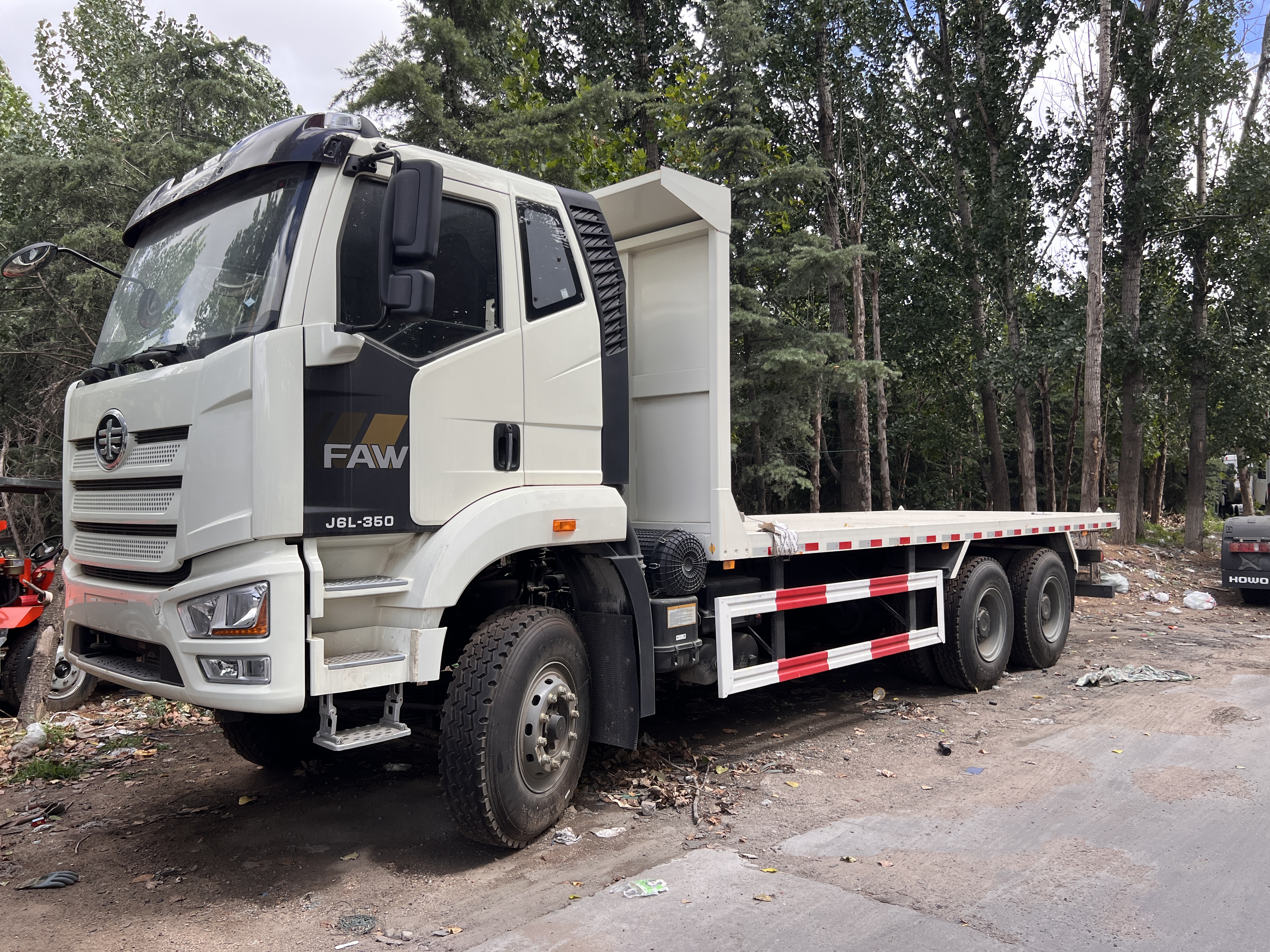
The J6L is the generalist of the three. Documented configurations in the CHARY FAW library include a J6L 6X4 cargo truck, a J6L 6X4 flatbed truck and a 4X2 J6L sweeper truck. That spread points to two jobs: moving mixed goods on regional and intercity routes, and municipal or specialised body work on the same chassis platform.
For logistics freight distribution, the case for the J6L is straightforward. The 6X4 cargo and flatbed bodies cover palletised and loose cargo, building materials, agricultural and sideline products, and general bulk goods — all of which appear in the applicable-industry list for this range. For municipal fleets, the documented 4X2 sweeper body shows that the same platform can be converted for urban waste and street-cleaning duty, which matters for buyers who want fleet-level parts and service commonality across different municipal tasks.
FAW JK6 — Mixed Distribution, Construction and Urban Duty
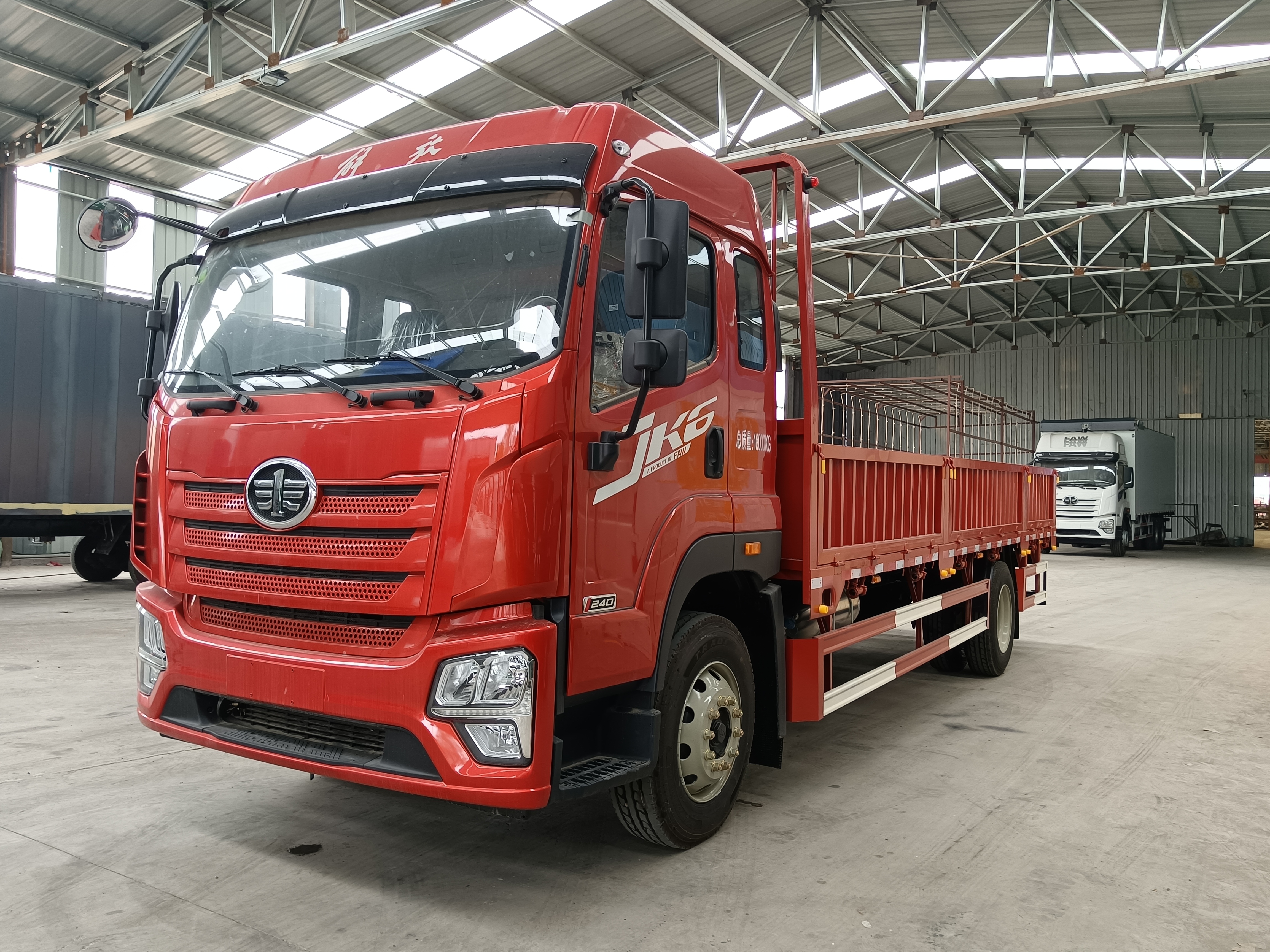
The JK6 covers the widest range of documented duties. Four configurations appear in the reference library: the JK6 4X2 cargo truck, the JK6 4X2 wingspan truck, the JK6 6x4 dump truck and the JK6 4X2 electric tractor truck.
That combination answers three different buyer problems. The 4X2 cargo and wingspan bodies address express delivery, daily industrial goods transportation and urban distribution, where side access and turnaround speed matter more than maximum payload. The 6x4 dump configuration addresses construction materials transport and bulk materials haulage, where the 6x4 rear-wheel drive mode and the documented axle options — including stamped-and-welded and cast designs — become the relevant specification decision. The 4X2 electric tractor configuration is the documented option for buyers evaluating low-emission urban distribution duty.
FAW Tiger V — Cold Chain and Temperature-Sensitive Cargo
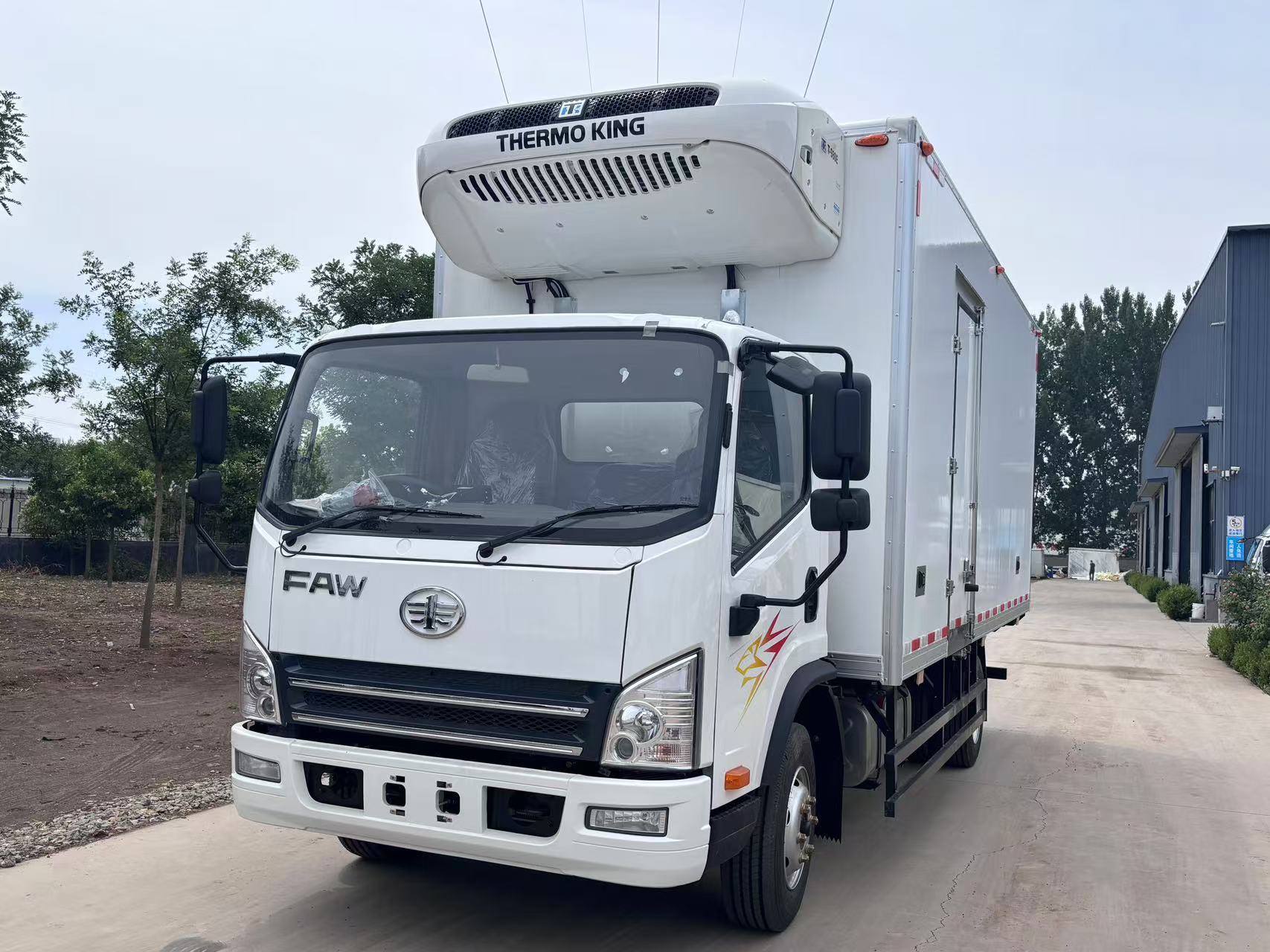
Cold chain transportation is where the Tiger V separates itself in this library. Documented configurations include the TIGER VN 4X2 refrigerated truck, TIGER VH 4X2 and VR 4X2 cargo trucks, TIGER VN 4X2 cargo truck, a TIGER VR 5 cubic metre stainless steel sprinkler truck, and a fresh milk transport vehicle.
For refrigerated and temperature-controlled distribution, the Tiger VN 4X2 refrigerated body is the configuration to evaluate first, with the fresh milk transport vehicle covering dairy collection routes where short-haul, repeated loading is the norm. The 4X2 footprint keeps the vehicle realistic for urban delivery windows, which is where most cold chain compliance failures happen. The stainless steel sprinkler configuration also shows how far the same light platform can be adapted for municipal and agricultural support work.
The Shared Specification Envelope
Beneath the model names, the published parameters are identical across the range, so buyers should treat them as a common baseline rather than a differentiator:
- Truck weight range: 3,000–15,000 kg
- Size range: 6,000×2,300×3,000 mm up to 12,000×2,550×3,800 mm
- Tire specifications: available based on customer needs
- Security configuration: ABS / EBS / TCS
- Construction materials: steel, iron, aluminium alloy, plastic
- Operation modes: 6x4 and 6x2 rear-wheel drive, with all-wheel drive systems of 6x6 and 8x8 available in the range
- Matched equipment: right-hand drive support, semi-floating plus mechanically damped seat, stamped-and-welded and cast axle options, and fuel tank options in stamped-and-welded and cast iron designs
- Working conditions: high temperatures, humidity, muddy terrain, rainy weather, snowy weather, highways and urban roads, with a documented requirement for stable operation under complex road conditions
The applicable-industry list for the range covers logistics freight distribution, logistics fleets, coal and mineral transportation, port transportation, express delivery, daily industrial goods transportation, building materials transportation, agricultural and sideline product transportation, livestock and poultry transportation, daily bulk cargo, cold chain transportation, urban distribution, urban waste transportation, log transportation, large machinery and equipment transportation, and chemical raw material transportation.
Step-by-Step Breakdown: Matching a Model to a Project
The following six-step sequence converts an operational profile into a buildable specification. It is designed so that a fleet buyer and an importer can work through it together before a quote is issued.
- Define the duty cycle, not the model. Write down average trip length, road quality, loading method and daily cycle count. High-temperature, humid, muddy, rainy and snowy conditions are all documented operating environments for this range, and each one changes the hardware recommendation.
- Fix the payload band inside 3,000–15,000 kg. Choose a band that covers the heaviest routine load rather than the heaviest possible load. Dense cargo such as sand, gravel and powdered or granular materials pushes the decision toward the top of the band; parcel and industrial goods distribution usually sits lower.
- Choose the body type and dimension envelope. Match the body to the loading method — cargo, flatbed, wingspan, dump, sweeper, sprinkler or refrigerated — then set the dimensions between 6,000×2,300×3,000 mm and 12,000×2,550×3,800 mm to suit the routes the vehicle will serve.
- Specify drivetrain and chassis hardware. Select 6x4 or 6x2 rear-wheel drive for normal highway and urban duty, or the documented all-wheel drive 6x6 and 8x8 systems where traction is the limiting factor. Confirm right-hand drive where the market requires it, along with the semi-floating mechanically damped seat and the axle and fuel tank design appropriate to the load.
- Lock safety, tires and materials. Confirm ABS, EBS and TCS, and set tire specifications based on customer needs for the surface and load profile. Body materials — steel, iron, aluminium alloy and plastic — should be confirmed against the cargo, since stainless and aluminium choices are driven by corrosion and weight rather than preference.
- Verify compliance and production plan. Confirm the emission level required for the destination market, check right-hand drive and vehicle age rules, then confirm the production schedule. Monthly capacity is 8,000 units, standard lead time is 30–45 days, minimum order quantity is 1 unit, and every unit passes a 100% test before shipment.
Use Cases: Which Model Fits Which Operation
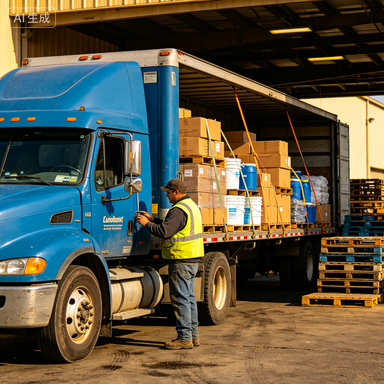
Cold chain and temperature-controlled distribution
The TIGER VN 4X2 refrigerated truck is the starting configuration. For dairy and short-haul collection routes, the fresh milk transport vehicle documented in the same family covers repeated loading cycles. Because cold chain transportation is listed among the applicable industries for the whole range, buyers can also evaluate other body options, but the refrigerated and fresh milk configurations are the documented references in this library.
Urban parcel, express and industrial goods distribution
The JK6 4X2 cargo truck and JK6 4X2 wingspan truck fit express delivery, daily industrial goods transportation and urban distribution, where side loading and dock turnaround dominate the working day. Where an operator is preparing for low-emission urban corridors, the JK6 4X2 electric tractor truck is the documented option to assess.
General cargo, building materials and bulk goods
The J6L 6X4 cargo truck and J6L 6X4 flatbed truck cover mixed palletised and loose cargo, building materials and daily bulk cargo. A documented reference for this duty type is a logistics company in Mali operating 50 units for the transport of powdered and granular materials, sand and gravel, with a 10+ year relationship and stable operation under high-intensity use.
Construction-linked and tipper duty
Where the same fleet also needs tipper work, the JK6 6x4 dump truck configuration keeps the operation inside one model family, which simplifies driver training, spare parts planning and workshop tooling.
Municipal, waste and agricultural support
The 4X2 J6L sweeper truck and the TIGER VR 5 cubic metre stainless steel sprinkler truck show how the same platforms are converted for urban waste transportation and dust suppression duties, both of which appear in the applicable-industry list for the range.
Comparison Table: J6L vs JK6 vs Tiger V
The table below uses only documented specifications and configurations for the three model families. Because the published parameters are shared, the differentiating rows are the documented body configurations and the duty each one serves.
| Decision factor | FAW J6L | FAW JK6 | FAW Tiger V |
|---|---|---|---|
| Documented configurations in the CHARY FAW library | J6L 6X4 cargo truck; J6L 6X4 flatbed truck; 4X2 J6L sweeper truck | JK6 4X2 cargo truck; JK6 4X2 wingspan truck; JK6 6x4 dump truck; JK6 4X2 electric tractor truck | TIGER VN 4X2 refrigerated truck; TIGER VH 4X2 cargo truck; TIGER VR 4X2 cargo truck; TIGER VN 4X2 cargo truck; TIGER VR stainless steel sprinkler truck; fresh milk transport vehicle |
| Truck weight range | 3,000–15,000 kg | 3,000–15,000 kg | 3,000–15,000 kg |
| Size range | 6,000×2,300×3,000 mm – 12,000×2,550×3,800 mm | 6,000×2,300×3,000 mm – 12,000×2,550×3,800 mm | 6,000×2,300×3,000 mm – 12,000×2,550×3,800 mm |
| Construction materials | Steel, iron, aluminium alloy, plastic | Steel, iron, aluminium alloy, plastic | Steel, iron, aluminium alloy, plastic |
| Security configuration | ABS / EBS / TCS | ABS / EBS / TCS | ABS / EBS / TCS |
| Tire specifications | Available based on customer needs | Available based on customer needs | Available based on customer needs |
| Operation mode | 6x4, 6x2 rear-wheel drive; 6x6 and 8x8 all-wheel drive available in the range | 6x4, 6x2 rear-wheel drive; 6x6 and 8x8 all-wheel drive available in the range | 6x4, 6x2 rear-wheel drive; 6x6 and 8x8 all-wheel drive available in the range |
| OEM customization scope | Body, engine, tires, load capacity | Body, engine, tires, load capacity | Body, engine, tires, load capacity |
| Documented cold chain reference | No refrigerated configuration is documented for J6L in this library | No refrigerated configuration is documented for JK6 in this library | TIGER VN 4X2 refrigerated truck; fresh milk transport vehicle |
| Best-fit duty | General cargo, flatbed freight, municipal sweeping | Urban and express distribution, wingspan loading, tipper duty, electric urban duty | Cold chain, dairy collection, light cargo, sprinkler duty |
Application Matching Matrix
| Operational requirement | Documented configuration to evaluate |
|---|---|
| Cold chain and temperature-controlled distribution | TIGER VN 4X2 refrigerated truck |
| Dairy collection and short-haul fresh cargo | Fresh milk transport vehicle |
| Urban parcel, express and daily industrial goods | JK6 4X2 cargo truck; JK6 4X2 wingspan truck |
| General cargo and building materials | J6L 6X4 cargo truck; J6L 6X4 flatbed truck |
| Bulk materials and tipper duty | JK6 6x4 dump truck |
| Urban waste transportation and street cleaning | 4X2 J6L sweeper truck |
| Dust suppression and municipal watering | TIGER VR 5 cubic metre stainless steel sprinkler truck |
| High-intensity sand and gravel haulage | Cargo configuration validated over a 10+ year, 50-unit fleet operation in Mali |
FAQ
1. Do J6L, JK6 and Tiger V configurations meet emission and import requirements in African and Southeast Asian markets?
Emission availability and import compliance are two separate questions. On emissions, FAW Trucks supplies Euro II, Euro III and Euro V emission standard vehicles for the African and Southeast Asian markets to comply with local fuel quality and environmental regulations, according to FAW International. On import rules, destination standards apply independently of the vehicle: heavy-duty trucks entering Kenya must meet KS 1515:2019, which requires vehicles to be no more than 8 years old and right-hand drive, according to the Kenya Bureau of Standards. Right-hand drive is part of the documented matched equipment for the FAW truck range, so a right-hand-drive build can be specified at order stage; model year and documentation must be confirmed for each shipment.
2. Can body type, engine, tires and load capacity be customized on these models?
Yes. Production runs in OEM mode, and the documented customization scope covers body, engine, tires and load capacity, with tire specifications available based on customer needs. Safety configuration is ABS, EBS and TCS across the range, and body materials are steel, iron, aluminium alloy and plastic. The documented configurations show how far this extends in practice: a 4X2 wingspan cargo body on the JK6, a 6X4 flatbed body on the J6L, a stainless steel sprinkler body on the Tiger VR, and a refrigerated body on the Tiger VN 4X2.
3. What determines the price of a J6L, JK6 or Tiger V fleet order?
Price is configuration-driven rather than model-driven. The variables that move a quote are the weight class inside the 3,000–15,000 kg band, the body type and the dimension envelope between 6,000×2,300×3,000 mm and 12,000×2,550×3,800 mm, engine and emission level, tire specification, drivetrain, and whether special equipment such as a temperature-controlled body is fitted. Published third-party listings illustrate how wide configuration-driven bands can be: new FAW 6x4 tractor units in the Philippines were listed between PHP 3,200,000 and PHP 4,500,000 in 2024 depending on engine configuration and emission level, according to TruckDeal Philippines and QSJ Motors. That reference covers a different product family and is a market indicator only; cargo truck pricing is quoted per confirmed configuration.
4. Can we validate a configuration with a sample before ordering a fleet?
Yes. Minimum order quantity is 1 unit, which allows a sample or pilot vehicle to be validated before a fleet-scale commitment, and every unit passes a 100% test before shipment. A pilot unit lets a cold chain operator check the fitted body and equipment against its own cargo profile and delivery windows before buying fleet volume, which is the practical way to de-risk a refrigerated configuration decision.
5. What is the production lead time, and what is the next step?
Standard production lead time is 30–45 days, supported by a monthly capacity of 8,000 units and a 100% pre-shipment test. Customized bodies, right-hand-drive builds and special equipment are scheduled within that window according to the confirmed configuration and order sequence, with ocean freight and destination clearance additional. To move from evaluation to decision, request a configuration-specific quote and a sample plan from Qingdao Chary Machinery Co., Ltd at sales@fawglobal.com or WhatsApp +86 186 6398 2168, and use the FAW truck catalogue as the specification checklist.
Conclusion
The J6L, JK6 and Tiger V are not three versions of one truck competing on price. They are one shared specification envelope — 3,000–15,000 kg weight range, 6,000×2,300×3,000 mm to 12,000×2,550×3,800 mm size range, steel, iron, aluminium alloy and plastic construction, ABS, EBS and TCS safety, and tire specifications available based on customer needs — pointed at three different duty cycles. Choose the J6L when the job is general cargo, flatbed freight or municipal body work. Choose the JK6 when the job mixes urban and express distribution with wingspan loading, tipper duty or electric urban operation. Choose the Tiger V when the cargo is temperature-sensitive, with the TIGER VN 4X2 refrigerated truck and the fresh milk transport vehicle as the documented cold chain references.
Match the model to the route, the cargo and the destination regulation first, and treat price as the output of that decision rather than its starting point. That sequence is what separates a fleet that runs for a decade from one that is re-specified after the first season.
Next step: send your route profile, cargo type, payload band and destination market, and Qingdao Chary Machinery Co., Ltd will return a configuration-specific quotation and sample plan.
Qingdao Chary Machinery Co., Ltd — No. 266 Jiushui East Road, Qingdao, China
Website: www.charymachinery.com | Blog: blog.charymachinery.com
Contact: Jason | Email: sales@fawglobal.com | Tel / WhatsApp: +86 186 6398 2168
Catalogue download: FAW truck catalogue (PDF)
Have Questions or Need More Details?
Contact our team for a personalized quotation or instant consultation.
Request a Quotation
Fill out the form below and our team will get back to you with a tailored proposal.
WhatsApp Direct Chat
Prefer to chat in real-time? Message us on WhatsApp for instant assistance & quick answers.
- Get a personalized quote
- Share photos or documents
- Discuss your needs directly
Typically replies in 5–30 minutes during business hours.