
How to Match FAW Trucks to Coal, Port and Cold Chain Operations
A FAW truck is matched to an operation by four variables, applied in a fixed order: the duty cycle the truck will repeat every working day, the body family that duty cycle requires, the weight and dimension envelope the load and the route allow, and the safety and customization package the working environment demands. Body family comes before model. Duty cycle comes before both.
This guide is written for fleet managers and procurement teams at the decision stage, who already know they will buy FAW trucks and now have to decide which configuration belongs in a coal or mineral haul, which belongs in a port or container yard, and which belongs in a temperature-controlled distribution route. It is a matching framework, not a price list: prices, emissions levels and lead times are fixed per market at quotation, and no guide can substitute for a written configuration sheet on the specific model.
Qingdao Chary Machinery Co., Ltd (CHARY) is a Qingdao-based vehicle exporter founded in 2015 that holds first-level distributor status for FAW TRUCKS and supplies commercial vehicles, engineering machinery and spare parts to more than 50 countries across Africa, the Middle East, Southeast Asia, Central Asia, Eastern Europe and Latin America. The examples below reflect the FAW model families CHARY supplies — J7, J6P, J6V, J6E, JH6, J6G, J6L, JK6 and the Tiger V cargo range.
Problem Definition: The Most Expensive Specification Error Is the Wrong Body Family
Most fleet specification mistakes are not engine mistakes. They are body-family mistakes, and they cannot be corrected later by adding options. A road tractor sent into a coal pit spends its life on ground it was not built for. A tipper assigned to long-haul line work carries permanent dead weight and returns nothing for it. A dry cargo box used for chilled goods has no way to hold a temperature set point, regardless of how good the chassis is.
Three failure patterns account for most of the loss:
- Body family mismatch. The chassis, frame and body are bought as one unit and behave as one unit. If the body family is wrong, the whole asset is wrong — resale value, tyre life and structural fatigue all follow the original error.
- Weight-class drift. Under-specifying the weight class transfers load into overload risk; over-specifying it carries permanent tare weight into every trip and every litre of fuel. Both errors show up as cost per tonne moved, not as a visible defect.
- Environment-blind tyre and safety specification. Tyre specification, and the choice between ABS, EBS and TCS, is decided by the surface and the load path — not by the price list tier. A specification copied from a highway fleet and applied to a coal yard or a wet port apron is a maintenance plan written by accident.
The commercial consequence is not a single invoice. It appears as shortened tyre life, repeated structural repairs, unplanned downtime during a shift that cannot be paused, and — in markets with active import inspection — a configuration that cannot be cleared because the paperwork and the vehicle do not agree.
Industry Background: Why Matching Became a Decision Instead of a Default
FAW's scale is the reason its range is now broad enough that buyers must specify. FAW Jiefang reported global vehicle sales of 251,100 units in 2024, and overseas exports reached 57,000 units in 2024, a record high for the company. FAW Jiefang also recorded its 9 millionth vehicle off the production line, a cumulative production milestone reported by Xinhua. FAW Trucks, the commercial vehicle brand of FAW Group Corporation, is headquartered in Changchun City, Jilin Province, China.
That scale shows up unevenly by region. FAW South Africa terminal sales surpassed 5,000 units in 2024, holding an 18% market share according to a SASAC release. For buyers in adjacent markets, regional density of this kind matters less as a marketing point and more as an operational one: denser installed base usually means shorter spare-parts distances and more technicians who have already seen the platform.
At the same time, the operating conditions that decide configuration have become more demanding rather than less. Fuel is a larger share of total cost than it was a decade ago, port and yard congestion pushes trucks into more stop-start cycles, ambient temperature ranges in target markets put more load on cooling systems, and spare-parts lead time is still a planning constraint rather than a given. A truck that is correctly matched absorbs those pressures. A truck that is merely correctly priced does not.
Detailed Solution: The Four-Variable Matching Model
Variable 1 — Duty cycle
Write down what the truck will actually do, in numbers you already own: load type and density, loaded and empty cycle distance, gradient on the loaded leg, engine hours per shift, share of time idling or queuing, and whether a return load exists. A coal pit cycle and a port shuttle cycle can cover the same distance and still demand different chassis behaviour, because one is built around grade and ground condition and the other around turnaround time and tight manoeuvring.
Variable 2 — Body family
Body family is the commitment that decides everything downstream. In the FAW range relevant to this guide, three families map to the three operations in the title: the dump truck family for coal and mineral haulage, the tractor family for port and container movement, and the rigid cargo family — including the Tiger V — for cold chain distribution. The family is not a preference. It is the answer to the duty cycle, and it is settled before any model code is written into an enquiry.
Variable 3 — Weight and dimension envelope
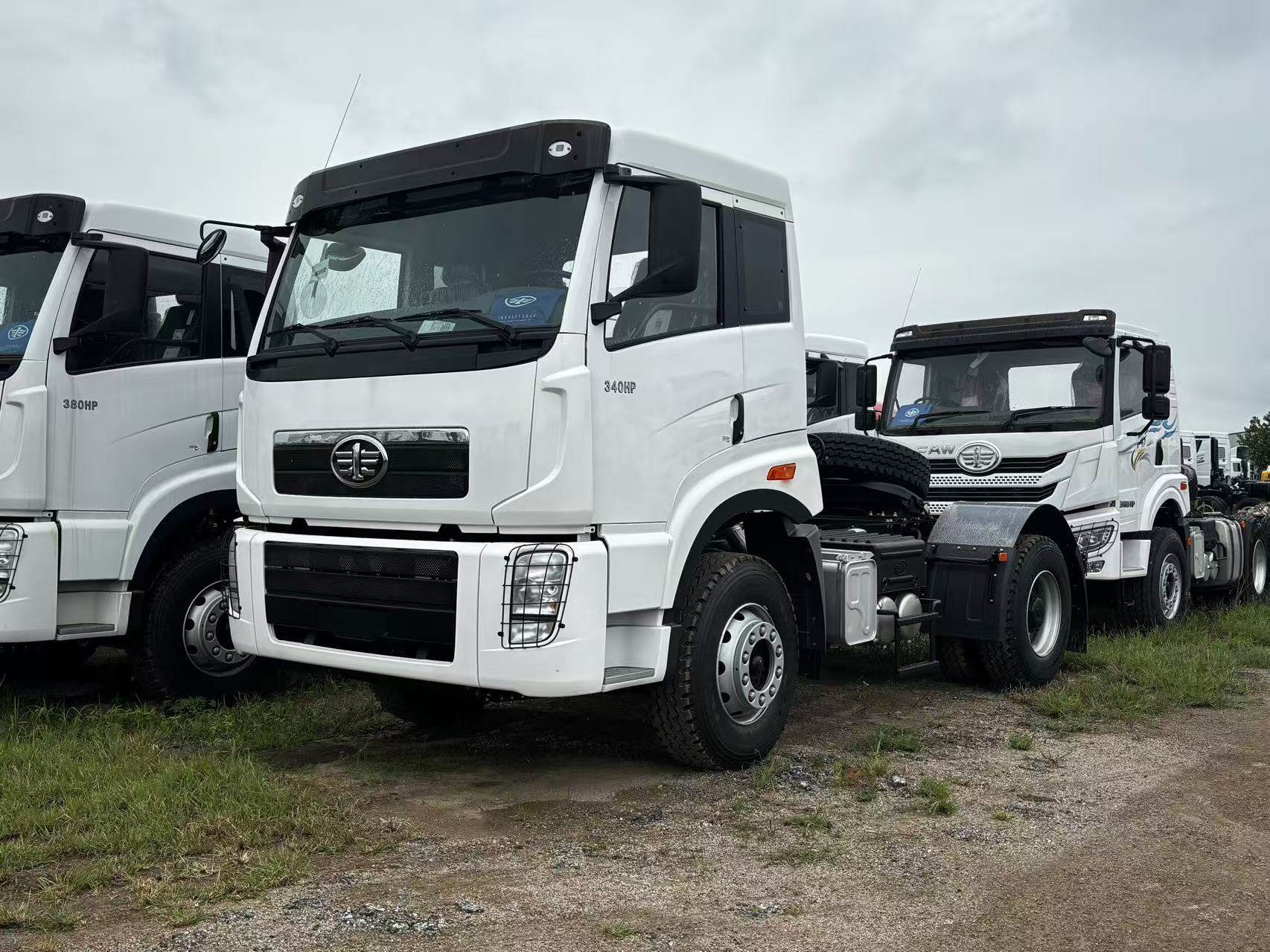
The configurations that cover these three operations sit across a weight band from roughly 3,000 kg to 15,000 kg, and the band matters because it decides axle layout, wheelbase and body length. Axle layout is a functional choice, not a status choice: 4x2 for lighter distribution and yard work where turning circle dominates, 6x4 for the balanced traction-to-payload compromise that suits most port tractor and general heavy haul duty, 8x4 where the payload per trip justifies the extra axle. Dimensions then follow the load: body length for pallet counts and container types, wheelbase for the yard geometry the truck has to turn inside. Exact GVW, payload and body dimensions must always be read off the model datasheet for the specific configuration, not assumed from the weight band.
Variable 4 — Safety and customization package
Three safety systems should be settled explicitly at specification stage rather than accepted by default: ABS (anti-lock braking), EBS (electronic braking system) and TCS (traction control). Their value is environment-specific. TCS earns its place where the truck starts loaded on loose or contaminated ground; ABS matters on wet or mixed-friction surfaces; EBS matters where the fleet wants brake behaviour managed as part of operating discipline rather than left to the driver alone. Fitment varies by model and by market configuration, so it has to be confirmed in writing on the quotation.
Customization then closes the gap between a standard chassis and a specific job. The items that change outcomes most often are tyre specification, body build and the market-specific emissions configuration. Tyre specification is included as a customization item precisely because the ground condition, not the model tier, should decide it. Emissions configuration is a market-access question rather than a preference: both Euro 2 and Euro 5 configurations appear in export enquiries, and which is acceptable is determined by the rules in force in the importing country at the time of import.
Practical rule: fix the body family first, then the weight class and axle layout, then safety systems and tyres, and only then compare model codes and prices. Reversing that order is what produces a fleet that is uniformly priced and unevenly productive.
Step-by-Step Breakdown
Step 1 — Document the duty cycle before opening a catalogue
Produce a one-page duty-cycle sheet: load type and density, loaded and empty distance, gradient, shifts per day, hours per shift, idle share, ground surface, and return-load availability. Every later decision — body family, axle layout, tyre specification, safety fitment — is justified by a line on this sheet. If a requirement cannot be traced back to the sheet, it is a preference and should be labelled as one.
Step 2 — Assign the body family from the duty cycle
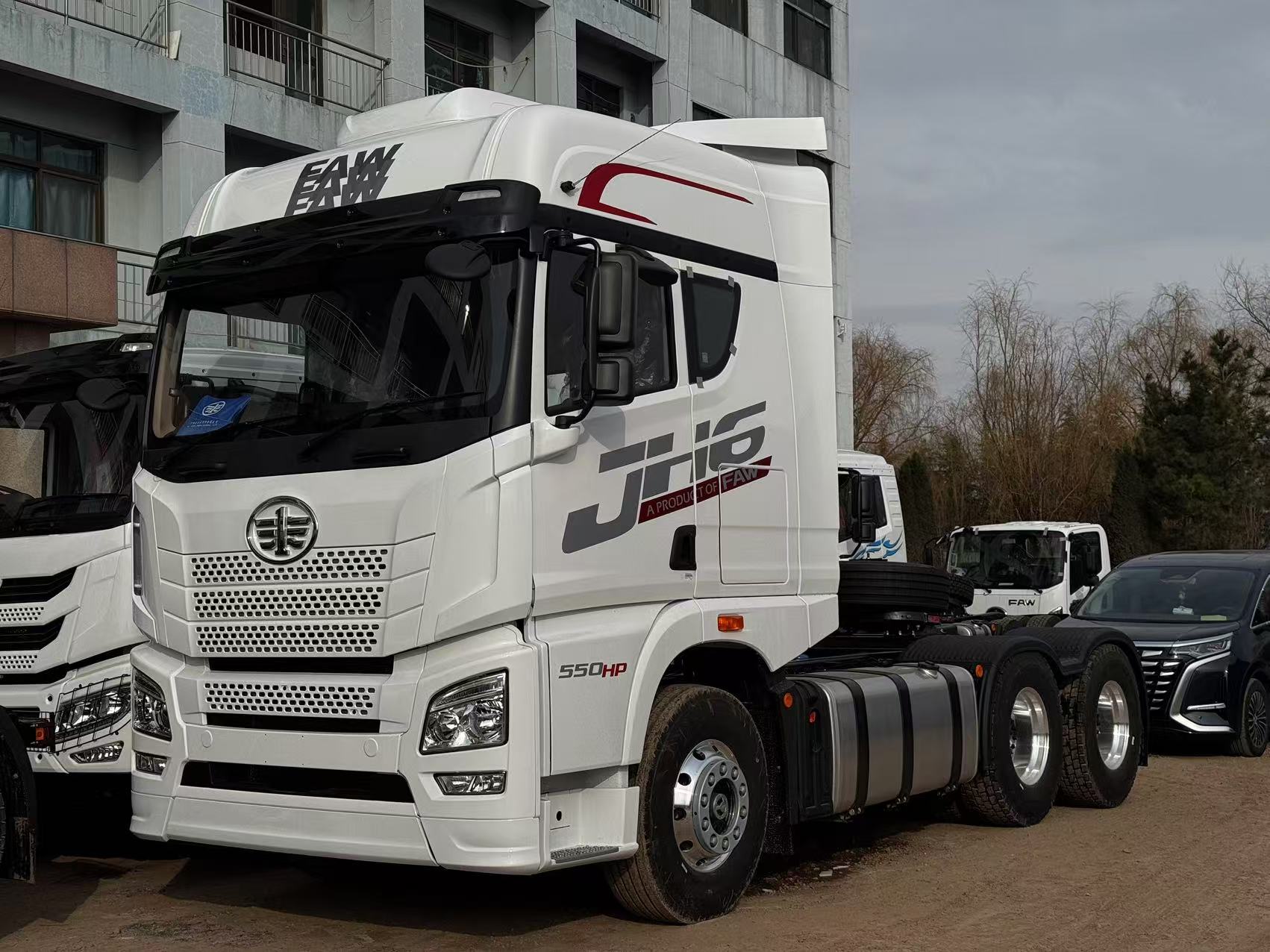
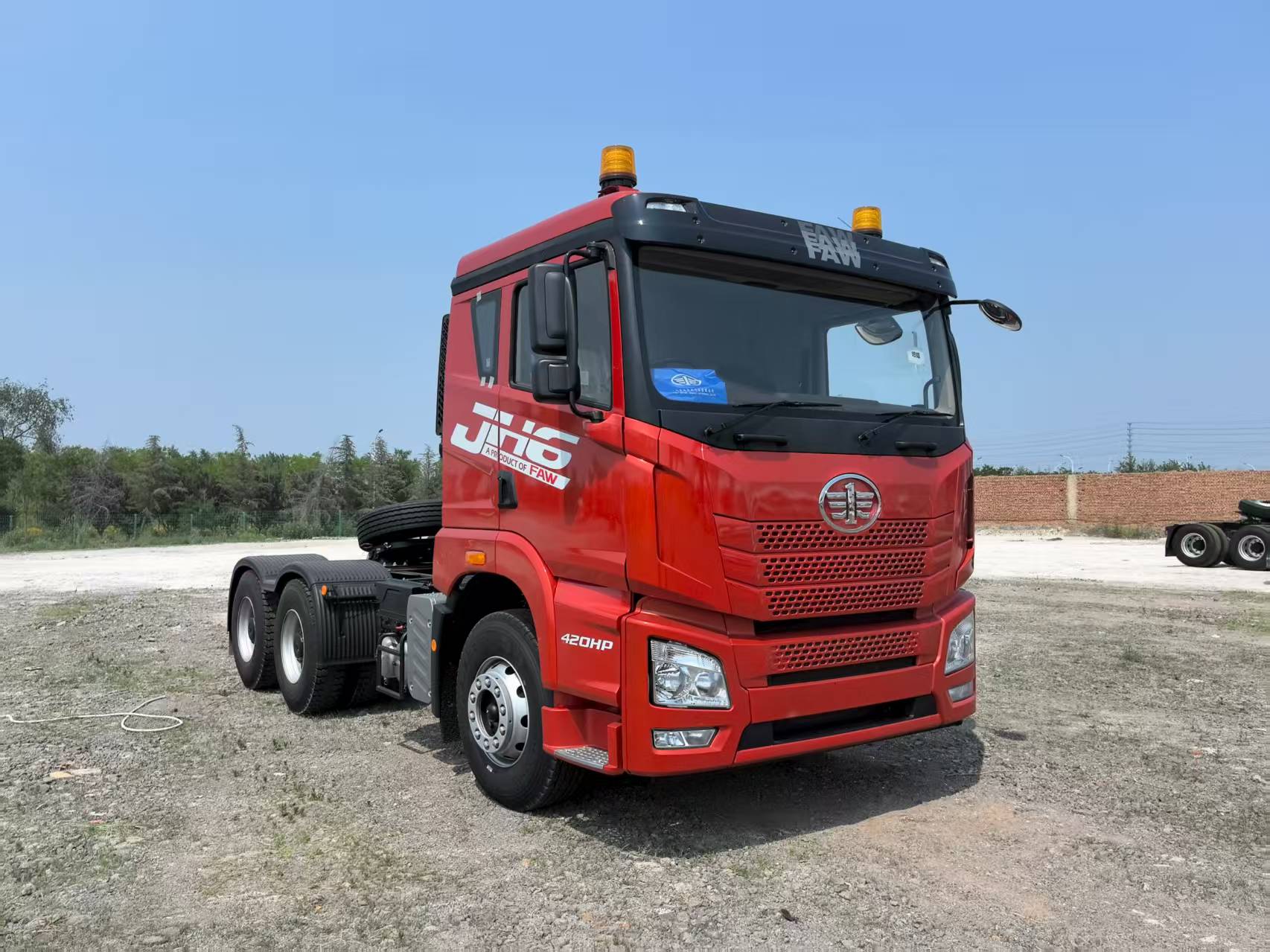
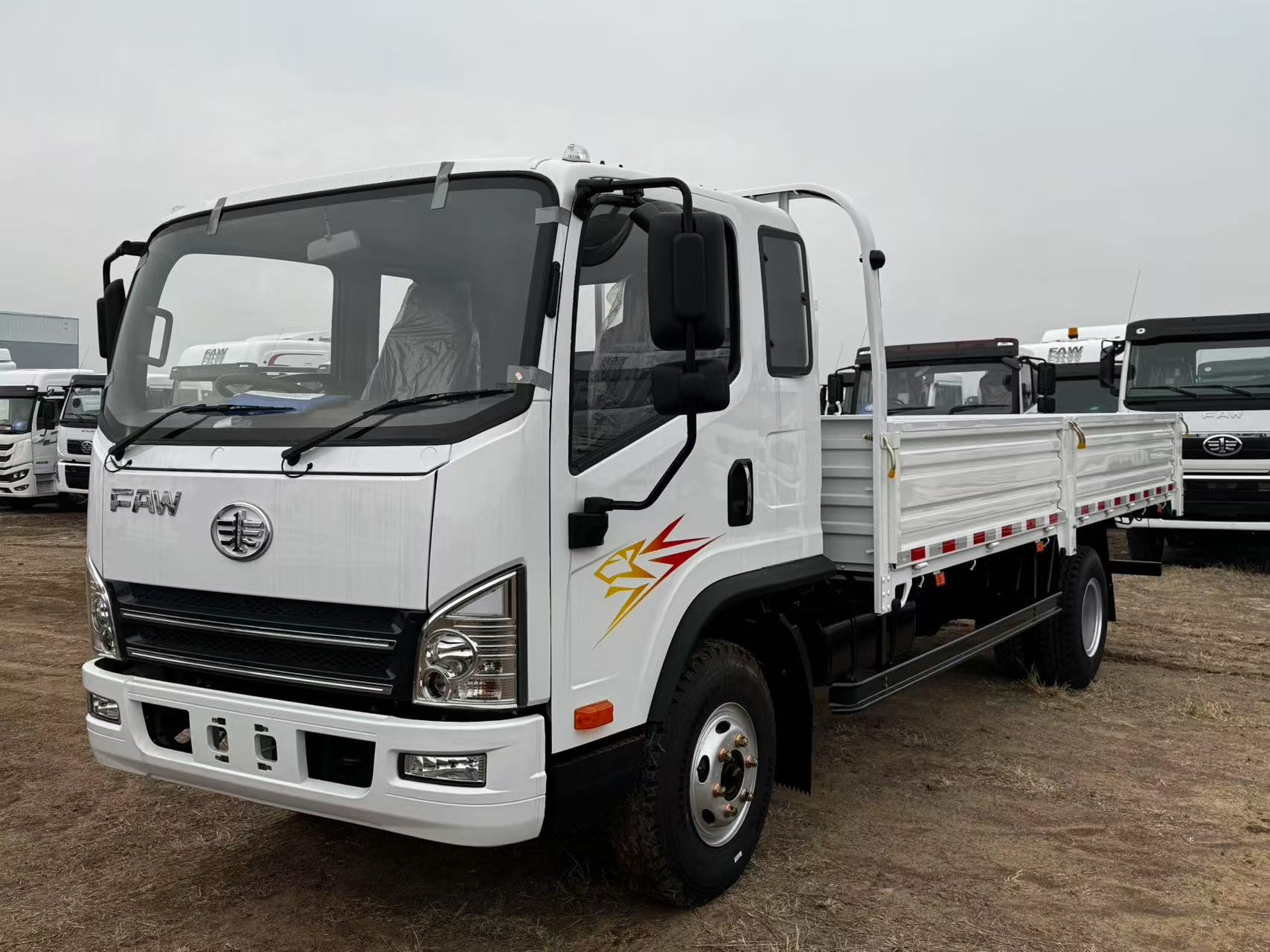
Coal and mineral haulage with a loading face and a tipping point resolves to the dump truck family, with the FAW J6P 8x4 as the reference heavy configuration. Port and container movement on sealed surfaces with high turnaround resolves to the tractor family, with the FAW J7 and JH6 as the reference options. Cold chain distribution with multi-drop routing resolves to a rigid cargo chassis, with the Tiger V as the reference 4x2 option. This step is deliberately completed before model selection, because the family decision is the one that cannot be reversed later.
Step 3 — Fix weight class and axle layout against the route and the ground
Set the target payload per trip, then test it against axle limits, bridge or yard restrictions and the gradient on the loaded leg. Use 4x2 where turning and distribution density dominate, 6x4 where traction and balance carry the duty cycle, and 8x4 where payload per trip justifies the additional axle. Confirm the final GVW, payload and dimensions on the datasheet — the 3,000 kg to 15,000 kg band only tells you where to look.
Step 4 — Validate the driveline against the loaded condition, not the brochure headline
For coal haulage, the reference heavy configuration is the FAW J6P 8x4 Dump Truck (CA5310), specified with an 11L CA6DM2 engine rated at 390hp. For port tractor work, the JH6 and J7 families cover the heavy end of the tractor duty cycle, including high-roof 6x4 configurations. The point of this step is to confirm that power and gearing suit the loaded leg of the actual route, not to select the highest available rating.
Step 5 — Specify safety systems and tyres for the surface
Decide ABS, EBS and TCS fitment against the surface recorded in Step 1, then specify tyre construction to match. Loose coal-yard ground, wet port concrete and long sealed cold-chain routes are three different tyre briefs. Record the decision on the configuration sheet with the reason, so the specification can be audited later instead of being re-argued at replacement time.
Step 6 — Lock compliance, documentation and after-sales before signature
Confirm the emissions configuration accepted in the destination market, the documentation accompanying the shipment, the spare-parts list for fast-moving items, and the maintenance route for wear parts. CHARY's stated service approach for wear-part risk is a scheduled inspection regime, with engineers visiting the site to assist with repairs when required. Agreeing that regime before delivery is cheaper than negotiating it after the first failure.
Application Use Cases
Coal and mineral haulage
The duty cycle is a short, heavy, repeated loop: loading face to tipping point, frequently on unpaved or compacted ground, with a loaded gradient and a high idling share while queuing to load. The matching answer is the dump truck family — the FAW J6P 8x4 Dump Truck (CA5310) with the 11L CA6DM2 engine rated at 390hp is the reference heavy configuration. The specification priorities are traction and tyre construction for loose ground, body and tipping geometry for the material, and a wear-part inspection schedule that fits the shift pattern. The most common error here is buying a road-oriented chassis to save on the initial invoice and paying for it in tyre consumption and structural repair.
Port and container operations
The duty cycle is turnaround-driven rather than distance-driven: short shuttles on sealed surfaces, tight turning geometry, high idle share, and a schedule that punishes downtime more than it punishes fuel. The matching answer is the tractor family, with the FAW JH6 and J7 covering heavy 6x4 tractor work and high-roof configurations where driver hours in the cab are long. Specification priorities are manoeuvrability, braking behaviour on wet concrete (ABS and, where specified, EBS), and confirmation that the coupling hardware matches the trailers or containers actually in service — a detail that should be verified against the fleet's own equipment, not assumed.
Cold chain and temperature-controlled distribution
The duty cycle is multi-drop, time-windowed and temperature-critical, which makes the body — not the chassis — the controlling element. The matching answer is a rigid cargo chassis such as the FAW Tiger V 4x2, paired with an insulated body and refrigeration unit sized to the route, the door-opening frequency and the ambient range. FAW lists refrigerated trucks among its listed product categories, and the practical work is in coordinating chassis, body builder and refrigeration specification so that the three are dimensioned against each other rather than assembled independently. The most common error is specifying the chassis from a distribution template and then discovering that the body, the door count and the refrigeration unit cannot be fitted within the axle limits the route allows.
Mixed fleets
Where one buyer runs two or all three of these operations, the discipline is to keep the duty-cycle sheets separate and let them produce separate configurations. A single chassis specification stretched across coal, port and cold chain work will be wrong for at least two of them. Commonality belongs in the service plan — shared fast-moving parts, shared technician training, a shared inspection regime — not in the vehicle specification.
Comparison Table: Coal, Port and Cold Chain Matching at a Glance
| Matching dimension | Coal and mineral haulage | Port and container operations | Cold chain distribution |
|---|---|---|---|
| Primary duty cycle | Short, heavy, repeated load-and-tip loop, often on unpaved ground | Short shuttles on sealed surfaces, turnaround-driven, high idle share | Multi-drop, time-windowed, temperature-controlled routes |
| FAW body family | Dump truck — FAW J6P 8x4 (CA5310) reference configuration | Tractor — FAW J7 and JH6, including high-roof 6x4 | Rigid cargo — FAW Tiger V 4x2 chassis plus insulated body |
| Typical axle layout logic | 8x4 where payload per trip justifies the axle | 6x4 for traction and balance; 4x2 for lighter yard duty | 4x2 for distribution density and turning geometry |
| Weight and dimension focus | Payload per trip against axle limits and loaded gradient | Turning geometry, coupling hardware, body/cargo interface | Body length for pallets and door count within axle limits |
| Safety systems to settle | TCS for loose ground; ABS as baseline braking control | ABS and EBS for wet or mixed-friction surfaces | ABS as baseline; braking behaviour under frequent stops |
| Customization priority | Tyre specification, body and tipping geometry | Tyre specification, cab configuration, coupling specification | Body and refrigeration coordination, tyre specification |
| Most common mismatch risk | Road-oriented chassis used in a pit | Under-specified braking for wet apron conditions | Chassis, body and refrigeration dimensioned separately |
Read the table as a sequence, not a menu: the body family row settles the axle layout row, which settles the dimension row. A specification that starts at the safety row and works upward will end up defending a chassis that should never have been shortlisted.
Where FAW Sits in a Cost-Performance Decision
Matching decisions are rarely made in isolation. Where a fleet is also comparing FAW against Beiben, Sinotruk and Shacman, the comparison has to be made on the same duty cycle and the same configuration — otherwise it compares a matched truck against an unmatched one. CHARY's own comparison material for this set positions FAW trucks as follows:
| Comparison dimension | Stated position relative to Beiben, Sinotruk and Shacman | What it means at specification stage |
|---|---|---|
| Cost | 10% lower cost over alternatives | Confirm on a line-item quotation for the same configuration, including body, tyres and freight |
| Configuration range | More truck configurations available | Wider chance of matching the duty cycle without engineering compromise |
| Cab | More spacious and comfortable driver's cab | Relevant where driver hours in the cab are long, such as port and heavy haul work |
| Performance | Higher engine power and better fuel efficiency | Verify against the loaded leg of the actual route, not a headline rating |
| Maintenance | Requires less maintenance; repair is more convenient and simple; spare parts available globally | Reduces planned downtime if the fast-moving parts list is agreed at order stage |
| After-sales | After-sales support described as superior, with higher output | Confirm the service route and response terms in the supply agreement |
These are supplier-stated positions, not independent findings. They are useful as a checklist of what to verify: cost per unit of work on the same configuration, the availability of the exact configuration your duty cycle needs, and the practical distance to spare parts. Published pricing illustrates the range rather than the rule — a 2026 Philippine listing shows the FAW Thor starting at ₱3.62 million (approximately US$64,000) for a heavy-duty dump or transit mixer application — but landed cost in any market depends on freight, duty, body build and tyre specification, and must come from a written quotation.
FAQ
Which emissions configuration should I specify for an export FAW truck — Euro 2 or Euro 5?
Neither is a default. Emissions configuration is a market-access requirement, so the acceptable level is set by the rules in force in the importing country at the time of import, not by buyer preference or stock availability. Both Euro 2 and Euro 5 configurations appear in export enquiries, and the correct sequence is to confirm the requirement in writing, then fix the configuration in the quotation and the order. Changing emissions configuration after the order is placed is a re-specification, not an adjustment.
Can one FAW truck be configured to cover coal, port and cold chain work?
No, because these three operations require different body families, and the body family is the one element customization cannot substitute for. Coal and mineral haulage resolves to the dump truck family, with the FAW J6P 8x4 (CA5310, 11L CA6DM2 engine, 390hp) as the reference heavy configuration. Port and container movement resolves to the tractor family, with the FAW J7 and JH6. Cold chain distribution resolves to a rigid cargo chassis such as the Tiger V 4x2, paired with an insulated body and refrigeration unit. Customization — including tyre specification, body build and market-specific emissions configuration — adjusts a correctly chosen family; it does not convert one family into another.
What does a FAW truck cost compared with Beiben, Sinotruk and Shacman?
No single figure is meaningful, because the comparison only holds for the same configuration on the same duty cycle. Two data points frame the answer. First, a 2026 Philippine listing shows the FAW Thor starting at ₱3.62 million, approximately US$64,000, for a heavy-duty dump or transit mixer application. Second, CHARY's comparison material states that FAW trucks provide 10% lower cost over alternatives in this competitive set. The figure that matters for a budget is the landed cost of your configuration: ex-works price, freight, duty, body build, tyre specification and the fast-moving spare-parts package, itemised separately so each line can be checked.
How can I validate a configuration before committing a full order?
Validation is documentary before it is physical. Request a written configuration sheet for the exact model and duty cycle, covering body family, axle layout, GVW and payload, dimensions, tyre specification, ABS/EBS/TCS fitment and the emissions level accepted in your market. Then require confirmation that those items are what will be built and shipped, and agree a pre-shipment inspection step against that sheet. Where order volume supports it, arranging a validation unit or a staged first delivery is the lower-risk route than a single large commitment. CHARY issues configuration sheets and quotations against the duty cycle you describe, and the downloadable catalogue at this link is the starting reference for model families.
What lead time should I plan for a matched FAW truck order?
There is no single lead time, because delivery depends on the model family, the body build, the tyre and safety specification, the emissions configuration and the shipping schedule to your port. The only reliable method is to confirm the schedule in the written quotation and to hold the configuration fixed once it is agreed, since late specification changes move the delivery date. For a coal, port or cold chain order, submit the duty-cycle sheet first and let the quotation carry the schedule against a fixed configuration.
Conclusion: Match the Operation, Then Buy the Truck
The sequence in this guide is deliberately unglamorous. Document the duty cycle, assign the body family, fix the weight class and axle layout, specify safety systems and tyres against the surface, then lock compliance and the service route. Followed in that order, the decision produces a coal truck for coal, a port tractor for the port, and a cold chain chassis for the cold chain — each with a specification that can be audited later.
FAW's scale supports that approach rather than replacing it: 251,100 units sold globally in 2024, 57,000 export units in the same year, and a cumulative production milestone of 9 million Jiefang vehicles mean the configurations exist. They still have to be chosen. CHARY supplies FAW TRUCKS as a first-level distributor from Qingdao, with more than 50 export markets served and an annual export volume of US$40 million in 2025, and issues quotations against a duty-cycle brief rather than a model name alone.
Next Step: Send the Duty Cycle, Get a Matched Configuration
Send CHARY your duty-cycle sheet — operation type, load, cycle distance, gradient, shifts per day and destination market — and you will receive a configuration sheet and quotation covering body family, axle layout, weight and dimensions, safety fitment, tyre specification and the emissions level accepted in your market.
- Download the FAW product catalogue: FAW trucks and commercial vehicles catalogue (PDF)
- Company website: www.charymachinery.com
- Contact: Jason · sales@fawglobal.com · Tel / WhatsApp +86 186 6398 2168
- Address: No. 266 Jiushui East Road, Qingdao, China
Have Questions or Need More Details?
Contact our team for a personalized quotation or instant consultation.
Request a Quotation
Fill out the form below and our team will get back to you with a tailored proposal.
WhatsApp Direct Chat
Prefer to chat in real-time? Message us on WhatsApp for instant assistance & quick answers.
- Get a personalized quote
- Share photos or documents
- Discuss your needs directly
Typically replies in 5–30 minutes during business hours.