Minidozer Power Specs and FAW Truck Chassis Configurations Explained
An electric minidozer and a highway truck are measured in different units, limited by different constraints and matched to different jobs. This guide separates the two specification languages — the CR468C's electric power system and tracked undercarriage, and FAW's 4X2 and 6X4 truck chassis — so that a buyer can read both sheets accurately instead of comparing them against each other.
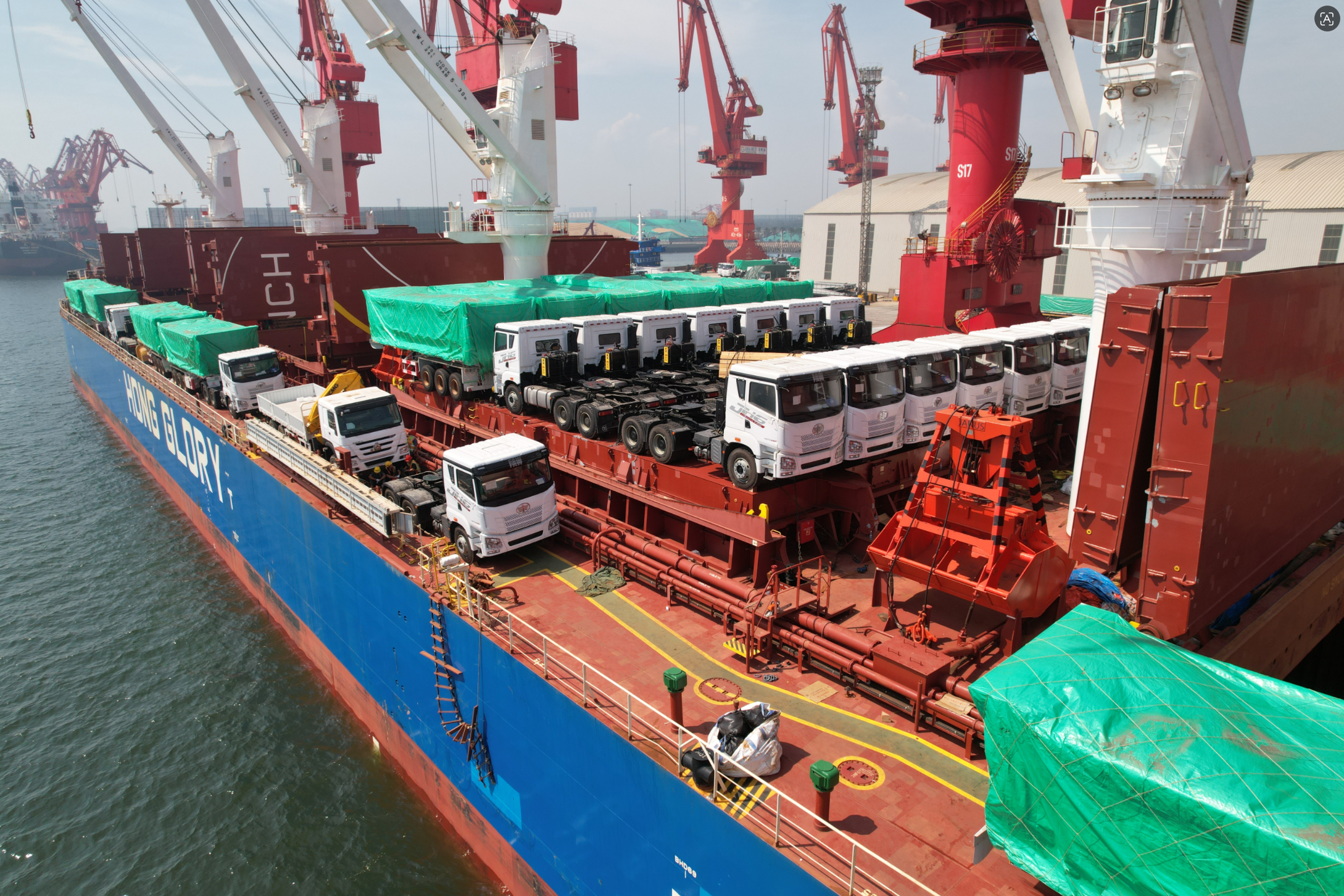
Qingdao Chary Machinery Co., Ltd is a Qingdao-based vehicle export enterprise founded in 2015 and authorized by the Ministry of Commerce as an enterprise for vehicle export. Mini machinery is one of its core lines — minidozers, mini loaders, mini electric loaders and skid steer loaders — supplied alongside FAW truck chassis configurations that include the 4X2 Tiger VH cargo truck, the 4X2 New J5P tractor truck and the 6X4 JH6 tractor family. Export business accounts for 80% of total sales, with major markets in Africa and South America, and the annual export volume reached 40 million US dollars in 2025.
Both families answer the same buyer question — what will this machine actually do on my site? — through completely different specifications. The sections below explain what each figure means, which figures to verify before an order is placed, and how power systems and braking systems change operation in construction and logistics.
Problem Definition: Why Power Specs and Chassis Specs Are Compared Incorrectly
Power specification failure is rarely a case of a bad machine. It is usually a case of the wrong comparison. Three patterns repeat in compact equipment and truck procurement:
- Energy is compared to engine output. An electric minidozer is defined by stored energy and recharge time — rated battery capacity in amp-hours (Ah), nominal system voltage (V) and charge time. A truck is defined by engine output delivered through a drivetrain. Asking both for "more power" produces two answers in units that cannot be compared.
- The machine envelope is checked after the order. A tracked machine is chosen precisely because it fits through an opening a wheel loader cannot use. If access width, turning space and floor surface are not confirmed first, the machine that wins on the quotation cannot enter the building.
- Chassis configuration is treated as a body option. On a truck, the axle configuration (4X2 or 6X4) and the cab variant set the duty cycle, the weight distribution and the way the vehicle behaves when braking with a full load. A body fitted afterwards cannot correct a chassis that does not match the route.
The practical fix is to verify each machine against the job it will do, using the specification class that belongs to that machine — never against a machine from another class.
Industry Background: Demand Is Moving Toward Compact and Configuration-Specific Equipment
Compact equipment is no longer a niche category. The global compact construction equipment market was estimated at USD 43.5 billion in 2024 and is projected to reach USD 69.1 billion by 2034 (Global Market Insights). Within that space, mini track machinery is projected to grow at a CAGR of 4.5% to USD 11.31 billion by 2035, with mini track loaders holding a 54% share of the segment (Future Market Insights). Small bulldozers — the class the minidozer belongs to — are projected to move from USD 2.11 billion in 2024 to USD 3.78 billion by 2035 at a CAGR of 5.44% (Spherical Insights).
Skid steer loaders, the closest conventional alternative, were valued at approximately USD 9.4 billion in 2023, with North America accounting for 84.7% of that revenue (Grand View Research). Segment estimates vary between research houses: DataM Intelligence forecasts the skid steer loader market reaching USD 11.24 billion by 2025, so these figures are best read as directional rather than exact. Supply is concentrated as well. The compact construction equipment market was led by Caterpillar Inc. with a share of over 15% in 2024 (Global Market Insights), and China concentrated 27.3% of total global machine exports in 2024, maintaining its position as the world's largest exporter in the sector (OEC).
For procurement, the conclusion is that availability is not the constraint — specification literacy is. A buyer building a five-year fleet does not struggle to find a minidozer or a truck chassis. The buyer struggles to compare two quotations whose specifications are written in different units, and to confirm that the support model behind the machine still holds after the first container has been delivered.
Detailed Solution: The CR468C Minidozer Power System and FAW Truck Chassis
The CR468C minidozer: electric power, remote control and tracked undercarriage
The CR468C belongs to the electric minidozer category. Its documented fuel is electricity, and it is remotely controlled — operated without a driver on board, which the product documentation records as eliminating the need for human driving and providing higher safety. That one design decision reshapes the operating envelope:
- Footprint and access. A minidozer has a smaller size than a wheel loader and can work in a smaller space, which is why basements, narrow openings and constrained interiors are its documented applications.
- Environment tolerance. Documented environments include narrow space, basement, high-temperature environments and harsh environments. Because no operator sits inside the machine, heat exposure and unstable ground become machine-management questions rather than personnel questions.
- Cost and energy position. The comparison documentation records a 90% lower cost difference versus a wheel loader, alongside cleaner energy and lower operating costs.
- Service model. Maintenance is handled with convenient and efficient after-sales service, and engineers can perform online repairs.
When reading the power section of a CR468C quotation, three figures decide whether the machine fits a shift pattern: rated battery capacity in amp-hours (Ah), nominal system voltage (V) and charge time. Capacity and voltage together define how much work one charge supports; charge time defines whether the machine can return for a second shift or must be scheduled around a recharge window. A lithium battery pack is specified for the CR468C, and these three numbers — not one headline "power" figure — are what should be locked down against the real shift plan before ordering.
The undercarriage is the other half of the indoor-use question. A tracked undercarriage is what allows entry into basements and interior slabs that a wheel loader cannot reach. Where finished floors are involved, the track specification should be confirmed with the supplier, because rubber-tracked machines are selected where floor protection matters and steel-tracked machines where traction on rough ground matters more. Track life is also one of the three areas the manufacturer supports with customization technical support, together with loading capacity and battery life.
FAW truck chassis: 4X2 and 6X4 configurations, engine output and braking systems
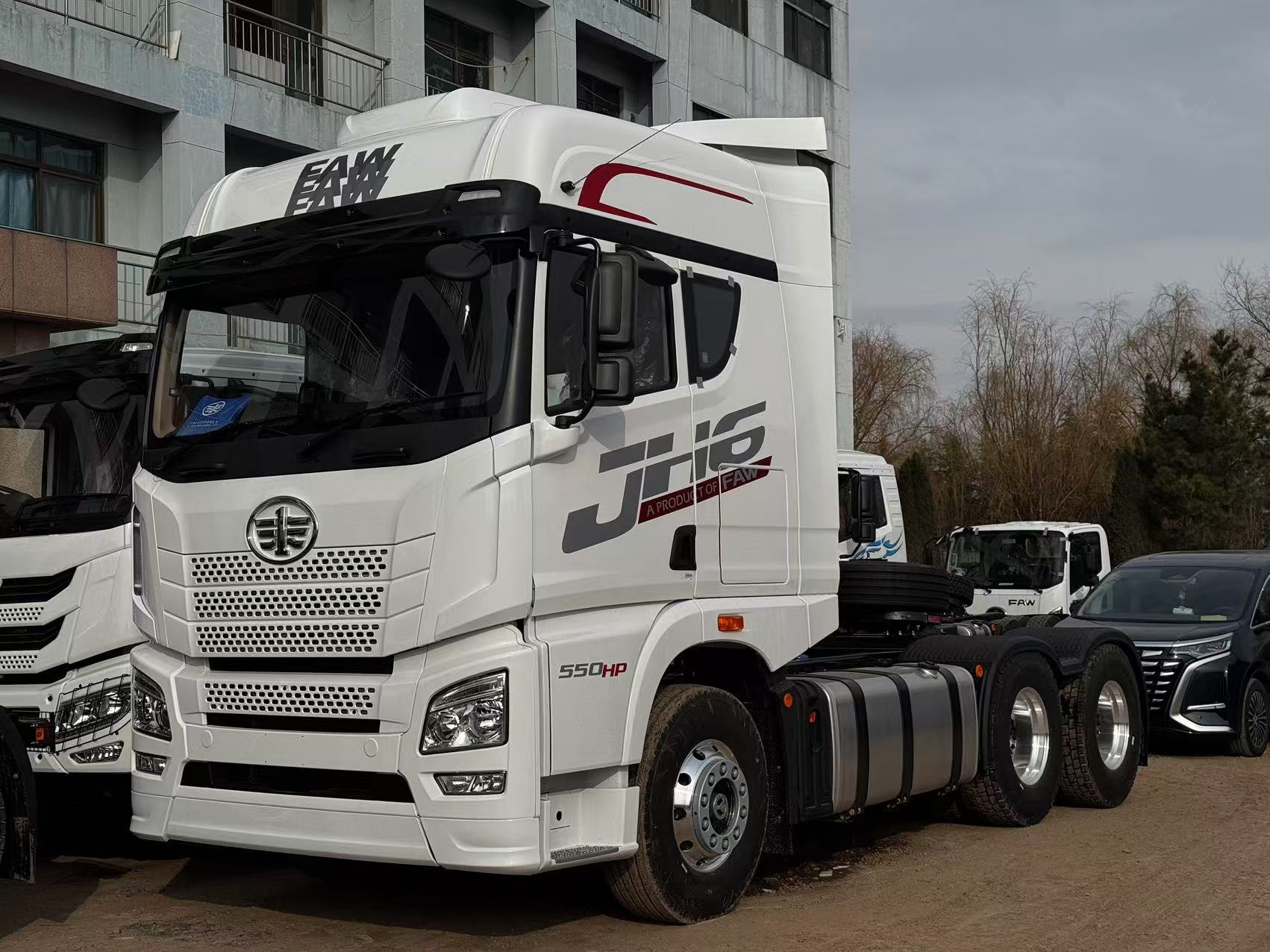
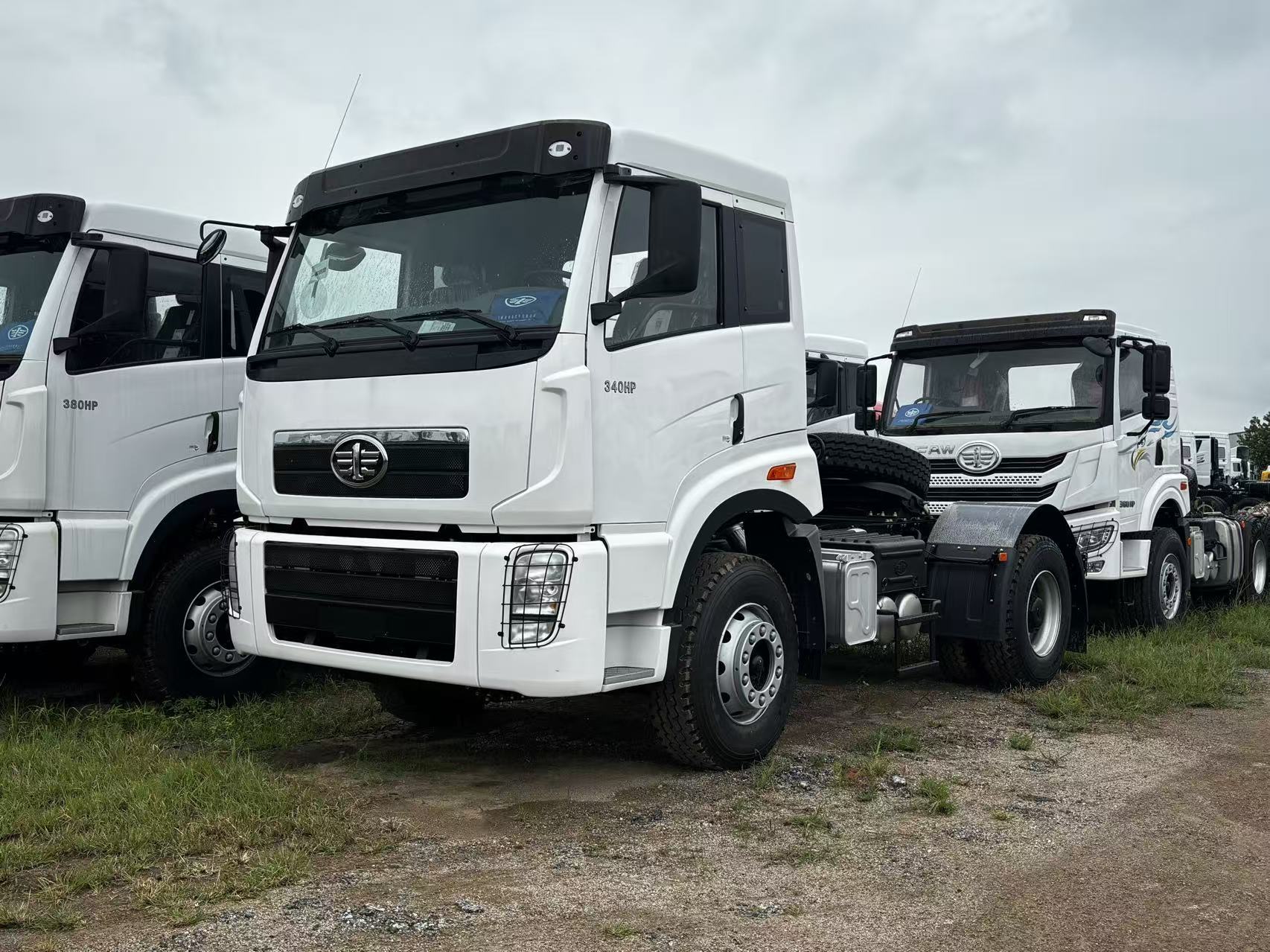
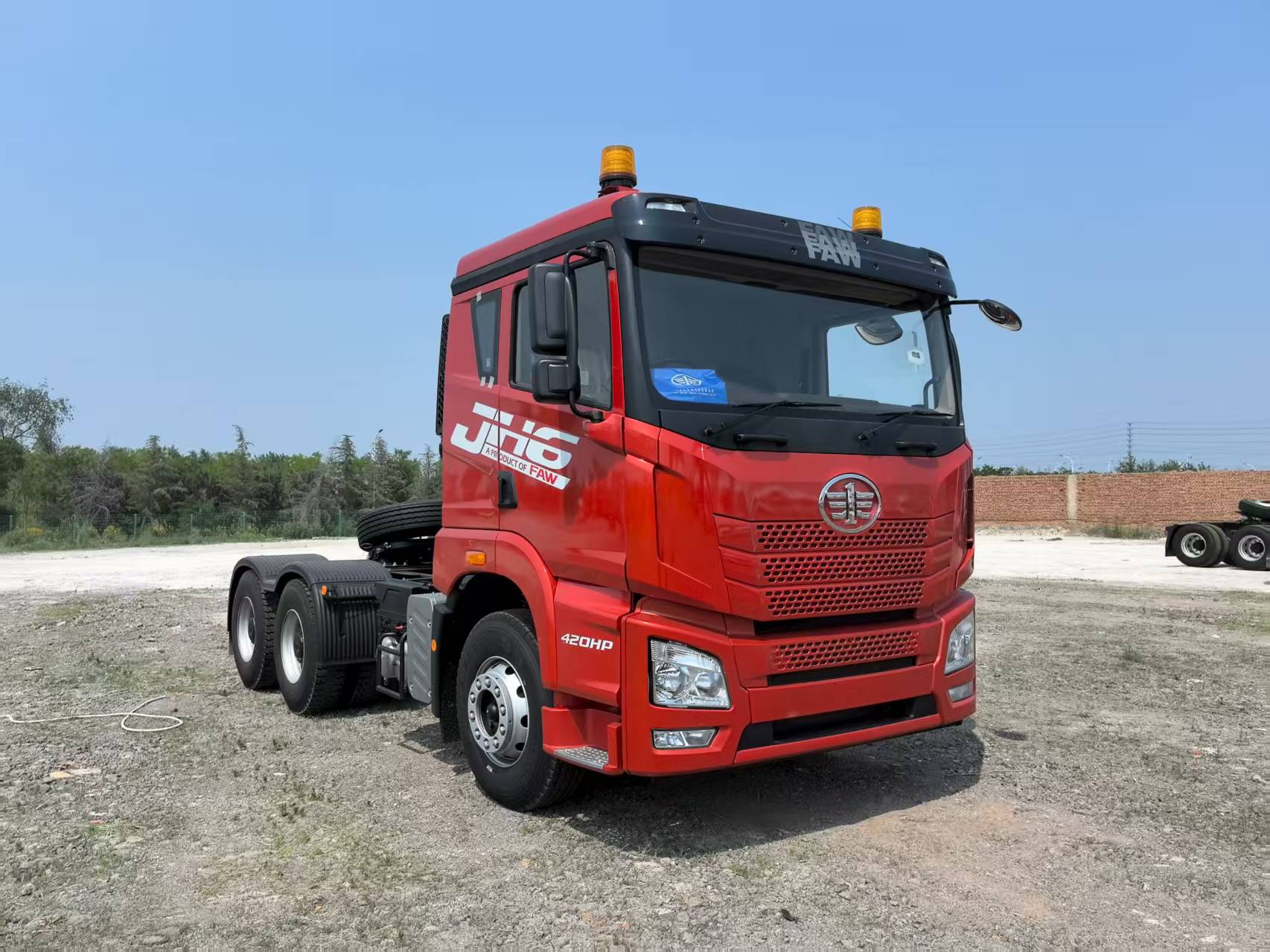
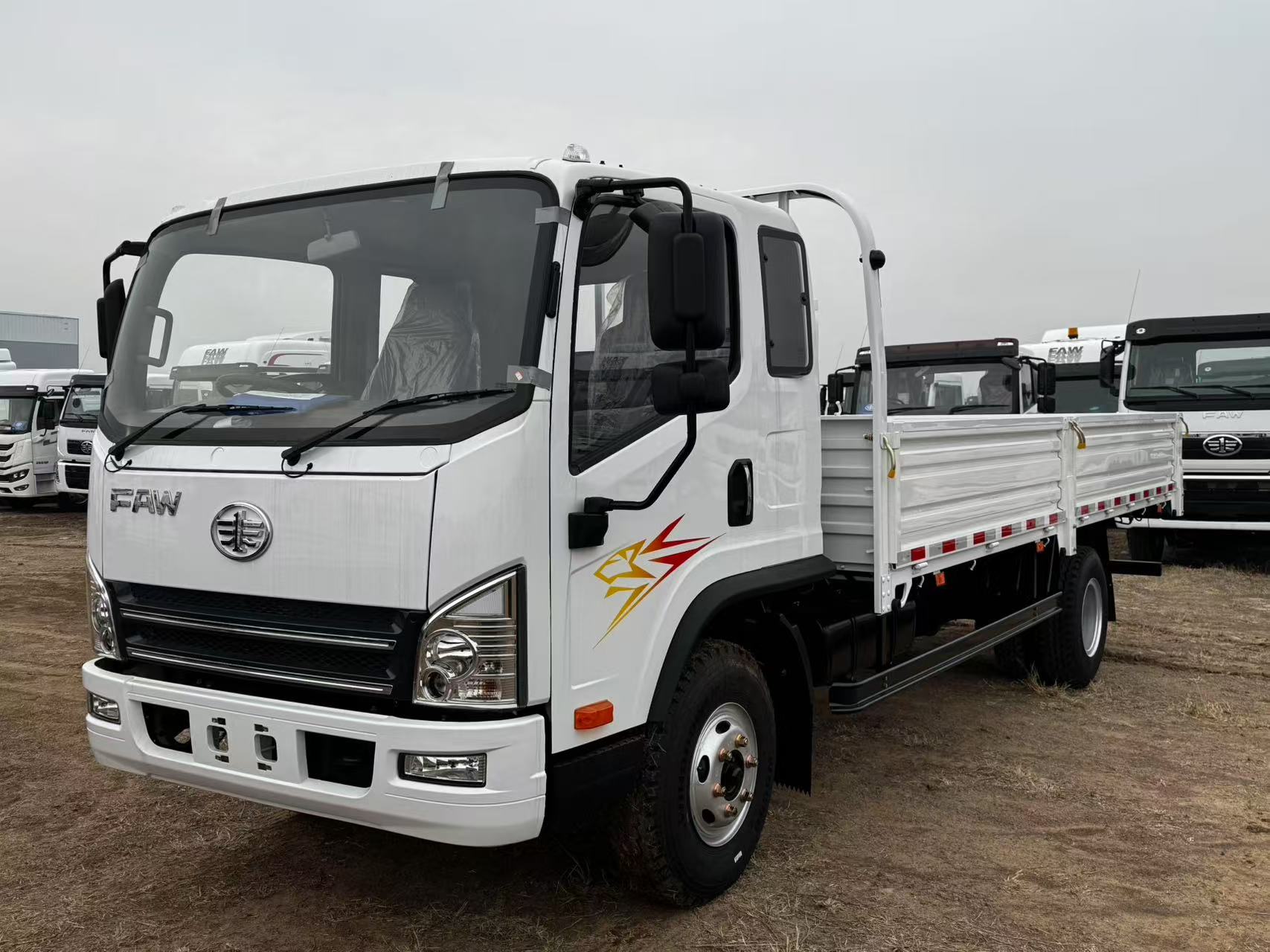
On the truck side, the specification that matters first is the chassis configuration, not the body. In the CHARY line, the FAW TIGER VH 4X2 cargo truck and the FAW NEW J5P 4X2 tractor truck use a 4X2 layout, while the JH6 6X4 Flat roof cab Tractor Truck and the FAW JH6 High Roof 6X4 550HP Tractor Truck use a 6X4 layout. Those two families — 4X2 and 6X4 — are the first decision point, because they determine how the load is distributed across the axles and how much traction the vehicle can put down under load.
Engine specification is the second decision point. Within the JH6 family, the High Roof 6X4 variant is specified at 550HP, which places it in the heavier tractor duty class; the Flat Roof 6X4 tractor and the 4X2 New J5P tractor cover lighter and more manoeuvrable duty. FAW's comparison documentation positions the trucks ahead of Beiben, Sinotruk and Shacman on engine power, fuel efficiency, repair simplicity and the number of configurations available, with a more spacious cab and superior global after-sales support, and records a 10% lower cost difference. The documented best-fit applications are urban construction, logistics and transport, livestock transport, and fresh goods transport.
Rated load capacity is not one number for the whole line. It is set by the chassis configuration, the axle rating and the body fitted to it, and it must be confirmed for the exact model and body combination being ordered. A 4X2 cargo truck, a 4X2 tractor and a 6X4 tractor are three different load cases even when the cab looks similar. That verification step matters more than any class range quoted at the start of a conversation.
Braking and traction systems then determine how those load cases behave in motion:
- ABS (anti-lock braking system) prevents wheel lock under heavy braking — the condition that most often turns a laden truck on a wet or loose surface into an uncontrollable one.
- EBS (electronic braking system) manages braking pressure electronically across the vehicle and, in a tractor, coordinates braking between tractor and trailer — a stability issue on any 6X4 unit pulling a loaded trailer.
- TCS (traction control system) limits wheel spin on starts and on poor surfaces, which is often the difference between pulling away and digging in on an unpaved construction access road.
Which of these systems is specified varies by model and market configuration, so the exact fitment must be confirmed on the quotation for the model being ordered, together with the engine specification for that chassis.
Step-by-Step: How to Verify a Power Spec and a Chassis Spec Before You Commit
The verification sequence below applies to both halves of the product line and can be run against any quotation.
- Define the duty cycle first. Confined, indoor or heat-exposed work points to an electric, remotely controlled minidozer. On-road haulage of construction materials, livestock or fresh goods points to a truck chassis.
- Read the power specification in its own units. For the minidozer, confirm battery capacity (Ah), nominal system voltage (V) and charge time against the shift plan. For a truck, confirm the engine specification and the axle configuration (4X2 or 6X4) against the route and the load.
- Verify the operating envelope. For a minidozer, check access width, turning space and floor surface. For a truck, confirm the body required and the rated load capacity for that exact chassis-and-body combination — not a class range.
- Confirm safety and braking fitment. Ask which of ABS, EBS and TCS are specified on the model quoted, and confirm the fitment in writing before the chassis is built.
- Lock the commercial terms. Minimum order quantity is 1 unit; delivery terms are FOB, CIF, CFR, EXW and DDP; payment terms are TT, LC, DA and DP; and acceptance criteria are based on pre-shipment inspection.
- Confirm the long-term support path. After-sales support includes global technical support, provision of accessories and remote maintenance. Customization technical support is available for loading capacity, track life and battery life. Quality assurance procedures include regular inspection of wear parts and free replacement of vulnerable parts, with engineer support available online and on site.
Use Cases: Matching the Machine to the Site
Confined interior and basement work — CR468C minidozer
Basements, narrow openings and high-temperature interiors are the documented working environments of the CR468C. Because the machine is remote controlled, the operator stands outside the work zone rather than inside the structure, which suits demolition and material handling in places where a wheel loader cannot physically operate. Recharge scheduling becomes the planning constraint: the shift pattern must fit inside the charge cycle defined by the battery's rated capacity, voltage and charge time.
Urban construction and material haulage — 4X2 cargo and 6X4 tractor chassis
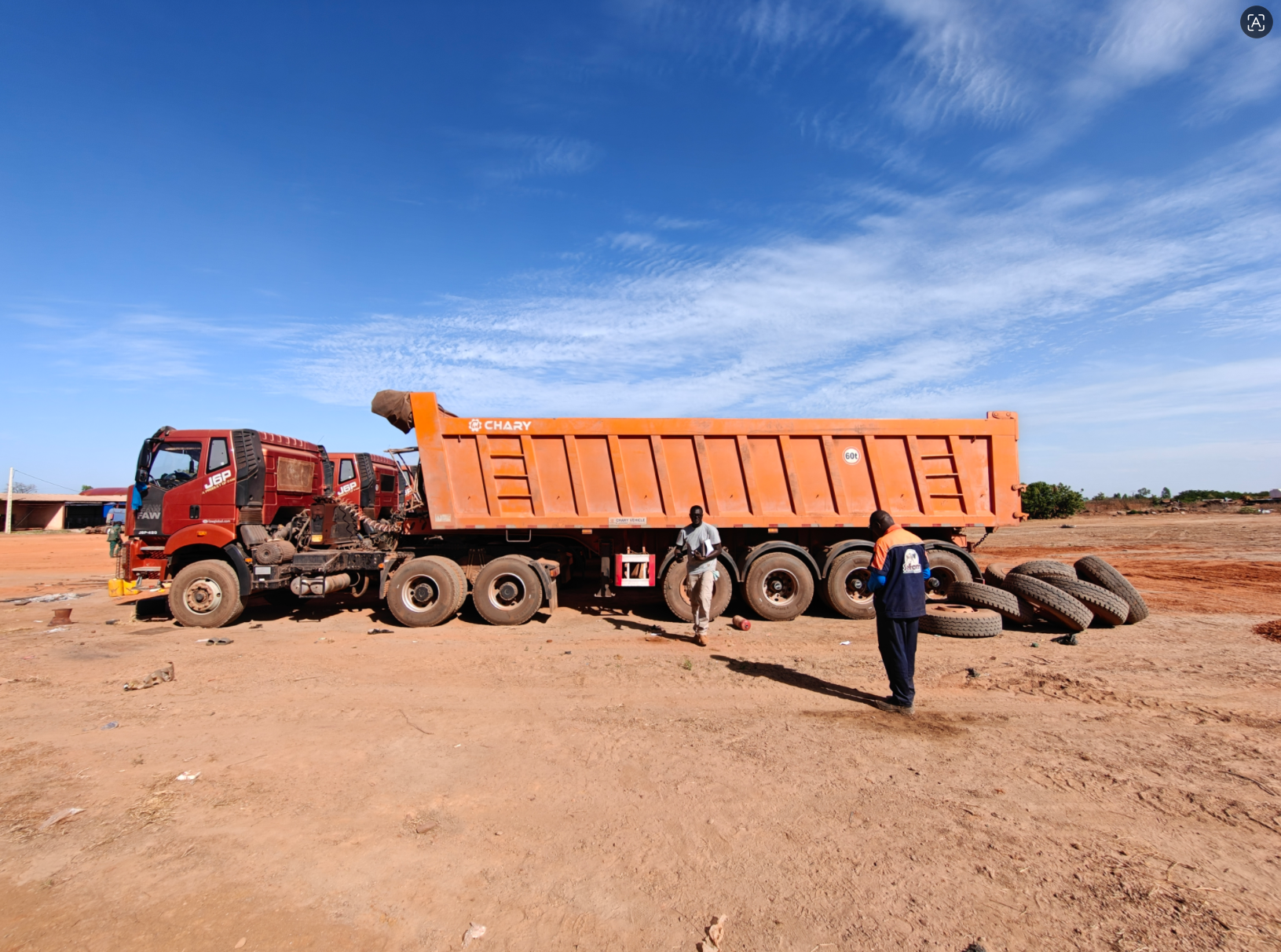
Urban construction and logistics and transport are the first two documented applications for the FAW truck range. A 4X2 cargo configuration such as the Tiger VH suits delivery into built-up areas where manoeuvrability matters; a 6X4 tractor such as the JH6 covers heavier haulage where the extra driven axle improves traction and load distribution. Where ABS, EBS and TCS are specified, their role is to keep a loaded vehicle stable under braking and predictable on loose site surfaces.
Livestock and fresh goods transport — configuration-specific chassis
Livestock transport and fresh goods transport are documented applications in their own right, and both are sensitive to the chassis and body combination rather than to headline engine output. These duty cycles are also where the documented 10% lower cost position and the configuration breadth of the FAW range — more configurations available than the comparison set — matter for fleet-level purchasing decisions.
Comparison: Chassis Configurations and Operating Envelopes
The two tables below use only the configurations and comparison points published in CHARY's product documentation. A dash indicates that the source comparison does not state a value for that cell, and it should not be read as a negative.
Table 1 — FAW truck chassis configurations in the CHARY line
| Model | Chassis layout | Cab / engine label | Documented application set |
|---|---|---|---|
| FAW TIGER VH 4X2 CARGO TRUCK | 4X2 | Cargo body configuration | Urban construction; logistics and transport; livestock transport; fresh goods transport |
| FAW NEW J5P 4X2 TRACTOR TRUCK | 4X2 | Tractor unit | Urban construction; logistics and transport; livestock transport; fresh goods transport |
| JH6 6X4 Flat roof cab Tractor Truck | 6X4 | Flat roof cab | Urban construction; logistics and transport; livestock transport; fresh goods transport |
| FAW JH6 High Roof 6X4 550HP Tractor Truck | 6X4 | High roof cab; 550HP | Urban construction; logistics and transport; livestock transport; fresh goods transport |
Table 2 — Minidozer positioning versus a wheel loader
| Comparison point | CHARY minidozer | Wheel loader |
|---|---|---|
| Footprint | Smaller size; can work in a smaller space | Larger working envelope required |
| Operating control | Remote control; no driver on board; documented as eliminating the need for human driving and providing higher safety | Driver-operated |
| Energy source | Documented fuel is electricity; cleaner energy | — |
| Documented environments | Narrow space; basement; high-temperature environment; harsh environment | — |
| Documented cost position | 90% lower cost difference versus a wheel loader; lower operating costs | — |
| Maintenance model | Convenient and efficient after-sales service; engineers can perform online repairs | — |
Source basis: CHARY comparison documentation for the minidozer versus wheel loader and for FAW trucks versus Beiben, Sinotruk and Shacman, plus the FAW model designations shown in the product line.
FAQ: Long-Term Mini Machinery Supply and Configuration Questions
Is Qingdao Chary Machinery Co., Ltd authorized for vehicle export, and where does it ship?
Yes. Qingdao Chary Machinery Co., Ltd is authorized by the Ministry of Commerce as an enterprise for vehicle export, and is based in Qingdao. Export business accounts for 80% of total sales, major markets include Africa and South America, and the annual export volume reached 40 million US dollars in 2025.
What support does a long-term supply partner receive after delivery?
After-sales support includes global technical support, provision of accessories and remote maintenance, and engineers can also assist with repairs on site. Customization technical support covers loading capacity, track life and battery life. Quality assurance procedures include regular inspection of wear parts and free replacement of vulnerable parts, which keeps a machine running across multiple seasons rather than one project.
What commercial terms apply to repeat and long-term orders?
The minimum order quantity is 1 unit. Delivery terms are FOB, CIF, CFR, EXW and DDP; payment terms are TT, LC, DA and DP; and acceptance criteria are based on pre-shipment inspection. On the truck side, the FAW comparison documentation records a 10% lower cost difference versus Beiben, Sinotruk and Shacman.
How can a buyer validate a first unit before scaling a programme?
Because the minimum order quantity is 1 unit and acceptance criteria are based on pre-shipment inspection, a single machine can be evaluated on its own terms before a larger fleet plan is committed. For a minidozer, that validation should cover rated battery capacity, nominal voltage, charge time against the real shift pattern, and the track specification for the floor surface involved.
What production capacity and lead time should a long-term partner plan around?
Monthly production capacity is 8,000 units for certain products and 50 units for others, with a typical production lead time of 30–45 days and a minimum order quantity of 1 unit. For programme planning, those three figures are what determine whether a repeat order can be scheduled against a fixed delivery window. The full product and specification overview is available in the CHARY machinery brochure, and configuration questions can be raised directly with the export team at sales@fawglobal.com or on WhatsApp (+86 186 6398 2168).
Conclusion: Two Spec Sheets, One Planning Discipline
Minidozer power specifications and truck chassis configurations are not competing answers to the same question — they are two different answers to two different questions. The CR468C is specified for places a conventional machine cannot reach: remotely controlled, electrically driven, tracked, and matched to basements, narrow spaces and high-temperature environments. The FAW truck range is specified for load and route: 4X2 configurations for lighter and more manoeuvrable duty, 6X4 configurations such as the JH6 for heavier tractor work, with engine output, braking and traction fitment deciding how each behaves under load.
For a buyer in the decision and execution stages, the discipline is the same on both sides: verify the specification in its own units, verify the operating envelope against the actual site, and verify the support model that keeps the machine productive in year three — not just in month one. That is what turns a single unit purchase into a supply relationship.
Next Step
Share your site conditions, shift pattern and route profile, and the CHARY export team will confirm the configuration that fits: battery capacity, voltage and charge time for the minidozer, and chassis layout, engine specification and braking fitment for the truck.
Email: sales@fawglobal.com · Tel / WhatsApp: +86 186 6398 2168 · Start a WhatsApp inquiry · Download the product brochure
Qingdao Chary Machinery Co., Ltd · No. 266 Jiushui East Road, Qingdao · www.charymachinery.com