
Minidozer or FAW Truck? What New Buyers Should Know
A minidozer and a FAW truck solve two different problems, and treating them as alternatives is the most common mistake new buyers make when they first see both machines on the same export quotation.
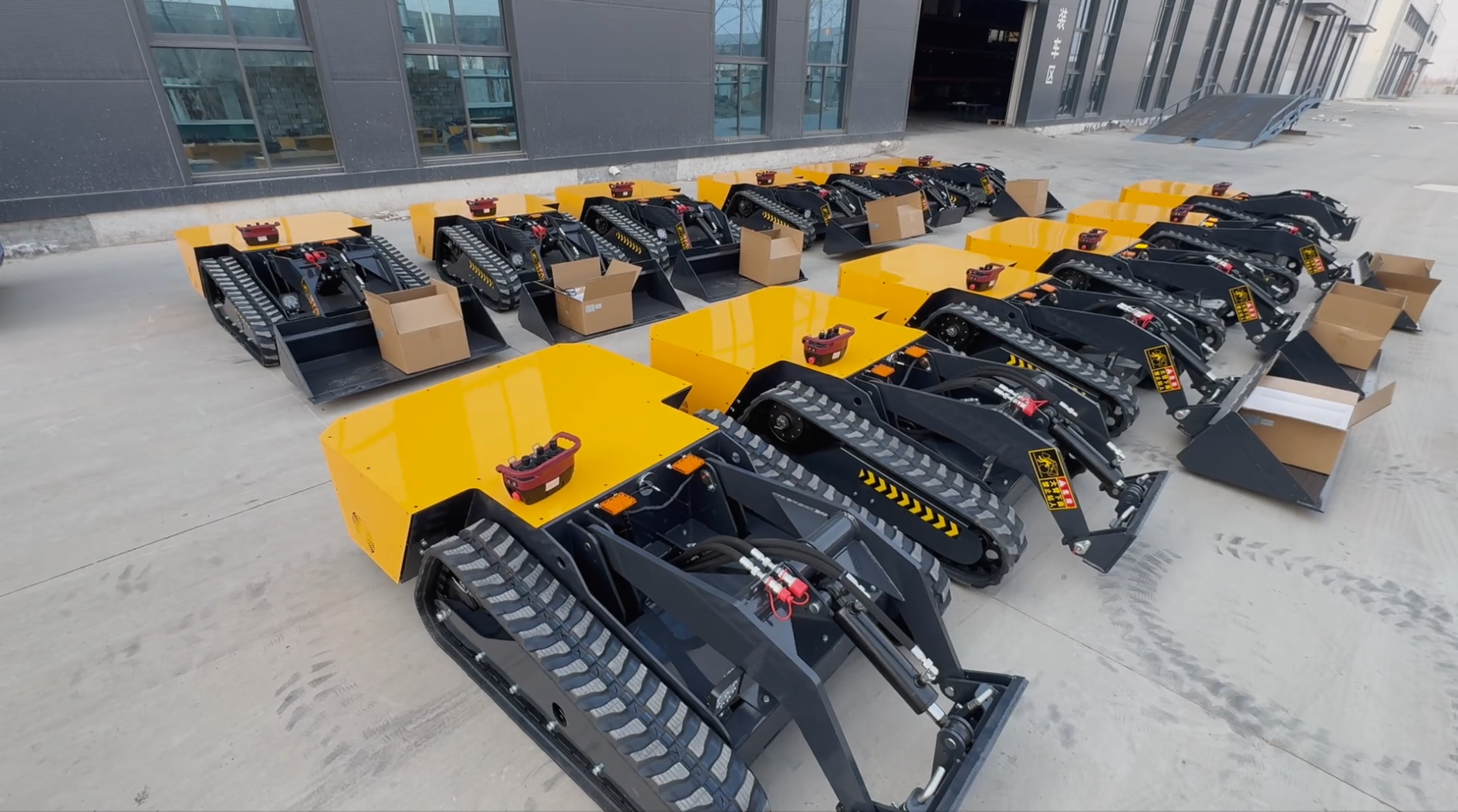
The minidozer discussed here is the CHARY CR468C: a remote control lithium battery rubber track machine listed at 2,850 × 1,200 × 600 mm overall dimensions, 1,100 kg self weight, a 0.15 m³ bucket and a 450 kg rated load capacity. Its job is to fill, lift, turn and dump material inside a site, including places where the alternative is manual labour.
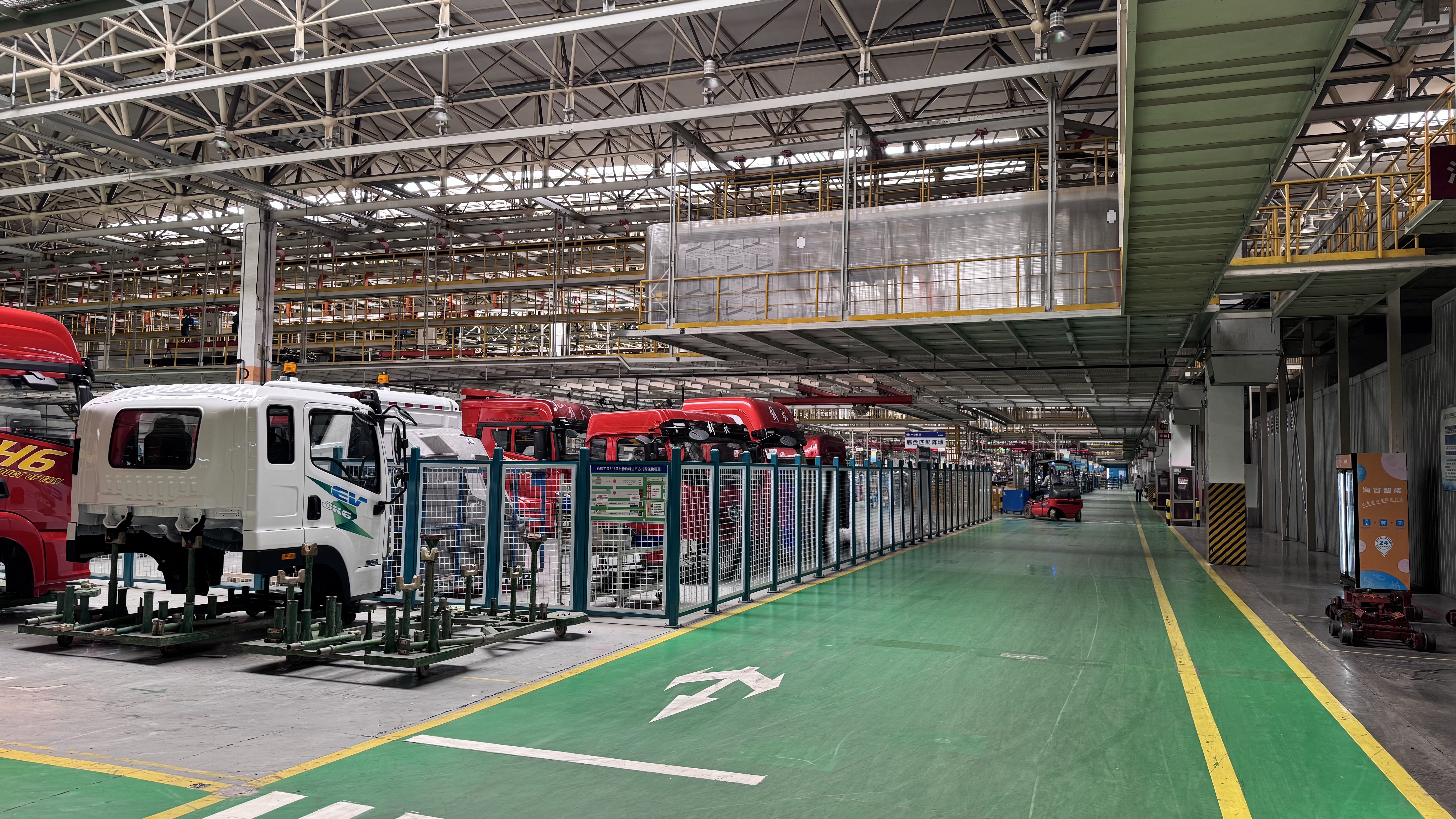
The FAW truck is a road vehicle. The truck line referenced in this guide is listed with a weight range of 3,000–15,000 kg and a size range from 6,000 × 2,300 × 3,000 mm up to 12,000 × 2,550 × 3,800 mm, across tractor, dump, cargo and rigid, light truck, concrete mixer, garbage, sprinkler, water tank, fuel tank, wrecker, sweeper, concrete pump, asphalt distributor, high-altitude platform and fire body types. Its job is to move goods between sites, ports, warehouses and customers.
Short answer. A minidozer is an on-site loading and short-haul machine; a FAW truck is an off-site transport machine. The CR468C is electric, remote controlled and 1,200 mm wide. The truck is a combustion-powered road chassis weighing 3,000–15,000 kg and measuring at least 6,000 mm long. Neither can replace the other, and the correct purchase decision is normally “which one first”, not “which one instead”.
Why New Buyers Compare a Minidozer With a Truck
Three comparisons look reasonable at quotation stage and are almost always misleading.
1. Bucket volume against vehicle weight
The CR468C has a 0.15 m³ bucket capacity, a 1,200 mm bucket width and a 450 kg rated load. Those numbers describe how much material the machine can pick up and carry in one cycle on site. The FAW truck's 3,000–15,000 kg figure is a listed vehicle weight range, not a payload rating. Putting the two numbers in a ratio produces an answer that means nothing in either direction.
2. Road speed against cycle speed
The minidozer's listed maximum driving speed is 4 km/h and its remote control distance is 200 m. Those are deliberate design choices for short, repeated cycles within a defined working area. Judging the machine by highway speed misreads its purpose; judging a truck by its ability to spin in place misreads its purpose in exactly the same way.
3. One machine for both jobs
A rubber-track unit that turns through a maximum steering angle of 360° spin in place, climbs 40° and stands 150 mm off the ground is built for ground a truck cannot enter. A road truck listed with ABS/EBS/TCS and a body up to 12,000 mm long is built for roads a minidozer must never enter.
The purchase decision therefore rests on four inputs: where the material must move (inside one site or between sites), how wide and how low the access route is, what energy is available on site (a 380/220 V supply or a fuel supply), and how many cycles per shift the machine must complete.
Where This Equipment Split Comes From
Electrification has moved into working equipment, not just passenger vehicles. CleanTechnica, analysing 2024 sales data for China, reported that new-energy concrete mixer sales reached 8,036 units and a 43.8% penetration rate. That is a direct signal that battery-electric powertrains are now a mainstream option in machinery that loads, mixes and hauls.
Compact equipment demand is expanding alongside it. Data Insights Reports values the global compact mini excavator market at USD 9.42 billion in 2026 and projects USD 16.39 billion by 2034, a 7.2% CAGR. That estimate covers mini excavators rather than minidozers, but it describes the same buyer group: contractors who need working capability inside a very small footprint.
On the supply side, China remains the dominant base. UN Comtrade data reported through HS Code Match shows China as the world's largest exporter of excavators under HS Code 8429.52, with a total value of USD 8.27 billion in 2024.
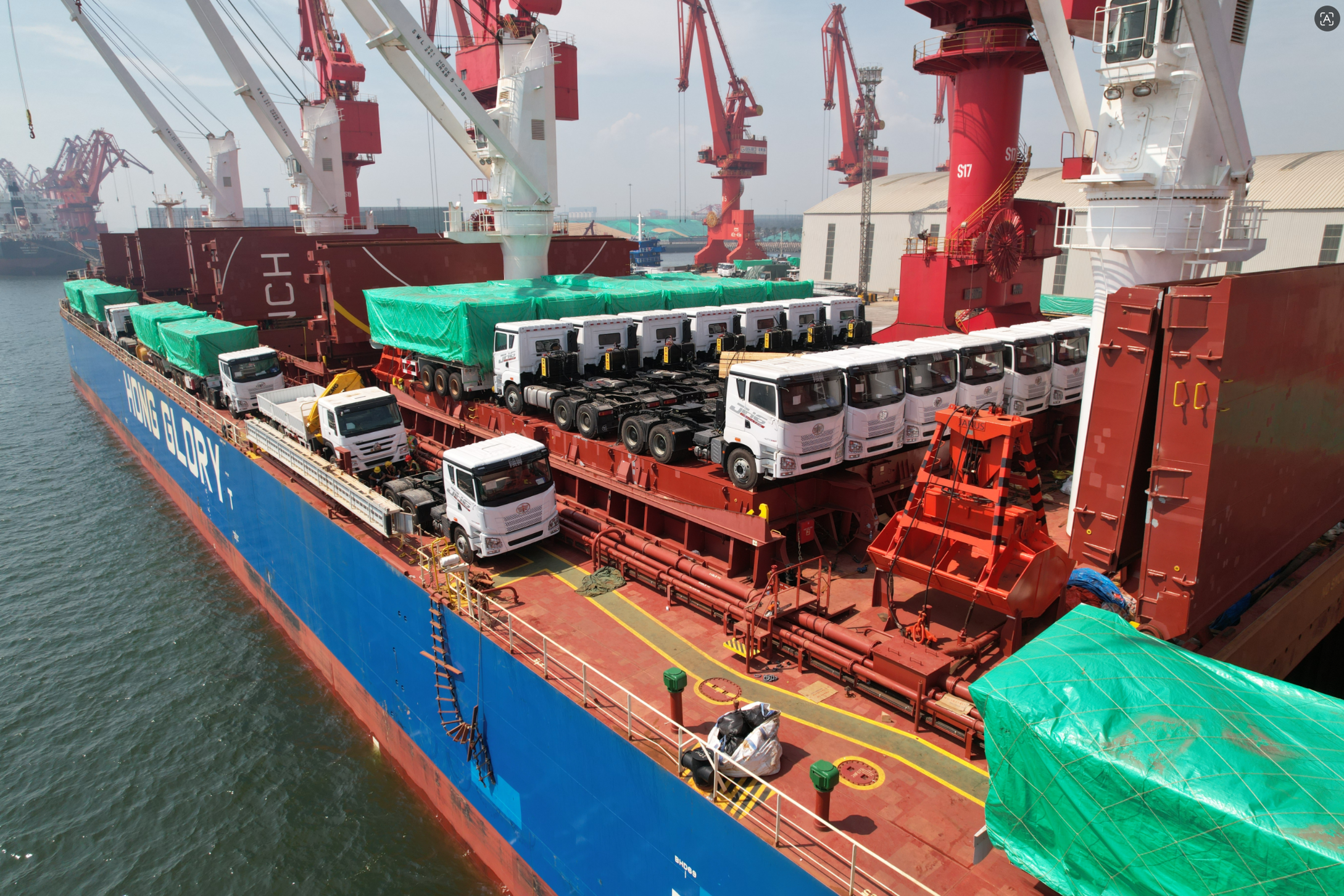
What this means practically is that both machines often arrive from one exporter, in one catalogue, on one quotation sheet. Qingdao Chary Machinery Co., Ltd, the company behind the CHARY brand, reports that it was founded in 2015 and lists more than 50 countries and regions as markets, with Africa and South America named as main destinations. That is exactly the situation in which a truck and a minidozer end up on the same shortlist before anyone has defined the task.

The CR468C Minidozer: What the Specification Actually Says
The CR468C is a remote control lithium battery rubber track minidozer. The published specification reads as follows.
| Parameter | Listed value |
|---|---|
| Model | CR468C |
| Machine type | Remote control lithium battery rubber track minidozer |
| Overall dimensions | 2,850 × 1,200 × 600 mm |
| Total length without bucket | 2,250 mm |
| Self weight | 1,100 kg |
| Rated load capacity | 450 kg |
| Bucket capacity | 0.15 m³ |
| Bucket width | 1,200 mm |
| Bucket unloading time | 1.1 s |
| Unloading height | 530 mm |
| Operation method | Remote control |
| Control distance | 200 m |
| Maximum driving speed | 4 km/h |
| Maximum steering angle | 360° spin in place |
| Climbing ability | 40° |
| Minimum ground clearance | 150 mm |
| Wheelbase | 1,000 mm |
| Walking style | Rubber tracks |
| Battery | Lithium battery, 300 Ah, 73.6 V |
| Motor power / speed | 7.5 kW / 3,000 rpm |
| Charging time | About 2 h |
| Working hours | About 8 h |
| Charging voltage | 380/220 V |
| Hydraulic flow / tank | 58 L/min / 20 L |
| Working temperature | -10 °C to 60 °C |
Four of these values decide whether the machine fits a job at all.
- Width. At 1,200 mm overall, with a bucket of the same 1,200 mm width, the machine is dimensioned around narrow access rather than around volume throughput.
- Remote control at 200 m. The operator does not sit in the machine. That matters where dust, heat, unstable ground or a confined structure makes an operator position unsafe or impractical.
- 360° spin in place with 150 mm ground clearance and a 40° climb. These are manoeuvring figures for tight, uneven indoor and outdoor ground, not for road travel.
- About 2 h charging for about 8 h working, from 380/220 V. The machine is designed around a charging point on or near the site; the electrical supply becomes part of the site planning.
How it sits among other mini machinery categories
CHARY lists mini machinery, minidozer, mini loader, mini electric loader and skid steer loader as separate product categories, and the CR468C is filed under minidozer. Within that family, the defining combination for this model is rubber tracks plus a lithium battery powertrain plus remote control plus a 1,200 mm working width. A mini loader, skid steer loader, compact track loader, mini wheel loader, mini dumper, backhoe loader or mini excavator from the same catalogue carries its own attachment and specification set. Ask for the current datasheet of the exact model instead of assuming that specifications carry across categories.
The FAW Truck Side of the Equation
The FAW truck is a road transport platform. The line is listed with a weight range of 3,000–15,000 kg and dimensions from 6,000 × 2,300 × 3,000 mm to 12,000 × 2,550 × 3,800 mm, with tyre specifications supplied according to customer requirements and ABS/EBS/TCS listed under security configuration. Body types cover tractor, dump, cargo and rigid, light truck, concrete mixer, garbage, sprinkler, water tank, fuel tank, wrecker, sweeper, concrete pump, asphalt distributor, high-altitude platform and fire variants.
The listed applications are logistics freight distribution and fleets, coal and mineral transport, port transport, express delivery, general industrial goods, building materials, agricultural products, livestock and poultry, bulk cargo, cold chain, urban distribution, urban waste, log transport, heavy machinery transport and chemical raw materials. None of those is an inside-a-building task.
Market access for trucks is handled through formal conformity routes. The approved data set for this product line includes an ECE R105 certificate, number E13*105R06/01*0023*00, issued on 7 February 2024 by Société Nationale de Certification et d'Homologation (SNCH) in Luxembourg for dangerous goods transport vehicles, referencing a FAW JK6. It also includes a GSO conformity certificate, CCR No. 435790, issued on 10 November 2022 by the GCC Standardization Organization for the FAW J6 series 4x2 truck tractor described as Euro 4 compliant, covering the GCC member states.
Note what these documents do: they certify trucks for defined road-transport scopes in defined jurisdictions. They say nothing about a rubber-track electric loading machine. Buyers who assume that a supplier's truck paperwork transfers to compact equipment are making an expensive assumption.
Function, Power Source and Working Envelope: The Three Real Differences
Function
The CR468C picks material up with a 0.15 m³ bucket, carries it at a 450 kg rated load and discharges it in 1.1 s from a 530 mm unloading height. It is a loading and short-transfer tool. The FAW truck receives material, secures it in a body and moves it over a road network. In a well-planned operation the minidozer loads and the truck hauls; treating either one as a substitute for the other removes one half of that cycle.
Power source
The minidozer runs on a 300 Ah, 73.6 V lithium battery driving a 7.5 kW motor, charged from 380/220 V in about 2 h for about 8 h of working time. That requires an electrical supply decision at the site, and it removes exhaust emissions and refuelling from the working area. The truck is a combustion vehicle; the J6 series 4x2 tractor in the approved certificate is described as Euro 4 compliant, which is a road emission standard tied to a fuel supply chain rather than a charging point.
Working envelope
At 1,200 mm wide, 1,100 kg and 4 km/h, with 360° spin in place and a 40° climb, the minidozer works where access is the constraint. The truck works where distance and load volume are the constraints. A work site that mixes both — material generated in a tight indoor area and required at a location 30 km away — needs both machines, and the only genuine question is the order in which they are purchased.
Commercial terms
On the commercial side the two lines are closer than buyers expect. Both are offered with an MOQ of 1 unit and a lead time of 30–45 days. The minidozer line is reported at a monthly capacity of 50 units, with 100% full inspection before shipment and a performance test on each machine, plus accessories and remote maintenance after sale. The truck line is reported at a monthly capacity of 8,000 units with 100% test and global technical support after sale. OEM production is available on both, with customization on the minidozer side covering loading capacity, track life and battery life, and on the truck side covering body, engine, tyres and load capacity.
Step-by-Step: How a New Buyer Should Decide
Step 1 — Write the task in one sentence
“Move 0.15 m³ loads of debris from an indoor floor to a collection point 40 m away” is a minidozer task. “Move 20 tonnes of bagged goods from a warehouse to a port 60 km away” is a truck task. If the sentence contains both, you need both machines, and the sentence itself tells you which one limits the schedule.
Step 2 — Measure the access route
Take the narrowest door, gate, corridor and lift opening. A machine 1,200 mm wide needs clearance beyond its own width to steer. If the route is tighter than that, no specification on the quotation will fix it.
Step 3 — Check the energy supply
The CR468C charges from 380/220 V in about 2 h and works about 8 h. Confirm that the charging point exists, that it is reachable by the machine, and that a charging window fits the shift pattern. On a remote site without a supply, this single item can decide the purchase.
Step 4 — Check the thermal envelope
The listed working temperature is -10 °C to 60 °C. Sites outside that band need a written answer from the supplier before an order is placed, not an assumption.
Step 5 — Confirm the control model
Remote control at up to 200 m changes the safety plan: the operator stands outside the working zone. Decide where the operator stands, what the line of sight is, and how the machine is stopped in an emergency. This is a planning decision, not a specification purchase.
Step 6 — Check the interface between the two machines
Unloading height is 530 mm. Before ordering a loading-and-hauling combination, measure the receiving container, hopper or truck bed and confirm that the discharge point clears it. If it does not, the combination needs a conveyor, a ramp or a different attachment — decide that at the planning stage.
Step 7 — Match duty cycle to capacity
At a 1.1 s bucket unloading time with a 0.15 m³ bucket and a 450 kg rated load, the machine's output depends on travel distance and ground conditions rather than on the dump speed. Estimate cycles per hour on your own site layout, then compare that figure with the volume the truck must move per day.
Step 8 — Lock the commercial terms in writing
MOQ is 1 unit; delivery terms available are FOB, CIF, CFR, EXW and DDP; payment terms are TT, LC, DA and DP; the acceptance criterion is pre-shipment inspection. Confirm all four in the order document, and confirm which configuration — loading capacity, track life, battery life — is being quoted.
Use Cases: One Supplier, Two Very Different Jobs
Confined and high-temperature handling — Saudi Arabia
An engineering construction client in Saudi Arabia operates 12 units for narrow indoor and outdoor material handling, with a reported duration of more than 10 years of stable operation. The stated highlight of the application is manpower and material savings in high-temperature and narrow environments. That description matches the machine's design logic: a 1,200 mm width, remote operation at up to 200 m and a working temperature ceiling of 60 °C.
Bulk logistics transport — Mali
A logistics company in Mali operates 50 units for transporting powdered and granular materials, sand and gravel. The application is reported as stable under high-intensity operation. That is a road-transport duty cycle, and it is the truck side of the same supply relationship — not a task the CR468C is specified for.
Pairing the two on one site
A demolition or renovation project typically produces material in a space the truck cannot reach. The workable sequence is: the minidozer loads inside the confined area and discharges at 530 mm into a receiving point; the truck takes the material to the disposal or processing location. Before committing, check that the control distance of 200 m covers the route between the operator position and the furthest working point, and that the charging window of about 2 h fits between shifts.
Comparison Table: CR468C Minidozer Against a FAW Truck
| Decision factor | CHARY CR468C minidozer | FAW truck line |
|---|---|---|
| Primary function | Load, lift and short-transfer material on site | Transport goods between sites, ports and warehouses |
| Power source | Lithium battery, 300 Ah / 73.6 V, 7.5 kW motor | Combustion; the certified J6 series 4x2 tractor is described as Euro 4 compliant |
| Energy cycle | About 2 h charging at 380/220 V for about 8 h working | Fuel supply; refuelling interval not specified in the approved data |
| Size | 2,850 × 1,200 × 600 mm; 2,250 mm without bucket | 6,000 × 2,300 × 3,000 mm up to 12,000 × 2,550 × 3,800 mm |
| Weight | 1,100 kg self weight | Listed vehicle weight range 3,000–15,000 kg |
| Load figures | 450 kg rated load; 0.15 m³ bucket; 530 mm unloading height | Payload rating not specified in the approved data; body type selected by application |
| Speed | 4 km/h maximum | Road speed; not specified in the approved data |
| Manoeuvring | 360° spin in place, 40° climb, 150 mm ground clearance | ABS/EBS/TCS listed; gradeability not specified in the approved data |
| Operator position | Remote control up to 200 m | Not specified in the approved data |
| Thermal envelope | -10 °C to 60 °C | Not specified in the approved data |
| Certification in approved data | No separate certificate number listed for the CR468C | ECE R105, E13*105R06/01*0023*00 (JK6); GSO CCR No. 435790 (J6 series 4x2) |
| MOQ / lead time | 1 unit / 30–45 days | 1 unit / 30–45 days |
| Reported monthly capacity | 50 units | 8,000 units |
| Quality control | 100% full inspection plus performance test on each machine | 100% test |
| After-sales | Accessories and remote maintenance | Global technical support |
| OEM customization | Loading capacity, track life, battery life | Body, engine, tyres, load capacity |
Read the table by row, not by column. The rows that decide a purchase are function, energy cycle and size — the remaining rows only confirm that both lines come from the same quality and delivery discipline.
FAQ
Which certifications apply to each machine?
In the approved data, both certificates on file are issued for FAW truck models. The ECE R105 certificate, number E13*105R06/01*0023*00, was issued on 7 February 2024 by SNCH in Luxembourg for dangerous goods transport vehicles and references a FAW JK6. The GSO conformity certificate, CCR No. 435790, was issued on 10 November 2022 by the GCC Standardization Organization for a FAW J6 series 4x2 truck tractor described as Euro 4 compliant. No separate certificate number for the CR468C minidozer appears in that same set, so the market-access requirement for a rubber-track electric machine should be confirmed in writing for your destination before an order is placed.
Is CHARY an ODM mini loader manufacturer?
The approved product data describes OEM production rather than ODM development. Qingdao Chary Machinery Co., Ltd, based in Qingdao, China and established in 2015, is listed with OEM production for mini machinery and with technical support for customizing loading capacity, track life and battery life on the minidozer line. Minimum order quantity is 1 unit, reported monthly capacity for that line is 50 units, and lead time is 30–45 days. If you need ODM-style development of a mini loader, state the scope in writing at inquiry stage so the engineering and tooling boundary is agreed before a quotation is issued.
What are the purchasing terms?
MOQ is 1 unit. Delivery terms available are FOB, CIF, CFR, EXW and DDP. Payment terms are TT, LC, DA and DP. The acceptance criterion is pre-shipment inspection. Price is configuration-dependent on both lines: on the minidozer side the variables are loading capacity, track life and battery life, and on the truck side they are body, engine, tyres and load capacity. Compare quotations only when the configuration behind each price is identical.
Can a unit be validated before shipment?
Yes — pre-shipment inspection is the stated acceptance criterion, and quality control on the minidozer line is described as 100% full inspection before shipment with a performance test on each machine. After delivery, the support scope is accessories and remote maintenance. For a first order, write the inspection items into the order document so the check is measurable rather than assumed.
How long from order to shipment?
Lead time is 30–45 days for the minidozer line and 30–45 days for the truck line. Reported monthly capacity is 50 units for the minidozer line and 8,000 units for the truck line, so planned volume should be discussed against that capacity at the quotation stage rather than after the order is confirmed. This is also the point to request the current catalogue and datasheet set for the exact model, so the specification on the order matches the specification on the machine.
Conclusion
A minidozer is not a small truck, and a FAW truck is not a large minidozer. The CR468C is defined by four facts that have nothing to do with road transport: 1,200 mm width, rubber tracks, remote control at up to 200 m and a 0.15 m³ bucket on a lithium battery powertrain that charges in about 2 h and works about 8 h. The truck is defined by the opposite set: 3,000–15,000 kg of vehicle, 6,000–12,000 mm of body, a road chassis with ABS/EBS/TCS and formal conformity documents for defined transport scopes.
For a new buyer, the decision rule is simple. If the material must move inside a space a truck cannot enter, the minidozer is the machine under discussion. If the material must travel on a public road, the truck is. If both are true, buy them in the order that unblocks the schedule — and check the 530 mm unloading height and the 380/220 V charging point before the order, not after delivery.
Next Step
Qingdao Chary Machinery Co., Ltd (CHARY) supplies mini machinery — including minidozers, mini loaders, mini electric loaders and skid steer loaders — alongside the FAW truck line, with OEM production and an MOQ of 1 unit.
Download the catalogue: CHARY machinery brochure (PDF)
Website: www.charymachinery.com
Contact: Jason · Email sales@fawglobal.com · Tel / WhatsApp +86 186 6398 2168 · No. 266 Jiushui East Road, Qingdao, China.
Send your site layout, access width and daily volume — you will get a configuration recommendation for the CR468C minidozer or the truck line, whichever matches the task.
Have Questions or Need More Details?
Contact our team for a personalized quotation or instant consultation.
Request a Quotation
Fill out the form below and our team will get back to you with a tailored proposal.
WhatsApp Direct Chat
Prefer to chat in real-time? Message us on WhatsApp for instant assistance & quick answers.
- Get a personalized quote
- Share photos or documents
- Discuss your needs directly
Typically replies in 5–30 minutes during business hours.