
What Is a Remote Control Lithium Battery Rubber Track Minidozer?
A remote control lithium battery rubber track minidozer is a compact, track-driven earthmoving machine that is driven from a handheld remote instead of a seat, powered by a rechargeable lithium battery pack instead of a diesel engine, and built small enough to work where a conventional wheel loader cannot go. Every word in that long name removes one constraint: an operator standing inside the risk zone, exhaust fumes in an enclosed space, wheels that need a firm wide surface, and a machine too large for the access route.
CHARY's CR468C is a documented example of the category. Its published data sheet lists overall dimensions of 2850 × 1200 × 600 mm, a self weight of 1100 kg, a rated load capacity of 450 kg, a 0.15 m³ bucket and a 300 Ah / 73.6 V lithium battery. Those five figures already answer the questions a first-time buyer asks: will it fit, what can it lift, what can it carry, and how is it powered.
The rest of this explainer takes the name apart word by word, using the CR468C to keep each definition concrete, and then places the category beside the larger FAW truck configurations that buyers often meet in the same supplier catalogue. The purpose is discovery rather than selection. After reading, a buyer should know what the category is, what its data sheet actually says, and which checks belong to the next stage.
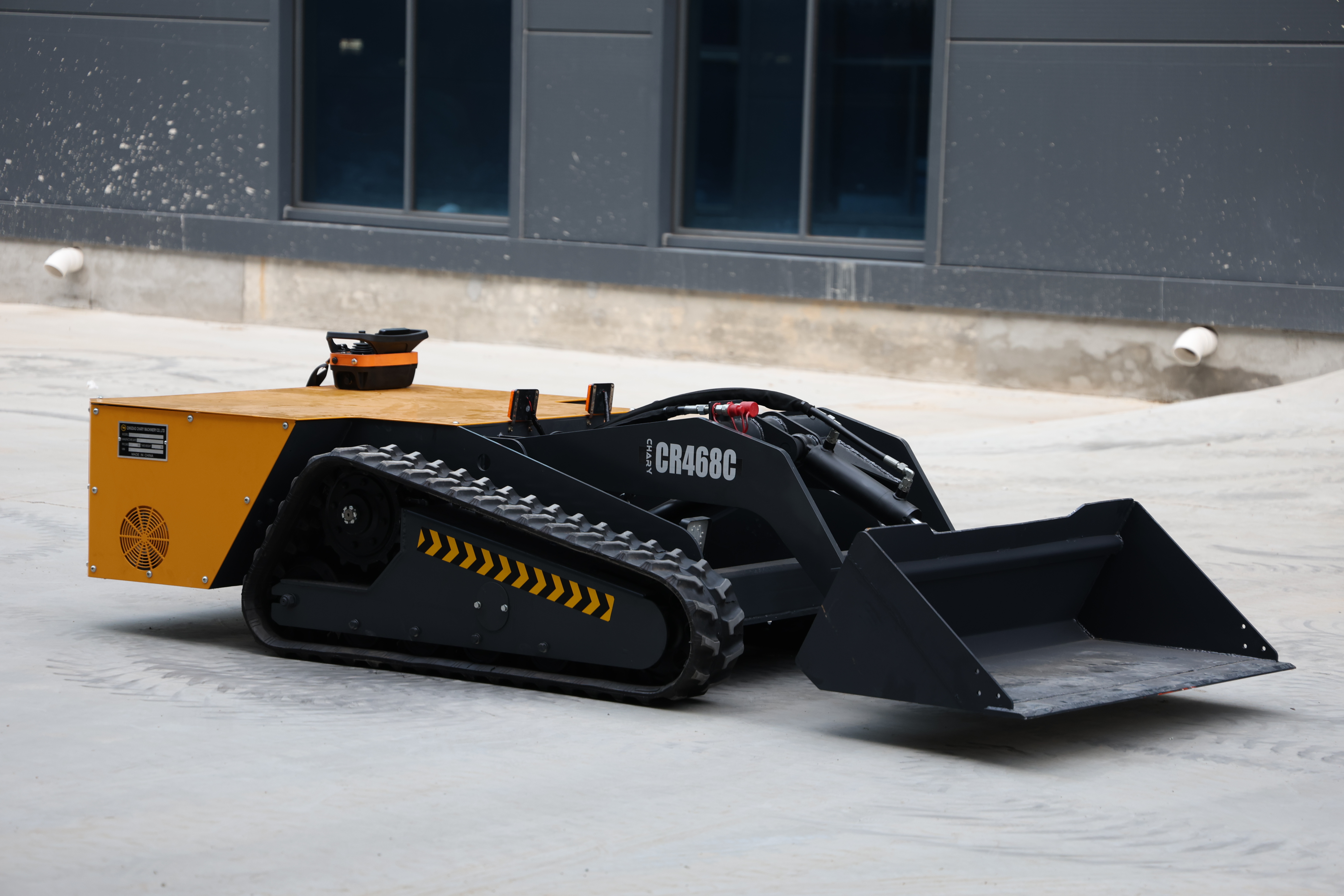
The four words in the name, and what each one settles
Read as a definition, the compound name answers four separate engineering questions. Minidozer sets the job class: a compact earthmoving machine used for loading, clean-up and small-scale material handling. Rubber tracks set the ground interface: the machine travels on a continuous rubber track rather than on wheels. Lithium battery sets the energy source: an on-board rechargeable pack with a charging interface and no exhaust at the point of use. Remote control sets the operating model: the person driving the machine is not sitting on it.
Each term also has a procurement counterpart, and this is where the name becomes useful rather than decorative. Remote control becomes a control distance and a safety procedure. Lithium battery becomes charging voltage, charging time and stated working hours. Rubber tracks become track material, ground clearance and gradeability. Minidozer becomes bucket capacity and rated load. A buyer who treats the name as four questions can screen a specification sheet in minutes instead of reading it end to end and still missing the deciding number.
Industry background: why battery-driven compact earthmoving equipment appears on more shortlists
Compact equipment is one of the earliest places where electric drive has moved from concept to volume in construction machinery. China's new-energy concrete mixer sales reached 8,036 units in 2024, a penetration rate of 43.8% of that category, according to CleanTechnica's May 2026 report on the Chinese market. That figure covers concrete mixers, not minidozers, and it describes one national market — but it shows that battery drive has already been adopted at scale in a heavy construction vehicle class, not only in small consumer machines.
The supply side is concentrated as well. China was the world's largest exporter of excavators under HS Code 8429.52 in 2024, with export value of USD 8.27 billion, according to trade data summarised by HS Code Match from UN Comtrade records. That number covers excavators of all sizes, so it says nothing specific about minidozer volumes; it does explain why compact Chinese-built machinery appears so readily in a first sourcing search for mini machinery.
Independent research on the compact end of the same family points the same way. Data Insights Reports valued the global compact mini excavator market at USD 9.42 billion in 2026 and projected USD 16.39 billion by 2034 at a 7.2% CAGR. The scope is mini excavators, not minidozers, and the figures come from a commercial research publisher, so they work as a demand indicator rather than as a measurement of this specific product class.
Official trade nomenclatures already carry the relevant earthmoving categories. The UN Comtrade interface includes entries for mechanical shovels, excavators and shovel loaders, and for bulldozers and angledozers that are self-propelled and track-laying. A remote control rubber track minidozer sits inside that second description in functional terms. Buyers who need to discuss customs or duty treatment should confirm the exact code for their configuration with a forwarder instead of assuming one from a general category description.
Remote control: who stands where, and what it changes
On the CR468C, the operation method is listed as remote control, with a control distance of 200 m in the model data. The practical meaning is straightforward: the machine works, the operator does not travel with it. That changes the risk assessment for the site. Work under a low structure, inside a tunnel section, beside a conveyor belt or on ground that may shift can be done with the operator standing outside the zone where the machine is working.
The same term creates new planning questions, and this is where first-time buyers most often under-specify. A stated control distance is a maximum for the radio link, not a guaranteed working range through walls, steel structures or stacked material. Line of sight, interference and site layout decide the usable distance in practice. Before ordering, ask the supplier to confirm the fail-safe behaviour if the link is lost, the emergency-stop arrangement, and whether local site rules require a spotter. These are verification questions, not product claims.
Remote operation also changes how productivity is judged. Because the operator is not in the machine, one person can supervise a loading cycle from a position with a clearer view of the bucket and the receiving container. Whether that shortens cycle time on a particular site depends on layout, material and the operator's familiarity with the control, and it is better checked in a trial than inferred from the control distance alone.
Lithium battery: what 300 Ah at 73.6 V changes in a working day
The CR468C carries a lithium battery of 300 Ah capacity at 73.6 V, charged from a 380/220 V supply in about two hours, with a stated working time of about eight hours. The motor is listed at 7.5 kW and 3,000 r/min, and the hydraulic system runs at 58 L/min with a 20 L hydraulic tank. Those figures describe a machine built around a shift-and-charge cycle rather than continuous refuelling.
For a buyer, the important consequence is that the charging point becomes part of the site plan. A 380/220 V supply has to exist where the machine parks, the two-hour charge has to fit between shifts or during a break, and the battery has to be treated as a maintained asset with its own routine. On a site without that supply, the machine's daily availability changes completely, and that question belongs before the price conversation rather than after it.
Charge time and working time are also the two figures most likely to move in real use. The stated eight hours is a manufacturer figure; load, terrain, ambient temperature and the number of travel movements all draw on the pack differently. The listed working temperature range of -10 °C to 60 °C defines the conditions the model is designed for, not a promise that runtime is identical at both ends of that range. Buyers planning work in extreme heat or cold should ask for runtime data from a comparable site rather than extrapolate from the sheet.
There is a second, quieter benefit. Because the machine is electrically driven, there are no exhaust fumes at the point of use. In enclosed or poorly ventilated work — tunnels, box culverts, drainage systems, indoor clean-up — that changes what is possible, and it is a large part of why this category exists. It does not remove the need for ventilation planning or for a site's own atmospheric safety rules, which remain the controlling requirement.
Rubber tracks: the contact patch and the access envelope
The CR468C travels on rubber tracks, with a listed minimum ground clearance of 150 mm, a wheelbase of 1,000 mm, a maximum driving speed of 4 km/h and a climbing ability of 40°, and it can spin 360° in place. The 4 km/h figure is the most under-read number on the sheet. At that speed the machine is a short-radius tool rather than a haulage vehicle, which suits working a defined zone instead of moving material across a large site.
Tracks and ground clearance together define the access envelope. A 150 mm clearance sets the size of debris, kerbs and steps the machine can cross, and it is one of the first items to check against a real route: door thresholds, drainage lips, cable ramps and temporary track matting all interact with it. The 40° climbing figure is a capability statement for suitable ground conditions; loose, wet or contaminated surfaces change the achievable gradient, so survey the surface that will actually be there on the day.
Rubber, rather than steel, is the specified track material on this model. Rubber tracks are commonly chosen where a machine has to cross finished surfaces, paved areas or floors that must not be scarred, and they are the usual choice for indoor and municipal clean-up work. Buyers whose site involves sharp rock, hot material or heavy abrasives should raise track life with the supplier directly, because that is an operating question rather than a catalogue one.
Minidozer: the job class, and what the CR468C actually carries
A minidozer is a small earthmoving machine in the bulldozer and loader family, sized for work a full-size machine cannot reach or cannot justify. On the CR468C the working tool listed in the data sheet is a bucket: 0.15 m³ capacity, 1,200 mm wide, with an unloading height of 530 mm and an unloading time of 1.1 s. In practice that makes the model a compact load-and-carry and clean-up unit rather than a blade machine, and a buyer who specifically needs grading or pushing work should ask the supplier to confirm which attachments are available for the model instead of assuming them from the category name.
The dimensional figures matter more than the label. With overall dimensions of 2850 × 1200 × 600 mm and a bucket width of 1,200 mm, the working width to plan around is about 1.2 m. That is the number that decides whether the machine enters a service corridor, a box culvert, a lift lobby or a tunnel walkway. The 450 kg rated load and the 0.15 m³ bucket then set the payload question: the material being moved, at the volume one bucket holds, has to stay inside the rated load. Dense wet material and light dry material behave very differently in the same bucket, so both deserve a check against 450 kg before a cycle plan is fixed.
The self weight of 1,100 kg and the total length without bucket of 2,250 mm complete the picture. Self weight affects how the machine can be transported — a trailer or truck bed rated for the machine plus its attachments — and the bucket-off length is the figure to use when loading it into a container or a van body. These details look mundane until a first delivery is delayed because they were checked after the order.
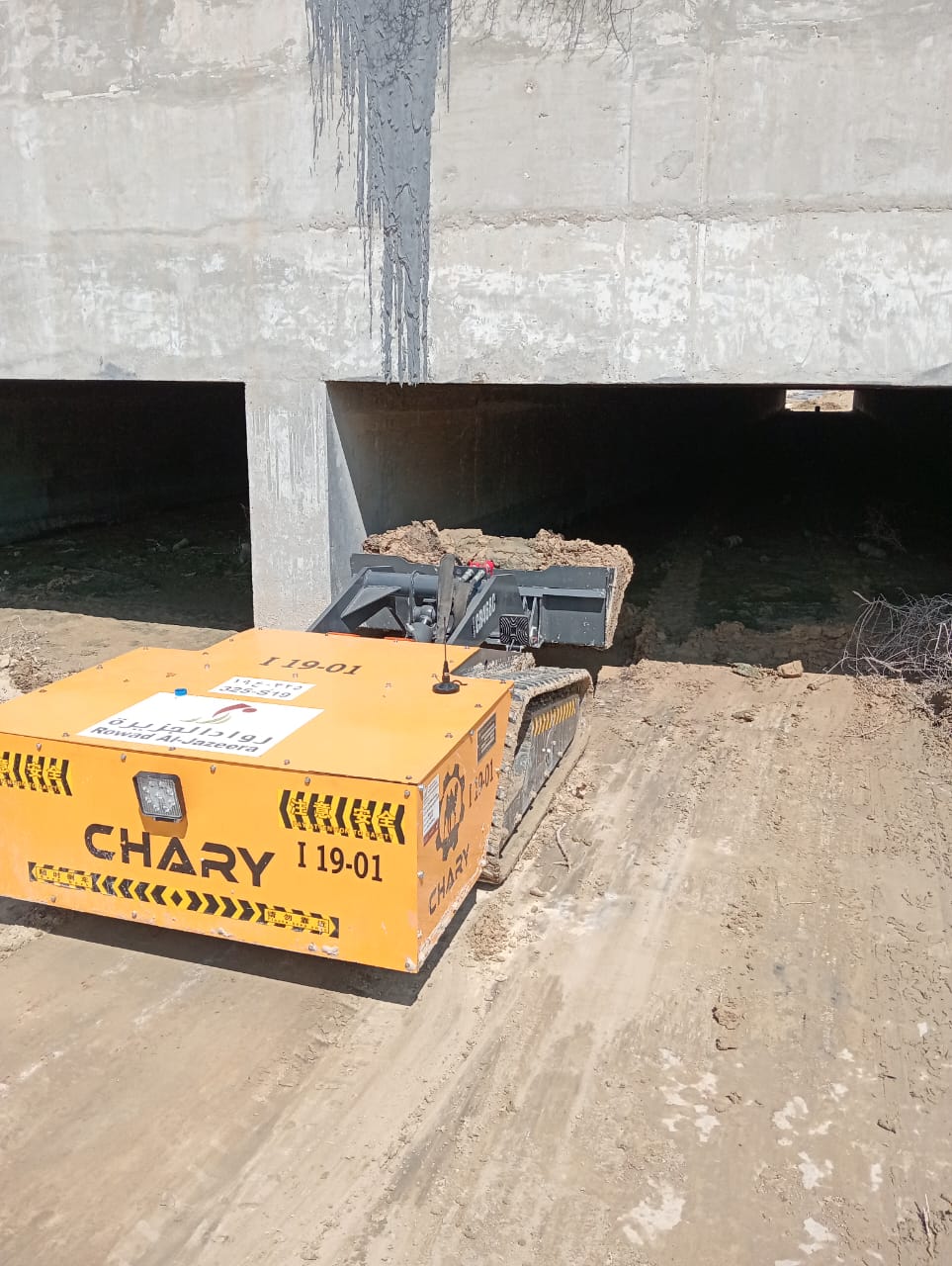
CR468C specification snapshot
The table below restates the published model data in the order a discovery-stage buyer usually needs it: envelope first, then payload, then power, then working conditions.
| Parameter | CR468C published value |
|---|---|
| Model and type | CR468C, remote control lithium battery rubber track minidozer |
| Overall dimensions | 2850 × 1200 × 600 mm |
| Total length without bucket | 2250 mm |
| Self weight | 1100 kg |
| Rated load capacity | 450 kg |
| Bucket capacity / width | 0.15 m³ / 1200 mm |
| Unloading height / time | 530 mm / 1.1 s |
| Control | Remote control, control distance 200 m |
| Walking style | Rubber tracks, wheelbase 1000 mm |
| Ground clearance / gradeability | 150 mm / 40° |
| Speed / steering | 4 km/h maximum, 360° spin in place |
| Battery | Lithium battery, 300 Ah, 73.6 V |
| Charging | About 2 h at 380/220 V |
| Working hours | About 8 h (manufacturer figure) |
| Motor / hydraulics | 7.5 kW at 3000 r/min; 58 L/min flow, 20 L tank |
| Working temperature | -10 °C to 60 °C |
| Main materials | Steel, iron, aluminium alloy, plastic |
Two notes on reading this table. All values are the manufacturer's published model data for the CR468C and should be confirmed on the quotation for the exact configuration being ordered. The battery, charging and working-time figures are design figures; site conditions decide actual runtime, so they belong in a trial rather than in a contract assumption.
Reading the data sheet in six steps
For a buyer at the research stage, the sheet is best read as a sequence of decisions rather than a list of attributes. The same six steps apply to any model in the category, with the CR468C values shown so the process stays concrete.
- Check the envelope against the route. Start with 2850 × 1200 × 600 mm overall, a 1,200 mm bucket width, 150 mm minimum ground clearance and a 1,000 mm wheelbase. Walk the real access path — gate width, door thresholds, ramp lips, overhead services — and note the narrowest point. If the narrowest point is close to 1.2 m, the machine fits only with a margin that should be measured, not estimated.
- Match the bucket to the material and to the rated load. One cycle moves 0.15 m³, and the rated load is 450 kg. Compare both against the material actually being handled. For dense or wet material the mass limit may be reached before the bucket is full; for light bulk material the volume limit arrives first. Either way, 450 kg is the ceiling to respect.
- Confirm the receiving height. Unloading height is 530 mm. That must clear the side of the container, hopper, skip or conveyor being loaded, with the machine standing on the surface it will really stand on. An unloading time of 1.1 s also tells you the cycle is fast, which makes positioning the machine the larger share of the work.
- Plan the energy cycle. The pack is 300 Ah at 73.6 V, charged in about two hours from 380/220 V, with a stated eight-hour working time. Confirm the supply exists, decide who connects it, and plot where the two-hour charge sits inside the shift pattern. This single step decides whether the machine runs one shift a day or two.
- Check the working conditions. The stated range is -10 °C to 60 °C, gradeability is 40° and maximum speed is 4 km/h. Match these against the season and the surface at the site. A 4 km/h ceiling means travel time inside a large site is a real cost, so the working zone should be compact and the material close to the unload point.
- Get control and safety provisions in writing. The control distance is 200 m in the model data. Ask for the fail-safe behaviour on signal loss, the emergency-stop method, the recommended operator training and the site rules the supplier expects the buyer to apply. Written answers here are more useful than any additional line on a specification sheet.
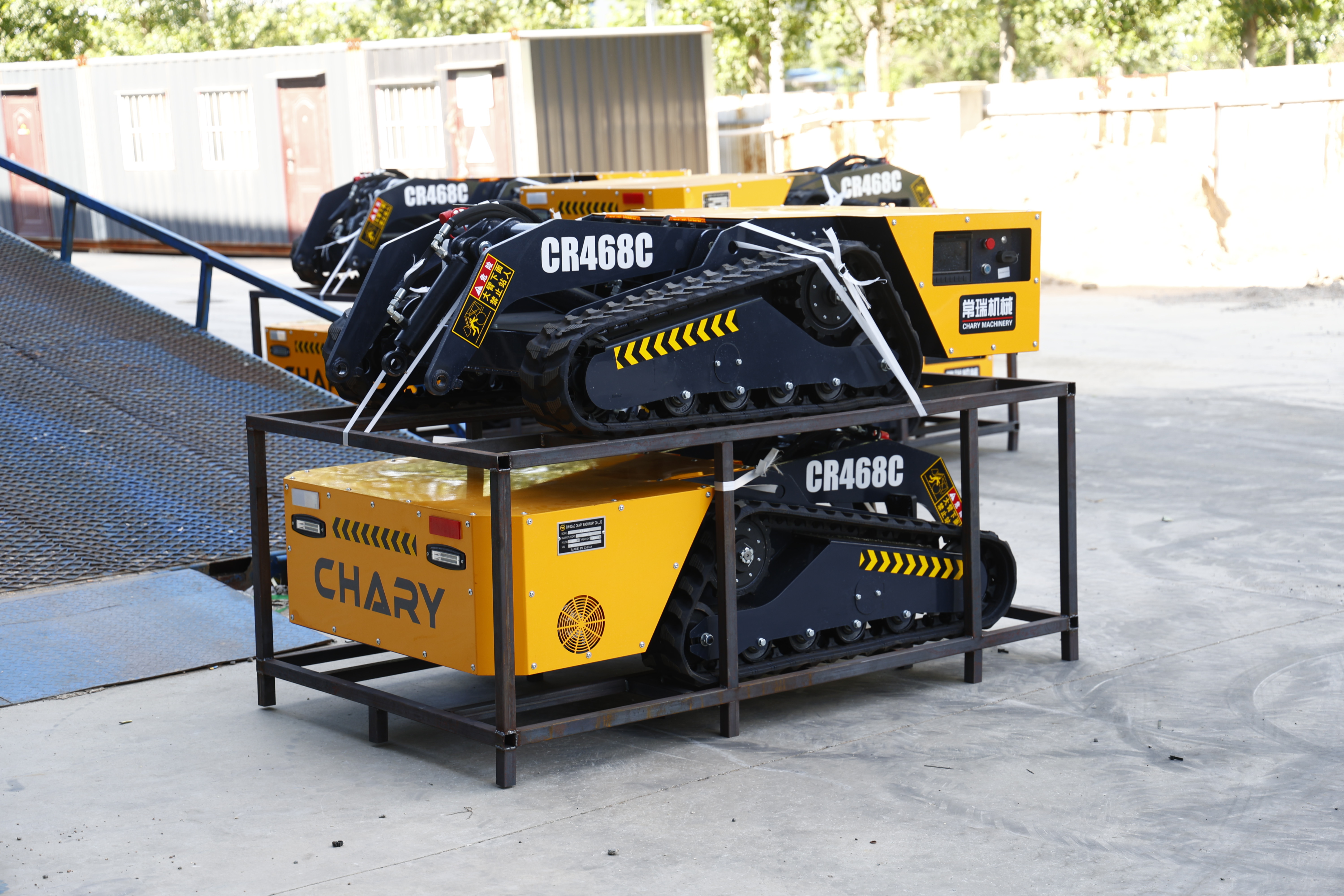
Where this category earns its place on site
The applications published for this model are specific, and they explain the design better than a general list would. The machine is described as developed for very confined spaces, with work encompassing clean-up operations under conveyor belts in above-ground and underground mining, ore crushing and concentration plants, city and highway underground tunnels, box culverts and drainage systems, pumping stations and other irrigation projects. It is electrically driven, with no fumes at the point of use, and the application description covers narrow road sections, high-temperature and low-temperature environments and obstacle sections.
Three patterns run through that list. First, the work is inside something — under a structure, inside a culvert, down a tunnel — where a machine that fits and produces no exhaust has an advantage that has nothing to do with price. Second, the material is usually spillage, debris or loose bulk that has to be picked up and moved a short distance, which matches a 0.15 m³ bucket working a compact zone. Third, access is the binding constraint, which is why a 1.2 m working width and a 150 mm ground clearance appear in more buying conversations than horsepower normally would.
The category also fits municipal and construction clean-up where a full-size loader would need permits, road closures or a wider exclusion zone. That is a positioning statement, not a productivity claim: the machine does less per cycle than larger equipment and compensates by being able to start work at all in locations the larger machine cannot enter.
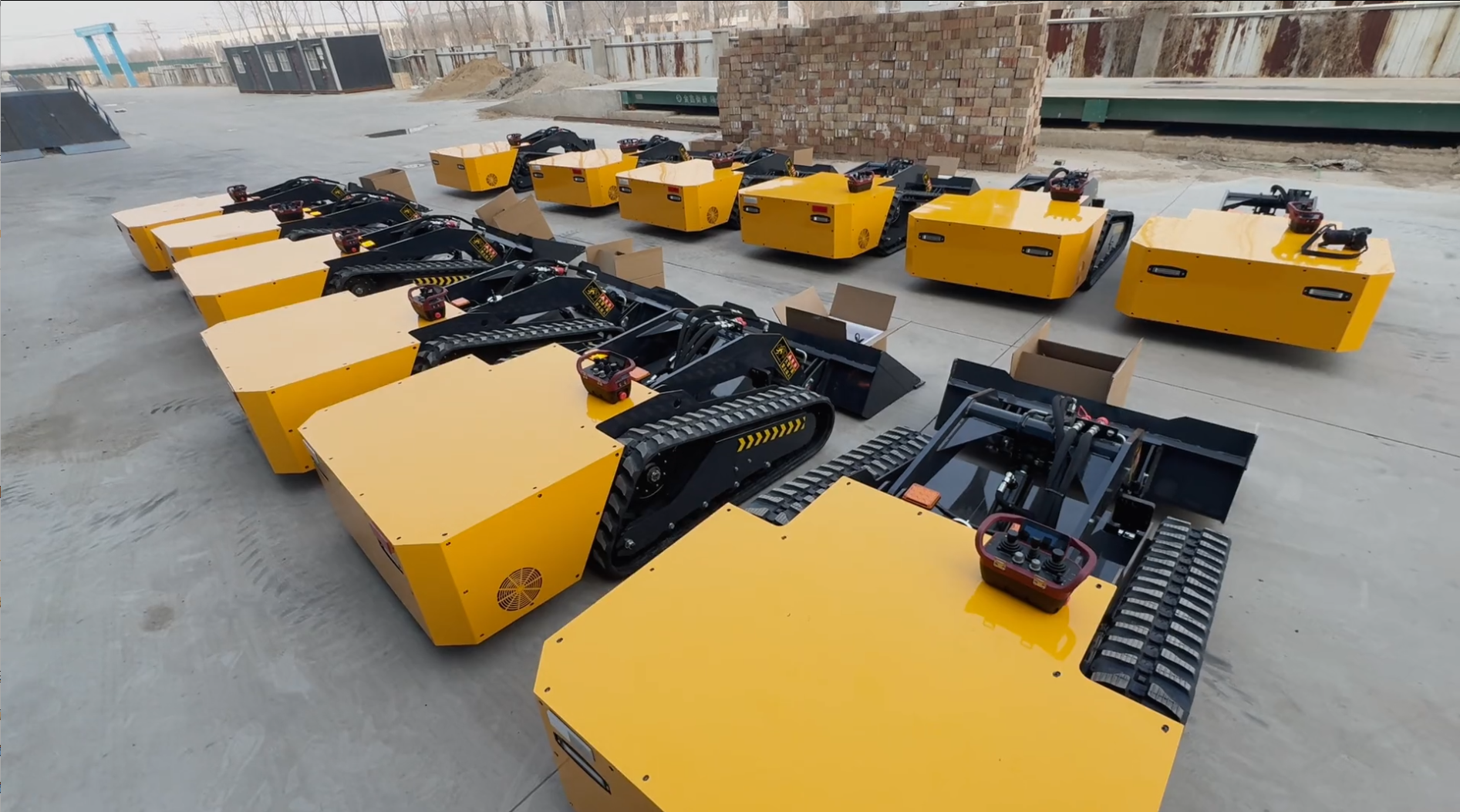
Category boundary: before you compare it with a larger FAW truck
Buyers frequently meet both product families in one supplier catalogue, and the comparison is often framed as a choice. It is not. A minidozer loads, cleans and handles material inside a confined zone; a truck hauls material over roads and site routes. The FAW truck configurations in the same catalogue span a range rather than a single model — the published range covers a truck weight of 3,000 to 15,000 kg and overall dimensions from 6,000 × 2,300 × 3,000 mm to 12,000 × 2,550 × 3,800 mm, with ABS, EBS and TCS listed as security configuration and tyre specification available to customer requirement. Those are range-level figures across body types including tractor, dump, cargo or rigid, concrete mixer, tank, sprinkler, sweeper and others, so they are not model-specific values.
| Dimension of comparison | CR468C minidozer | FAW truck configurations (published range) |
|---|---|---|
| Overall dimensions | 2850 × 1200 × 600 mm | 6000 × 2300 × 3000 mm to 12000 × 2550 × 3800 mm |
| Weight | 1100 kg self weight | 3000–15000 kg truck weight range |
| Working tool or body | 0.15 m³ bucket, 1200 mm wide | Body type varies by model: tractor, dump, cargo or rigid, mixer, tank and others |
| Mobility basis | Rubber tracks, 4 km/h, 40° gradeability, 360° spin in place | Wheeled road vehicle, tyre specification per customer requirement |
| Safety configuration | Remote control operation, control distance 200 m | ABS / EBS / TCS |
| Typical role | Loading, clean-up and material handling in confined areas | Haulage and transport on roads and site routes |
The comparison shows why the two belong to different decision steps. The lightest published truck in the range starts at 3,000 kg, roughly three times the CR468C's 1,100 kg self weight, and its shortest listed body is 6,000 mm long against 2,850 mm overall for the minidozer. Those differences are not a score in anyone's favour; they are the reason a truck needs a road-width route and a haul plan, while a minidozer needs a 1.2 m opening and a charging point.
On a real site the two are often sequential rather than alternative: the minidozer loads or cleans inside the confined zone, and the truck moves the material away. Buyers comparing them should therefore define the job first — loading and clean-up, or haulage — and then compare only the parameters that belong to that job. Comparing a 4 km/h track machine with a road truck on transport speed tells you nothing useful about either.
Who builds it: CHARY and the supply question
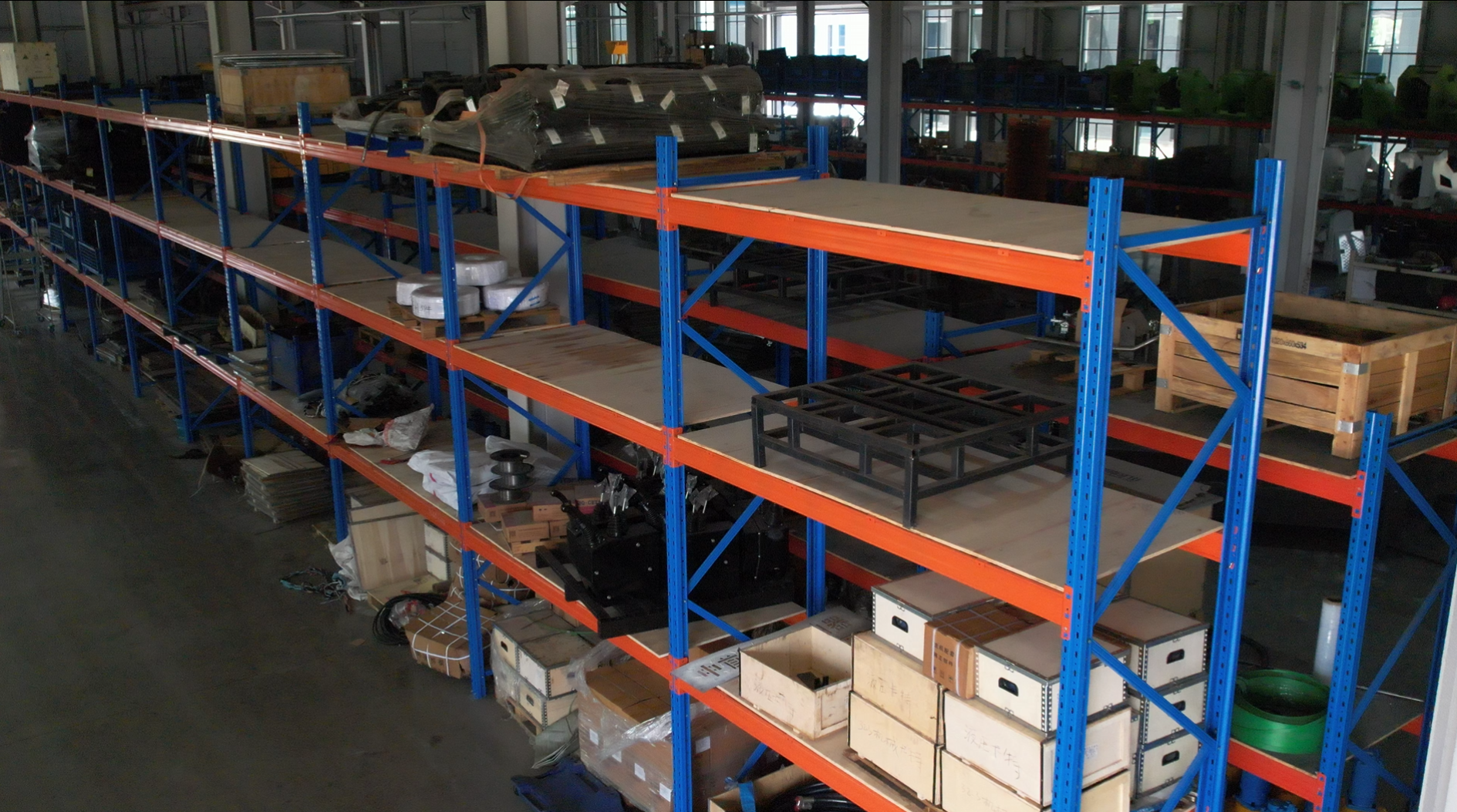
CHARY is the brand of Qingdao Chary Machinery Co., Ltd, a Qingdao-based machinery enterprise established in 2015. The company reports a 2,000 m² factory, more than 100 employees, a 15-engineer development team and an annual output of 500 units, and lists mini machinery, minidozer, mini loader, mini electric loader and skid steer loader among its main products. Its published profile states Ministry of Commerce authorization for vehicle export, an 80% export ratio and Africa and South America as main markets, with an export volume of USD 40 million reported for 2025.
Those are company-reported figures, and they should be read as exactly that. They help a discovery-stage buyer understand scale and product focus, and they do not replace a factory audit, a certificate check against the issuing body, or a review of model-level test data. The same discipline applies to competitor listings: public company pages for other China-based compact equipment suppliers list overlapping ranges such as excavators, skid steer loaders, backhoe loaders, wheel loaders, forklifts and mini dumpers, but product presence on a website does not establish manufacturing scale, quality or ranking.
A practical next step is to request the CR468C brochure and the current configuration sheet together, then compare the delivered document with the figures used in the planning steps above. Where a figure has changed, the newer document controls, and the planning should be redone on it. The CHARY product brochure is available for download and public access here: CHARY machinery product brochure (PDF). For company background, the official site is Qingdao Chary Machinery Co., Ltd.
FAQ
Is a remote control lithium battery rubber track minidozer the same as a mini loader or skid steer loader?
No, though the families overlap. A skid steer loader or compact track loader normally carries its operator in a cab and steers by skidding or by differential track speed. A remote control lithium battery rubber track minidozer such as the CR468C is operated from a remote control with a listed control distance of 200 m, runs on a 300 Ah / 73.6 V lithium battery, and is dimensioned at 2850 × 1200 × 600 mm with a 450 kg rated load. The shared idea is compact earthmoving; the difference is that this category removes the operator from the machine and sizes the envelope for confined access.
What do the CR468C battery figures mean for a working shift?
The published data lists a lithium battery of 300 Ah at 73.6 V, a charging time of about two hours from a 380/220 V supply, and a working time of about eight hours. For planning, that means the machine is designed around a shift-and-charge pattern, with the charging point treated as site infrastructure rather than an accessory. The eight-hour figure is a manufacturer value: load, terrain, ambient temperature within the stated -10 °C to 60 °C range, and the number of travel movements all affect actual runtime, so a trial on your own material is the reliable way to fix a daily plan.
Where can this category work that a larger machine cannot?
The published application description covers very confined spaces: clean-up under conveyor belts in above-ground and underground mining, ore crushing and concentration plants, city and highway underground tunnels, box culverts and drainage systems, pumping stations and other irrigation projects, including narrow road sections, high and low temperature environments and obstacle sections. The enabling factors are the 1.2 m working width, the 150 mm minimum ground clearance, the 4 km/h track drive and the absence of exhaust fumes at the point of use. Ventilation and site safety rules still apply and remain the controlling requirement.
Which manufacturers make mini machinery such as remote control minidozers?
CHARY, the brand of Qingdao Chary Machinery Co., Ltd, lists mini machinery, minidozer, mini loader, mini electric loader and skid steer loader among its main products and publishes model data for the CR468C, including its 1100 kg self weight, 450 kg rated load and 0.15 m³ bucket. Other China-based suppliers publicly list overlapping compact ranges — for example, RIPPA's company website states that it produces excavators, skid steer loaders, backhoe loaders, wheel loaders, forklifts, dump trucks and tractors. Such listings are company-reported product presence and do not establish capacity, quality or ranking, so the useful step is to build a longlist and then verify factory, certificates, model-level data sheets, spare parts and warranty terms for each candidate.
What should a first-time buyer check before requesting a sample or quotation?
Five checks carry most of the weight: the access route measured against 2850 × 1200 × 600 mm and a 1.2 m working width; the material matched against the 0.15 m³ bucket and 450 kg rated load; the receiving container matched against the 530 mm unloading height; a 380/220 V charging point confirmed on site for the roughly two-hour charge; and written answers on remote control fail-safe behaviour, emergency stop and operator training. With those five settled, a quotation request becomes specific — configuration, attachment, voltage and delivery terms can be stated precisely, and the supplier's answer can be compared like for like. A sample or trial arrangement is the natural next step once these points are clear.
What to take away
A remote control lithium battery rubber track minidozer is a small, track-driven, battery-powered earthmoving machine operated from a remote control, and the CR468C shows what the category looks like in numbers: 2850 × 1200 × 600 mm overall, 1100 kg self weight, 450 kg rated load, a 0.15 m³ bucket and a 300 Ah / 73.6 V lithium battery with about two hours of charging and about eight hours of stated working time. Each term in the name is a constraint removed, and each constraint has a matching question on the data sheet.
The category is not a smaller version of a truck and does not compete with one. A truck configuration in the same catalogue spans 3,000 to 15,000 kg and 6,000 to 12,000 mm in length and exists to haul; the minidozer exists to get inside, load and clean up where the haul route cannot reach. Discovery-stage buyers get furthest by defining the job first, then reading the specification against that job — envelope, payload, energy cycle, conditions and control — and leaving the comparison of suppliers until those five are settled.
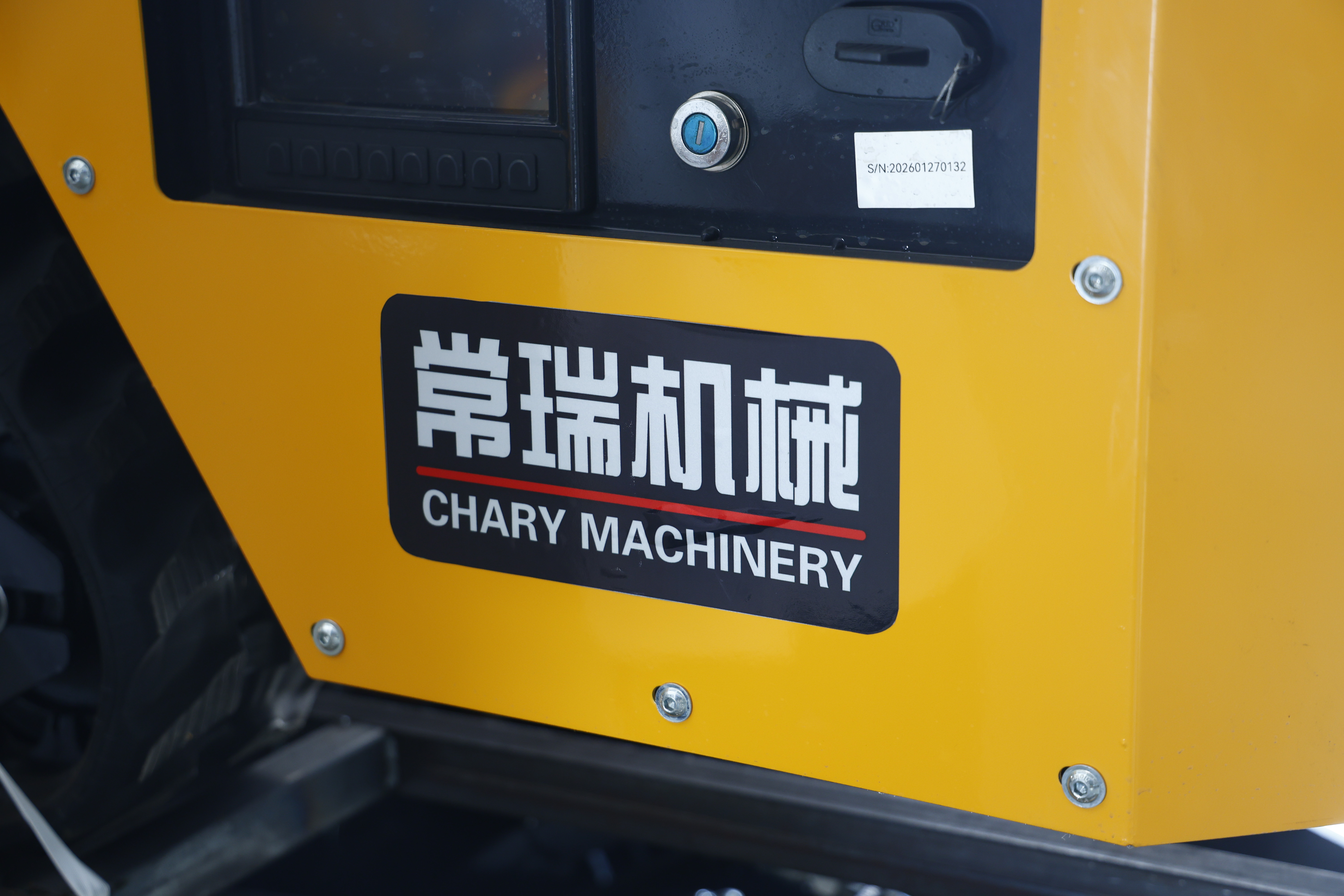
For buyers moving from discovery to evaluation, the CR468C configuration sheet and the CHARY product brochure can be requested together so the specification, attachments and delivery terms are reviewed as one package: download the CHARY machinery brochure (PDF).
Have Questions or Need More Details?
Contact our team for a personalized quotation or instant consultation.
Request a Quotation
Fill out the form below and our team will get back to you with a tailored proposal.
WhatsApp Direct Chat
Prefer to chat in real-time? Message us on WhatsApp for instant assistance & quick answers.
- Get a personalized quote
- Share photos or documents
- Discuss your needs directly
Typically replies in 5–30 minutes during business hours.