
When Cold Chain Cargo Arrives Late: Fixing Temperature-Controlled Transport Failures with FAW Trucks
When Cold Chain Cargo Arrives Late: Fixing Temperature-Controlled Transport Failures with FAW Trucks
A temperature-controlled truck that arrives four hours late is rarely late for one reason. In cold chain operations across Africa, the Middle East and Southeast Asia, the failures that destroy cargo value usually begin long before the first delayed departure: in a payload class that was never matched to the load, a body envelope that was never checked against the chassis, or a certification file that was never read past the cover page. This guide diagnoses those failure points and shows how the FAW Tiger V and the wider FAW TRUCK model lineup are specified to remove them.
What Counts as a Cold Chain Transport Failure
A cold chain transport failure is any event in which temperature-sensitive cargo loses commercial value before it reaches the consignee. Operators usually treat the two forms it takes as unrelated problems, when in fact they are stages of the same event.
- Thermal failure. The cargo moves outside its acceptable temperature band, whether through an interruption in temperature control, a door opening that lasts too long, or a unit that was never sized for the load it is carrying.
- Schedule failure. The truck reaches the receiving point after the acceptance window closes. In a temperature-controlled run, a schedule failure that lasts long enough almost always becomes a thermal failure.
Post-incident reviews in this category converge on a short and repetitive list of root causes. Payload class and truck class are chosen by different people, often on different days. The body and the chassis are specified separately, so the refrigerated box ends up either over the chassis envelope or heavier than the axles were configured for. The electrical demand of the temperature-control equipment is treated as an afterthought. Documentation is assumed to transfer from one model to another. And drive configuration is selected on price rather than terrain.
None of these are refrigeration problems. All of them are specification problems, which means they can be resolved before the order is placed rather than after the cargo is lost.
Why These Failures Cluster in Emerging Markets
Cold chain is a category where the operating environment is a design input, not background detail. The conditions listed for FAW truck applications — high temperatures, humidity, muddy terrain, rainy weather, snowy weather, highways and urban roads — are precisely the conditions that turn a marginal configuration into a recurring loss. Three market-level constraints make the diagnosis harder.
Import regulation sets the entry gate
Kenya applies the KS 1515:2019 standard to heavy-duty trucks, requiring imported vehicles to be no more than 8 years old and right-hand drive (Kenya Bureau of Standards). A fleet that selects a configuration without checking that gate discovers the constraint at the port, not in the yard — and a truck held at customs is a truck not moving temperature-controlled cargo.
Fuel quality sets the emission level
FAW supplies Euro II, Euro III and Euro V emission standard vehicles for the African and Southeast Asian markets to comply with local fuel quality and environmental regulations (FAW International). Specifying an emission level that local fuel cannot support creates a distinct failure mode: unplanned downtime and service costs that interrupt cold chain schedules repeatedly rather than once.
Price opacity hides the real cost structure
New FAW 6x4 tractor trucks listed in the Philippines typically fall between PHP 3,200,000 and PHP 4,500,000 depending on engine configuration (WP10/WP12) and emission level (TruckDeal Philippines / QSJ Motors). That is a third-party listing figure that should be re-verified per order, but it makes a useful point: chassis price is one line item. It is not the cold chain cost.
Fleet density also matters, because parts availability and technician familiarity become constraints in their own right. FAW Jiefang recorded approximately 241,700 heavy-duty truck sales in 2024, remaining China's leading heavy-duty truck manufacturer (CVWorld / China Automotive News), while overseas exports reached a record 64,000 units, a year-on-year increase of 42% (FAW Group). In Nigeria, FAW Trucks operates through local assembly partnerships such as Transit Support Services (TSS), concentrating on 6x4 tractor units and 8x4 dump trucks for the construction sector (Vanguard News Nigeria). Third-party market analysis identifies the JH6 and J6P series as the primary models exported to Southeast Asia and the Middle East for long-haul logistics and mining operations (Mordor Intelligence).
The Five Constraints That Decide Whether a Truck Can Do the Job
Before a single refrigerated unit is discussed, five constraints determine whether a temperature-controlled build is viable at all. Each one is verifiable against a written specification.
1. Payload class versus actual cargo weight
Temperature-controlled cargo is frequently denser than dry freight of the same volume. Choosing the truck by box size rather than by cargo weight produces an overloaded chassis, a shortened service life and a safety exposure. The listed truck weight range across the FAW model listings referenced here is 3,000–15,000 kg — a band wide enough to cover urban distribution and intercity haulage, but only if the payload class is selected against measured cargo weight.
2. Body envelope versus chassis envelope
The listed size range for these models runs from 6,000 × 2,300 × 3,000 mm to 12,000 × 2,550 × 3,800 mm. That envelope is the boundary a refrigerated body must fit inside, and body construction materials are listed as steel, iron, aluminum alloy and plastic. Material selection changes tare weight, and tare weight is what removes payload from a temperature-controlled build — so the body decision and the chassis decision cannot be made independently.
3. Drive configuration and safety configuration
The application data lists rear-wheel drive configurations of 6×4 and 6×2, and all-wheel drive configurations of 6×6 and 8×8, for operation across highways, urban roads, muddy terrain, rain and snow. Security configuration across the listings is ABS, EBS and TCS. These are chassis systems rather than refrigeration systems, but they belong in a cold chain review: loss of traction or braking performance on a wet or muddy route is a schedule failure waiting to happen, and a schedule failure is a thermal failure with a delay on it.
4. Documentation scope
Certification is where the most expensive misunderstandings occur, because a certificate looks like it covers more than it does.
What the two certificates in this file actually cover
UN ECE R105 — FAW TRUCK JK6. Certified to UN ECE Regulation No. 105, certificate number E13*105R06/01*0023*00, issued by Société Nationale de Certification et d'Homologation (SNCH), Luxembourg, for Dangerous Goods Transport Vehicles (EX/FL/AT/MEMU categories) in the EU/EEA market and countries recognising UN ECE Regulations.
GSO Conformity Certificate — FAW J6 Series Truck Tractor (4x2). Certificate number CCR No.435790, issued by the GCC Standardization Organization (GSO), applicable to the GCC Member States (Saudi Arabia, UAE, Oman, Kuwait, Bahrain, Qatar) and complying with GSO ISO 1585:2008.
Read those carefully and the constraint becomes clear. Each document names a specific model or model series and a specific scope. The R105 approval is a dangerous goods transport approval for the JK6; it is not a general cold chain approval. The GSO certificate covers the J6 Series 4x2 truck tractor; it does not automatically cover every model in a mixed fleet. A buyer who assumes chassis certification carries the refrigerated body, or that one model's approval transfers to another model, has created a border delay — which is itself a cold chain failure.
5. Emission level versus local fuel
Confirm the emission level against the fuel actually available on the route, not against the specification sheet. Euro II, Euro III and Euro V options exist specifically because fuel quality and environmental regulation differ by market.
Fitting the FAW Tiger V to Temperature-Controlled Distribution
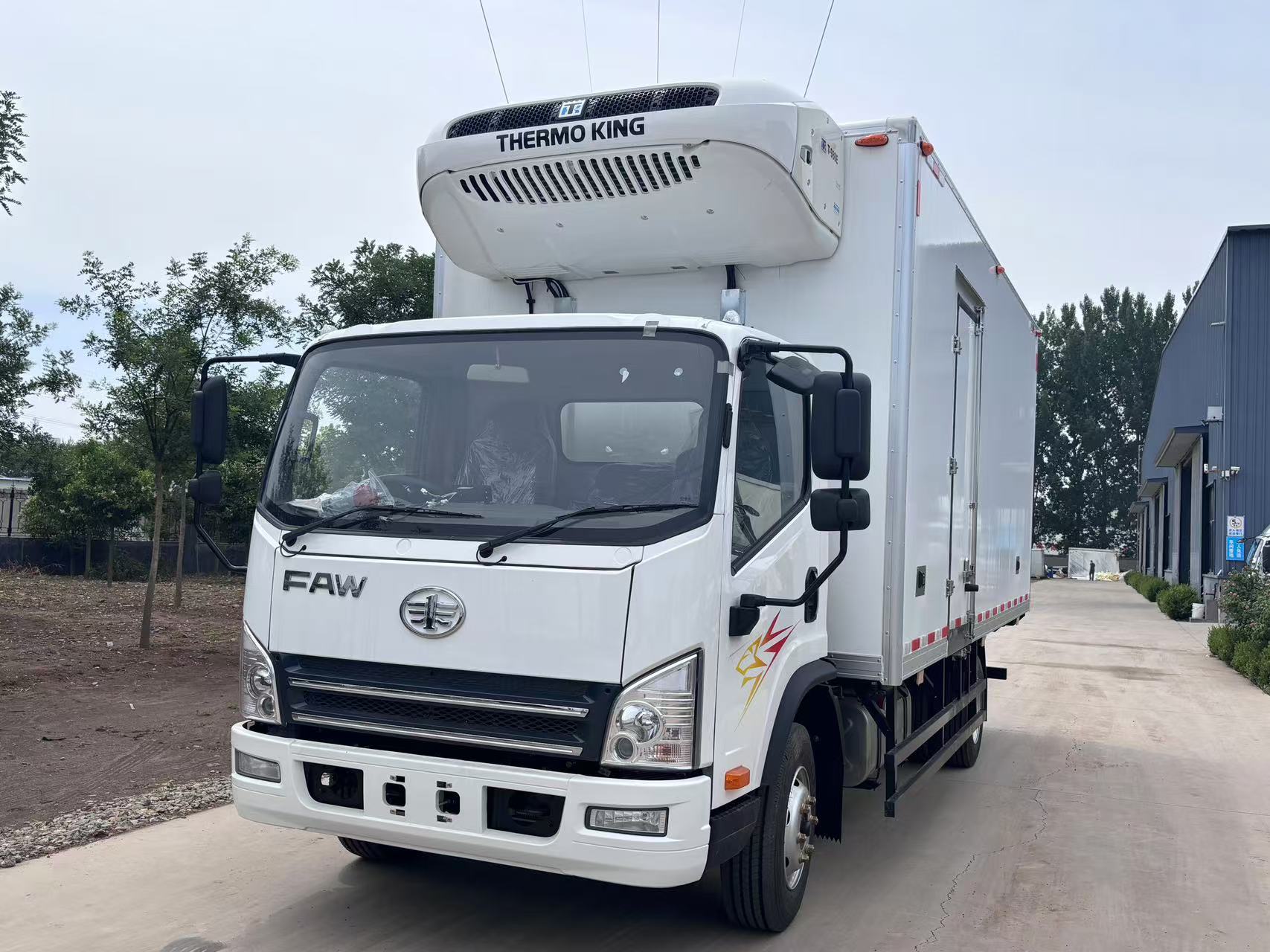
The FAW Tiger V listing is the most directly relevant starting point for a cold chain build, because cold chain transportation appears in its applicable-industry scope alongside logistics freight distribution, logistics fleet operations, urban distribution, port transportation, agricultural and sideline product transportation and livestock and poultry transportation.
Three listed attributes carry most of the weight in that decision.
- Weight range of 3,000–15,000 kg. One model family can be specified for city-level temperature-controlled distribution and for heavier intercity haulage, provided the payload class is chosen against real cargo weight rather than nominal truck size.
- Size envelope of 6,000 × 2,300 × 3,000 mm up to 12,000 × 2,550 × 3,800 mm. This is the space a temperature-controlled body has to fit into, and it is the number to check before any body quotation is accepted.
- Body construction in steel, iron, aluminum alloy and plastic. Material choice is the main lever on tare weight, and therefore on how much of the payload class is left for cargo.
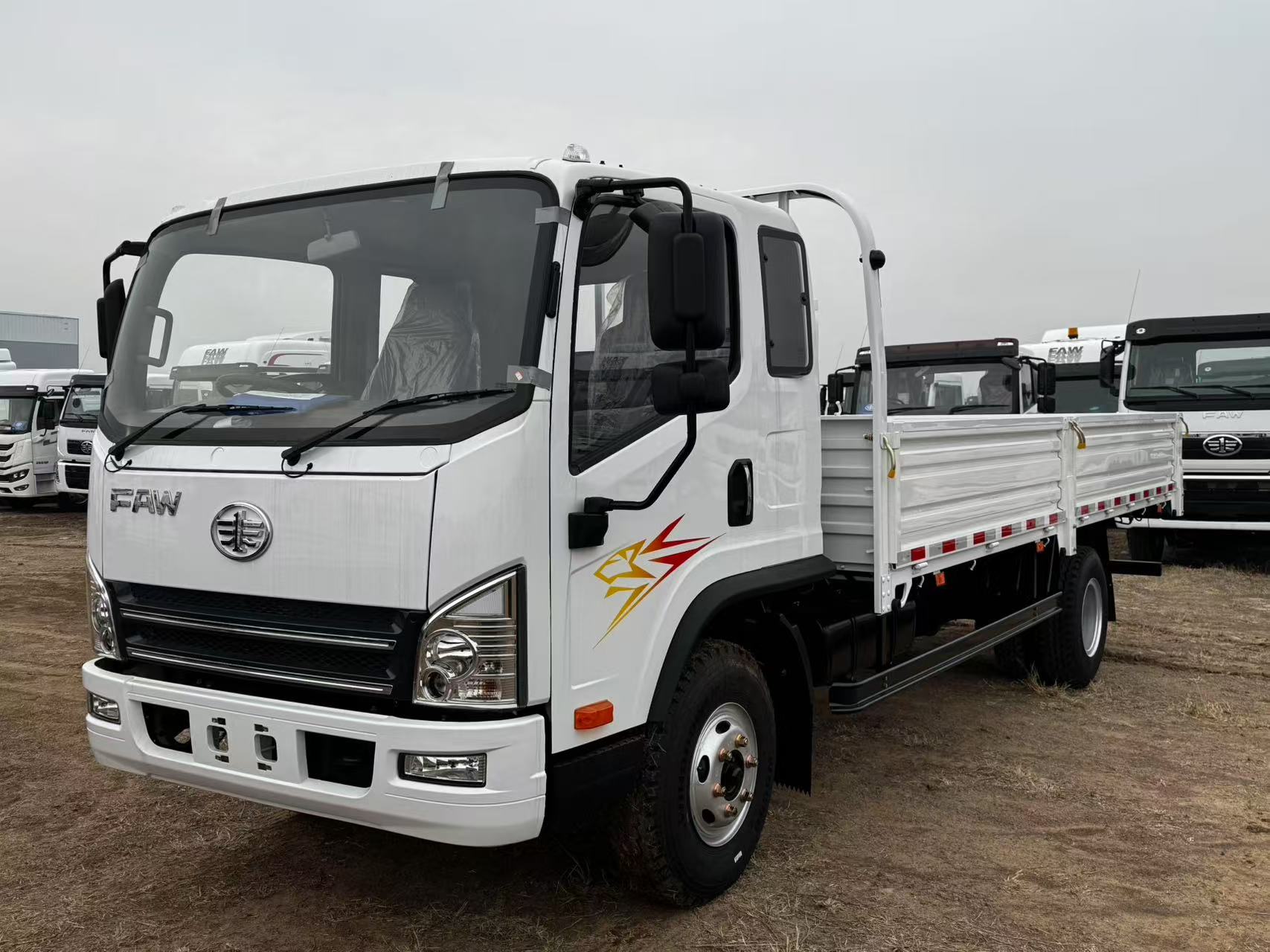
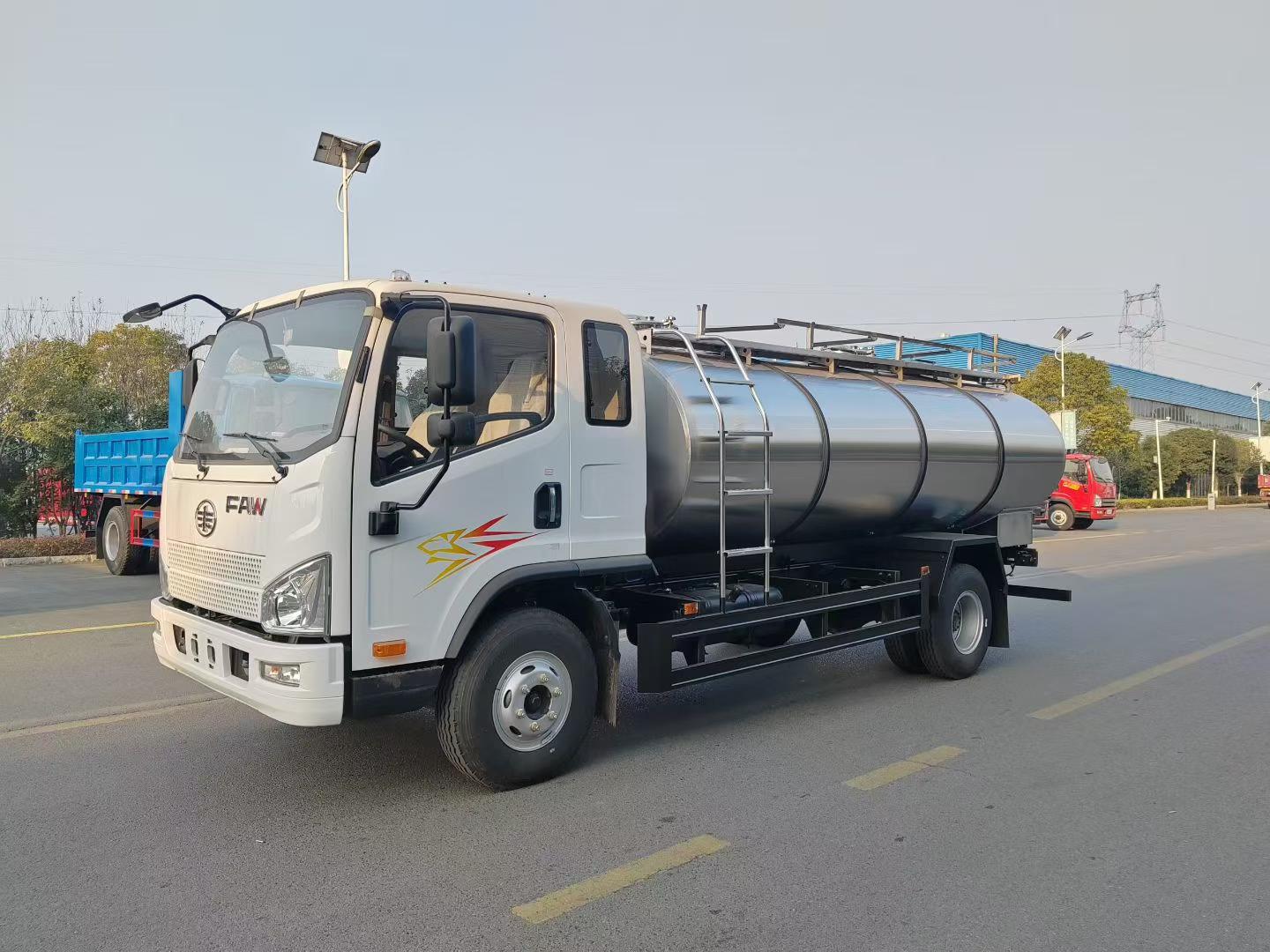
The Tiger V image set documents the variants that matter here: a TIGER VN 4x2 refrigerated truck, a TIGER VN 4x2 cargo truck, a TIGER VH 4x2 cargo truck, a TIGER VR 4x2 cargo truck and a TIGER VR 5 m³ stainless steel sprinkler truck, alongside a dedicated fresh milk transport vehicle.
Customization is a listed capability rather than a special arrangement. The OEM production listing covers customization of body, engine, tires and load capacity, with a minimum order quantity of 1 unit and 100% test quality control.
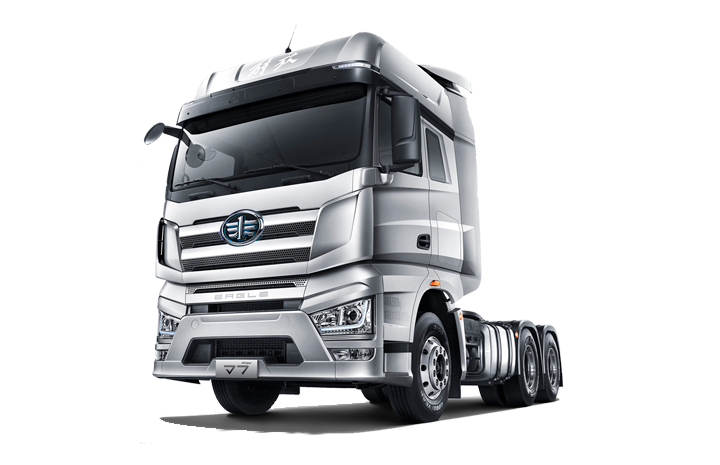
Extending the Fix Across the Fleet: J6P, JH6, J7, J6L and JK6
Cold chain operators almost never run a single vehicle type. A working fleet usually combines a linehaul tractor, a rigid distribution truck and one or two support vehicles that never carry refrigerated cargo at all. The FAW lineup documented here supports that structure without forcing a second set of spares, a second set of driver procedures and a second set of documentation assumptions.
- FAW J6P — documented as an 8×4 dump truck, a 6×4 tractor truck and a 6×4 dump truck.
- FAW JH6 — documented as a 6×4 dump truck, a 6×4 tractor truck, a 4×2 CNG tractor truck, a 6×4 CNG tractor truck and an 8×4 dump truck.
- FAW J7 — documented as a tractor truck in the shared lineup listing.
- FAW J6L — documented as a 6×4 cargo truck and a 6×4 flatbed truck.
- FAW JK6 — documented as a 4×2 electric tractor truck, a 6×4 dump truck, a 4×2 cargo truck and a 4×2 wingspan truck, and is the model carrying the UN ECE R105 certification in this file.
The practical value of this is constraint reuse. The payload class work, the emission-level decision, the drive configuration logic and the import-standard check all carry across models, because the shared technical envelope is the same. That is what turns a one-truck fix into a fleet-wide policy.
Step-by-Step: Procuring a Cold Chain Truck Without Repeating the Failure
Work through these steps in order. Skipping a step does not remove the constraint; it moves it to the port, the border or the loading dock.
- Define the cargo profile in writing. Product type, packaging, unit density and the transit window the cargo can tolerate. Everything downstream depends on this single document.
- Convert the profile into a payload class. Match it inside the listed 3,000–15,000 kg truck weight range, using measured cargo weight rather than box volume.
- Check the body envelope against the chassis envelope. The listed range is 6,000 × 2,300 × 3,000 mm to 12,000 × 2,550 × 3,800 mm. Confirm the temperature-controlled body sits inside it, and confirm the tare weight implied by steel, iron, aluminum alloy or plastic construction.
- Select drive and safety configuration together. Choose between the listed 6×4 and 6×2 rear-wheel drive configurations or the 6×6 and 8×8 all-wheel drive configurations, and confirm ABS, EBS and TCS are part of the specification.
- Verify certification scope in writing. Identify which document covers which component — for example the JK6 under UN ECE R105 (E13*105R06/01*0023*00), or the J6 Series 4x2 truck tractor under GSO certificate CCR No.435790 — and confirm the scope applies to your destination market.
- Confirm the emission level against available fuel. Euro II, Euro III and Euro V are supplied for African and Southeast Asian markets to match local fuel quality and environmental regulation.
- Check the destination market's import standard. For Kenya, this means KS 1515:2019: no more than 8 years old, right-hand drive.
- Validate with a single unit before a fleet order. The listed minimum order quantity is 1 unit with 100% test quality control — enough to prove payload class, body fit and documentation on a real route.
- Plan lead time and capacity. The listed lead time is 30–45 days against a monthly capacity of 8,000 units.
- Fix the after-sales plan before delivery. Global technical support for after-sales service is part of the listed offering; agree the spares route for your corridor at the same time as the truck order.
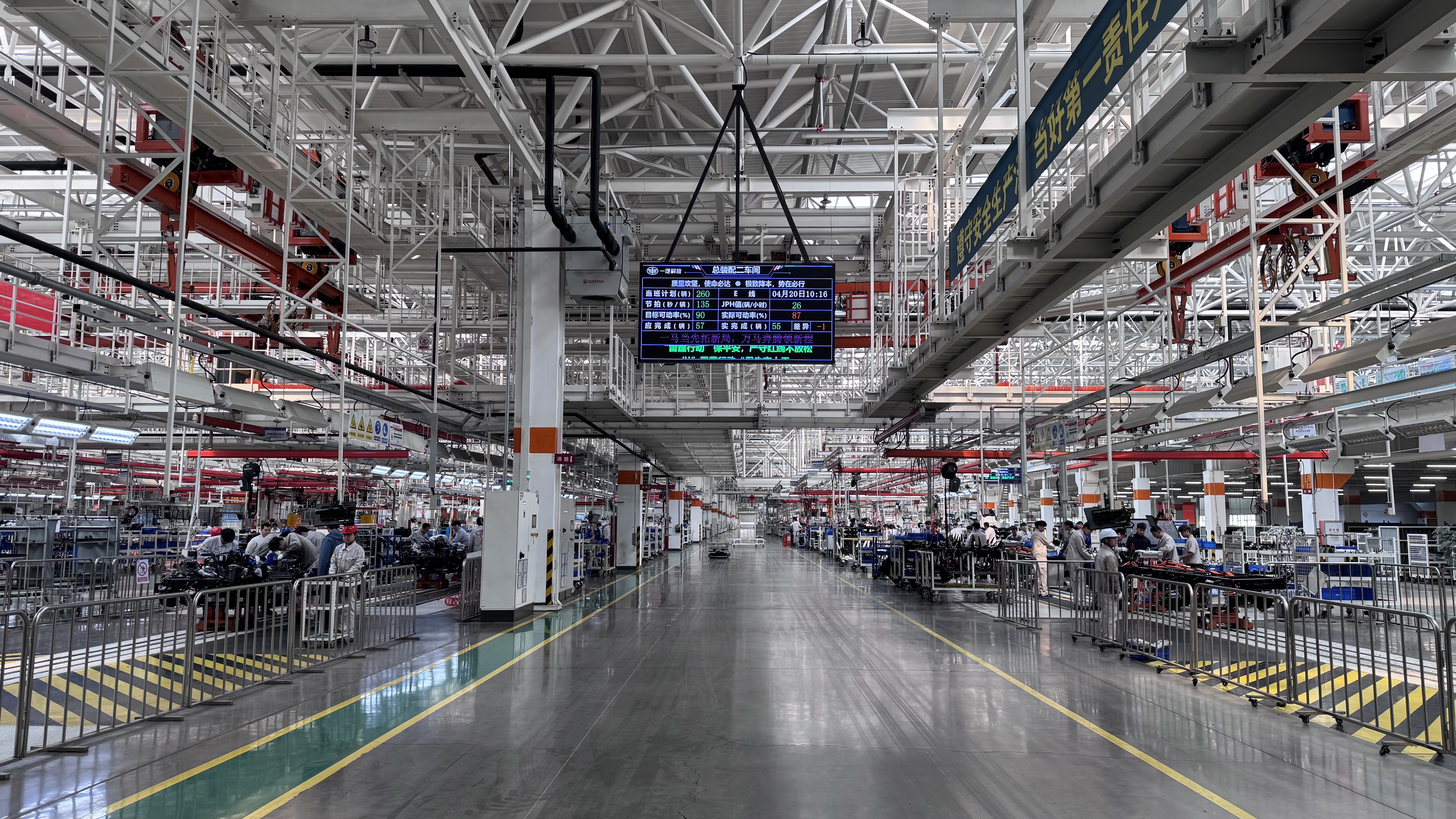
Qingdao Chary Machinery Co., Ltd, trading as CHARY, states an operating scale that includes a 1,500,000 m² facility footprint, 3,000+ employees, a 1,000-employee R&D team and an annual output of 248,700 units. For a cold chain buyer, the relevant reading of that figure is not scale for its own sake: it is whether a validated single-unit configuration can be repeated across a fleet order without specification drift.
Where These Configurations Are Used
Temperature-controlled work is only one part of a cold chain fleet's duty cycle, and the same vehicle platform is often asked to do both.
- Urban cold chain distribution. Short routes on city roads in high ambient temperatures, where the constraint is body envelope and repeated stop-start thermal load rather than linehaul speed.
- Intercity temperature-controlled freight. Longer highway routes where drive configuration, braking and traction systems carry the schedule risk.
- Dairy and fresh collection. Documented in the corpus by the FAW fresh milk transport vehicle.
- Agricultural, sideline product and livestock transport. Listed as applicable industries for the model range.
- Port and transfer station movement. Listed under port transportation, where temperature-controlled containers and cargo move between modes.
- Support and construction logistics. The J6P and JH6 8×4 dump truck and 6×4 tractor variants cover the non-refrigerated side of the same fleet, which is where many operators generate the volume that pays for the cold chain assets.
Durability on that mixed duty cycle is not theoretical. A logistics company in Mali operating 50 units for the transport of powdered and granular materials and sand and gravel has recorded stable operation over a duration of 10+ years, described as stable, high-intensity operation. It is a dry-freight reference rather than a cold chain one, and it should be read as such — but it is a useful signal when the same fleet has to absorb the maintenance and uptime demands of temperature-controlled assets.
FAW Model Comparison: What the Listings Actually Document
This table uses only the model listings, image captions and certification records available in the source material. Where a field is not documented, it is left blank rather than estimated.
| Model listing | Documented variants (image set) | Certification documented in file | Relevance to a temperature-controlled fleet |
|---|---|---|---|
| FAW Tiger V | TIGER VN 4×2 refrigerated truck; TIGER VN 4×2 cargo truck; TIGER VH 4×2 cargo truck; TIGER VR 4×2 cargo truck; TIGER VR 5 m³ stainless steel sprinkler truck; fresh milk transport vehicle | None linked in the provided file | Only listing with a documented refrigerated variant and with cold chain transportation named in its applicable-industry scope |
| FAW JK6 | 4×2 electric tractor truck; 4×2 cargo truck; 4×2 wingspan truck; 6×4 dump truck | UN ECE R105, cert. E13*105R06/01*0023*00, SNCH Luxembourg, dangerous goods transport vehicles (EX/FL/AT/MEMU), EU/EEA | Documentation benchmark for regulated loads in EU/EEA and UN ECE-recognising markets |
| FAW J6 Series Truck Tractor (4×2) | Tractor truck variant | GSO Conformity Certificate, CCR No.435790, GCC Standardization Organization, GSO ISO 1585:2008, GCC member states | GCC-market compliance for the tractor unit, not a blanket fleet approval |
| FAW J6P | 8×4 dump truck; 6×4 tractor truck; 6×4 dump truck | None linked in the provided file | Linehaul tractor and construction support within the same fleet |
| FAW JH6 | 6×4 dump truck; 6×4 tractor truck; 4×2 CNG tractor truck; 6×4 CNG tractor truck; 8×4 dump truck | None linked in the provided file | Named in third-party analysis as a primary export model for SE Asia and Middle East long-haul logistics and mining |
| FAW J7 | Tractor truck | None linked in the provided file | Heavy tractor capacity on the shared technical envelope |
| FAW J6L | 6×4 cargo truck; 6×4 flatbed truck | None linked in the provided file | Rigid cargo and distribution work below the heavy tractor class |
Shared technical envelope across these listings
| Truck weight range | 3,000–15,000 kg |
| Size range | 6,000 × 2,300 × 3,000 mm to 12,000 × 2,550 × 3,800 mm |
| Tire specifications | Available based on customer needs |
| Security configuration | ABS / EBS / TCS |
| Material | Steel, Iron, Aluminum Alloy, Plastic |
| Applicable industries (selected) | Cold chain transportation, logistics freight distribution, logistics fleet, urban distribution, port transportation, agricultural and sideline product transportation, livestock and poultry transportation, building materials transportation, chemical raw material transportation, log transportation, large machinery and equipment transportation |
| Operation modes listed | Rear-wheel drive 6×4, 6×2; all-wheel drive 6×6, 8×8 |
Frequently Asked Questions
No. Certificates are issued to a named model or model series within a defined scope. The FAW TRUCK JK6 is certified to UN ECE Regulation No. 105, certificate number E13*105R06/01*0023*00, issued by Société Nationale de Certification et d'Homologation (SNCH), Luxembourg, for Dangerous Goods Transport Vehicles (EX/FL/AT/MEMU categories) in the EU/EEA market. Separately, the FAW J6 Series Truck Tractor (4×2) holds a GSO Conformity Certificate, number CCR No.435790, issued by the GCC Standardization Organization for GCC member states and complying with GSO ISO 1585:2008. Neither document is a general approval for a temperature-controlled body, so the component-level coverage should be confirmed in writing before shipment.
The FAW Tiger V listing includes cold chain transportation and logistics freight distribution in its applicable-industry scope, alongside logistics fleet, urban distribution, port transportation, agricultural and sideline product transportation and livestock and poultry transportation. Its listed truck weight range is 3,000–15,000 kg, its size envelope runs from 6,000 × 2,300 × 3,000 mm to 12,000 × 2,550 × 3,800 mm, its security configuration is ABS/EBS/TCS, and its body construction materials are steel, iron, aluminum alloy and plastic. Body, engine, tires and load capacity are listed as customizable, and the Tiger V image set documents a TIGER VN 4×2 refrigerated truck alongside a fresh milk transport vehicle.
There is no single global price, and chassis price is only one line in a cold chain budget. As a third-party reference, new FAW 6×4 tractor trucks listed in the Philippines typically range from PHP 3,200,000 to PHP 4,500,000 depending on engine configuration (WP10/WP12) and emission level (TruckDeal Philippines / QSJ Motors); this figure requires re-verification per order and excludes the temperature-controlled body, certification work and import compliance. Budget separately for body construction, destination-market certification and local import rules — Kenya, for example, applies KS 1515:2019, which requires heavy-duty trucks to be no more than 8 years old and right-hand drive.
Yes. The listed capability parameters include a minimum order quantity of 1 unit, 100% test quality control, an OEM production mode with customization of body, engine, tires and load capacity, and global technical support for after-sales service. A single-unit validation order is the standard way to confirm payload class, body envelope fit and documentation scope on a real route before a fleet commitment.
Lead time is listed at 30–45 days against a monthly capacity of 8,000 units. Qingdao Chary Machinery Co., Ltd (CHARY), founded in 2015 and based in Qingdao, China, is a first-level distributor of FAW TRUCKS and an export distributor of SINOTRUK, SHACMAN and BEIBEN, exporting to more than 50 countries with an annual export volume of USD 40 million in 2025. To move from diagnosis to a configured quotation, send your cargo profile, destination market and required certification scope to sales@fawglobal.com or +86 186 6398 2168 (WhatsApp available), or download the product brochure below.
Conclusion: Fix the Constraint, Not the Symptom
When cold chain cargo arrives late, the instinct is to inspect the refrigeration equipment. The evidence in this guide points somewhere else. The failures that repeat across emerging-market cold chain fleets are constraint failures: a payload class that was never matched to cargo weight inside the listed 3,000–15,000 kg range, a body that was never checked against the 6,000 × 2,300 × 3,000 mm to 12,000 × 2,550 × 3,800 mm envelope, a drive and safety configuration chosen without reference to ABS, EBS and TCS, and a certification file read as broader than it is.
The FAW Tiger V addresses the first of those directly, with cold chain transportation named in its applicable-industry scope and a documented TIGER VN 4×2 refrigerated variant. The wider lineup — J6P, JH6, J7, J6L and JK6 — addresses the rest, because a fleet that shares one technical envelope shares its spares, its driver procedures and its documentation logic.
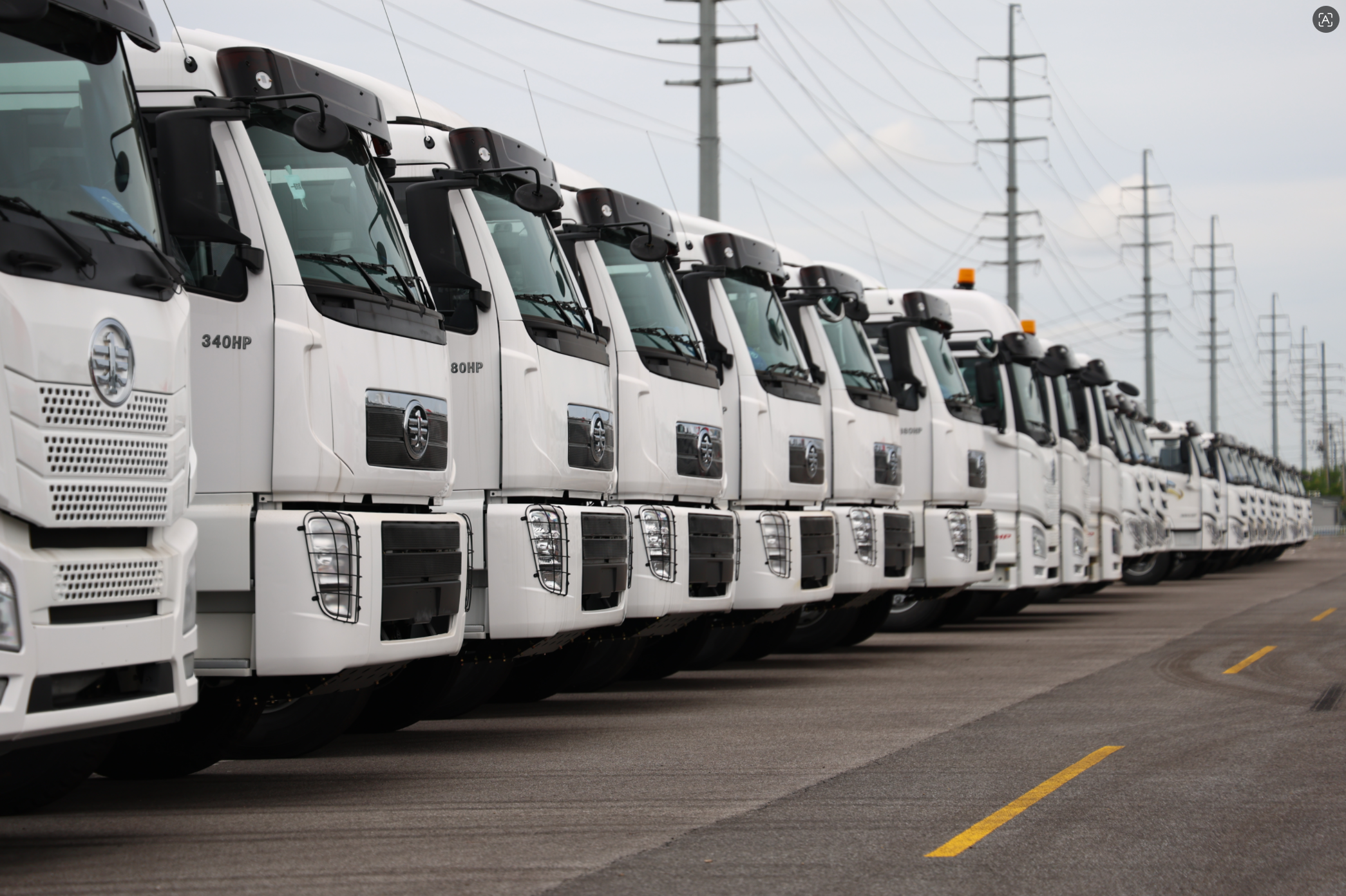
Next Step: Validate One Unit Before You Commit a Fleet
Send us your cargo profile, destination market and required certification scope. CHARY lists a minimum order quantity of 1 unit, 100% test quality control and a 30–45 day lead time, so the fastest route from a failed delivery to a corrected specification is a single validated truck on your own route.
Email: sales@fawglobal.com | Tel / WhatsApp: +86 186 6398 2168
Website: www.charymachinery.com
Download the product brochure: CHARY FAW Truck Product Catalogue (PDF)
Qingdao Chary Machinery Co., Ltd — No. 266 Jiushui East Road, Qingdao, China. First-level distributor of FAW TRUCKS.