
Which FAW Truck Fits Your Project? A 2026 Scenario Selection Roadmap
Which FAW Truck Fits Your Project? A 2026 Scenario Selection Roadmap
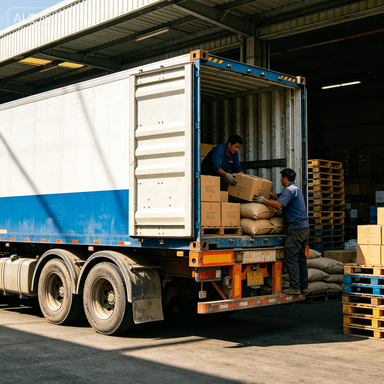
Project conditions should guide the FAW truck model and body configuration before one compares price lists.
Buyers often begin a fleet search by typing FAW Trucks into an engine, then looking for a model. But a better way is to describe the project first: what route, what load cycle, what road surface, what climate, what drivers, and what local compliance rules. A FAW tractor truck that performs well on a long motorway corridor is not necessarily the same specification a mine site or a wet-season construction route needs.
This article explains how to match FAW trucks to real scenarios. It focuses on the Research and Evaluation stage, where a buyer is moving from brand awareness to specific configuration decisions. The practical reference used here is the FAW export range available through Qingdao Chary Machinery Co., Ltd, known internationally as CHARY.
Why Project Matching Fails When Model Comes First
The most common procurement mistake is choosing a truck model before defining the mission. If the project is construction material haulage in a muddy site, the buyer should be looking at a dump truck with a layout suited to loading and dumping cycles. If the project is regional line-haul distribution, a rigid cargo truck may be the wrong vehicle class compared with a tractor and semi-trailer combination.
A mismatch creates costs that appear later: higher fuel use, lower payload efficiency, premature suspension damage, body abuse, or a vehicle that cannot be legally operated for its intended gross weight. The same FAW chassis family can perform very differently when fitted with different bodies, axle ratios and driving support packages.
Project procurement therefore requires a translation process. The buyer translates site and operating constraints into truck parameters. The exporter translates those parameters into a FAW chassis, body, tyres, axle configuration, cab layout and compliance package.
FAW Trucks in 2026: Market Context for Buyers
FAW Trucks is the commercial vehicle product line of FAW Jiefang, a major Chinese heavy-duty truck manufacturer. According to industry reporting covered in 2025, FAW Jiefang sold approximately 241,700 units in 2024 and maintained the leading position among Chinese heavy-duty truck manufacturers. The same reporting said FAW Jiefang overseas exports reached 64,000 units in 2024, a year-on-year increase of 42 percent.
That export base matters for project buyers because it is connected to global vehicle options, parts planning and regional service expectations. FAW Trucks provides emission-compliant configurations for emerging markets, including Euro II, Euro III and Euro V vehicles for Africa and Southeast Asia, depending on fuel quality and local rules.
For direct China-based sourcing, CHARY acts as a commercial vehicle export enterprise. Qingdao Chary Machinery Co., Ltd was established in 2015, is located in Qingdao, and describes itself as a first-level distributor of FAW Trucks. Its main export markets include Africa, the Middle East, Southeast Asia, Central Asia, Eastern Europe and Latin America, and its reported export volume reached 40 million US dollars in 2025.
Project-First Solution: Five Matching Layers
Scenario matching can be simplified into five layers. Each layer answers a focused question.
1. Mission Profile
Define what the truck must do every day. Key questions include: what material is carried, what is the density of the load, how many tonnes per trip, how many trips per day, what is the one-way distance, and who loads and unloads the vehicle. A FAW dump truck selected for sand and gravel may need a reinforced body and a different rear axle ratio than a FAW truck used for palletised cargo.
2. Body Type and Loading Interface
Once the mission is clear, choose the body family. FAW Trucks available through CHARY cover a wide body range, including tractor trucks, dump trucks, cargo or rigid trucks, concrete mixer trucks, garbage trucks, sprinkler trucks, water tank trucks, fuel tank trucks, wrecker trucks, sweeper trucks, concrete pump trucks, asphalt distributor trucks, high altitude platform trucks and fire trucks.
In normal commercial vehicle planning, tractor trucks suit long-haul semi-trailer work, dump trucks suit aggregate and site material transport, rigid cargo trucks suit general freight, and refrigerated trucks suit cold chain loads. Special bodies, such as concrete mixers and tankers, serve one project function and require more careful body engineering.
3. Driving Mode and Road Condition
Road condition determines whether a buyer needs a standard highway layout or a more robust configuration. CHARY FAW application notes mention operating conditions that include high temperatures, humidity, muddy terrain, rainy weather, snowy weather, highways and urban roads.
For complex sites, the product requirement includes stable operation under difficult roads. The supported options include 6x4 rear-wheel drive and all-wheel drive modes. In simple terms, 6x4 is a common balance for trucks that combine highway access with unpaved site entry, while all-wheel drive is generally used where traction conditions become severe.
4. Cab, Ergonomics and Driver Support
Driver environment also affects operating results. Export FAW configurations can be prepared with right-hand drive for markets that require it. Supporting seat options include a semi-floating mechanically damped seat, which matters on long unpaved routes where driver fatigue becomes a productivity issue.
Buyers should confirm cab orientation, seat specification, air conditioning, fuel tank capacity and whether the truck will be operated by local drivers with experience of that layout.
5. Regional Compliance and Fuels
Compliance should be checked before production, not after arrival. A truck that performs well in one country may not be registrable in another because of steering position, age limits, emissions, axle load, lighting or documentation rules.
FAW Trucks has already provided Euro II, Euro III and Euro V versions for Africa and Southeast Asia. This is an important point for buyers who must match the engine to local diesel quality. A high-emission standard engine running on poor fuel is not a practical solution. The correct route is to select the emission version that matches the available fuel and the local certificate requirements.
Regional Scenario Notes: Kenya, Nigeria, Africa and Beyond
Some regional project examples show how scenario matching actually works in practice.
Kenya applies KS 1515:2019 to heavy-duty trucks. The standard requires right-hand drive and vehicles that are not older than eight years. A buyer planning a Kenya-based logistics fleet therefore needs to confirm that the FAW truck is supplied as a right-hand-drive new vehicle, not a left-hand-drive unit that cannot be registered.
Nigeria has a different demand pattern. FAW Trucks has operated through local assembly partnerships such as Transit Support Services, focusing on 6x4 tractor units and 8x4 dump trucks for construction. This is a strong hint for construction buyers: the Nigeria market has built its FAW experience around construction-oriented vehicle configurations, especially 6x4 tractors for semi-trailer work and 8x4 dumps for heavy site loads.
For mining and long-haul projects in Southeast Asia and the Middle East, FAW export series most commonly associated with these duties are JH6 and J6P models. These two model families appear in export records for long-haul logistics and mining operations. Buyers in those regions should treat JH6 and J6P as an important part of the initial evaluation shortlist.
Step-by-Step Breakdown: From Project Data to FAW Truck Specification
The following six-step sequence is a practical way to organise a truck inquiry.
Step 1: Write the Project Profile
Record the operating region, typical route, weather and road condition, material type, load weight, loading method, unloading method, annual working days and expected vehicle life. This profile prevents the conversation from drifting toward a generic FAW truck price comparison before the specification is complete.
Step 2: Define the Load Cycle
Short distance with many loading cycles points to a dump truck. Long distance with high speed points to a tractor truck or heavy rigid truck. Cold chain points to a refrigerated body. Municipal duty points to a purpose-built body on a FAW cargo chassis.
Step 3: Select the Axle and Drive Arrangement
6x4 is common for construction dumps and tractor work where the road mix includes highway and site entry. 8x4 is often chosen when the project needs a heavier payload layout and the legal axle configuration allows it. All-wheel drive can be justified when site roads are exceptionally muddy or poorly maintained.
Step 4: Match Powertrain and Emission Level
Check whether the project requires Euro II, Euro III or Euro V compliance. Select the engine and fuel system only after checking local diesel quality. A FAW truck built for higher emission standards may require cleaner fuel than some regional sites can supply.
Step 5: Confirm Cab and Driving Side
Right-hand drive must be confirmed for Kenya and other RHD markets. The cab specification should also include seat damping, air conditioning, visibility and driver access. FAW application notes list semi-floating plus mechanically damped seats and right-hand drive support as important configuration items.
Step 6: Evaluate Supplier Execution, Not Just Quotation
The exporter must be able to coordinate the FAW chassis, the body builder, necessary certification paperwork, shipping and spare parts. CHARY provides OEM-style customisation for body, engine, tyres and load capacity, with a minimum order of one unit. The stated lead time for export orders is 30 to 45 days, and the quality control note is 100 percent test. After-sales support is described as global technical support for after-sales service.
Evidence From the Field: A Mali Logistics Operation
One recorded FAW case involves a logistics company in Mali operating 50 units. The application is the transport of powdered and granular materials, plus sand and gravel. The client has operated FAW vehicles for more than 10 years, and the operation is summarised as stable under high-intensity working conditions.
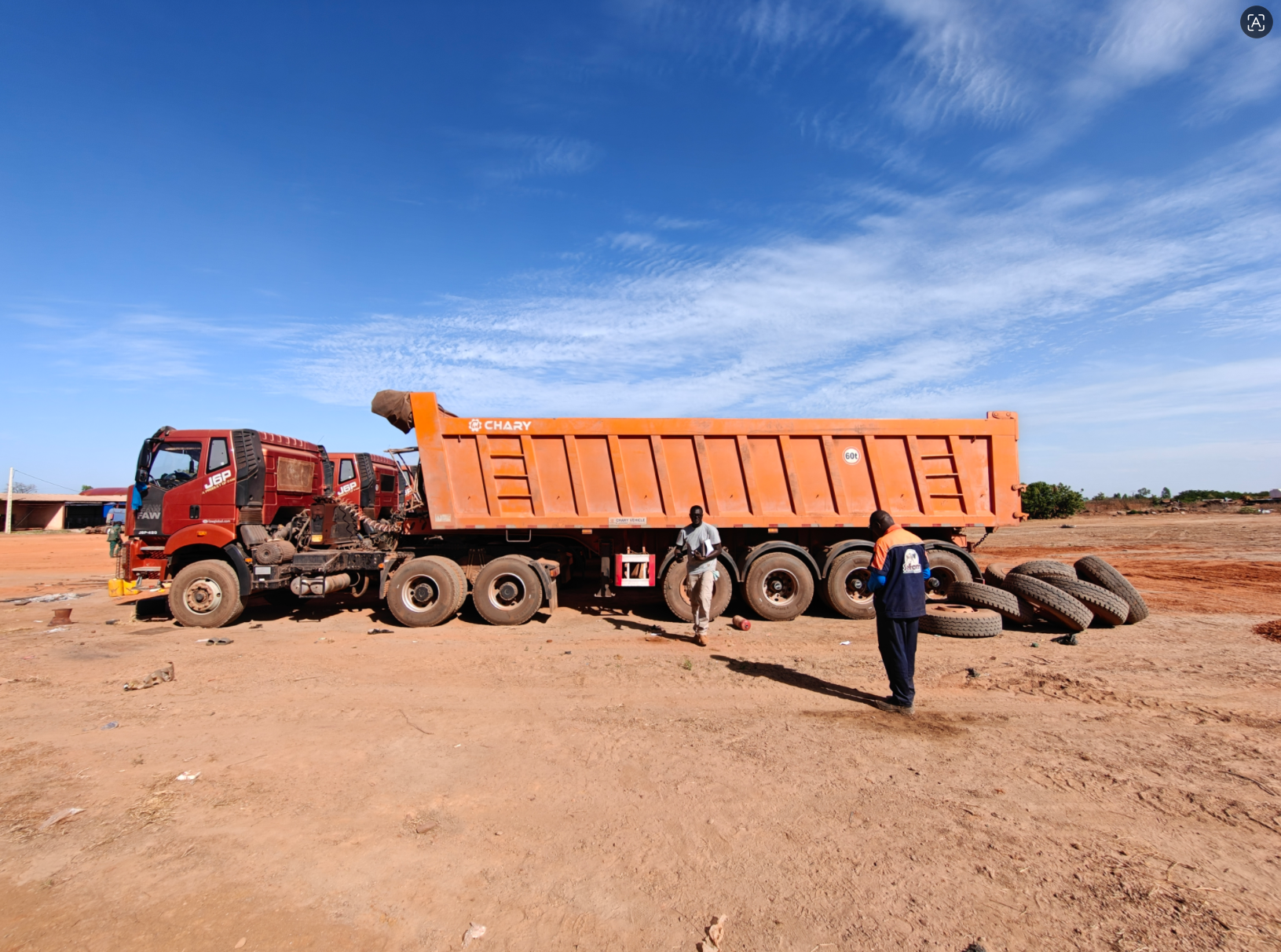
A long-running FAW truck operation in Mali shows that bulk material applications can be stable and high-intensity.
This case is relevant because powdered, granular and sand-gravel loads create punishing conditions for a truck body and suspension. The fact that 50 units were purchased and the operation has run beyond 10 years gives a project buyer a practical benchmark for FAW durability, although exact load details and route conditions should always be discussed in the inquiry.
FAW Project Decision Matrix
The table below compares common project scenarios and the vehicle layout questions that should be answered before ordering.
| Project Scenario | Vehicle Role | Drive and Body Checkpoints | FAW Export Evidence |
|---|---|---|---|
| Construction materials and site haulage | Dump truck or flatbed cargo | 6x4 or 8x4; body steel thickness; loading height; wheelbase | Nigeria FAW assembly focuses on 6x4 tractors and 8x4 dump trucks for construction |
| Mining and bulk commodity handling | Heavy dump truck for severe loading | 8x4 or all-wheel drive; reinforced body; road gradient; tyre duty | JH6 and J6P are FAW export models associated with mining operations in Southeast Asia and the Middle East |
| Long-haul logistics and container work | Tractor truck with semi-trailer | 6x4 tractor; engine power; sleeper cab; fifth-wheel height | JH6 and J6P are primary FAW export series for long-haul logistics in Southeast Asia and the Middle East |
| Cold chain and distribution | Refrigerated rigid truck | 4x2 medium truck; insulated body; temperature rating; door sealing | FAW Tiger VN 4X2 refrigerated truck appears in the CHARY FAW catalogue |
| Urban municipal and special-duty work | Purpose-built body on medium chassis | Body mounting points; PTO; vehicle approval; local inspection | CHARY FAW listings include sweeper, sprinkler, garbage, tank and wrecker body options |
Cost and Price Logic in a FAW Truck Inquiry
Buyers often expect a direct FAW truck price answer, but price in export trucking is configuration-led. Changing the body type, emission standard, tyre brand, cab standard, axle configuration or export documents can change the total cost. A cheap FAW truck in the catalogue may not be the same specification that meets a Kenya, Nigeria or Philippines project requirement.
For a useful price comparison, a buyer should compare identical specification packages: chassis model, body, gross vehicle mass, axle arrangement, engine standard, cab side, tyres and after-sales parts. Without that common basis, a lower price quote may simply mean a lower specification.
FAQ
Which FAW truck is normally selected for construction materials and site work?
For sand, gravel, crushed stone and similar site materials, a FAW dump truck is the common choice. CHARY FAW export listings include dump truck variants with 6x4 and 8x4 axle arrangements. The Nigeria market also shows FAW activity in construction with 6x4 tractors and 8x4 dump trucks through a local assembly partnership.
What is the difference between FAW 6x4 and 8x4 configurations?
The notation 6x4 and 8x4 describes wheels rather than axles. A 6x4 truck has six wheel positions and drives on four of them; this is common for tractor and dump work where a truck needs highway speed plus reasonable traction. An 8x4 truck has eight wheel positions, drives on four, and distributes its gross weight over more axles, which supports heavier payload layouts. 8x4 dumps are especially relevant for mine and bulk duty where legal axle loads allow it.
Can FAW trucks be delivered with right-hand drive for Kenya?
Yes, right-hand drive is available as a supporting configuration in FAW export packages. Kenya specifically requires right-hand drive under KS 1515:2019, and the vehicle must not be older than eight years. Any Kenya-bound FAW truck should be ordered as a new right-hand-drive unit with the compliance documentation confirmed before shipment.
Does FAW offer refrigerated trucks for cold-chain projects?
Yes. A refrigerated truck is part of the FAW body range, and the FAW Tiger VN 4X2 refrigerated truck is one available model in the CHARY catalogue. A cold-chain buyer should also specify insulation material, refrigeration unit capacity, internal airflow, door type, temperature data logging and planned maintenance access.
What FAW truck information should a buyer send when asking for a project quotation?
Send project location, road conditions, material type, payload per trip, number of trips, route distance, cab side, emission requirement and loading or unloading method. If the buyer does not know which model fits, the exporter can translate that project data into a FAW chassis and body recommendation. The key is to avoid treating the model name as the starting point.
Conclusion
FAW Trucks can serve many types of projects, but the most reliable procurement route is scenario-driven. Define the route, the load cycle, the road condition, the climate, the driver position and the local compliance standard. Only then choose whether a FAW tractor truck, FAW dump truck, FAW cargo truck or FAW refrigerated truck is the right solution.
Buyers working with CHARY have access to a FAW export range that includes J7, J6P, J6V, J6E, JH6, J6G, J6L, JK6 and Tiger V model series, with body types covering the majority of construction, mining, logistics and municipal applications. Since CHARY is a first-level FAW distributor in Qingdao, China, it can coordinate chassis selection, customisation, export testing and shipping in a single commercial process.
Ready to shortlist a FAW truck for your project?
Email sales@fawglobal.com or contact the CHARY export team directly. The company brochure is available for download and contains the FAW product range, body options and export service description.