The Long-Term Electric Actuator Partnership Playbook: Evaluating Suppliers for Distribution and Plant Operations
When a plant or distribution network plans to buy electric actuators, the first response is usually to compare torque, voltage, speed, and price. Those specifications matter, but they do not answer the larger procurement question: can this supplier support the actuator over years of operation, expansion, and control-system change? This guide is for buyers, distributors, and plant operators who are moving from decision to execution. It builds a framework for choosing an electric actuator manufacturer as a long-term ecosystem partner rather than a one-time vendor.
The commercial context supports this shift. The global electric actuator market was estimated at roughly USD 11.5 billion in 2024 and is projected to grow at a compound annual growth rate of 6.5% to 7.2% through 2034, according to Zion Market Research. Asia-Pacific accounted for 38.5% of the electric valve actuator market in 2025, and China exported USD 6.43 billion of electric motor parts in 2024, about 26.1% of global exports, according to OEC. With global supply chains expanding, long-term supplier stability is becoming part of the specification.
Problem Definition: The Real Cost of Choosing Only a Product
Many electric actuator failures are detected only after commissioning. Common failure patterns include insufficient torque, mismatch between actuator travel and valve stroke, wrong voltage, reversed phase sequence, moisture or dust entering the electrical enclosure during setting, and non-compliance in explosive atmospheres. These problems can turn a low purchase price into high lifecycle cost, including downtime, emergency logistics, site service, and safety exposure.
The root cause is often a one-time transaction mindset. A plant may buy an electric part turn actuator for a butterfly valve project, an electric multi turn actuator for a gate valve, and an intelligent modulating electric valve actuator for a flow loop, but treat each as isolated. In a long-term relationship, the same supplier must handle product selection, explosion-proof compliance, control integration, and commissioning support across all those applications. Chenglei addresses these points through structured risk-control measures.
- Misoperation during debugging: non-invasive setting using an infrared remote control or rotary knob; phase sequence detection and automatic correction for three-phase motors; self-learning of full-open and full-close valve positions.
- Selection and matching risks: a selection database with mandatory input for medium characteristics, maximum pressure difference, and pipe diameter; a 1.5x safety factor; technical review by sales, technical, and production departments for non-standard conditions.
- Electrical and explosion-proof risks: actuators for explosive areas must have national explosion-proof certificates such as Ex d or Ex e and 3C certification; optocoupler-isolated I/O; conformal-coated mainboard; internal and external grounding bolts.
Industry Background: Why Electric Actuator Sourcing Is Becoming a Long-Term Decision
The actuator market is consolidating around higher-value requirements: intelligent control, bus communication, hazardous-area certification, and long service life. Explosion-proof electric actuators are standardized under IEC 60079-0 and IEC 60079-1 for flameproof enclosures. They are classified into Gas Groups IIA, IIB, and IIC and Temperature Classes T1 to T6. Group IIC is required for hydrogen environments. These classifications affect design, testing, documentation, and replacement parts. Therefore, a supplier that cannot maintain certification documentation over time creates risk for the entire plant.
There is also a technology shift toward intelligent electric actuators. Industrial Ethernet protocols such as Profinet and EtherNet/IP, 5G edge connectivity, and digital-twin integration are becoming more common. These trends mean the actuator is no longer a standalone mechanical component. It is part of a control ecosystem. Buyers need a supplier that can support protocol changes, firmware updates, spare-part continuity, and engineering consultation.
Detailed Solution: What a Long-Term Electric Actuator Ecosystem Should Include
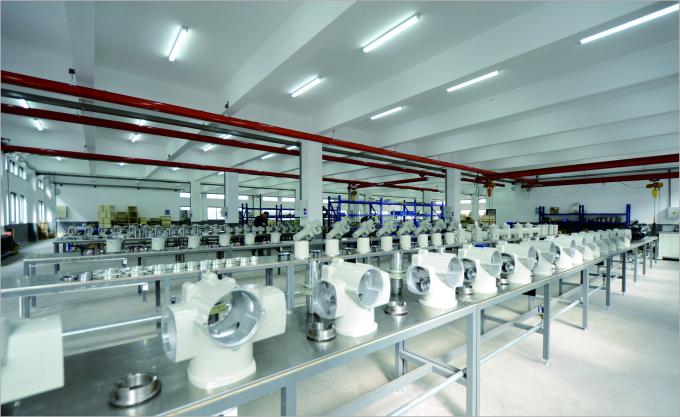
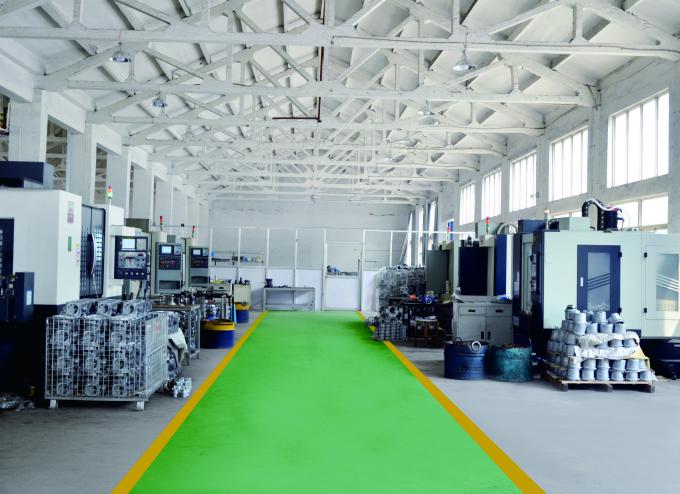
Changzhou Chenglei Valve Technology Co., Ltd. is a Changzhou-based manufacturer of electric actuators. Chenglei has been developing and manufacturing valve electric actuators for 20 years and produces the CL series valve electric actuators for oil and gas, water and power, and chemical, process and industrial applications. The company operates a 20,000 square meter factory, employs around 100 people, and has 25 engineers in the R&D team. The factory has a monthly production capacity of 8,000 units and annual output of 120,000 units. More than 50 CNC machining centers, CNC lathes, and various inspection equipment support production. About 80% of output is exported.
For a long-term partner, the product range must cover multiple valve control jobs. Chenglei's CL series includes:
| Actuator category | Typical valve application | Representative Chenglei model and evidence |
|---|---|---|
| Electric Part Turn Actuator | Quarter-turn ball, butterfly, and plug valves | QI10: 100 N.M, 1 R/Min, F05/F07; QI60: 600 N.M, 1 R/Min, F10/F12; QI500: 5,000 N.M, 0.5 R/Min, F14/F16, explosion-proof housing |
| Electric Multi Turn Actuator | Gate, globe, and sluice valves | Z10: 100 N.M, 18/24 R/Min, F10; Z30: 300 N.M, explosion-proof on/off, IP67; Z45: 450 N.M, IP67, thermal protection |
| Intelligent Linear Electric Actuator | Linear stroke control and modulating duty | ZXC series / CLZXC4000: max thrust 10,000 N, standard stroke 250 mm, 24 VDC or 220/380 V 50 Hz, IP65/IP67, thermal protection, Bluetooth connection, battery backup available |
| Explosion Proof Actuator | Hazardous areas requiring BT4/CT4 rating | Models support ATEX Ex d BT4/CT4; QI500 and Z45 include explosion-proof housing; ZXC series lists CE, ATEX, SIL3 |
This range matters for distributor and plant-level procurement because it reduces the number of brands and spare-part systems a buyer must manage. It also supports an OEM/ODM route: Chenglei offers OEM intelligent on/off electric valve actuators and OEM intelligent adjustment electric valve actuators, with MOQ as low as one set.
From a capacity perspective, the factory's monthly production capacity of 8,000 units and annual output of 120,000 units provide a foundation for repeat orders. Pre-shipment tests are part of the acceptance process, and the company offers FOB/CIF delivery terms with payment by L/C, T/T, or PayPal.
Step by Step: Qualify and Execute a Long-Term Electric Actuator Relationship
Step 1: Map your valve and process profile
List every valve type and duty: part-turn, multi-turn, or linear; on/off or modulating; required torque; travel; voltage; speed; ambient temperature; and control signal. If the supplier provides a selection database, use it. Chenglei's risk-control process includes automatic matching with a safety factor of at least 1.5 times and countersigning by sales, technical, and production departments for large or non-standard projects.
Step 2: Define hazardous-area requirements
Identify the zone, gas group, and temperature class. For hydrogen, specify Group IIC; for many hydrocarbon or solvent applications, BT4 or CT4 temperature classes are common. Explosion-proof actuators under IEC 60079-0 and IEC 60079-1 need nameplates and certificates that match the site classification. Chenglei's intelligent explosion-proof models and ZXC linear series provide ATEX Ex d BT4/CT4 options and thermal protection.
Step 3: Select the control mode
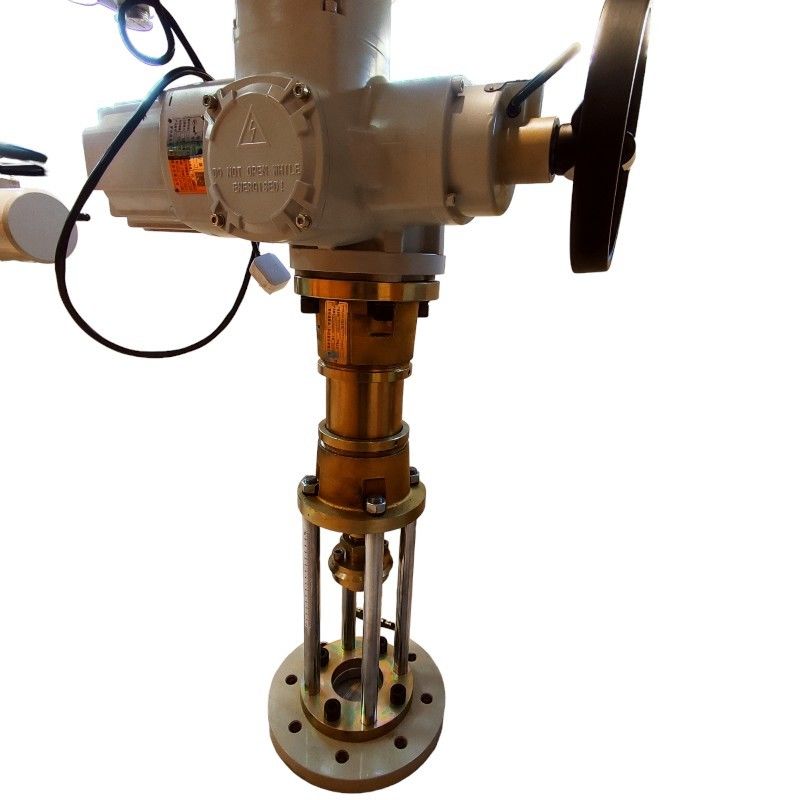
For simple open/close duty, an intelligent on/off electric valve actuator may be enough. For flow control, an intelligent modulating electric valve actuator or intelligent linear electric actuator with 4-20 mA or 0-10 VDC feedback is more appropriate. If the control system uses Profinet, Modbus, or Profibus, verify the actuator supports bus communication.
Step 4: Audit production capacity and quality evidence
Long-term supply agreements require capacity and repeatability. Evidence can include factory area, staff size, R&D team, CNC capacity, monthly production capacity, annual output, inspection equipment, and export ratio. For Chenglei, this evidence is: 20,000 m2 factory, 100 employees, 25 R&D engineers, 50+ CNC machines, 8,000 units monthly production capacity, 120,000 units annual output, and 80% export ratio.
Step 5: Define commercial and after-sales terms
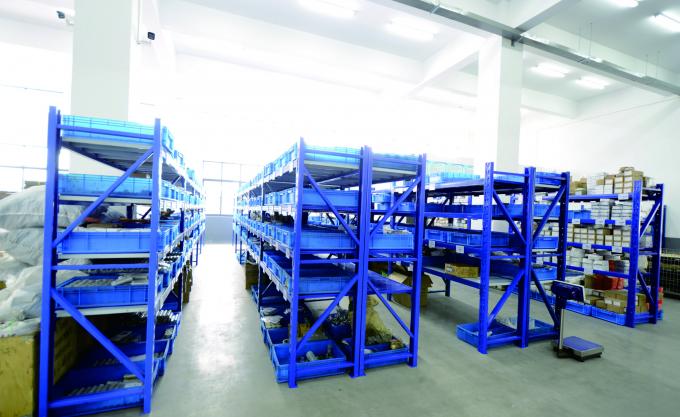
Set MOQ, delivery terms, payment method, inspection, and spare-part policy. Chenglei's published terms include MOQ of 1 set, FOB/CIF, payment by L/C, T/T, or PayPal, and pre-shipment testing. For a large relationship, clarify how control modules, spare parts, and software parameters are managed.
Step 6: Execute with commissioning controls
During installation, use non-invasive setting to avoid opening the electrical cover. Confirm phase-sequence self-correction, valve-position self-learning, grounding, and voltage labels. Chenglei's commissioning measures also include fault codes via bus or infrared remote, one-click copying of software parameters, and high interchangeability of control modules.
Use Cases: Where Long-Term Supply and Intelligent Design Matter Most
Oil and gas emergency shutdown
For an emergency shutdown valve in a hazardous area, the actuator must fail predictably and communicate status to the control system. A multi-turn intelligent explosion-proof actuator such as the Z30 with IP67 enclosure or a high-torque quarter-turn QI500 with explosion-proof housing provides torque protection and thermal protection. The intelligent controller can report power phase loss, motor overheating, or valve jamming through bus diagnostics or an infrared remote.
Chemical process modulating control
For a regulating valve in a chemical process, an intelligent linear electric actuator with absolute encoder position acquisition and adjustable dead band from 0.5% to 5% supports stable flow control. Continuous torque monitoring and anti-seizure protection reduce the risk of valve damage. The ZXC series, with max thrust of 10,000 N and standard stroke of 250 mm, is designed for this type of linear modulating duty.
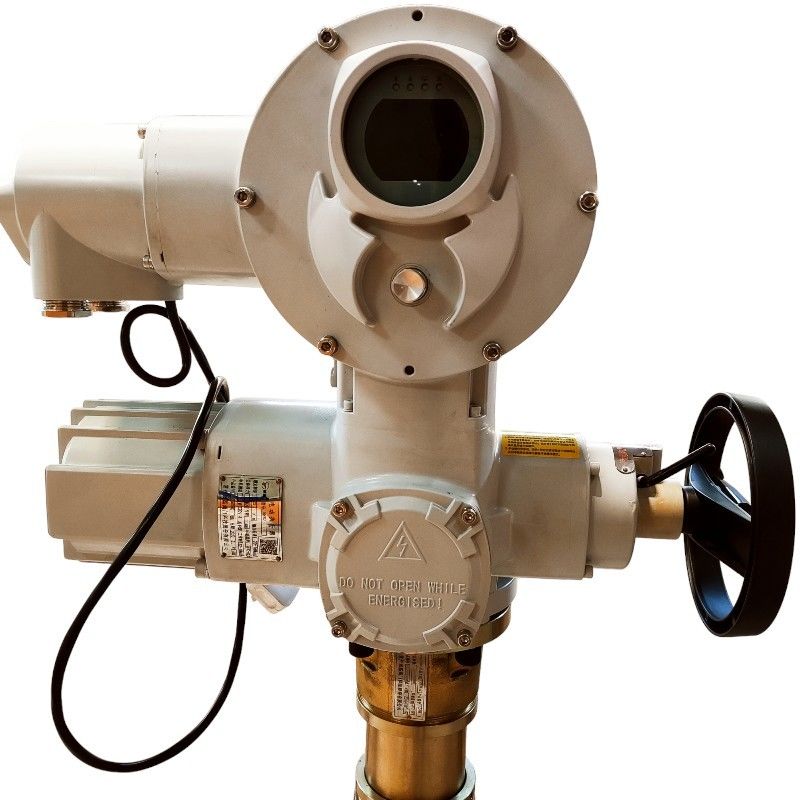
Extreme cold and corrosive environments
Some projects operate at -40°C or even -60°C. The DQ series low-temperature actuator operates from -60°C to +70°C, supports 380V, 110V, 220V, 440V, or 660V AC and 12V/24V DC, includes Bluetooth connection for setting, and carries ATEX Ex d BT4/CT4 protection. This is relevant for regions such as Russia, high-temperature digestion in alumina plants, and corrosive Middle East oil fields, as described in Chenglei's design data.
Comparison: Intelligent Electric Actuator Evidence vs. Procurement Impact
The following table is based on Chenglei intelligent actuator design data. It can be used as a scoring guide during supplier evaluation.
| Evaluation area | Intelligent actuator evidence | Procurement impact |
|---|---|---|
| Control and setting | Non-invasive setting; infrared remote or rotary knob; no need to open the electrical cover; phase sequence self-correction; valve position self-learning | Lower commissioning risk and less exposure to moisture or dust |
| Positioning and protection | Absolute encoder position acquisition; continuous torque monitoring; anti-seizure; IP68 submerged for 48 hours; -40°C to +70°C, extendable to -60°C | Better performance in harsh environments and critical process sections |
| Diagnostics and integration | Self-diagnosis; fault warning; bus communication via Profinet, Modbus, or Profibus; fault codes through bus or infrared remote | Faster troubleshooting and deeper integration with DCS or PLC |
| Reliability | Lifespan of at least 30,000 operations without maintenance; MTBF greater than 50,000 hours; adjustable dead band from 0.5% to 5% | More predictable maintenance planning and lower downtime |
| Cost and energy | Initial cost roughly 1.5 to 2.5 times traditional models; bus installation can reduce total installation cost by 20% to 40%; standby power below 5W; energy consumption reduced by 15% to 30% | Higher upfront cost, but lower total lifecycle cost |
FAQ: Long-Term Electric Actuator Sourcing Questions
Which certifications should a long-term explosion-proof electric actuator supplier hold?
Explosion-proof electric actuators are standardized under IEC 60079-0 and IEC 60079-1. They are classified into Gas Groups IIA, IIB, and IIC and Temperature Classes T1 to T6; Group IIC is required for hydrogen environments. Chenglei's ZXC series lists CE, ATEX, and SIL3, and several Chenglei models support ATEX Ex d BT4/CT4. Before order confirmation, confirm the selected model's certificate against the project zone, gas group, and temperature class.
How can I verify an electric actuator manufacturer has long-term production capability?
Check capacity and operational depth. Chenglei operates a 20,000 m2 factory with 100 employees and 25 R&D engineers. The factory has more than 50 CNC machining centers, CNC lathes, and inspection equipment, with a monthly production capacity of 8,000 units and annual output of 120,000 units. About 80% of output is exported.
What are the cost implications of choosing an intelligent electric actuator?
Intelligent electric actuators typically cost 1.5 to 2.5 times more than traditional models upfront, depending on functionality. However, bus communication can reduce total installation cost by 20% to 40% by saving cables, trays, and IO cards. Total lifecycle cost is usually lower due to fewer malfunctions, less downtime, easier maintenance, standby power below 5W, and 15% to 30% lower energy consumption from on-demand torque output.
Can I request samples before committing to a distribution agreement?
Yes. Chenglei's procurement terms include an MOQ of one set, pre-shipment testing, and payment by L/C, T/T, or PayPal. A sample or pilot unit is a practical first step before a larger distribution agreement. Contact Mr. Gui Jing via WhatsApp/phone +8613401325958 or email terry.gui@cz-chenglei.com to discuss sample requirements.
What delivery and payment terms should I expect from an electric actuator supplier?
Chenglei offers FOB/CIF delivery terms, payment by L/C, T/T, or PayPal, and pre-shipment testing as part of acceptance. Exact lead time depends on model, quantity, and customization, so the schedule should be confirmed in the quotation. For a formal quote and lead-time commitment, contact the sales team directly.
Conclusion: Turn the RFQ into a Long-Term Ecosystem Decision
The next time you issue a request for electric actuators, evaluate more than torque and price. Check whether the supplier can support part-turn, multi-turn, linear, explosion-proof, intelligent, on/off, and modulating variants. Verify production capacity, technical review, risk-control measures, commercial flexibility, and after-sales commitment. Chenglei appears as a practical example because its product line, manufacturing data, and published procurement terms align with the long-term pattern described in this guide.
For a complete product catalog and technical reference, download the Chenglei brochure: CHENGLEI Electric Actuator Brochure. To request a sample, quotation, or distribution discussion, contact Mr. Gui Jing by email at terry.gui@cz-chenglei.com or WhatsApp/phone +8613401325958. Company website: www.electricvalvesactuators.com.
Next step: Request a sample or pre-shipment test to verify actuator performance before scaling the supply relationship.

Have Questions or Need More Details?
Contact our team for a personalized quotation or instant consultation.
Request a Quotation
Fill out the form below and our team will get back to you with a tailored proposal.
WhatsApp Direct Chat
Prefer to chat in real-time? Message us on WhatsApp for instant assistance & quick answers.
- Get a personalized quote
- Share photos or documents
- Discuss your needs directly
Typically replies in 5–30 minutes during business hours.