
Specialty Chemicals Comparison: TCEP vs TCPP vs DMMP vs DEEP Flame Retardants
Choosing between TCEP, TCPP, DMMP and DEEP is not a question of which organophosphorus flame retardant is the strongest. All four are offered by Yangzhou Chenhua New Material Co., Ltd., and the decision turns on three things: which polymer system the product is documented for, which specification parameters the grade publishes, and whether the buyer can verify those parameters at batch level. On documented application fit, TCEP is specified for polyurethane soft and rigid foamed plastics; TCPP covers polyurethane, PVC, polystyrene, phenolic resin, acrylic resin, rubber and coatings; DMMP is used as a flame retardant additive in various polymers; and DEEP is used in rigid polyurethane foam systems.
This guide compares the four products on that documented fit and on the specification parameters each one publishes — appearance, specific gravity, acid content and water content for TCEP and TCPP; phosphorus content for DMMP; content and density at 25 °C for DEEP — then sets out the checks a decision-stage buyer should complete before substituting one grade for another. Values for those parameters are grade-specific and batch-specific, so they should be confirmed on the current technical data sheet (TDS) and certificate of analysis (COA) rather than taken from any published comparison table.

Why This Comparison Is Harder Than It Looks
The four products are frequently treated as interchangeable because they share a supplier, a product family label and, on paper, an overlapping phrase: “flame retardant for polyurethane.” That overlap is real but shallow. Polyurethane appears in the documented fit of TCEP, of TCPP and, through rigid polyurethane foam systems, of DEEP as well. A buyer who selects on that single shared word can end up specifying a grade that was documented for a different foam type or a different processing route.
The second difficulty is structural: the four products do not publish the same set of specification parameters. TCEP and TCPP are described through appearance, specific gravity, acid content and water content — a physical-and-purity set. DMMP is described through phosphorus content, an active-element measure. DEEP is described through content and density at 25 °C. Because the parameter sets differ, a single column of numbers cannot produce a like-for-like ranking. What can be compared honestly are the application fit, the parameter set each grade is controlled against, and the verification steps available to the buyer.
The third difficulty is commercial. Quotations often carry a product name and a price but not a grade designation or a specification revision. Two offers for “TCPP” from different supply chains may be controlled against different acid-content or water-content limits, which is why the COA matters more than the name on the quote.
Industry Background: Where These Four Sit
Organophosphorus flame retardants are a class of phosphorus-based flame retardants used as additives in polymer systems. Within that class, TCEP, TCPP, DMMP and DEEP are established product types rather than experimental grades, which is why buyers usually compare them on fit and consistency rather than on availability.
Chenhua's company profile states that the company integrates scientific research, pilot-scale testing, production and sales, and that it operates as a production base in China for Alkyl Polyglucoside, Polyether Amine, Polyether Polyol, Silicone Surfactant, Organophosphorus Flame Retardants, Emulsifier and Silicone Rubber. The same profile records a total annual production capacity of 168,000 Mt across those product lines and states that its production scale for Alkyl Polyglucoside and Organophosphorus Flame Retardants ranks among the top in China. For a buyer, that framing matters less as a market claim and more as a supply-continuity signal: the flame retardant range sits inside a multi-line specialty chemicals operation rather than a single-product plant.
The practical consequence is that a decision-stage buyer comparing TCEP, TCPP, DMMP and DEEP is usually comparing them inside one supplier relationship. That changes the questions worth asking — from “who sells it” to “which grade, controlled against which limits, documented by which certificate.”
The Four Products and Where Each Fits
TCEP: Polyurethane Soft and Rigid Foamed Plastics
TCEP is documented for use in polyurethane soft and rigid foamed plastics. In a selection process, that makes it the first candidate to check when the program is a polyurethane foam program and the formulation route involves foaming. Its published specification set covers appearance, specific gravity, acid content and water content, which means the buyer can screen a batch on four independent attributes rather than on a single assay figure.
The distinction worth holding onto is that TCEP's documented fit spans both soft and rigid foamed polyurethane, while DEEP's documented fit is narrower — rigid polyurethane foam systems only. For a rigid foam program, both appear on the candidate list; for a flexible foam program, only TCEP of the two is documented.
TCPP: The Broadest Documented Fit
TCPP has the widest documented application range of the four: polyurethane, PVC, polystyrene, phenolic resin, acrylic resin, rubber and coatings. Where a plant runs several polymer lines and wants to reduce the number of flame retardant grades held in stock, TCPP is the grade whose documented fit covers the most of those lines.
Its specification set matches TCEP's — appearance, specific gravity, acid content and water content — but matching parameter names do not mean matching values. The two products are separate grades with their own specification limits, and a buyer moving a formulation from one to the other should re-read both data sheets rather than assume the numbers transfer.
DMMP: A Flame Retardant Additive Across Polymers
DMMP is documented as a flame retardant additive in various polymers. Its position in this comparison is different from the other three: the published parameter that characterizes it is phosphorus content, an active-element measure rather than a physical property set. For a formulator, that is the number that describes how much flame-retardant element a given mass of additive carries, which is the natural basis for comparing additive options when the loading is being worked out on a phosphorus basis.
“Various polymers” is deliberately broad, and it should be read as a statement of additive role rather than a guarantee of fit in any specific system. The system-specific work — compatibility, processing temperature, effect on mechanical properties — belongs to the formulator's own trials.
DEEP: Rigid Polyurethane Foam Systems
DEEP is documented for use in rigid polyurethane foam systems. Of the four, it has the narrowest stated application scope, and that narrowness is useful in a decision process: it removes DEEP from consideration for flexible foam, PVC, rubber and coating applications where TCPP is documented and DEEP is not.
Its published parameters are content and density at 25 °C. The temperature attached to the density value is part of the specification, not a detail — density changes with temperature, so a density figure quoted without its measurement temperature cannot be compared with another supplier's figure. Content, meanwhile, is the assay-type value that tells the buyer how much of the active substance the product carries.
Side-by-Side Comparison
The table below compares only what is documented for each product. It does not rank the four, and it does not imply that one outperforms another in a shared application — no comparative performance data is asserted here.
| Selection question | TCEP | TCPP | DMMP | DEEP |
|---|---|---|---|---|
| Documented application fit | Polyurethane soft and rigid foamed plastics | Polyurethane, PVC, polystyrene, phenolic resin, acrylic resin, rubber, coatings | Flame retardant additive in various polymers | Rigid polyurethane foam systems |
| Published specification parameters | Appearance, specific gravity, acid content, water content | Appearance, specific gravity, acid content, water content | Phosphorus content | Content, density at 25 °C |
| Parameter type | Physical properties plus purity indicators | Physical properties plus purity indicators | Active-element measure | Assay plus temperature-defined physical property |
| Typical first check in a selection | Whether the program is a polyurethane foam program | How many polymer lines the grade must cover | Whether the additive is being compared on a phosphorus basis | Whether the system is rigid polyurethane foam |
| What must be confirmed before use | Current TDS values and batch COA | Current TDS values and batch COA | Current TDS value and batch COA | Current TDS values and batch COA |
Reading the Specification Parameters
Understanding what each parameter is used for makes the four data sheets easier to compare, even though the parameter sets differ.
- Appearance (TCEP, TCPP). A visual descriptor that serves as the first screening check on receipt and as an indicator of whether the batch matches the grade the formulation was developed against.
- Specific gravity (TCEP, TCPP). The mass-to-volume relationship of the product. It matters whenever a formulation is dosed by volume but costed by weight, because the two bases do not convert identically across products.
- Acid content (TCEP, TCPP). A purity-type indicator reported as a specification limit. Buyers use it as a batch-consistency check, particularly where the polymer system contains components sensitive to acidic species.
- Water content (TCEP, TCPP). A moisture indicator. Moisture control is a routine concern in polyurethane work because water reacts with isocyanate, so a stated water-content limit is part of what makes a batch predictable rather than a formality.
- Phosphorus content (DMMP). The share of phosphorus the product carries. It is the parameter that lets a formulator compare additive options on the element that does the flame-retardant work, before any loading decision is made in trials.
- Content and density at 25 °C (DEEP). Content describes how much active substance the product contains; density at 25 °C is a physical property bound to a stated measurement temperature, and it is only comparable with another value measured under the same condition.
Step-by-Step Selection Process
The following sequence keeps the decision anchored to documented fit rather than to habit or to whichever grade happens to be in stock.
- Define the polymer system first. Polyurethane foam, PVC, polystyrene, phenolic resin, acrylic resin, rubber and coatings do not share the same compatibility profile. Write the system down before opening any data sheet.
- Separate foam from non-foam. If the system is polyurethane foam, split it again into soft and rigid. TCEP is documented for both; DEEP is documented for rigid only; TCPP is documented for polyurethane without that split.
- Match the grade to the documented fit. A grade whose documented application list does not include the target system should leave the shortlist at this stage, regardless of price.
- Compare the parameter sets, not just the numbers. TCEP and TCPP are controlled against appearance, specific gravity, acid content and water content; DMMP against phosphorus content; DEEP against content and density at 25 °C. Decide which of those parameters your specification actually needs to control.
- Request the current TDS and a batch COA. Check that the document revision is current and that the COA values sit inside the TDS limits. Where a value is quoted without its measurement condition — density without a temperature, for example — ask for the condition.
- Run a laboratory trial before committing volume. Compatibility, processing behaviour and the effect on the finished article are system-specific and are established by the formulator's own testing, not by a comparison table.
- Qualify batch consistency, not just the first batch. Ask how successive batches are controlled against the same specification, and keep COAs on file so that a drift in acid content or water content can be traced to a delivery.
Use Cases by Polymer System
The documented application lists translate into fairly distinct buying situations.
- Flexible polyurethane foam. TCEP is the grade among the four documented for polyurethane soft foamed plastics; DEEP is documented for rigid systems and TCPP for polyurethane generally.
- Rigid polyurethane foam. TCEP and DEEP are both documented here, and TCPP is documented for polyurethane without a foam-type restriction — so a rigid foam program has three candidates on paper and must separate them on specification and trial data.
- PVC, polystyrene, phenolic resin, acrylic resin, rubber and coatings. TCPP is the product documented across this group; the other three are not documented for these systems in the supplied material.
- Multi-polymer plants. A site running several of the above lines can, on documented fit alone, concentrate on TCPP and hold TCEP or DEEP only for the polyurethane foam lines that need them.
- Formulations compared on a phosphorus basis. DMMP's published phosphorus content makes it the natural reference point when additive options are being weighed on active-element basis rather than on physical properties.
Limitations and Boundaries of This Comparison
Three boundaries should be stated plainly, because a decision-stage buyer will otherwise read more into the comparison than it contains.
Documented fit is not measured performance. The application lists in this article state where each product is used, not how well it performs relative to the others. No comparative flame-retardant efficiency, loading level or finished-article result is asserted, and none should be inferred from the ordering of the products above.
Specification parameters are not specification values. Appearance, specific gravity, acid content, water content, phosphorus content, content and density at 25 °C describe what each product is controlled against. The values themselves are grade-specific and appear on the TDS and COA. A comparison built on remembered or third-hand numbers is not a comparison.
Regulatory status is out of scope here. This guide does not assess the regulatory position of any of the four products in any market. Buyers should confirm the applicable requirements for their destination market and application directly with the supplier and with their own compliance function before qualifying a grade.
Supplier-Side Comparison Inputs: The Chenhua Position
Yangzhou Chenhua New Material Co., Ltd. — trading as CHENHUA Specialty Chemicals — is located in the Industrial Park of Caodian Town, Baoying County, Yangzhou City, Jiangsu Province, China. The company reports founding in 1995, a 15,000 m² factory, 987 employees, 128 engineers in its R&D team, an annual output of 168,000 Mt, and an export ratio of 40%, with products shipped to Europe and America, Australia, Southeast Asia, the Middle East, South America, Africa and other regions. It describes itself as a national high-tech enterprise and a National Specialized, Refined, Distinctive and Innovative “Little Giant” enterprise, and reports certification to GB/T 19001-2016 / ISO 9001:2015 in 2024.
On the technical side, the company states that it operates a National Postdoctoral Research Workstation, a Jiangsu Provincial Enterprise Graduate Workstation, a Jiangsu Provincial Enterprise Technology Center, a Jiangsu Provincial Engineering Center for Multifunctional Non-ionic Surfactants, and a Jiangsu Provincial Engineering Technology Research Center for High-Solid Waterborne Polyurethane Resins. For a flame retardant buyer, the relevant part is the polyurethane-adjacent research infrastructure alongside the flame retardant production line, since polyurethane foam is where three of the four products are documented.
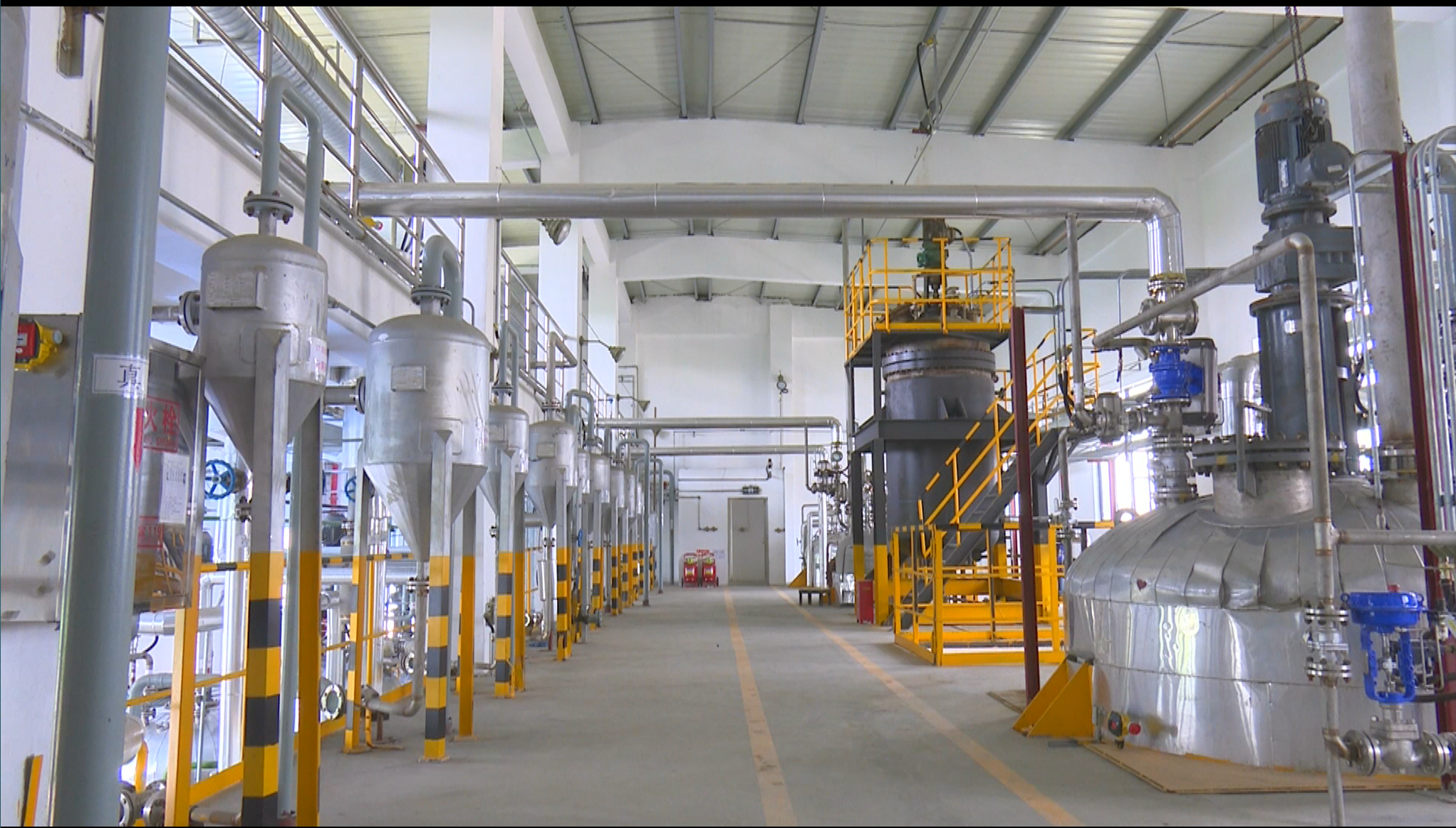
Chenhua's published comparison material states its differentiating basis as the integration of research, pilot-scale testing, manufacturing and sales, together with a series-based portfolio of surfactants, flame retardants and organosilicon products. The same material states 35% higher product specification diversity, a 30% shorter custom formulation lead time, approximately 12% lower separate procurement cost through one-stop sourcing, and an on-time delivery rate of at least 96%. These are company-published figures. They are useful as a statement of how the supplier positions its range, and they should be validated against a specific program — grade availability, documentation and delivery terms — rather than treated as independently measured results.
For buyers who want the full range context, the company portfolio spans Alkyl Polyglucoside, Polyether Amine, DETDA, DMTDA, Polyethers, Flame Retardants, Silicone Oils, Silicone Rubber Compounds and Silicone Sealants. That breadth is relevant to a flame retardant decision mainly in one respect: where a formulation also needs a surfactant, a polyol or a silicone component, sourcing the flame retardant and the adjacent raw materials through the same technical channel reduces the number of specification conversations a buyer has to run in parallel.

The company's official website is Yangzhou Chenhua New Material Co., Ltd., where current product documentation is published.
Frequently Asked Questions
Which of the four products should be checked first for a rigid polyurethane foam system?
DEEP is documented specifically for rigid polyurethane foam systems, and TCEP is documented for polyurethane soft and rigid foamed plastics, so both belong on the shortlist for a rigid foam program. TCPP is documented for polyurethane without a foam-type restriction. Because three of the four are documented for polyurethane in some form, the separating work is done on specification parameters and trial data rather than on the application list alone.
What is the practical difference between TCEP and TCPP?
The clearest documented difference is application breadth. TCEP is specified for polyurethane soft and rigid foamed plastics. TCPP is specified for polyurethane, PVC, polystyrene, phenolic resin, acrylic resin, rubber and coatings, making it the broader of the two. Both publish the same specification parameter set — appearance, specific gravity, acid content and water content — but they are separate grades with their own limits, so values should be read from each product's own data sheet rather than carried across.
When is DMMP the more relevant choice than TCPP?
DMMP and TCPP are characterized differently. DMMP is documented as a flame retardant additive in various polymers and is described through phosphorus content; TCPP is described through appearance, specific gravity, acid content and water content and is documented across a defined set of polymer systems. DMMP becomes the more relevant reference when the formulation decision is being made on a phosphorus basis rather than on physical-property controls. Compatibility and loading remain system-specific and are settled by the formulator's own trials.
Which specification values should appear on the certificate of analysis?
The COA should report the parameters that the grade's technical data sheet controls. For TCEP and TCPP that means appearance, specific gravity, acid content and water content; for DMMP it means phosphorus content; for DEEP it means content and density at 25 °C. Buyers should also check that the COA values fall inside the current TDS limits and that the density figure carries its stated measurement temperature, since a density value without that condition cannot be compared with another source.
Does Chenhua supply specialty chemicals beyond flame retardants?
Yes. The company's stated portfolio covers Alkyl Polyglucoside, Polyether Amine, DETDA, DMTDA, Polyethers, Flame Retardants, Silicone Oils, Silicone Rubber Compounds and Silicone Sealants. The company also states integrated research, pilot-scale testing, manufacturing and sales capabilities and ten-thousand-ton-scale production capacity for surfactants, flame retardants and organosilicon products, with a total stated annual capacity of 168,000 Mt across its product lines.
What is the reasonable next step before placing a volume order?
Request the current TDS and a batch COA for the specific grade under consideration, confirm that the documented application fit matches your polymer system, and run a laboratory trial before committing volume. Buyers who want to review the wider product range first can download the CHENHUA product brochure (PDF), and can then request a sample or a quotation for the exact grade — TCEP, TCPP, DMMP or DEEP — together with its specification revision, so that the offer and the technical document refer to the same product.
Conclusion
The decision between TCEP, TCPP, DMMP and DEEP resolves fastest when the polymer system is fixed first. TCEP fits polyurethane soft and rigid foamed plastics; TCPP covers the widest documented range, from polyurethane through PVC, polystyrene, phenolic resin, acrylic resin, rubber and coatings; DMMP serves as a flame retardant additive across various polymers and is characterized by phosphorus content; DEEP is documented for rigid polyurethane foam systems and is characterized by content and density at 25 °C. From there, the buyer's work is documentary: read the current TDS, match the COA to it, confirm any measurement condition attached to a value, and test before committing volume.
Next step for a decision-stage buyer: confirm the grade against your polymer system, then request the current technical data sheet, a batch certificate of analysis and a sample for laboratory evaluation. The full company and product range is available in the CHENHUA brochure.
Have Questions or Need More Details?
Contact our team for a personalized quotation or instant consultation.
Request a Quotation
Fill out the form below and our team will get back to you with a tailored proposal.
WhatsApp Direct Chat
Prefer to chat in real-time? Message us on WhatsApp for instant assistance & quick answers.
- Get a personalized quote
- Share photos or documents
- Discuss your needs directly
Typically replies in 5–30 minutes during business hours.