
Chain-Only Replacement vs. Chain & Sprocket Kit: A Buyer's Comparison Guide
Chain-Only Replacement vs. Chain & Sprocket Kit: A Buyer's Comparison Guide
Quick answer: Replace only the chain when the sprockets are still within acceptable wear and the chain has reached its wear limit. Choose a chain and sprocket kit when the sprocket teeth are hooked, severely worn, or when the chain has exceeded its elongation limit. The reason is mechanical: the chain and sprocket are a meshing pair and wear together. A new chain running on worn sprockets can experience abnormal meshing and concentrated impact load, which can quickly elongate the new chain and may damage sprocket teeth.
This guide uses CHJC Motorcycle Chains, the motorcycle chain brand of Jiangxi Hengjiu Chain Transmission Co., Ltd., as a supplier example because the company manufactures motorcycle chains and matching sprockets. The comparison is written for importers, distributors, workshops, aftermarket buyers and procurement teams who need to decide whether a chain-only order or a chain and sprocket kit is the more appropriate purchase.
What the choice actually involves
A motorcycle drive chain transmits engine power and torque to the rear wheel. It absorbs transient impact load, buffers vibration during frequent start-stop and shifting, and maintains consistent driving force. The chain is assembled from inner plates, outer plates, pins, bushings and rollers. The rollers roll along the sprocket teeth to reduce friction and achieve efficient power transmission.
Because the chain and sprocket work as a pair, wear is not isolated to one part. A chain can elongate while the sprockets remain serviceable, or sprocket teeth can wear into hooked profiles before the chain reaches its limit. The buying decision therefore depends on inspection evidence, not on a default rule. Chain-only replacement is a narrower intervention. A chain and sprocket kit resets the full meshing pair when both sides show wear or when the buyer wants to avoid mixing new and worn components.
Why the chain and sprocket wear together
Worn sprocket teeth form hooked profiles. If a new chain is fitted to worn sprockets, the chain and sprocket do not mesh correctly. The load is concentrated on fewer contact points, and the new chain can suffer rapid elongation while the sprocket teeth may break. This is why set replacement is recommended when the sprockets are already worn. The same principle explains why a chain-only purchase should be preceded by a sprocket inspection rather than a price comparison alone.
For buyers, the practical question is not whether a kit is always better. It is whether the existing sprockets can support a new chain without causing early failure. If the answer is yes, chain-only replacement may be reasonable. If the answer is no, a kit is the lower-risk technical choice.
Industry context: why this decision matters
Motorcycle chains serve commuter motorcycles, naked bikes, sport bikes, off-road motorcycles, ATVs and the aftermarket modification market. Common drive-chain sizes include 415, 420, 428, 520, 525 and 530. Product families can include standard roller chains, heavy-duty H series, O-Ring sealed chains, X-Ring sealed chains and solid bush chains, with matching sprockets available for kit assembly.
One commercial research estimate cited in the supplied verified data places the global motorcycle chain market at USD 2.89 billion in 2024, with a projected 7.2% CAGR from 2025 to 2035. These figures are commercial estimates, not chain-kit-specific accounting, and definitions vary across publishers. They are useful as directional industry context, not as a substitute for supplier quotations or buyer demand data.
Technical standards also matter in supplier screening. ISO 10190:2008 is identified as a motorcycle-chain standard covering characteristics and test methods. Its current status should be verified before it is used in a compliance claim. ISO 606:2015 covers short-pitch precision roller and bush chains and associated sprockets, but motorcycle chains themselves are covered by ISO 10190. Buyers should separate general transmission-chain references from motorcycle-specific requirements when reviewing supplier documents.
Option A: chain-only replacement
Chain-only replacement means the buyer keeps the existing sprockets and installs a new chain. It is appropriate when the chain shows wear, elongation, stiff links, cracked O-rings, heavy corrosion or other signs that it has reached the replacement point, while the sprocket teeth remain within acceptable condition.
When chain-only is reasonable
- The chain has reached its wear limit, but the sprockets have not developed hooked or severely worn teeth.
- The buyer has inspected both parts and can document that the sprocket profile is still serviceable.
- The motorcycle is used in a controlled maintenance program where chain tension, lubrication and wear are checked regularly.
- The existing sprocket specification matches the replacement chain pitch and model.
Where chain-only goes wrong
The main risk is fitting a new chain to worn sprockets. The old sprocket teeth can create abnormal meshing and uneven stress, which may quickly wear the new chain. In that situation, the buyer may face a second replacement sooner than expected. Chain-only replacement is therefore not a universal cost-saving choice; it is a condition-based choice that depends on sprocket inspection.
Option B: chain and sprocket kit
A chain and sprocket kit replaces the chain together with matching sprockets. The purpose is to restore the full meshing pair rather than combining a new chain with worn sprocket teeth. For buyers, the kit is a technical decision as much as a purchasing decision: the chain pitch, link count, sprocket compatibility and intended application must all be confirmed.
When a kit is the better decision
- The sprocket teeth are hooked, severely worn or no longer provide a reliable meshing profile.
- The chain has exceeded its limit elongation and the sprockets show related wear.
- The buyer wants to reset the drive assembly as a matched set for a known service interval.
- The vehicle is used in high-load, dusty, muddy, off-road or frequent start-stop conditions where uneven wear is more likely.
- The buyer needs a documented chain-and-sprocket combination rather than a mixed replacement.
What ‘matched’ should mean in a kit
A matched kit should not be treated as a box of unrelated parts. The chain pitch must match the sprocket tooth pitch. The chain model and link count must suit the motorcycle or ATV application. The sprocket fitment and ratio should be confirmed against the intended use. For motorcycle chains, the pitch is the centre-to-centre distance between two adjacent pins and is a key specification for chain and sprocket matching.
Engine displacement can be used as a preliminary guide: 415 for up to about 70cc; 420 for 70–125cc; 428 for 125–250cc; 520 for 250–600cc; 525 for 400–900cc; and 530 for 600–1400cc. This is only a starting point. The chain must be compatible with the matched sprockets, and buyers should not change chain size based on displacement alone.
Side-by-side comparison
| Decision factor | Chain-only replacement | Chain and sprocket kit |
|---|---|---|
| What is replaced | Chain only; existing sprockets are retained. | Chain plus matching sprocket or sprocket set. |
| Best condition | Sprockets remain within acceptable wear; chain has reached its replacement point. | Sprockets are hooked or severely worn; chain has exceeded its elongation limit. |
| Main technical risk | Worn sprocket teeth can cause abnormal meshing and rapid wear of the new chain. | Requires accurate chain, sprocket and fitment matching; unnecessary if sprockets are still good. |
| Inspection evidence | Chain elongation, stiff links, cracked O-rings, corrosion and sprocket tooth condition. | Same checks, plus sprocket profile, ratio and chain-sprocket compatibility. |
| Procurement scope | Narrower part scope; simpler order quantity for one replacement item. | Broader part scope; requires correct kit configuration and mixed-SKU planning when needed. |
| Maintenance implication | Continue monitoring sprocket wear; a later kit replacement may still be needed. | Resets the meshing pair; maintenance should continue with correct tension and lubrication. |
Step-by-step buying and inspection workflow
1. Measure chain wear before deciding
Use a chain wear gauge to check elongation. Inspect for rust, cracked O-rings, bent links, stuck links and heavy corrosion. If the chain has exceeded the limit elongation, replace it. If the chain is still within limit but the sprockets are worn, the decision shifts toward a kit.
2. Inspect the sprocket teeth
Look at the tooth shape, not only the tooth count. Hooked, asymmetrical or heavily reduced teeth indicate that the sprocket should be replaced. When the sprocket is severely worn, the chain and sprocket should be replaced as a set. This is the clearest condition for choosing a kit over chain-only replacement.
3. Confirm chain size, pitch and fitment
Confirm the chain model, pitch, link count and sprocket compatibility. Use displacement only as a preliminary guide. The final check should be against the actual motorcycle or ATV configuration, sprocket specification and intended application. For ATV use, CHJC lists 530 chain compatibility with Explorer 300, Explorer 400, MUD 400, Ranger 450 and other compatible models; buyers should still verify the final fitment against their unit.
4. Select the sealing type for the application
Sealed O-Ring chains are preferred for harsh outdoor conditions and lower-maintenance use because the O-ring retains grease and blocks mud and water from the pin-bushing friction area. Non-sealed chains can suit racing or frequent-maintenance users who prioritize low resistance and accept more frequent cleaning and oiling. X-Ring chains are also offered, but the buyer should compare documented specifications, fitment and sample performance rather than assume one seal type is universally superior.
5. Decide the purchase scope and verify supplier evidence
If the sprockets are serviceable, a chain-only order may be sufficient. If the sprockets are worn, request a chain and sprocket kit quotation. Before ordering, ask for technical drawings or specification sheets for standard models, certification documents, sample availability, packaging options, MOQ and lead time. These checks are more useful than a headline price because they determine whether the part will fit and whether the supplier can support repeat orders.
6. Plan installation and maintenance
Install the chain with the correct routing and master link, then adjust slack evenly. A common target is 20–30 mm deflection, checked at the tightest chain point. Clean and lubricate the chain regularly, inspect elongation and link condition, and replace the chain when it is worn out. Correct tension and lubrication help protect both the chain and the sprockets.
Use cases: matching the decision to the riding environment
Commuter and delivery motorcycles
A commuter motorcycle may reach chain wear before the sprockets are badly worn. In that case, chain-only replacement can be reasonable after a proper sprocket inspection. However, frequent start-stop use and high mileage can accelerate both parts. If the sprocket teeth show wear, a kit avoids mixing a new chain with a worn meshing profile.
Off-road and ATV use
Off-road motorcycles and ATVs operate in sand, mud, steep slopes, dust and water. A sealed O-Ring chain is designed to retain grease and resist abrasive particle intrusion in these conditions. Because off-road use can wear both chain and sprocket, a kit is often the more coherent choice when the sprockets are already worn. The 530 chain is used in several ATV applications, and the correct link count and model compatibility must be confirmed before ordering.
Distributor and aftermarket programs
Distributors and aftermarket buyers need a clear SKU logic. Chain-only orders are narrower and easier to forecast for a single replacement item. Chain and sprocket kits require accurate fitment data, mixed-SKU planning and clear labeling. A supplier that can provide technical drawings, neutral packing, OEM/ODM packaging and mixed-container loading can reduce the operational burden of maintaining both formats.
Supplier evidence: how CHJC Motorcycle Chains fits the comparison
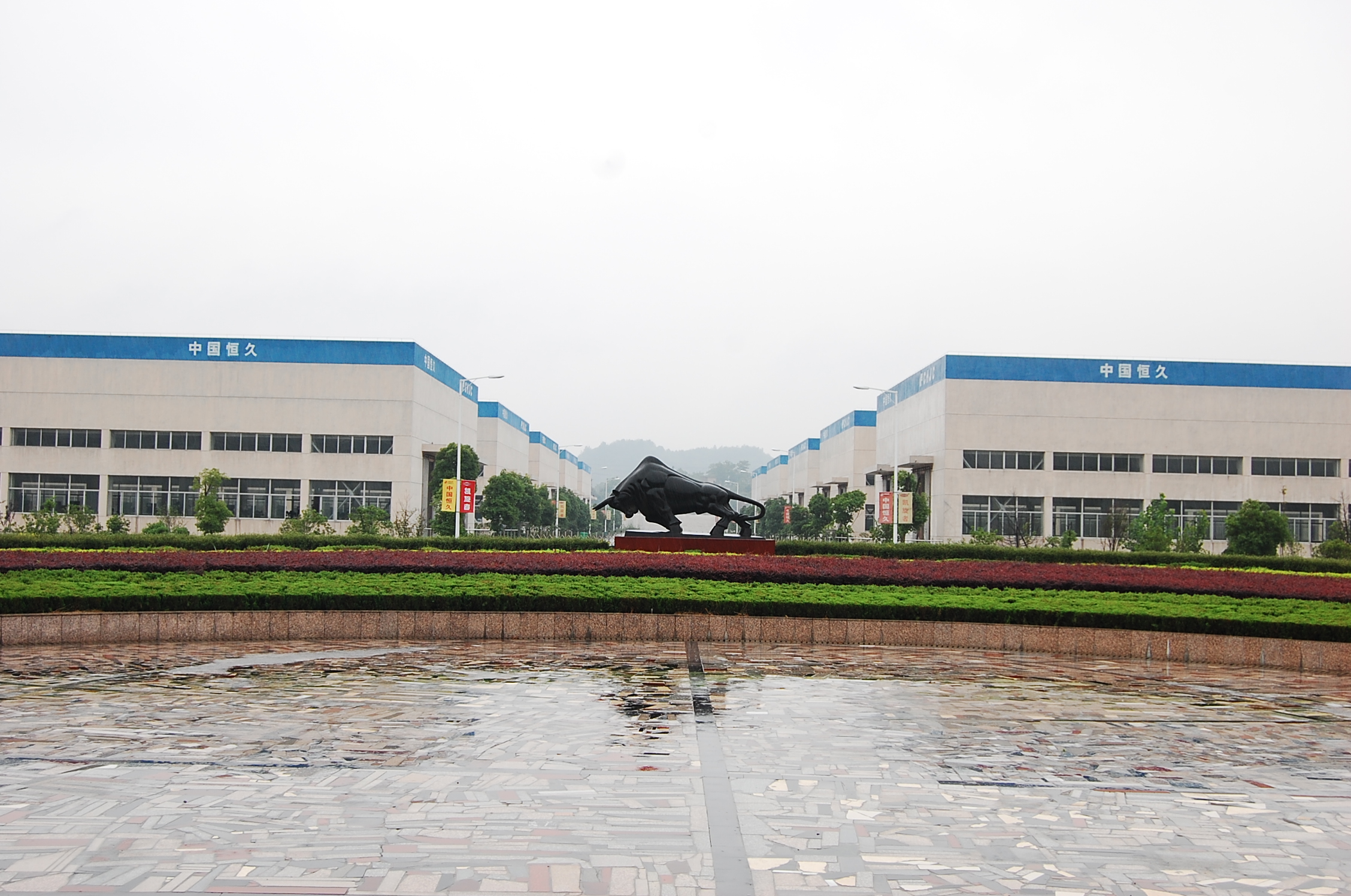
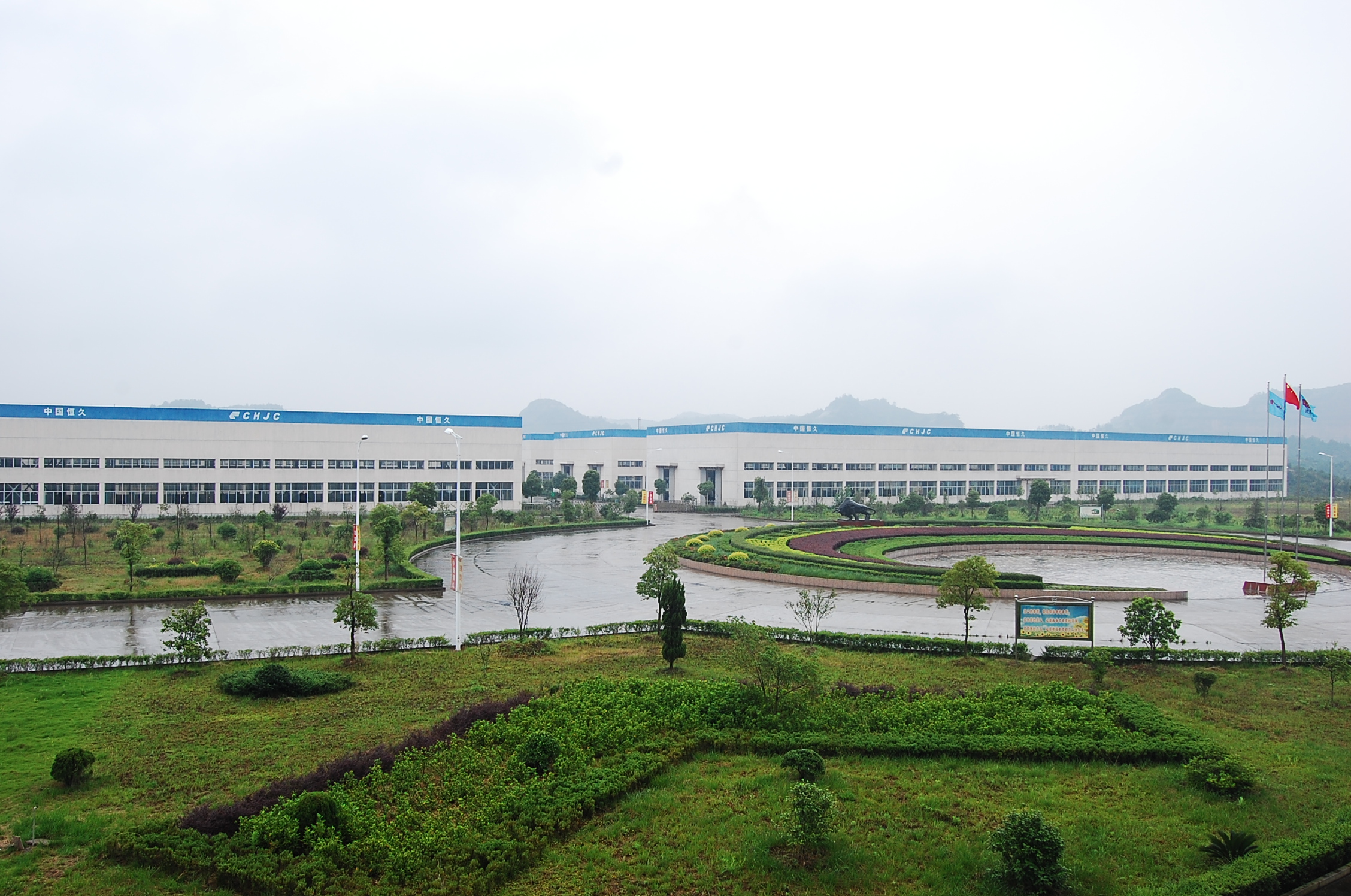
CHJC Motorcycle Chains is the motorcycle chain brand of Jiangxi Hengjiu Chain Transmission Co., Ltd., a manufacturer founded in 2006 and based in Shangrao, Jiangxi, China. The parent Hengjiu Group has manufactured chains since 1953 and operates nine R&D and production bases across Zhejiang, Anhui, Jiangxi and Jiangsu. The Jiangxi subsidiary reports a 13,000㎡ factory, 106 employees, a 10-technician R&D team and an 80% export ratio.
The product scope covers motorcycle roller chains in sizes 415, 420, 428, 520, 525 and 530, plus standard roller chains, heavy-duty H series, O-Ring sealed chains, X-Ring sealed chains and solid bush chains. Matching sprockets and motorcycle chain sprocket kits are also available. Applications listed by the company include commuter motorcycles, naked bikes, sport bikes, off-road motorcycles, ATVs and the aftermarket modification market.
Manufacturing and quality controls
The company reports multiple production lines and a monthly production capacity of over 800,000 meters, supported by a CNAS-accredited laboratory. Quality control includes 100% inspection of components and finished chains, automatic optical inspection, in-process sampling and final manual recheck. Chain parts are carburized, quenched and tempered to achieve hardness and wear resistance.
Material specifications listed by the company include 45Mn alloy steel for inner and outer plates; 20CrMnMo, 20CrNiMo or 30CrMnTi for pins; 20Mn, 20CrMnMo or 20CrNiMo for bushes; and 10#, 20#, 35# or 20CrMnMo for rollers. Sprockets use AISI 1045, SAE 1045, 40Cr or 20CrMnTi. The company holds ISO9001 and Brazil INMETRO certification and can supply CNAS test reports.
Commercial support and export experience
CHJC reports an 80% export ratio and long-term cooperation with customers in Central and South America, Southeast Asia, Africa and the Middle East. Its listed markets include Mexico, Brazil, Vietnam, Indonesia, Colombia, Peru, India, Bangladesh, Egypt, Malaysia, Kazakhstan, the Philippines, Pakistan, Nigeria, Russia, Tanzania, Ghana, Argentina, Venezuela, Ecuador, Thailand and Turkey, among others. These are company-provided commercial statements, not independently audited market-share data.
For buyers, the relevant support points are technical guidance on chain-sprocket ratio matching, installation, tension adjustment and lubrication, plus troubleshooting for noise and skipping teeth. Technical drawings and specification sheets can be provided for standard models. OEM and ODM services are available, including neutral packing without the company logo and custom color boxes or packaging produced to the buyer’s artwork. Mixed container loading is accepted for different standard sizes of chains and sprockets.
Commercial terms include flexible MOQ for standard models, higher MOQ for customized specifications, samples for quality and performance verification, and a normal lead time of 30–45 working days after deposit for mass production. Stock models can ship more quickly. Payment methods include TT, letter of credit and OA, with FOB as the usual price term and CIF, CFR or other terms available on request. Quotations are normally valid for 30 days and quantity discounts are available for larger orders.
Limitations and what this comparison does not prove
This comparison does not prove that one purchase format is always cheaper or always more durable. It also does not establish a universal replacement interval for every motorcycle. The correct choice depends on chain elongation, sprocket tooth condition, riding environment, maintenance practice and the specific chain and sprocket specifications.
The article also does not assert performance specifications for motorcycle timing chains or electric-motorcycle chains. Those applications require their own verification. For drive chains and chain-sprocket kits, buyers should use current supplier drawings, test reports and samples rather than assume that a general chain reference applies to every motorcycle model.
FAQ
What certifications and test reports can support a chain or kit purchase?
CHJC holds ISO9001 quality management certification and Brazil INMETRO certification, and can supply CNAS test reports. The company states that tensile strength and fatigue test data can be provided with inspection reports. Buyers should verify that the certificate and report match the exact product family and destination market, and should confirm the current status of any external standard before using it as a compliance claim.
When should I replace only the chain?
Replace only the chain when the chain has reached its wear limit or shows stiff links, cracked O-rings, heavy corrosion or other replacement signs, while the sprocket teeth remain within acceptable wear. The sprockets must be inspected first. If the sprocket teeth are hooked or severely worn, chain-only replacement is not the lower-risk choice.
When is a chain and sprocket kit the better choice?
A chain and sprocket kit is the better choice when the sprockets are worn, the chain has exceeded its limit elongation, or the buyer wants to reset the full meshing pair. Off-road, ATV, high-load and dusty applications may justify a kit when both parts show wear. The kit must still be matched to the correct chain pitch, link count and sprocket fitment.
Can I install a new chain on worn sprockets?
It is not recommended when the sprockets are worn. Worn sprocket teeth can form hooked profiles that cause abnormal meshing and concentrated impact load. A new chain on worn sprockets can elongate quickly, and the sprocket teeth may break. If the sprockets are severely worn, replace the chain and sprocket as a set.
What chain size fits my motorcycle?
Use engine displacement only as a preliminary guide: 415 for up to about 70cc, 420 for 70–125cc, 428 for 125–250cc, 520 for 250–600cc, 525 for 400–900cc and 530 for 600–1400cc. The final selection must match the sprockets and the actual motorcycle configuration. Do not change chain size based on displacement alone.
Are O-Ring chains suitable for off-road and dusty conditions?
O-Ring chains are intended for harsh outdoor conditions and lower-maintenance use. The O-ring retains grease around the pin and bushing and helps block mud, water and dust from the friction area. Non-sealed chains can suit racing or frequent-maintenance users who prioritize low resistance. X-Ring chains are also available and should be compared on documented specifications and sample performance.
Which motorcycle chain manufacturers offer the best O-Ring versus X-Ring options for Mexico?
The supplied evidence does not support a verified ‘best manufacturer’ ranking for Mexico. A practical Mexico-focused comparison should check documented O-Ring or X-Ring construction, chain size and fitment, destination-market certification, sample performance, technical support and commercial terms. CHJC offers both O-Ring and X-Ring chains and lists Mexico among its export markets; buyers should request current specifications and samples before selecting a seal type.
What are the MOQ, sample and lead-time steps?
Standard models have flexible MOQ, while customized specifications carry a higher MOQ that should be confirmed with the supplier. Samples are available for quality and performance verification. Mass production orders normally take 30–45 working days after deposit, while stock models can ship more quickly. Buyers can request a sample, quotation or current catalogue to confirm specifications before placing a bulk order.
Conclusion
Chain-only replacement and chain and sprocket kit replacement solve different conditions. Chain-only replacement is appropriate when the sprockets are still serviceable and the chain alone has reached its wear limit. A chain and sprocket kit is the safer technical choice when the sprocket teeth are worn, hooked or no longer provide a reliable meshing profile. The decision should be based on inspection evidence, correct fitment and the intended riding environment, not on part count alone.
For buyers sourcing motorcycle chains, matching sprockets and kits, CHJC Motorcycle Chains provides a documented product range, export experience, OEM/ODM support, technical guidance and quality documentation. The company’s suitability for a specific order still depends on the exact chain size, sprocket configuration, certification requirement, sample result and commercial terms. To review the full range, download the CHJC catalogue or request a sample and quotation for the intended motorcycle or ATV application.
Have Questions or Need More Details?
Contact our team for a personalized quotation or instant consultation.
Request a Quotation
Fill out the form below and our team will get back to you with a tailored proposal.
WhatsApp Direct Chat
Prefer to chat in real-time? Message us on WhatsApp for instant assistance & quick answers.
- Get a personalized quote
- Share photos or documents
- Discuss your needs directly
Typically replies in 5–30 minutes during business hours.