
O-Ring vs Non-Sealed Motorcycle Chains: Buyer Comparison Guide
An O-ring or X-ring sealed chain is the lower-maintenance choice for a rider who covers distance in rain, dust or mud. A standard non-sealed roller chain suits a rider who cleans and oils after every session and wants the least drivetrain drag. Heavy-duty H series and solid bush chains sit between those two positions, and every one of these options wears together with the sprockets it runs on.
This guide compares the five motorcycle chain families manufactured by CHJC Motorcycle Chains — standard roller, heavy-duty H series, O-ring sealed, X-ring sealed and solid bush — across the six sizes in the company's range: 415, 420, 428, 520, 525 and 530. CHJC Motorcycle Chains is the motorcycle chain brand of Jiangxi Hengjiu Chain Transmission Co., Ltd., a manufacturer established in 2006 in Shangrao, Jiangxi, China, and part of Hengjiu Group, which has produced chain since 1953.
The comparison is organised around what a buyer actually settles at this stage: how much lubrication work the chain will demand, which pitch size matches the engine and the sprockets already fitted, whether chain and sprocket should be renewed as a pair, and how to judge when a chain is finished. Service-life figures here use a 25,000–30,000 km planning window for a correctly tensioned, regularly lubricated sealed chain; real life moves with load, surface conditions, sprocket condition and maintenance quality.
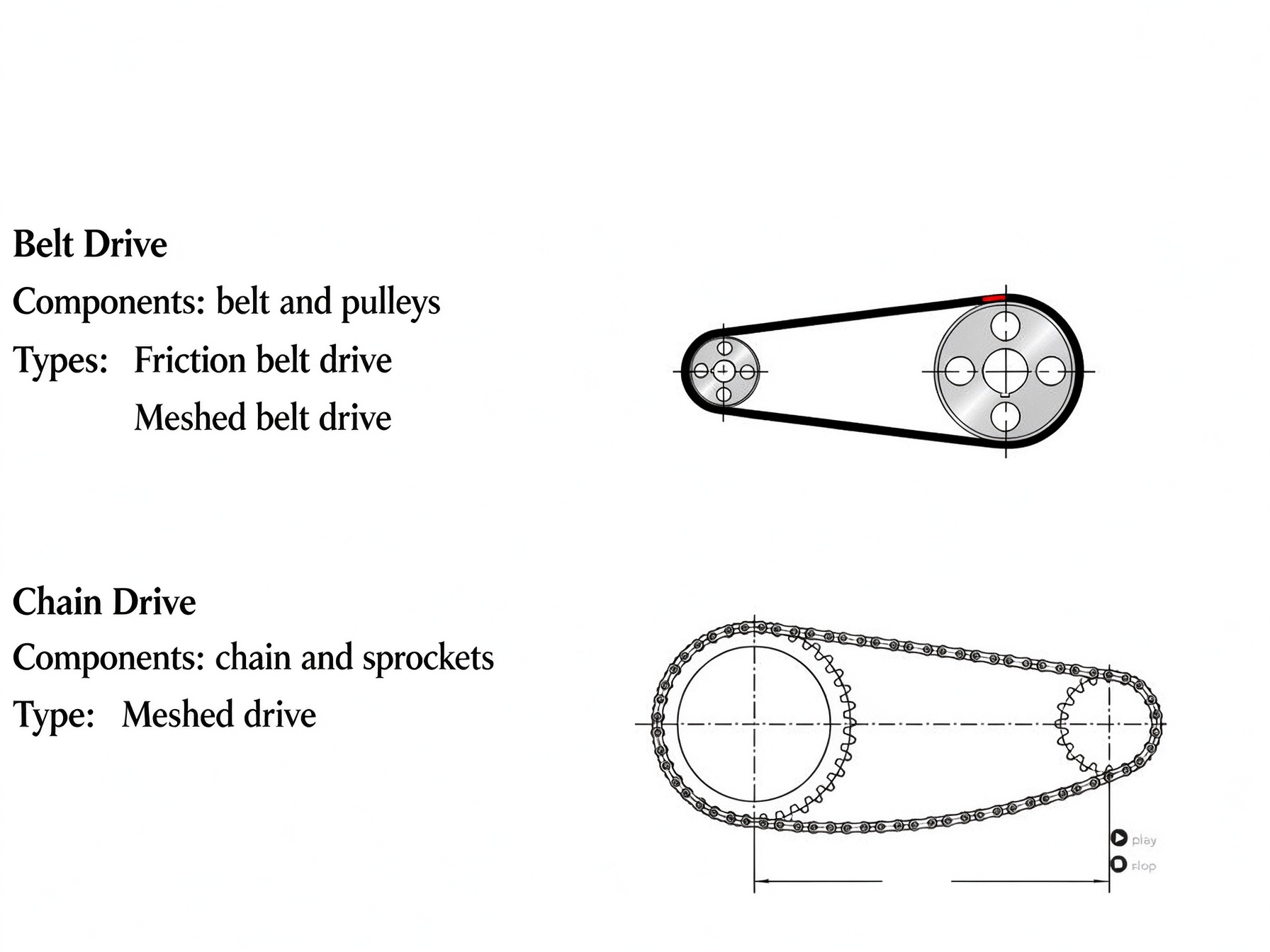
Chain drive comparison reference: sealing and construction decide the maintenance routine more than the price tag does.
Why chain type is a wear-pair decision, not a parts-list decision
A motorcycle chain is never a stand-alone component. The drive sprocket on the engine output shaft turns the chain, the rollers roll along the sprocket teeth, and the chain turns the rear-wheel sprocket. Because chain and sprockets form a meshing pair that wears together, a chain-only decision made at the parts counter can be undone by the condition of the sprockets already on the bike.
Two failure patterns dominate. The first is elongation. A chain that keeps needing retensioning is usually suffering from insufficient lubrication, long-term overloading, worn sprocket teeth or incorrect pre-tension during installation — and once elongation passes the limit, the correct action is replacement, not another adjustment. The second is contamination. On an open chain, grit and water reach the pin-and-bushing friction area, dry wear begins, corrosion follows, and the chain stretches and stiffens earlier than it should.
So the comparison runs on two tracks at once: chain type changes the maintenance burden and the resistance to contamination, while pitch size and sprocket condition determine whether the chain can do its job at all.
Industry background: standards, seal share and the chain-versus-belt baseline
Two international standards explain why motorcycle chain specifications deserve careful reading. ISO 10190:2008 is the motorcycle-chain standard covering characteristics and test methods. ISO 606:2015 sets dimensions, tolerances, length measurement, preloading, minimum tensile strength and minimum dynamic strength for short-pitch precision roller and bush chains and their associated sprockets. ISO 606 is a useful reference for roller-and-bush construction and sprocket terminology, but motorcycle chains fall under the motorcycle-specific standard, so a supplier's ISO 606 reference alone does not certify a motorcycle drive chain. Buyers writing a purchase specification should confirm the current edition and status of each standard with the issuing body.
Sealed chains are mainstream rather than niche: a commercial market-research estimate supplied for this category puts O-ring and X-ring chains at 58% of 2024 unit shipments. Headline market-size estimates vary widely by definition — a 2024 commercial estimate of USD 2.89 billion sits alongside higher figures from other publishers that include sprocket kits or industrial drive chain — so any single number should be treated as directional rather than as a procurement baseline.
At sourcing level, China exported roughly USD 6.7 billion of motorcycle and moped parts and accessories in 2025 according to a trade-aggregator profile. That is a parent-category figure that does not isolate chains, so it indicates the weight of the supply base rather than the size of the chain market. Company comparison data for chain versus rubber belt drive puts chain at approximately 30% higher breaking load, with better wear resistance, a longer service interval and lower long-term maintenance cost — which is why chain drive remains standard on heavy-load motorcycles.
The five chain types and what each one does for the rider
What separates the five families is whether the pin-and-bushing area is sealed, and what internal construction the chain uses. The rest — pitch, link count, tensile class — is specification, not category.
O-ring sealed chains
An O-ring chain places an O-ring between the outer plate and the roller to form a sealed cavity that holds grease around the pin and bushing. The seal keeps mud, water and dust out of the friction zone, which reduces wear, corrosion and elongation, and it is the reason a sealed chain holds a long lubrication interval. The company's selection data recommends sealed O-ring chain for road use, rain and dusty outdoor environments, and for riders who want a long maintenance period rather than minimum resistance. The trade-off is drag: a non-sealed chain is described as having less friction resistance, so the sealed design gives up a little of that in exchange for sealing.
X-ring sealed chains
X-ring is the second sealed family in the range and is offered across the same production sizes. Both seal types are specified for grease retention at the pin and bushing, and both target the same long-interval, contaminated-environment use. The supplied company data does not publish a measured friction or wear-life difference between O-ring and X-ring construction. If an X-ring chain is quoted at a premium, the practical step is to request size-level comparison data — tensile strength, fatigue life and any wear test — and judge the upgrade on that evidence rather than on seal profile alone.
Standard roller (non-sealed) chains
A standard roller chain leaves the pin-and-bushing area open. It carries the lowest friction resistance and the lowest purchase cost, and it is the version the company's selection guidance associates with racers and riders who clean and oil their equipment frequently. It demands exactly that: regular cleaning and re-lubrication, because nothing holds grease at the friction surface and nothing keeps grit out. On a machine serviced after every session that is a reasonable trade; on a bike used daily in rain and road spray it usually is not.
Heavy-duty H series chains
Heavy-duty H series is a separate version in the range, not a synonym for sealed. "Heavy duty" is a product designation rather than a measured rating in the data used here, so a buyer comparing an H-series chain with a standard roller chain of the same pitch should request the specification sheet: plate thickness, pin diameter, minimum tensile strength, minimum dynamic strength and the applicable test method. CHJC supplies technical drawings and specification data sheets for standard models, which is the document set needed to make that comparison properly.
Solid bush chains
Solid bush construction is the fifth option. Roller chains and bush chains are related but distinct constructions, and ISO 606 treats precision roller and bush chains as its scope. The practical question for a buyer is whether the replacement matches the original drive's construction and meshing geometry. Interchangeability is a stated design requirement for the company's chains, yet the seal status and internal construction of a solid bush version should still be confirmed on the quotation — particularly on a bike used in wet or dusty conditions.
Maintenance and lubrication: what each type asks of the owner
A sealed chain still needs maintenance; it simply needs less of it. The company's service guidance for O-ring chain runs in five steps: clean mud and old grease off with chain cleaner and wipe dry, spray dedicated O-ring-safe chain lubricant onto the roller surfaces, rotate the rear wheel to spread it evenly, wipe off excess after a few minutes, and repeat every 300–500 km or after riding in rain. Ordinary oil and long-term use of a general-purpose penetrant such as WD-40 are not recommended for lubricating a sealed chain, and lubricant should be kept off tyres and brake discs.
Non-sealed chain leaves that protection to the rider. Cleaning and oiling frequency is set by use rather than by a fixed interval — a race bike serviced after each session, a commuter in dry conditions on a weekly routine. What the open design gains is the absence of seal drag.
Tension matters as much as lubricant. The documented procedure is to put the motorcycle on a centre stand, turn the rear wheel to find the tightest point, loosen the rear axle nut, turn the left and right adjusters by equal amounts, set deflection to 20–30 mm, retighten the axle nut and re-check. Uneven adjustment causes rapid wear, and an over-tight chain damages bearings and gearbox. The engine stops and hands stay clear of rotating sprockets before any of this work begins.
Size selection: matching 415 to 530 to engine displacement
Chain pitch is the centre-to-centre distance between two adjacent pins, and it is the specification that defines model numbers such as 415, 420 and 520. Pitch must match the sprocket tooth pitch for the chain to mesh smoothly, which makes size selection a check against the machine rather than a free choice.
Engine displacement gives a preliminary size guide, and the company publishes one:
| Chain size | Engine displacement guide | Buyer note |
|---|---|---|
| 415 | Up to 70 cc | Small-displacement use |
| 420 | 70–125 cc | Commuter range |
| 428 | 125–250 cc | Commuter and light sport range |
| 520 | 250–600 cc | Mid-displacement range |
| 525 | 400–900 cc | Overlaps 520 and 530 by application |
| 530 | 600–1400 cc | High-torque and ATV use |
Three cautions attach to that table. Displacement is only a preliminary reference — the chain must be compatible with the sprockets already fitted, and size should not be changed on displacement alone. A heavy chain on a small-displacement bike adds power loss, while an undersized chain on a big-displacement bike tends to stretch and can break. Link count is also a separate decision from size: for 530 chain on ATVs, 78L and 96L are the more frequently used lengths, with other link counts available.
Service life, inspection and replacement criteria
A correctly tensioned, regularly lubricated sealed chain is planned around a 25,000–30,000 km service window in this guide. Treat that as a planning figure, not a guarantee. A chain run in sand, mud, coastal salt fog or on a worn sprocket reaches its limit sooner; one maintained on a strict 300–500 km lubrication routine in dry conditions can run longer.
Replacement is decided by measurement and inspection, not by mileage alone. The inspection sequence is: check elongation with a wear gauge; look for rust, cracked O-rings, bent or stuck links; check sprocket tooth wear at the same time; and replace the chain together with worn sprockets. A chain that has passed its limit elongation should be replaced directly. The safety reason is simple — a worn chain can jump teeth or break suddenly while riding.
A chain that keeps getting loose deserves diagnosis rather than another adjustment. The four documented causes are insufficient lubrication, long-term overloading, worn sprocket teeth and improper pre-tensioning at installation. The matching remedy: inspect sprocket tooth shape and replace chain and sprocket as a set if teeth are badly worn, restore a regular chain-specific lubrication routine, set sag to the original specification instead of over-tightening, and replace any chain that has exceeded its elongation limit.
O-ring versus non-sealed: comparison table
The table compares the five families on the dimensions that change a purchase decision. Cells describe documented characteristics; where the supplied data does not state a value, the table says so instead of filling the gap.
| Type | Sealing / construction | Lubrication demand | Contamination resistance | Where it fits |
|---|---|---|---|---|
| O-ring sealed | O-ring between outer plate and roller, sealed grease cavity | Long interval; re-lube every 300–500 km or after rain | Blocks mud, water and dust from the pin and bushing | Road, rain, dusty outdoor use and distance riding |
| X-ring sealed | Sealed, X-ring profile, grease retention at pin and bushing | Same sealed maintenance logic | Sealed friction zone | Same sealed applications; compare against O-ring on documented data |
| Standard roller | Non-sealed, open pin and bushing area | Frequent cleaning and oiling by the rider | Open to dirt and water | Track and race use with frequent maintenance; lowest friction resistance |
| Heavy-duty H series | Heavy-duty designation; seal status to be confirmed on the spec sheet | Follow the construction actually quoted | Confirm from specification data | Where tensile, fatigue and plate/pin dimensions support the load |
| Solid bush | Bush construction; seal status to be confirmed | Follow the construction actually quoted | Confirm from specification data | Replacement where construction matches the original drive |
"Heavy duty" and "solid bush" describe construction, not seal type. Confirm seal status on the quotation before comparing a price against a sealed chain — otherwise the comparison is between two different maintenance regimes.
A step-by-step buyer checklist
- Read the pitch off the machine, not from memory. Check the chain marking or the sprocket, then cross-check with the displacement table. Do not change size on displacement alone.
- Estimate the maintenance budget. Long weekly distance, commuting in rain or fleet use points to a sealed chain; a race bike serviced after every session can justify a non-sealed chain.
- Match the environment. Sand, mud, coastal salt fog and unpaved roads all favour sealed construction because the seal keeps abrasive particles out of the friction zone.
- Inspect the sprockets before ordering. Hooked or unevenly worn teeth mean the chain and sprocket should be replaced as a pair.
- Confirm the construction you are quoted. For heavy-duty H series and solid bush versions, get seal status, plate thickness and pin diameter in writing.
- Request the test documents. Tensile strength and fatigue-life data by size, plus quality management and destination-specific certification, belong in the supplier file before the first bulk order.
- Confirm link count and connection type. Size and length are separate decisions; 530 ATV drives commonly use 78L and 96L, with other counts available.
- Set a replacement trigger in advance. A wear-gauge elongation limit, cracked O-rings, stiff links or heavy corrosion are the signals to replace — not a mileage target alone.
Where each type fits: buyer profiles and applications
Daily commuter and courier use. Distance, rain and road spray make a sealed O-ring or X-ring chain the practical choice, in 420 or 428 for smaller commuters and 520 for mid-displacement bikes. The 300–500 km lubrication routine is the whole maintenance story until the wear gauge says otherwise.
Off-road and ATV use. Heat-treated links and high tensile strength are the stated basis for resisting sand and mud abrasion in heavy-duty off-road conditions including steep slopes. The 530 chain in this range is listed as compatible with ATV models such as Explorer 300, Explorer 400, MUD 400 and Ranger 450, and can directly replace the original chain on those models.
Sport and track use with frequent servicing. A rider who cleans and oils after every session can use the lower friction resistance of a standard non-sealed chain, accepting the shorter maintenance interval and open exposure to contamination.
Distributor and own-brand programmes. Buyers assembling a market range usually need several sizes and both sealed and non-sealed versions in one shipment, plus neutral packing and their own artwork on the box.
Two categories sometimes grouped under the same search term need separate checks: motorcycle timing chains and dedicated electric motorcycle chains. The product data used here covers drive chains and matching sprockets in 415–530, so a buyer sourcing timing chain or e-motorcycle chain should confirm the exact construction, rating and test standard with the supplier before ordering.
Sprocket pairing, materials and supplier verification
Sprocket material is specified as AISI 1045, SAE 1045, 40Cr or 20CrMnTi. Chain materials are equally specific: 45Mn alloy steel for inner and outer plates; 20CrMnMo, 20CrNiMo or 30CrMnTi for pins; 20Mn, 20CrMnMo or 20CrNiMo for bushes; and 10#, 20#, 35# steel or 20CrMnMo for rollers. Components go through carburizing, quenching and tempering to reach the hardness and wear resistance the application requires.
Verification is the part of a supplier comparison that separates documented claims from catalogue language. CHJC inspects components and finished chains 100%, using automatic optical inspection, in-process sampling and a final manual recheck. The company holds ISO9001 quality management certification and Brazil INMETRO certification, and CNAS-accredited test reports can be supplied. Stated capacity is more than 800,000 meters per month and more than 10 million meters per year from a 13,000 m² plant.
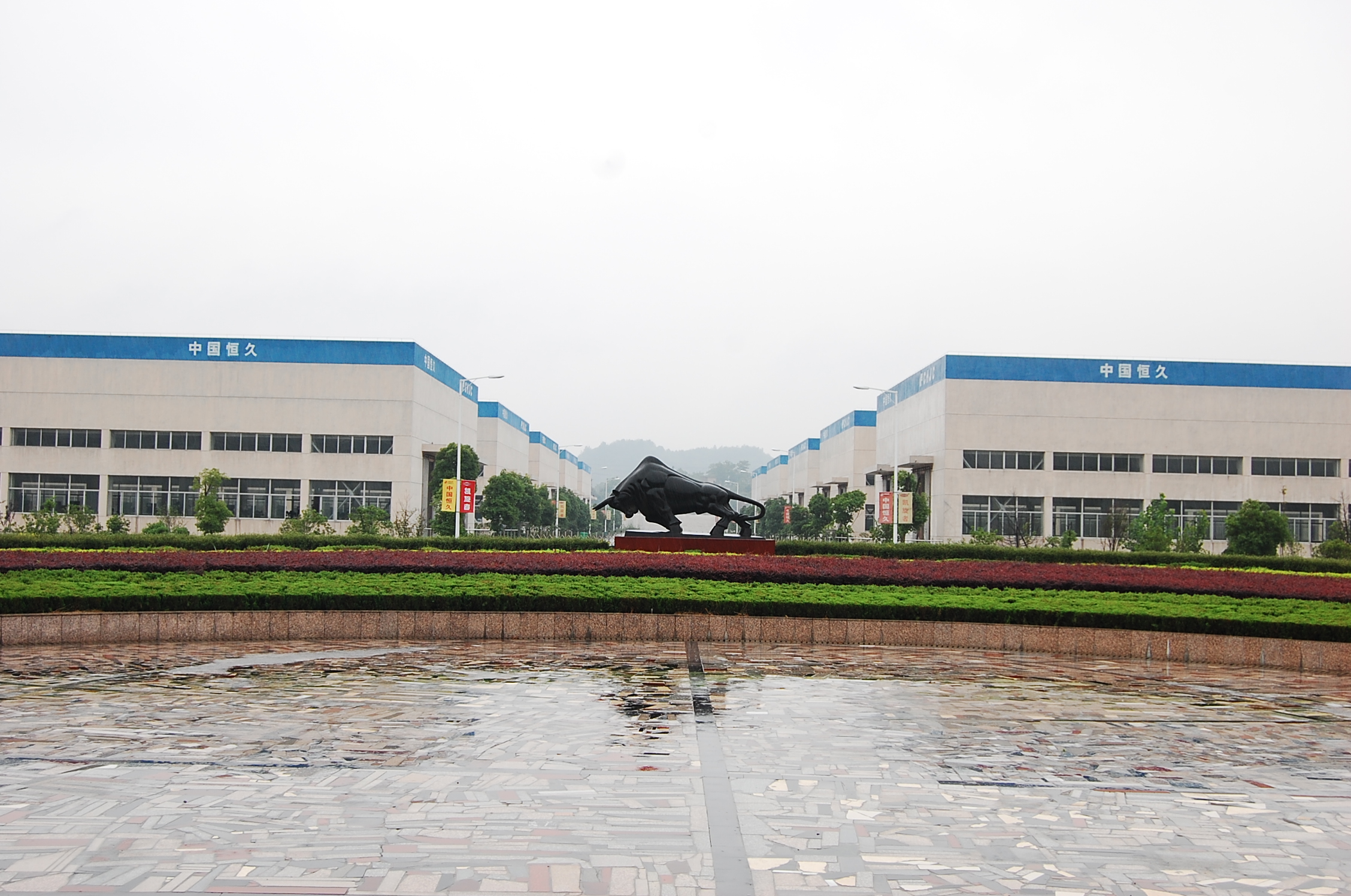
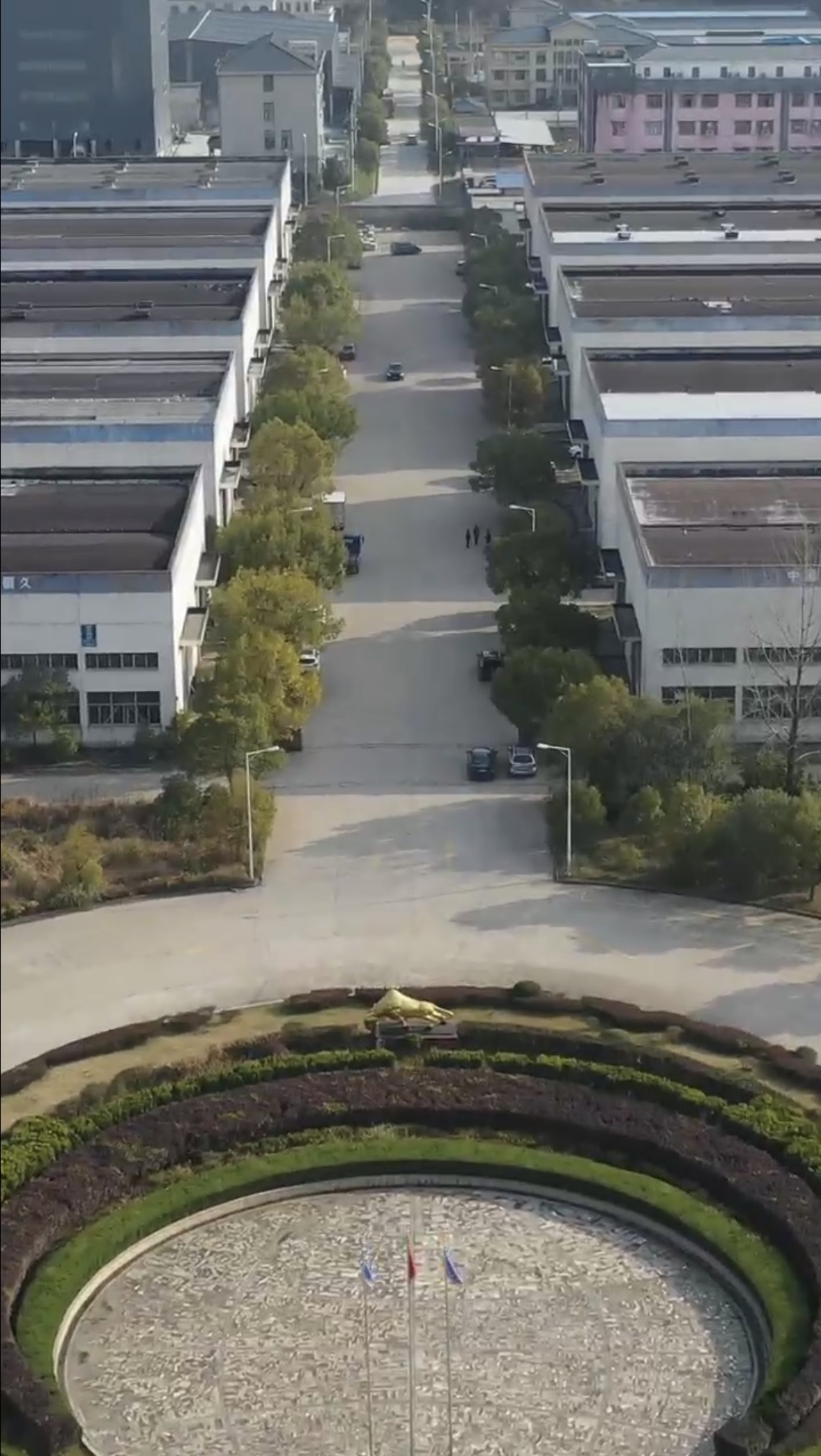
Production base in Shangrao, Jiangxi: motorcycle chains and matching sprockets under one roof.
Matching support matters as much as the part itself. CHJC provides chain–sprocket ratio matching suggestions, installation and tension adjustment guidance, lubrication guidance and troubleshooting for abnormal noise or skipping teeth. Chain and sprocket are supplied together, which is the practical way to keep the wear pair synchronised instead of fitting a new chain to worn teeth.
Chain production and inspection in the same facility that supplies the matching sprockets.
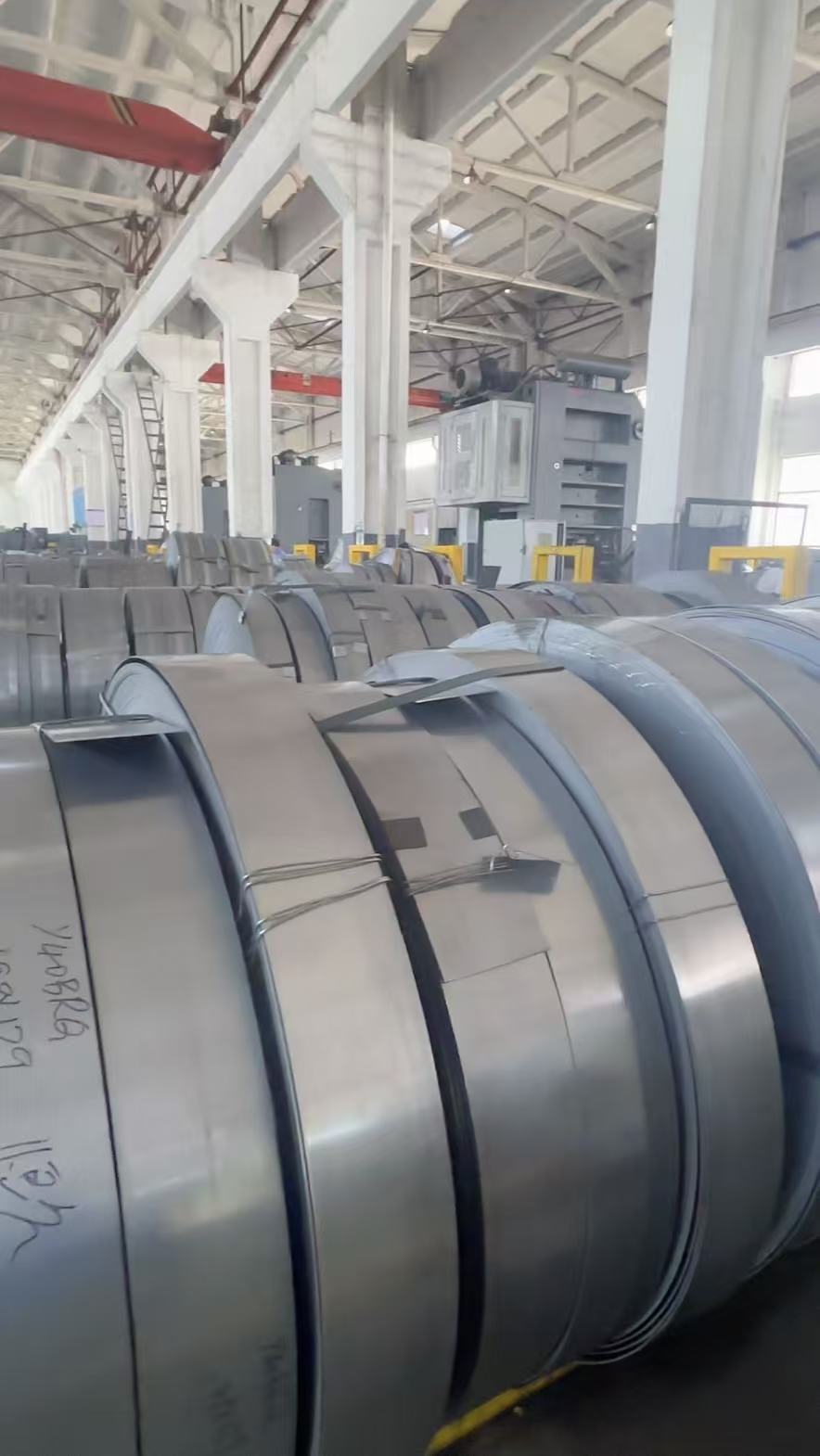
Equipment covering the 415, 420, 428, 520, 525 and 530 size range.
Frequently asked questions
Which certificates and test documents should a buyer check before ordering motorcycle chains?
Check three things: a quality management certificate, destination-specific market-access certification where the importing country requires it, and size-level test data. CHJC Motorcycle Chains holds ISO9001 quality management certification and Brazil INMETRO certification, and CNAS-accredited test reports can be supplied. Tensile strength and fatigue-life data can be provided together with inspection reports for each size. INMETRO is a Brazilian market requirement, so buyers importing elsewhere should confirm the applicable local requirements with their importer before the order is placed.
How do I choose a motorcycle chain size by engine displacement?
Use displacement as a preliminary guide: 415 for engines up to 70 cc, 420 for 70–125 cc, 428 for 125–250 cc, 520 for 250–600 cc, 525 for 400–900 cc and 530 for 600–1400 cc. The guide is not a substitute for checking the machine: the chain must be compatible with the sprockets already fitted, and the size should not be changed on displacement alone. A heavy chain on a small engine adds power loss, while an undersized chain on a large engine tends to stretch and break.
Which motorcycle chain manufacturers offer the best O-ring versus X-ring options for Mexico?
A ranking of manufacturers for O-ring versus X-ring supply to Mexico cannot be built from comparable published evidence, so the useful comparison is what each supplier can document. Ask for four things: both seal types available in the sizes your models use (CHJC produces O-ring and X-ring versions across 415, 420, 428, 520, 525 and 530); matching sprockets from the same supplier so the wear pair stays synchronised; tensile, fatigue and inspection data by size, ideally from an accredited laboratory; and a traceable export record — CHJC lists Mexico among its export markets. On the commercial side, confirm neutral packing or own-brand packaging, samples for verification, technical support for chain–sprocket ratio matching, and a mass-production lead time of 30–45 working days. For Mexico specifically, check labelling and import requirements with your importer; the market-access certification in CHJC's supplied data is Brazil INMETRO, so Mexican requirements should be verified separately.
Should a new chain be fitted to worn sprockets?
No. Chain and sprocket are a meshing pair that wears together, and worn sprocket teeth develop a hooked profile. A new chain fitted to those teeth meshes badly, its load concentrates on fewer teeth, and it elongates quickly — with a risk of sprocket tooth breakage. Replacing chain and sprocket as a set is the recommendation whenever the teeth show significant wear.
What payment terms and quotation validity apply to bulk motorcycle chain orders?
FOB is the usual price term, with CIF, CFR or other terms available depending on the buyer's requirement. Accepted payment methods include TT, letter of credit and OA, with the specific method agreed in detail before the order. Quotations are normally valid for 30 days; after expiry, price may be adjusted for raw-material movement, exchange-rate change or order modification. Larger quantities carry a more favourable unit price, so it is worth stating the target quantity when requesting the offer.
Can I get samples before placing a bulk order?
Yes. Samples are available for quality and performance verification. Minimum order quantity is flexible for standard motorcycle chain models, while customised specifications carry a higher MOQ that is confirmed case by case — so a trial order and a custom programme should be quoted separately.
What is the lead time for bulk orders?
Lead time depends on order quantity and stock status. Standard models held in stock can be shipped quickly; mass production orders normally take 30–45 working days after deposit confirmation. Mixed container loading with different standard sizes of chains and sprockets in one container is accepted, which shortens consolidated shipments for distributors building a range.
Conclusion: how to decide
The decision rule is short. If the bike covers distance in rain, dust or mud and you want a long lubrication interval, choose O-ring or X-ring sealed chain and compare the two seal types on documented test data rather than on premium pricing. If the bike is serviced after every session and minimum drag matters more than maintenance time, choose a standard non-sealed roller chain and accept the shorter lubrication interval. If you are specifying heavy-duty H series or solid bush construction, confirm seal status, plate thickness and pin diameter on the specification sheet before you compare prices. In every case, set the pitch from the machine and its sprockets — 415 through 530 — and plan to replace chain and sprocket as a wear pair, with a wear gauge deciding the timing rather than the calendar.
CHJC Motorcycle Chains supplies standard roller, heavy-duty H series, O-ring, X-ring and solid bush chains in 415, 420, 428, 520, 525 and 530, together with matching sprockets and technical support for ratio matching, installation, tension and lubrication. Jiangxi Hengjiu Chain Transmission Co., Ltd. publishes its full range in the CHJC motorcycle chain catalogue (PDF), and samples are available for quality and performance verification before a bulk order.
Have Questions or Need More Details?
Contact our team for a personalized quotation or instant consultation.
Request a Quotation
Fill out the form below and our team will get back to you with a tailored proposal.
WhatsApp Direct Chat
Prefer to chat in real-time? Message us on WhatsApp for instant assistance & quick answers.
- Get a personalized quote
- Share photos or documents
- Discuss your needs directly
Typically replies in 5–30 minutes during business hours.