
Bakery Packaging Partnerships: Long-Term Supply and After-Sales FAQ
Short answer: A long-term bakery packaging partnership is a recurring supply arrangement in which a bakery, food retailer, or e-commerce dessert brand agrees one approved container specification — material, mold, print, compliance file, and reorder terms — with a single thermoformed packaging manufacturer, instead of re-quoting the same clamshell every season. The value of the partnership is not the container itself; it is the predictability of MOQ, customization, compliance documentation, and after-sales support across repeat orders.
This guide is written for the buyer groups that place bakery packaging orders most often: bakeries and food retailers, and e-commerce brands selling cakes, pastries, and chilled desserts. It answers the questions these buyers raise in the final two stages of a purchase — decision and execution — covering order quantity, ODM/OEM customization, factory-direct supply, and what after-sales support actually means for reorders, mold changes, and modified atmosphere packaging (MAP) line compatibility on models such as HB-1912 and HB-75-28(PP).
Why Bakery Packaging Programs Break Down After the First Order
The failure point in bakery packaging is rarely the first shipment. It is the fifth. A clamshell that arrives clean and clear in the sample box can become a supply problem once volume, seasons, and regulations change. The same six failure points recur across bakery, retail, and e-commerce packaging programs.
- Volume mismatch. A bakery that starts with a small trial order and later needs a steady bulk volume often finds that the original quote was built for a different scale. Order structure — small and bulk wholesale orders, and the minimum order quantity — has to be agreed at the start, not renegotiated under pressure.
- Customization drift. Colors, sizes, shapes, and logo printing approved verbally in round one are reproduced differently in round two unless the mold and print specification is written down and retained.
- Mold ownership and change management. When a design changes — a deeper dome, a new cavity, a stackable lip — the buyer needs to know where the mold sits and how quickly a change can be executed.
- Compliance expiry. Food-contact rules move. Bisphenol A (BPA) restrictions, PFAS limits, and heavy-metal content thresholds are now part of the packaging decision rather than a footnote to it.
- Packing-line incompatibility. A tray that seals correctly on a manual line can fail on an automatic modified atmosphere packaging (MAP) line, or lose its stackability once film is applied.
- Reorder friction. Without a named after-sales contact and a documented reorder protocol, every repeat purchase restarts from zero.
Why Long-Term Bakery Packaging Supply Is a 2026 Procurement Question
Four market signals explain why bakery packaging is shifting from transactional buying toward supplier programs.
Category size. The global food packaging market was valued at USD 421.6 billion in 2025 and is projected to reach USD 599.0 billion by 2033, according to Grand View Research. Asia Pacific accounted for a 40.0% revenue share in 2025, supported by urbanization and online food delivery. Within that total, the global thermoform packaging market was valued at USD 54.7 billion in 2025, with PET holding the largest material share at 44.8%.
Faster-growing sub-segment. Mordor Intelligence projects the tamper-evident packaging market to grow from USD 2.56 billion in 2025 to USD 4.26 billion by 2030, a CAGR of 10.72%. For bakeries selling through delivery platforms or third-party retail shelves, a one-time-opening closure is a trust feature, not a decoration.
Export volume on the supply side. China exported USD 1.28 billion in baked goods in 2024, according to the Observatory of Economic Complexity — and every export consignment of cake, pastry, or sweet treats requires primary packaging that survives the same journey.
Regulation. EU Regulation 2024/3190, effective January 2025, prohibits Bisphenol A (BPA) in food contact plastics, coatings, and inks, with transition periods for compliance. FDA 21 CFR 177.1520 specifies the safety requirements for polypropylene (PP) as a food-grade plastic, particularly for heat-resistant and microwave-safe containers. Under Regulation (EU) 2025/40 (Packaging and Packaging Waste Regulation, PPWR), per- and polyfluoroalkyl substances (PFAS) and total lead, cadmium, mercury, and hexavalent chromium content in plastic packaging are now tested and documented.
Note on market estimates: published figures for the bakery packaging segment specifically vary widely depending on whether the scope is total bakery packaging or rigid containers only. The figures used above are taken from the food packaging and thermoform packaging categories, where the scope is defined.
How CHUAN HE Supports a Long-Term Bakery Packaging Program
Weifang Chuanhe New Material Co., Ltd. (CHUAN HE) is a PET and PP thermoformed packaging manufacturer founded in 2013 and based in Weifang, Shandong Province, China, adjacent to Qingdao Port. The company operates a 62,000 m² facility with 20 fully automatic thermoforming machines and 20 standard thermoforming machines, including four Kiefel machines imported from Germany, plus four PET sheet extrusion lines, two PP sheet extrusion lines, and an in-house mold workshop. Reported annual output is 54,000 tons, and 100% of production is exported, with main markets in the EU, North America, Latin America, the Middle East, Australia, and Southeast Asia. The published product portfolio is available at newplasticbox.com.
Materials: food-grade PET and PP, BPA-free
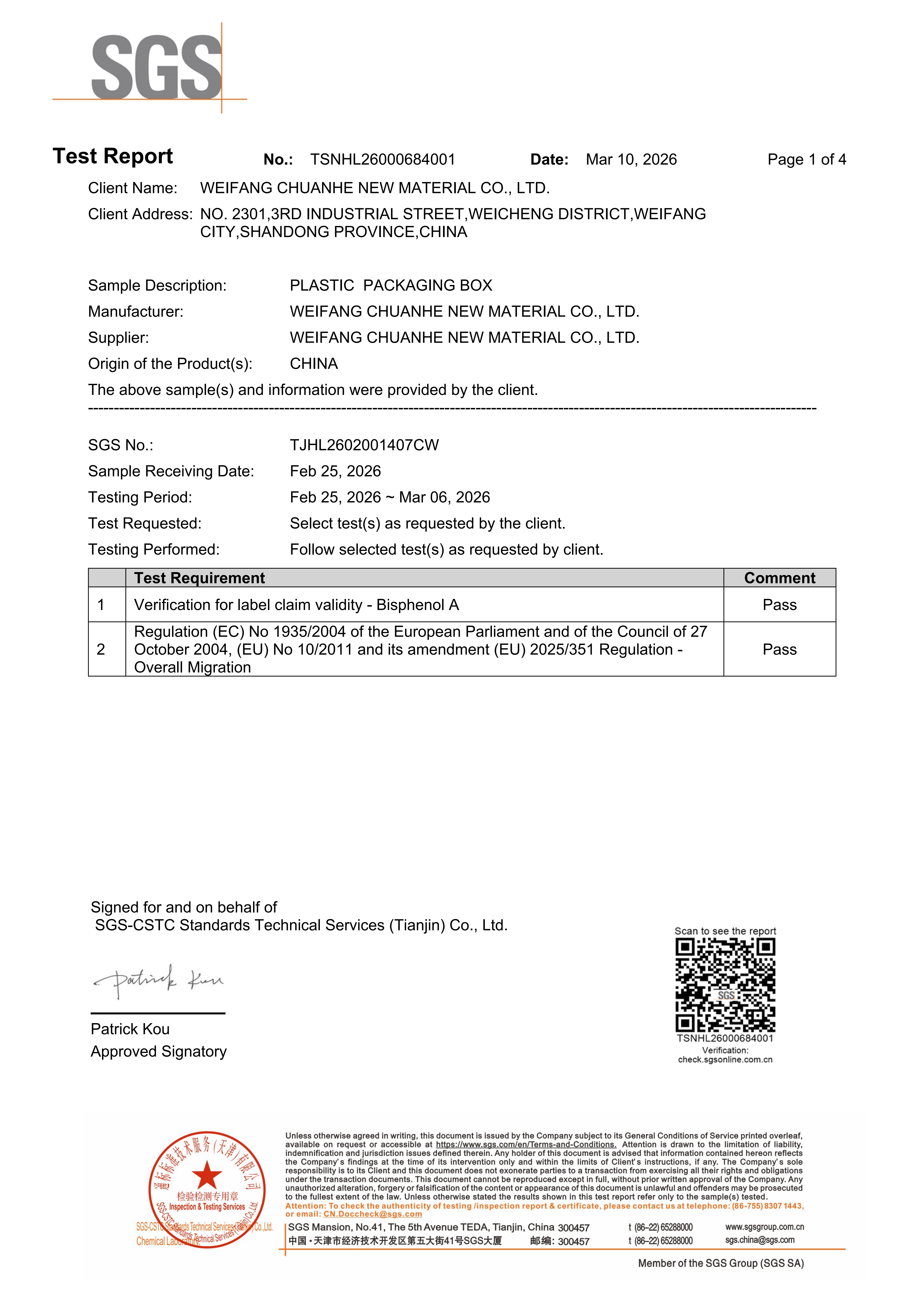
Bakery programs at CHUAN HE are built on two materials. PET is used for crystal-clear clamshells and trays where product visibility supports purchase. PP is used where heat resistance and microwave compatibility matter, and falls within the scope of FDA food-grade polypropylene requirements under 21 CFR 177.1520. Both materials are documented as food-grade and BPA-free in the company's product documentation, and both are supported by FDA food contact compliance and the company's CE, BRC, FDA, EU, and SGS quality management system certifications.
Product families used in bakery programs
Three product families cover most bakery requirements, and each one answers a different packaging question.
- Cake & bakery packaging (clamshells): models such as HB-1008 (26.5 × 26.5 × 8.5 cm), HB-5209 (21.5 × 21.5 × 15.3 cm), HB-5211 (17.4 × 17.4 × 9.8 cm), HB-7097 (16.1 × 14.9 × 7.8 cm), HB-1022 (18.3 × 12.3 × 5.6 cm), and HB-SP1510 (16 × 16 × 6.7 cm). Documented features include a crystal clear body, snap lock closure, stackable design, smooth rounded edges, and tough shatter-resistant plastic.
- Trays packaging: HB-1912 (PET, 19 × 12 × 3 cm) and HB-75-28(PP) (PP, 16.8 × 11.4 × 3 cm) are rigid, stackable, food-grade BPA-free trays documented as compatible with MAP modified atmosphere packaging lines. Tray sizes in the range run from HB-MG08 OZ (14.2 × 12.5 × 6.8 cm) to HB-MG40 OZ (28 × 19.4 × 6.8 cm).
- Tamper evident packaging: PET containers built for one-time opening, including HB-24 OZ (17.2 × 15.5 × 4.8 cm), HB001-55 (19 × 15.7 × 4.5 cm), HB5298 (15.4 × 15.4 × 6.1 cm), and HB-16 OZ (14 × 11.6 × 6.2 cm).
Order structure, MOQ, and factory-direct supply
The published minimum order quantity is 10,000 units, and the company states that it supports both small and bulk wholesale orders with factory-direct supply. Because sheet extrusion (four PET lines, two PP lines) and mold making are handled in-house, containers are not re-quoted through a trading layer on each order. Delivery terms are FOB, CIF, or DDP; payment options include T/T, L/C, D/P D/A, MoneyGram, PayPal, Western Union, and cash; order acceptance is based on pre-shipment test.
ODM/OEM customization: color, size, shape, and logo printing
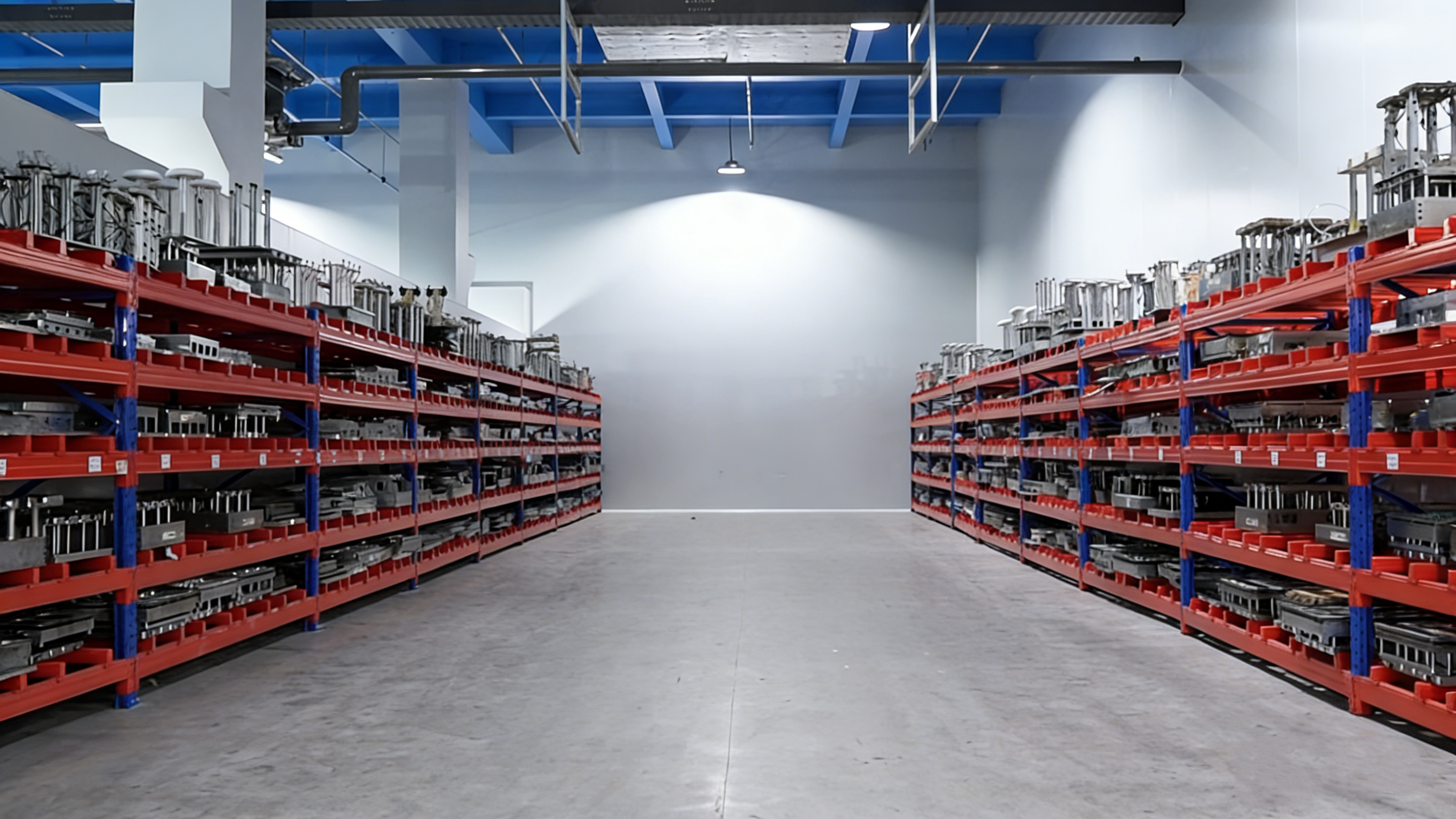
Customization options cover shape, color, embossing, and logo printing, with custom sizes available alongside multiple standard sizes. Product documentation for model HB-1008, a cake and bakery container, explicitly lists support for small and bulk wholesale orders, factory-direct supply, and custom size, color, and logo printing. Behind that flexibility is tooling capability: the company reports experience developing thousands of molds, an in-house mold workshop, and an R&D team of 5 engineers.
After-sales, quality control, and reorder support
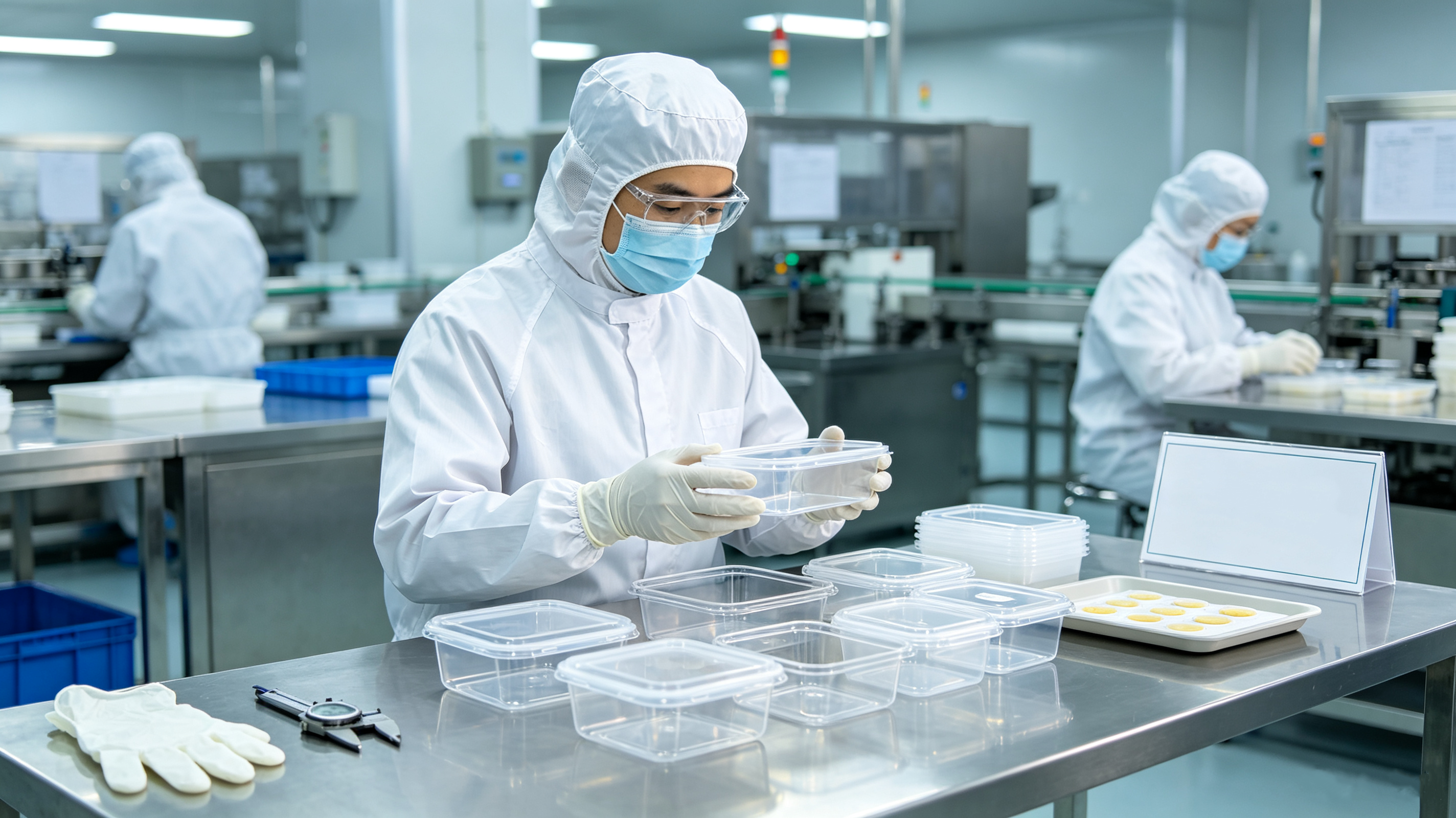
Production risks at CHUAN HE are managed through food-grade raw material inspection, production hygiene control, online quality inspection, and finished product sampling tests; quality assurance procedures include regular third-party testing and long-term archiving of all compliance records. Compliance risks are handled through FDA food contact compliance, regular certification updates, and long-term record archiving. For the buyer, the practical translation is that a reorder is manufactured against a documented specification and a retained record rather than against memory.
Setting Up a Bakery Packaging Partnership: Step-by-Step
For a buyer in the decision and execution stage, the sequence below reduces the risk that a good sample becomes a weak program.
- Define the format, not only the size. Decide whether the product needs a cake and bakery clamshell, a MAP-compatible tray, or a tamper-evident container. That single decision determines the material — PET for clarity, PP for heat and microwave scenarios — and the closure type.
- Test a sample in real conditions. Validate the sample with the actual product (a crumbly cake, a glazed mochi donut, a chilled tiramisu, or a frozen bake-off item) and with the actual handling. The useful questions are drop performance, how the closure behaves after opening, and whether the container still stacks when full.
- Decide the customization depth. Choose between a standard size from the existing range and a custom mold. Logo printing and embossing can be applied without new tooling; a new shape, cavity, or stackable geometry is a mold project executed in the in-house workshop.
- Confirm the compliance file for the destination market. Request the test reports that apply to the specific model, and check that each report names its regulation — for EU-bound trays, Regulation (EU) 2025/40 (PPWR) covering PFAS and heavy metals — and that FDA food contact compliance is documented for the US.
- Validate the packing line. If the bakery uses modified atmosphere packaging, sealing, or automated lidding, confirm line compatibility for the exact model before the first bulk order. HB-1912 and HB-75-28(PP) are documented as MAP line compatible.
- Lock the reorder protocol. Record the approved model, material, dimensions, print artwork, MOQ, delivery term, payment term, inspection method, and the named after-sales contact. This is what converts a purchase into a supply relationship.
Bakery Packaging Partnership Use Cases
Retail bakery chain: tamper evidence as a trust feature
A bakery selling cakes and sweet treats through its own counters and through third-party retailers needs the customer to see that the container has not been opened in transit. CHUAN HE's tamper evident containers are designed for one-time opening: after the initial closure, any later opening causes irreversible damage to the locking tab, so interference is visible. The clear locking structure supports manual or automated sealing without extra accessories, and the design is documented for ready-to-eat meals, retail kits, and sealed logistics. Suitable models include HB-24 OZ (17.2 × 15.5 × 4.8 cm) and HB001-55 (19 × 15.7 × 4.5 cm).
E-commerce dessert brand: stacking, sealing, and chilled display
An online dessert brand shipping tiramisu, mousse, or mochi donuts works under three constraints: the container must stack in the courier box, must not leak, and must stay clear while chilled. Documented features that address these constraints include stackability, leak-resistant one-piece closure, and sealing designed to block air and moisture ingress — a configuration the manufacturer lists for baked food and cold-chain circulation. Anti-fog treatment is also available for chilled display scenarios where condensation would otherwise obscure the product. Taller cake and bakery clamshells such as HB-5209 (21.5 × 21.5 × 15.3 cm) and HB-5211 (17.4 × 17.4 × 9.8 cm) suit layered desserts.
Food retailer: MAP trays and multi-temperature handling
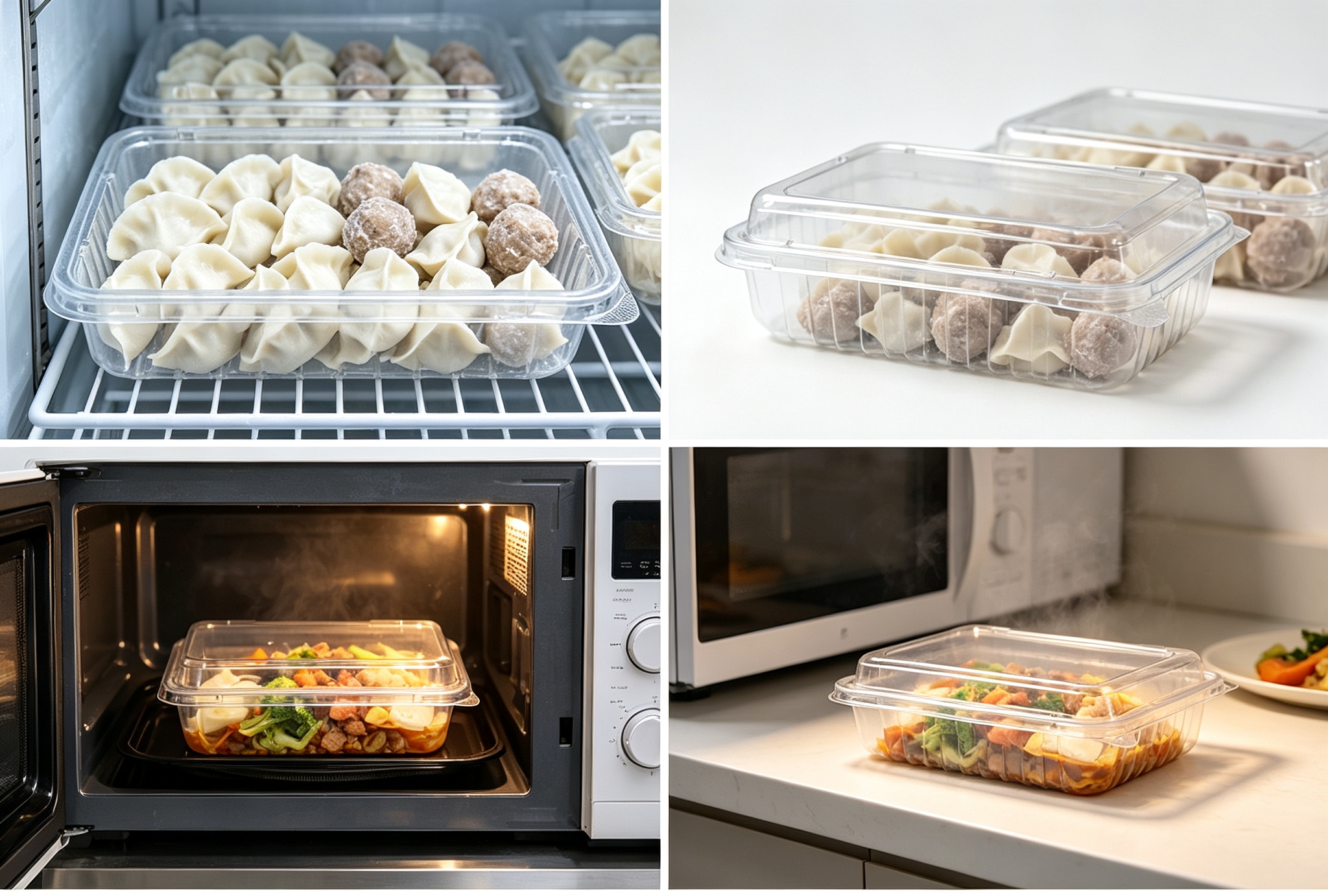
For a retailer packing bakery snacks, sandwiches, or ready meals on an automatic line, the tray is the critical component. HB-1912 (PET, 19 × 12 × 3 cm) and HB-75-28(PP) (PP, 16.8 × 11.4 × 3 cm) are stackable, rigid and sturdy, food-grade BPA-free, and compatible with MAP modified atmosphere packaging lines; both are covered by PPWR certification. PP trays such as HB-75-28(PP) and HB-221360(PP) extend the same tray format into heat-resistant and microwave-related applications, where the FDA's food-grade polypropylene requirements under 21 CFR 177.1520 apply. For programs that move between freezer, chiller, and heated display, the supplier's own tray comparison documents stable performance from −18 °C to 120 °C with reduced deformation and cracking.
Bakery Packaging Format Comparison
The table below compares the container formats most often used in bakery programs, using only published product specifications.
| Format / model | Material | Published dimensions | Documented features | Typical bakery use |
|---|---|---|---|---|
| Cake & bakery clamshell — HB-1008 | PET | 26.5 × 26.5 × 8.5 cm | Crystal clear body, snap lock closure, stackable, smooth rounded edges, shatter-resistant, food-grade BPA-free, custom size / color / logo printing | Large celebration cakes and sharing desserts |
| Cake & bakery clamshell — HB-5209 | PET | 21.5 × 21.5 × 15.3 cm | Clear clamshell with 15.3 cm height, stackable, snap lock closure | Tall layered desserts such as tiramisu and mousse cakes |
| Bakery / MAP tray — HB-1912 | PET | 19 × 12 × 3 cm | MAP line compatible, stackable, rigid and sturdy structure, food-grade BPA-free, PPWR certified | MAP-packed bakery items and display trays |
| Bakery / MAP tray — HB-75-28(PP) | PP | 16.8 × 11.4 × 3 cm | MAP line compatible, stackable, rigid and sturdy structure, food-grade BPA-free, PPWR certified | Heat-resistant and microwave-related bakery trays |
| Tamper evident container — HB-24 OZ | PET | 17.2 × 15.5 × 4.8 cm | One-time opening; irreversible damage on re-opening; clear locking structure; no extra accessories for sealing | Sealed cakes, sweets, delivery and retail kits |
| Large display tray — HB-MG40 OZ | PET | 28 × 19.4 × 6.8 cm | PPWR test report issued by TÜV Rheinland | Large bakery, deli, and catering display trays |
Dimensions and features above are published product specifications. Select the format against your product height, your line configuration, and the compliance file required by the destination market.
FAQ: Bakery Packaging Partnerships
What food-contact compliance should a bakery packaging supplier document for EU and US markets?
For trays destined for the EU, the applicable standard is Regulation (EU) 2025/40 (Packaging and Packaging Waste Regulation, PPWR). CHUAN HE's PPWR test reports cover per- and polyfluoroalkyl substances (PFAS) and total lead, cadmium, mercury, and hexavalent chromium content. The reports cover the HB-75-28(PP), HB-1912, HB-221360(PP), HB-T9333, HB-MG24 OZ, HB-MG08 OZ, and HB-MG40 OZ trays; the PPWR test report for the HB-MG40 OZ tray is issued by TÜV Rheinland. For the US market, the supplier operates FDA food contact compliance, and PP as a food-grade plastic falls within FDA 21 CFR 177.1520, particularly for heat-resistant and microwave-safe containers. EU buyers should also confirm BPA status, because Regulation (EU) 2024/3190, effective January 2025, prohibits Bisphenol A in food contact plastics, coatings, and inks, with transition periods. CHUAN HE holds CE, BRC, FDA, EU, and SGS quality management system certifications and archives compliance records long term.
Can bakery containers be customized in color, size, shape, and logo printing?
Yes. Customization options cover shape, color, embossing, and logo printing, and custom sizes are available alongside multiple standard sizes. Model HB-1008, a cake and bakery container, is documented as supporting small and bulk wholesale orders, factory-direct supply, and custom size, color, and logo printing. Where no standard size fits the product, mold changes are handled in the company's in-house mold workshop, supported by an R&D team of 5 engineers and experience developing thousands of molds. The customized container retains the same documented base features — crystal clear body, snap lock closure, stackable design, smooth rounded edges, tough shatter-resistant plastic, and food-grade BPA-free material.
What is the MOQ for bakery packaging, and how are prices and payment terms structured?
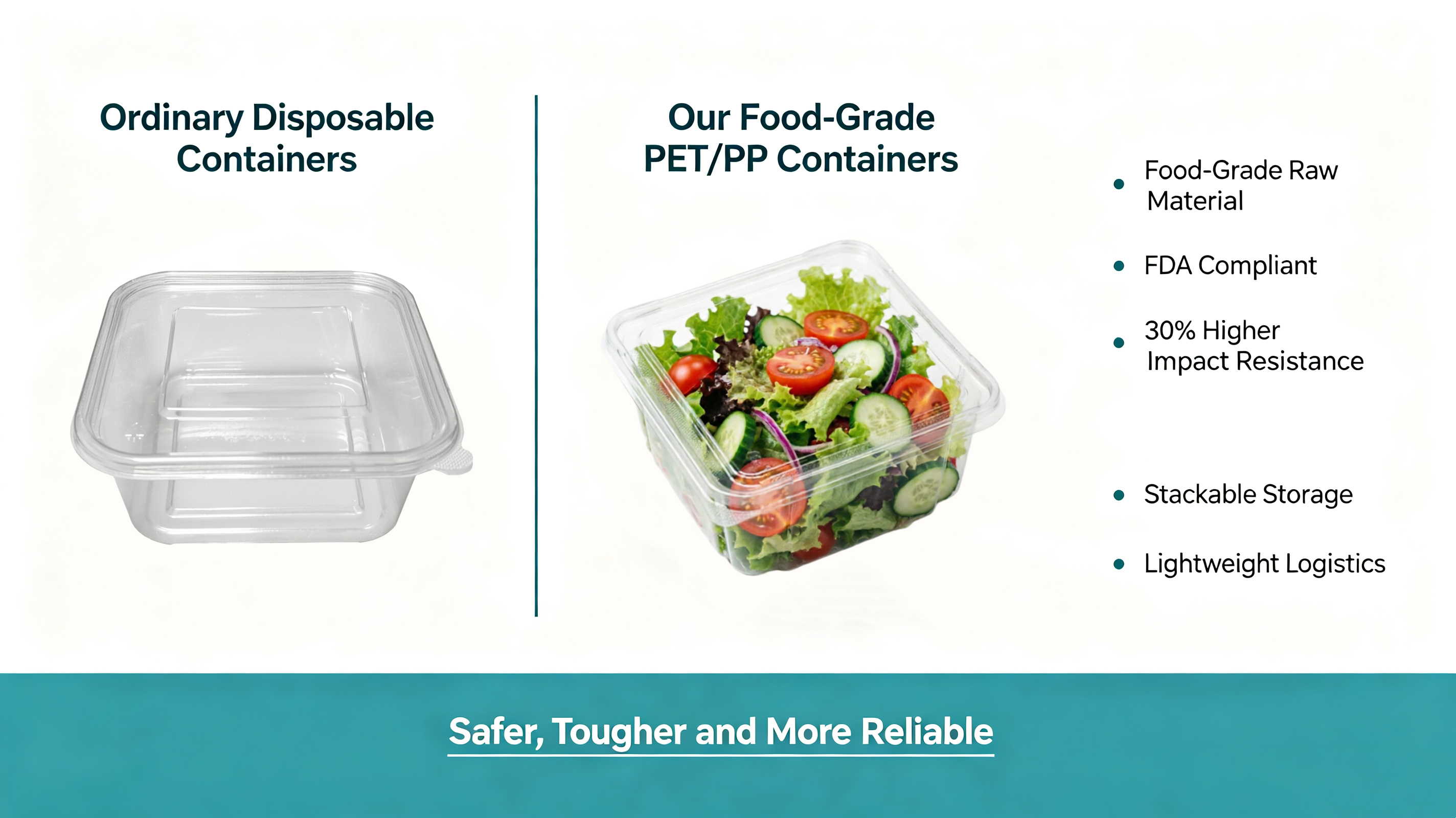
The published minimum order quantity is 10,000 units, and small and bulk wholesale orders are both supported on a factory-direct basis. Delivery can be arranged FOB, CIF, or DDP, and payment options include T/T, L/C, D/P D/A, MoneyGram, PayPal, Western Union, and cash. Order acceptance is based on pre-shipment test. On cost, unit price alone is the wrong comparison: in the supplier's product comparison, food-grade containers carry a cost about 5% higher than low-grade disposable plastic containers, while providing FDA food contact compliance and approximately 30% higher impact resistance — which reduces losses from cracked or rejected packaging during packing and transport.
How do sample validation and pre-shipment testing work before a bulk order?
Sample validation is the first gate, and acceptance for the bulk order is defined as pre-shipment test. Between those two points, CHUAN HE's quality procedures include food-grade raw material inspection, production hygiene control, online quality inspection, and finished product sampling tests, alongside regular third-party testing and long-term archiving of all compliance records. In practice, buyers should test the sample with their own product and, where relevant, on their own line: for a MAP line, confirm sealing behavior and stacking with the actual film and tray — HB-1912 or HB-75-28(PP) — before approving bulk production.
What after-sales support is available for reorders, mold changes, and MAP line compatibility?
After-sales support in a bakery packaging partnership covers three areas. Reorders are produced against the approved model, material, dimensions, and print artwork, with compliance records retained so the specification does not drift between batches. Mold changes are handled in the in-house mold workshop, where an existing standard size can be adapted or a new mold developed for a shape, cavity, or stackable geometry. Line compatibility is documented rather than assumed: HB-1912 (PET, 19 × 12 × 3 cm) and HB-75-28(PP) (PP, 16.8 × 11.4 × 3 cm) are compatible with MAP modified atmosphere packaging lines, stackable, rigid and sturdy, made of food-grade BPA-free plastic, and PPWR certified. To start, request a sample or a quote for your bakery packaging specification — contact Ever Liu at chuanhe@newplasticbox.com or +86 134-5566-2777 (WhatsApp available).
Conclusion: Qualify the Relationship, Not Only the Container
A bakery packaging partnership is judged on five practical criteria: whether the compliance file matches the destination market, whether customization extends to color, size, shape, embossing, and logo printing, whether the order structure accepts both small and bulk wholesale volumes on factory-direct terms, whether a sample survives validation on the real product and the real line, and whether after-sales support answers reorders, mold changes, and MAP line questions without restarting the conversation. On every one of those criteria, the useful evidence is documented rather than claimed: published dimensions, named standards, retained test reports, and a named contact.
Next step
If you are evaluating a long-term bakery packaging supplier, request a sample of the model that matches your product and line, or ask for a quote against your specification. Contact Ever Liu — email chuanhe@newplasticbox.com, phone or WhatsApp +86 134-5566-2777. You can also download the 2026 product catalog here: CHUAN HE product brochure (PDF), or review the full range at newplasticbox.com.
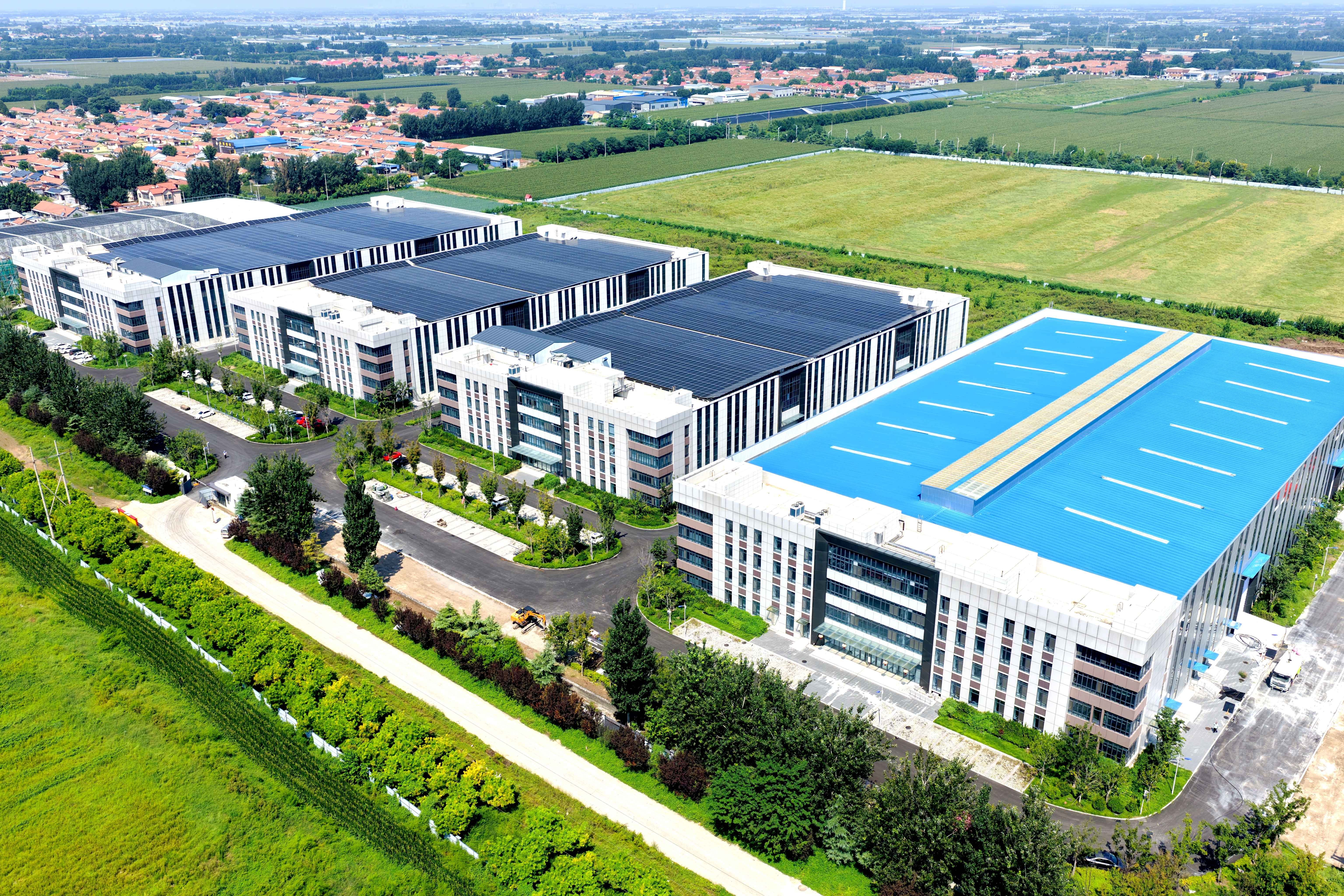
Weifang Chuanhe New Material Co., Ltd. (CHUAN HE) — founded 2013, 62,000 m² facility, 100% export, main markets across the EU, North America, Latin America, the Middle East, and Southeast Asia.
Have Questions or Need More Details?
Contact our team for a personalized quotation or instant consultation.
Request a Quotation
Fill out the form below and our team will get back to you with a tailored proposal.
WhatsApp Direct Chat
Prefer to chat in real-time? Message us on WhatsApp for instant assistance & quick answers.
- Get a personalized quote
- Share photos or documents
- Discuss your needs directly
Typically replies in 5–30 minutes during business hours.