Crumbly Cake Ruining Your Delivery Reputation? Try HB-1912 Rigid Trays
Crumbly Cake Ruining Your Delivery Reputation? Try HB-1912 Rigid Trays
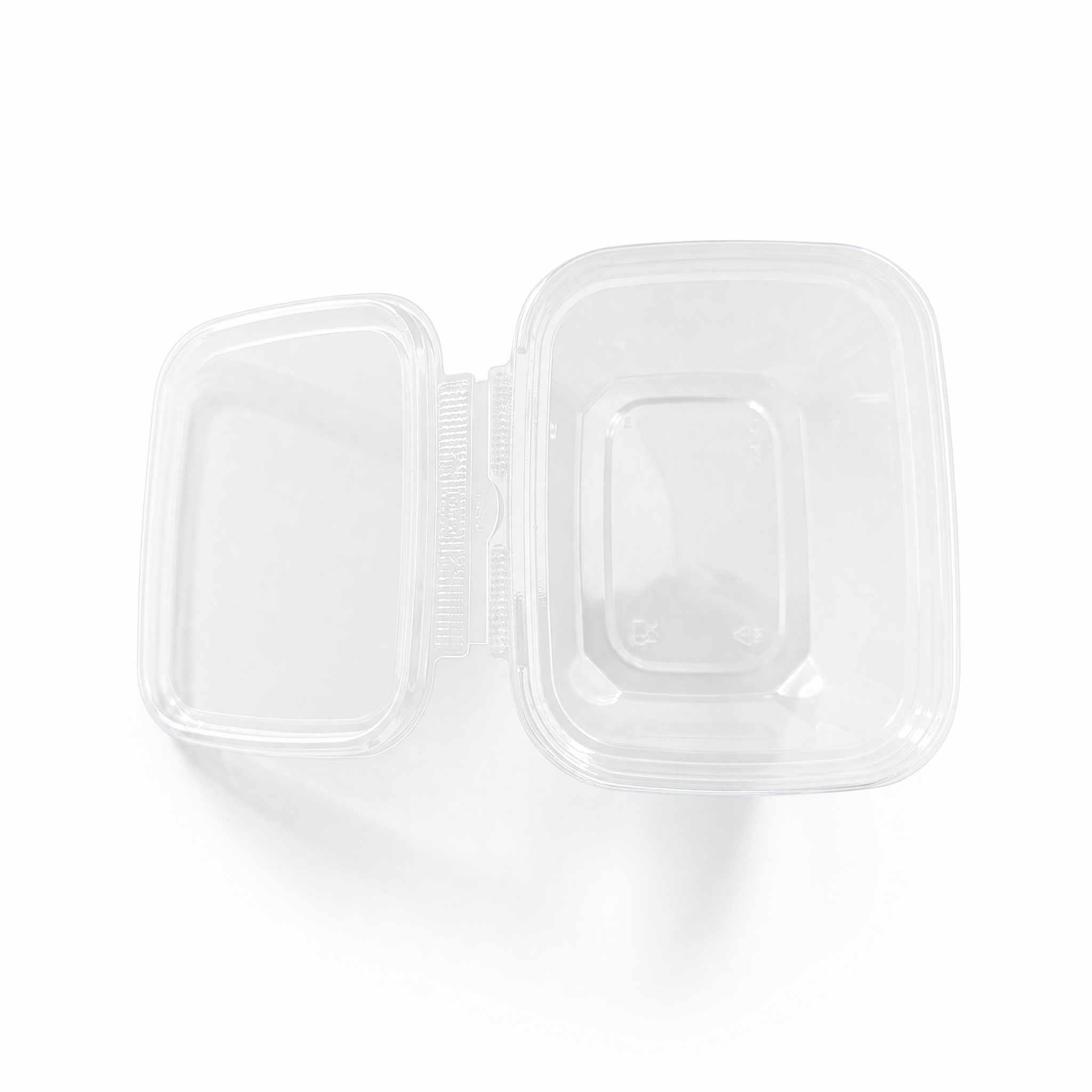
A cake slice that lands on the customer's table in pieces tells that customer three things at once: nobody protected the product, the brand did not plan the journey, and the next order should go somewhere else. Crushed corners, cracked chocolate shells and sugar-dusted tops smeared into the lid are not baking failures. They are packaging failures, and they repeat on every order until the tray itself changes.
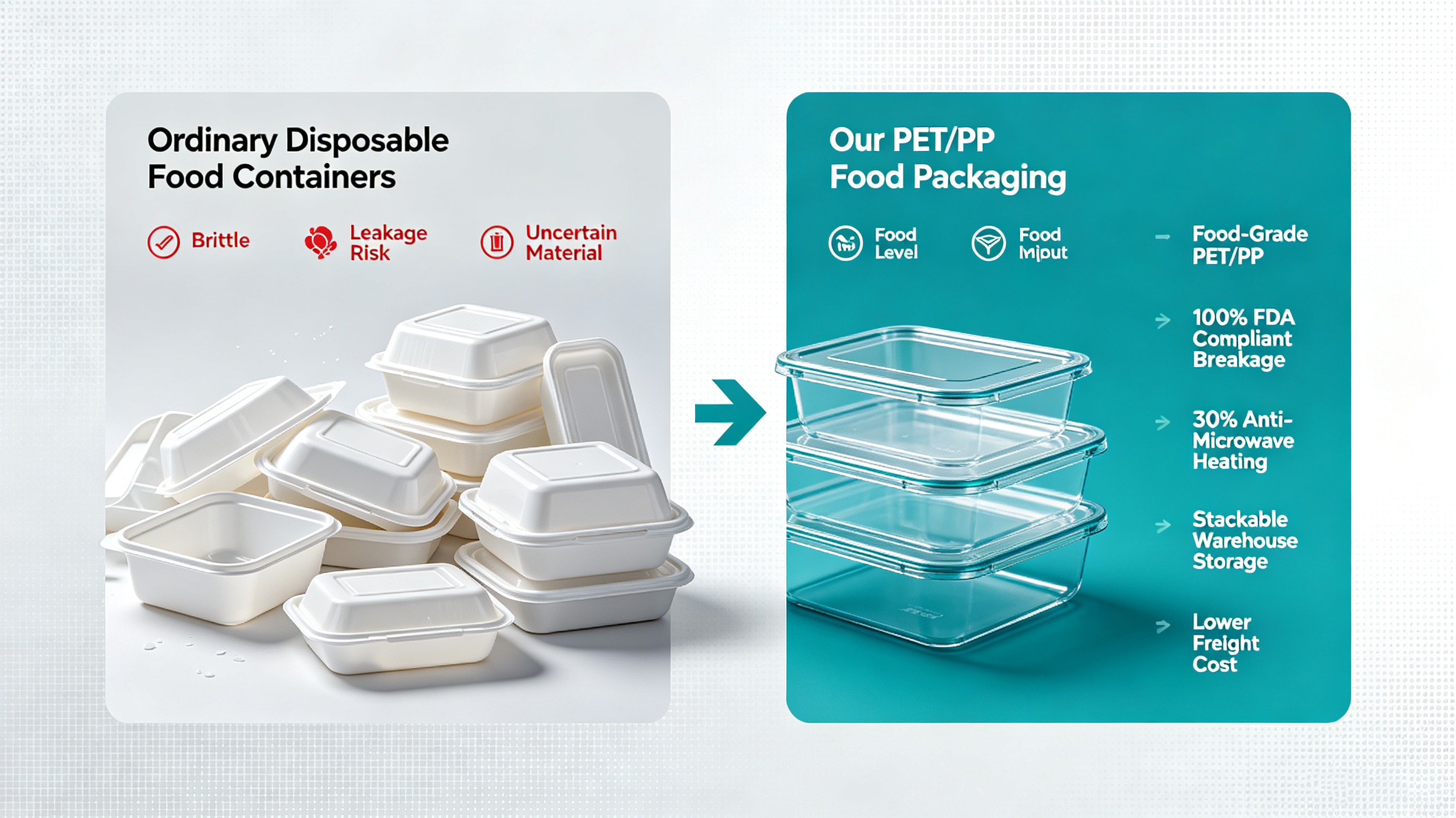
The short answer: the HB-1912 rigid tray is a thermoformed, food-grade PET bakery tray measuring 17.2 × 15.5 × 6.2 cm, produced by Weifang Chuanhe New Material Co., Ltd. (CHUAN HE). Its thickened reinforced structure is rated at 30% higher impact resistance and a 35% lower drop breakage rate than ordinary disposable plastic food containers, it stacks downward onto its own rim instead of onto the product, and it seals closed to block air and moisture. Those three properties are what stop a soft, crumbly bake from degrading on the way to the customer and on the retail shelf afterwards.
The problem: why crumbly bakes fail between the line and the customer
Bakery products are mechanically fragile in ways that other packaged foods are not. A sponge cake, a cream-filled pastry or a decorated cookie has almost no internal structure to resist a point load, and it is usually the most expensive item in the parcel relative to its weight. That combination produces four predictable failure modes:
- Vertical crush. Thin-wall trays flex under stacking pressure. When the pack below carries the weight of the pack above, the load transfers to the product, not to the tray structure.
- Impact and drop damage. Last-mile handling produces drops that thin-walled blister packaging absorbs poorly. The classic result is a cracked edge or a shattered flange, not a clean dent.
- Moisture migration and staling. Packaging that does not seal closed lets air and moisture move across the product surface. Crusts soften, glazes dull, and shelf life shortens on the display counter.
- Condensation and fogging. In chilled display, ordinary clear containers fog up. The customer cannot see the product, and a bakery item that cannot be seen does not sell.
Each of these failures produces the same commercial outcome: refunds, repacking labour, spoiled stock and review text that follows the brand for months. The damage usually costs more than the packaging line ever saved.
Industry background: bakery demand is scaling faster than packaging specifications
The volume economics behind bakery packaging are not in question. Grand View Research valued the global food packaging market at USD 421.6 billion in 2025 and projects USD 599.0 billion by 2033, with Asia Pacific holding a 40.0% revenue share in 2025 on the back of urbanisation and online food delivery. Within that, the global thermoform packaging market was valued at USD 54.7 billion in 2025, and PET holds the largest material share at 44.8%.
The pull comes from production, not only from packaging spend. China exported USD 1.28 billion in baked goods in 2024 according to the Observatory of Economic Complexity, which implies a correspondingly large requirement for primary bakery packaging such as PET and PP containers, trays and clamshells. On the tamper-evidence side, Mordor Intelligence projects that market to grow from USD 2.56 billion in 2025 to USD 4.26 billion by 2030, a CAGR of 10.72%.
Regulation is moving at the same time as demand. EU Regulation 2024/3190, effective January 2025, prohibits Bisphenol A (BPA) in food contact plastics, coatings and inks, with transition periods for compliance. In the United States, FDA 21 CFR 177.1520 sets the safety requirements for polypropylene as a food-grade plastic, particularly for heat-resistant and microwave-safe containers. For bakery buyers this means the packaging decision is no longer only a protection decision; it is also a documentation decision.
Note on market sizing: published bakery packaging figures diverge sharply by scope — Strategic Market Research cites roughly USD 12.4 billion while Market Research Future cites USD 57.76 billion — because each analyst defines the category differently. Treat any single number as a scope statement, not as a precise market value. The established multinational players in the wider category include Amcor Plc, Berry Global Inc., Sealed Air Corporation and Mondi Group, alongside thermoforming specialists in Asia.
The solution: what the HB-1912 rigid tray actually does
Rigidity is the design decision that separates a tray that protects a bake from a tray that only contains it. The HB-1912 is built around a thickened reinforced structure rather than a thin wall, and the measured consequences of that choice are what bakery buyers should evaluate on.
Rigidity and stacking: solving the crush problem
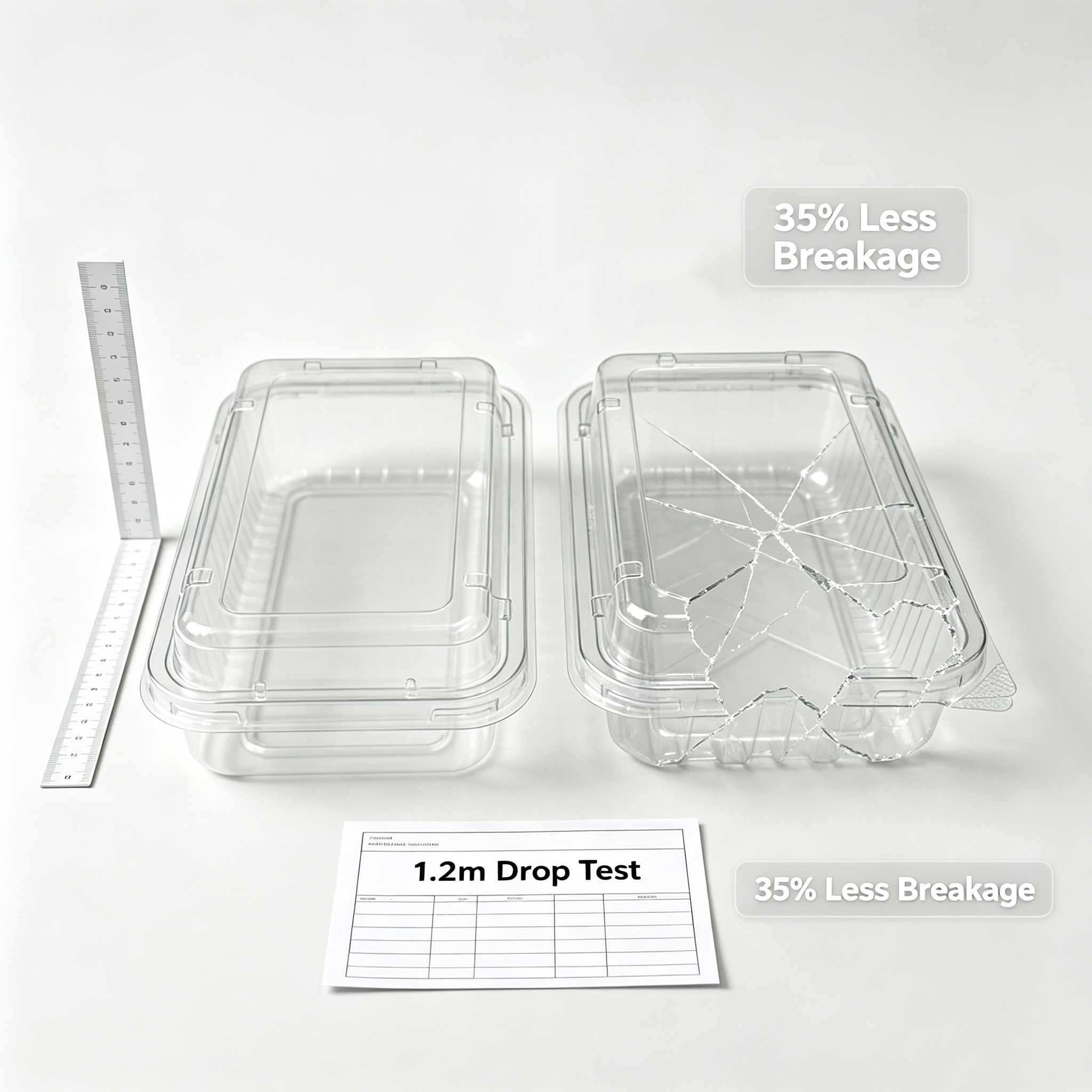
Against ordinary thin-wall PET blister packaging, the HB-1912 delivers 30% higher impact resistance and a 35% reduction in drop breakage rate. It is designed to withstand a 1.2 m vertical drop without rupture. Because the tray is stackable and the lid carries the load, stacked packs press down on the tray rim rather than on the cake inside, which is the mechanical reason a decorated product survives a parcel network at all.
Sealing and shelf life: solving the moisture problem
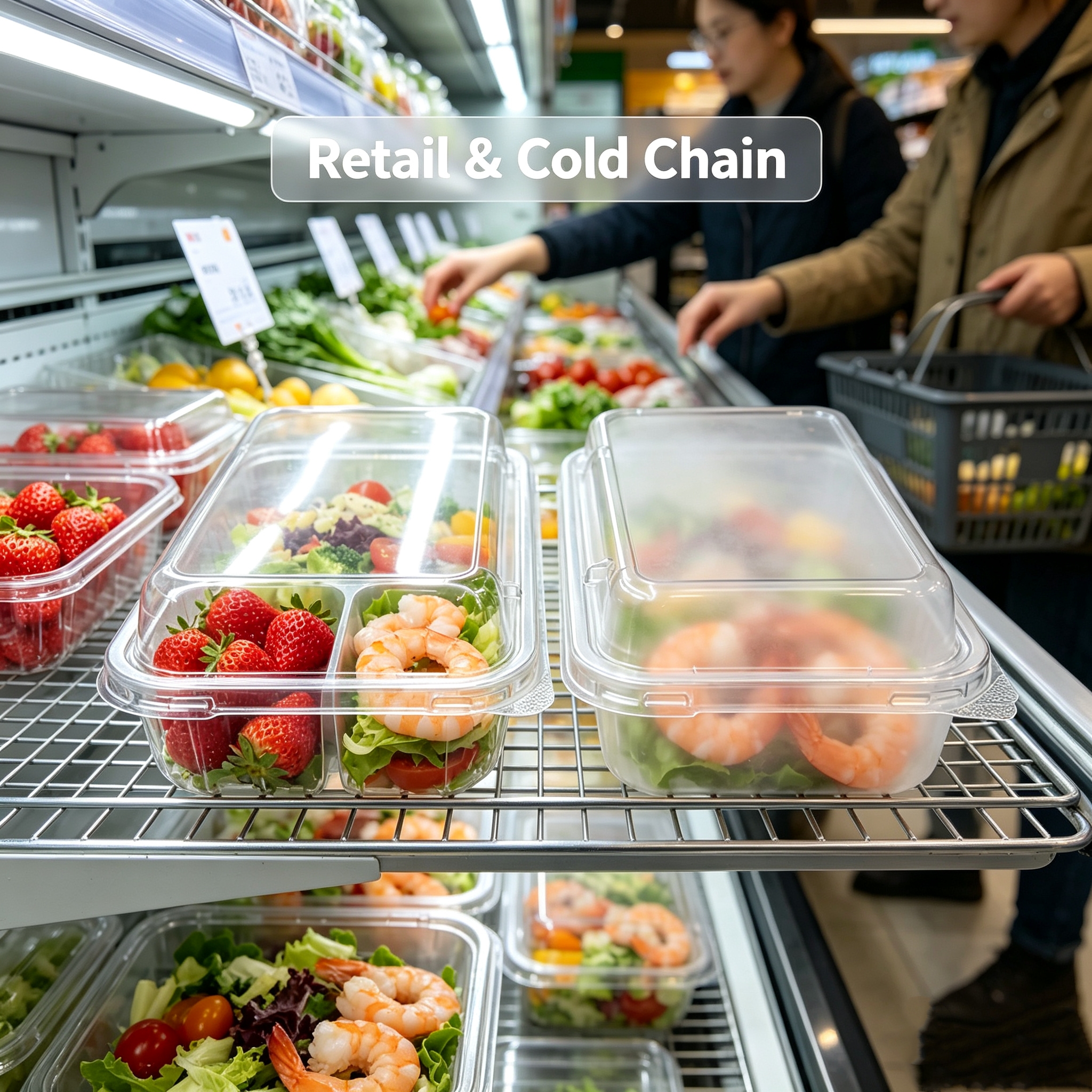
The tray claims a leak-proof seal once closed, blocking the ingress of air and moisture, with sealing tightness reported 32% higher than alternative blister boxes and a food spoilage rate reduced by 26%. For fresh produce, baked food, seafood and cold-chain circulation this is the property that decides whether a product is still sellable after a shift on the counter. The uniform sealing edge is also stable on automatic packaging assembly lines, which is the operating requirement when a tray has to run through a modified atmosphere packaging (MAP) workflow rather than being sealed by hand.
Temperature range: from freezer to display
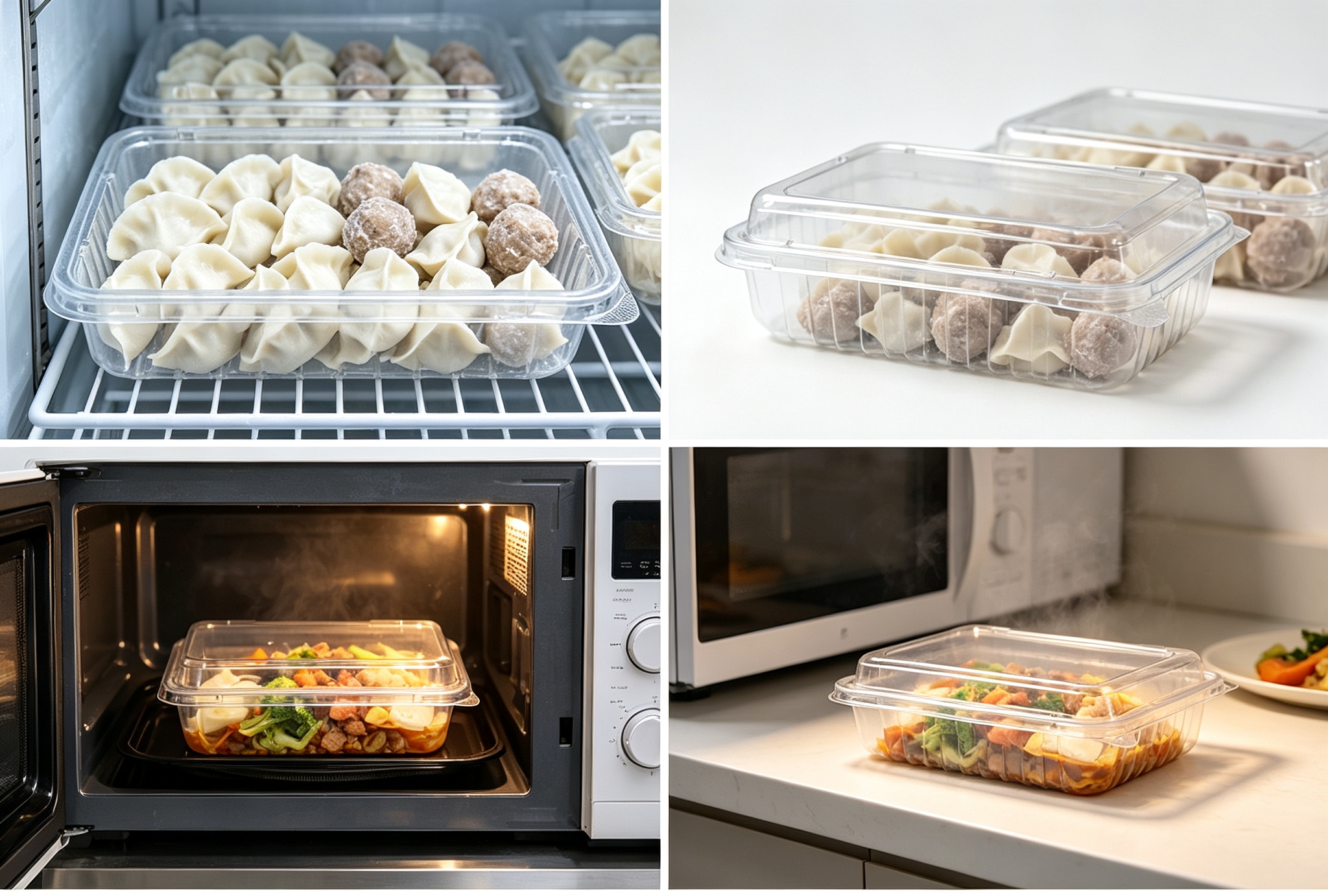
Performance holds across both cold and hot conditions: the tray resists a temperature range from −18 °C to 120 °C, with heat deformation rate reduced by 38% and low-temperature cracking rate reduced by 32% compared with blister packaging that has no low-temperature or heat-resistant treatment. In practice that means one tray format can move from quick-freezing to microwave reheating without a material switch, which reduces both packaging SKUs and logistics waste.
Visibility: keeping the product sellable on the shelf
The tray is made of PET, a food-grade, BPA-free material that provides high transparency for clear visibility of contents. Where an anti-fog coating is applied, visibility retention improves by 40% over untreated containers, and the appearance stays clear in a 0–8 °C cold storage environment. Anti-fog treatment also reduces cleaning frequency, since condensation on the lid no longer has to be wiped down between display cycles.
Tamper evidence as an option
For e-commerce bakery brands and pharmacy-adjacent food channels, the same product family is available with an anti-tamper structure. After initial closure, the container is designed for one-time opening only, and any subsequent opening causes irreversible damage that is easy to detect. The locking tab cannot be restored to its original closed state. The product cost increases slightly, but the design reduces the risk of returns caused by tampering, and visual tamper evidence improves trust at the delivery point.
Compliance: the part that decides whether the tray can ship
The tray is 100% compliant with FDA food contact requirements and uses food-grade raw material with good toughness and anti-breakage properties. CHUAN HE's manufacturing site holds CE, BRC, FDA, EU and SGS certification. The supplier's risk-control programme addresses chemical migration, sharp fragments, microbial contamination and unqualified raw materials polluting food through food-grade raw material verification, migration and physical testing, clean production controls, third-party testing, batch traceability and long-term archiving of compliance records, including declarations of conformity and alignment with EU 10/2011, PPWR and PFAS limits.

Cost: where the 5% sits
Food-grade packaging is not the cheapest line on the quote. The tray is positioned about 5% higher in cost than low-grade containers, which is described as competitive among food-grade packaging, and the difference is recovered through lower overall loss expense, reduced repacking and fewer refunds. The lightweight design reduces logistics transportation cost, no special storage condition is required, and trays stack to save warehouse space. The realistic comparison is not tray price against tray price; it is tray price against the value of the product it protects.
Step-by-step: how to qualify the HB-1912 tray for your bakery line
- Name the failure you are packaging against. Decide whether the priority is crush, drop impact, moisture migration, condensation or tamper evidence. A tray specified against the wrong failure mode will still disappoint, even if the material is correct.
- Match the footprint to the product and the display plan. The HB-1912 measures 17.2 × 15.5 × 6.2 cm. Check slice depth, garnish height and whether the tray will be displayed flat on a shelf or stacked in an outer carton.
- Validate material and destination-market compliance. Confirm food-grade PET and FDA food contact compliance for direct food contact. If the goods enter the EU, confirm BPA-free status against EU Regulation 2024/3190, which has applied to food contact plastics, coatings and inks since January 2025.
- Test drop, seal and temperature as a set. Run a 1.2 m vertical drop check on the packed configuration, verify the closed seal holds against air and moisture, and confirm behaviour across the −18 °C to 120 °C range used in your own cold chain and reheating steps.
- Confirm line compatibility before tooling. The tray needs a uniform sealing edge that is stable on automatic packaging assembly lines, particularly if your process uses MAP equipment or automated lidding.
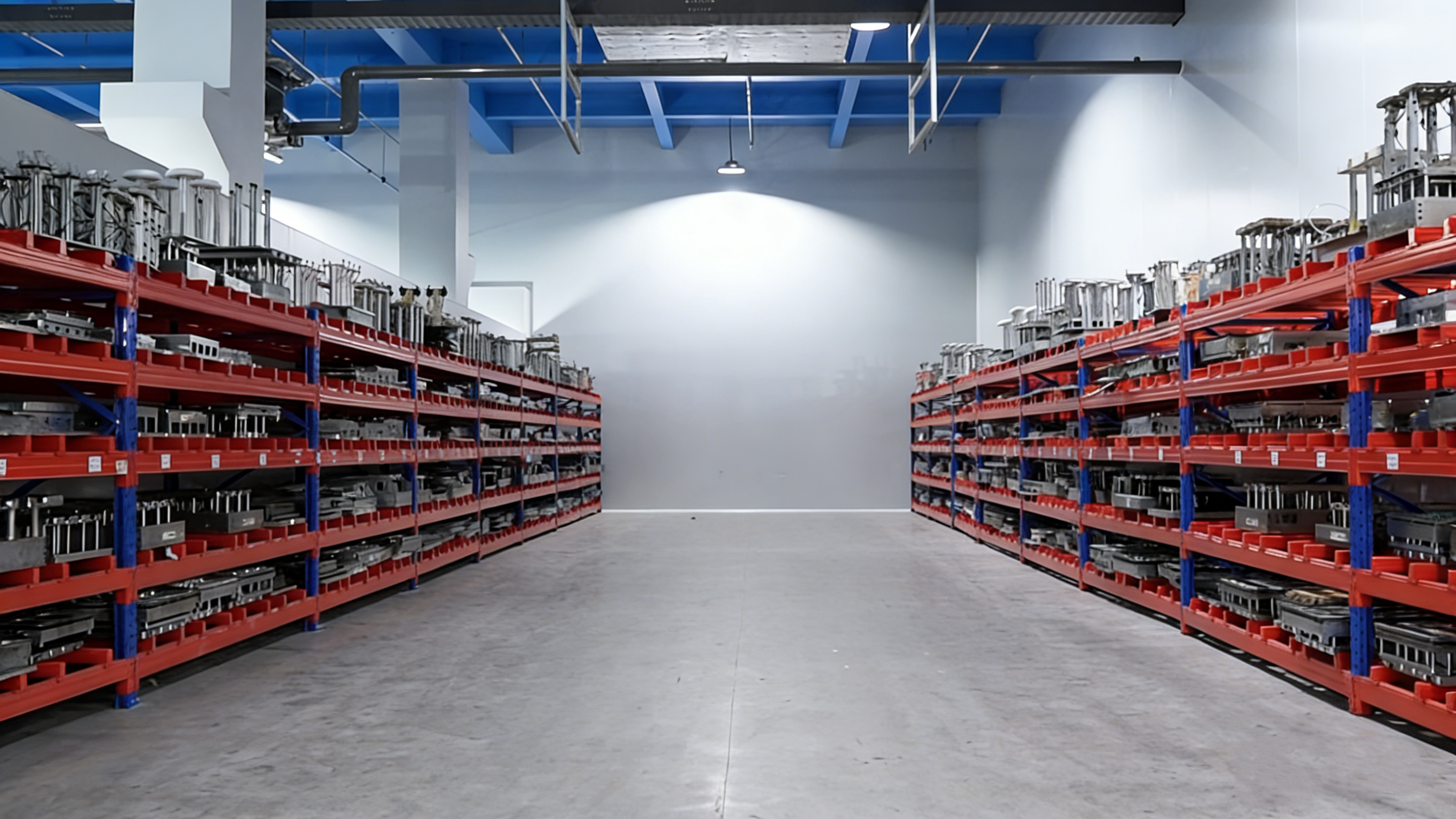
- Lock tooling and repeatability. CHUAN HE runs an in-house mold workshop alongside four PET sheet extrusion lines and two PP sheet extrusion lines, which reduces reliance on outsourced raw materials and supports coordinated production and faster delivery on repeat orders.
Use cases: where a rigid bakery tray changes the outcome
- Direct-to-consumer bakery e-commerce. Cake slices, brownies and decorated cookies that pass through parcel networks benefit most from the drop resistance and stackability, and the tamper-evident option answers the customer question of whether the pack was opened before arrival.
- Supermarket and convenience bakery counters. Clear, anti-fog visibility in 0–8 °C display keeps the product shoppable, while the closed seal slows staling on the counter.
- Frozen and thawed desserts. Tiramisu, mousse cakes and frozen cream products use the same format across freezing, transport and thawing, since the tray holds stable hardness after temperature changes.
- Cookie, mochi donut and snack multipacks. Retail snack packs need the flange to stay intact through automated handling and repeated customer picking; a thickened structure reduces cracking and loose fragments.
- Takeaway and ready-meal bakery items. Leak-proof sealing and heat tolerance support hot-hold and reheated formats without switching packaging materials.
- Export programmes. With China exporting USD 1.28 billion in baked goods in 2024, exporters need trays that are documented for FDA food contact and consistent with EU material restrictions at the same time.
Comparison table: HB-1912 rigid tray vs ordinary thin-wall PET blister packaging
| Evaluation criterion | HB-1912 rigid PET tray | Ordinary thin-wall PET blister packaging | Measured basis |
|---|---|---|---|
| Wall structure | Thickened reinforced structure | Thin wall | Documented structural difference |
| Impact resistance | 30% higher | Baseline | Comparison against ordinary disposable plastic food containers |
| Drop breakage rate | 35% lower; withstands 1.2 m vertical drop without rupture | Higher breakage under impact | Drop test result |
| Sealing tightness | 32% higher; leak-proof seal once closed | No equivalent leak-proof seal reported | Comparison against alternative blister boxes |
| Food spoilage rate | 26% lower | Baseline | Comparison against alternative blister boxes |
| Visibility in cold storage | 40% better visibility retention with anti-fog treatment; clear at 0–8 °C | Fogging under refrigeration | Comparison against PET blister containers without anti-fog treatment |
| Temperature range | −18 °C to 120 °C; heat deformation −38%; low-temperature cracking −32% | No low-temperature or heat-resistant treatment | Comparison against untreated blister packaging |
| Stacking and storage | Stackable; no special storage condition; fewer broken fragments on automated lines | Reported deformation risk under stack load | Supplier performance data |
| Tamper evidence | Optional one-time opening with irreversible damage on re-opening | Not available in this configuration | Comparison against packaging without tamper-evident locking design |
| Materials and compliance | Food-grade PET, BPA-free, 100% FDA food contact compliant | Varies by supplier | Supplier compliance statement |
| Cost position | About 5% above low-grade containers; lower overall loss expense | Lower unit price, higher loss risk | Supplier cost comparison |
Frequently asked questions
Is the HB-1912 rigid tray compliant with FDA food contact requirements?
Yes. The tray is made from food-grade PET and is 100% compliant with FDA food contact requirements, which makes it suitable for direct food contact applications. The manufacturing site is certified to CE, BRC, FDA, EU and SGS, and the risk-control programme covers chemical migration, sharp fragments, microbial contamination and unqualified raw materials through supplier certificate verification, regular third-party testing, workshop hygiene rules and long-term archiving of compliance records. For EU shipments, buyers should also confirm BPA-free status, since EU Regulation 2024/3190 has prohibited Bisphenol A in food contact plastics, coatings and inks since January 2025.
Can the HB-1912 tray run on modified atmosphere packaging (MAP) lines?
The tray is designed with a closed, leak-proof seal that blocks air and moisture once closed, and sealing tightness is reported 32% higher than alternative blister boxes, with a 26% reduction in food spoilage rate. Its uniform sealing edge is stable on automatic packaging assembly lines, which is the mechanical requirement a MAP or automated lidding process depends on. The tray also maintains stable performance across −18 °C to 120 °C, so a single format suits cold-chain circulation, retail display and reheating without a material change.
How much more does a food-grade rigid tray add to unit cost?
Food-grade PET packaging is positioned at roughly 5% higher cost than low-grade containers, which is described as competitive among food-grade packaging. The relevant comparison is total loss rather than unit price: a broken or repacked bakery item costs more than the material difference, and the tray reduces overall loss expense while a lightweight design lowers logistics transportation cost. Maintenance is also minimal — no special storage condition is required and the trays stack to save warehouse space.
Can I evaluate a sample before committing to a production mould?
Yes. Samples are the normal starting point, because drop behaviour, seal quality and stack height have to be validated against your own product and parcel configuration rather than on paper. CHUAN HE operates an in-house mold workshop and has developed thousands of moulds, with four PET sheet extrusion lines and two PP sheet extrusion lines feeding production, so a tray can be checked for fit and sealing before a dedicated tool is cut. Requests for samples, specifications or a quotation can be sent to chuanhe@newplasticbox.com.
How is supply continuity handled for repeat bakery packaging orders?
Weifang Chuanhe New Material Co., Ltd. was founded in 2013 and operates a facility of more than 62,000 m² in Weifang, Shandong, adjacent to Qingdao Port. The site runs 20 fully automatic thermoforming machines and 20 standard thermoforming machines, including four Kiefel machines imported from Germany, plus an in-house mold workshop and in-house sheet extrusion — a configuration that reduces reliance on outsourced raw materials and supports coordinated production for repeat orders. The company exports 100% of its output to the EU, United States, North America, Latin America and the Middle East. To discuss scheduling for a specific tray and volume, send your requirement through WhatsApp or the enquiry form and the team will confirm the plan for your order.
Conclusion: protect the product, and the review score protects itself
A crumbly cake arriving intact is not a lucky outcome; it is the result of a packaging decision made several steps earlier. The HB-1912 rigid tray addresses the four mechanisms that actually damage bakery products — crush, impact, moisture migration and condensation — with a 17.2 × 15.5 × 6.2 cm food-grade PET format rated 30% higher in impact resistance, 35% lower in drop breakage and 32% higher in sealing tightness than the thin-wall alternatives it replaces. Stackability and a closed seal then carry that protection onto the shelf, where anti-fog clarity and a 26% lower spoilage rate keep the product saleable rather than discounted.
For bakery producers, retail chains and e-commerce brands, the practical next step is a sample run against your own worst-case parcel and display conditions. Compare the tray on drop performance, seal integrity, stack height and documentation, not on unit price alone.
Next step: request a sample or a quotation
Send your product dimensions, target market and annual volume, and CHUAN HE will confirm tray fit, compliance documents and quotation. Contact: chuanhe@newplasticbox.com · WhatsApp +86 134-5566-2777 · Weifang Chuanhe New Material Co., Ltd., No. 2301 Industrial Third Street, Weicheng Economic Development Zone, Weifang City, Shandong Province, China.
Download the CHUAN HE 2026 product brochure (PDF)