
Fruit & Vegetable Packaging: EU & US Food Contact Compliance
Fruit & Vegetable Packaging: EU & US Food Contact Compliance
For buyers sourcing PET trays and salad containers, food contact compliance is decided before the first sheet is thermoformed — by the resin grade, the additive package, the migration testing, and the documentation a supplier is willing to sign. PET is authorized for food contact under EU Regulation (EU) No 10/2011 and meets food contact safety standards as a BPA-free material. The real question for a chain retail buyer is narrower: can this supplier prove it, for this model, under the conditions my produce will actually be sold in?
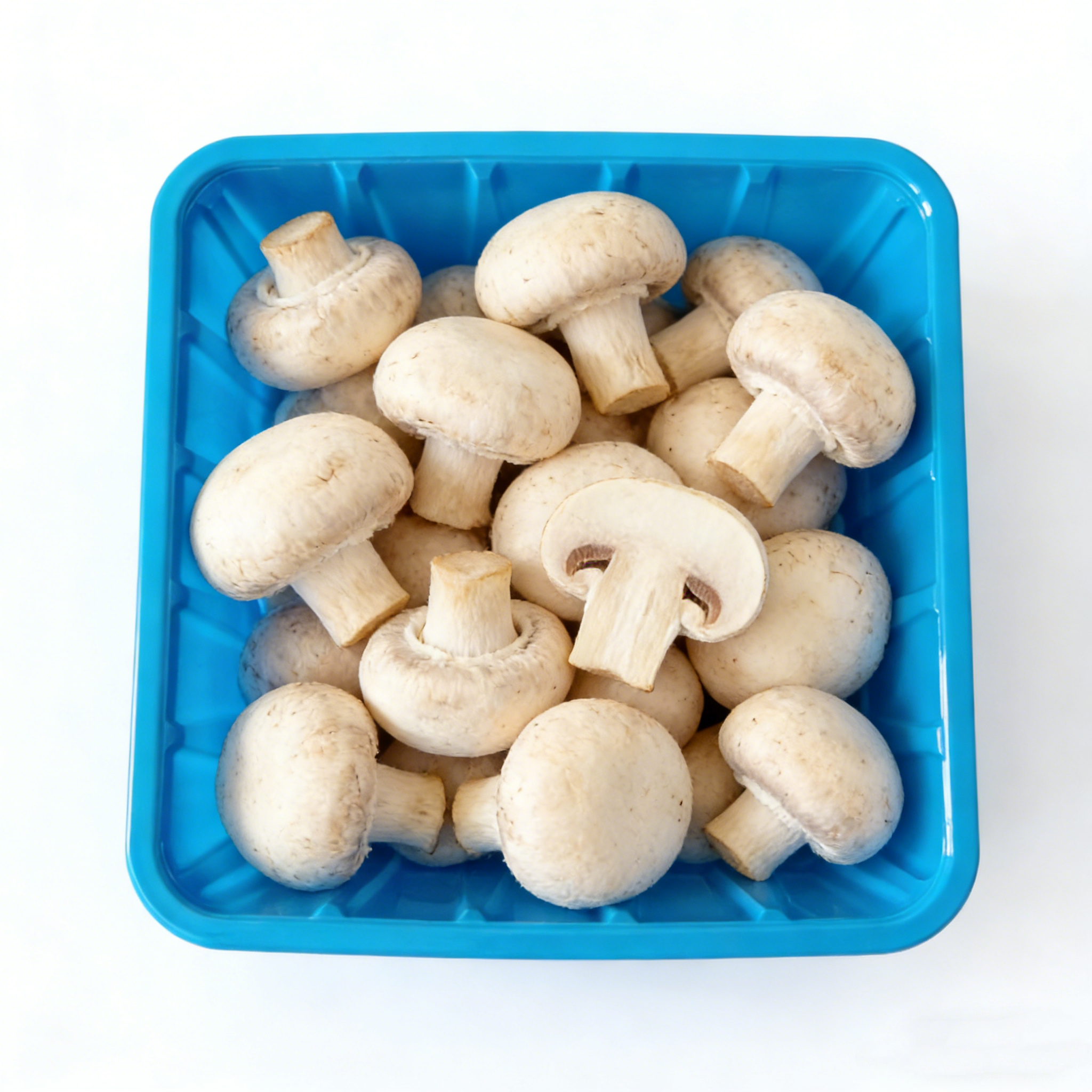
Food-grade PET produce trays: the compliance question starts with the material declaration, not the shelf appearance.
Problem Definition: Why Compliance Is a Documentation Problem
Most compliance failures in fresh produce packaging do not come from using the wrong polymer family. They come from three mismatches that are easy to miss at the quotation stage.
First, the wrong use condition. A declaration of compliance is written for a defined food type, contact temperature, and contact duration. A tray approved for short-duration refrigerated contact with fruit is not automatically approved for long-duration contact with fatty or acidic prepared foods. Buyers who apply one blanket specification across a whole range inherit that risk silently.
Second, the unverified claim. "Food grade" and "BPA-free" are useful descriptors, but they are not evidence. The evidence is a declaration of compliance referencing the applicable regulation, plus the supporting migration test data behind it. When a buyer cannot trace a claim to a document, the claim is marketing rather than compliance.
Third, the wrong material class. PET and PP are both governed by EU Regulation (EU) No 10/2011, but they are different materials with different processing windows, different additive sets, and different recyclability streams. Selecting a polymer by appearance rather than by classification is how specification errors enter a packaging line.
Industry Background: The Regulatory Frame Buyers Operate In
Two EU instruments set the baseline for plastic food contact materials, and one incoming regulation is already reshaping how buyers plan fresh produce packaging programs.
- Regulation (EC) No 1935/2004 provides the framework for all food contact materials. Its core requirement is that materials must not release constituents into food at levels harmful to human health.
- Regulation (EU) No 10/2011 specifically governs plastic materials and articles intended to come into contact with food. It is the regulation under which PET and PP containers are assessed.
- The EU Packaging and Packaging Waste Regulation (PPWR) will, from 2030, ban single-use plastic packaging for fresh fruit and vegetables under 1.5 kg.
That third point changes the buying brief. For fresh produce sold in small-format consumer units, the compliance conversation is no longer only about whether a polymer is safe — it is also about what the format itself will be permitted to be. Buyers planning multi-year packaging programs in the EU are, in practice, evaluating two things at once: current food contact conformity, and format durability beyond 2030.
In the US, the equivalent gate is food contact substance clearance for the specific material and intended use, which is why North American buyers tend to ask for documentation tied to the exact resin and application rather than a category-level statement.
The commercial context explains why this scrutiny is intensifying. The global fresh food packaging market reached USD 134.60 billion in 2024 and is projected to reach USD 240.50 billion by 2035, according to Spherical Insights & Consulting. The produce-specific segment was valued at approximately USD 38.08 billion in 2024, per Market Research Future, while the Europe fresh food packaging market stood at USD 15.2 billion in 2024 with a projected CAGR of 4.5% through 2033. Thermoformed plastic for food packaging is expected to grow at a CAGR of 4.9%, reaching USD 20.66 billion by 2030, according to Grand View Research.
Growth of that shape puts more packaging volume, and more compliance surface area, in front of chain retail buyers. It also means the supplier base is broad — global names such as Amcor PLC, Berry Global Group, Sealed Air Corp, Mondi Group, and Smurfit Kappa operate alongside regional thermoformers — so specification discipline, not supplier size, is what protects the buyer.
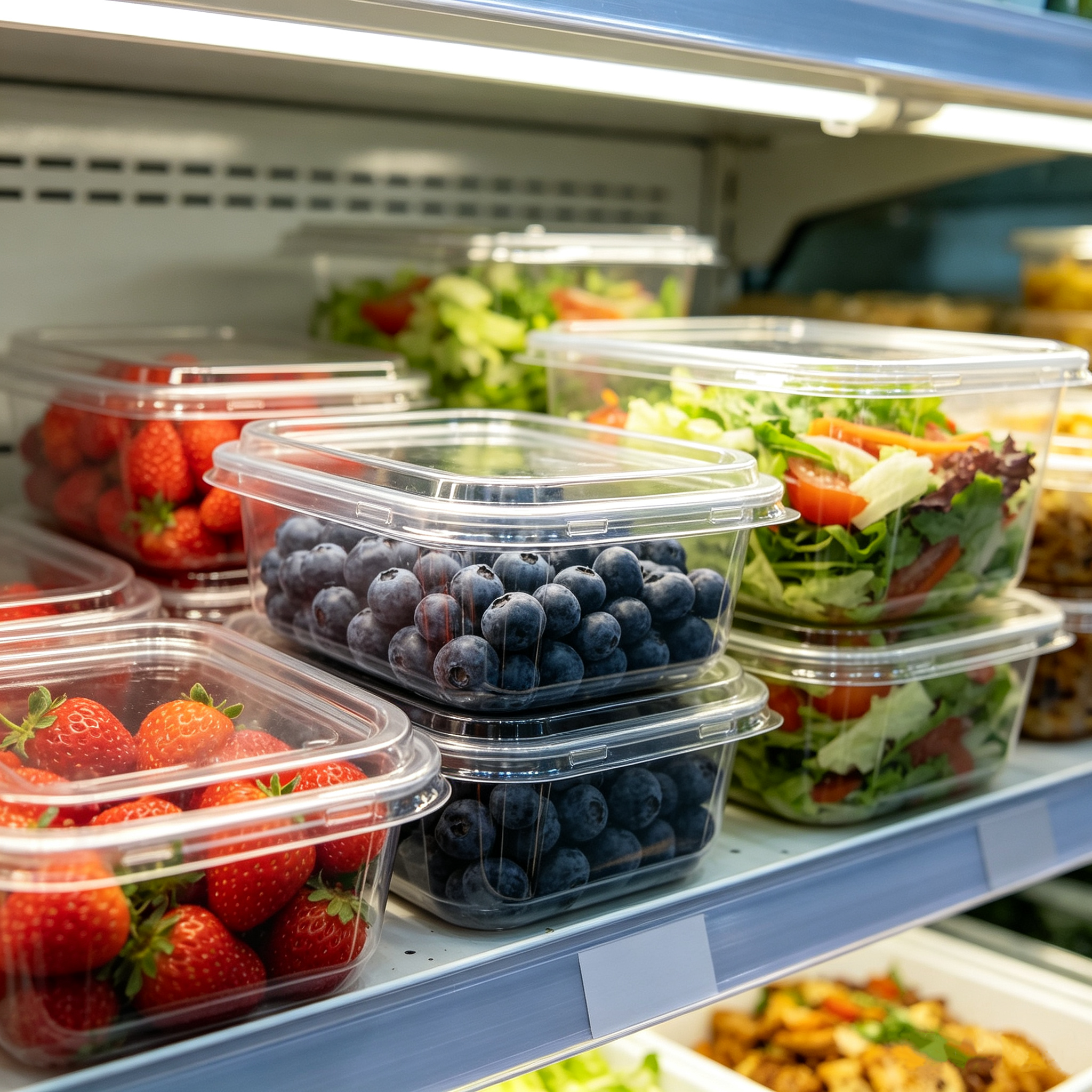
Refrigerated chain-retail display: the use condition that the compliance declaration must actually cover.
The Supplier Verification Checklist for PET Trays and Salad Containers
A food contact verification process for fresh produce packaging works best as a short, repeatable list. Each item below answers a specific buyer question.
1. Declaration of compliance, scoped to the product
Ask for a declaration that names the regulation it is issued against and states the intended food types, contact temperature, and contact duration. A declaration covering "food contact generally" is weaker than one covering refrigerated contact with fresh fruit and vegetables.
2. Material classification and resin identification
Confirm that the tray or container is PET or PP as declared, and that the material falls under the plastic food contact framework rather than a general-purpose polymer grade. This matters because PET classification in regulations determines which conformity route applies.
3. BPA-free structure
Food-grade BPA-free plastic, compliant with food contact safety standards, is the baseline expectation for produce trays and salad containers. Buyers should have this stated in the product documentation, not inferred from a general brand claim.
4. Migration testing evidence
Migration testing data supports the declaration. Ask which tests were run, against which simulant and condition set, and whether results are held per model or per material family.
5. Structural performance in the cold chain
Compliance does not survive a cracked tray. Rigid, anti-deformation structure reduces goods damage in transit, and for blister containers in the range the stated performance is a 1.2 m vertical drop without rupture. Buyers should tie this to their own logistics profile rather than accept it as a general statement.
6. Line compatibility
If the trays will run on a MAP modified atmosphere packaging line, or through scanning and label application, compatibility should be confirmed at the specification stage. A tray that is compliant but mis-sized for the line is a compliance problem in practice.
Applying the Checks to Specific Models
Compliance verification becomes concrete when it is anchored to models a buyer is actually considering. Three examples from the CHUAN HE range show how the checks map onto real specifications.
HB-SG300ML — produce storage container
HB-SG300ML measures 17.5 × 13.5 × 6 cm and is made of PET. It belongs to the produce storage container category alongside berry storage containers and ventilated produce keepers. Its documented properties include refrigerator safety, food-grade BPA-free plastic compliant with food contact standards, stackable design, and a clear transparent body suited to supermarket retail display. For a buyer, the verification actions are: confirm the declaration covers refrigerated fresh produce contact, confirm the model-level specification matches the quoted size, and confirm whether custom size, color, or logo printing changes any part of the declaration scope.

The HB-SG300ML produce container: PET construction, refrigerator-safe use, stackable format.
HB-7001 — fruit and vegetable container
HB-7001 measures 19.5 × 19.5 × 5 cm and shares the same material and compliance baseline: food-grade BPA-free PET, refrigerator safe, stackable, clear transparent body for retail display, with custom size, color, and logo printing available. The wider footprint makes it suitable for shallow, high-visibility produce presentation. The buyer check here is whether the wider format still satisfies the retailer's own packaging spec for the category, since display format and compliance are separate approvals.
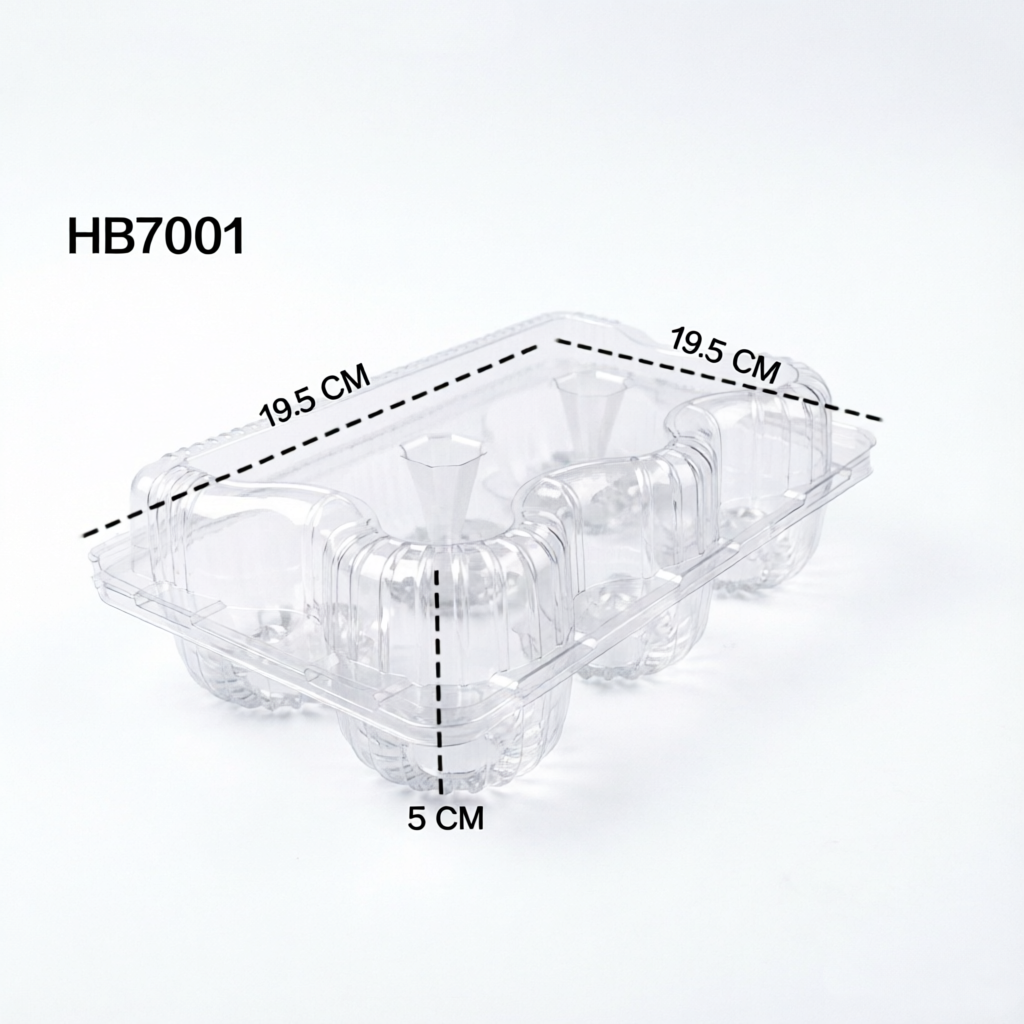
HB-7001 at 19.5 × 19.5 × 5 cm — dimension verification is part of the compliance record.
HB5053 — salad container
HB5053 measures 15.2 × 10.2 × 5.3 cm and is made of PET, in the clear plastic salad box category. It uses food-grade BPA-free plastic, is durable and anti-break to reduce transportation damage, has a leakproof and airtight lid, an optional compartment design to separate sauce and vegetables, and a stackable structure. For salad formats the compliance questions shift toward contact duration and moisture, since prepared salads differ from whole produce in both respects.
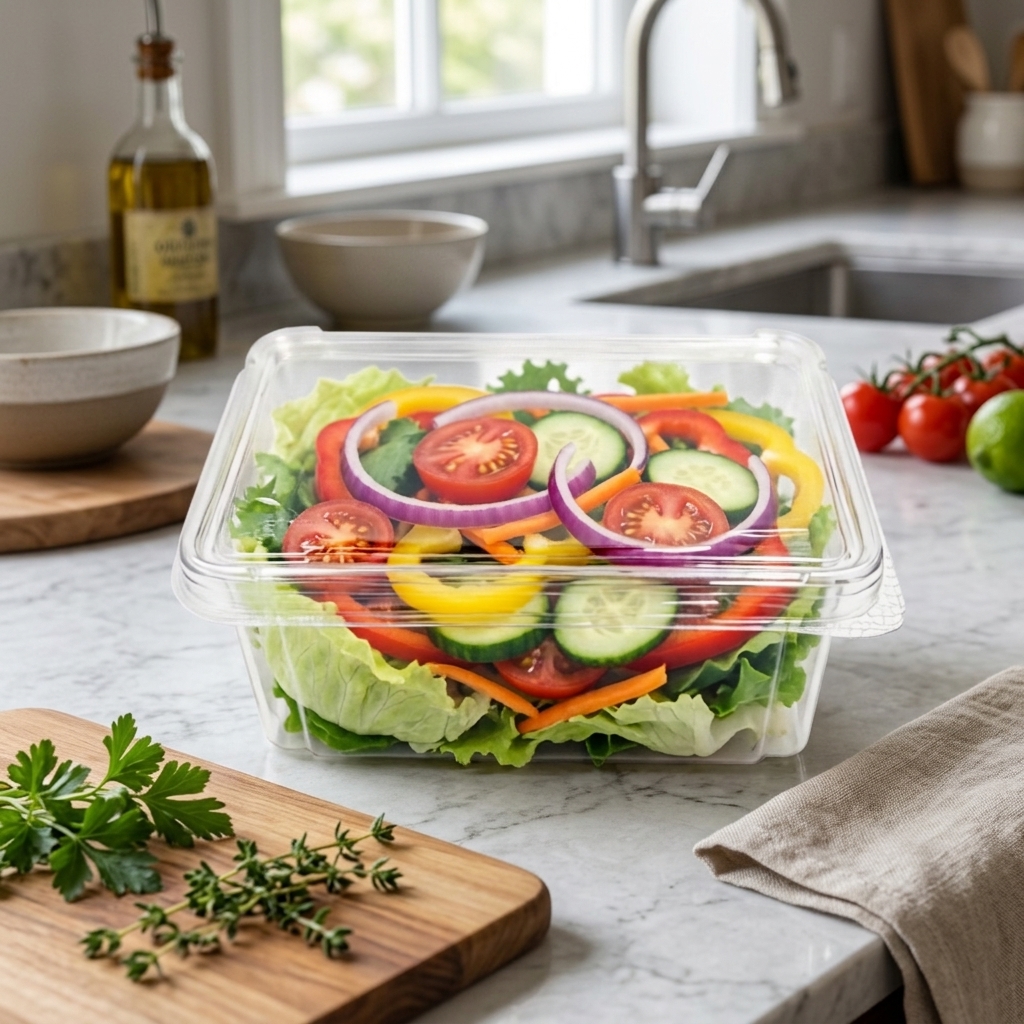
HB5053 — clear PET salad container with leakproof, airtight lid and optional compartment.
Step-by-Step Breakdown: A Five-Stage Verification Workflow
The workflow below is the sequence that keeps a compliance decision defensible when it is later reviewed by a retailer's quality team.
Stage 1 — Define the use condition
Write down the food type, the contact temperature, and the contact duration for each SKU. This single document prevents the most common specification error, which is over-broad application of a narrow declaration.
Stage 2 — Request scoped documentation
Request the declaration of compliance and the supporting migration test evidence, referenced to the model or material family being quoted.
Stage 3 — Confirm classification
Verify that the material is classified as PET or PP under the applicable plastic food contact framework, and that the resin grade matches the declaration.
Stage 4 — Validate physical fit
Confirm dimensions, stackability, lid closure, and line compatibility against the actual packing line. Structural claims such as anti-deformation and drop resistance should be matched to the buyer's own transit profile.
Stage 5 — Sample and seal the specification
Approve a physical sample, then lock the specification — material, dimensions, printing, and documentation package — so that repeat orders are auditable against the approved baseline.
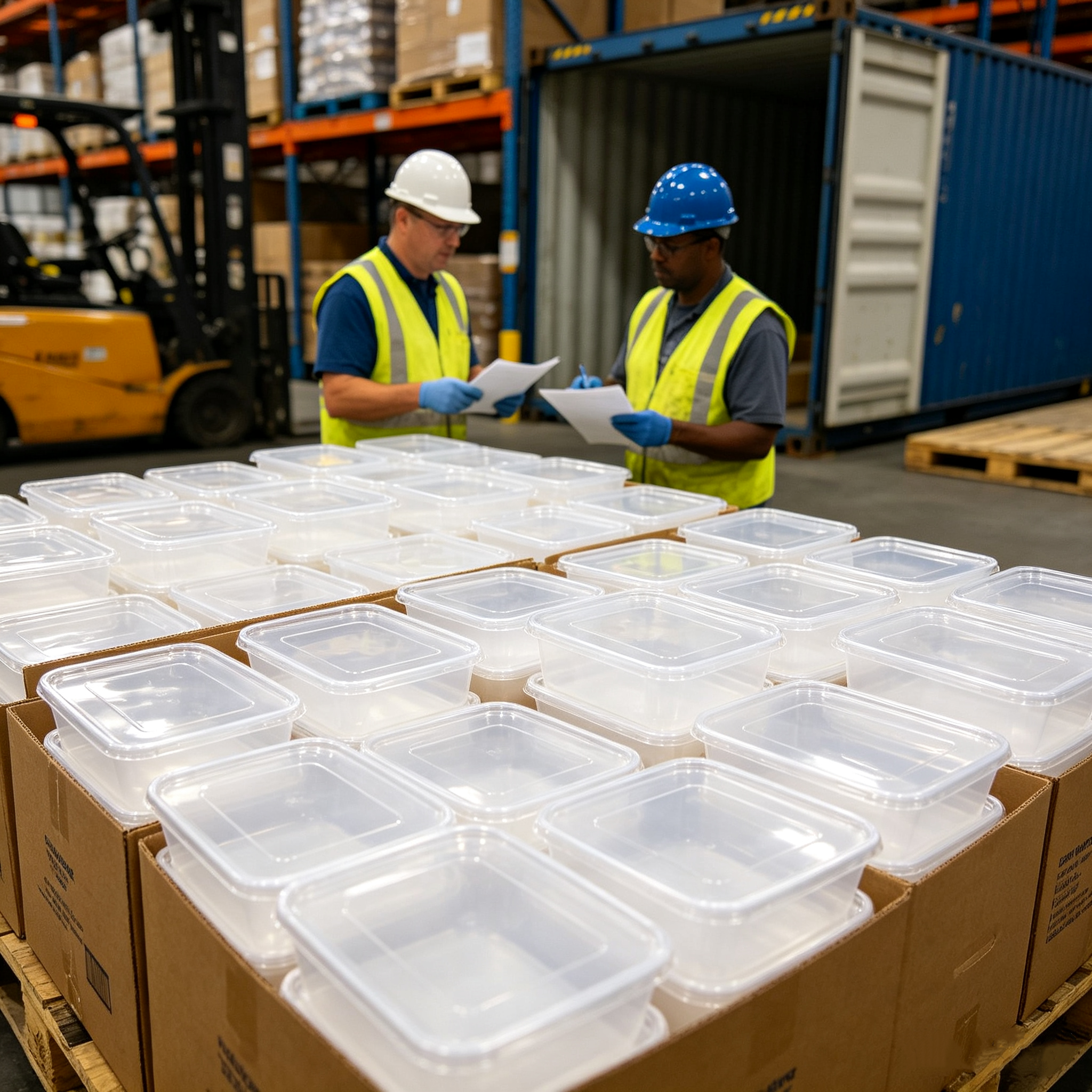
Quality inspection before dispatch: the point where the approved specification is checked against the produced lot.
Use Cases: Refrigerated Fresh Produce Retail in Chain Supermarkets
Chain retail is where compliance and display requirements collide. Supermarkets place produce or pre-made salads in trays and boxes for consumer selection, and the packaging must protect, display, and scan — while remaining within its declared food contact scope. E-commerce fresh channels add a second pressure: sturdy, volume- and weight-optimized packs that reduce logistics cost without compromising the pack's integrity.
Documented supply scenarios illustrate how these requirements are met in practice:
- North America: A food retail distributor and importer has used the product for over 3 years, with monthly orders of 120,000 pieces for fresh fruit and ready meal packaging in supermarket retail. The project achieved FDA food contact standard qualification, with custom sizes, PET material, microwave-safe capability, and customized printing.
- Europe: A European program serving supermarket chains, packaging wholesalers, and food retailers has run for over 7 years at 350,000 pieces per month across bakery, fruit and vegetable, and customized packaging applications, with compliant food-grade material, stackable design, and custom printing support.
- MENA: A food factory and chain supermarket program covering farm fresh fruit and vegetable packaging, cherry tomato and berry clamshells, harvest sorting, and retail display runs at 250,000 pieces per month, with clear PET clamshell containers, vent holes for freshness, and stackable food-grade construction.
- Latin America: A program with vegetable and fruit wholesalers and large chain supermarkets has run for over 6 years at 250,000 pieces per month, using stackable, high-transparency custom-size PET clamshell containers.
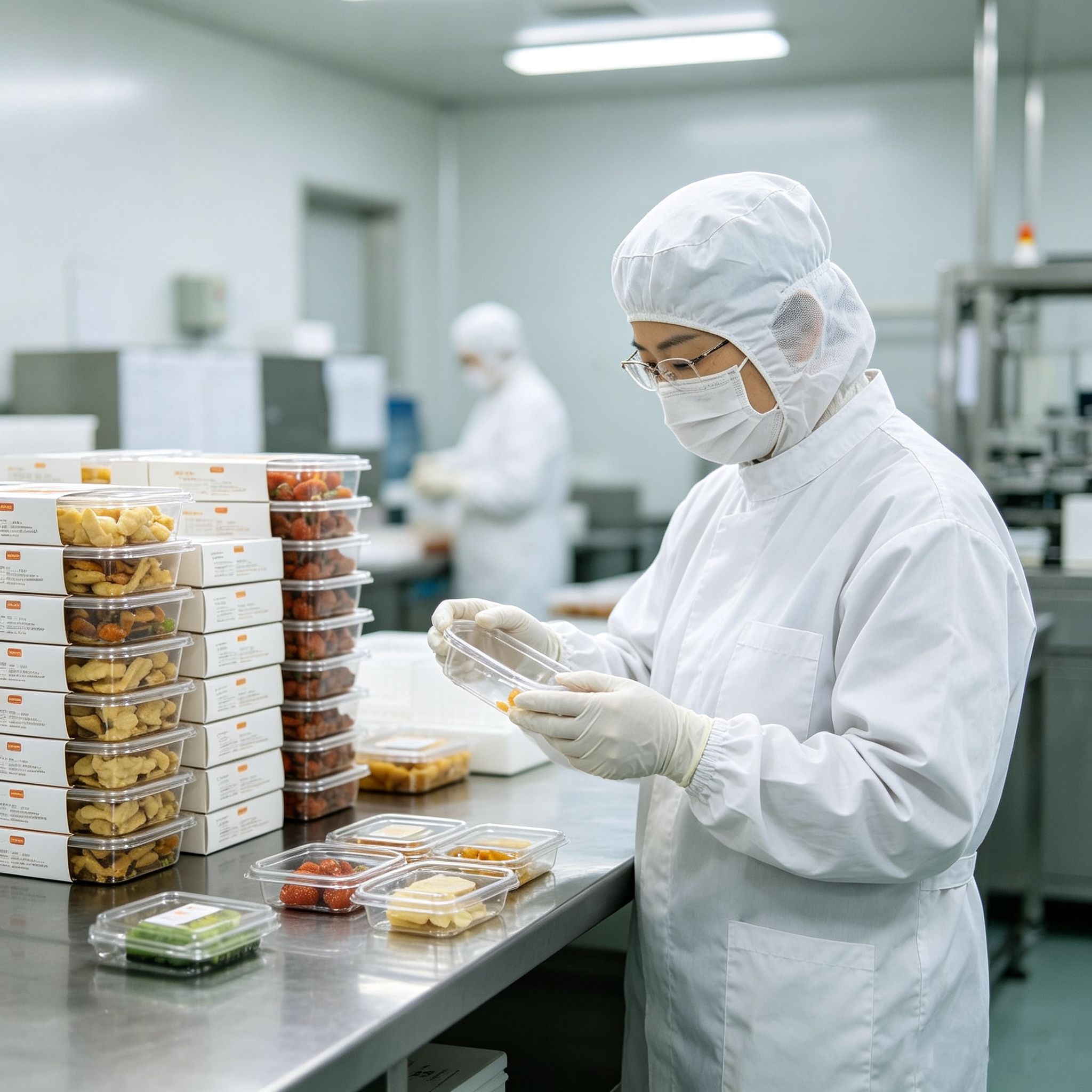
Batch acceptance: documentation, model reference, and physical lot checks belong in the same record.
PET vs PP in Food Contact Compliance: A Neutral Comparison
Both materials are governed by the same EU plastic food contact framework, so the choice between them is usually driven by format and function rather than by which is more compliant. The table below compares them only on points supported by the regulatory data and the supplied product documentation.
| Comparison point | PET | PP |
|---|---|---|
| EU plastic food contact framework | Covered by Regulation (EU) No 10/2011 | Covered by Regulation (EU) No 10/2011 |
| BPA-free food-grade declaration | Documented as food-grade BPA-free and compliant with food contact standards in the supplied product data | Not specified in the supplied product data |
| Typical role in fresh produce | Clear trays, clamshells, produce containers, salad boxes | Trays in the range where a PP format is specified |
| Examples in the CHUAN HE range | HB-7001, HB-SG300ML, HB5053, HB1720, HB-MG24 OZ, HB-3066 | HB-75-28(PP), HB-221360(PP) |
| Refrigerated storage suitability | Refrigerator safe per product documentation | Not specified in the supplied product data |
| Optical properties for retail | Clear transparent body for supermarket shelf display | Not specified in the supplied product data |
The practical reading: PET is the more thoroughly documented option in this range for clear, refrigerated, display-driven produce formats, while PP formats exist where the buyer's specification calls for them. The buyer's task is to confirm that whichever material is quoted, the declaration covers the intended use.
FAQ
Does PET meet EU and US food contact requirements for fresh produce packaging?
PET is authorized for food contact under EU Regulation (EU) No 10/2011, which specifically governs plastic materials and articles intended to come into contact with food, including PET and PP containers. Regulation (EC) No 1935/2004 provides the overarching framework — materials must not release constituents into food at levels harmful to human health. PET is documented as meeting food contact safety standards as a BPA-free material. For the US, clearance applies to the specific food contact substance and intended use, which is why US buyers typically request documentation tied to the exact resin and application rather than a category statement.
What should buyers verify about a supplier's PET tray and salad container production capability?
Buyers should verify four things: that the supplier controls material sourcing and sheet production rather than outsourcing it; that the declared PET grade matches the produced part; that model-level specifications such as dimensions are documented and repeatable; and that quality control is applied to the produced lot. Weifang Chuanhe New Material Co., Ltd. operates 4 PET sheet extrusion lines and 2 PP sheet extrusion lines alongside 20 fully automatic and 20 standard thermoforming machines, including 4 Kiefel machines, within a 62,000 m² facility in Weifang, China. The company holds CE, BRC, FDA, EU and SGS quality management system certifications, and applies 100% testing as part of its quality control process.
What drives the cost of compliant PET fruit and vegetable packaging?
Cost is driven less by the polymer name than by four variables: material grade and additive package, tooling and mold amortization, print or customization requirements, and order volume. In-house mold development and in-house sheet extrusion reduce outsourced raw material cost and allow coordinated production, which is why factory-direct supply supports both small trial orders and bulk wholesale. Buyers evaluating budget should compare the total specification — material, dimensions, printing, documentation, and packaging — rather than a unit price in isolation. A quotation can be requested against a defined specification and use condition.
Can buyers request samples of models such as HB-SG300ML or HB-7001 before ordering?
Yes. Small trial orders are supported, and custom size, color, and logo printing are available across the produce container and tray range, including HB-SG300ML (17.5 × 13.5 × 6 cm) and HB-7001 (19.5 × 19.5 × 5 cm). The practical sampling approach is to request the model closest to the intended use condition, then confirm material, dimensions, lid closure, and stackability against the actual packing line before locking the specification.
What lead time should buyers expect for PET produce trays and salad containers?
Standard lead time for the range is 30–45 days, with a minimum order quantity of 10,000 pieces for standard formats. Buyers planning EU programs should also factor in the regulatory timeline: from 2030, the EU Packaging and Packaging Waste Regulation will ban single-use plastic packaging for fresh fruit and vegetables under 1.5 kg. That makes lead time a strategic as well as an operational number — packaging formats approved today should be evaluated against that horizon. To move forward, request a quotation or sample against a defined use condition, or download the product catalog for the full model list.
Conclusion
Food contact compliance for PET fruit and vegetable packaging is a chain of evidence, not a badge. Regulation (EC) No 1935/2004 sets the safety principle, Regulation (EU) No 10/2011 provides the plastic-specific route under which PET and PP are assessed, and the incoming PPWR 2030 restriction on small-format single-use plastic produce packaging adds a format decision on top of the material decision.
For models such as HB-SG300ML, HB-7001, and HB5053, the verification path is consistent: confirm the declaration is scoped to your real use condition, confirm the material classification and BPA-free food-grade structure in writing, validate dimensions and line fit against a physical sample, and lock the specification so repeat orders remain auditable. Buyers who run that sequence across their range — rather than accepting a category-level claim — are the ones who keep refrigerated fresh produce retail programs stable through supplier changes and regulatory shifts.
Next step for buyers
Weifang Chuanhe New Material Co., Ltd. (CHUAN HE) manufactures PET and PP thermoformed packaging for fresh produce, salad, bakery, frozen food and dry fruit applications, exporting to North America, Europe, the Middle East, Southeast Asia and Latin America. Certified to CE, BRC, FDA, EU and SGS quality management systems.
Request a sample or quotation against your use condition, or review the full model range in the catalog.
Website: www.newplasticbox.com | Catalog download: Download the 2026 product brochure
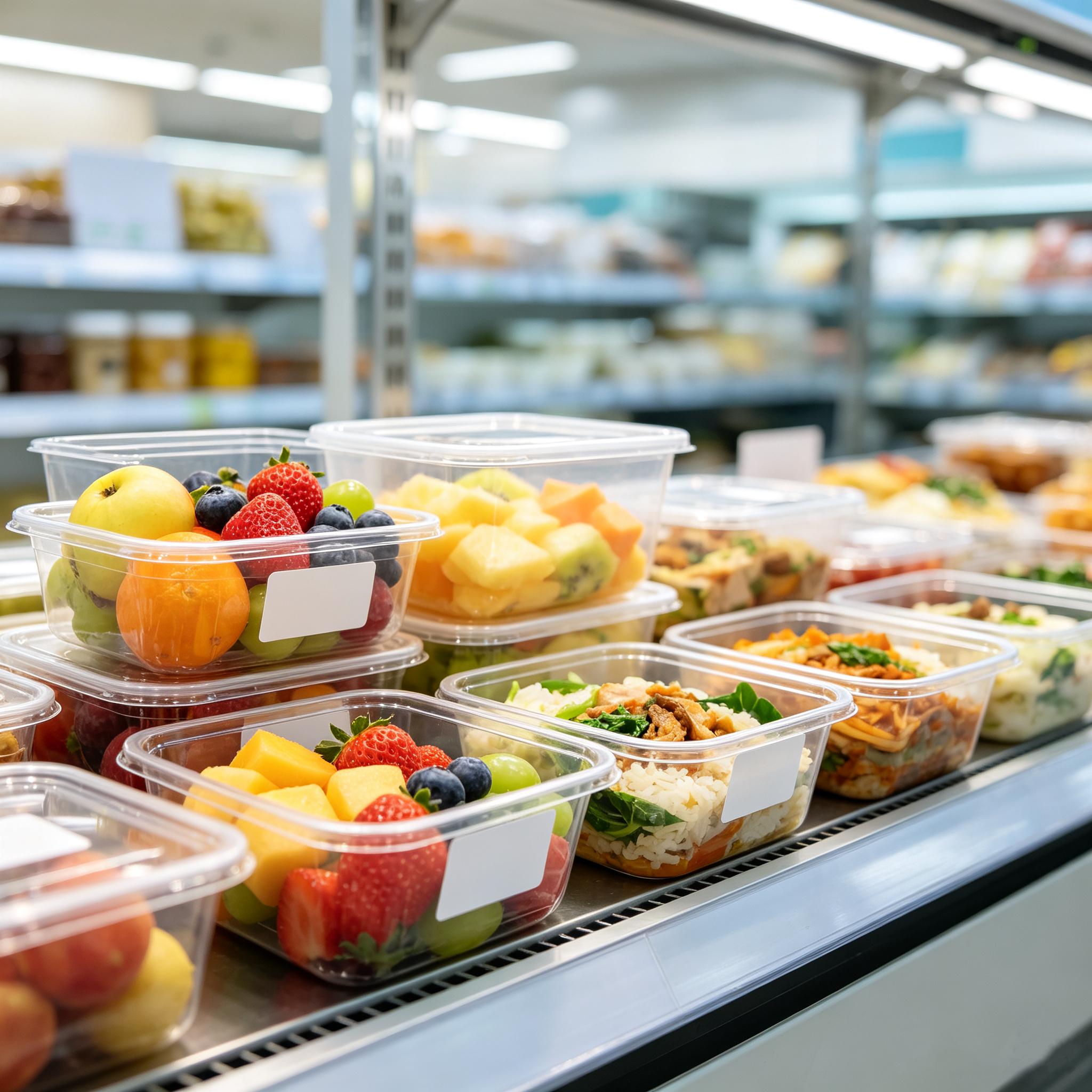
Compliant packaging, displayed well — the outcome the verification process is designed to protect.
Have Questions or Need More Details?
Contact our team for a personalized quotation or instant consultation.
Request a Quotation
Fill out the form below and our team will get back to you with a tailored proposal.
WhatsApp Direct Chat
Prefer to chat in real-time? Message us on WhatsApp for instant assistance & quick answers.
- Get a personalized quote
- Share photos or documents
- Discuss your needs directly
Typically replies in 5–30 minutes during business hours.