
Packaging Fresh Bakery Items with Versatile PET Produce Trays
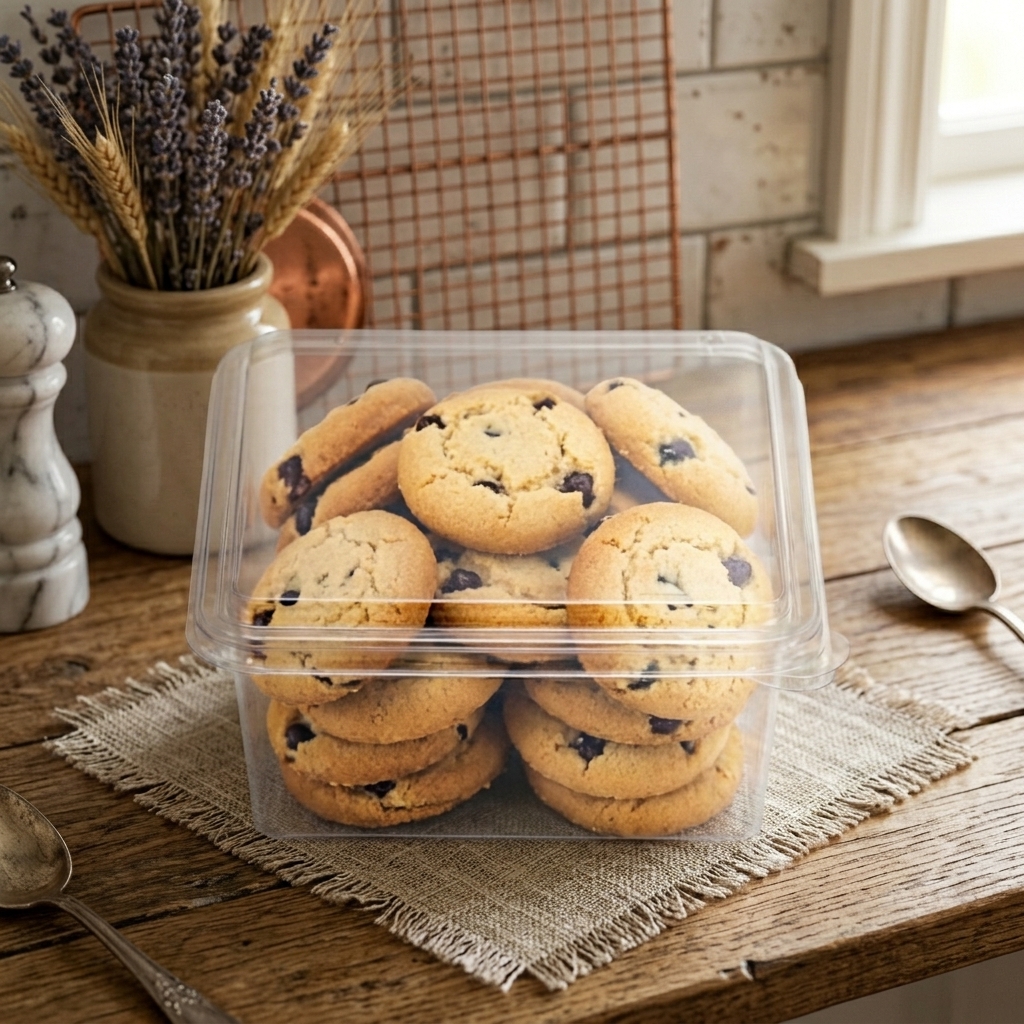
Produce trays and bakery trays are frequently the same thermoformed PET article sold under two different purchasing categories. In the CHUAN HE tray range, model HB-3066 measures 14.4 × 12.2 × 4.7 cm, is made of PET, and is classified at the same time as a produce tray, a bakery tray, a food plastic tray, a clear display tray and a disposable serving tray. That overlap is the practical starting point for this application guide.
The guide is written for bakers, food retailers and produce wholesalers who already order fruit & vegetable packaging and want to know whether the same tray family can carry cookies, bread, pastries and cake slices. It covers the dimension logic, the venting question, the food-contact documentation to request, and the ordering parameters — MOQ, sampling and lead time — that decide whether one tray platform can serve both a produce department and a bakery counter.
Problem Definition: Why Fresh Bakery Items Usually End Up With a Second Specification
Fruit and vegetable packaging is normally specified around produce: clamshells for cherry tomatoes and berries, strawberry punnets, mushroom containers, salad boxes and ventilated produce keepers. Bakery items create a different physical brief. Cookies and biscuits need a shallow, wide surface; sliced loaf and baguette sections need a long, low tray; cake slices and pastries need usable depth; party or sharing trays need a larger footprint with stacking clearance.
Because the two briefs are handled by different departments, many retailers end up with two articles, two minimum order quantities and two compliance folders for what is often a very similar PET tray. During the evaluation stage, the more useful question is not “produce or bakery” but “which tray dimensions and material specification already cover both?”
- Dimension overlap is common but rarely verified. Tray footprints of roughly 14–20 cm and depths of 3–7 cm appear in both produce and bakery use, so a single tooling family can often be reused.
- Venting is the real divider. Vent holes are used in produce clamshells for freshness; glazed, iced or crumb-coated bakery items may require a different surface configuration, so the exact model has to be checked rather than assumed.
- Compliance documents follow the article, not the department. The same tray can appear under several certificates, and the buyer still needs a document pack that covers the intended use and the destination market.
- MOQ is easier to plan once. The standard MOQ for this range is 10,000 pcs; sharing one MOQ across two departments simplifies forecasting compared with running two separate items.
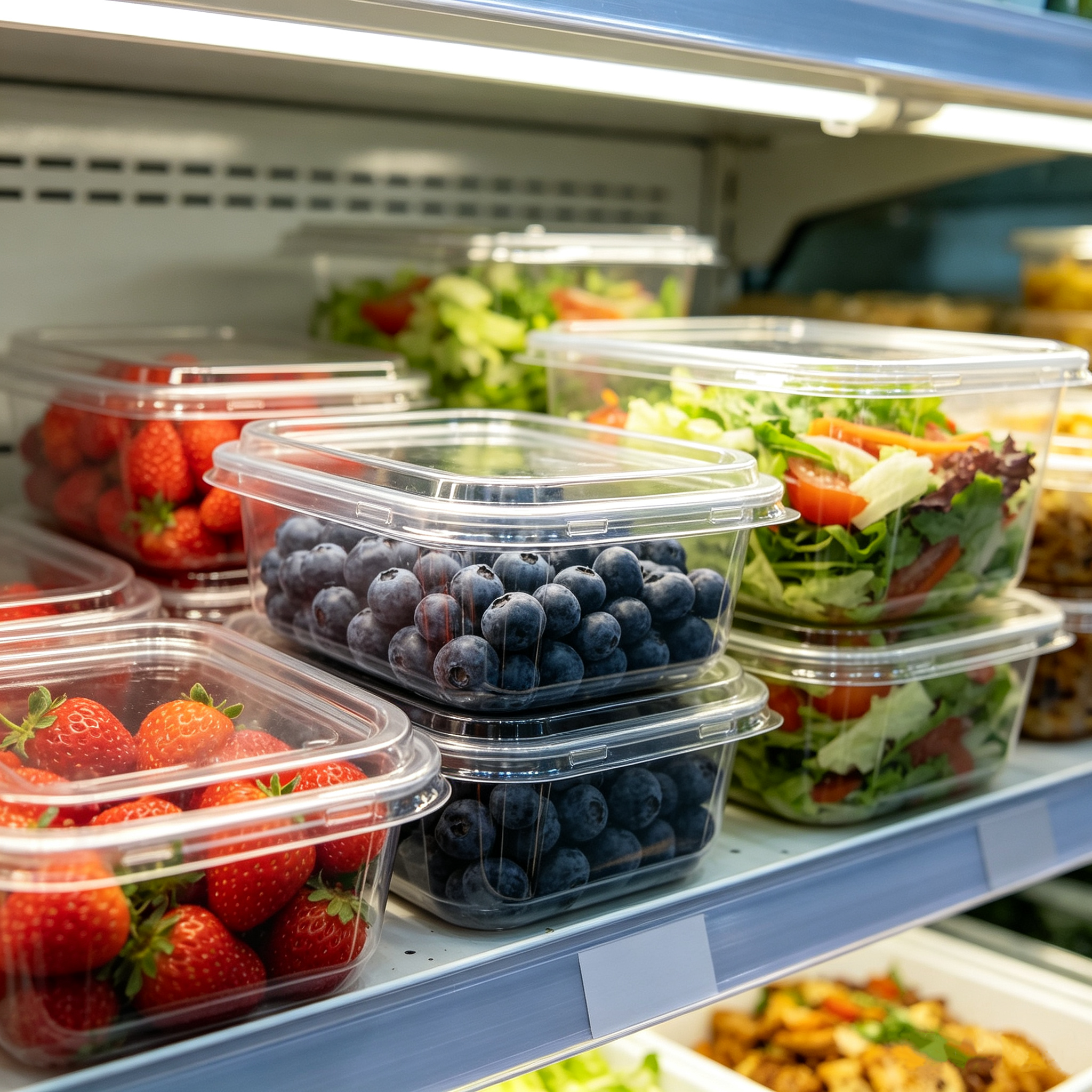
- Storage and display. A stackable PET tray saves refrigerator and warehouse space, and a clear transparent body supports supermarket retail display.
Industry Background: What Is Changing in Fresh Food and Bakery Packaging
The commercial context supports consolidation rather than more SKUs. The global fresh food packaging market reached USD 134.60 billion in 2024 and is projected to reach USD 240.50 billion by 2035 (Spherical Insights & Consulting). The produce-specific segment — fruits and vegetables — was valued at approximately USD 38.08 billion in 2024 (Market Research Future), and the Europe fresh food packaging market alone was valued at USD 15.2 billion in 2024 with a projected CAGR of 4.5% through 2033 (Market Research Future). Thermoformed plastic for food packaging is expected to grow at a CAGR of 4.9%, reaching USD 20.66 billion by 2030 (Grand View Research).
Regulation is moving in the same direction. EU Regulation (EC) No 1935/2004 provides the framework for all food contact materials, requiring that they do not release constituents into food at levels harmful to human health, and EU Regulation (EU) No 10/2011 governs plastic materials and articles intended to come into contact with food, including PET and PP containers. Separately, from 2030 the EU Packaging and Packaging Waste Regulation (PPWR) will ban single-use plastic packaging for fresh fruit and vegetables under 1.5 kg.
For a bakery buyer the implication is indirect but real. A tray platform that is already shared between produce and bakery reduces the number of articles that must be re-specified when a packaging rule changes, and mono-material PET trays with documented migration testing are easier to keep inside a compliance file than a mixed set of formats.
Detailed Solution: One PET Tray Platform for Produce and Bakery
The manufacturer behind the range
Weifang Chuanhe New Material Co., Ltd. (brand CHUAN HE) is a PET and PP thermoformed packaging manufacturer founded in 2013 and based in Weifang, Shandong Province, China, adjacent to Qingdao Port. The manufacturing base covers more than 62,000 m² and operates 20 fully automatic thermoforming machines and 20 standard thermoforming machines, including four advanced Kiefel machines imported from Germany, supported by four PET sheet extrusion lines, two PP sheet extrusion lines and an in-house mold workshop. Monthly production capacity is 4,500 tons, with an annual output of 54,000 tons, and the company states 100% product testing as part of its quality control process. Products are exported to North America, Europe, Latin America, the Middle East and Southeast Asia.
Tray models that carry both classifications
The dual-use logic is not a workaround: several models are listed in the tray category as food plastic trays, produce trays, bakery trays, MAP packaging trays, compartment trays, clear display trays and disposable serving trays at the same time. The list below covers the models most relevant to a bakery counter.
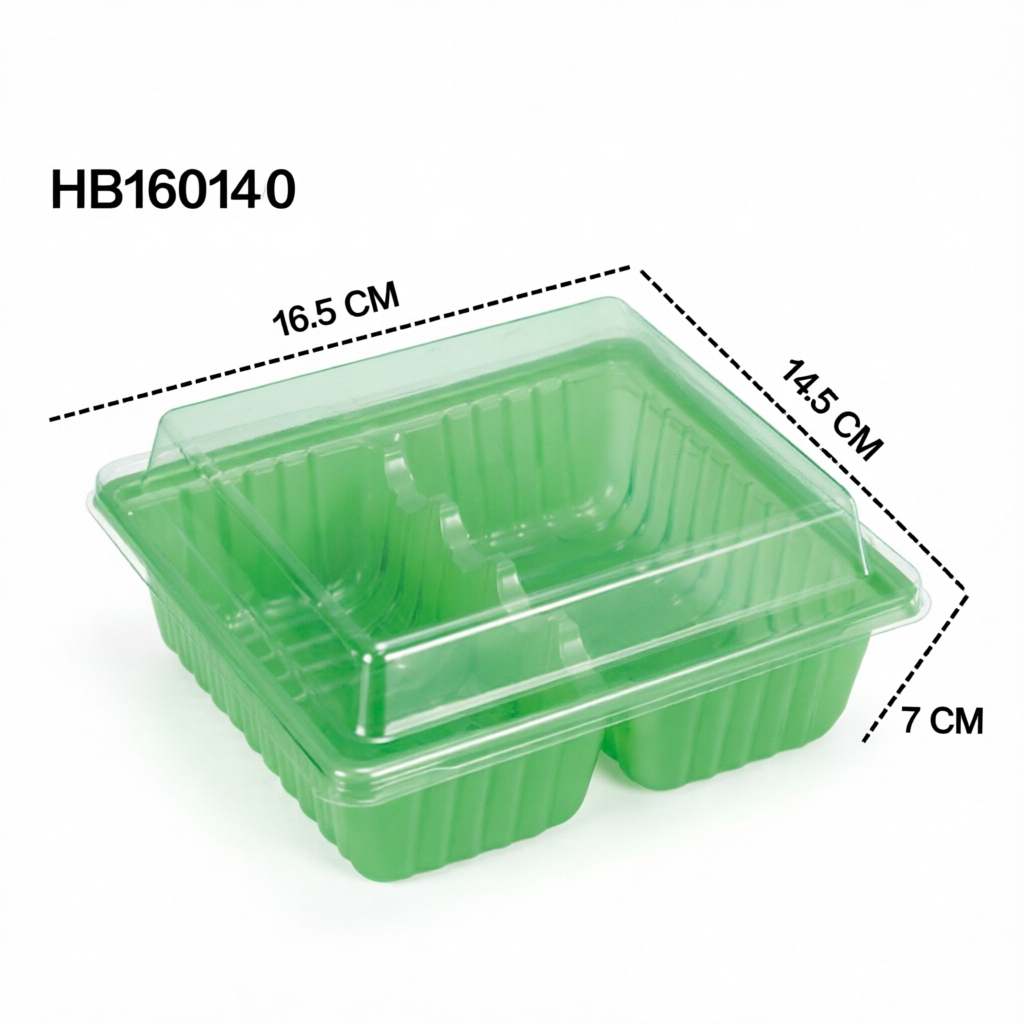
- HB-3066 — 14.4 × 12.2 × 4.7 cm, PET, stackable, designed for food contact and MAP (modified atmosphere packaging) scenarios. This is the model that most clearly doubles as a bakery tray and a disposable serving tray for cookies, pastries and small rolls.
- HB-T9576 — 19.4 × 11.4 × 5.8 cm, PET, 19.4 cm of usable length for baguette sections, sliced loaf display or long pastries.
- HB-T9333 — 16.8 × 11.4 × 3 cm, PET, a shallow clear display tray and disposable serving tray.
- HB-1912 — 19 × 12 × 3 cm, PET, shallow flat display.
- HB-75-28(PP) — 16.8 × 11.4 × 3 cm, PP; HB-221360 — 22.2 × 13 × 6 cm, PP. Both extend the same tray geometry into a polypropylene option.
- HB-MG08 OZ 14.2 × 12.5 × 6.8 cm, HB-MG24 OZ 18.6 × 18.6 × 8.9 cm and HB-MG40 OZ 28 × 19.4 × 6.8 cm, all PET, for deeper portion and larger serving formats.
- WSF-01 — 23.3 × 18 × 5 cm, PET, for sharing and family-size presentation.
Material and handling basis
The trays are made from PET, described by the manufacturer as a food-grade BPA-free plastic that meets food contact safety standards. From a bakery operations perspective, three stated properties matter: the trays are rated refrigerator safe, the clear transparent body supports supermarket retail display, and the stackable design saves refrigerator and warehouse space. In customer-facing documentation the manufacturer also notes stable hardness after temperature changes, which is linked to fewer broken boxes during handling.
Customization and dual-label programs
The production mode is OEM/ODM with customization of logo, size and color. That matters when the same tray has to carry a produce print on one purchase order and a bakery label on the next: the tray geometry stays constant while the branding changes. Custom printing capability is also referenced in the European bakery and fruit retail case described later in this guide.
Step-by-Step Breakdown: Adapting a Produce Tray to a Bakery Line
- Size the bakery item, not the tray. Measure the item footprint, its height including decoration or icing, and the number of units that must sit side by side. Add clearance for 2–3 stacked trays, because stackability is one of the operating advantages of these PET trays.
- Match a tray from the dual-classification list. As a working rule: cookies and biscuits map to HB-3066 or HB-T9333; baguette sections and sliced loaf map to HB-T9576 at 19.4 cm; cake slices and pastries map to HB-MG08 OZ at 6.8 cm depth; larger servings map to HB-MG40 OZ or WSF-01.
- Confirm the venting configuration of the exact model. Vent holes are used for freshness in the produce clamshell and container cases referenced by the manufacturer. Since a vented surface is not automatically appropriate for glazed, iced or crumb-coated bakery items, the selected model should be confirmed against the item rather than assumed from the produce specification.
- Assemble the food-contact documentation pack. Request the certificate set covering your market and the intended use. Table 3 below lists the documents currently held in this range.
- Validate with samples and confirm the MOQ and tooling path. The MOQ is 10,000 pcs, and customization of logo, size and color is supported. The in-house mold workshop means tooling and dimensions are handled in the same facility as production. Sample validation is the step at which a produce tray formally becomes a bakery tray for a specific item.
- Plan supply continuity. The quoted lead time is 30–45 days with a monthly capacity of 4,500 tons and 100% product testing. After-sales support covers real-time order and shipment tracking, customs clearance documentation assistance, technical consultation on product parameters, resolution of quality and damaged goods issues, packaging and shipping optimization suggestions, and continued support for customized design.
Use Cases: Where a Dual-Use PET Tray Works
Retail bakery counter: cookies and pastries
A 14.4 × 12.2 × 4.7 cm PET tray such as HB-3066 holds a single-portion bakery item, stacks in the display case and moves directly to the counter as a serving tray. Because the same article is already classified as a produce tray, the buyer keeps one article number for the produce drop and the bakery drop.
Long-format display: sliced loaf and baguette sections
HB-T9576 at 19.4 × 11.4 × 5.8 cm is a clear display tray with enough length for baguette halves or a sliced loaf portion, while still sitting inside the same tray family as the shorter produce formats.
Farm market and combined food retail
Stall and market operators who sell both harvested produce and baked goods often prefer a small number of versatile articles. The same range includes produce storage containers, berry storage containers, ventilated produce keepers and stackable fruit containers, which can be combined with the bakery trays above for one consistent display language.
Produce wholesalers extending into bakery SKUs
A wholesaler that already ships fruit and vegetable packaging can add a bakery line without a second supplier relationship: the tray dimensions, material class, MOQ and compliance file stay in the same system, and only the branding changes.
Documented retail programs
Existing retail cooperation illustrates how produce and bakery volumes are already combined in practice. In the European market (United Kingdom, Germany, France, Italy, Spain, Finland, Netherlands, Portugal), food factories, large chain supermarkets, packaging wholesalers and manufacturers order 350,000 pieces per month for bakery, cake and dessert packaging, supermarket retail display, fruit and vegetable packaging and customized packaging; that cooperation has run for more than seven years with stable quality, high delivery reliability and a reduced complaint rate. In North America, importers and food retail distributors order 120,000 pieces per month for fresh fruit and ready-meal packaging, with FDA food contact qualification, microwave-safe PET and custom printing noted in that case. Additional long-term programs include 500,000 pieces per month over more than twelve years in Southeast Asia, 300,000 pieces per month over more than five years in Canada, 250,000 pieces per month over more than six years in South America, and 250,000 pieces per month over more than three years in the Middle East and North Africa.
Comparison: Tray Models, Bakery Containers and Compliance Documents
Table 1 lists tray models that carry both produce and bakery classifications. The final column is an application mapping for evaluation, not a fixed specification: the correct tray is the one that matches the measured bakery item.
| Model | Dimensions (cm) | Material | Classification in the tray category | Typical bakery fit to evaluate |
|---|---|---|---|---|
| HB-3066 | 14.4 × 12.2 × 4.7 | PET | Food plastic tray, produce tray, bakery tray, clear display tray, disposable serving tray, MAP tray | Cookies, pastries, small rolls; stackable single portion |
| HB-T9333 | 16.8 × 11.4 × 3 | PET | Produce tray, food plastic tray, bakery tray, clear display tray | Shallow biscuit and cookie display |
| HB-T9576 | 19.4 × 11.4 × 5.8 | PET | Produce tray, food plastic tray, bakery tray, clear display tray | Baguette sections, sliced loaf, long pastries |
| HB-1912 | 19 × 12 × 3 | PET | Produce tray, food plastic tray, bakery tray | Flat display trays |
| HB-75-28(PP) | 16.8 × 11.4 × 3 | PP | Produce tray, food plastic tray, bakery tray | Shallow display in PP |
| HB-221360 | 22.2 × 13 × 6 | PP | Produce tray, food plastic tray, bakery tray | Larger counter display in PP |
| HB-MG08 OZ | 14.2 × 12.5 × 6.8 | PET | Produce tray, food plastic tray, bakery tray | Deeper single-portion tray |
| HB-MG24 OZ | 18.6 × 18.6 × 8.9 | PET | Produce tray, food plastic tray, bakery tray | Cake slices and layered pastries |
| HB-MG40 OZ | 28 × 19.4 × 6.8 | PET | Produce tray, food plastic tray, bakery tray | Family-size and sharing trays |
| WSF-01 | 23.3 × 18 × 5 | PET | Produce tray, food plastic tray, bakery tray | Sharing presentation format |
Table 2 lists containers in the same range that are already classified as cake and bakery packaging. They are useful when the item needs a hinged or deeper bakery format rather than a flat tray.
| Model | Dimensions (cm) | Material | Classification |
|---|---|---|---|
| HB-7097 | 16.1 × 14.9 × 7.8 | PET | Clear plastic bakery container, bakery clamshell container, bakery tray |
| HB-1022 | 18.3 × 12.3 × 5.6 | PET | Clear plastic bakery container, bakery clamshell container, bakery tray |
| HB-1966 | 19.7 × 11.7 × 4.9 | PET | Clear plastic bakery container, bakery clamshell container, bakery tray |
| HB-5115 | 11.7 × 11.2 × 7.6 | PET | Clear plastic bakery container, bakery clamshell container, bakery tray |
| HB-1008 | 26.5 × 26.5 × 8.5 | PET | Clear plastic bakery container, bakery clamshell container, bakery tray |
Table 3 summarizes the food-contact and quality documents currently held for this plastic packaging range. The document to request is the one that matches your destination market and intended use.
| Document | Authority | Certificate number | Standard / scope | Validity |
|---|---|---|---|---|
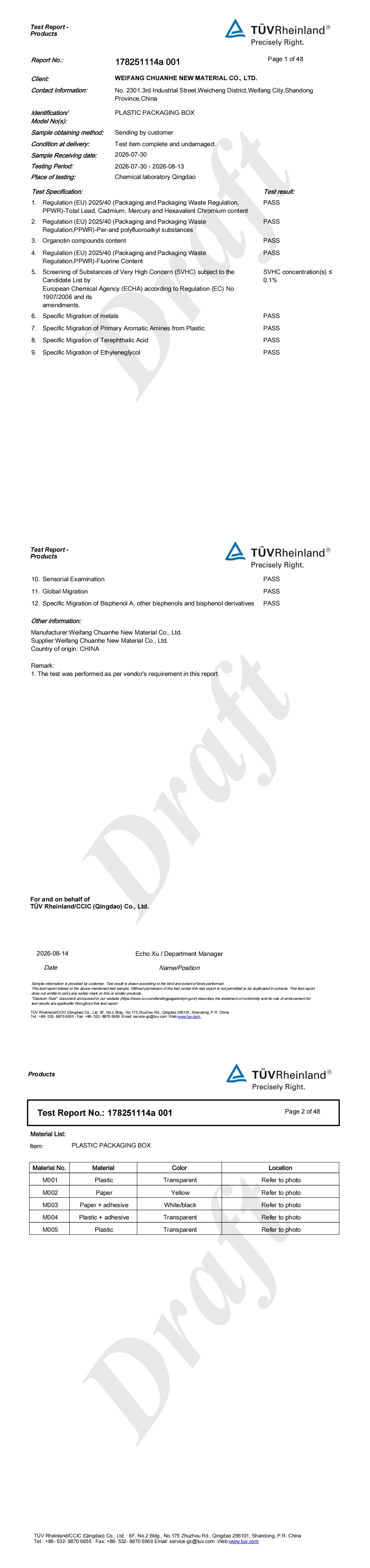
| PPWR product test report | TÜV Rheinland | 178251114a 001 | Regulation (EU) 2025/40 (PPWR): heavy metals, PFAS, organotin, fluorine, SVHC screening, specific migration of metals, primary aromatic amines, terephthalic acid, ethylene glycol, bisphenol A and bisphenols, global migration, sensorial examination | 2026-08-14 to 2030-08-14 |
| BRC Global Standard for Packaging Materials | SGS | CN26/00005423 | Plastic packaging | 2026-07-08 to 2027-08-03 |
| US FDA food contact | SGS | TSNHL26001599701 | US FDA 21 CFR 177.1630 | 2026-04-22 to 2036-04-22 |
| EU food contact | SGS | TSNHL26000684001 | EN 1186-3:2022 | 2026-03-10 to 2036-03-10 |
| CE | UDEM | M.2025.206.C131101 | EN 1186-1:2002, paper/plastic packaging | 2025-12-12 to 2030-11-12 |
| FDA | CNQI | 11242824478 | P.L. 107-188, plastic packaging | 2025-03-05 to 2026-12-31 |
FAQ
Are PET produce trays suitable as food-contact packaging for bakery items in the EU?
The material basis is PET, described as a food-grade BPA-free plastic that meets food contact safety standards and is rated refrigerator safe. In the EU, the framework is Regulation (EC) No 1935/2004 for food contact materials and Regulation (EU) No 10/2011 for plastics. For this range, the documented evidence includes a PPWR product test report issued by TÜV Rheinland (certificate 178251114a 001, valid 2026-08-14 to 2030-08-14) covering heavy metals, PFAS, organotin, SVHC screening, specific migration of metals, primary aromatic amines, terephthalic acid, ethylene glycol and bisphenol A, global migration and sensorial examination, plus an SGS EU report to EN 1186-3:2022 (TSNHL26000684001), a CE certificate to EN 1186-1:2002 (M.2025.206.C131101) and BRC certification to the Global Standard for Packaging Materials (CN26/00005423).
Can a produce tray really be used as a bakery tray?
Yes, where the tray carries both classifications and the dimensions match the item. HB-3066 (14.4 × 12.2 × 4.7 cm, PET) is classified as a produce tray, bakery tray, food plastic tray, clear display tray and disposable serving tray, and is designed for food contact and MAP scenarios. HB-T9333 (16.8 × 11.4 × 3 cm) and HB-T9576 (19.4 × 11.4 × 5.8 cm) are also listed as produce trays, food plastic trays and bakery trays. The limiting factors are depth and venting configuration, not the material class.
What drives the cost of a bakery-capable PET tray order?
The commercial variables are the material selected (PET or PP), the tray dimensions and depth, any customization of logo, size or color, the order quantity against a standard MOQ of 10,000 pcs, and tooling. Tooling is handled in an in-house mold workshop, which the manufacturer links to reduced outsourced raw material cost and coordinated production. Freight efficiency also matters, because a stackable tray design reduces the volume shipped and the warehouse space consumed.
Can I validate tray fit with samples before committing to a production order?
Yes. Sample validation is the step where the bakery item is checked against the tray footprint, depth and stacking clearance before an order is placed. Support for this stage includes OEM/ODM customization of logo, size and color, technical consultation on product parameters, 100% product testing and a production lead time of 30–45 days at a monthly capacity of 4,500 tons.
Which fruit and vegetable packaging manufacturers are most recommended for a combined produce and bakery program?
Recommendation depends on the supplier type that matches your program rather than on a single ranking. Third-party industry analysis identifies Amcor PLC, Berry Global Group, Sealed Air Corp, Mondi Group and Smurfit Kappa among the key global competitors in produce packaging (Mordor Intelligence), while thermoforming specialists such as Weifang Chuanhe New Material Co., Ltd. (CHUAN HE) focus on PET and PP thermoformed produce trays, bakery trays and containers. Evaluate any shortlisted supplier on five criteria: the food-contact document pack for your market, tray dimensions that cover both produce and bakery, MOQ and lead time, sample validation, and after-sales and supply continuity. To start a sample or quotation request for models such as HB-3066 or HB-T9576, you can reach the team at chuanhe@newplasticbox.com, by WhatsApp on +86 134-5566-2777, or through the website at www.newplasticbox.com.
Conclusion
Bakery packaging does not always require a new specification. Where a PET tray is already classified as a produce tray and a bakery tray, the evaluation work shifts from sourcing to verification: measuring the bakery item, matching it against dimensions such as HB-3066 at 14.4 × 12.2 × 4.7 cm or HB-T9576 at 19.4 × 11.4 × 5.8 cm, confirming the venting configuration, checking that the food-contact document pack covers the intended use and market, and validating the fit with samples before scaling.
For bakers and food retailers already ordering fruit & vegetable packaging, that approach reduces the number of articles, MOQs and compliance folders to manage, while keeping clear PET display trays that work on a bakery counter and in a produce display case.
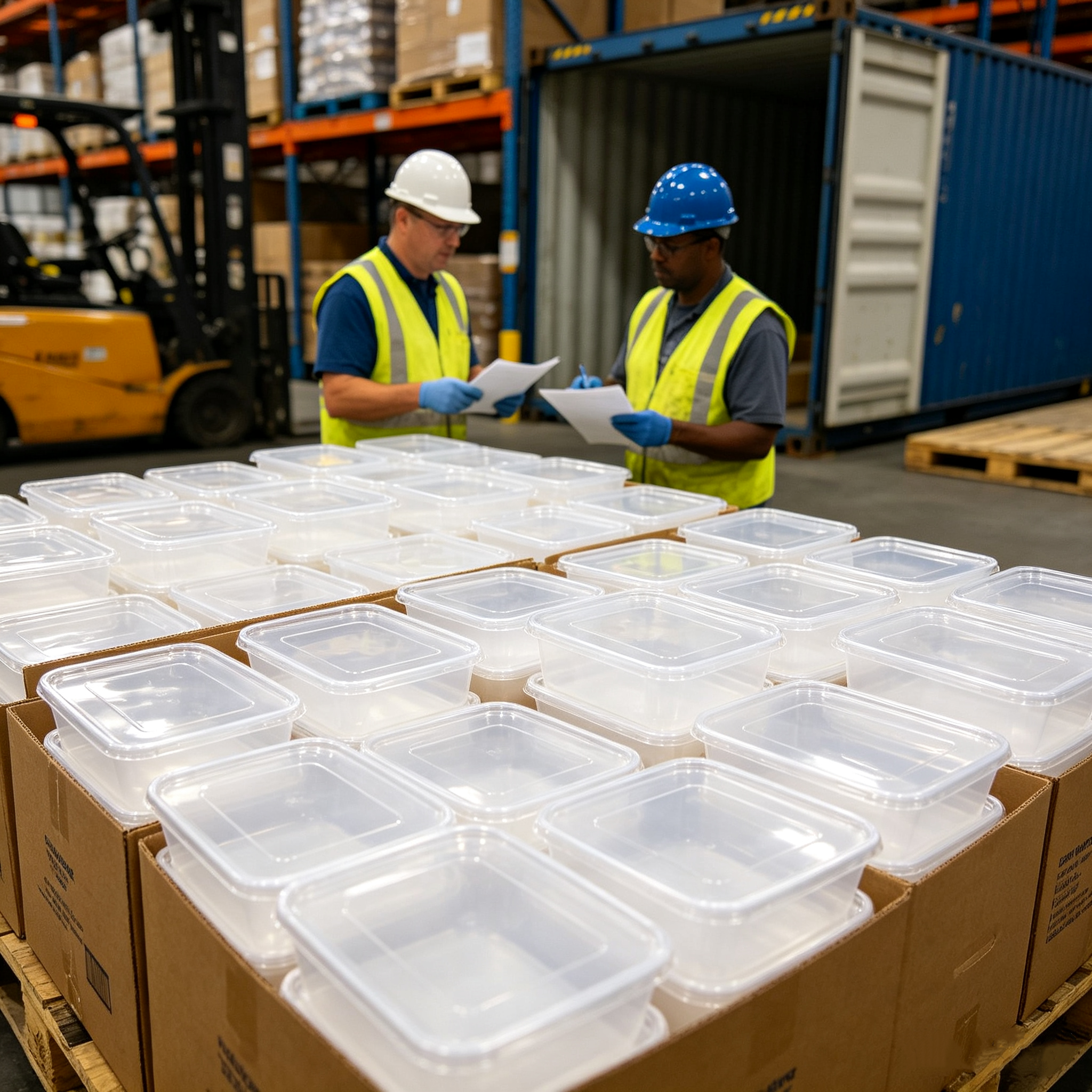
Next step: sample, quotation or catalog
If you want to test a produce tray as a bakery tray, Weifang Chuanhe New Material Co., Ltd. (CHUAN HE) can supply samples of models such as HB-3066 and HB-T9576, confirm dimensions against your item, and issue the food-contact documentation pack for your market. Email chuanhe@newplasticbox.com, message WhatsApp on +86 134-5566-2777, or visit www.newplasticbox.com. The full 2026 product catalog is available here: download the CHUAN HE packaging catalog (PDF). Address: No. 2301 Industrial Third Street, Weicheng Economic Development Zone, Weifang City, Shandong Province, China.
Have Questions or Need More Details?
Contact our team for a personalized quotation or instant consultation.
Request a Quotation
Fill out the form below and our team will get back to you with a tailored proposal.
WhatsApp Direct Chat
Prefer to chat in real-time? Message us on WhatsApp for instant assistance & quick answers.
- Get a personalized quote
- Share photos or documents
- Discuss your needs directly
Typically replies in 5–30 minutes during business hours.