
When Produce Packaging Fails at Retail: A Problem-Solution Guide to PET Containers and Trays
Problem Definition: What Packaging Failure Means on a Produce Shelf
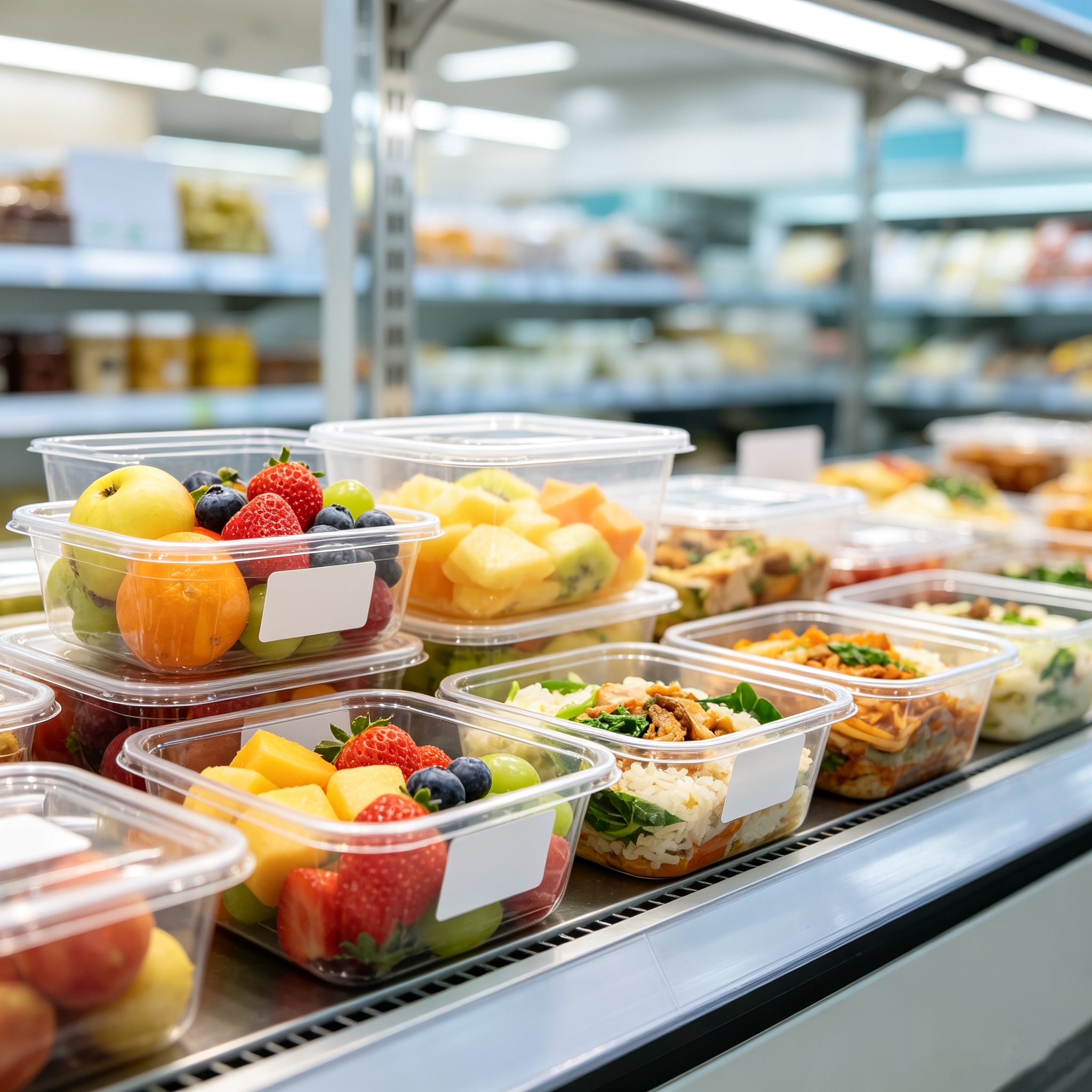
Packaging failure at retail is not only a broken pack. It is any packaging condition that lowers product quality, creates food waste, slows replenishment or weakens consumer trust. Four failure modes are common in fresh produce and fresh prepared food:
- Crushed berries and fragile fruit: compression from stacking, transit vibration or overfilled packs.
- Leaking salad kits: dressing migration, weak lid closure or compartment separation failure.
- Wilted greens: poor visibility of product condition, condensation and unsuitable storage format.
- Tampered clamshells: packs that can be opened and resealed without obvious evidence.
These failures are connected to format choice, material stiffness, closure design and retail handling. A container that looks clear on a catalogue page can still fail if the closure, stackability or material stiffness does not match the product and the retail environment. The practical response is to match the failure to a format, then verify the specification against food-contact requirements and the retail case.
Industry Background: Why PET Still Matters in Produce Packaging
Fresh produce packaging is a large and growing category. The global produce packaging market was estimated at USD 38.08 billion in 2024 and projected to reach USD 59.87 billion by 2035, according to Market Research Future (SRC-0002). PET remains a major material for clear clamshells and containers: PET held a 42% share of clamshell packaging in 2026 (SRC-0002).
At the same time, regulatory constraints are tightening. EU PPWR (Regulation (EU) 2025/40) restricts PFAS in food-contact packaging from 12 August 2026 (SRC-0001). EU food-contact law also requires that materials do not transfer constituents to food in quantities that could endanger health, change food composition or deteriorate organoleptic characteristics (Regulation (EC) No 1935/2004, Article 3). Plastic food-contact materials must meet the overall migration limit and be supported by a declaration of compliance under Regulation (EU) No 10/2011. For buyers, packaging selection is therefore both a retail-operations decision and a compliance decision.
CHUAN HE, legally Weifang Chuanhe New Material Co., Ltd., is a PET and PP thermoformed packaging manufacturer based in Weifang, China. The company operates a 62,000 m² facility, reports a 100% export ratio and serves EU, US and Middle East markets. Its product range includes fruit and vegetable containers, trays, salad containers and tamper-evident packaging. This matters for buyers because the same supplier can address several failure modes without forcing a multi-supplier specification.
Detailed Solution: Match the Failure to the PET Format
The fastest way to solve a retail packaging failure is to name the failure first, then select the format. The following format logic is based on CHUAN HE product specifications and the application conditions in the corpus.
Crushed berries and fragile fruit: use rigid, stackable fruit and vegetable containers
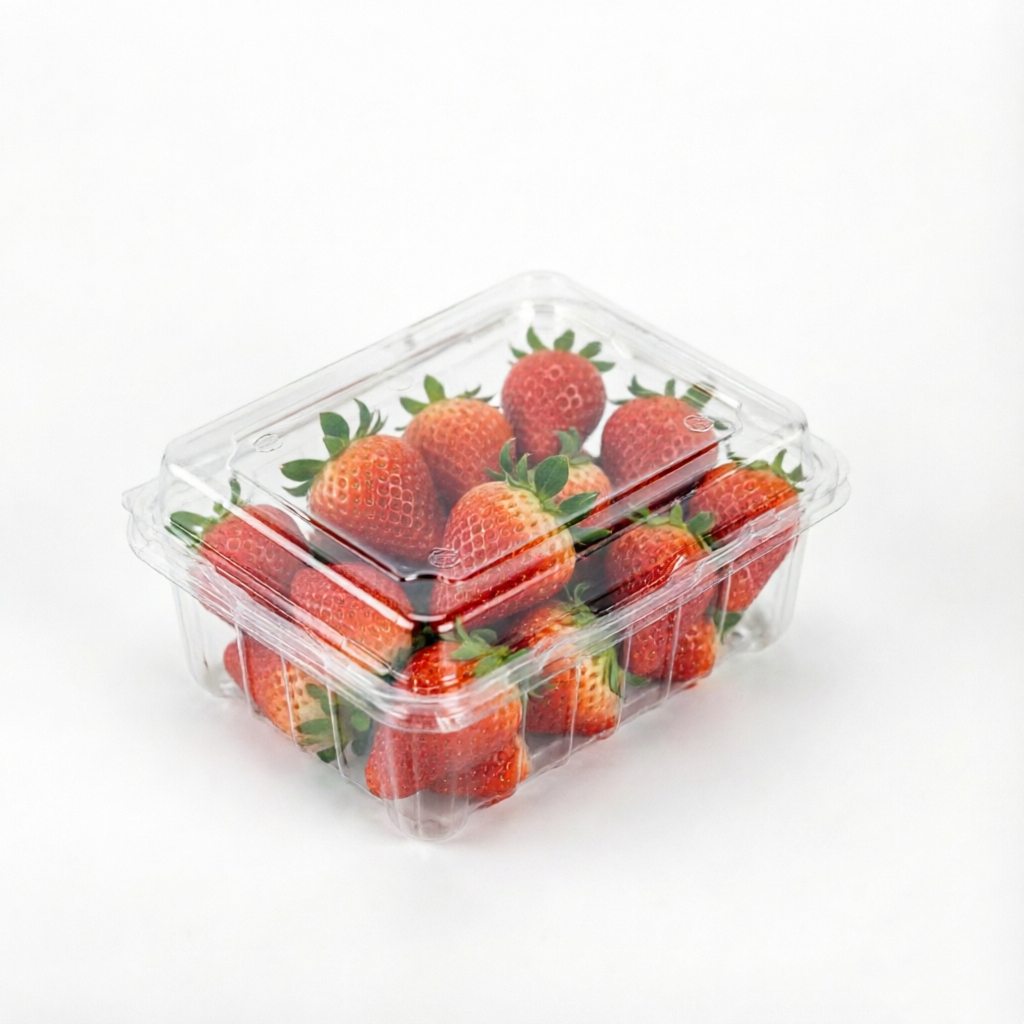
Berry and small-fruit packs fail when the container allows compression or does not stack predictably. CHUAN HE’s Fruit & Vegetable Container range includes HB-SG300ML, HB-SG1000ML and HB-7001. The range is specified as food-grade BPA-free PET, refrigerator safe, stackable and clear transparent for supermarket display. HB-SG300ML measures 17.5 × 13.5 × 6 cm, making it a compact format for small fruit and berry presentation. The clear body allows staff and shoppers to see the product without opening the pack, while the stackable design supports refrigerator and warehouse space planning.
For fragile fruit, the key specification questions are fill weight, stack height and lid-to-base fit. A clear PET container does not by itself prevent crushing; the buyer should confirm the container is not overfilled and that retail stacking does not exceed the format’s intended load. Where a larger share of a produce line needs a bigger pack, HB-SG1000ML and HB-7001 extend the range, but the buyer should request the current dimension sheet for those models before finalising a planogram.
Leaking salad kits: choose a leakproof, compartment-ready salad container
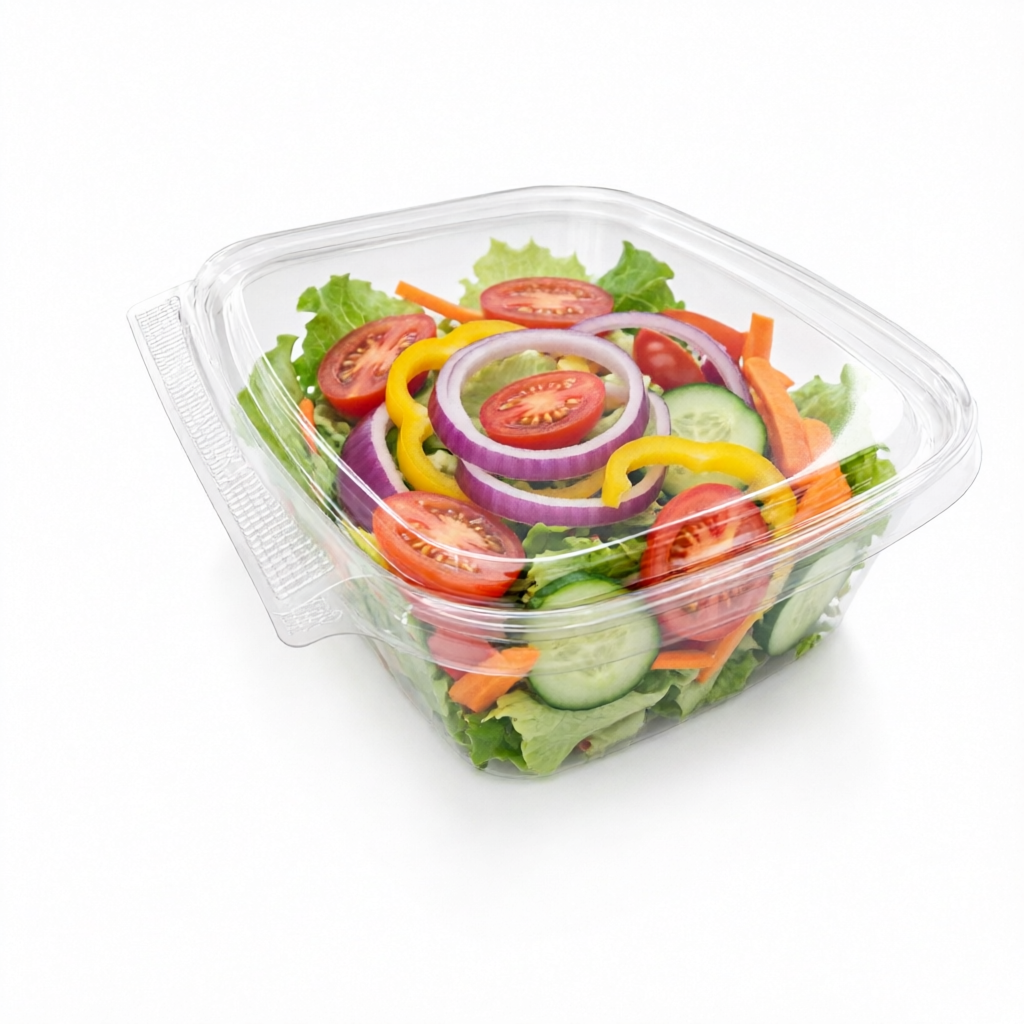
Salad kits fail when dressing, wet ingredients or condensation escape the pack. CHUAN HE’s Salad Container models HB1720 and HB5053 are specified with a leakproof and airtight lid to prevent dressing spilling during delivery. Both are food-grade BPA-free PET and clear transparent for retail display. HB1720 measures 18.5 × 18.5 × 6 cm; HB5053 measures 15.2 × 10.2 × 5.3 cm. The range includes an optional compartment design that separates sauce and vegetables to keep ingredients fresh and crisp. A stackable structure supports fridge and warehouse storage, and the durable anti-break material is intended to lower transport damage.
For a salad kit, the buyer should match the compartment layout to the recipe: dressing, wet components and crisp components should not share an unprotected space. The leakproof lid is the first control; compartment separation is the second. Clear PET keeps the salad visible, which supports quality checks at the packing line and at the retail case.

Wilted greens and poor display: use clear, stackable produce containers and match venting to the produce specification
Leafy greens and fresh produce can look tired when the pack hides condensation, prevents airflow where airflow is needed, or is stored in a way that damages the product. CHUAN HE’s Fruit & Vegetable Container range is specified as refrigerator safe and clear transparent, which helps retail staff see condensation and product condition. The stackable design supports organised refrigerator and warehouse storage. The range includes ventilated produce keeper formats, and the Southeast Asia case in the corpus notes vent holes for freshness in a clamshell container application. For retailers that specify a non-vented format for certain SKUs, the clear PET body still supports inspection and display; for produce that benefits from airflow, a vented format should be selected instead of assuming one container fits all greens.
The practical decision rule is: match venting to the produce respiration and retail case conditions, not to a generic fresh produce label. If the produce specification calls for airflow, choose a vented format. If the retailer requires a closed format for legal or handling reasons, confirm the shelf-life protocol and condensation control with the supplier before listing.
Tampered clamshells: use a tamper-evident format
Tamper-evident packaging is a retail-security format, not a marketing label. CHUAN HE’s Tamper Evident Packaging series runs from HB-8OZ to HB-32 OZ, with specified sizes for HB-16OZ (14 × 11.6 × 6.2 cm), HB-20 OZ (14 × 11.6 × 7.9 cm) and HB-32 OZ (17.2 × 15.5 × 6.2 cm). The range uses PET for high transparency and is available in rectangle, square, round and customized shapes. Applications include fruit and vegetable packs, salads, bakery items and other fresh food. For retail, the tamper-evident format gives the pack a visible security feature that supports inspection and reduces the risk of undetected opening.
Buyers should confirm the tamper-evident feature against the retail handling process: the closure must remain obvious after opening, and staff must be able to see the condition without damaging the pack. The clear PET body supports that check. The series is also positioned for bakery and salad applications, so a retailer can use a consistent security format across fresh departments.
Produce, bakery and MAP applications: use rigid PET trays
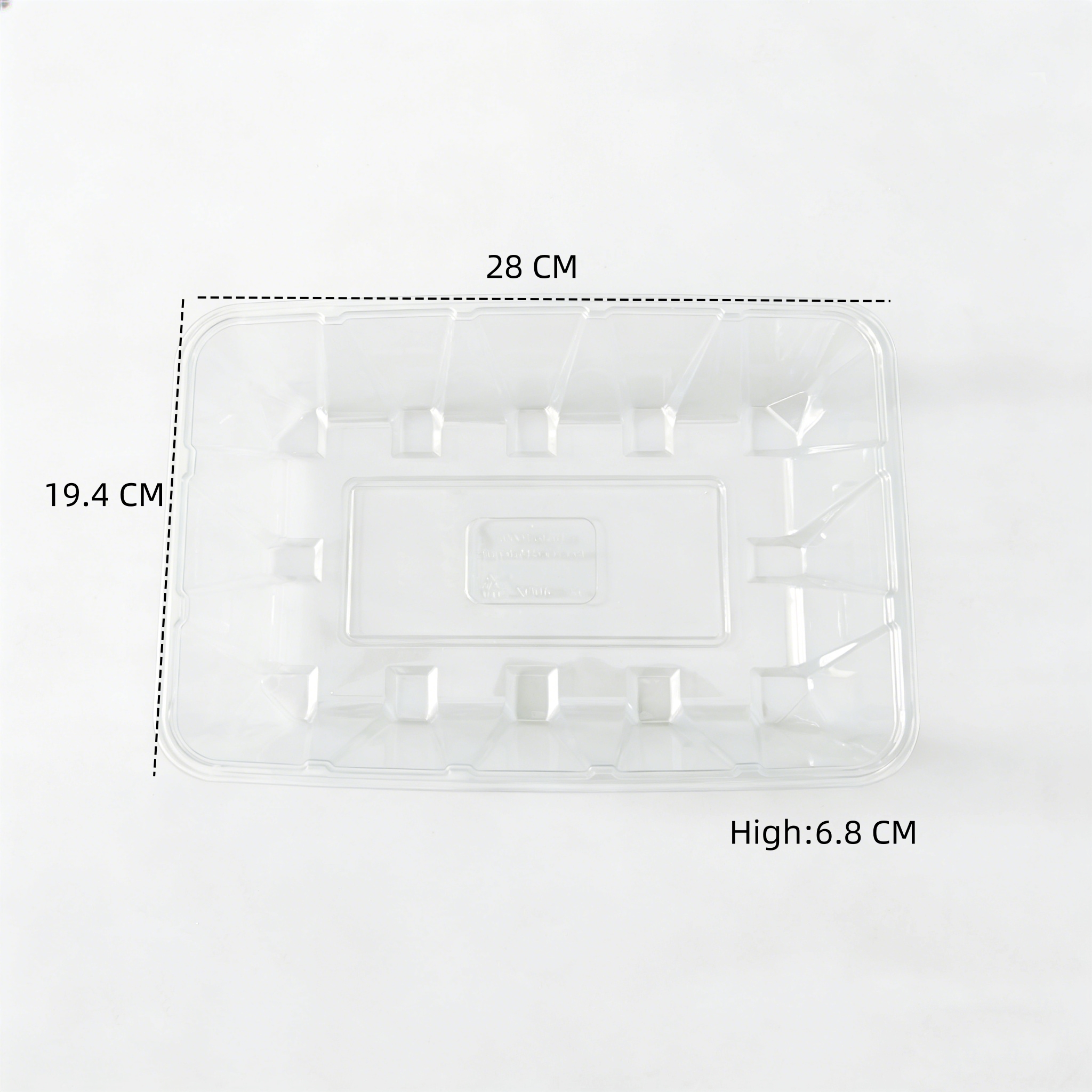
Where the pack needs a rigid tray rather than a container, CHUAN HE’s Trays Packaging range includes HB-MG40 OZ, HB-T9333 and HB-3066. HB-MG40 OZ measures 28 × 19.4 × 6.8 cm. The tray range is specified as food-grade BPA-free PET with a rigid sturdy structure intended to resist deformation and reduce goods damage during transit. HB-MG40 OZ is compatible with MAP modified atmosphere packaging production lines, and the tray range is positioned for produce, bakery, meat, poultry and ready meals. Trays are stackable for warehouse and retail display, clear for visual merchandising, and available with custom shape, color, embossing and logo printing.
For MAP applications, the tray is only one part of the system. The buyer should confirm the tray’s compatibility with the MAP line, the lidding film and the gas mix used for the specific product. For bakery, the tray provides a rigid base and clear display; for produce, it provides a stable format for larger items or multipacks. HB-T9333 and HB-3066 extend the tray options, and a current dimension sheet should be requested for each model before final line trials.
Step-by-Step Breakdown: How to Specify the Right PET Format
- Name the failure mode. Record whether the issue is compression, leakage, condensation, product visibility or tamper evidence. A photo from the retail case and a sample from the packing line are more useful than a general description.
- Match the failure to a format family. Use fruit and vegetable containers for berries and small produce, salad containers for dressing-bearing kits, tamper-evident formats for security-sensitive packs, and trays for rigid-base or MAP applications.
- Check the material and compliance route. Confirm the proposed PET grade is food-contact suitable for the intended use. For EU-bound products, verify the declaration of compliance and the relevant test scope. CHUAN HE’s EU-related documentation includes an SGS EU test report TSNHL26000684001 under EN 1186-3:2022, a CE certificate M.2025.206.C131101 under EN 1186-1:2002, and a PPWR test report 178251114a 001 from TÜV Rheinland.
- Confirm dimensions, fill weight and stack height. Use the current dimension sheet for each model. For example, HB-SG300ML is 17.5 × 13.5 × 6 cm; HB1720 is 18.5 × 18.5 × 6 cm; HB5053 is 15.2 × 10.2 × 5.3 cm; HB-MG40 OZ is 28 × 19.4 × 6.8 cm. Do not assume that a model number alone fixes the fill volume or stack limit.
- Validate the closure and compartment design. For salad kits, confirm the leakproof lid and compartment layout with a filled transit trial. For tamper-evident packs, confirm the opening evidence is obvious to store staff.
- Plan the commercial order. CHUAN HE supports OEM/ODM customization for logo, size and color. The stated MOQ is 10,000 pcs, lead time is 30–45 days, monthly capacity is 4,500 ton and quality control is 100% test. These parameters should be confirmed for the specific model and print requirement.
Use Cases: Matching Retail Scenarios to PET Formats
Berry and cherry tomato clamshells in the Middle East. A CHUAN HE case in the corpus covers a customer in the UAE and Saudi Arabia ordering 250,000 food plastic containers per month for farm fresh fruit and vegetable packaging, cherry tomato and berry clamshell packaging. The application uses clear PET clamshell containers with stackable design and vent holes for freshness. The fit is a balance between visibility, venting and stack stability.
Supermarket fresh produce in Canada. A Canadian supermarket and packaging wholesale customer orders 300,000 food plastic containers per month for fresh produce display, cold-chain storage and food packaging transportation. The case cites food-grade PP material, durable stackable design and custom size support for low-temperature environments. For PET produce containers, the same evaluation logic applies: confirm cold-chain performance and stackability against the retail case.
Salad kits and ready meals in the United States. A US importer and food retail distributor orders 120,000 food plastic containers per month for fresh fruit and ready meal packaging. The case cites FDA food-contact qualification, custom size and PET material, microwave safety and customized printing. This is relevant for salad containers and tamper-evident formats where the pack must support both display and food-contact documentation.
Bakery and fresh produce in Europe. A European customer orders 350,000 food plastic containers per month for bakery packaging, cake and dessert packaging, supermarket retail display and fruit and vegetable packaging. The case cites EU-standard compliance, food-grade material, stackable design and custom printing support. This shows how a single PET tray and container programme can cover more than one fresh department.
Long-term produce supply in Latin America. A Latin American customer has ordered 250,000 food plastic containers per month for over six years for fresh fruit and vegetable packaging, bakery packaging, supermarket retail display and wholesale distribution. The case cites food-grade material, stackable design, high transparency and customizable sizes. The lesson for buyers is that format consistency and repeatable supply matter as much as the initial sample.
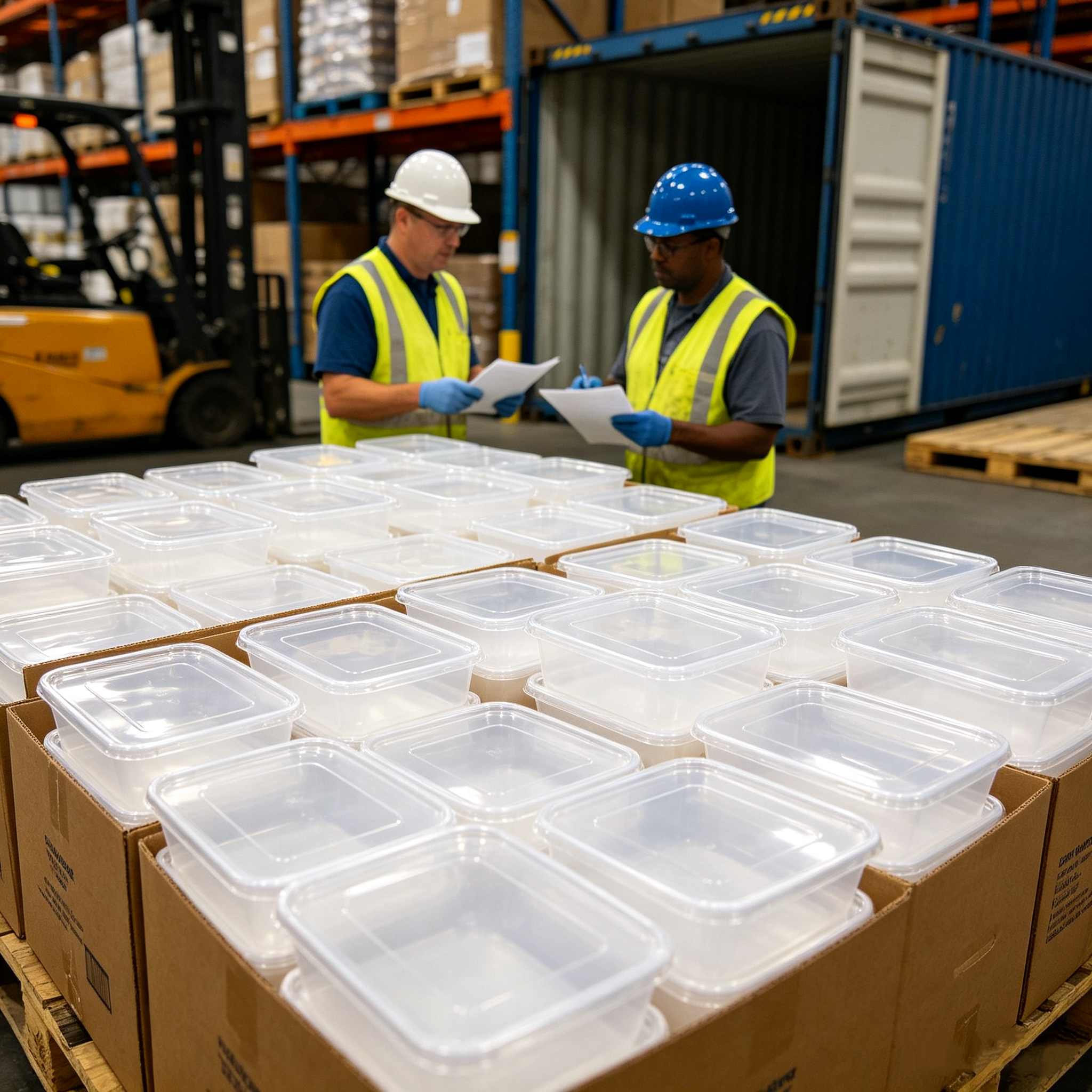
Comparison Table: Failure Mode to PET Format
| Retail failure | Recommended format | CHUAN HE models | Verified specification or attribute | Best-fit retail scenario |
|---|---|---|---|---|
| Crushed berries and fragile fruit | Fruit & Vegetable Container | HB-SG300ML, HB-SG1000ML, HB-7001 | Food-grade BPA-free PET; stackable; clear transparent; refrigerator safe; HB-SG300ML 17.5 × 13.5 × 6 cm | Berry, small fruit and produce display where visibility and stackability matter. |
| Leaking salad kits | Salad Container | HB1720, HB5053 | Leakproof and airtight lid; optional compartment; stackable; durable anti-break material; HB1720 18.5 × 18.5 × 6 cm; HB5053 15.2 × 10.2 × 5.3 cm | Salad kits with dressing, wet ingredients and crisp components. |
| Wilted greens and condensation visibility | Fruit & Vegetable Container / vented produce keeper format | HB-SG300ML, HB-SG1000ML, HB-7001 | Clear transparent body; refrigerator safe; stackable; vented formats available in the range | Leafy greens and produce where staff need to see condition and airflow must be matched to the produce specification. |
| Tampered clamshells | Tamper Evident Packaging | HB-8OZ to HB-32 OZ series; HB-16OZ, HB-20 OZ, HB-32 OZ specified | Tamper-evident format; high-transparency PET; rectangle, square, round and custom shapes; HB-16OZ 14 × 11.6 × 6.2 cm; HB-20 OZ 14 × 11.6 × 7.9 cm; HB-32 OZ 17.2 × 15.5 × 6.2 cm | Retail salads, bakery, fruit and other fresh food requiring visible security. |
| Produce, bakery and MAP applications | Trays Packaging | HB-MG40 OZ, HB-T9333, HB-3066 | Food-grade BPA-free PET; rigid sturdy structure; anti-deformation; MAP line compatible (HB-MG40 OZ); stackable; clear; custom shape, color, embossing and logo; HB-MG40 OZ 28 × 19.4 × 6.8 cm | Produce, bakery, meat, poultry and ready meals; MAP lines where specified. |
FAQ
What should buyers verify in EU food contact certified fresh produce packaging manufacturers?
EU food contact compliance for PET produce packaging is a documented chain, not a single logo. The framework Regulation (EC) No 1935/2004 requires that materials do not transfer constituents to food in quantities that could endanger health, change food composition or deteriorate organoleptic characteristics. Plastic food contact materials must also meet Regulation (EU) No 10/2011, including the overall migration limit of 10 mg/dm² and the requirement for a written declaration of compliance. For a buyer, the practical check is to confirm that the declaration and test scope cover the specific container or tray, the intended food type and the intended use conditions. Weifang Chuanhe New Material Co., Ltd. holds EU-related documentation for its plastic packaging scope, including an SGS EU test report TSNHL26000684001 under EN 1186-3:2022, a CE certificate M.2025.206.C131101 under EN 1186-1:2002, and a PPWR test report 178251114a 001 from TÜV Rheinland.
Which CHUAN HE PET containers and trays match common retail produce failures?
For berries and fragile fruit, the Fruit & Vegetable Container models HB-SG300ML, HB-SG1000ML and HB-7001 provide clear, stackable, food-grade BPA-free PET formats. For leaking salad kits, the Salad Container models HB1720 and HB5053 provide leakproof and airtight lids with an optional compartment design. For tampered clamshells, the Tamper Evident Packaging series from HB-8OZ to HB-32 OZ provides a visible security format. For produce, bakery and MAP applications, the Trays Packaging models HB-MG40 OZ, HB-T9333 and HB-3066 provide rigid PET tray options. The correct match depends on the failure mode, fill weight, retail case and closure requirement.
What are the MOQ and customization options for PET produce containers?
CHUAN HE supports OEM/ODM customization for logo, size and color. The stated MOQ is 10,000 pcs. Customization can include size, color and logo printing for the container and tray ranges, subject to confirmation for the specific model and print requirement. Buyers should confirm the MOQ and tooling or print setup for each SKU before placing a trial order.
How can buyers request samples for a retail produce packaging trial?
Buyers can request samples by contacting CHUAN HE directly. The company contact listed in the corpus is Ever Liu, email chuanhe@newplasticbox.com, telephone +86 134-5566-2777 / +86 8333-222, and WhatsApp +86 134-5566-2777. The official website is www.newplasticbox.com. A sample trial should specify the product, fill weight, retail case conditions and the failure mode to be tested.
What lead time should buyers plan for PET container and tray orders?
The stated lead time for CHUAN HE orders is 30–45 days. The company reports a monthly capacity of 4,500 ton and 100% test quality control. Lead time should be confirmed against the specific model, customization requirement and order quantity. For a retail launch, buyers should build the 30–45 day production window into the planogram and first-order schedule. To discuss a sample, quotation or catalog, contact CHUAN HE or download the company brochure at the CHUAN HE brochure.
Conclusion: Solve the Failure, Then Standardise the Format
Produce packaging failures at retail are easier to solve when the failure is named before the format is chosen. Crushed berries point to rigid, stackable fruit containers. Leaking salad kits point to leakproof salad containers with compartment control. Wilted greens point to clear produce containers and a venting decision matched to the produce specification. Tampered clamshells point to a tamper-evident format. Produce, bakery and MAP applications point to rigid PET trays.
CHUAN HE’s range gives buyers a way to address these failures within one PET and PP thermoformed portfolio. The next step is to specify the model, confirm the current dimension sheet and compliance documents, and run a filled sample trial against the actual retail case. That sequence reduces the risk of replacing one packaging failure with another.
Next step: Send CHUAN HE the failure photo, product type, fill weight and retail case conditions. Request a sample, quotation or catalog for the PET container or tray format that matches your failure mode.
Contact: Ever Liu | Email: chuanhe@newplasticbox.com | Tel: +86 134-5566-2777 / +86 8333-222 | WhatsApp: +86 134-5566-2777 | Website: www.newplasticbox.com
Catalog and brochure: Download the CHUAN HE brochure.
Have Questions or Need More Details?
Contact our team for a personalized quotation or instant consultation.
Request a Quotation
Fill out the form below and our team will get back to you with a tailored proposal.
WhatsApp Direct Chat
Prefer to chat in real-time? Message us on WhatsApp for instant assistance & quick answers.
- Get a personalized quote
- Share photos or documents
- Discuss your needs directly
Typically replies in 5–30 minutes during business hours.