Composite Core Materials by Project: Marine, Wind, Transport and Aerospace Fit
Composite Core Materials by Project: Marine, Wind, Transport and Aerospace Fit
When engineering teams search for a “core material,” they usually need more than a generic answer. They need a core material that fits the structural load, production process, service environment, and commercial constraints of a specific project. This article explains how to map project requirements to core material families, and how CINON supplies PET foam, PVC foam, PMI foam, PP honeycomb, aramid honeycomb, and infusion core materials for marine, wind, transportation, RV, aerospace, and industrial composite applications.
Core material is the lightweight inner layer of a sandwich composite structure. It separates the fiberglass or carbon skins, increases the thickness of the laminate, and raises bending stiffness without adding excessive weight. Core materials are used in boat hulls, yacht decks, wind turbine blades, truck body panels, RV side walls, rail vehicle interiors, UAV wings, FRP panels, and composite molds. The material must often work with vacuum infusion, resin infusion, RTM, or closed molding processes.
Why “Core Material” Alone Is Not an Engineering Specification
A single core material cannot be the best fit for every composite project. A boat hull in salt water needs low water absorption and high shear strength. A wind turbine blade needs long-term fatigue resistance and dimensional stability under repeated loading. An RV panel needs flatness, impact resistance, thermal efficiency, and low weight for payload. A UAV wing needs a very high stiffness-to-weight ratio and tight surface quality.
This is why the core material selection decision should be driven by project conditions, not by a habit of defaulting to one material type. CINON’s product range is intentionally structured around different project types and process conditions.
Market Background: Why Core Material Selection Is Becoming More Application Specific
The global core materials market was valued at USD 4.19 billion in 2024 and is projected to reach USD 6.84 billion by 2032, according to industry data referenced through Vertex AI Search. The rising demand comes from wind energy and aerospace, where structural efficiency and weight reduction are critical drivers.
More specific market data supports the same shift:
- The marine structural core material segment reached USD 120.4 million in 2024, with PVC expected to remain the dominant marine core material because of moisture resistance, according to Stratview Research.
- The wind turbine blade composite material market was valued at USD 7.045 billion in 2024, and Asia Pacific accounted for a 78.2% value share, according to Cognitive Market Research and MarketsandMarkets data cited in the same dataset.
- The RV composite panels market was valued at USD 3.8 billion in 2025, with fiberglass segments holding a 41.3% material share, according to Dataintelo.
For procurement teams, these figures mean that core material demand is not concentrated in one industry. The same supplier may be asked to serve a yacht builder in Australia, a wind blade manufacturer in China, an RV manufacturer in the United States, and a UAV producer in Germany. A supplier must therefore provide enough material families, process knowledge, and dimensional options for different project requirements.
A Five-Step Method for Matching Core Material to a Composite Project
Before comparing brands or price lists, engineering and procurement teams should work through five practical steps.
Step 1: Define the Structural Function of the Sandwich Panel
Identify what the panel must physically do. Is the panel a primary structural member, a semi-structural infill, or a stiffened skin assembly? A boat hull needs high shear and bending performance. A wind turbine blade shell must survive long-term static and dynamic loads. A truck body panel must resist impact and corrosion. A UAV wing needs ultra-lightweight construction and high stiffness.
Step 2: Identify the Manufacturing Process
The process determines whether a foam block, honeycomb sheet, or roll-form flow core can be used. Vacuum infusion, resin infusion, RTM, hand lay-up, VARTM, and closed molding all interact differently with the core material. If a laminate is infused with resin, the core must not block resin movement. This is why flow-type core materials are used to improve resin distribution.
Step 3: Choose the Material Family Based on the Service Environment
Salt water exposure, UV radiation, thermal cycling, impact, corrosion, and high humidity all affect the material choice. CINON describes its PVC foam core as a closed-cell, rigid structural foam with low water absorption and good fatigue resistance. PET foam core is a recyclable lightweight structural core supplied in densities from 80 kg/m³ to 320 kg/m³. PMI foam core is positioned for high-performance applications such as aerospace, UAV, motorsport, and high-performance marine structures.
Step 4: Convert the Design Into Core Density, Thickness, and Format
Once the material family is selected, the design must be translated into orderable specifications. For example, CINON PVC foam core is available in densities from 45 kg/m³ to 300 kg/m³ and thicknesses from 1 mm to 80 mm. PET foam core starts at 80 kg/m³ and goes up to 320 kg/m³. Roll-form core materials are supplied in controlled roll lengths and widths. CM core mat, for example, is available in 1.5 mm to 6 mm thickness with dry weights ranging from 125 g/m² to 360 g/m².
Step 5: Validate With Samples and Supplier Checks
Finally, validate the material under real production conditions. CINON states that its quality control process tests 100% of products. The company also reports a monthly capacity of 100,000 m² and a typical lead time of 15 to 30 days. Engineering support covers material selection, process optimization, vacuum infusion guidance, alternative material recommendations, sample evaluation, and quality traceability.
Core Material Families Used Across Composite Projects
CINON supplies several distinct material families. The choice among them is not a brand decision; it is a project-fit decision.
Closed-Cell PVC Foam Core
PVC foam core is a crosslinked closed-cell rigid foam commonly used in marine, wind, transportation, rail, RV, and defense structures. CINON PVC foam is available in densities from 45 kg/m³ to 300 kg/m³, in thicknesses from 1 mm to 80 mm. Surface options include plain, grooved, perforated, and scrim-backed formats.
PET Foam Core
PET foam core is described by CINON as a lightweight structural core with recyclable material content. It is supplied in densities of 80, 100, 120, 150, 200, 250, and 320 kg/m³. PET foam is applicable to marine and yacht building, wind energy, transportation, rail vehicles, RV and caravan manufacturing, construction panels, and renewable energy structures.
PMI Foam Core
PMI foam core is a polymethacrylimide foam positioned as a high-performance alternative for aerospace, UAV and drone manufacturing, motorsport, high-performance marine, and defense applications. CINON supplies PMI foam in densities of 40, 50, 80, 100, and 130 kg/m³.
PP Honeycomb Sheet
PP honeycomb is a polypropylene honeycomb panel available from 5 mm to 100 mm thickness. Cell sizes are 6 mm, 8 mm, 10 mm, and 12 mm. Density is 70 or 80 kg/m³. Standard sheet size is 1220 × 2440 mm, with customized sizes available. Surface options include PP nonwoven and fiberglass skin. PP honeycomb can be cut, CNC machined, laminated, and thermoformed.
Aramid Honeycomb Core
CINON also supplies aramid paper honeycomb under the product name Nomex Honeycomb. It is supplied with cell sizes of 1.83, 2.75, 3.67, and 5.5 mm, densities from 32 kg/m³ to 128 kg/m³, and working temperatures from -60°C to 180°C. It is suitable for aircraft interiors, helicopter panels, UAV structures, motorsport, defense, radar structures, and composite engineering.
Flow Core and Structural Core Materials
CINON’s nonwoven polyester core materials are sold under the CT, CS, CM, and CX model names.
- CT Core Material is a lightweight thin flow core available in 1.5 mm, 2 mm, and 3 mm thickness, with roll lengths of 120 m, 80 m, and 50 m, dry weights of 90, 120, and 160 g/m², and a maximum process temperature of 180°C.
- CS Core Material is a general-purpose vacuum infusion core available in 2 mm and 3 mm thickness, with roll lengths of 80 m and 50 m, dry weights of 130 and 170 g/m², and a maximum process temperature of 170°C.
- CM Core Material is a structural core mat available from 1.5 mm to 6 mm, with dry weights from 125 g/m² to 360 g/m² and a maximum process temperature of 175°C.
- CX Core Material is positioned as an alternative to Soric LRC, with 1.5 mm, 2 mm, and 3 mm thickness, dry weights from 120 to 220 g/m², and a maximum process temperature of 180°C.
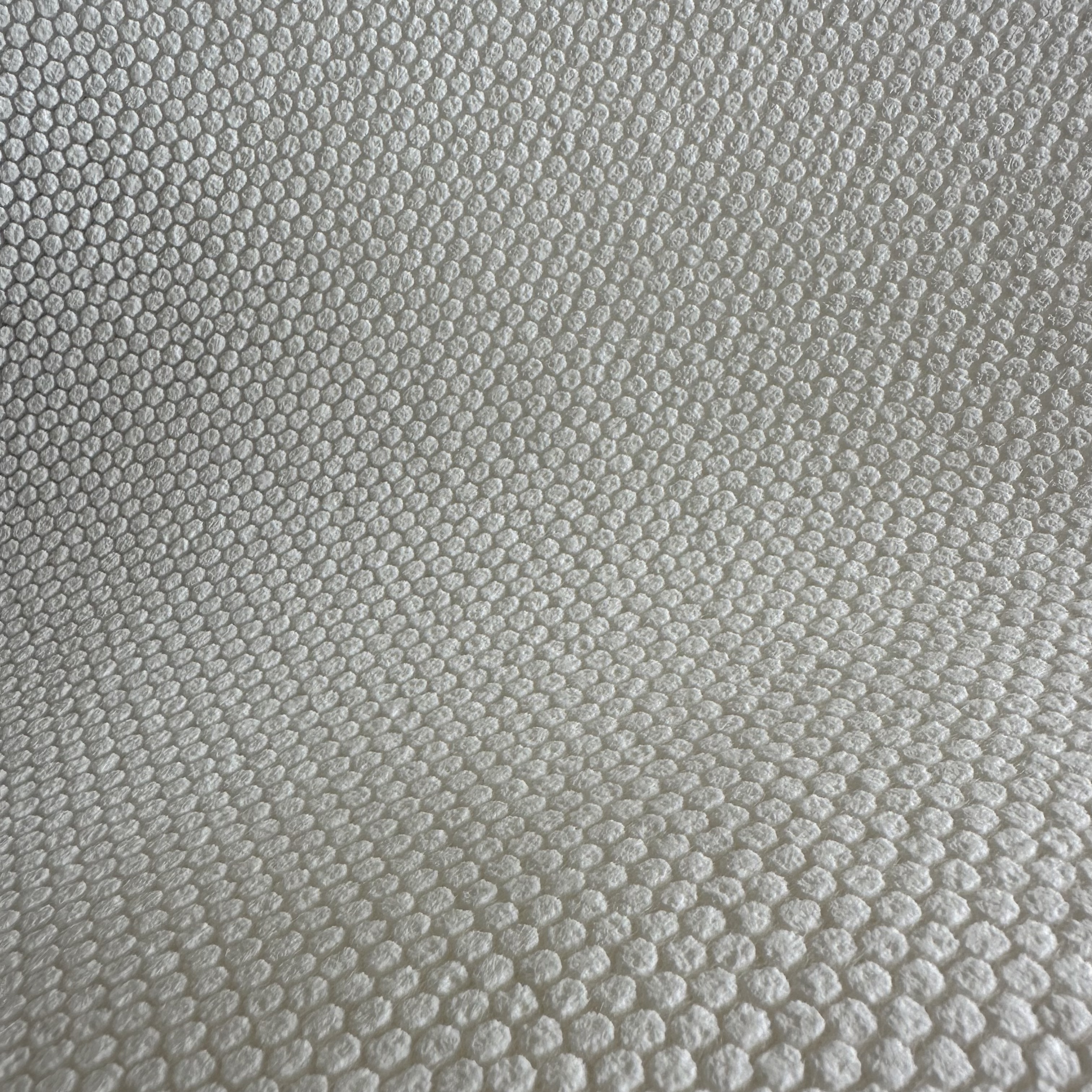
These roll materials act as resin flow channels inside the laminate. They can increase laminate thickness and stiffness, reduce resin consumption, distribute resin evenly, minimize print-through, and improve surface finish.
What Core Material Specs Actually Tell You
Project teams often compare core materials only by density. In practice, density is one input, but other specs determine processability and structural behavior.
- Density is a quick indicator of weight and strength potential. CINON PVC foam spans 45 to 300 kg/m³; PET foam spans 80 to 320 kg/m³; PMI foam spans 40 to 130 kg/m³; PP honeycomb is available at 70 and 80 kg/m³. A higher density is usually chosen where local loads are higher or inserts must be bonded.
- Thickness influences bending stiffness and laminate weight. PVC foam is available from 1 to 80 mm; PP honeycomb can be supplied from 5 to 100 mm. Thickness selection should follow the design bending requirement, not just a standard stock size.
- Surface options affect bonding and resin flow. Grooved, perforated, or scrim-backed foam surfaces support different infusion and lamination methods.
- Roll length and width matter in production planning. CT, CS, CM, and CX cores are supplied in rolls with standard widths of 1.27 m and documented roll lengths.
- Maximum process temperature is important for prepreg, RTM, and high exotherm resin systems. The stated maximum temperature of CT and CX is 180°C, while CS is 170°C and CM is 175°C.
- Working temperature range matters for aerospace and specialty panels. CINON aramid honeycomb is documented for -60°C to 180°C.
Project-to-Core-Material Mapping for Common Composite Applications
The following table is not a full design calculation. It is an initial shortlist that connects typical project types with CINON product families and the reasons for those combinations.
| Project Type / Scenario | Typical Engineering Needs | Core Material Families in CINON Range | Why This Combination Is Commonly Selected |
|---|---|---|---|
| Boat hulls, yacht hulls, decks, bulkheads, marine panels | Salt water resistance, low water absorption, stiffness, lightweight, vacuum infusion suitability | Closed-cell PVC foam, PET foam, CT/CS/CM/CX flow cores | Closed-cell PVC foam is listed by CINON as a low-water-absorption marine-grade option. Flow cores help create sandwich thickness and resin flow paths during infusion. |
| Wind turbine blades, blade shells, nacelle structures | Fatigue resistance, dimensional stability, lightweight, long-term static and dynamic loads | PET foam core, PVC foam core, flow cores | PET foam is supplied up to 320 kg/m³ and is applicable to wind energy. CINON product photos also document PET foam in wind turbine blade structures. |
| RV side panels, caravan walls, floors, roofs | Weight reduction, flatness, impact resistance, thermal efficiency, anti-UV surfaces | PP honeycomb sheet, PET foam, PVC foam | PP honeycomb has a low nominal density of 70 to 80 kg/m³, is thermoformable, and is supplied with PP nonwoven or fiberglass skins for panel lamination. PET foam is also documented for RV applications. |
| Truck bodies, bus panels, rail vehicle panels, transportation panels | Dynamic road loads, impact resistance, corrosion resistance, payload optimization | PET foam, PVC foam, PP honeycomb, CT/CS/CM/CX cores | These CINON materials are explicitly listed as applicable to transportation, RV, rail vehicles, and commercial vehicle construction. |
| Aerospace, UAV wings, drone structures, aircraft interiors | Ultra-lightweight structures, high stiffness-to-weight ratio, thermal stability, traceability | PMI foam, aramid honeycomb, lightweight fiberglass fabrics | PMI is supplied for aerospace and UAV applications. Aramid honeycomb is documented for aircraft interiors, helicopter panels, and UAV structures with a working temperature range of -60°C to 180°C. |
| Industrial FRP panels, covers, machine enclosures | Corrosion resistance, weight reduction, structural performance | PET foam, PVC foam, CT/CS/CM/CX cores | Industrial composite applications commonly require a balance of stiffness, process consistency, and chemical compatibility. |
| Composite molds and tooling | Dimensional stability, vacuum integrity, heat distortion resistance, lower tool weight | CT core material, PET foam, multiaxial or woven glass fabrics | CT core material is documented for composite tooling. It reduces tool weight and helps manage resin flow in infusion tooling. |
Detailed Selection Notes for Key Industrial Scenarios
Core Material for Boat Building and Yacht Decks
Marine builders using vacuum infusion and resin infusion have used CINON to supply materials for large boat-building projects. The relevant CINON material set includes core mat, PET foam, PVC foam, fiberglass fabric, and multiaxial fabric. For service in salt water and high humidity, materials must resist water ingress and corrosion. PVC foam’s documented characteristics, such as a closed-cell structure and low water absorption, make it a conventional starting point for hull skins and deck panels. PET foam is a recyclable structural alternative in the same range.
Core Material for Yacht Decks and Superstructures
Yacht decks and superstructures often require smooth sandwich surfaces and controlled laminate thickness. Flow core materials such as CT or CM can build sandwich thickness while also distributing resin. This is useful for avoiding print-through and producing a clean outer surface. CINON’s Australian marine case profile reports that core mat and PET foam supplied for boat building resulted in a smooth surface, easy wet-out, and better finish.
Core Material for Wind Turbine Blades
Blade production is a large-volume, highly controlled vacuum infusion process. PET foam is one of the core material families documented by CINON for wind turbine blades. Its availability in multiple densities supports different blade root, shear web, and shell requirements. Flow core materials such as CT, CS, CM, and CX may also support resin distribution in complex geometries.
Core Material for RV Panels and FRP Panels
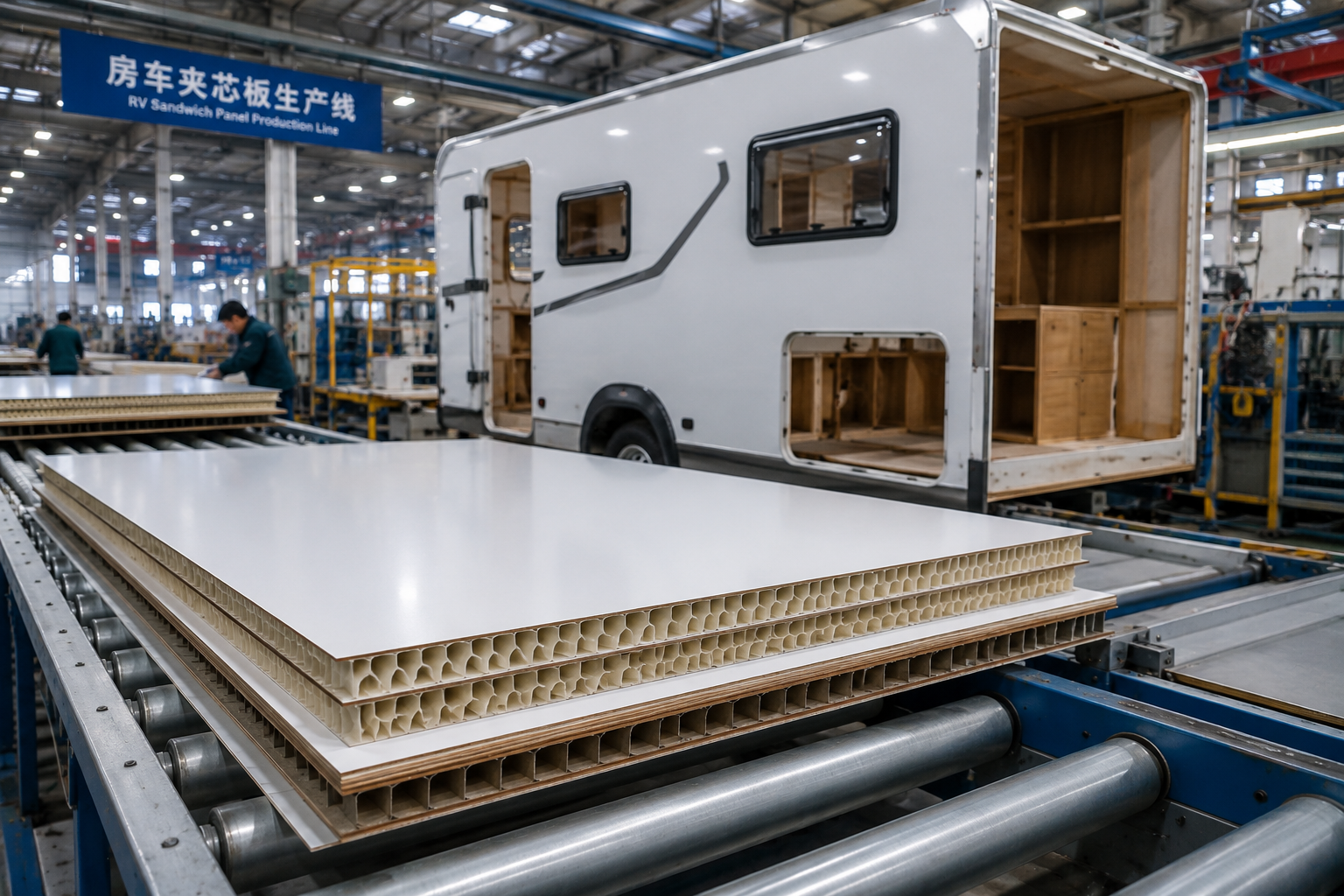
RV and caravan panels are frequently manufactured with large-format vacuum presses or continuous lamination lines. For these panels, flatness, dimensional consistency, and skin quality are as important as density. CINON’s PP honeycomb sheet is supplied in 1220 × 2440 mm standard panels and supports CNC machining and thermoforming. PET foam can also be laminated between fiberglass skins in FRP panel applications. A CINON RV case in the United States reports five pallets of material used for FRP panels, with a glossy surface treatment and good thickness uniformity.
Core Material for Transportation Panels, Truck Bodies, and Railway Interiors
Commercial vehicle and railway interior panels must provide weight reduction without sacrificing impact resistance or dimensional stability. PET foam and PVC foam in the CINON range are listed for transportation, rail vehicles, and composite panels. PP honeycomb sheet is another option where low density and recyclability are important. Rail and commercial vehicle programs should confirm any additional fire, smoke, and toxicity requirements separately with the laminate designer. CINON does not claim unspecified certification standards.
Core Material for Aerospace and UAV Structures
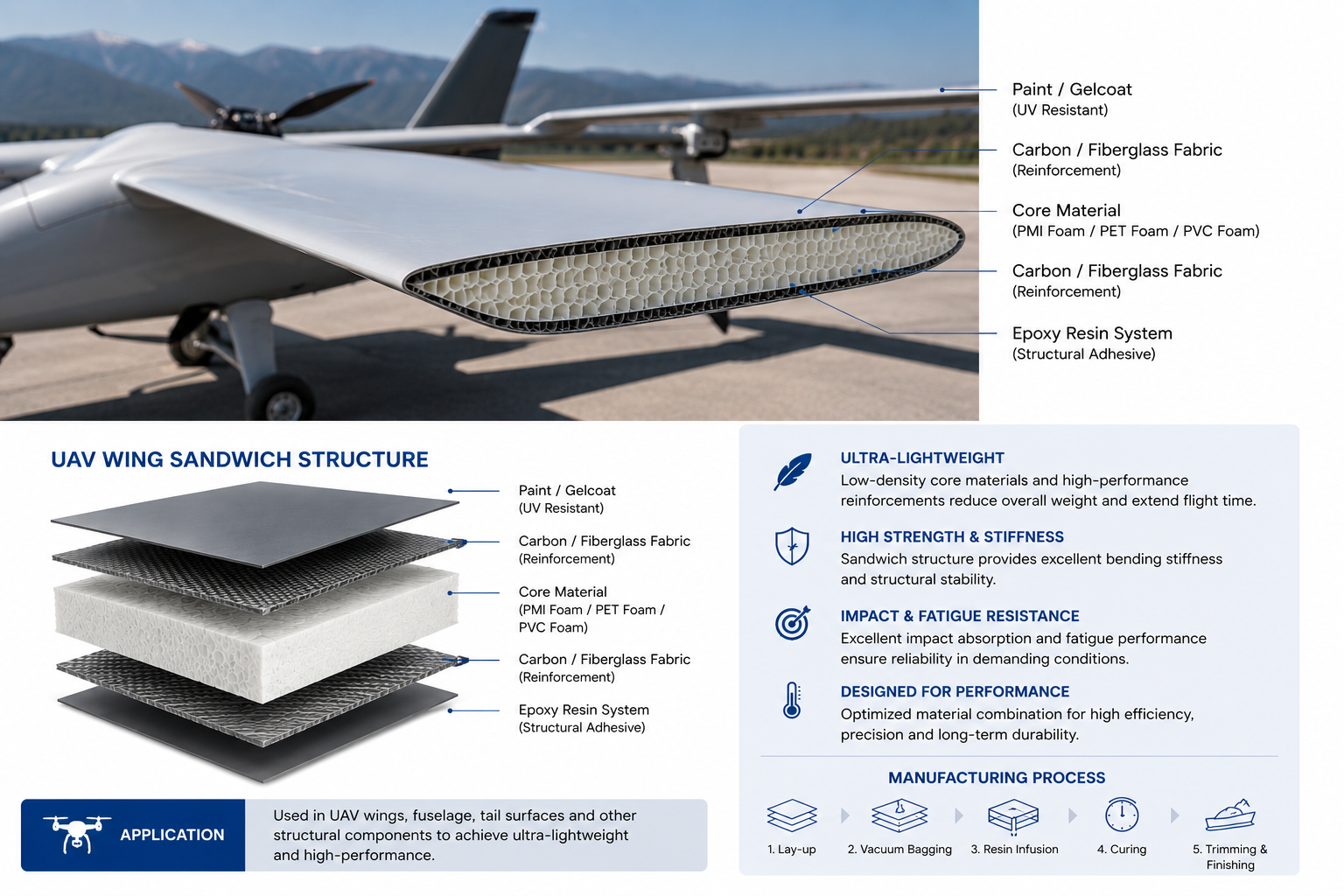
Aerospace and UAV structures are weight-critical and stiffness-critical. CINON’s PMI foam core and aramid honeycomb core directly support this project type. A German UAV manufacturer case documents 10 pallets of material used for UAV production. The reported outcomes are ultra-lightweight structures, high stiffness, and high-temperature resistance. Aramid honeycomb is also documented for use in aircraft interiors, helicopter panels, racing yachts, and defense structures.
Case Evidence: CINON Core Materials in Real Project Types
CINON’s published case profiles describe project-level results without inventing specific customer measurement data.
| Customer Type / Region | Project Type | Quantity Signal | Reported Result |
|---|---|---|---|
| Marine and yacht builders, Australia | Materials and tools for boat building | Container orders | Smooth surface, easy wet-out, better finish |
| RV manufacturers, United States | FRP panels | 5 pallets | Glossy surface treatment, uniformity of thickness, low weight and anti-UV performance |
| UAV manufacturers, Germany | UAV production | 10 pallets | Ultra-lightweight structures, high stiffness, high-temperature resistance |
| Sports equipment manufacturers, Thailand | Surfboards | Container orders | Weight reduction, performance improvement, high buoyancy and impact resistance |
Core Material Selection Checklist for Project Evaluation
During the Research and Evaluation stages, use the following checklist when comparing core material suppliers.
- Confirm the material family is applicable to your project type. Check whether the supplier lists PET, PVC, PMI, honeycomb, or flow core for your industry.
- Verify density and gauge range against the sandwich structure design.
- Check supply format: sheets, rolls, panels, cut parts, CNC machining, lamination, thermoforming, or customized sizes.
- Confirm process compatibility: vacuum infusion, RTM, VARTM, hand lay-up, prepreg, or continuous lamination.
- Review maximum process temperature and any surface options that affect resin movement.
- Compare lead time, MOQ, monthly capacity, and export logistics.
- Request sample evaluation before full production, especially if the core material will replace an existing material.
Comparison Considerations: When to Use Flow Core, Foam, or Honeycomb
Some project teams ask whether a foam block, honeycomb sheet, or thin flow core is better. Each format serves a different purpose.
- Standard foam core such as PET or PVC adds thickness and stiffness over a large area. It is commonly used for hull sides, wind blade shells, and flat composite panels.
- Honeycomb core such as PP or aramid offers very low density and high stiffness-to-weight performance in flat or lightly curved panels. Aramid honeycomb is positioned for aerospace and racing structures, while PP honeycomb is used in wider transportation and RV panels.
- Flow core such as CT, CS, CM, and CX is not a replacement for thick structural foam in every part. It is a thin core layer that creates resin flow channels and adds sandwich stiffness without much weight. It is particularly useful in cosmetic laminates, injection-molded parts, and closed molding processes.
What OEM and Custom Supply Means for Composite Core Material Projects
CINON production records state an annual output capacity of 1,200,000 m², a monthly capacity of 100,000 m², a 15-to-30-day lead time, and an MOQ of 1,000 m². The factory is in Guangzhou, China, with a facility area of 40,000 m². CINON supports ODM work and customization of core materials and fiberglass fabric. Aftersales support includes material selection, composite process optimization, vacuum infusion guidance, alternative material recommendations, sample evaluation, and quality traceability.
Some distributor case records also highlight OEM labeling and monthly reordering. From a buyer perspective, this means the supplier can serve both manufacturers and distributors who need a stable alternate source for core material products.
FAQ
1. Which core material is suitable for boat building and saltwater conditions?
For marine and yacht building, closed-cell PVC foam core is a common first material to evaluate. CINON supplies PVC foam core in densities from 45 kg/m³ to 300 kg/m³, with thicknesses from 1 mm to 80 mm, and describes it as a closed-cell rigid foam with low water absorption. PET foam core is an alternative for projects requiring a recyclable structural core. Flow cores such as CT, CS, CM, and CX can be combined with marine laminates to support resin distribution and increase laminate stiffness during infusion.
2. What is the difference between PET foam and PVC foam core?
PET foam core is described by CINON as a recyclable lightweight structural core, supplied in densities of 80, 100, 120, 150, 200, 250, and 320 kg/m³. PVC foam core is a crosslinked closed-cell polyvinyl chloride foam available in densities from 45 kg/m³ to 300 kg/m³ and in thicknesses from 1 mm to 80 mm. In practice, PVC is widely associated with marine moisture resistance, while PET is commonly evaluated for wind, transportation, RV, and recyclable sandwich panel programs.
3. Does CINON provide alternative flow core options for Soric-type materials?
Yes, CINON supplies a family of polyester nonwoven core materials under the CT, CS, CM, and CX names. CS Core Material has been offered as an alternative to Soric SF in product images and is available in 2 mm and 3 mm thickness with dry weights of 130 g/m² and 170 g/m². CX Core Material is positioned as an alternative to Soric LRC. CT is a thinner flow medium with dry weights from 90 to 160 g/m². Because Soric grades vary, buyers should evaluate samples against their actual resin system and laminate geometry before switching.
4. How should a composite manufacturer evaluate CINON core material samples before ordering?
CINON’s quality control is listed as 100% product testing. Aftersales support covers material selection, process optimization, vacuum infusion guidance, alternative material recommendations, sample evaluation, quality traceability, and global logistics coordination. Buyers should test the sample under the actual production process, whether that is vacuum infusion, RTM, hand lay-up, VARTM, or closed molding, and check density, thickness, surface finish, resin consumption, and visual laminate quality.
5. What are CINON’s MOQ, lead time, and ordering terms for core material projects?
CINON lists a minimum order quantity of 1,000 m², a typical lead time of 15 to 30 days, and a monthly production capacity of 100,000 m². The company has a 40,000 m² facility and exports to Europe, North America, and Asia-Pacific markets. For a project-specific quotation, send the material type, density, thickness, and quantity requirement to the CINON team.
Next step for project evaluation: CINON’s engineering and supply team can help you qualify the right core material format for your part. For quotes, sample requests, or process support, contact Waylon at waylon@cinoncomposites.com or WhatsApp +86 135-8036-3674. A downloadable catalog is available here: CINON Core Materials and Fiberglass Catalog.
Conclusion
Core material specifications should be mapped to the project, not copied from another industry. A marine part is not the same as an RV panel, and a UAV wing is not the same as a truck body. The correct selection depends on structural loads, infusion and lamination methods, service environment, surface requirements, and supply constraints.
CINON provides one of the broader core material portfolios for this type of application mapping: PET foam, PVC foam, PMI foam, PP honeycomb, aramid honeycomb, and polyester flow cores. Each family has documented specifications, and the technical team can support material qualification through samples, production trials, and routine export supply.