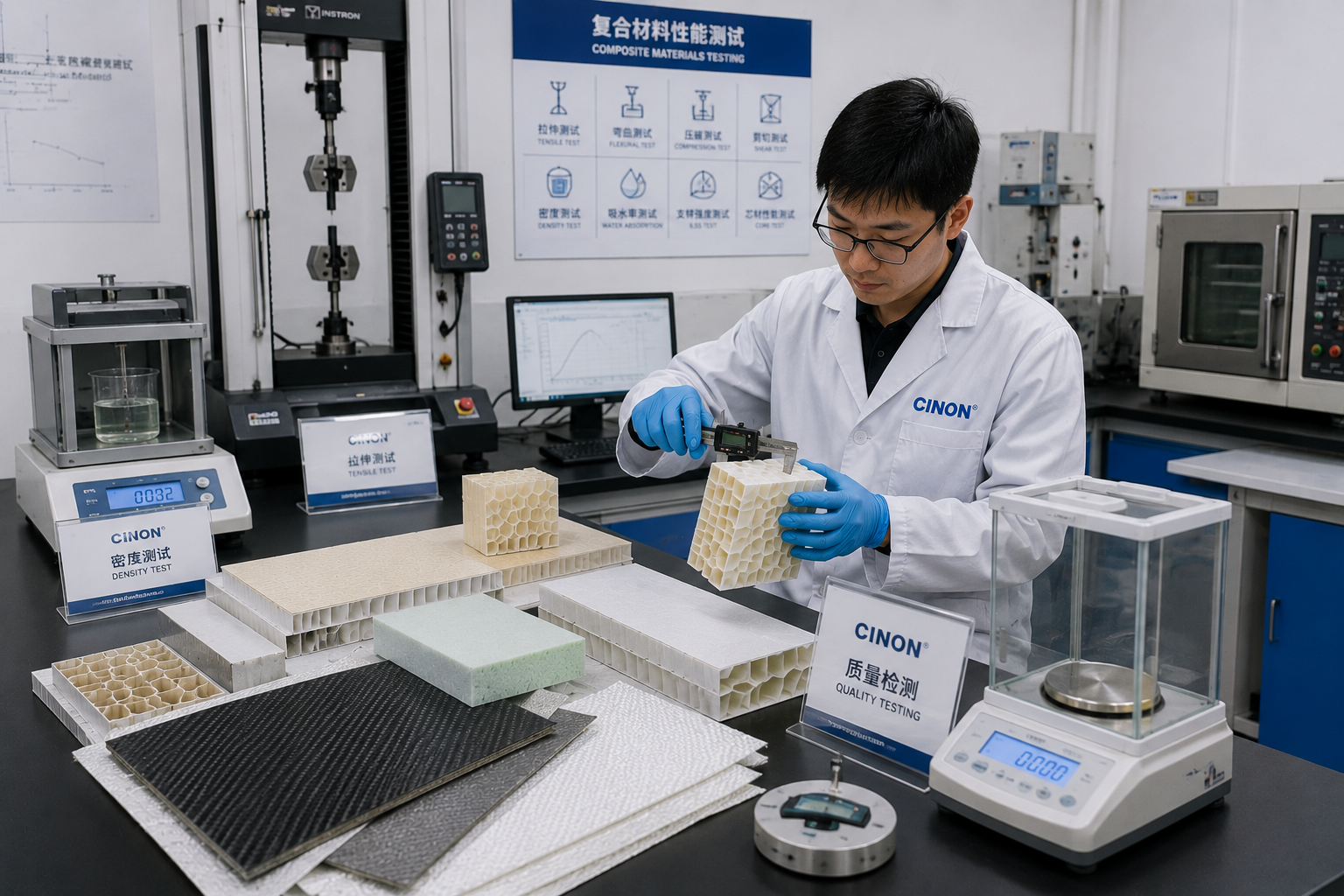
Core Material Selection Under Real Engineering Constraints: Specs, Certifications, and Supplier Checks
Core Material Selection Under Real Engineering Constraints: Specs, Certifications, and Supplier Checks
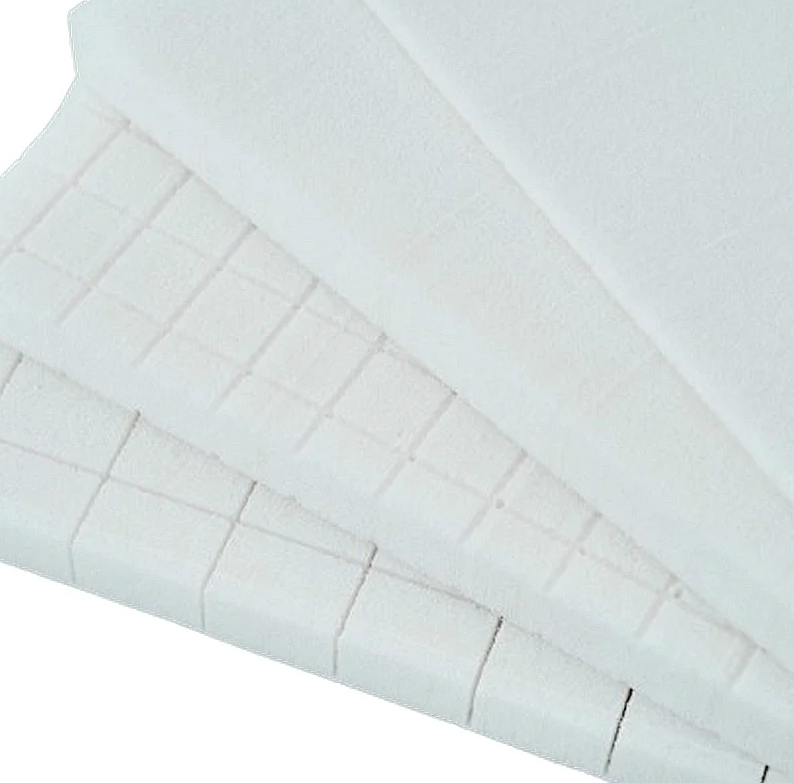
Core material selection is a structural decision before it is a purchasing decision. In a composite sandwich panel, the core separates the outer skins, increases bending stiffness, lowers component weight, and in some formats controls resin flow during infusion. For engineers and buyers moving from research to evaluation, the practical issue is not only which material family to choose, but whether the specific grade, documented certifications, process limits, and supply parameters match the project. This guide applies that constraint-based view to marine, wind, transportation, aerospace, and industrial composite applications.
What Problem Does Core Material Choice Solve?
Sandwich constructions are specified when stiffness must be raised without a proportional increase in weight. A thick, lightweight core increases the distance between two thin structural skins, which improves bending stiffness. The core also carries shear loads, supports impact resistance, and can contribute to insulation or resin distribution.
In marine projects, the core must resist water absorption and saltwater corrosion. In wind turbine blades, fatigue resistance and dimensional stability are critical. In truck bodies, RV panels, and rail interiors, weight reduction is balanced with impact resistance and thermal performance. In UAV and aircraft structures, stiffness-to-weight ratio becomes the governing requirement.
Why the Core Material Market Is Becoming More Specification-Driven
Market growth is not only a volume signal; it is also a specification signal. According to industry reports, the global core materials market was valued at USD 4.19 billion in 2024 and is projected to reach USD 6.84 billion by 2032, with wind energy and aerospace among the main demand drivers. The marine structural core materials market reached USD 120.4 million in 2024, with PVC expected to remain dominant because of its moisture resistance. The wind turbine blade composite materials market was valued at USD 7.045 billion in 2024, and Asia Pacific accounted for a 78.2% value share of the global wind turbine composites market. The global RV composite panels market was valued at USD 3.8 billion in 2025, with fiberglass segments holding 41.3% of the material share.
These numbers point to longer production series and stricter documentation. Buyers are asking for exact densities, thickness limits, maximum process temperatures, certification numbers, and supply commitments. A core material that performs in a prototype can still fail evaluation if the supplier cannot provide the required traceability.
Core Material Families and Their Engineering Boundaries
Selection starts with understanding what each material family can and cannot do. CINON Composites specializes in fiberglass reinforcements and lightweight core materials for marine, transportation, wind energy, industrial, and aerospace composite applications. The core material portfolio includes PET foam, PVC foam, PMI foam, PP honeycomb, aramid honeycomb, and polyester-based infusion core mats. The following sections list documented parameters that engineering teams can verify before qualification.
PET Foam Core for Boat Building, Wind Blades, and Transport Panels
Recyclable foam core is made from polyethylene terephthalate (PET). CINON supplies PET foam in densities of 80, 100, 120, 150, 200, 250, and 320 kg/m³. PET foam supports vacuum infusion, offers corrosion resistance, and is commonly used in boat hulls, boat decks, wind turbine blades, rail vehicle interiors, truck body panels, RV side panels, composite sandwich panels, and industrial structures.
PVC Foam Core for Hulls, Decks, and Infrastructure
PVC foam core is a crosslinked closed-cell rigid foam. Documented densities range from 45 to 300 kg/m³, and thickness ranges from 1 to 80 mm. Surface options include plain, grooved, perforated, and scrim-backed. It can be processed by vacuum infusion, RTM, hand lay-up, prepreg, and VARTM. Key documented characteristics include a closed-cell structure, low water absorption, high shear strength, fatigue resistance, thermal insulation, and corrosion resistance.
PMI Foam Core for Aerospace, UAV, and High-Performance Structures
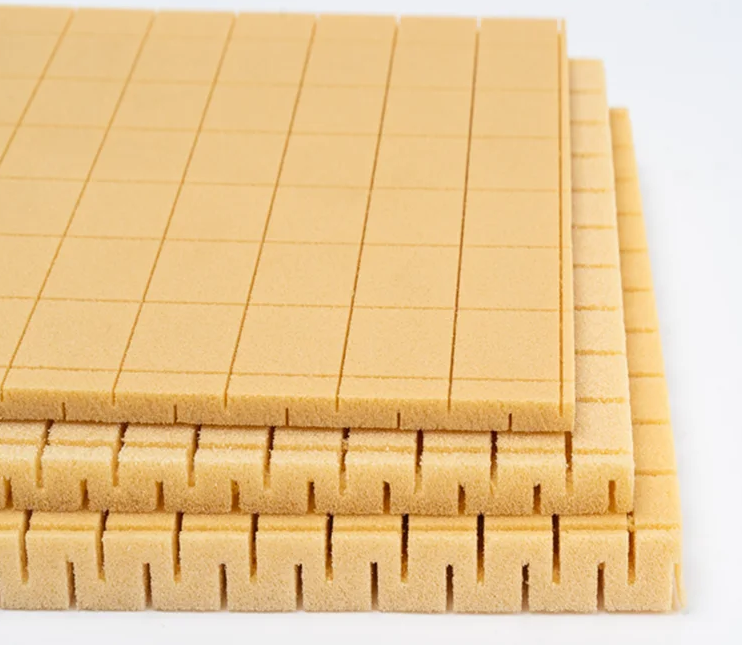
PMI foam core is made from polymethacrylimide and is used where high stiffness-to-weight ratio and heat resistance are required. CINON supplies PMI foam at densities of 40, 50, 80, 100, and 130 kg/m³. Documented benefits include ultra-lightweight structures, high stiffness-to-weight ratio, high temperature resistance, excellent fatigue performance, and autoclave compatibility. Typical applications include aircraft structures, drone components, UAV wings, racing yacht structures, carbon fiber sandwich panels, radar systems, and lightweight composite components.
PP Honeycomb Sheet for RV, Transportation, and Industrial Panels
PP honeycomb is a thermoplastic honeycomb core made from polypropylene. It is available in thicknesses from 5 to 100 mm, with cell sizes of 6, 8, 10, and 12 mm and densities of 70 or 80 kg/m³. Standard sheet size is 1220 x 2440 mm, with customized sizes available. Surface options include PP nonwoven and fiberglass skin. Processing methods include cutting, CNC machining, lamination, and thermoforming. It is used in transportation, RV and caravan, marine and yacht, construction, and industrial composite applications. It is often selected as a lightweight alternative to plywood, marine board, and traditional solid composite panels.
Aramid Honeycomb for Aerospace Interiors and High-Stiffness Panels
Aramid honeycomb core is made from aramid paper. CINON supplies cell sizes of 1.83, 2.75, 3.67, and 5.5 mm, densities from 32 to 128 kg/m³, and panel dimensions of 2440 x 1220 mm. Documented mechanical properties range from 0.43 to 5.52 MPa, with a working temperature range of -60 to 180°C. It is used in aerospace and aircraft interiors, helicopter panels, UAV structures, drone manufacturing, sandwich panels, motorsport applications, defense applications, radar structures, and marine racing yachts.
Infusion Core Mats: CM, CS, CT, and CX
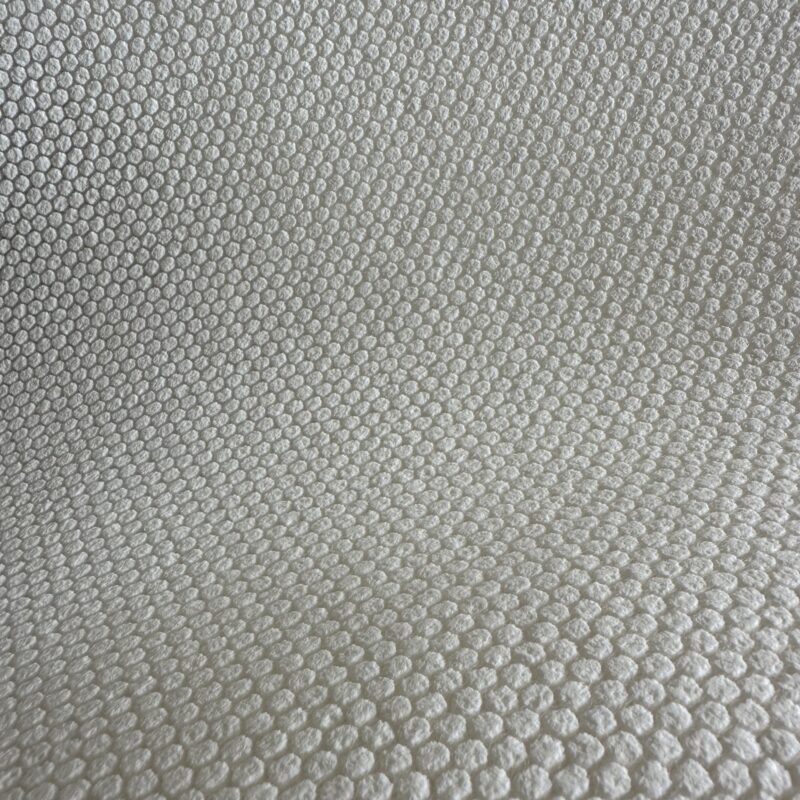
Infusion core mats are polyester-based materials that combine a lightweight core with resin flow channels. They are designed for vacuum infusion, resin infusion, RTM, VARTM, hand lay-up, and closed molding. CINON supplies four formats:
- CM core mat: thickness 1.5 to 6 mm; dry weight 125 to 360 g/m²; maximum process temperature 175°C; roll lengths 80, 80, 50, 40, 30, and 25 m; used in boat building, yacht construction, transportation panels, industrial composites, and lightweight structures.
- CS core material: thickness 2 to 3 mm; dry weight 130 or 170 g/m²; maximum process temperature 170°C; roll lengths 80 and 50 m; general-purpose vacuum infusion core.
- CT core material: thickness 1.5 to 3 mm; dry weight 90, 120, or 160 g/m²; maximum process temperature 180°C; roll lengths 120, 80, and 50 m; thin flow core for improved surface quality and reduced print-through.
- CX core material: thickness 1.5 to 3 mm; dry weight 120, 150, or 220 g/m²; maximum process temperature 180°C; roll lengths 70, 60, and 40 m; positioned by CINON as a Soric LRC alternative.
Engineers looking for an alternative to Soric XF or Soric SF should note that Soric XF and SF are non-woven polyester cores that act as internal flow media, and Soric SF uses fine hexagon cells of 2–3 mm for sharp corners. In the CINON range, CM and CS core materials are presented as alternatives to XF/SF-type flow cores, while CX is described as a Soric LRC alternative.
Step-by-Step Core Material Selection Checklist
A structured evaluation should move from load case to process limit to supply check. The following sequence can be used by design engineers and procurement teams.
- Define the load case and failure mode. Is the panel stiffness-driven, strength-driven, or impact-dominated? This determines whether the core needs shear strength, fatigue resistance, or energy absorption.
- Set process limits. Record the maximum process temperature, molding method, and resin system. PVC foam is compatible with vacuum infusion, RTM, hand lay-up, prepreg, and VARTM. Core mats support vacuum infusion and closed molding.
- Map density and thickness to weight targets. PET foam covers 80 to 320 kg/m³; PVC foam covers 45 to 300 kg/m³ and 1 to 80 mm; PMI foam covers 40 to 130 kg/m³; PP honeycomb covers 5 to 100 mm with densities of 70/80 kg/m³; aramid honeycomb covers 32 to 128 kg/m³.
- Verify documented compliance. Check whether the supplier’s quality, environmental, and occupational health and safety systems are certified and whether the certificate scope covers the materials you are buying.
- Evaluate sample panels. Measure resin flow, laminate thickness, surface quality, and stiffness. Ask for vacuum infusion guidance if needed.
- Check supply parameters. Confirm monthly capacity, lead time, MOQ, customization options, and export logistics before approval.
For CINON, the documented production capability includes a 40,000 m² facility, a monthly capacity of 100,000 m² for core materials and fiberglass reinforcement, an annual output of 1,200,000 m², a lead time of 15 to 30 days, and an MOQ of 1,000 m². The company states that quality control includes 100% testing, and supports ODM customization for core materials and fiberglass fabric.
Certification Constraints: What Evidence Should a Supplier Provide?
Documentation is a constraint, not an afterthought. For global projects, buyers should ask for the certificate number, issuing body, applicable standard, scope, and validity. CINON holds the following documented certifications applicable to the global market:
- ISO 9001:2015 — certificate number 51326Q04922R053, issued by Shenzhen Moqc Certification Co., Ltd., based on GB/T19001-2016/ISO9001:2015.
- ISO 14001:2015 — certificate number ISO14001-2023-001, issued by SGS, based on ISO 14001:2015.
- ISO 45001:2018 — certificate number 51326S01896R053, issued by Shenzhen Moqc Certification Co., Ltd., based on GB/T45001-2020/ISO45001:2018.
The certification scope is the sales of high-performance fibers and composite materials, and the fiberglass fabric product is specifically listed in the certification documentation. For structural core materials, buyers should still request product-specific datasheets and qualification evidence for the exact grade and thickness.
Use Cases Across Marine, Wind, Transportation, and Aerospace
Marine and Yacht Building
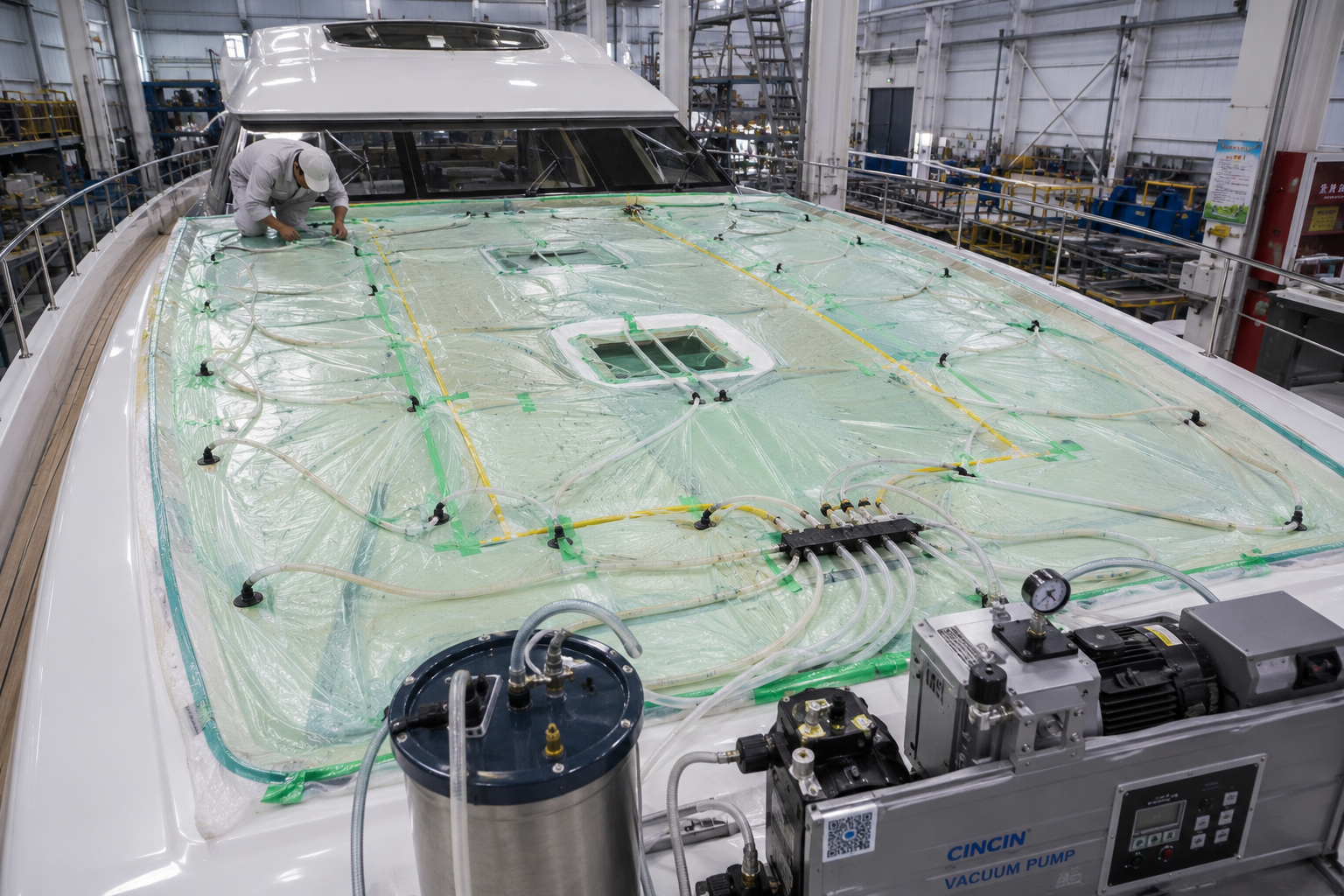
The main requirements are low water absorption, saltwater corrosion resistance, and good resin flow. In vacuum infusion processes, core mats and PET/PVC foams help produce hulls, decks, bulkheads, superstructures, and marine panels. CINON has supplied materials and tools for boat building to a marine and yacht builder in Australia in container orders; the customer reported a smooth surface, easy wet-out, and better finish.
Wind Energy
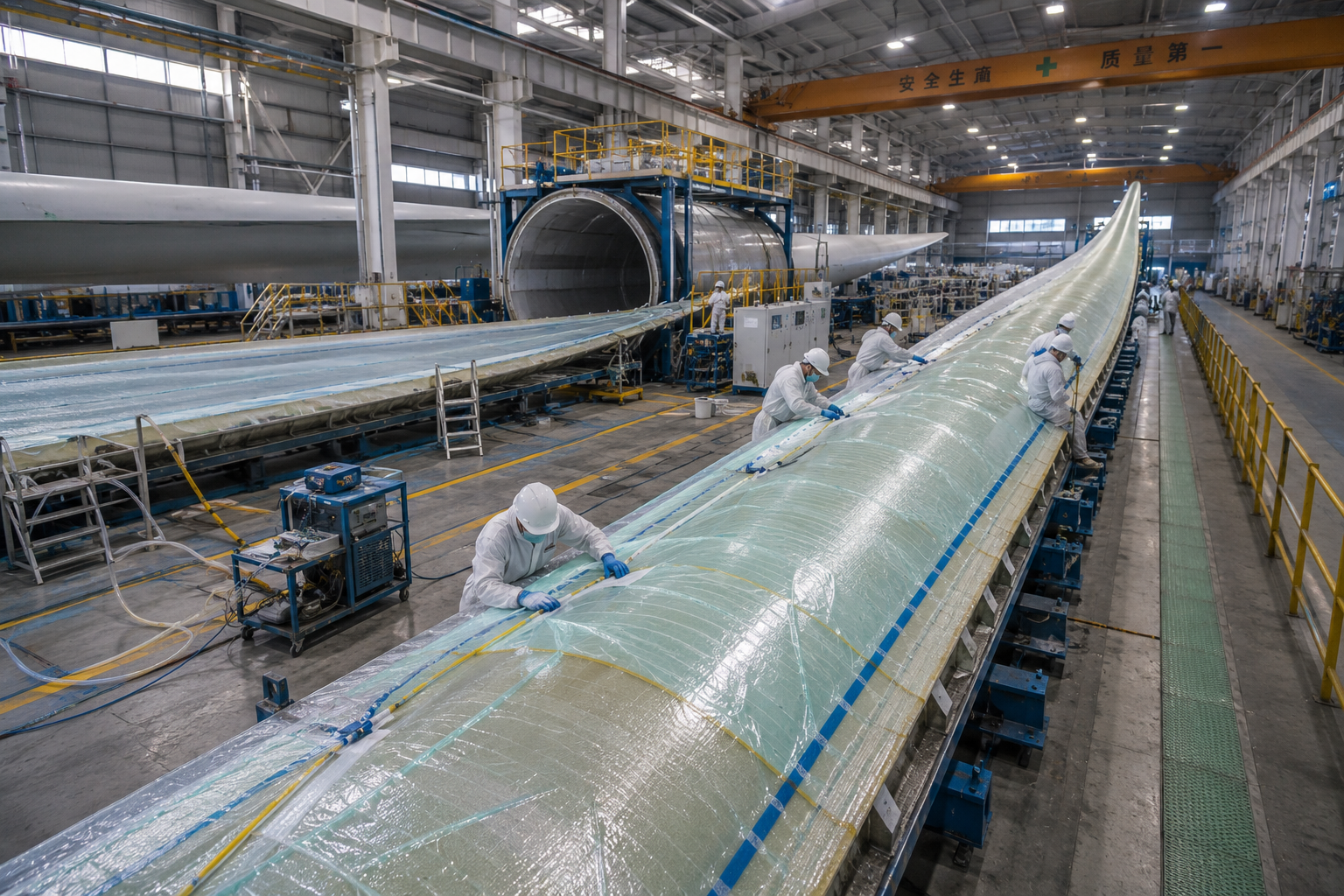
Wind turbine blades, blade shells, and nacelle structures require fatigue resistance, lightweight construction, and dimensional stability. PET and PVC foam cores are used in vacuum infusion with large mold systems. CINON’s portfolio includes PET and PVC foam cores plus CM/CS/CT/CX core mats that support blade shell infusion.
Transportation, RV, and Caravan
Truck bodies, bus panels, and rail interiors demand weight reduction, impact resistance, and corrosion resistance. PP honeycomb is a lightweight alternative to plywood and marine board. CINON supplied PP honeycomb and PET foam sandwich panels used in lightweight RV construction to an RV manufacturer in the United States; the application was FRP panels, and the reported result was a glossy surface and uniformity of thickness.
Aerospace and UAV Structures
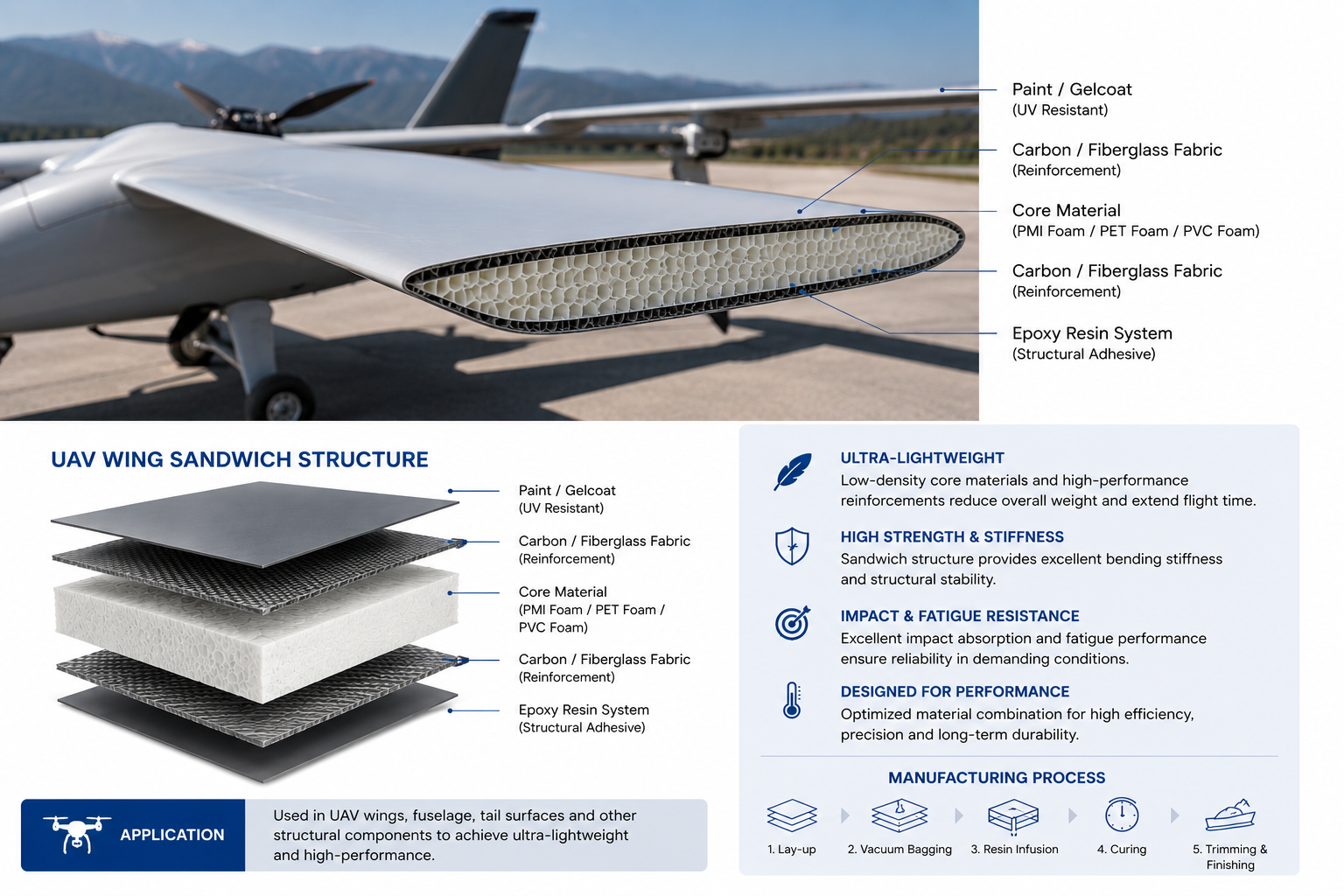
UAV wings, drone structures, and aircraft panels are weight-critical and need high stiffness-to-weight ratio. PMI foam offers high temperature resistance, fatigue performance, and autoclave compatibility; aramid honeycomb is used for sandwich panels in aerospace and racing structures. CINON supplied PMI foam and lightweight fiberglass fabrics to a UAV manufacturer in Germany in a 10-pallet order; the focus was ultra-lightweight structures, high stiffness, and high temperature resistance.
Industrial Composites and Composite Tooling
Industrial covers, FRP panels, and machine enclosures need corrosion resistance and structural performance. Core mats such as CM and CS add thickness and stiffness without high weight and improve resin distribution in closed molding. PET foam is also used in composite tooling for dimensional stability and tool weight reduction.
Comparison Table: Core Material Options and Documented Parameters
| Core material | Documented parameters | Typical composite applications |
|---|---|---|
| PET foam core | Density 80–320 kg/m³; recyclable; vacuum infusion compatible; corrosion resistance | Boat hulls, boat decks, wind turbine blades, rail interiors, truck body panels, RV side panels, industrial sandwich panels, renewable energy structures |
| PVC foam core | Density 45–300 kg/m³; thickness 1–80 mm; closed-cell; low water absorption; high shear strength; fatigue resistance; thermal insulation | Marine and yacht building, wind energy, transportation, rail vehicles, RV, industrial composites, construction panels, defense |
| PMI foam core | Density 40–130 kg/m³; high temperature resistance; excellent fatigue; autoclave compatible | Aircraft structures, UAV wings, drone components, racing yachts, carbon fiber sandwich panels, radar systems |
| PP honeycomb | Density 70/80 kg/m³; thickness 5–100 mm; cell sizes 6/8/10/12 mm; moisture and impact resistance | Transportation, RV and caravan, marine and yacht, construction, industrial composites |
| Aramid honeycomb | Density 32–128 kg/m³; cell sizes 1.83–5.5 mm; mechanical properties 0.43–5.52 MPa; working temperature -60 to 180°C | Aerospace interiors, helicopter panels, UAV structures, motorsport, defense, racing yachts |
| CM core mat | Thickness 1.5–6 mm; dry weight 125–360 g/m²; max process temperature 175°C; integrated resin flow channels | Boat building, yacht construction, transportation, wind energy, industrial composites, infrastructure |
| CS core material | Thickness 2–3 mm; dry weight 130/170 g/m²; max process temperature 170°C | Marine, transportation, industrial composites, wind energy, RV, infrastructure |
| CT core material | Thickness 1.5–3 mm; dry weight 90/120/160 g/m²; max process temperature 180°C; improved resin distribution; reduced print-through | Marine, transportation, industrial composites, wind energy, composite tooling, sports and leisure equipment |
| CX core material | Thickness 1.5–3 mm; dry weight 120/150/220 g/m²; max process temperature 180°C; Soric LRC alternative | Marine and yacht, wind power, automotive and rail transit, aerospace and UAV, construction, anti-corrosion industry |
The table is based on supplier-documented specifications, not on marketing claims. It is intended to support shortlisting, not to replace finite element analysis or process trials.
Frequently Asked Questions
What certifications should a core material supplier hold for global composite projects?
Buyers normally ask for quality, environmental, and occupational health and safety certificates. CINON holds ISO 9001:2015 (51326Q04922R053), ISO 14001:2015 (ISO14001-2023-001), and ISO 45001:2018 (51326S01896R053), all applicable globally. The certificate scope covers the sales of high-performance fibers and composite materials, and the fiberglass fabric product is specifically listed.
How do core material density and thickness affect sandwich panel performance?
Density affects weight and mechanical properties; lower density reduces mass but usually lowers strength and stiffness per volume. Thickness increases bending stiffness. Documented ranges include PET foam 80–320 kg/m³, PVC foam 45–300 kg/m³ and 1–80 mm, PMI foam 40–130 kg/m³, PP honeycomb 5–100 mm at 70/80 kg/m³, and aramid honeycomb 32–128 kg/m³.
How can buyers evaluate cost efficiency without sacrificing core material quality?
Compare total panel cost, process reliability, and waste rather than only unit price. Core mats reduce resin consumption and improve infusion reliability, and PET foam is recyclable. Sample panels should be used to verify resin use, stiffness, surface quality, and cycle time before procurement.
What should a core material sample evaluation include?
A sample evaluation should check density and thickness, visual surface quality, compatibility with vacuum infusion or RTM, resin flow and wet-out, laminate stiffness, and weight. CINON supports material selection, composite process optimization, vacuum infusion guidance, alternative material recommendations, sample evaluation, quality traceability, and global logistics coordination.
What lead time and order flexibility should be expected from CINON?
CINON documents monthly capacity of 100,000 m², lead time of 15 to 30 days, and MOQ of 1,000 m². ODM customization is available for core materials and fiberglass fabric. For the next step, request a current sample and the CINON catalog.
Conclusion
Core material decisions are constrained by structural requirements, process limits, compliance documentation, and supply reliability. Engineers who document density, thickness, process temperature, and certification evidence before qualification reduce the risk of later changes. The CINON portfolio covers a wide range of core materials for boat building, yacht decks and hulls, wind turbine blades, transportation panels, RV panels, truck bodies, aerospace and UAV structures, composite molds, FRP panels, and renewable energy applications.
Next step. For current specifications and available grades, download the CINON catalog. For samples and technical questions, contact waylon@cinoncomposites.com or WhatsApp +86 135-8036-3674.