
Core Material Thickness and Dry Weight for Vacuum Infusion: A Technical Guide
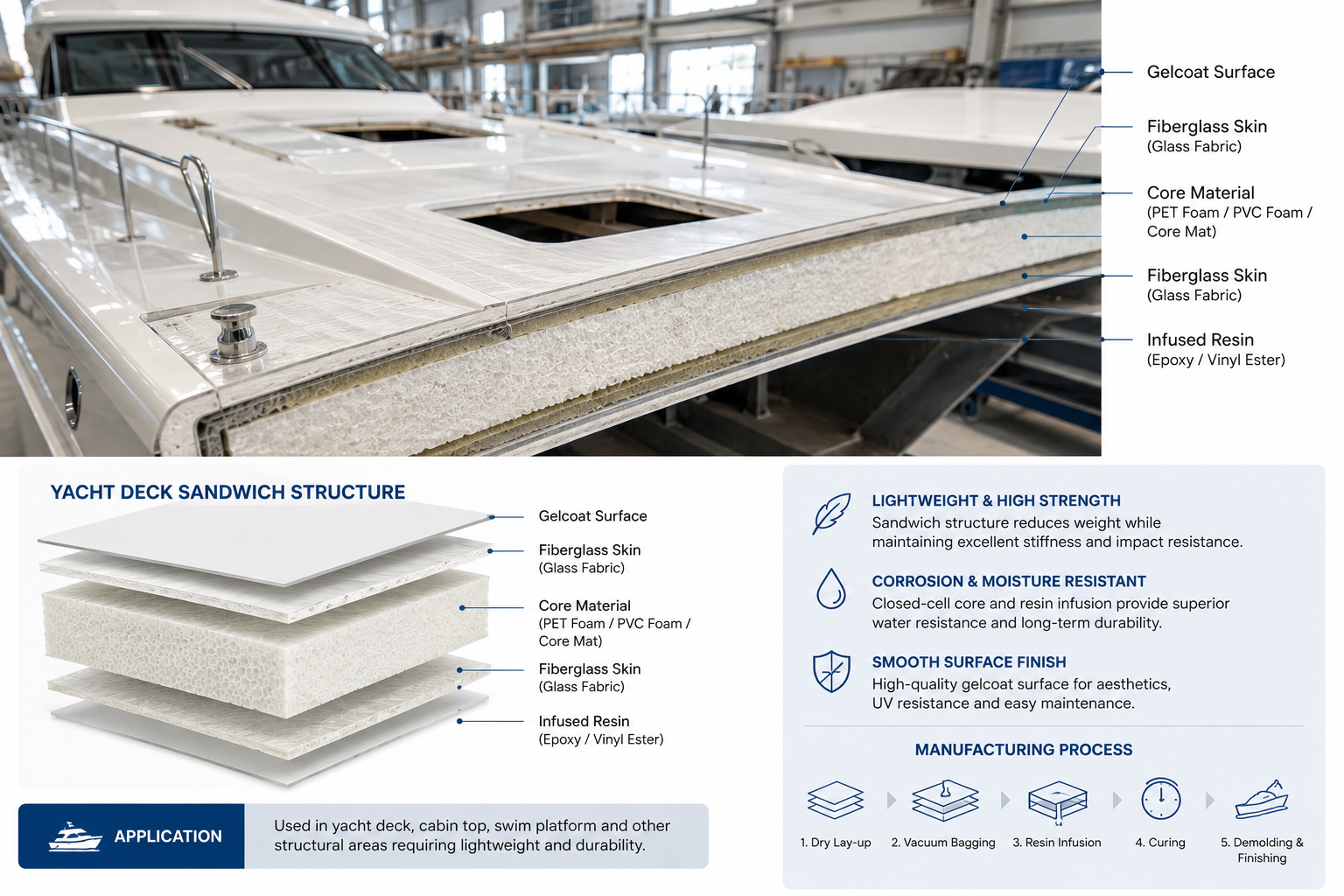
In vacuum infusion, two numbers define a nonwoven core material long before resin is drawn in: thickness in millimetres, and dry weight in grams per square metre. Thickness fixes the gap between the two skins, so it drives the bending stiffness of the finished sandwich. Dry weight fixes how much nonwoven fibre occupies that gap, so it drives resin uptake, the open volume available for resin movement, and the mass the core carries before any laminate is added.
CINON Composites (Guangdong Cinon New Material Technology Co.,Ltd) supplies the two families that these numbers separate. CT Core Material is a thin flow core specified at 90–160 g/m² in 1.5, 2 and 3 mm. CM core mat is a structural mat specified at 125–360 g/m² from 1.5 mm to 6 mm. CX Core Material covers 120–220 g/m² and is specified as a Soric LRC alternative, and CS Core Material covers 130–170 g/m² in 2 mm and 3 mm. All four grades are polyester nonwoven fabric supplied 1.27 m wide.
This guide sets out how to size thickness and dry weight, how to convert them into a cutting plan using CX roll lengths of 40–70 m and CS roll lengths of 50–80 m, and which grade is the preferred starting point for a given infusion job.
The Two Ways These Decisions Go Wrong
Answer first: most core-related infusion problems trace back to one of two mistakes — assigning a flow layer to a structural mat, or choosing thickness and dry weight for reasons that have nothing to do with the structural and flow requirements of the part.
- Role substitution. CT and CX are specified as flow cores (CT as a thin flow core, CX as a Soric LRC alternative), while CM and CS are specified as structural and general-purpose grades. Because all four are polyester nonwovens of similar appearance and identical 1.27 m width, they are frequently treated as interchangeable. When a flow layer is replaced by a structural mat, the internal resin path changes and the resin front has to travel further than the plan assumed.
- Thickness chosen by habit, dry weight ignored. A thicker core is the fastest way to gain stiffness, but it also increases resin-filled volume and finished mass. Dry weight is then treated as a purchasing detail rather than a process variable, even though it determines how much fibre and how much open volume sit inside that thickness.
- Cutting plans built on nominal lengths. CX rolls are supplied in 70 m, 60 m and 40 m lengths; CS in 80 m and 50 m; CM across a wider set that runs down to 25 m at the heavy end. A plan that assumes one convenient length produces splices, offcuts and rework.
Where Demand for Specified Core Material Is Coming From
The commercial context explains why thickness and dry weight grades have multiplied. The global core materials market was valued at USD 4.19 billion in 2024 and is projected to reach USD 6.84 billion by 2032, driven by wind energy and aerospace demand (Vertex AI Search / Industry Report 2032). Published estimates diverge with scope — one source values the broader market at USD 2.8 billion for 2025 — so market size is best read as a directional signal rather than a specification.
Sector detail is more useful for planning:
- Marine structural core materials reached USD 120.4 million in 2024, with PVC expected to remain the dominant material because of moisture resistance (Stratview Research).
- Wind turbine blade composite materials were valued at USD 7.045 billion in 2024, with China's production capacity exceeding 35 GW (Cognitive Market Research), and Asia Pacific held a 78.2% value share of the wind turbine composites market in 2024 (MarketsandMarkets).
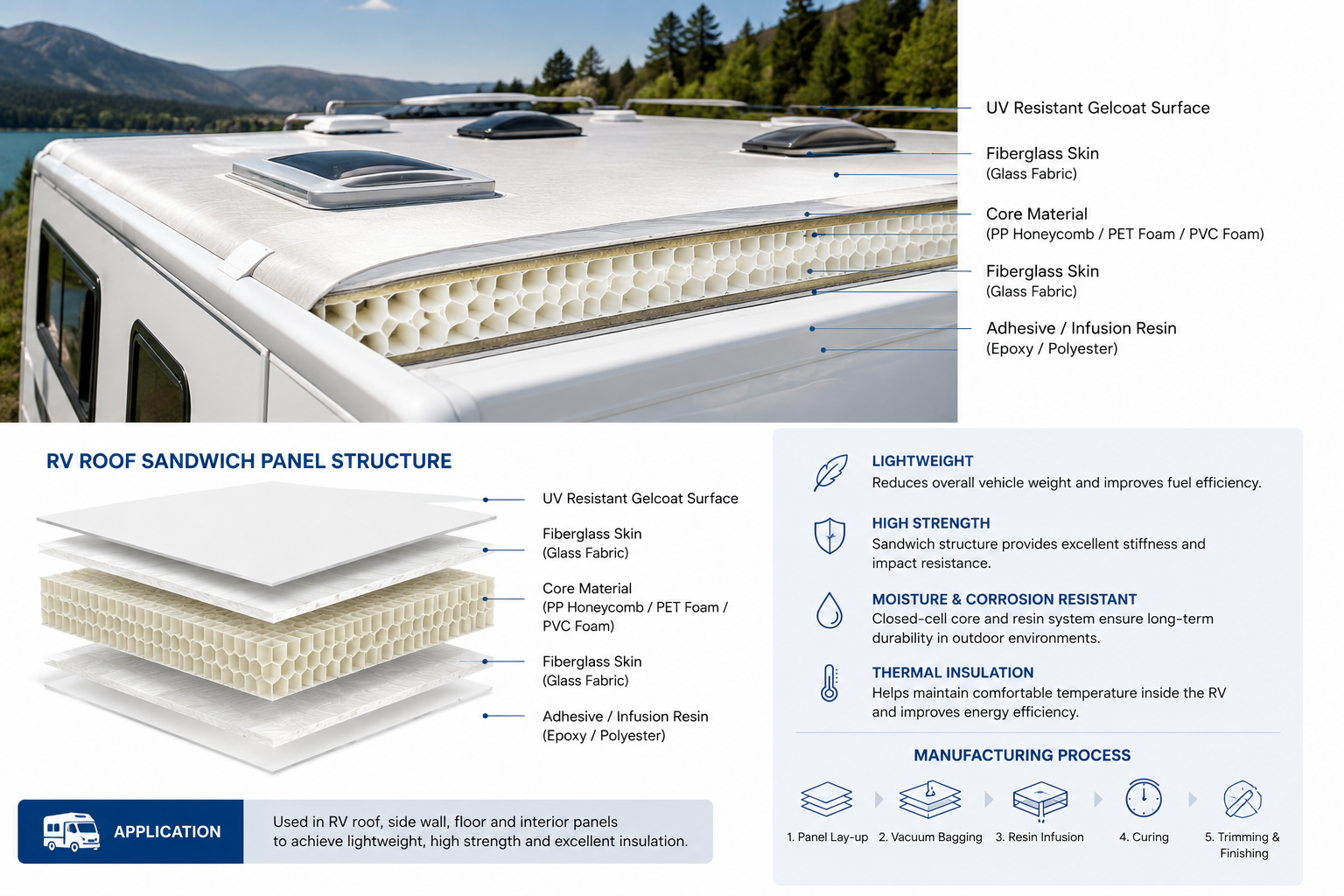
- RV composite panels reached USD 3.8 billion in 2025, with fiberglass segments holding 41.3% of the material share (Dataintelo).
The supply-side consequence is a preference shift towards dry-form, infusion-compatible cores that can be quoted in g/m² rather than only in kg/m³. Buyers comparing against Lantor Soric XF and SF — non-woven polyester cores that act as internal flow media for resin infusion, with Soric SF using fine 2–3 mm hexagon cells for sharp corners — are specifying exactly this family of material, and alternatives are now evaluated on thickness and dry weight data rather than appearance.
Matching Grade, Thickness and Dry Weight to the Job
Flow cores: CT Core Material at 90–160 g/m²
CT Core Material is classified as a thin flow core material: a polyester nonwoven supplied in 1.5 mm, 2 mm and 3 mm thicknesses, with dry weights of 90 g/m², 120 g/m² and 160 g/m². Roll lengths are 120 m, 80 m and 50 m at 1.27 m width, and the grade carries a maximum process temperature of 180 °C. Its stated applications are marine and yacht building, transportation, industrial composites, wind energy, composite tooling, and sports and leisure equipment. Where the core must stay thin while resin still has to travel, 1.5 mm sets the floor of the CT range.
Flow cores: CX Core Material at 120–220 g/m²
CX Core Material is specified as a Soric LRC alternative and is the flow layer for larger part families. It is a polyester core in 1.5 mm, 2 mm and 3 mm thicknesses at 120 g/m², 150 g/m² and 220 g/m², supplied on 70 m, 60 m and 40 m rolls at 1.27 m width, with a maximum process temperature of 180 °C. Target industries span marine and yacht, wind power, automotive and rail transit, aerospace and UAV, construction and sanitary ware, and anti-corrosion work. Where a project is benchmarking Soric XF or SF against alternatives, CX is the grade in this portfolio that carries the same functional role — an internal flow layer inside the laminate.
Structural mats: CM core mat at 125–360 g/m²
CM core mat is a structural nonwoven in 1.5 mm, 2 mm, 3 mm, 4 mm, 5 mm and 6 mm thicknesses, with dry weights of 125 g/m², 150 g/m², 190 g/m², 260 g/m², 340 g/m² and 360 g/m², at 1.27 m width and a maximum process temperature of 175 °C. Roll lengths shorten as thickness increases, running from 80 m at the thin end down to 25 m at the heavy end. Applications cover marine and yacht building, transportation, wind energy, industrial composites, RV and caravan manufacturing, and infrastructure. CM is the preferred choice when the layer has to add bulk and stiffness rather than carry resin across the part.
General-purpose: CS Core Material at 130–170 g/m²
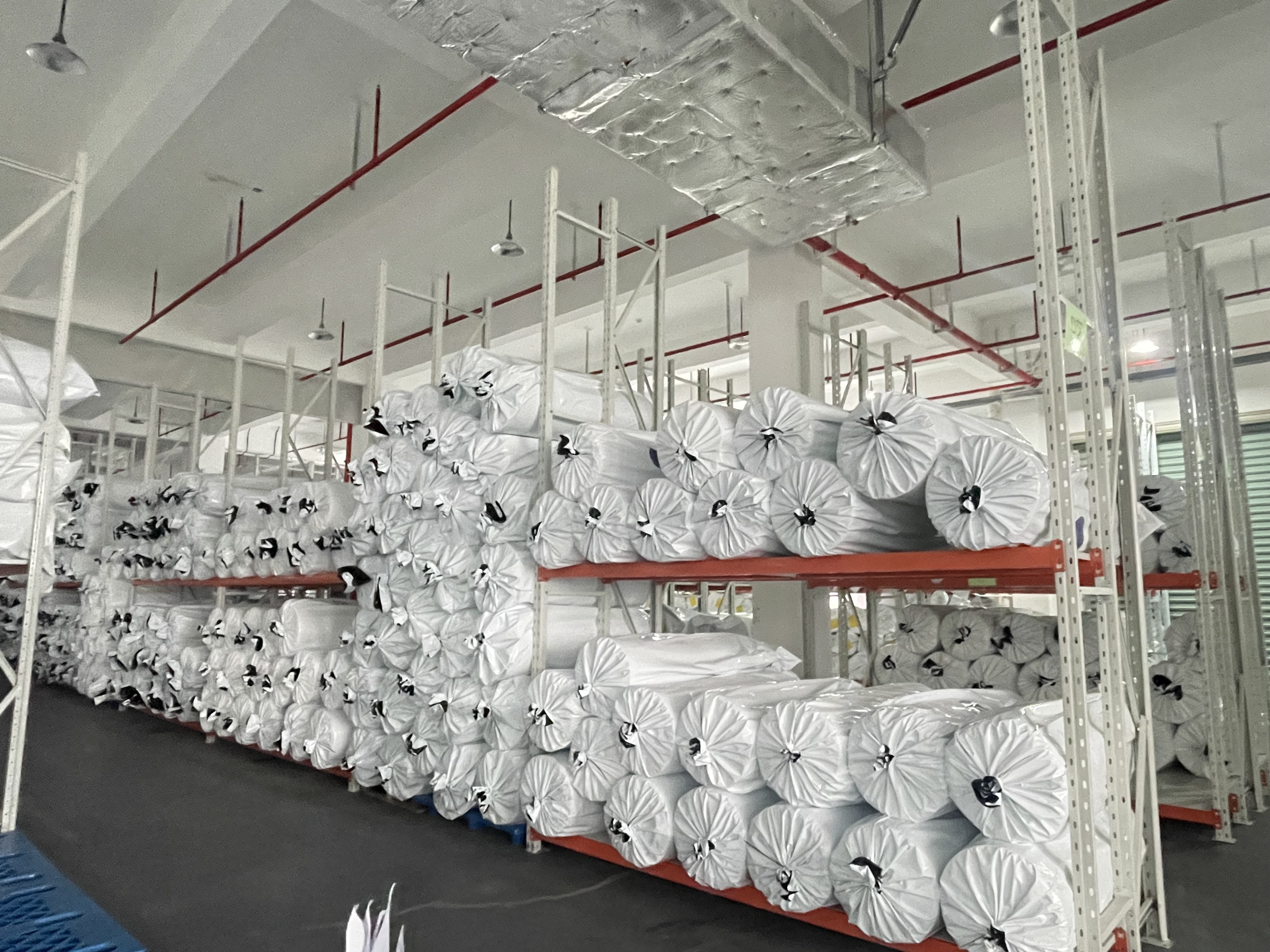
CS Core Material is a vacuum infusion core in 2 mm and 3 mm thicknesses at 130 g/m² and 170 g/m², supplied on 80 m and 50 m rolls at 1.27 m width, with a maximum process temperature of 170 °C. It serves marine and yacht building, transportation, industrial composites, wind energy, RV and caravan manufacturing, and infrastructure. With only two thicknesses and two dry weights, CS is the simplest specification to standardise across a plant — and the one with the least room to correct a mismatch, which is why the 50 m roll length should be checked against the largest panel in the schedule before CS is adopted as the standard.
How to read dry weight
Dry weight is not resin weight and not finished core weight. It is the mass of the nonwoven fibre alone per square metre, without resin. Two consequences follow from that definition, and both affect the calculation more than the headline number does:
- At a fixed thickness, a heavier dry weight means more fibre occupies the same gap, which leaves less open volume for resin. Dry mass rises, resin mass falls, and the finished weight can land closer to the lighter grade than expected.
- Across the thickness range — 125 g/m² at 1.5 mm against 360 g/m² at 6 mm, for example — fibre mass and the open, resin-filled volume both increase, so dry weight, thickness and finished panel weight move in the same direction.
That is why dry weight should be selected after the thickness has been fixed, not at the same time.
When a nonwoven is the wrong answer
Nonwoven cores are quoted in g/m²; foam and honeycomb cores are quoted in kg/m³. They are not interchangeable specifications. CINON also supplies PVC foam core from 45 to 300 kg/m³ in 1–80 mm thicknesses with plain, grooved, perforated or scrim-backed surfaces and processing by vacuum infusion, RTM, hand lay-up, prepreg or VARTM; PET foam core from 80 to 320 kg/m³; PMI foam core from 40 to 130 kg/m³; PP honeycomb at 70–80 kg/m³ in 5–100 mm; and aramid honeycomb at 32–128 kg/m³ in cell sizes of 1.83, 2.75, 3.67 and 5.5 mm. When the design requirement is a defined density with a closed-cell or cellular structure, the core should be specified in kg/m³ and thickness plus dry weight stop being the deciding pair.
| Grade | Type as specified | Thickness | Dry weight | Roll length | Max. process temperature |
|---|---|---|---|---|---|
| CT Core Material | Thin flow core material | 1.5 / 2 / 3 mm | 90 / 120 / 160 g/m² | 120 / 80 / 50 m | 180 °C |
| CX Core Material | Soric LRC alternative | 1.5 / 2 / 3 mm | 120 / 150 / 220 g/m² | 70 / 60 / 40 m | 180 °C |
| CM core mat | Structural core material | 1.5 / 2 / 3 / 4 / 5 / 6 mm | 125 / 150 / 190 / 260 / 340 / 360 g/m² | 80 / 80 / 50 / 40 / 30 / 25 m | 175 °C |
| CS Core Material | Vacuum infusion core material | 2 / 3 mm | 130 / 170 g/m² | 80 / 50 m | 170 °C |
All four grades are supplied 1.27 m wide. CT, CM and CS are polyester nonwoven fabric; CX is polyester.
Preferred Starting Points, Ranked by Infusion Scenario
The list below is a selection preference based on the published specification of each grade and the role it is classified for — not a sales-volume ranking. Read it as the first specification to test for each scenario.
- Thin, flow-critical skins — CT Core Material. Start at 90–120 g/m² in 1.5–2 mm. The grade is classified as a thin flow core, the maximum process temperature is 180 °C, and the 120 m roll length at the thin end keeps cutting plans simple on long, narrow parts.
- Large infused parts needing an internal flow layer — CX Core Material. Start at 150 g/m² in 2 mm. It is the Soric LRC alternative in the range, shares the 180 °C ceiling with CT, and covers marine, wind, rail, aerospace and anti-corrosion applications from a single grade.
- Stiffness and bulk build-up — CM core mat. Start at 190–260 g/m² in 3–4 mm. CM reaches 6 mm and 360 g/m², which no other nonwoven in the portfolio does, and it is the only grade with a 25 m short roll for small, heavy sections.
- Standardised production runs — CS Core Material. Start at 130 g/m² in 2 mm where a single 170 °C ceiling and two thicknesses are enough for the whole product family and the plant benefits from a simple, repeatable specification.
Seven Steps to Size Thickness and Dry Weight
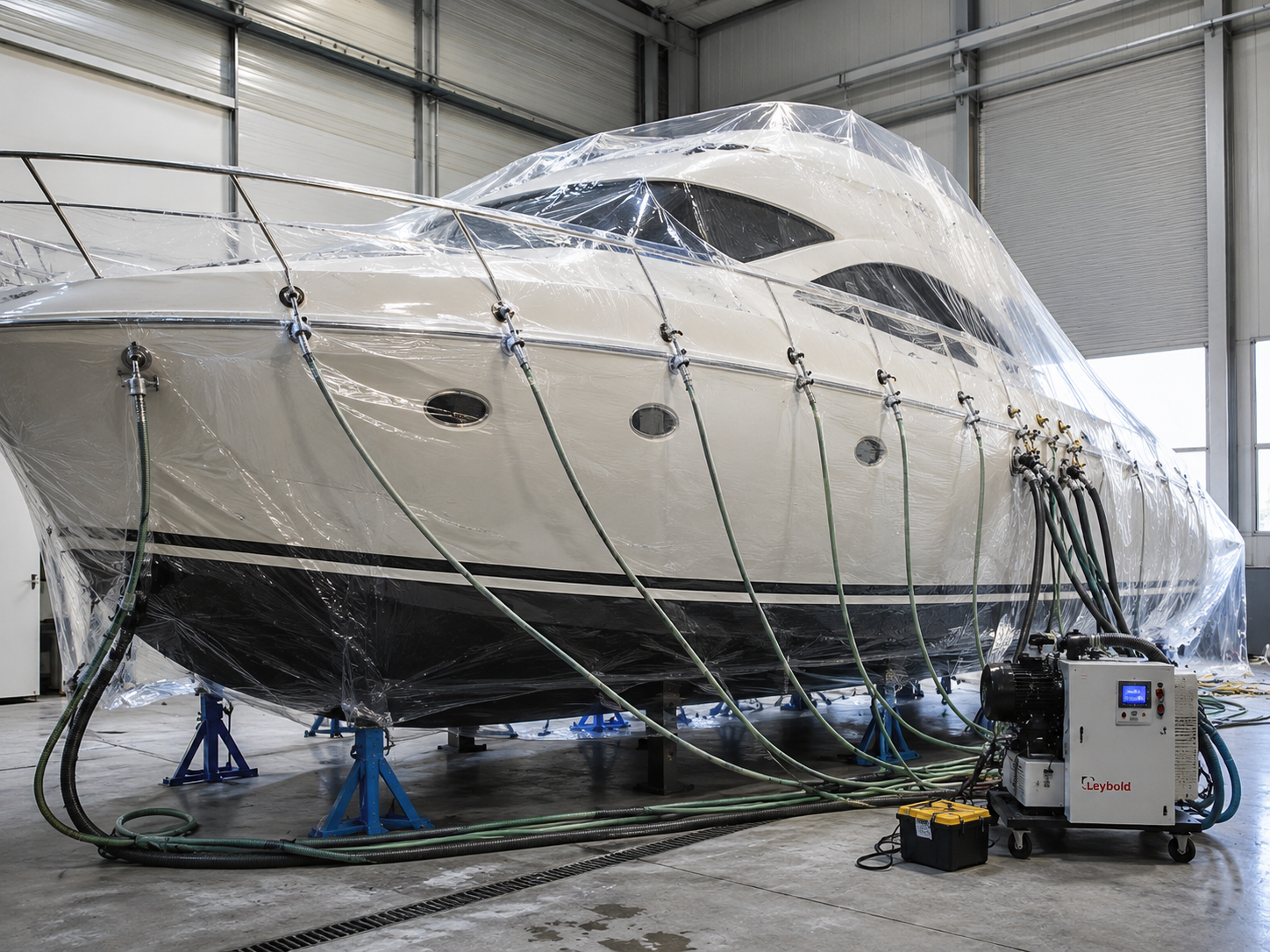
- Decide what the layer is for. A flow layer (CT, CX) carries resin inside the laminate. A structural layer (CM) adds bulk and stiffness. A general-purpose layer (CS) does neither job aggressively and is chosen for simplicity. Get this wrong and no amount of thickness tuning will recover the process.
- Set the target thickness from the structural requirement. Across the CINON nonwoven portfolio, thickness options run 1.5, 2 and 3 mm for CT and CX, 2 and 3 mm for CS, and 1.5 through 6 mm for CM.
- Set dry weight at that thickness. Use the fixed-thickness logic above: more fibre in the same gap means less resin volume. For a 3 mm layer, the available dry weights are 160 g/m² (CT), 220 g/m² (CX), 190 g/m² (CM) and 170 g/m² (CS) — four different resin-volume outcomes for the same sandwich height.
- Check the process temperature ceiling. CS tops out at 170 °C, CM at 175 °C, and CT and CX at 180 °C. A process that runs hotter than the grade allows is a specification failure, not a trial-and-error problem.
- Convert to area before ordering. Roll area = roll length × 1.27 m. That gives 88.9 m² from a 70 m roll, 76.2 m² from 60 m, 63.5 m² from 50 m, 50.8 m² from 40 m, 38.1 m² from 30 m, and 31.8 m² from 25 m.
- Build the cutting plan against the lengths actually supplied. Match the roll length to the largest single panel, then allocate offcuts deliberately rather than discovering them at lay-up.
- Validate on a sample before locking the specification. Evaluated samples confirm wet-out, surface finish and thickness consistency before a production quantity is committed.
Roll-Length Planning: CX (40–70 m) and CS (50–80 m) in a Real Cutting Plan
Roll length is where a technically correct specification becomes a practical one. CX is supplied in 70 m, 60 m and 40 m lengths; CS in 80 m and 50 m. At 1.27 m width, those lengths translate into 88.9 m², 76.2 m² and 50.8 m² of CX, and 101.6 m² or 63.5 m² of CS.
Worked example. A 40 m² infusion area at 1.27 m width needs at least 32 linear metres of core (40 ÷ 1.27 = 31.5 m), before any allowance for trimming and lay-up sequence. Against that requirement:
- A single 40 m CX roll provides 50.8 m², which covers the area with roughly 8 m of linear length left over — enough to absorb trimming on the same part rather than starting a second roll.
- A 50 m CS roll provides 63.5 m² and covers the same area from one roll, which is why the 50 m length is often the practical standard for mid-size infused panels.
- Heavier CM constructions are supplied on progressively shorter rolls, down to 25 m. At 25 m, one roll provides 31.8 m² — just short of the 40 m² example, so the plan needs two rolls and the offcut has to be allocated to the next part in the schedule.
Three planning rules follow from those numbers. First, order the mix of roll lengths that matches the part sizes, rather than a single average length. Second, treat the shortest roll in the range as the constraint that sets the minimum order quantity, not the longest. Third, when a project moves from CX to CM or CS — or the reverse — re-run the cutting plan, because the roll-length range changes with it even when the thickness stays the same.
Use Cases: Where These Configurations Are Used
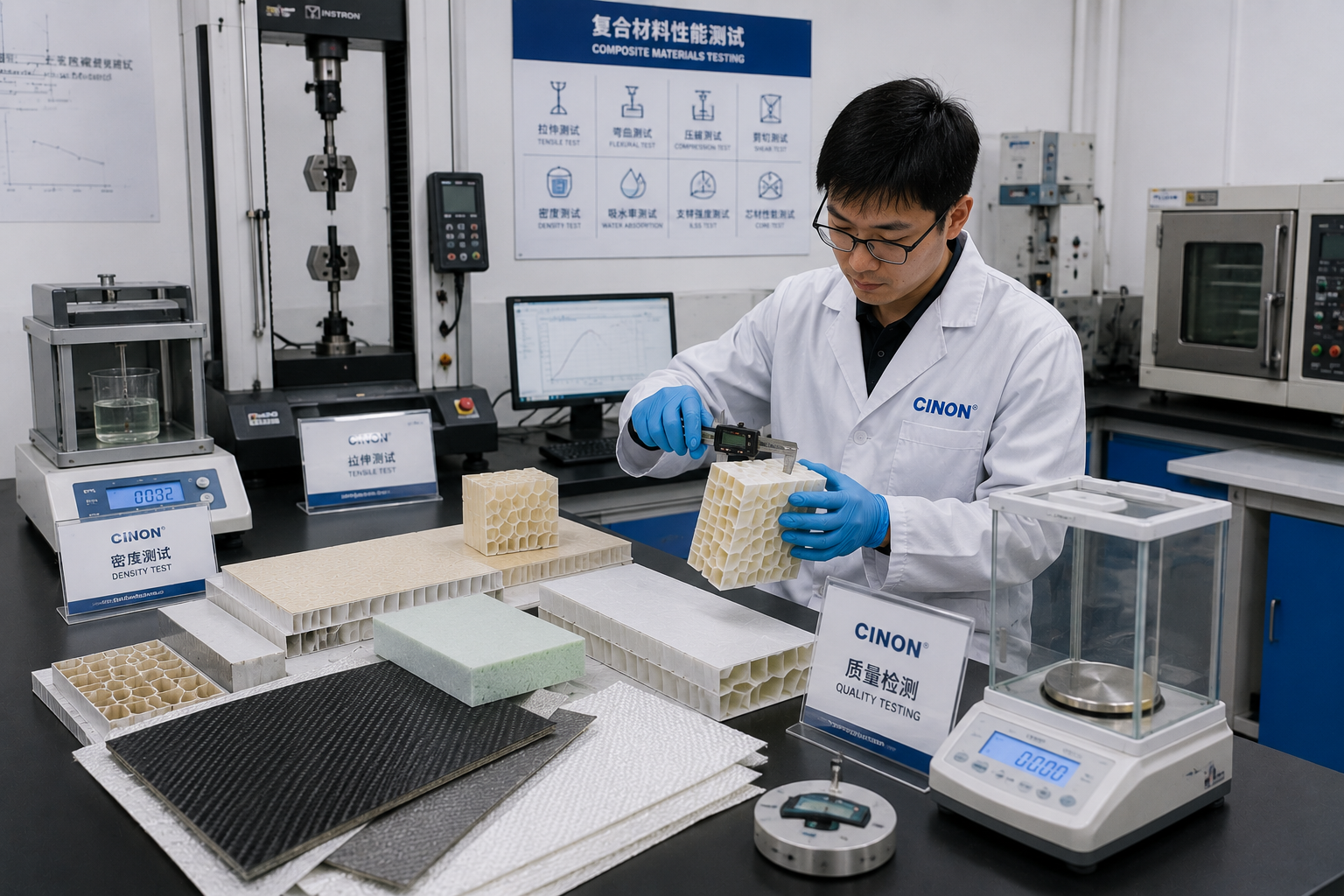
- Marine and yacht building. An Australian marine and yacht builder used Core Mat and PET foam in vacuum infused hull and deck sandwich structures, supplied in container orders, with reported results of smooth surface, easy wet-out and better finish. The decisive specification points were material selection and the flow behaviour of the core layer across a large, curved laminate.
- RV and transportation panels. A US RV manufacturer used fiberglass reinforcements and core material for FRP panels across five pallets, reporting glossy surface treatment and uniformity of thickness, with low weight and anti-UV performance as the target properties. Uniformity of thickness is directly governed by core thickness specification and roll consistency.
- UAV and aerospace structures. A German UAV manufacturer ordered ten pallets of PMI foam core, CX Core Material, CS Core Material and CT Core Material for UAV production, achieving ultra-lightweight structures with high stiffness and high temperature resistance, against a requirement for fatigue resistance at low density.
- Sports and leisure equipment. A Thailand sports equipment manufacturer used lightweight fiberglass fabrics and core material for surfboards in container quantities, achieving weight reduction, performance improvement, and high buoyancy with impact resistance.
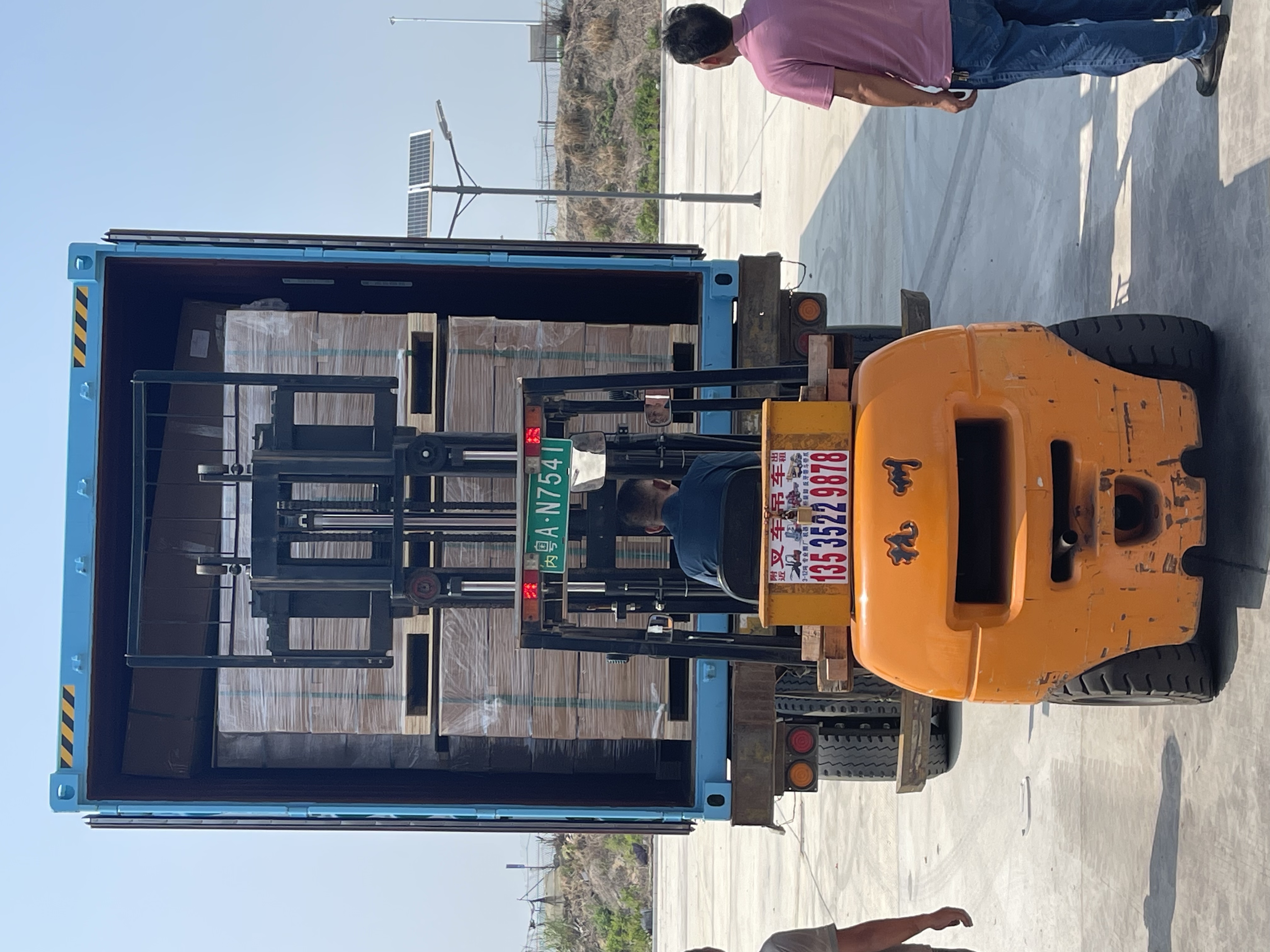
- Distribution and channel supply. A Polish composite material distributor runs monthly repeat orders of container quantities with OEM labelling; a Czech distributor reports good local feedback and monthly reorders with OEM labelling; a UK composite material distributor started from sample evaluation and moved to commercial supply as an alternative supply solution for vacuum infusion composite structures.
Comparison Table: CT vs CX vs CM vs CS
The table below compares the four nonwoven grades on the criteria that actually decide an infusion specification. All values are the published specifications for the CINON range.
| Decision criterion | CT Core Material | CX Core Material | CM core mat | CS Core Material |
|---|---|---|---|---|
| Role in infusion | Thin flow core | Soric LRC alternative flow layer | Structural core material | Vacuum infusion core material |
| Thickness span | 1.5–3 mm | 1.5–3 mm | 1.5–6 mm | 2–3 mm |
| Dry weight span | 90–160 g/m² | 120–220 g/m² | 125–360 g/m² | 130–170 g/m² |
| Longest roll supplied | 120 m | 70 m | 80 m | 80 m |
| Shortest roll supplied | 50 m | 40 m | 25 m | 50 m |
| Max. process temperature | 180 °C | 180 °C | 175 °C | 170 °C |
| Material | Polyester nonwoven fabric | Polyester | Polyester nonwoven fabric | Polyester nonwoven fabric |
| Preferred when | Skins must stay thin and resin must still travel | Large parts need an internal flow layer | Bulk and stiffness must be built up to 6 mm | One grade must be standardised across a plant |
FAQ
Are CINON core materials produced under a certified quality system?
Yes. Guangdong Cinon New Material Technology Co.,Ltd operates under ISO 9001:2015 certificate 51326Q04922R053, issued by Shenzhen Moqc Certification Co.,Ltd on 2026-04-29 and valid to 2029-04-28, with the certified scope of sales of high-performance fibers and composite materials under GB/T19001-2016 / ISO9001:2015. The same scope is covered by ISO 45001:2018 certificate 51326S01896R053 (valid 2026-04-29 to 2029-04-28) and by ISO 14001:2015 certificate ISO14001-2023-001 issued by SGS (valid 2023-06-01 to 2028-06-01). Quality control on the core material lines is 100% test.
What thickness and dry weight options are available for vacuum infusion?
Four nonwoven grades are supplied, all 1.27 m wide. CT Core Material: 1.5 / 2 / 3 mm at 90 / 120 / 160 g/m². CX Core Material: 1.5 / 2 / 3 mm at 120 / 150 / 220 g/m². CM core mat: 1.5 / 2 / 3 / 4 / 5 / 6 mm at 125 / 150 / 190 / 260 / 340 / 360 g/m². CS Core Material: 2 / 3 mm at 130 / 170 g/m². ODM customisation is available for core materials and fiberglass fabric.
How do dry weight and roll length affect the total cost of a core specification?
They change cost through two channels rather than through the core price alone. Dry weight sets how much fibre and how much open volume occupy a given thickness, so it changes the resin mass the part consumes per square metre. Roll length sets how much material is lost to offcuts: CX is supplied at 40–70 m and CS at 50–80 m, and a specification whose standard panel does not divide cleanly into the supplied lengths pays for the difference on every run. Ordering is subject to a minimum order quantity of 1,000 m², against a monthly capacity of 100,000 m², which is why matching specification to roll length is worth doing before the first order rather than after.
Can we validate thickness and dry weight on samples before a production order?
Yes. Sample evaluation is part of CINON's after-sales technical support, alongside material selection, composite process optimisation, vacuum infusion guidance, alternative material recommendations, quality traceability and global logistics coordination. A UK composite material distributor is a documented case of that path: the relationship began with sample evaluation and progressed to commercial supply as an alternative supply solution. Support is provided by email, WhatsApp, online meetings and technical documentation, from prototype development through to mass production.
What is the typical lead time, and how is delivery handled?
Lead time is 15–30 days, and all output is exported, serving Europe, North America and Asia-Pacific markets with logistics coordination as part of the service. If you want to compare the full thickness and dry weight range against an existing specification, the CINON catalogue can be downloaded here: CINON Composites product catalogue. For a thickness and dry weight recommendation on a specific part, send the panel dimensions, target thickness, process temperature and annual area to waylon@cinoncomposites.com or WhatsApp +86 135-8036-3674.
Next Step: Confirm the Two Numbers Before the Cutting Plan
Thickness and dry weight are the two variables that decide whether a vacuum infusion core does its job. Set thickness from the structural requirement, set dry weight from the resin-volume and flow requirement, verify the process temperature ceiling of the grade chosen (170 °C for CS, 175 °C for CM, 180 °C for CT and CX), and then — before ordering — convert the requirement into roll quantities using the lengths actually supplied: CX at 40–70 m and CS at 50–80 m.
CINON Composites, operated by Guangdong Cinon New Material Technology Co.,Ltd, was founded in 2022 and runs a 40,000 m² facility with 25 engineers and an annual output of 1,200,000 m² of fiberglass reinforcements and lightweight core materials. Contact details for specification review and sample evaluation are below.
Request a sample, a quotation, or a thickness and dry weight recommendation
Guangdong Cinon New Material Technology Co.,Ltd (CINON Composites)
Email: waylon@cinoncomposites.com
Tel: +86 186-2098-8848
WhatsApp: +86 135-8036-3674
Website: cinoncomposites.com
Address: Building 3, No.1, viheng Lane, jinnan Second Street, Dachongkou Village, Shawan Street, Panyu District, Guangzhou
Have Questions or Need More Details?
Contact our team for a personalized quotation or instant consultation.
Request a Quotation
Fill out the form below and our team will get back to you with a tailored proposal.
WhatsApp Direct Chat
Prefer to chat in real-time? Message us on WhatsApp for instant assistance & quick answers.
- Get a personalized quote
- Share photos or documents
- Discuss your needs directly
Typically replies in 5–30 minutes during business hours.