Evaluating Fiberglass Fabric Suppliers: 5 Capabilities to Verify for Wind and Marine Projects
A wind blade spar or a yacht hull laminate will outlast the quotation that produced it. That is why evaluating fiberglass fabric suppliers for wind and marine projects is a capability assessment rather than a price comparison: the reinforcement disappears inside the laminate, and weaknesses in process fit, structural data, export handling or batch control only become visible after lay-up, infusion and cure.
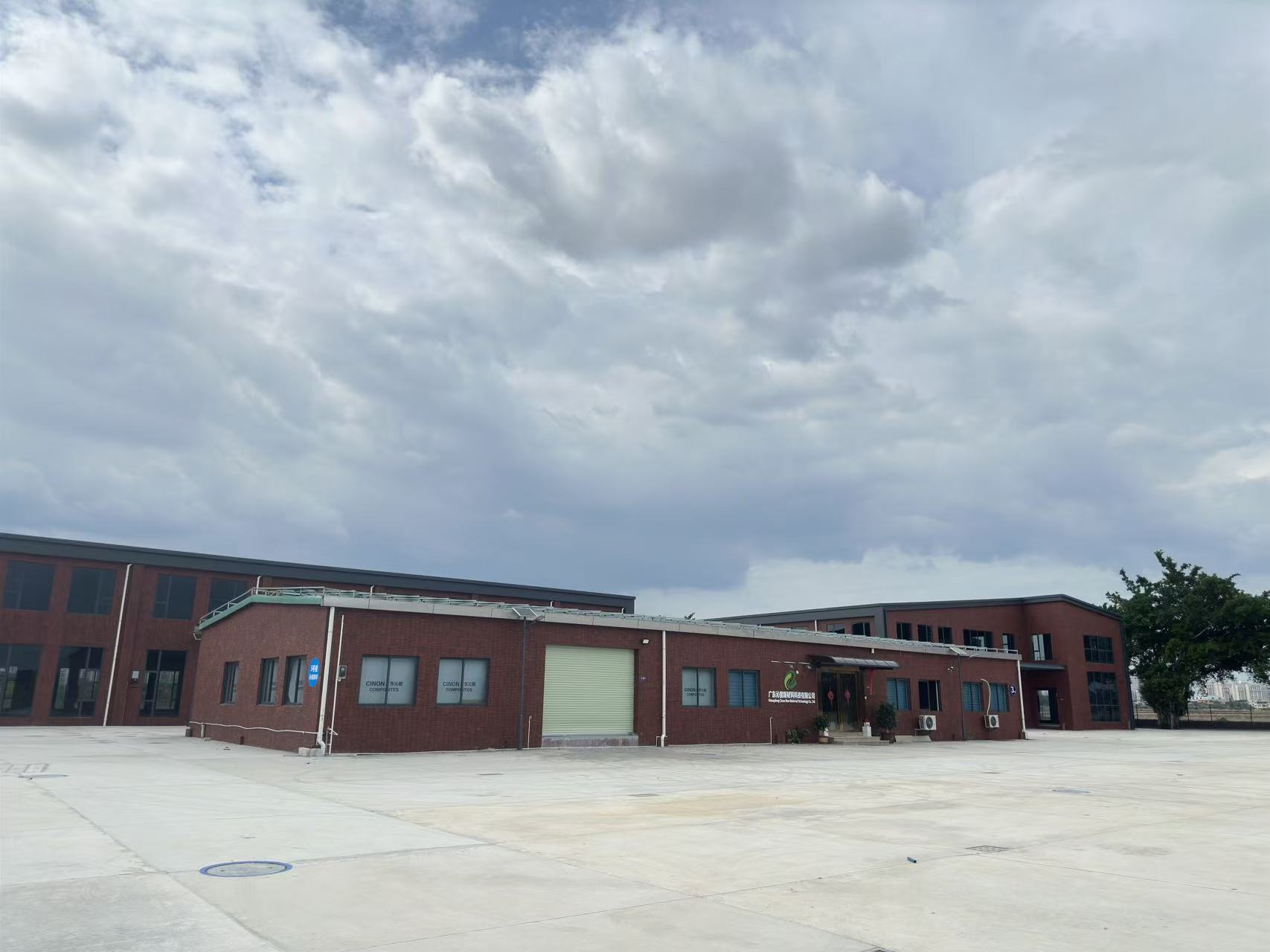
This article sets out five capabilities to verify before approving a fiberglass fabric supplier for wind energy and marine work, together with the documented evidence that should exist for each one. CINON Composites (Guangdong Cinon New Material Technology Co., Ltd., Panyu District, Guangzhou, China) is used as the reference case because its published product, process and quality documentation addresses all five verification points.
Problem definition: capability gaps are invisible at quotation stage
Fiberglass fabric is a technical reinforcement material made from glass fiber yarns in woven, stitched, or other fabric constructions, used across composite structures, electrical laminates, construction reinforcement systems and engineered transport applications (Fortune Business Insights, 2026). Its role is structural rather than decorative, which is exactly what makes supplier screening difficult: two quotations can look identical on paper while producing very different laminates.
Before the first roll arrives, a wind or marine project has already locked in fiber architecture, areal weight, glass type, sizing, resin system and molding route - RTM, VARTM, vacuum infusion or hand lay-up. If the supplier cannot support those decisions with process knowledge, the mismatch appears later as uneven resin uptake, excess finish correction, or a laminate that misses the stiffness the design assumed.
Documented supplier-side risk controls identify four failure modes that a capable fiberglass fabric supplier is expected to manage:
- Incorrect material selection - controlled through technical evaluation support that recommends suitable reinforcements, core materials and manufacturing processes before order confirmation.
- Product specification deviation - controlled through pre-production confirmation of dimensions, thickness, density, roll length, width and weight, plus first-piece inspection before mass production.
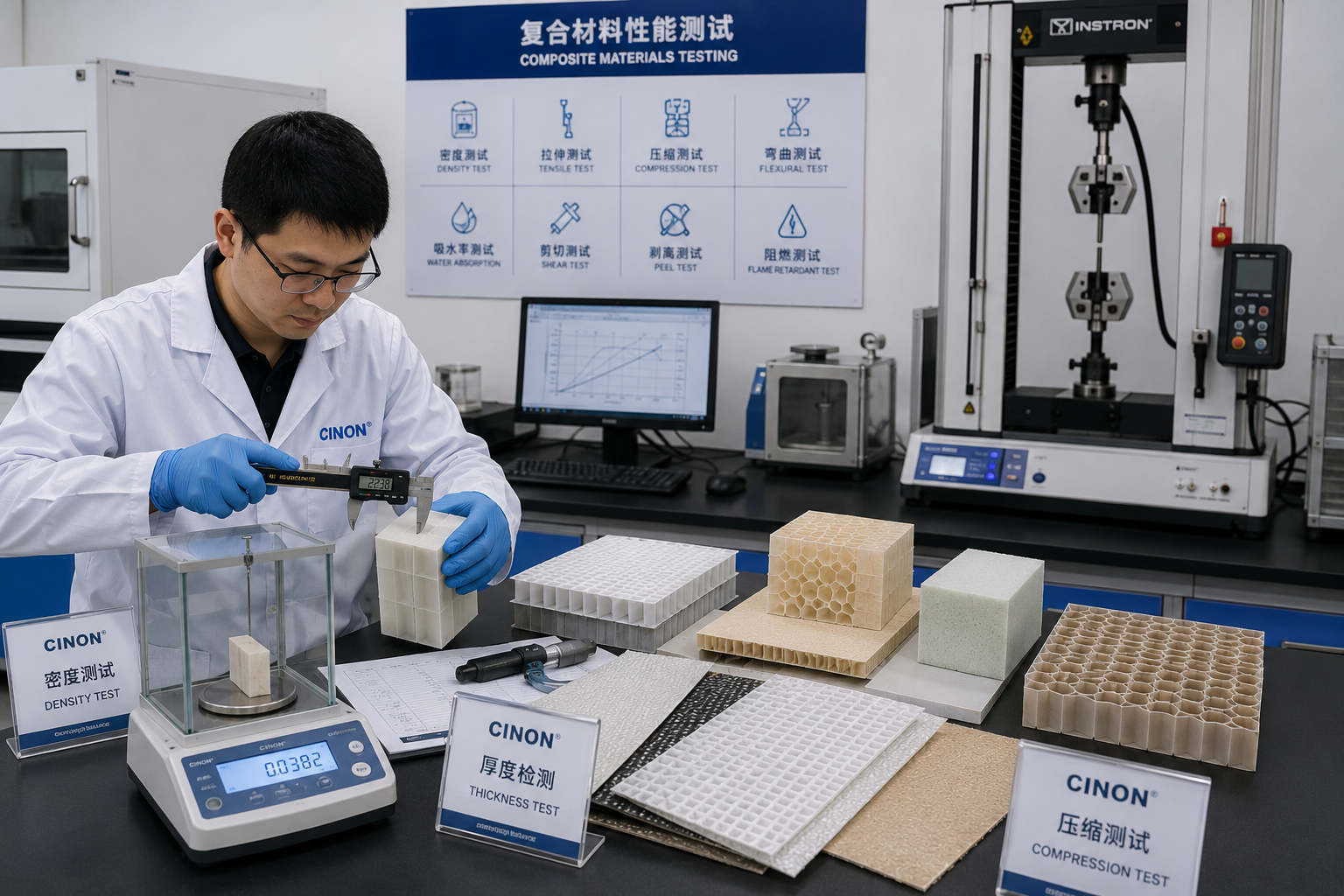
- Performance inconsistency - controlled through batch verification, where every production batch undergoes density, thickness, weight and appearance inspection, with test reports available on request.
- Transportation damage - controlled through reinforced pallets, moisture-proof wrapping, corner protection and export-standard packaging.
Those four controls map directly onto the five capabilities in the evaluation framework below.
Industry background: where wind and marine demand stands in 2026
Category scale explains why supplier capability is a commercial question, not only a technical one. One commercial research house values the global fiberglass fabric market at USD 5.15 billion in 2025 and projects USD 9.72 billion by 2034, a 7.4% CAGR (Fortune Business Insights). Another sizes the same category at USD 11.81 billion in 2025, reaching USD 16.88 billion by 2031 at a 6.13% CAGR (Mordor Intelligence).
Those two figures should not be averaged or combined: they reflect different product-scope definitions. The practical reading is directional demand growth, confirmed with supplier-level capacity data rather than with category averages.
Two independent data points are directly relevant to wind and marine buyers:
- Wind energy is the fastest-growing application segment for fiberglass fabric, at a 7.02% CAGR through 2031 (Mordor Intelligence).
- Asia Pacific held 45.05% of the fiberglass fabric market in 2025, and E-glass accounted for 68.4% of product revenue (Fortune Business Insights) - meaning E-glass fabric is the material most buyers will actually be evaluating.
On the supply side, China's fiberglass market - a broader product scope than fabric alone - was valued at USD 6,285.2 million in 2025 and is projected to reach USD 9,121.9 million by 2030 (MarketsandMarkets). E-glass fibers are described as widely used in textile and composite materials and as resistant to vibrations and abrasion (US fiberglass market report, Fortune Business Insights, 2024). Balanced strength, dimensional stability, resin compatibility and process flexibility are the reasons fiberglass fabric remains preferred across composite laminates, marine structures, automotive panels, industrial sheets and infrastructure reinforcement (Strategic Market Research, 2026).
The implication for procurement is straightforward: the material is well understood, the supply base is deep, and differentiation between suppliers therefore sits in process support, structural know-how, export execution and batch discipline - the five capabilities below.
The five capabilities to verify
Each capability below is framed as a verification question, the evidence a supplier should be able to produce, and the reason that evidence matters in wind or marine work. The reference case throughout is CINON Composites, a Guangzhou-based manufacturer of fiberglass reinforcements and lightweight core materials: founded in 2022, operating a 40,000 m2 facility with an annual output of 1,200,000 m2, a 25-engineer R&D team and a 100% export ratio serving Europe, North America and Asia-Pacific markets.
1. Production capability for RTM, VARTM and vacuum infusion
Verification question: which fabrics in the supplier's range are produced for resin infusion and closed-mold processes, and what process data supports that claim?
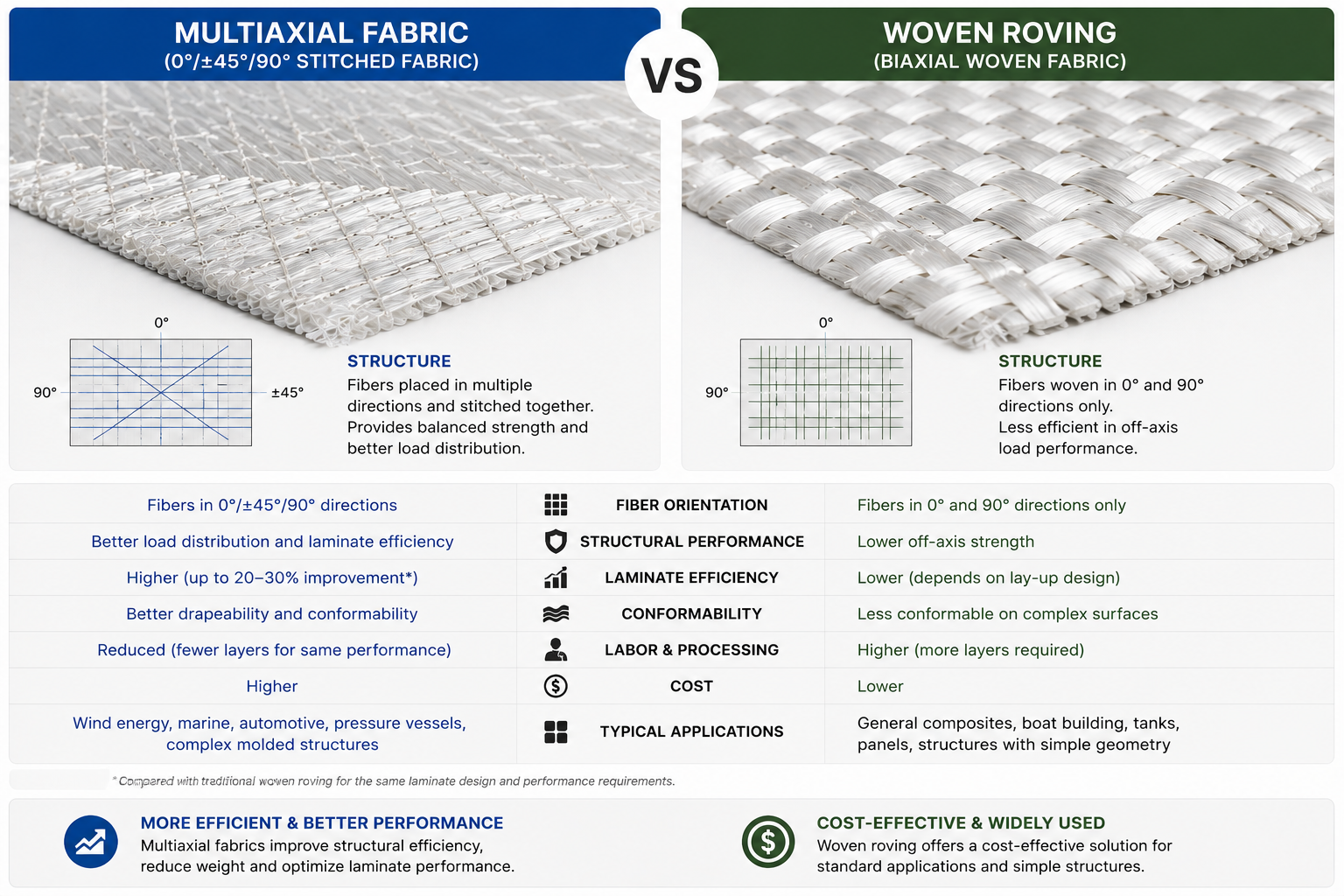
In RTM, VARTM and vacuum infusion, laminate quality depends on how quickly and evenly resin travels through the reinforcement. Multiaxial reinforcements are documented to deliver a higher resin impregnation rate and lower energy consumption during lamination than woven roving, which affects cycle time as well as consistency across large parts such as blades and hulls.
Evidence to request: a product list that separates infusion-grade fabrics from hand lay-up grades; written process recommendations issued before order confirmation; and explicit confirmation of resin compatibility for the resin system in use.
Reference practice: CINON's engineering support is structured to recommend suitable core materials, fiberglass reinforcements and manufacturing processes before an order is confirmed, and the company's stated product function includes optimizing vacuum infusion processes for composite manufacturers.
2. Structural reinforcement and laminate performance expertise
Verification question: can the supplier explain what its fabric does to laminate stiffness and structural efficiency in a specific lay-up?
Documented comparison data provides a benchmark here: compared with woven roving, multiaxial fabric offers straighter fiber orientation and higher structural efficiency, delivering up to 20-30% higher laminate performance depending on lay-up design. Multiaxial material carries a higher material cost, but it reduces labor requirements, needs less post-finish correction and lowers long-term repair cost. Its documented best-fit applications are wind energy, marine and structural composites.
Evidence to request: lay-up design support; the basis behind any performance claim, including whether a 20-30% laminate improvement applies to the buyer's specific architecture; and documentation of how the fabric contributes to weight reduction and structural stiffness.
Reference practice: CINON positions its fiberglass reinforcements and core materials as a system that helps composite manufacturers reduce weight, improve structural stiffness, optimize vacuum infusion processes and lower total manufacturing cost.
3. Global market and export execution experience
Verification question: has the supplier shipped comparable composite materials internationally, and can it show how those goods survive the journey?
Wind and marine programs rarely consume a single roll; they consume scheduled volumes across multiple production sites, and the fabric has to arrive undamaged, dry and dimensionally stable. Global market experience is therefore a packaging and logistics capability as much as a sales footprint.
Reference practice: CINON reports a 100% export ratio with supply into Europe, North America and Asia-Pacific markets, and controls transportation damage through reinforced pallets, moisture-proof wrapping, corner protection and export-standard packaging, with packing dimensions sized to container format.
Evidence to request: export documentation for comparable markets; the packaging specification; and a load plan showing how roll weights and dimensions are arranged to prevent compression damage in transit.
4. Technical support for vacuum bagging and material selection
Verification question: who answers the process questions, and at which point in the purchase?
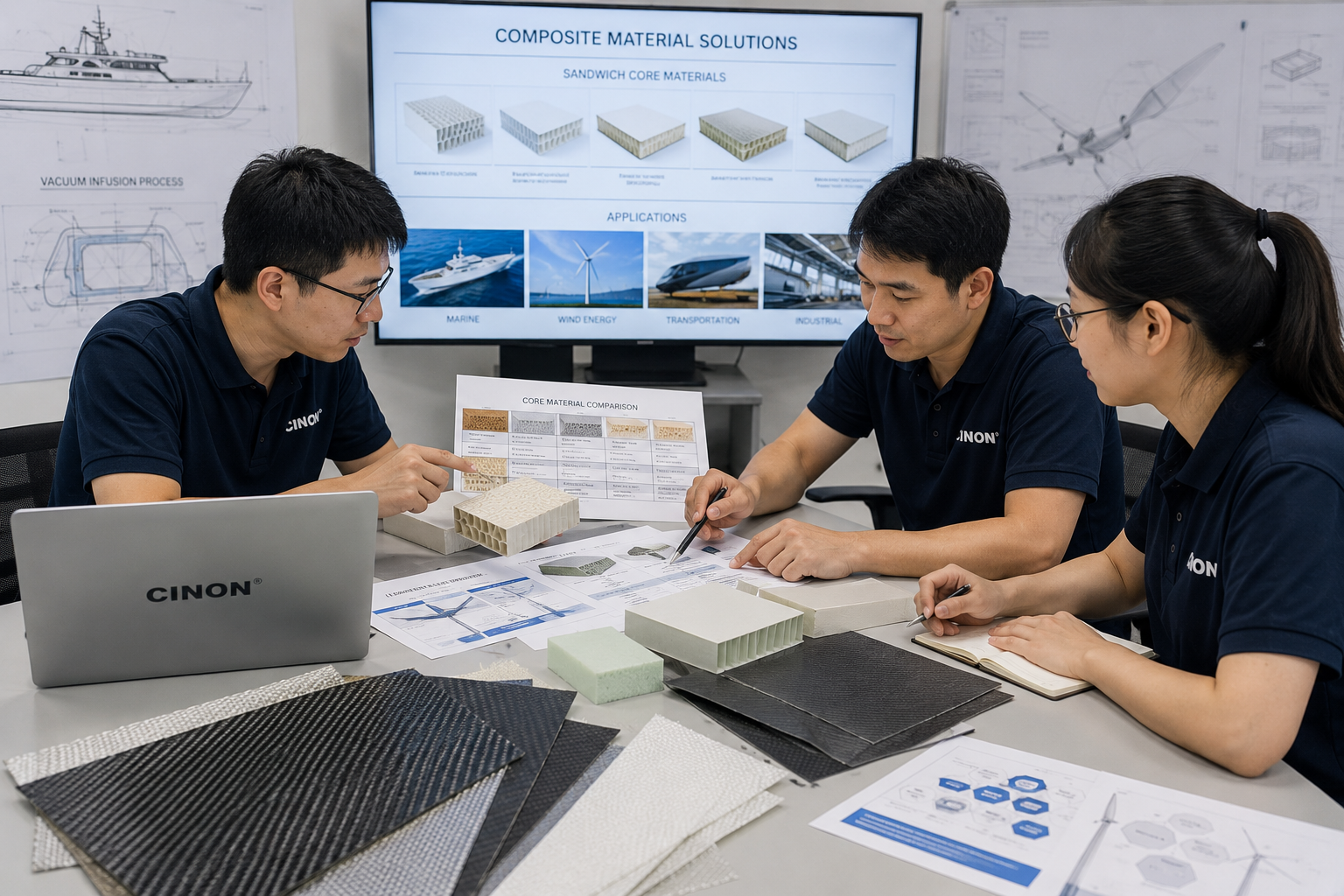
Vacuum bagging and infusion troubleshooting is where supplier capability is easiest to test and hardest to imitate. A supplier that only quotes prices hands the buyer a specification sheet; a supplier with real engineering support will question the lay-up, the core selection and the resin flow path before production starts.
Reference practice: CINON provides engineering support to recommend suitable core and reinforcement combinations before order confirmation, confirms dimensions, thickness, density, roll length, width and weight in writing before production, and completes first-piece inspection before mass production.
Evidence to request: a named technical contact; written responses to process questions; and a documented first-piece approval step between sampling and volume production.
5. Stiffness verification and batch consistency
Verification question: how does the supplier prove that the shipped batch matches the sample that was approved?
Batch drift is the quiet failure mode in composite supply. Even inside tolerance, a shift in areal weight or thickness changes resin uptake and laminate thickness, which propagates into fit-up problems on large structures such as yacht hulls and blade shells.
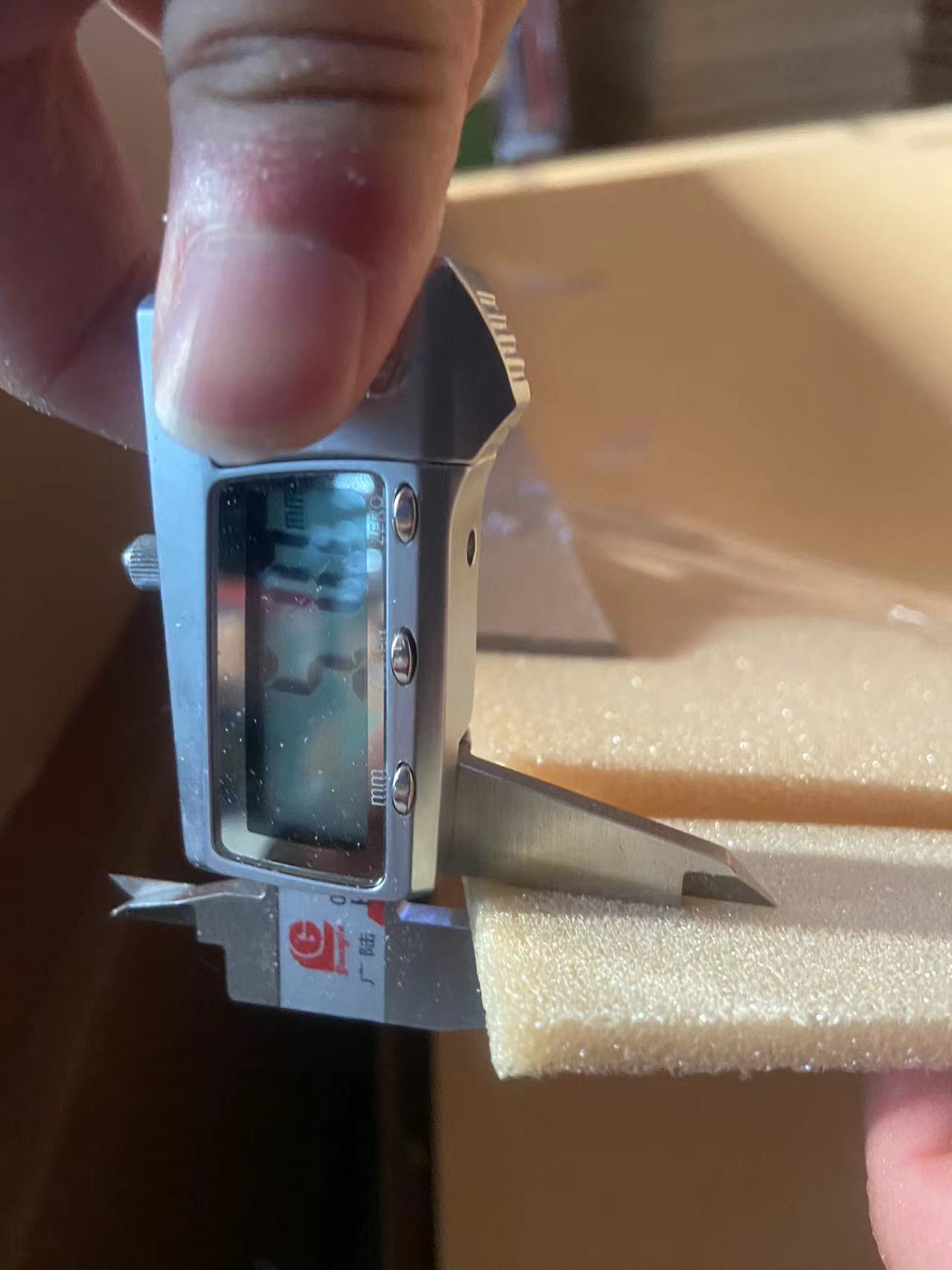
Reference practice: every CINON production batch undergoes density, thickness, weight and appearance inspection, with test reports available on request, and dimensional checks are performed in line against the confirmed specification.
Step-by-step: a six-stage supplier verification sequence
The five capabilities become practical when they are sequenced. The order below follows the point at which each risk can still be corrected cheaply.
- Desk screening of process fit. Confirm which fabrics the supplier produces for RTM, VARTM and vacuum infusion as opposed to hand lay-up, and whether process recommendations are issued before order confirmation.
- Technical specification checkpoint. Require written confirmation of dimensions, thickness, density, roll length, width and weight. This single step is the documented control against product specification deviation.
- Sample and first-piece approval. Approve a sample, then require first-piece inspection before mass production begins, so the approved sample and the production line are linked by a recorded check.
- Process trial. Run an infusion or lamination trial on the actual resin system. Multiaxial reinforcements are documented to deliver a higher resin impregnation rate and lower energy consumption during lamination than woven roving, which is measurable in the trial rather than assumed.
- Packaging and load plan review. Check the documented packaging controls: reinforced pallets, moisture-proof wrapping, corner protection, export-standard packaging, and packing dimensions sized to container format.
- Batch release documentation. Agree that every batch carries density, thickness, weight and appearance inspection, with test reports available on request.
Comparison table: material selection and verification evidence
The first table compares fiberglass fabric with the reinforcements it is most often measured against in wind and marine laminates. Where the source comparison does not make a claim for a given combination, the cell is marked with a dash and no value has been inferred.
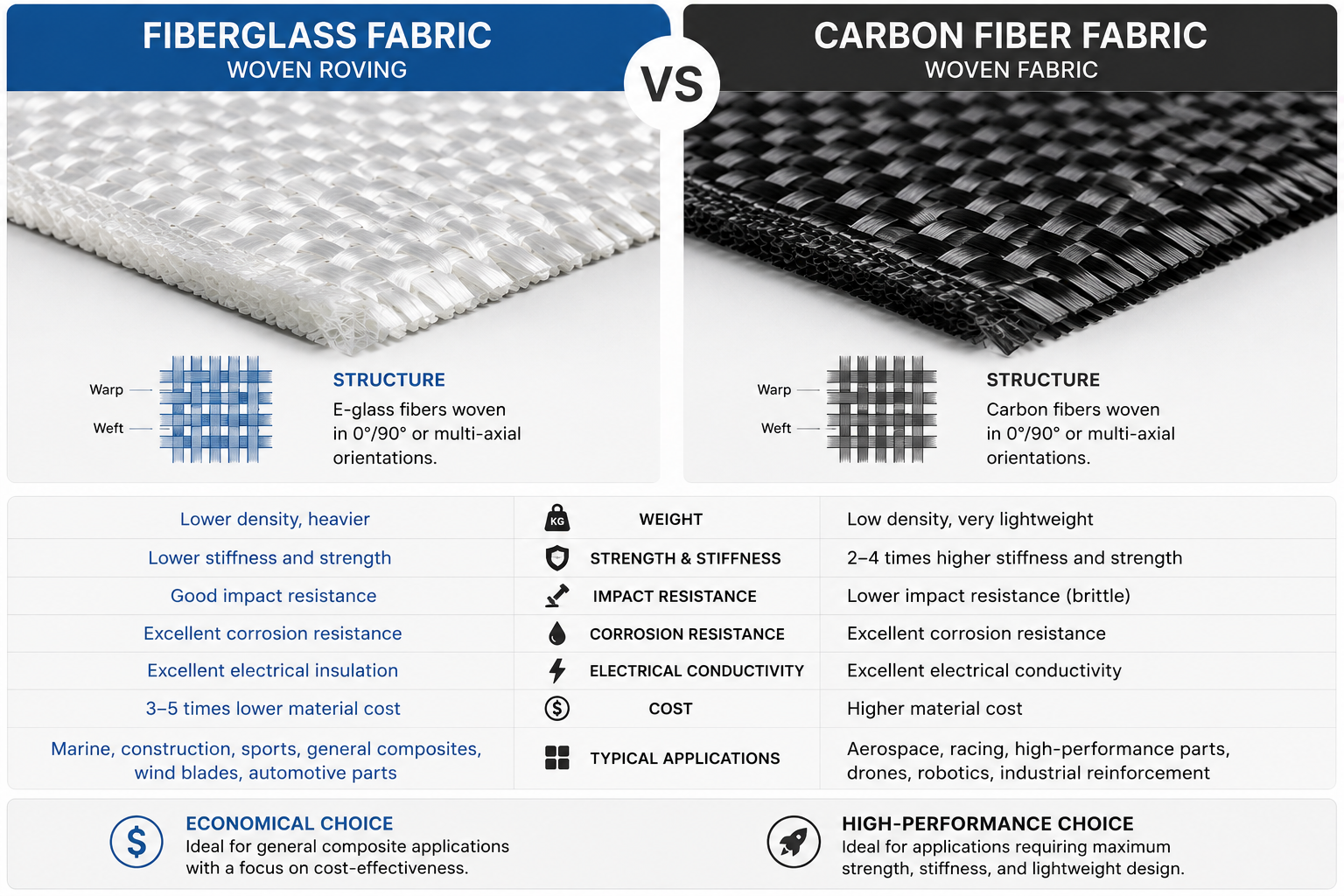
| Decision dimension | Fiberglass fabric (woven / stitched) | Multiaxial fabric | Woven roving | Carbon fiber |
|---|---|---|---|---|
| Structural efficiency | Balanced strength, dimensional stability, resin compatibility and process flexibility | Straighter fiber orientation and higher structural efficiency | Reference baseline in the comparison | Highest stiffness |
| Laminate performance | - | Up to 20-30% higher laminate performance than woven roving, depending on lay-up design | Lower than multiaxial fabric | - |
| Stiffness | 2-4x lower stiffness than carbon fiber | - | - | 2-4x stiffer than fiberglass |
| Material cost | 3-5x lower material cost than carbon fiber | Higher material cost than woven roving | Lower material cost than multiaxial fabric | Price of carbon fiber is 12-15x that of glass fiber |
| Impact resistance | Better impact resistance than carbon fiber | - | - | Lower impact resistance than fiberglass |
| Labor and processing | Lower overall production energy consumption for mass production | Higher resin impregnation rate, less energy consumption during lamination, reduced labor requirements | - | - |
| Maintenance and repair | Stable long-term performance, cheaper repair and maintenance cost | Less post-finish correction, lower long-term repair cost | - | - |
| Documented best-fit applications | Marine, industrial, construction | Wind energy, marine, structural composites | - | Aerospace, racing, high-performance structures |
The second table maps each verification stage to the failure mode it controls, so the sequence can be used as an audit checklist during supplier evaluation.
| Verification stage | Documented evidence to request | Failure mode controlled |
|---|---|---|
| Process fit screening | Fabrics identified for RTM, VARTM and vacuum infusion; process recommendations issued before order confirmation | Incorrect material selection |
| Specification checkpoint | Written confirmation of dimensions, thickness, density, roll length, width and weight | Product specification deviation |
| First-piece approval | First-piece inspection completed before mass production | Product specification deviation |
| Process trial | Trial laminate result; documented resin impregnation behavior of the fabric architecture | Process mismatch and inconsistent resin uptake |
| Packaging review | Reinforced pallets, moisture-proof wrapping, corner protection, export-standard packaging, packing sized to container format | Transportation damage |
| Batch release | Density, thickness, weight and appearance inspection for each batch; test reports available on request | Performance inconsistency |
Use cases: what each capability looks like in practice
Wind turbine blades and wind energy structures
Blade production concentrates several requirements at once: large infusion areas, tight weight targets and repeatable stiffness. Multiaxial fiberglass fabric is documented as best-fit for wind energy and structural composites, and wind energy is the fastest-growing application segment for fiberglass fabric at a 7.02% CAGR through 2031. The capabilities that matter most are process fit for VARTM, structural reinforcement expertise and batch consistency, because a thickness or areal weight shift repeats across every blade in a series.
Yacht hulls, boat building and racing boats
Marine laminates depend on balanced strength, dimensional stability, resin compatibility and process flexibility. In hull and deck construction, the decisive check is whether the supplier can support vacuum infusion with process recommendations, and whether the fabric's impact resistance and long-term performance match the repair profile of the vessel.
Marine repair and refit
Repair work places a premium on impact resistance, stable long-term performance and cheaper repair and maintenance cost - the documented advantages that fiberglass fabric holds over carbon fiber. A repair yard evaluating a supplier should verify batch-level consistency above all, because repair laminates are blended into existing structures where thickness variation shows immediately.
Structural reinforcement and sandwich panels
Sandwich construction combines reinforcement fabric with core material. CINON's range covers fiberglass fabrics, biaxial fabrics, PET foam core, PVC foam core, PMI foam core, Core Mat, PP honeycomb and aramid honeycomb - a portfolio that lets a buyer test whether the supplier understands skin-core interaction rather than selling fabric as a standalone commodity.
Transportation panels, composite molds and UAV structures
Transportation panels, RTM and VARTM molds, drone and UAV structures, and lightweight industrial components share one requirement: repeatable stiffness at low weight. E-glass fibers are documented as resistant to vibrations and abrasion, which is relevant for panels and moving structures, while multiaxial reinforcements support the straighter fiber orientation that closed-mold parts need.
Frequently asked questions
What documentation should be in place before approving a fiberglass fabric supplier for wind or marine projects?
Three documents should exist before approval. First, a pre-production specification confirmation that records dimensions, thickness, density, roll length, width and weight in writing before production starts. Second, a first-piece inspection result completed before mass production. Third, per-batch performance verification showing that density, thickness, weight and appearance were inspected for every production batch, with test reports available on request. Where a supplier cites a third-party certification, the claim should be checked with the issuing registry rather than accepted from a brochure.
How can a buyer confirm that a supplier genuinely supports RTM, VARTM and vacuum infusion?
Ask the supplier to separate its range by process rather than by price. A capable supplier can state which fabrics are produced for infusion and closed-mold processes, provide written process recommendations before order confirmation, and explain resin compatibility for the buyer's resin system. Documented process evidence - for example that multiaxial fabrics deliver a higher resin impregnation rate and lower lamination energy consumption than woven roving - is a stronger signal than a general statement of experience.
Is fiberglass fabric the right cost choice against carbon fiber for marine and wind laminates?
For most marine, industrial and construction laminates, yes. Fiberglass fabric carries a material cost 3-5 times lower than carbon fiber, and the price of carbon fiber is 12-15 times that of glass fiber. Carbon fiber is 2-4 times stiffer, so it remains the choice for aerospace, racing and other high-performance structures, but fiberglass offers better impact resistance, more stable long-term performance, cheaper repair and maintenance, and lower production energy consumption in mass production.
What should happen between sampling and mass production?
Sampling should end with a written specification, not a verbal agreement. The supplier confirms dimensions, thickness, density, roll length, width and weight, then completes a first-piece inspection before mass production begins. Only after that should the buyer move to volume release, with batch-level density, thickness, weight and appearance checks applied to each production run and test reports available on request.
How can delivery reliability be protected when ordering fiberglass fabric internationally?
Delivery reliability is a packaging and inspection problem as much as a logistics one. Export-standard packaging with reinforced pallets, moisture-proof wrapping and corner protection, combined with packing dimensions sized to container format, is the documented control against transportation damage. Batch inspection before shipment closes the loop. Buyers evaluating a supplier for a wind or marine program can request a sample, a quotation or the full product catalog from CINON Composites by writing to waylon@cinoncomposites.com, calling +86 186-2098-8848, or messaging WhatsApp +86 135-8036-3674.
Conclusion: verify capability, then commit volume
Fiberglass fabric procurement for wind and marine projects rewards buyers who verify capability before they negotiate volume. Five checks carry most of the risk: production capability for RTM, VARTM and vacuum infusion; structural reinforcement and laminate performance expertise; global market and export execution experience; technical support for vacuum bagging and material selection; and stiffness verification with batch consistency. Each one has a documented evidence trail, and each one maps to a failure mode that is far more expensive to correct inside a finished blade, hull or structural panel than at the supplier evaluation stage.
CINON Composites documents all five: engineering support for material and process selection before order confirmation, fiberglass reinforcements and lightweight core materials engineered to reduce weight and improve structural stiffness, a 100% export orientation across Europe, North America and Asia-Pacific, and batch-level density, thickness, weight and appearance inspection with test reports available on request.
Next step
Evaluate the supplier against your own project. Request a fiberglass fabric sample, a quotation or the CINON product catalog, and run the six-stage verification sequence above on real material.

CINON Composites (Guangdong Cinon New Material Technology Co., Ltd.)
Website: https://cinoncomposites.com/
Catalog download: CINON Composites product catalog (PDF)
Email: waylon@cinoncomposites.com
Tel: +86 186-2098-8848
WhatsApp: +86 135-8036-3674
Address: Building 3, No.1, viheng Lane, jinnan Second Street, Dachongkou Village, shawan Street, Panyu District, Guangzhou
Have Questions or Need More Details?
Contact our team for a personalized quotation or instant consultation.
Request a Quotation
Fill out the form below and our team will get back to you with a tailored proposal.
WhatsApp Direct Chat
Prefer to chat in real-time? Message us on WhatsApp for instant assistance & quick answers.
- Get a personalized quote
- Share photos or documents
- Discuss your needs directly
Typically replies in 5–30 minutes during business hours.