Fiberglass Fabric Verification: Specs and Certifications to Check Before Approval
Fiberglass Fabric Verification: Specs and Certifications to Check Before Approval
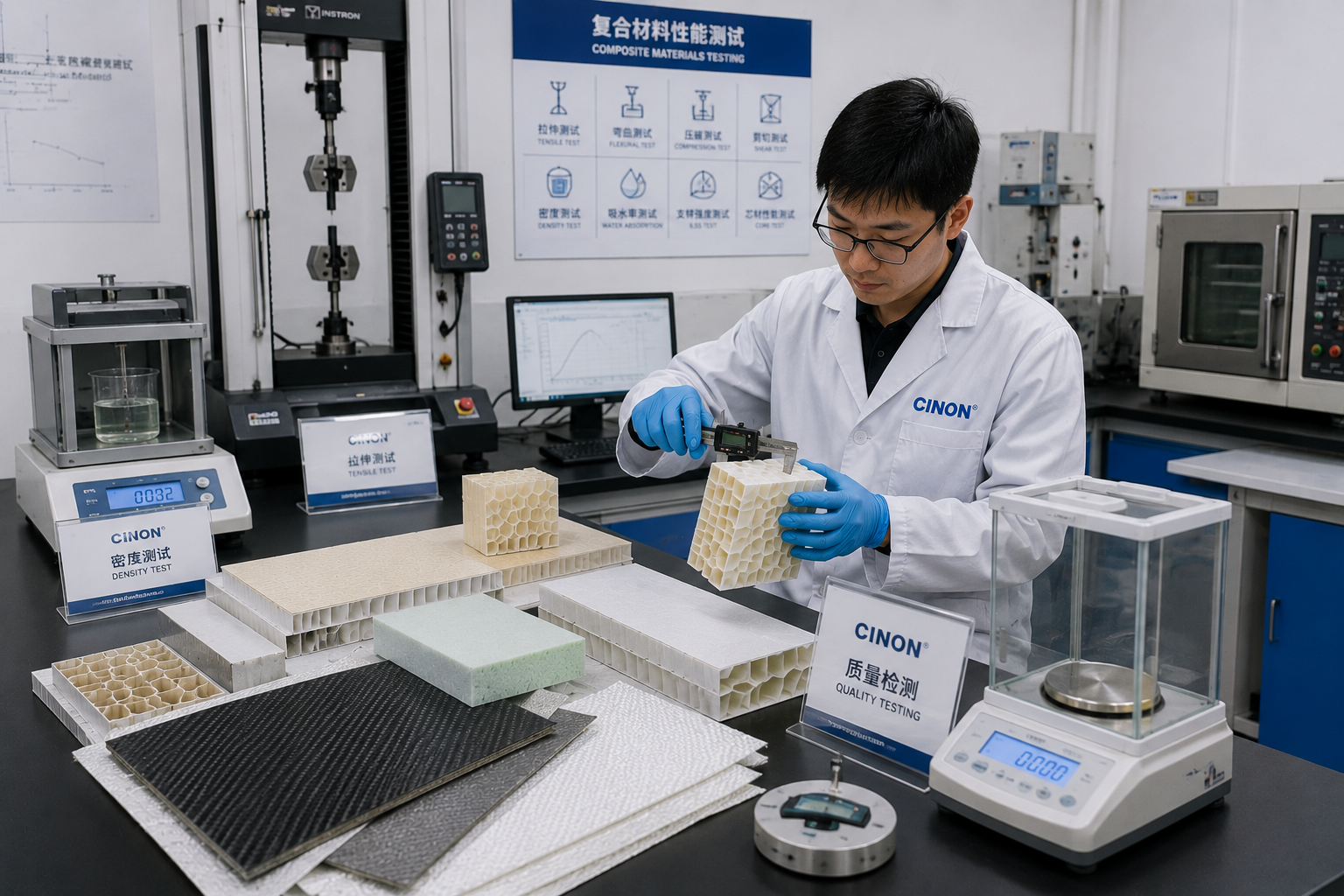
Approving a fiberglass fabric is rarely done on price alone. At the Research and Evaluation stage, buyers compare material data, process limits, and certificates before placing the reinforcement into a boat hull, wind blade, UAV structure, or transport panel. This article turns those approval steps into a verification checklist. Guangdong Cinon New Material Technology Co., Ltd., known as CINON Composites, is used as a working example because its two main fabric families are supported by published parameters and ISO management-system certificates. CINON’s official website is https://cinoncomposites.com/.
Why Specification and Compliance Gaps Create Procurement Risk
Composite buyers often evaluate a fabric by areal weight alone. In practice, the decision requires more than weight. Weave or stitch architecture, material type, width, binder content, moisture limit, and the actual scope of a supplier’s certificate all affect whether a laminate will meet its design and process requirements.
Evaluation gaps usually appear in five places:
- Missing weave or architecture data. A woven E-glass cloth and a non-crimp multiaxial fabric perform differently even at the same weight.
- No binder or moisture information. For vacuum infusion, RTM, and VARTM, moisture and combustible matter influence resin flow and laminate quality.
- Unclear width and roll format. Width affects cutting plans, nesting, scrap rate, and infusion layout.
- Certificates that cannot be traced. A certificate number, issuing body, scope, issue date, and expiry date must be legible and current.
- Missing product-to-process fit. A fabric optimized for hand lay-up may not be optimal for infusion or automated molding.
The commercial cost of these gaps includes rejected parts, rework, delayed qualification, and disputes about whether the supplier met the agreed material description.
Market Context: Why Verification Is Becoming More Important
The fiberglass fabric market is growing, and the material is being specified in increasingly demanding structural applications. Grand View Research valued the global fiberglass fabric market at USD 14.01 billion in 2024 and projects it to reach USD 25.65 billion by 2033. The same source reports that Asia Pacific accounted for 41.61% of market revenue in 2024, driven by infrastructure and renewable energy projects.
Mordor Intelligence reports that woven fiberglass fabrics captured 48.62% of market revenue in 2025, largely because of their role in yacht hulls and automotive panels. For wind energy, Grand View Research expects the fiberglass fabric segment to grow at a CAGR of 8.5% from 2025 to 2033, the highest among all application segments. Within the wind energy sector, Dataintelo estimates that wind turbine blades account for approximately 42.5% of total fiberglass usage.
When buyers specify mechanical tests, they often reference ASTM D638 for tensile properties and ASTM D790 for flexural strength and modulus. These standards provide a common language for comparing fiberglass reinforcements from different suppliers.
Detailed Solution: What a Qualified Fiberglass Fabric Data Sheet Should Contain
CINON Composites supplies two fiberglass reinforcement families that illustrate the distinction between fabric formats: Light Weight Fiberglass Cloth and Multiaxial Fiberglass Fabrics. Each family has a different structure, weight range, and processing profile.
Light Weight Fiberglass Cloth
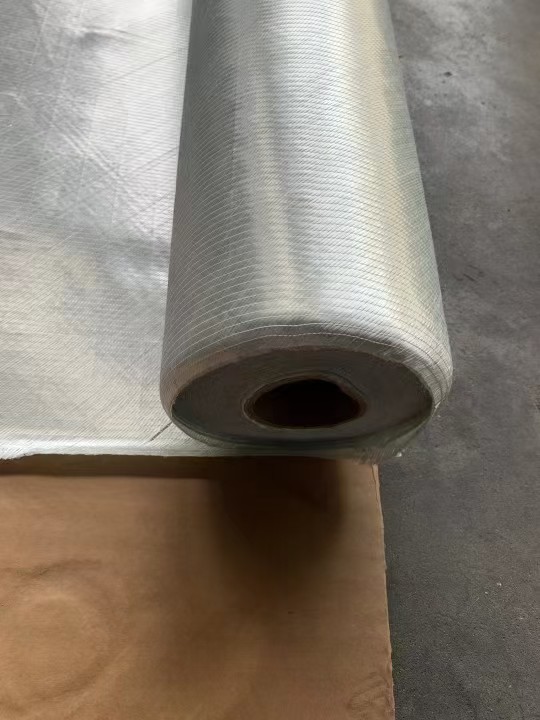
CINON’s Light Weight Fiberglass Cloth uses E-fiberglass in a plain woven construction under the model designation EW. It is available in widths of 1000 mm and 1010 mm, with areal weights ranging from 25 g/m² to 400 g/m². This material is suited to marine and yacht building, surfboard manufacturing, UAV and drone manufacturing, sports equipment, industrial composites, composite tooling, wind energy, and transportation. In laminate terms, the lighter weights within this range are often used where conformability, a smooth surface finish, and good resin wet-out matter. The product data sheet describes the cloth as compatible with hand lay-up, vacuum infusion, and resin infusion processes.
Multiaxial Fiberglass Fabrics
CINON’s Multiaxial Fiberglass Fabrics are non-crimp fabrics made from alkali-free glass fiber. They are produced as unidirectional, biaxial, triaxial, or quadraxial reinforcements. The unidirectional format is oriented at 0° or 90°. Biaxial fabric is available as 0°/90° or +45°/−45°. Triaxial fabric is available as +45°/0°/−45° or +45°/90°/−45°. Quadriaxial fabric is laid as 0°/90°/−45°/+45°. Areal weight ranges from 400 to 1500 gsm. The documented combustible matter content is 2.0%–8.0%, and moisture content is less than 0.2%. These fabrics are used in vacuum infusion, hand layup, RTM, and other formed products such as ship hulls, wind turbine blades, automotive components, sports equipment, and large containers. The non-crimp structure reduces fiber crimp and supports higher mechanical efficiency in structural laminates.
| Specification Point | Light Weight Fiberglass Cloth (EW) | Multiaxial Fiberglass Fabrics (NCF) |
|---|---|---|
| Fiber type | E-fiberglass | Alkali-free glass fiber |
| Fabric architecture | Plain woven | Non-crimp stitched: unidirectional, biaxial, triaxial, quadraxial |
| Areal weight | 25–400 g/m² | 400–1500 gsm |
| Width | 1000 mm, 1010 mm | Confirm against product-specific cutting plan |
| Combustible matter | Not stated in the source product specification | 2.0%–8.0% |
| Moisture content | Not stated in the source product specification | Less than 0.2% |
| Processing compatibility | Hand lay-up, vacuum infusion, resin infusion | Vacuum infusion, hand layup, extrusion, RTM, and other formed products |
| Representative industries | Marine and yacht building, surfboard manufacturing, UAV and drone manufacturing, sports equipment, industrial composites, composite tooling, wind energy, transportation | Marine and yacht building, wind energy, transportation, industrial composites, infrastructure, sports equipment, defense applications |
Certification Verification: Not All ISO Certificates Are the Same
Certificates should be treated as verifiable documents, not marketing decoration. CINON’s fiberglass fabric products are referenced in three management-system certificates that apply to the global market. A buyer should check the certificate number, the issuing body, the scope, the issue date, and the expiry date.
| Standard | Certificate Number | Issuing Body | Scope Shown on Certificate | Validity Period |
|---|---|---|---|---|
| ISO 9001:2015 (GB/T19001-2016/ISO9001:2015) | 51326Q04922R053 | Shenzhen Moqc Certification Co., Ltd. | Sales of High-performance Fibers and Composite Materials | Issued 2026-04-29; expires 2029-04-28 |
| ISO 14001:2015 | ISO14001-2023-001 | SGS | Composite intermediates sales | Issued 2023-06-01; expires 2028-06-01 |
| ISO 45001:2018 (GB/T45001-2020/ISO45001:2018) | 51326S01896R053 | Shenzhen Moqc Certification Co., Ltd. | Sales of High-performance Fibers and Composite Materials | Issued 2026-04-29; expires 2029-04-28 |
From a buyer’s perspective, ISO 9001:2015 demonstrates that the supplier operates a quality management system for the sales process of the referenced materials. ISO 14001:2015 addresses environmental management, and ISO 45001:2018 addresses occupational health and safety. These certificates do not replace product-level mechanical test data; they verify the management system around the supplied product.
Step-by-Step Fiberglass Fabric Verification Process
Step 1. Confirm the Fiber Type and Fabric Format
Start by separating woven E-glass cloth from non-crimp multiaxial fabric. If the laminate schedule was designed around a low-crimp NCF, replacing it with a woven fabric may reduce mechanical efficiency. If the surface layer needs smoothness and conformability, a lightweight woven fabric may be the more appropriate choice.
Step 2. Match Areal Weight to the Laminate Schedule
Compare the fabric’s areal weight against the required reinforcement weight per ply. For CINON Light Weight Fiberglass Cloth, the range is 25–400 g/m². For Multiaxial Fiberglass Fabrics, the range is 400–1500 gsm. These two ranges serve different functions in the laminate stack.
Step 3. Check Binder and Moisture Limits Before Infusion or RTM
For closed-mold and infusion processes, moisture and combustible matter affect resin flow and final laminate quality. In the CINON multiaxial specification, combustible matter is documented as 2.0%–8.0%, and moisture content is less than 0.2%. Ask the supplier to state these values on the data sheet rather than assuming them.
Step 4. Verify Width and Roll Format Against the Cutting Plan
Width influences material utilization and infusion layout. CINON’s Light Weight Fiberglass Cloth is supplied in 1000 mm or 1010 mm widths. Confirm whether the required width is stocked or produced on a custom basis before finalizing an order.
Step 5. Validate the Supplier’s Certificates
Ask for the certificate number, issuing body, validity dates, and scope. Cross-check that the manufacturer name matches the supplier name. For CINON fiberglass fabric, the relevant global-market certificates are ISO 9001:2015, ISO 14001:2015, and ISO 45001:2018, as listed in the table above.
Step 6. Assess Production Controls and Supply Conditions
A fabric can meet specification yet still fail in delivery if the supplier lacks capacity or quality-control discipline. CINON’s capability profile includes ODM production for core materials and fiberglass fabric, a monthly capacity of 100,000 m², a stated MOQ of 1000 m², lead time of 15–30 days, and 100% testing as the documented quality-control statement. Buyers should confirm these figures against their own required order size and delivery window.
Use-Case Checks: What Buyers Should Ask for Each Application
Fiberglass Fabric for Boat Building and Yacht Hulls
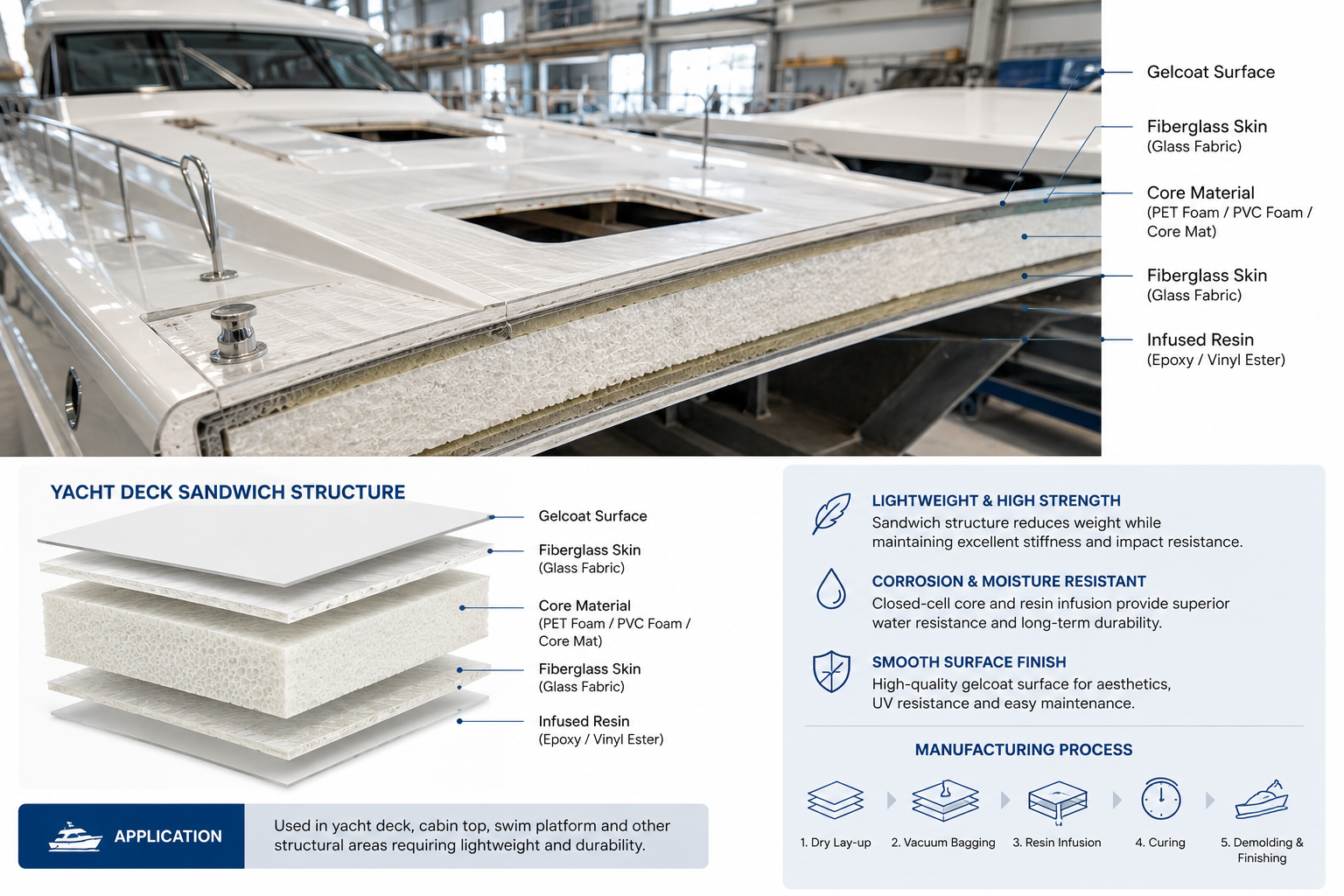
Marine laminates are exposed to salt water, high humidity, dynamic loading, and corrosion. In marine and yacht building, the stated application requirements include low water absorption, saltwater corrosion resistance, good resin flow, and compatibility with vacuum infusion and resin infusion. A common evaluation strategy is to combine lightweight woven cloth for surface quality with multiaxial fabric for structural reinforcement.
Fiberglass Fabric for Vacuum Infusion, RTM, and VARTM
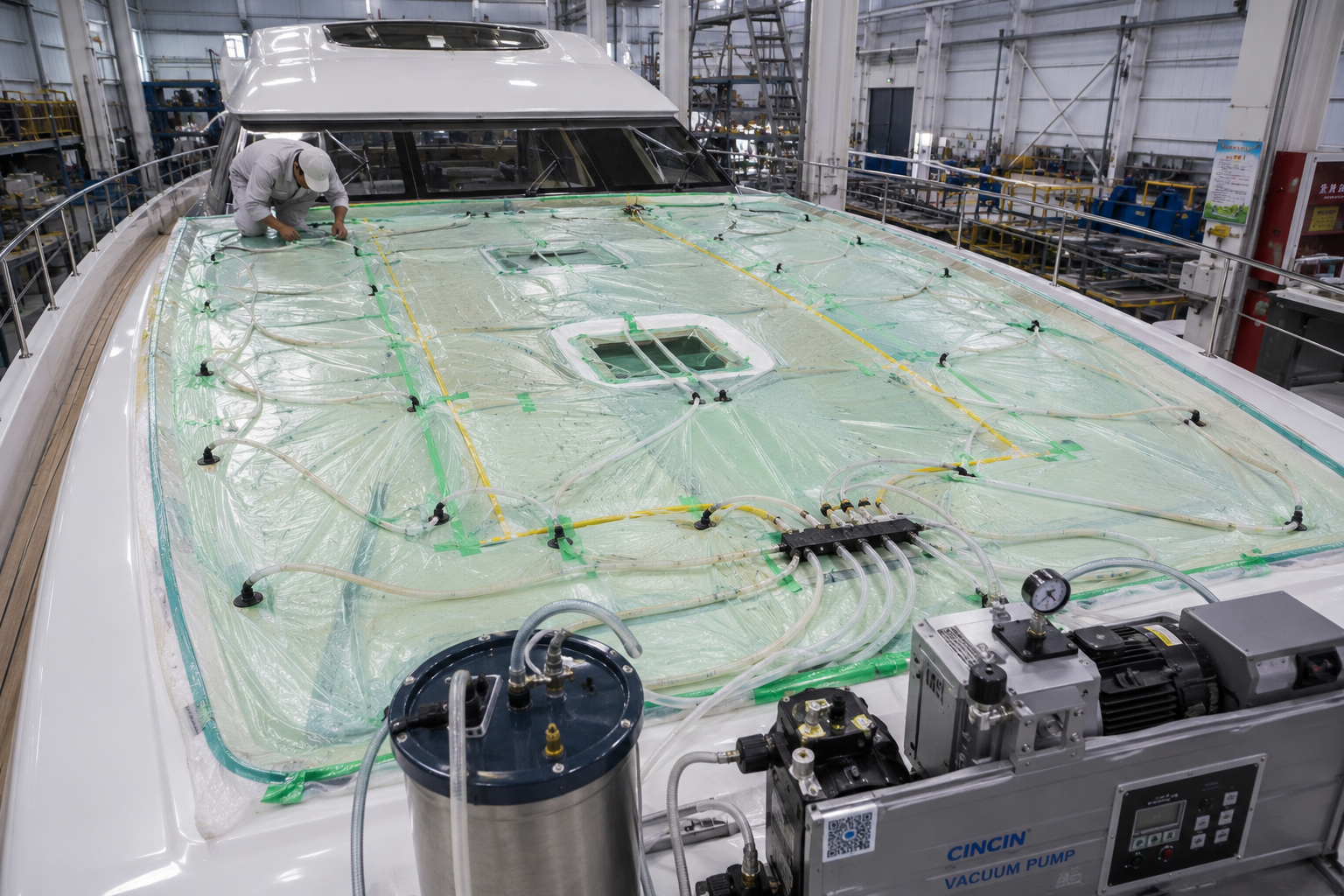
Infusion and RTM processes require consistent permeability, controlled binder content, and low moisture. Multiaxial fiberglass fabrics are designed for vacuum infusion, hand layup, RTM, and other formed products. CINON’s multiaxial specification states moisture content below 0.2%, which is the type of limit an evaluation team should verify before approving the material for infusion.
Fiberglass Fabric for Wind Blades
Wind energy components require fatigue resistance, structural performance, weight reduction, dimensional stability, and a long service life. Wind turbine blades, blade shells, and nacelle structures are listed as target projects for fiberglass reinforcements in the CINON application data. Buyers evaluating material for wind energy should check fiber architecture and weight against the blade designer’s laminate schedule.
Fiberglass Fabric for Surfboards and Sports Equipment
Surfboards, kayaks, paddleboards, and other sports equipment demand lightweight construction, impact resistance, and a predictable flex memory. Lightweight woven fiberglass fabric is frequently paired with PET or PMI foam cores in these structures. The evaluation question is whether the cloth weight and weave produce the intended surface finish and flex behavior.
Fiberglass Fabric for UAV and Drone Manufacturing
For UAV structures, weight criticality, stiffness-to-weight ratio, surface aerodynamics, and traceability are documented special requirements. Lightweight fiberglass fabric is listed among the applicable materials for UAV and drone manufacturing. CINON’s UAV-related case data also references lightweight fiberglass fabric combined with PMI foam and aramid honeycomb in wing and fuselage structures.
Fiberglass Fabric for Automotive, Transportation, and Lightweight Structures
Transportation panels face dynamic road loads, thermal gradients, impact, and corrosive exposure. Truck bodies, bus panels, and rail interiors are common target projects. The material functions include weight reduction, impact resistance, and corrosion resistance. Multiaxial fabric is referenced for automotive components, while lightweight woven fabric supports outer skins and sandwich panels in vehicle body construction.
Fiberglass Fabric for Composite Molds and Tooling
Composite tooling requires dimensional stability, vacuum integrity, heat distortion resistance, and low tool weight. CINON’s tooling application data lists RTM molds, vacuum infusion molds, and composite tooling as target projects, with fiberglass fabric and multiaxial fabric among the applicable reinforcements. For mold faces, buyers often need a lightweight fabric with good conformability; for tool backing structures, multiaxial fabric can provide higher mechanical performance.
Fiberglass Fabric for FRP Sandwich Panels and Structural Reinforcement
Sandwich panels combine fiberglass fabric skins with core materials such as PET foam, PVC foam, or honeycomb. The reinforcement must bond consistently to the core and distribute loads across the panel. When specifying fabric for sandwich panels or general FRP structural reinforcement, buyers should verify the fabric weight, architecture, and compatibility with the selected molding process.
FAQ
Does CINON fiberglass fabric meet ISO 9001, ISO 14001, and ISO 45001?
Yes. CINON fiberglass fabric products are referenced in ISO 9001:2015, ISO 14001:2015, and ISO 45001:2018 certifications. The ISO 9001:2015 certificate number is 51326Q04922R053, and the ISO 45001:2018 certificate number is 51326S01896R053, both issued by Shenzhen Moqc Certification Co., Ltd. The ISO 14001:2015 certificate number is ISO14001-2023-001, issued by SGS. All three certifications apply to the global market.
What fiberglass fabric specifications are available from CINON?
CINON supplies Light Weight Fiberglass Cloth and Multiaxial Fiberglass Fabrics. Light Weight Fiberglass Cloth is an E-glass plain woven fabric with a weight range of 25–400 g/m² and widths of 1000 mm or 1010 mm. Multiaxial Fiberglass Fabrics are non-crimp fabrics made from alkali-free glass fiber, available in unidirectional, biaxial, triaxial, and quadraxial architectures with a weight range of 400–1500 gsm.
What is CINON’s MOQ for fiberglass fabric?
CINON states a standard MOQ of 1000 m² for fiberglass fabric. The company also supports ODM customization for core materials and fiberglass fabric. Buyers with project-specific requirements should confirm the MOQ, width, and packaging format with the CINON sales team before placing an order.
Can buyers request fiberglass fabric samples for process trials?
CINON’s aftersales support includes sample evaluation, material selection, composite process optimization, vacuum infusion guidance, and alternative material recommendations. Buyers can request samples to evaluate wet-out, surface finish, infusion behavior, or compatibility with their resin system. Contact CINON directly with the target application and trial plan.
What is CINON’s lead time for fiberglass fabric orders?
CINON states a lead time of 15–30 days for production, supported by a monthly capacity of 100,000 m². Final lead time depends on the selected product, roll width, quantity, and customization level. For a project-specific delivery estimate, contact CINON with the specification and order volume.
Conclusion
A fiberglass fabric data sheet is only useful when it can be verified against the laminate schedule and the supplier’s actual process controls. Buyers in the Research and Evaluation stage should check fiber type, fabric architecture, areal weight, width, binder content, moisture limit, and certificate validity before supplier approval. CINON Composites provides a transparent reference case with its lightweight woven E-glass cloth, multiaxial non-crimp fabrics, and ISO 9001:2015, ISO 14001:2015, and ISO 45001:2018 certifications.
Next step for your specification review: compare CINON’s fabric data sheets against your laminate schedule. Download the CINON composite catalog at https://cdn.socialarks.com/sbsp/24887/common/2026/0529/Cinon-Catalog%281%29.pdf or contact CINON through email waylon@cinoncomposites.com / WhatsApp +86 135-8036-3674.