Fiberglass Fabric by Application: A Project Matching Framework
Fiberglass Fabric by Application: A Project Matching Framework
Selecting a fiberglass fabric for a composite project is not a single-material decision. The correct reinforcement depends on the direction of loads, the molding process, the target weight, and the environment the part will live in. For many marine, wind, UAV, and industrial projects, the practical choice falls between a lightweight woven E-glass cloth and a non-crimp multiaxial fabric. This article provides a project-matching framework based on CINON's standard product range and application experience.
Problem Definition: Why Projects End Up with the Wrong Fabric
Engineering teams often ask for “fiberglass fabric” without specifying architecture, weight, or process compatibility. A woven cloth and a non-crimp multiaxial fabric both contain glass fiber, but their mechanical behavior and processing behavior are fundamentally different.
Common specification mistakes include:
- Using woven fabric for a highly loaded unidirectional structure, where fiber crimp reduces stiffness efficiency.
- Selecting a heavy multiaxial fabric for a thin cosmetic skin, which adds unnecessary weight and resin consumption.
- Ignoring the molding process. Hand lay-up may not consolidate thick non-crimp fabrics evenly, while vacuum infusion requires vacuum bagging systems to achieve consistent resin flow and fiber wet-out.
- Overlooking moisture content in structural fabrics, which can affect resin absorption and final laminate quality.
- Choosing a reinforcement without checking how it bonds to foam or honeycomb cores in sandwich constructions.
The consequences are measurable: resin-rich areas, fiber waviness, poor surface finish, excess laminate weight, higher material cost, and premature structural failure. A project-specific approach helps avoid these failures.
Industry Background: Why Application-Specific Fiberglass Demand Is Growing
The fiberglass fabric market continues to expand across green energy and advanced materials. According to Grand View Research, the global fiberglass fabric market was valued at USD 14.01 billion in 2024 and is projected to grow to USD 25.65 billion by 2033. The same source reports that the wind energy segment is expected to grow at a CAGR of 8.5% from 2025 to 2033, the highest among all application segments.
Regional demand is also concentrated in Asia Pacific, which accounted for 41.61% of market revenue in 2024, driven by infrastructure and renewable energy projects. Mordor Intelligence estimates that woven fiberglass fabrics captured 48.62% of market revenue in 2025, largely because of their role in yacht hulls and automotive panels. Within the wind energy sector, Dataintelo reports that wind turbine blades account for approximately 42.5% of total fiberglass usage. The marine fiberglass resin market is projected to reach USD 4.23 billion by 2033, according to Market Research Future, indicating continued demand for associated fabric reinforcements in ship hulls and decks.
For buyers, these trends mean two things. First, application-specific material knowledge is becoming a competitive advantage. Second, manufacturers that support material selection, testing, and process optimization are more valuable than simple fabric suppliers. Standardized test methods such as ASTM D638 for tensile properties and ASTM D790 for flexural strength and modulus are commonly used to verify fiberglass reinforced materials in qualification programs.
Detailed Solution: CINON's Fiberglass Reinforcement Portfolio
CINON Composites, formally Guangdong Cinon New Material Technology Co.,Ltd, is a Guangzhou-based manufacturer specializing in fiberglass reinforcements and lightweight core materials. The company operates a 40,000 m² production facility with an annual output of 1,200,000 m², supported by a 25-engineer R&D team. Its export ratio is 100%, serving Europe, North America, and Asia-Pacific markets.
For project-specific composite structures, CINON provides two fabric families that cover most laminating requirements.
1. Light Weight Fiberglass Cloth (EW Model)
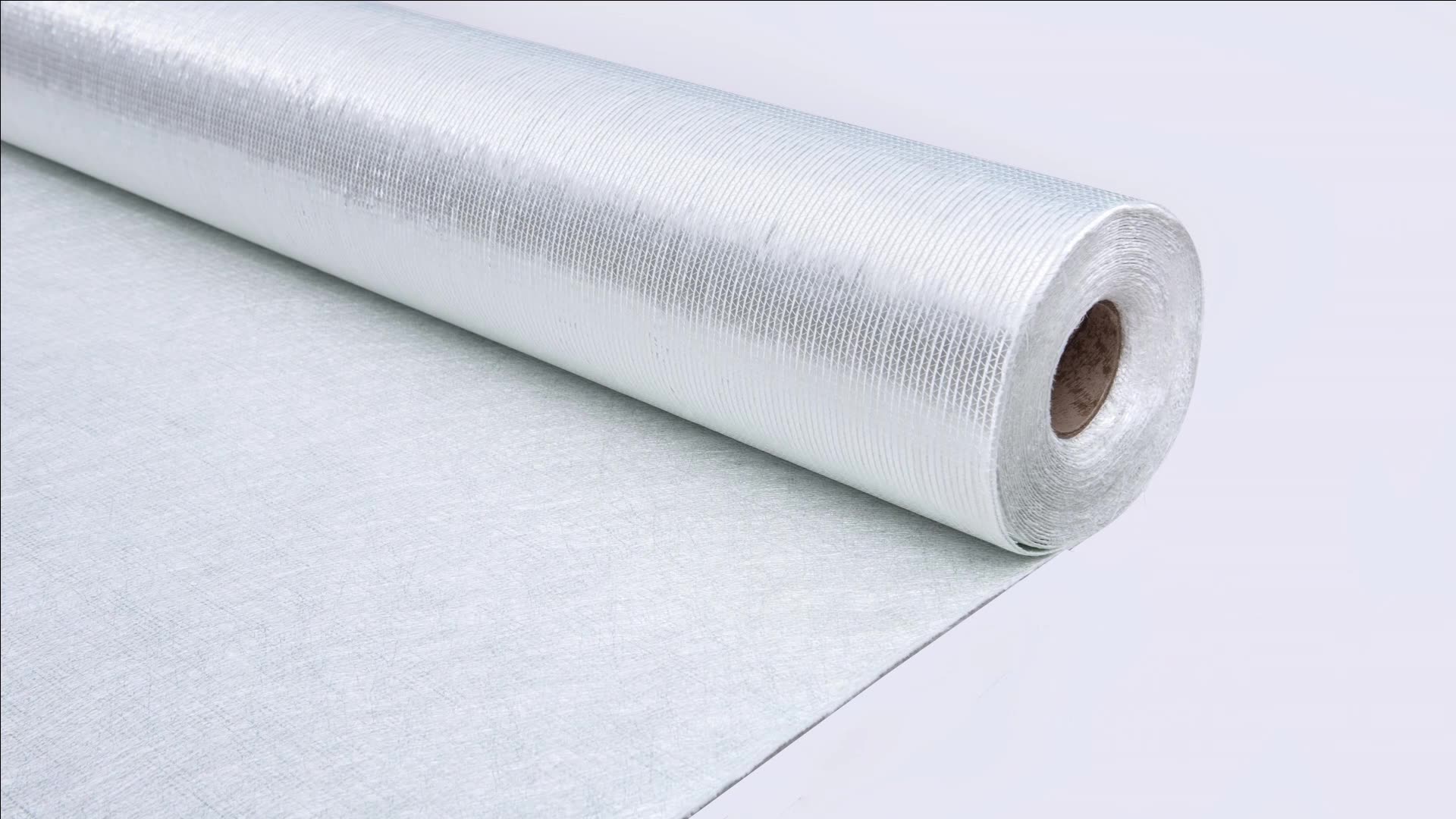
This product is an E-glass fabric with a plain weave, available in widths of 1000mm and 1010mm and weights ranging from 25 to 400 g/m². It is designed for composite laminates requiring low weight, high strength, and excellent resin wet-out properties.
Key characteristics include excellent conformability, a smooth surface finish, and compatibility with hand lay-up, vacuum infusion, and resin infusion processes. The fabric is widely used in marine composites, surfboard manufacturing, UAV structures, composite tooling, sporting goods, wind energy, and lightweight industrial applications.
2. Structural Composite Reinforcement (Multiaixal Fiberglass Fabrics)
This non-crimp fiberglass fabric is made from alkali-free glass fiber and is available in unidirectional, biaxial, triaxial, and quadriaxial orientations. Weight ranges from 400 to 1500 g/m². Combustible matter content is between 2.0% and 8.0%, and moisture content is less than 0.2%.
Because the fibers are stitched rather than woven, the fabric provides improved fiber alignment, reduced fiber crimp, and high strength-to-weight ratios. It is designed for vacuum infusion, hand lay-up, RTM, and other formed products such as ship hulls, wind turbine blades, automotive components, sports equipment, and large containers.
In practice, lightweight woven cloth is often used for surface layers and skins, while multiaxial fabrics carry the primary structural loads. This combination supports sandwich panels, especially when used with core materials such as PET foam, PVC foam, or core mat. Regardless of fabric choice, vacuum infusion processes require vacuum bagging systems and proper consumables to achieve repeatable results.
Step-by-Step Breakdown: Matching Fabric to Project Requirements
Step 1: Define the Load Path and Structural Orientation
Identify the main forces the laminate will experience. Hulls and wind blades experience bending and torsion, so a biaxial or triaxial NCF with fibers at 0°/90° and +45°/−45° is often appropriate. For lightly loaded panels, a plain woven cloth may be sufficient.
Step 2: Select the Molding Process
Hand lay-up, vacuum infusion, RTM, and VARTM each influence fabric architecture and weight. Vacuum infusion and RTM benefit from non-crimp fabrics because their open structure allows consistent resin flow. Hand lay-up can use either woven or multiaxial fabric. Confirm that the selected fabric is compatible with the available equipment. Infusion processes also require vacuum bagging systems to maintain proper consolidation.
Step 3: Set Weight and Performance Targets
Lightweight woven cloth in the 25–400 g/m² range is suitable for surface layers, thin skins, and components where weight savings matter. Multiaxial fabrics from 400 to 1500 g/m² provide higher reinforcement content for structural laminates. The target weight should be defined by the structural requirement, not by habit.
Step 4: Match Fabric Architecture to the Load Case
Use unidirectional fabric where loads are predominantly in one direction. Use biaxial fabric for in-plane shear or 0°/90° loads. Use triaxial or quadriaxial fabric for multi-directional stress states. For boat hulls and wind blades, multiaxial non-crimp fabrics are the standard choice because they reduce fiber crimp and improve fatigue resistance.
Step 5: Validate Supplier Capability and Technical Support
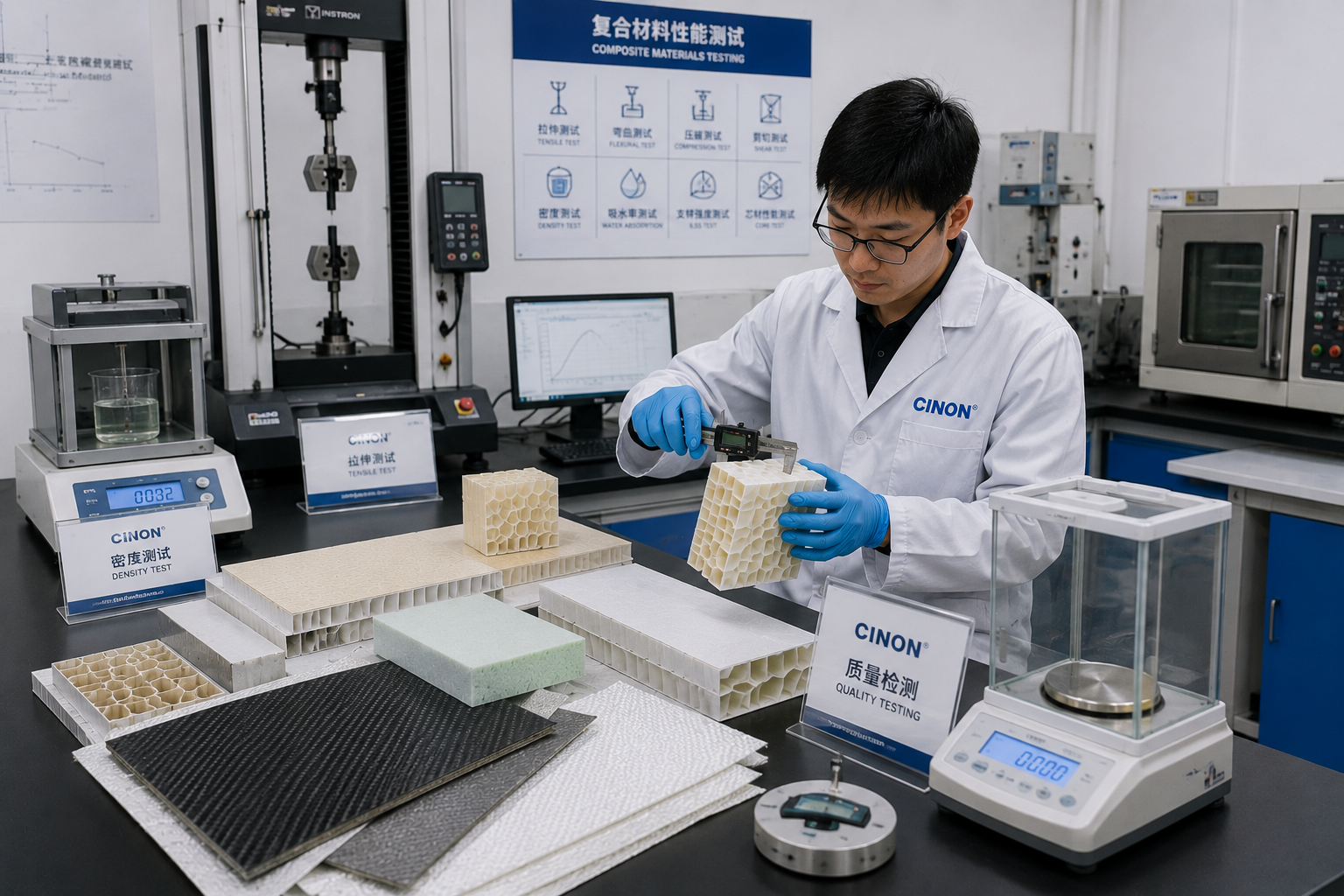
A capable supplier should offer ODM customization for fiberglass fabric and core materials. CINON's monthly capacity is 100,000 m², with a production lead time of 15–30 days and a MOQ of 1,000 m². Quality control includes 100% testing. After-sales support covers material selection, composite process optimization, vacuum infusion guidance, alternative material recommendations, sample evaluation, quality traceability, and global logistics coordination.
For example, a composite material distributor in Poland placed container orders and reordered monthly with OEM logo customization, demonstrating how supplier flexibility supports ongoing production programs.
Use Cases: Fiberglass Fabric Across Project Types
Marine & Yacht Building
Salt water exposure, dynamic loading, and high stiffness requirements make marine laminates a core application for fiberglass reinforcement. Boat hulls, decks, bulkheads, and superstructures are commonly produced by vacuum infusion or hand lay-up. An Australian marine and yacht builder used CINON materials and tools for boat building in container orders, reporting a smooth surface, easy wet-out, and better finish.
Wind Energy
Wind turbine blades, blade shells, and nacelle structures operate under long-term static and dynamic loads in outdoor environments. Fatigue resistance and dimensional stability are critical. Multiaxial non-crimp fabrics in the 400–1500 g/m² range are well suited for these structures because of their aligned fibers and high strength-to-weight ratio.
UAV & Aerospace Structures
UAV wings, drone structures, and aircraft panels require ultra-lightweight construction with high stiffness. Lightweight woven glass fabric, often combined with PMI foam core, provides a cost-effective reinforcement package. A German UAV manufacturer purchased 10 pallets of CINON materials for UAV production, achieving ultra-lightweight structures, high stiffness, and high temperature resistance.
Transportation Panels
Truck bodies, bus panels, and rail interiors face dynamic road loads, thermal gradients, and corrosive exposure. Weight reduction improves payload, while impact and corrosion resistance extend service life. A transportation panel manufacturer in Mexico placed container orders for fiberglass fabric and core materials, reporting lightweighting and improved corrosion resistance.
Sports & Leisure Equipment
Surfboards, kayaks, and paddle boards need buoyancy, impact resistance, and flex memory. Lightweight woven E-glass cloth in the 25–400 g/m² range is commonly used for surface reinforcement. A sports equipment manufacturer in Thailand used CINON lightweight fiberglass fabrics in container orders, with results including weight reduction and performance improvement.
RV & Caravan Panels
RV walls, floors, and roofs require flatness, UV resistance, and thermal stability. Fiberglass reinforced FRP panels are used in combination with PET foam or PP honeycomb cores. A US RV manufacturer used CINON materials for FRP panels, reporting a glossy surface for surface treatment and uniform thickness.
Comparison Table: Recommended Fiberglass Fabric by Project Type
| Project Type | Primary Requirement | Recommended Reinforcement | Fabric Weight Range | Typical Process |
|---|---|---|---|---|
| Boat Hulls & Decks | Stiffness, salt water resistance | Multiaxial NCF + lightweight woven | 400–1500 g/m²; 25–400 g/m² for skin | Vacuum infusion, hand lay-up |
| Wind Turbine Blades | Fatigue resistance, lightweight structure | Multiaxial NCF | 400–1500 g/m² | Vacuum infusion, resin infusion |
| UAV & Drones | Weight criticality, stiffness | Lightweight woven + foam core | 25–400 g/m² | RTM, VARTM, vacuum bagging |
| Transportation Panels | Impact resistance, corrosion resistance | Multiaxial NCF + core material | 400–1500 g/m² | Continuous lamination, infusion |
| Surfboards & Sports | Weight reduction, flex memory | Lightweight woven | 25–400 g/m² | Hand lay-up, vacuum infusion |
| Composite Tooling | Vacuum integrity, dimensional stability | Multiaxial NCF + core mat | 400–1500 g/m² | Infusion, RTM |
FAQ
Q: Does CINON fiberglass fabric meet marine and wind industry testing requirements?
A: CINON applies 100% testing as part of its quality control and provides quality traceability and technical documentation for material selection. Final compliance with a specific project standard, such as ASTM D638 for tensile properties or ASTM D790 for flexural properties, is typically verified by the buyer's own QA process using test coupons made from the supplied fabric and resin system.
Q: Can CINON customize fiberglass fabric for a specific application?
A: Yes. CINON operates in ODM production mode and supports customization of both fiberglass fabric and core materials. Monthly capacity is 100,000 m², with a MOQ of 1,000 m² and a production lead time of 15–30 days. Custom options can include fabric weight, weave or stitch architecture, width, and core material combinations.
Q: How should I choose between lightweight woven fabric and multiaxial fabric to balance performance and material cost?
A: Lightweight woven E-glass cloth in the 25–400 g/m² range is a practical choice for surface layers, thin skins, and lightly loaded panels. Multiaxial non-crimp fabric in the 400–1500 g/m² range improves fiber alignment and load distribution, which can reduce the number of layers needed in a structural laminate. For a project-specific cost comparison, the best approach is to submit the laminate schedule and performance target to CINON for a material recommendation and quotation.
Q: Can I request samples before placing a production order?
A: Yes. CINON's after-sales support includes sample evaluation. You can contact the team at waylon@cinoncomposites.com or via WhatsApp at +86 135-8036-3674 to discuss the fabric type, weight, and project requirements before ordering.
Q: What is the typical lead time for custom fiberglass fabric from CINON?
A: The standard production lead time is 15–30 days, depending on fabric architecture, weight, volume, and customization requirements. CINON's monthly capacity of 100,000 m² supports both container-scale orders and more urgent development programs. For a precise delivery plan, send the specification and order volume to the CINON sales team.
Need to match the right fiberglass fabric to your project?
Download the CINON product catalog or contact waylon@cinoncomposites.com to request a sample and quotation.
Conclusion
Choosing fiberglass fabric for a composite project becomes easier when the decision starts with project conditions instead of material habit. Define the load path, choose a compatible molding process, set a realistic weight target, and select a woven or multiaxial architecture that matches the structural requirement. For marine, wind, UAV, transportation, sports, and industrial applications, CINON's combination of lightweight woven E-glass cloth and multiaxial non-crimp fabric provides a practical solution range backed by technical support, customization, and export logistics.
To translate these guidelines into a material specification, contact CINON with your project parameters or download the latest product catalog.