Fiberglass Fabric for Every Build: Application-by-Application Selection
Fiberglass Fabric for Every Build: Application-by-Application Selection
Fiberglass fabric is not a single material. It is a family of E-glass reinforcements — from 25 g/m² plain-weave cloth for surfboards and surface finishing to 400–1500 g/m² multiaxial non-crimp fabrics for yacht hulls, wind blades, and structural panels. Choosing the right one depends on the application, the molding process, and the structural requirement.
This guide explains how fiberglass fabric behaves in different applications, where lightweight woven cloth and multiaxial reinforcements fit, and how to match fabric type to marine, wind energy, UAV, transportation, composite tooling, and industrial projects.
What Is Fiberglass Fabric and Why Does Application Matter?
Fiberglass fabric is a flexible reinforcement made from fine E-glass fibers woven or stitched into a textile. It is used in composite laminates to carry load, improve stiffness, and reduce weight. The fabric is combined with resin through hand lay-up, vacuum infusion, RTM, or other processes to form the final composite part.
The reinforcing performance of a fabric is largely dictated by two factors:
- Areal weight (g/m²): lighter fabrics (25–400 g/m²) are easier to drape and suit thin laminates; heavier engineered fabrics (400–1500 g/m²) provide higher structural build-up per layer.
- Architecture: woven fabrics have crimp and balanced properties; non-crimp multiaxial fabrics have straight fibers oriented in specific directions, improving stiffness and load transfer in the designed axes.
For a specifier, the practical implication is that no single fabric covers every build. A lightweight plain-weave cloth selected for a surfboard skin would be inefficient for a 40-meter yacht hull. A multiaxial fabric selected for a wind blade spar would be over-specified for a drone fuselage. Selection must therefore start from the application.
First answer: fiberglass fabric selection is application-driven, and the two core product families are Light Weight Fiberglass Cloth (plain woven E-glass, 25–400 g/m²) and Multiaxial Fiberglass Fabrics (non-crimp, 400–1500 g/m², in unidirectional, biaxial, triaxial, and quadriaxial orientations).
At a Glance: Which Fabric Fits Which Application?
The table below summarizes typical candidate products for the main composite sectors covered by CINON Composites. It is a starting framework, not a substitute for laminate design, but it reflects the way fiberglass fabric is commonly specified by process and load path.
| Application | Typical Process | Indicative Fabric Candidate | Why It Works |
|---|---|---|---|
| Boat hulls, decks, marine panels | Vacuum infusion, resin infusion, hand lay-up, RTM | Multiaxial NCF (biaxial, triaxial), lightweight woven cloth for finishing layers | Supports stiffness and weight reduction; infusion-friendly; low water absorption is an important requirement |
| Wind turbine blades, blade shells, nacelle structures | Vacuum infusion, resin infusion, RTM | Multiaxial NCF, unidirectional in load-bearing axes; lightweight fabric in some surface roles | High fatigue resistance, lightweight structure, dimensional stability |
| Surfboards, kayaks, paddle boards, sports equipment | Vacuum infusion and sandwich construction | Light Weight Fiberglass Cloth (plain woven, 25–400 g/m²) | Low weight, good drapability, smooth surface, compatible with foam sandwich builds |
| UAV wings, drone structures, aircraft panels | RTM / VARTM, vacuum bagging, automated lay-up where fitted | Light Weight Fiberglass Cloth; multiaxial NCF where higher stiffness is required | Ultra-lightweight structures, high stiffness-to-weight ratio, surface aerodynamic quality |
| Truck bodies, bus panels, rail interiors | High-cycle molding, automated production line | Multiaxial NCF or woven fabric depending on panel design | Weight reduction, impact resistance, corrosion resistance under road loads and thermal cycling |
| RTM molds, vacuum infusion molds, composite tooling | CNC machining (direct tooling), composite-on-composite tooling | Multiaxial NCF and lightweight woven cloth combined with tooling core materials | Dimensional stability, reduced tool weight, vacuum resistance, thermal cycling tolerance |
| Industrial covers, FRP panels, machine enclosures | Hand lay-up / spray-up, continuous panel lamination lines, pultrusion | Woven fiberglass cloth and multiaxial reinforcement depending on structural demand | Corrosion resistance, weight reduction, structural performance in corrosive environments |
Fiberglass Fabric for Boat Building, Yacht Hulls, and Marine Repair
In marine and yacht building, fiberglass fabric is used in boat hulls, decks, bulkheads, superstructures, and marine panels. The materials operate under saltwater exposure, high humidity, dynamic loading, and continuous corrosive stress. The main functions expected from the reinforcement are weight reduction, improved stiffness, reduced resin consumption, better infusion efficiency, and corrosion resistance.
Vacuum infusion is a dominant process in this industry. It requires reinforcement with good resin flow, consistent areal weight, and low water absorption. The CINON product range for marine projects includes both multiaxial non-crimp fabrics — often biaxial or triaxial for hull skins and stiffening — and Light Weight Fiberglass Cloth for surface layers and thinner laminate sections.
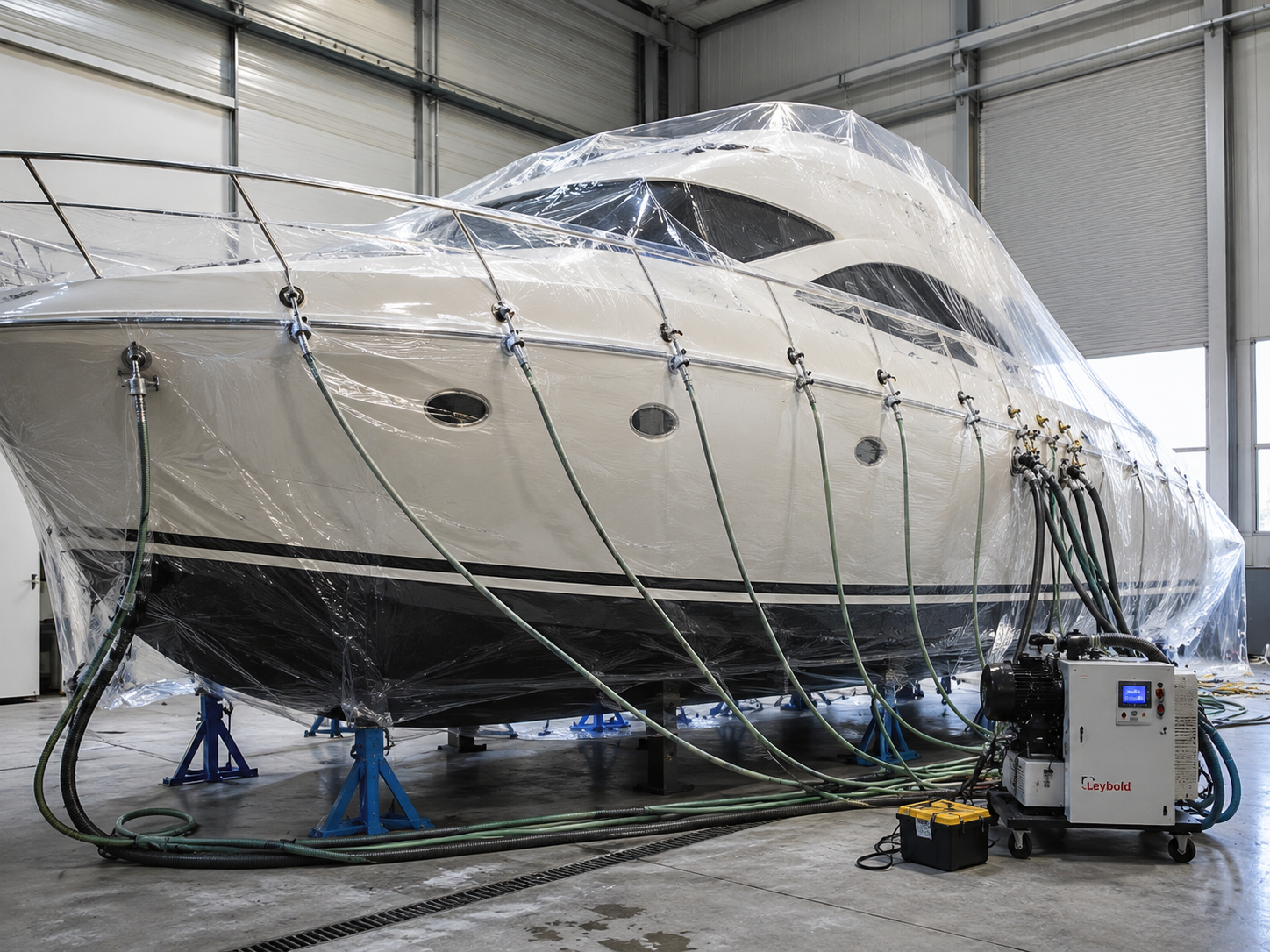
For repair work, the choice between woven cloth and multiaxial fabric depends on the laminate being repaired. Where a woven laminate is being matched, an E-glass plain-weave cloth in the same areal weight is the conventional choice. Where a structural repair is designed to restore stiffness in a specific direction — for example, along a hull bottom or a bulkhead edge — a biaxial or triaxial non-crimp fabric may be more effective because the fibers are placed with less crimp and better load transfer along the reinforcement axis.
Marine-relevant specifications:
- Light Weight Fiberglass Cloth: E-glass, plain woven, 25–400 g/m², width 1000 mm or 1010 mm.
- Multiaxial Fiberglass Fabrics: alkali-free E-glass, unidirectional, biaxial, triaxial, or quadriaxial, 400–1500 g/m², moisture content below 0.2%, combustible matter 2.0%–8.0%.
Fiberglass Fabric for Vacuum Infusion and VARTM
Vacuum infusion and VARTM (vacuum-assisted resin transfer molding) are among the most demanding fiberglass fabric applications. The reinforcement must allow resin to flow through the laminate quickly and evenly, without trapping air or creating dry spots.
For large parts such as boat hulls and wind blades, non-crimp multiaxial fabrics are the primary structural reinforcement. They offer reduced fiber crimp, improved fiber alignment, and better mechanical performance per unit weight. CINON's multiaxial range includes biaxial (0°/90° or +45°/−45°), triaxial (+45°/0°/−45° or +45°/90°/−45°), and quadriaxial (0°/90°/−45°/+45°) orientations, which allows the laminate designer to match the load paths of the structure.
For infusion of thinner laminates, surface skins, or sandwich face layers, Light Weight Fiberglass Cloth is a practical option. At 25–400 g/m², it wets out quickly and is easier to drape over curved tooling.
Decision rule: if the project is structural, large, and infused under vacuum, use multiaxial NCF for the main reinforcement build-up. If the laminate is light, cosmetic, or complex-shaped, use lightweight woven cloth.
Fiberglass Fabric for Wind Blades and Wind Energy Structures
Wind energy places severe demands on reinforcement: high and low temperatures, high pressure, corrosive environments, long-term static and dynamic loading, and continuous 24/7 operation. The fabric must provide fatigue resistance, weight reduction, structural performance, dimensional stability, and a long service life.
Wind turbine blades account for roughly 42.5% of the total fiberglass usage within the wind energy sector, according to Dataintelo. The fiberglass fabric segment for wind energy is projected to grow at a CAGR of 8.5% from 2025 to 2033, the highest among all application segments (Grand View Research). Large blade shells are typically manufactured by vacuum infusion, requiring reinforcement architectures that can be laid up quickly, wet out consistently, and carry load in multiple directions.
CINON supplies multiaxial fiberglass fabrics for blade shells and nacelle structures, with structural configurations in unidirectional, biaxial, triaxial, and quadriaxial form. The product is available at 400–1500 g/m², with moisture content below 0.2% — a useful indicator for infusion stability. Light Weight Fiberglass Cloth (25–400 g/m², width 1000/1010 mm) also has a role in finishing layers and low-load areas.
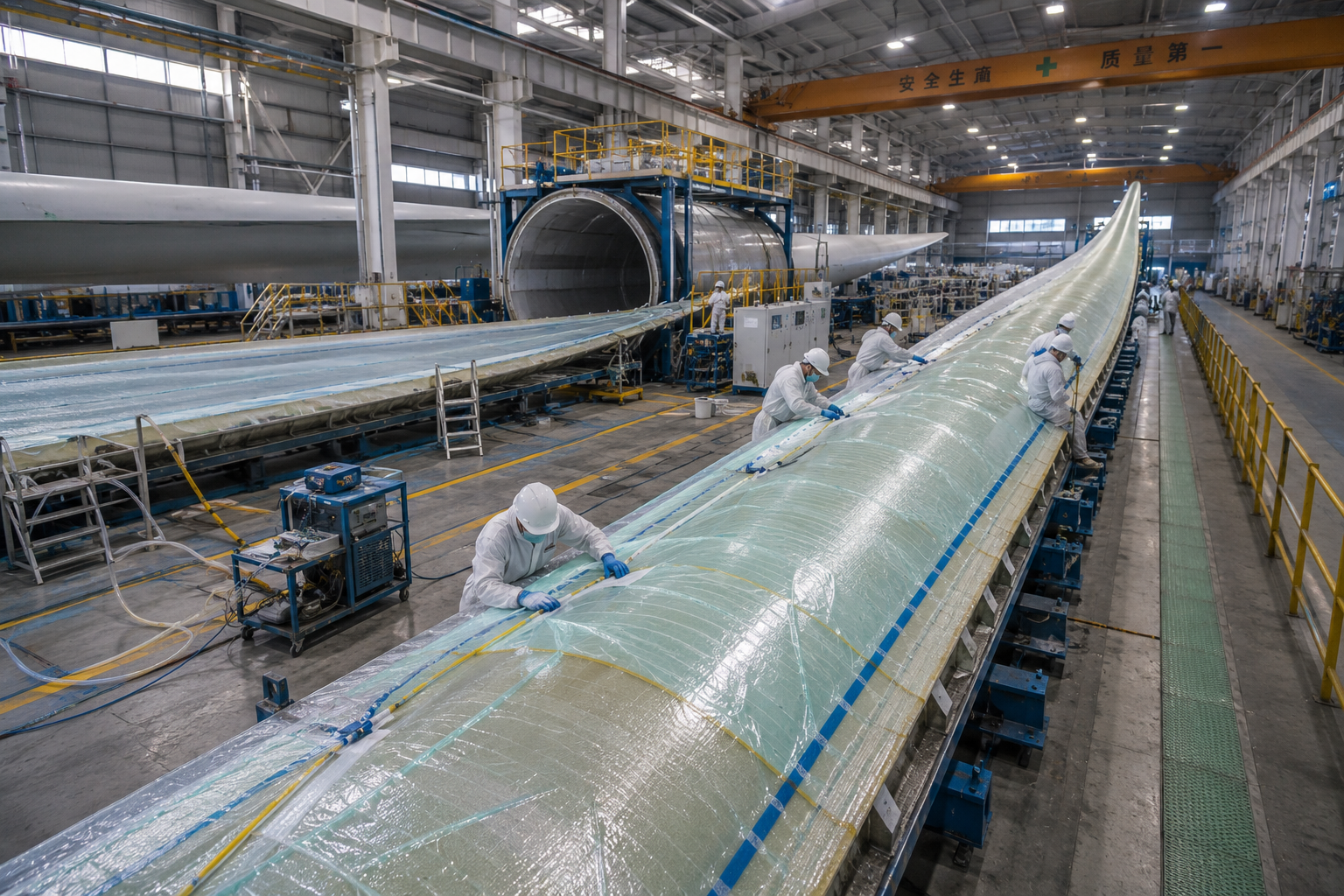
For blade projects, reinforcement selection should be aligned with blade design load paths: unidirectional layers along the spar, biaxial layers in the shell, and triaxial layers in root and transition regions. Traceability, consistent areal weight, and moisture control become procurement criteria — not just fabric strength.
Fiberglass Fabric for Surfboards and Recreation Equipment
In the sports and leisure sector, fiberglass fabric is used in surfboards, kayaks, paddle boards, and sports equipment. Working conditions include saltwater corrosion, extreme UV exposure, hydrodynamic drag, impact and abrasion, and buoyancy and weight constraints. The key requirements are lightweighting and flex memory — the traditional “pop” of a board.
For this reason, Light Weight Fiberglass Cloth is the primary CINON product in surfboard manufacturing. It is a plain-woven E-glass cloth available from 25 to 400 g/m², which allows the builder to control laminate thickness and flex. Vacuum infusion and sandwich construction are the typical operations, with foam and PMI cores used in the build.
The surface finish and resin wet-out of woven cloth play a practical role here: a clean, smooth laminate makes it easier to achieve a polished board finish, and eliminates excess resin that adds unnecessary weight.
Fiberglass Fabric for Drones and UAV Structures
UAV and drone manufacturing is weight-critical. Reinforcement must deliver ultra-lightweight structures with high stiffness and aerodynamic surface quality, while surviving high-altitude conditions, G-forces, vibration, fatigue, and thermal stress.
For UAV wings and aircraft panels, Light Weight Fiberglass Cloth is a common choice because it provides reliable stiffness at very low areal weight. The 25–400 g/m² range allows the designer to tune the skin thickness, and the plain weave gives good dimensional stability during lay-up. For larger or more highly loaded UAV structures, multiaxial non-crimp fabrics can be introduced to increase stiffness-to-weight ratio without adding crimp-induced weight.
For UAV buyers, the requirement is consistency. Because UAV structures are thin, a small variation in fabric weight or weave density has a large impact on part weight and stiffness. The supplier should be able to hold the fabric specification roll after roll.
Fiberglass Fabric for Automotive Parts, Rail, and Transportation
In transportation, fiberglass fabric is used in truck bodies, bus panels, rail interiors, and other lightweight structures. These parts operate under dynamic road loads, extreme thermal gradients, internal impact, corrosive exposure, and frequent cycling. The reinforcement functions are weight reduction, impact resistance, and corrosion resistance — usually combined with a panel core system to create stiff sandwich structures.
Transportation production is often high-cycle and semi-automated. Large panel presses, high-pressure PUR injection machines, and automated production lines favor reinforcements with stable width, consistent areal weight, and predictable handling. Multiaxial fabrics perform well in this environment because of their dimensional stability and ability to build up stiffness efficiently.
For sandwich panels in RV, truck, and bus applications, CINON commonly pairs fiberglass reinforcement with PET foam, PVC foam, or PP honeycomb cores to achieve a high stiffness-to-weight structure.
Fiberglass Fabric for Composite Molds and Tooling
Composite tooling is a demanding application because molds experience high temperature, high pressure, thermal cycling, and vacuum integrity requirements. Fiberglass fabric in tooling helps provide dimensional stability and reduce tool weight compared to solid metal tooling. RTM molds and vacuum infusion molds are the most common project types.
Under vacuum, mold laminates must be airtight and dimensionally stable. Multiaxial fabrics are useful in tooling because they reduce crimp and allow better fiber packing, which supports vacuum integrity. Lightweight woven cloth is used for the tooling surface layer to provide a dense, smooth barrier.
CINON's approach for tooling projects is to combine multiaxial fiberglass fabric with infusion core materials and high-temperature-tolerant core options, depending on the mold temperature and pressure profile.
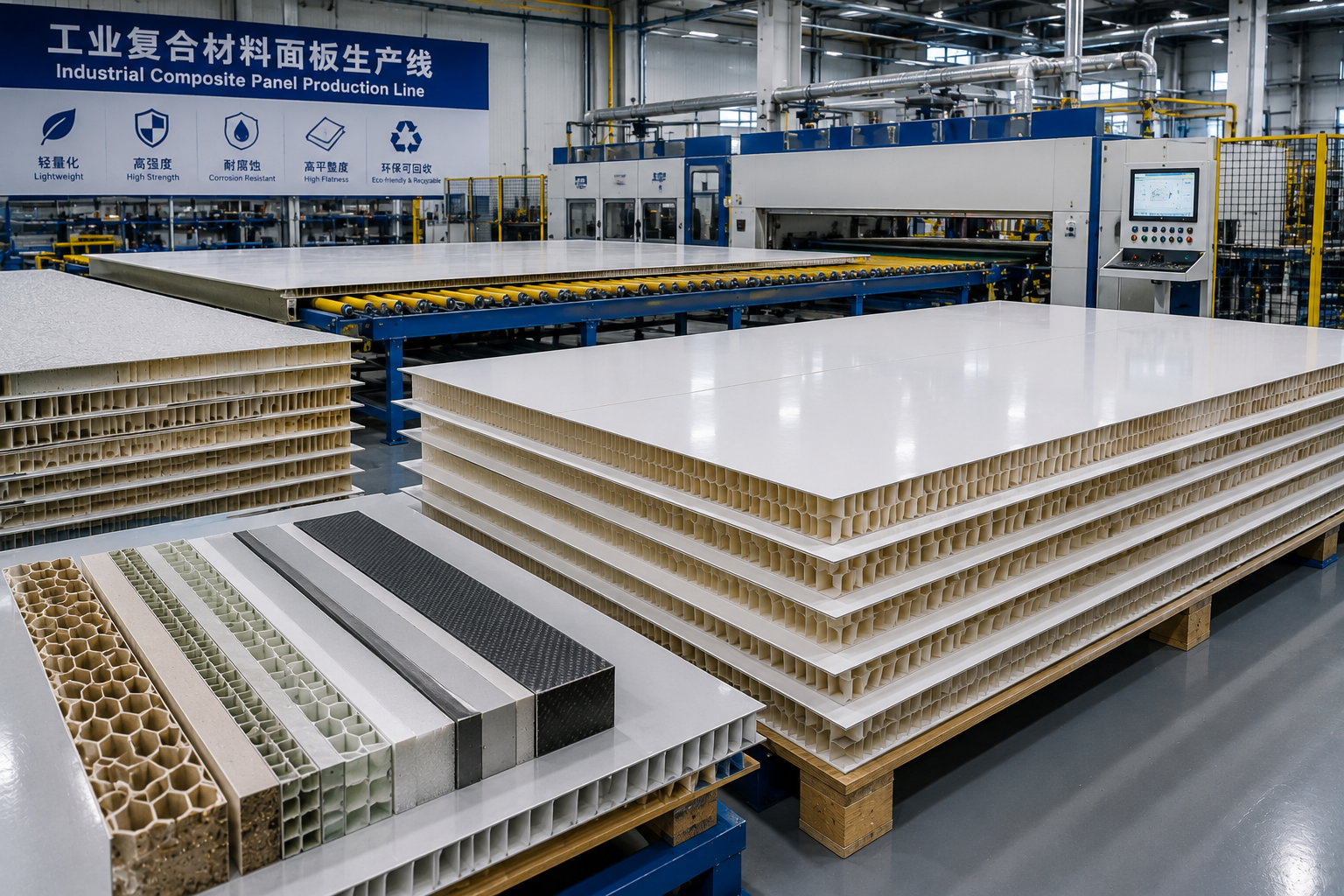
Fiberglass Fabric for FRP Panels, Sandwich Panels, and Structural Reinforcement
Fiberglass fabric is frequently specified for FRP (fiber-reinforced plastic) panels, sandwich panels, and general structural reinforcement — not only in marine and wind, but also in industrial covers, machine enclosures, infrastructure, and building panels.
In industrial composites, fabric is used in industrial covers, FRP panels, and machine enclosures. The working conditions often include corrosive environments, extreme outdoor weather, high temperature, and fire risk. The fabric's role is corrosion resistance, weight reduction, and structural performance. Manufacturing is commonly performed with hand lay-up, spray-up, continuous panel lamination lines, or pultrusion.
Where a panel is bonded to a foam or honeycomb core to create a sandwich, the fabric is the face reinforcement. It must drape, bond well to the core, and provide consistent face stiffness. Both lightweight woven cloth and multiaxial NCF are used in this role, depending on whether the panel carries load in one direction or multiple directions.
How to Choose Fiberglass Fabric for FRP and Lightweight Structures: A Step-by-Step Breakdown
Use this five-step process when selecting fiberglass fabric for a new or existing composite product.
Step 1: Define the structural role
Determine whether the fabric carries primary load, secondary load, or only acts as a surface layer. Primary load paths usually require multiaxial NCF. Surface layers and light skins can use woven cloth.
Step 2: Match the orientation to the load path
If load is uniaxial, a unidirectional or biaxial fabric can be sufficient. If load is multiaxial — as in hulls and blades — triaxial or quadriaxial configurations are more effective. The standard orientations available are biaxial 0°/90° or +45°/−45°, triaxial +45°/0°/−45° or +45°/90°/−45°, and quadriaxial 0°/90°/−45°/+45°.
Step 3: Choose areal weight and fabric build
For lightweight products, select from the 25–400 g/m² plain-weave cloth range. For high build-up rates and structural thickness, select multiaxial NCF in the 400–1500 g/m² range. Multiaxial fabric with appropriate stack sequence often reduces the number of plies needed.
Step 4: Verify process compatibility
For vacuum infusion, RTM, and VARTM, confirm resin flow and wet-out. Non-crimp fabrics are usually preferred for infusion because straight fibers create more open channels for resin movement. In hand lay-up, low-areal-weight woven cloth is easier to drape and compact.
Step 5: Check quality and compliance indicators
For structural applications, evaluate moisture content and combustibility limits for the fabric specification. For CINON multiaxial fabrics, moisture content is below 0.2% and combustible matter is between 2.0% and 8.0% — criteria that can be used in supplier qualification.
Product Families Compared: Light Weight Fiberglass Cloth vs Multiaxial Fiberglass Fabric
| Comparison Axis | Light Weight Fiberglass Cloth (EW) | Multiaxial Fiberglass Fabrics (NCF) |
|---|---|---|
| Reinforcement type | E-Glass Fabric | Non-Crimp Fiberglass Fabric |
| Weave / architecture | Plain woven | Unidirectional, biaxial, triaxial, or quadriaxial stitched |
| Areal weight | 25–400 g/m² | 400–1500 g/m² |
| Width | 1000 mm / 1010 mm | Not fixed in the same range; engineering by orientation and weight |
| Moisture content | Not defined in the same data field | Less than 0.2% |
| Combustible matter | Not defined in the same data field | 2.0%–8.0% |
| Typical use | Surfboards, UAV structures, sport equipment, surface finishing, light laminates | Boat hulls, wind blades, automotive components, sports equipment, large containers, structural reinforcement |
| Processing | Hand lay-up, vacuum infusion, resin infusion | Vacuum infusion, hand layup, RTM, extrusion, other formed products |
These two product families are complementary. A specifier may use lightweight woven cloth for the outer veil and multiaxial NCF for the structural core of the same laminate.
Industry Evidence and Market Context
Fiberglass fabric demand is anchored in several high-growth sectors. Grand View Research valued the global fiberglass fabric market at USD 14.01 billion in 2024, with projected growth to USD 25.65 billion by 2033. Asia Pacific led in 2024 with a revenue share of 41.61%, supported by infrastructure and renewable energy projects.
Within the market, two product-level findings are relevant to buyers:
- Woven fiberglass fabrics captured 48.62% of market revenue in 2025, due partly to their role in yacht hulls and automotive panels (Mordor Intelligence). This confirms that woven fabric remains a mainstream choice for surface and moderate-load applications.
- Wind energy is the fastest-growing application segment for fiberglass fabric, with an expected CAGR of 8.5% from 2025 to 2033 (Grand View Research). Buyers planning wind-related composite manufacturing should qualify suppliers now.
In marine applications, the marine fiberglass resin market is projected to reach USD 4.23 billion by 2033 (Market Research Future), which suggests continued demand for fiberglass fabric reinforcements in hulls and decks.
Caution on market data: research firms use different inclusion criteria, so market figures vary. Grand View Research, Fortune Business Insights, and Market Research Future publish different values for the same category. Use them as directional context rather than as a precise procurement benchmark.
Supplier Considerations for Fiberglass Fabric Procurement
Application selection is only half of the procurement task. The supplier must deliver consistent fabric across batches, with documentation that supports the intended end-use.
For CINON Composites, the relevant operational facts include:
- Guangdong Cinon New Material Technology Co., Ltd., established in 2022, specializes in fiberglass reinforcements and lightweight core materials for marine, transportation, wind energy, industrial, and aerospace composite applications.
- The facility covers 40,000 m², the R&D team includes 25 engineers, and annual production capacity is 1,200,000 m².
- Export sales account for 100% of revenue, with main markets in Europe, North America, and Asia-Pacific.
- The product range covers fiberglass fabrics, biaxial fabrics, PET foam, PVC foam, PMI foam, Core Mat, PP honeycomb, and aramid honeycomb — useful when one supplier is expected to support sandwich panel and infusion projects.
For a buyer, the practical takeaways are:
- Ask for the areal weight tolerance, width control, roll length, and moisture content of the fabric you are buying.
- For infused structural parts, request documentation of moisture content and consistent resin uptake behavior.
- For laminated sandwich structures, verify the supplier can provide compatible core materials; mixed-material integration usually improves supply continuity.
Frequently Asked Questions
What is the right fiberglass fabric for boat building?
For boat hulls, decks, and bulkheads, CINON recommends multiaxial non-crimp fiberglass fabrics (biaxial or triaxial) for the structural build-up, and Light Weight Fiberglass Cloth for surface layers and thinner laminates. Marine laminates often operate under saltwater exposure, high humidity, and dynamic loading. Vacuum infusion is a common process, so reinforcement should provide good resin flow, consistent areal weight, and low water absorption.
Can the same fiberglass fabric be used for vacuum infusion and hand lay-up?
Yes, with different efficiencies. Multiaxial non-crimp fabrics are used in vacuum infusion, hand layup, RTM, extrusion, and other formed products. Light Weight Fiberglass Cloth can also be laminated by hand or infusion. For vacuum infusion, the straight fibers of NCF improve resin flow; for hand lay-up, low-areal-weight woven cloth is easier to wet out and compact. Match the fabric to your dominant process.
What is the difference between woven fiberglass cloth and multiaxial fiberglass fabric?
Woven fiberglass cloth has fibers interlaced at angles, creating crimp and balanced properties. Multiaxial fiberglass fabric is a non-crimp reinforcement with straight fibers laid in fixed orientations — unidirectional, biaxial, triaxial, or quadriaxial — and held together by stitching. CINON's Light Weight Fiberglass Cloth is plain woven E-glass at 25–400 g/m². CINON's Multiaxial Fiberglass Fabrics are alkali-free E-glass non-crimp fabrics at 400–1500 g/m², with moisture content below 0.2% and combustible matter between 2.0% and 8.0%.
What fiberglass fabric should I use for a UAV frame or drone structure?
For UAV wings, drone structures, and aircraft panels, Light Weight Fiberglass Cloth is a practical starting point because it provides ultra-lightweight reinforcement with good surface qualities. It is available from 25–400 g/m², which allows fine tuning of skin thickness and stiffness. For larger or more highly loaded UAV structures, multiaxial NCF can be added to increase stiffness-to-weight ratio without adding crimp-induced weight.
How do I verify whether a fiberglass fabric supplier is suitable for my project?
Start by confirming the supplier's manufacturing scope and capacity. CINON, for example, has an annual production capacity of 1,200,000 m², a facility of 40,000 m², and an R&D team of 25 engineers. Then check the product specification for your process: areal weight, width, orientation (for NCF), moisture content, and combustibility limits. If your project combines reinforcement with foam or honeycomb cores, ask whether the supplier can provide a compatible system. For a full product range overview, see the CINON catalog: download the CINON catalog.
How long does it take to get a sample or quote for fiberglass fabric?
Inquiry response time depends on the specification, application, and whether you need a standard or engineered product. To move a project forward quickly, contact the CINON team with your application (marine, wind, UAV, automotive, etc.), process (vacuum infusion, RTM, hand lay-up), target areal weight, and requested width. CINON can confirm product suitability and provide a quote based on the specification. Contact: waylon@cinoncomposites.com or +86 186-2098-8848.
Conclusion: Build the Specification Around the Application
Fiberglass fabric selection is a decision about weight, orientation, process, and supplier consistency. For lightweight and cosmetic applications, plain-woven E-glass cloth in the 25–400 g/m² range offers drape, surface finish, and flex tuning. For structural applications such as hulls, blades, transportation panels, and tooling, multiaxial non-crimp fabric in the 400–1500 g/m² range provides the fiber alignment, stiffness, and infusion behavior required for long-service-life composites.
CINON Composites supplies both families — plus the foam cores, core mats, and honeycomb materials needed to turn them into sandwich structures. The supporting know-how includes vacuum infusion optimization, weight reduction, and total manufacturing cost control. For buyers approaching the market in 2026, the benefit of working with a supplier that covers both reinforcement and core is a shorter qualification process and a single point of technical responsibility.