Fiberglass Fabric for Marine, Wind & UAV: Certified Specs & Selection
Fiberglass Fabric for Marine, Wind & UAV: Certified Specs & Selection
Fiberglass fabric is a reinforcement material made from glass fibers, used to build composite laminates for boat hulls, wind turbine blades, UAV structures, and industrial panels. For composite manufacturers evaluating suppliers, the practical decision criteria are specification accuracy, process compatibility, and certification — because fabric weight, weave architecture, and documented quality systems determine whether a laminate reaches its structural and compliance targets.
CINON Composites — Guangdong Cinon New Material Technology Co., Ltd — is a manufacturer of fiberglass reinforcements and lightweight core materials for marine, transportation, wind energy, industrial, and aerospace composite applications. This guide covers CINON's certified fiberglass fabric and multiaxial non-crimp reinforcements, how to match fiberglass fabric specifications to vacuum infusion, RTM, and hand lay-up processes, and what to verify before placing an order.
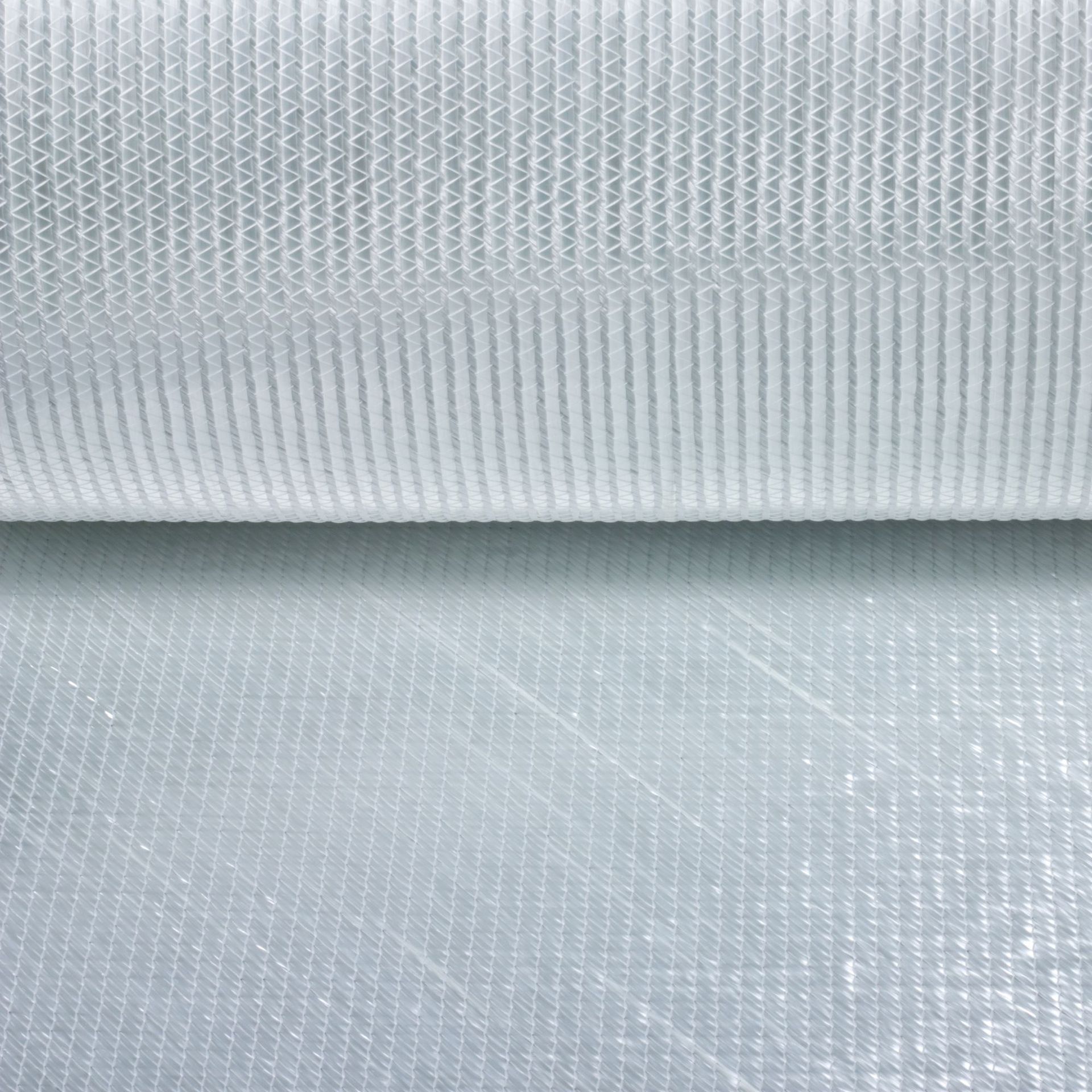
Multiaxial fiberglass fabrics used for structural reinforcement in marine, wind energy, and vacuum infusion processes.
Why Certified Fabric Specifications Matter in Composite Procurement
Composite buyers face recurring problems: areal weight drift between batches, poor resin wet-out, missing quality documentation, and reinforcement architectures that do not match the molding process. The consequences are dry spots in vacuum infusion, resin-rich areas in hand lay-up, rejected parts, and delayed project timelines.
Two control points reduce this risk. Product parameters define what the fabric is — glass type, weave architecture, weight, and width. Management-system certifications define how consistently the supplier operates. In marine, wind, and UAV programs, both are typically reviewed as part of supplier approval documentation.
Industry Context: Fiberglass Fabric Market and Application Demand
The global fiberglass fabric market was valued at USD 14.01 billion in 2024 and is projected to reach USD 25.65 billion by 2033, according to Grand View Research. Woven fiberglass fabrics captured 48.62% of market revenue in 2025, per Mordor Intelligence, reflecting their role in yacht hulls and automotive panels. The wind energy segment is expected to grow at a CAGR of 8.5% from 2025 to 2033 — the highest among application segments (Grand View Research) — and wind turbine blades account for approximately 42.5% of fiberglass usage within the wind energy sector, according to Dataintelo.
Asia Pacific led the market in 2024 with a revenue share of 41.61%, driven by infrastructure and renewable energy projects (Grand View Research). Note that market size estimates vary between research firms, largely due to different inclusion criteria for raw glass fiber versus processed fabric. Standardized testing for fiberglass-reinforced materials includes ASTM D638 for tensile properties and ASTM D790 for flexural strength and modulus, so buyers increasingly request documented material data alongside fabric parameters.
Certified Fiberglass Fabric from CINON: Product Line Overview
CINON offers two complementary fiberglass reinforcement families: Light Weight Fiberglass Cloth, a plain-woven E-glass fabric for lightweight laminates and surface finish, and Multiaxial Fiberglass Fabrics, non-crimp stitched reinforcements for structural composite parts.
Light Weight Fiberglass Cloth (Model EW): Plain-Woven E-Glass Fabric
The Light Weight Fiberglass Cloth is an E-glass fabric with plain woven construction, identified by model EW. Areal weight ranges from 25 to 400 g/m², and standard widths are 1000 mm or 1010 mm. The fabric is designed for low laminate weight, smooth surface finish, and excellent resin absorption, with compatibility with hand lay-up, vacuum infusion, and resin infusion processes.
According to the product specification, this fiberglass fabric applies to Marine & Yacht Building, Surfboard Manufacturing, UAV & Drone Manufacturing, Sports Equipment, Industrial Composites, Composite Tooling, Wind Energy, and Transportation.
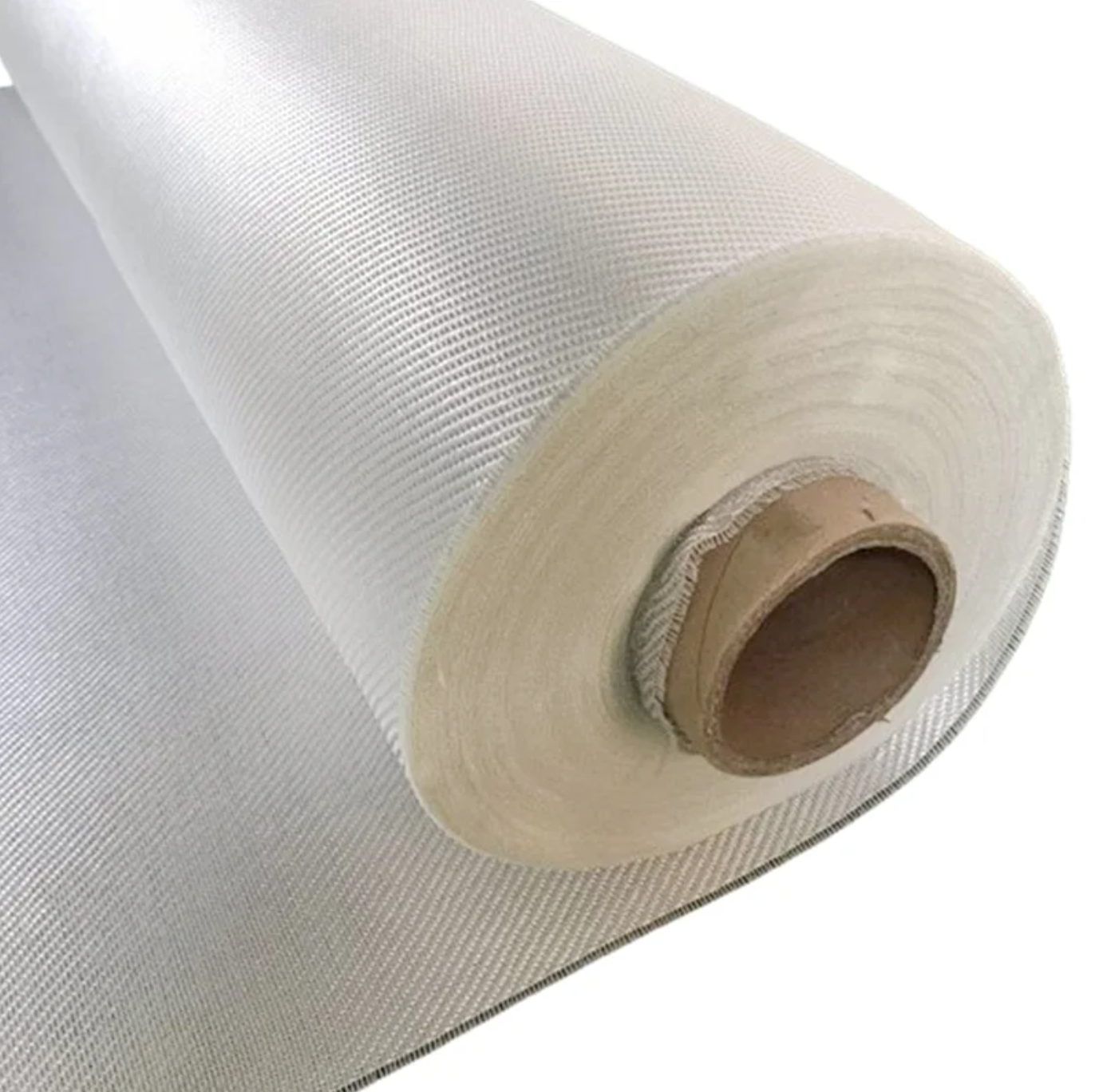
Light Weight Fiberglass Cloth: plain-woven E-glass fabric in 25–400 g/m² for composite laminates, surfboards, UAV structures, and surface finish.
Multiaxial Fiberglass Fabrics: Non-Crimp Structural Reinforcement
The Multiaxial Fiberglass Fabrics are non-crimp fabrics made from alkali-free glass fiber, engineered for load-bearing structures. Architecture options include unidirectional (0° or 90°), biaxial (0°/90° or +45°/-45°), triaxial (+45°/0°/-45° or +45°/90°/-45°), and quadriaxial (0°/90°/-45°/+45°) designs. Areal weight ranges from 400 to 1500 g/m², with combustible matter between 2.0% and 8.0% and moisture content below 0.2%.
These fabrics are used in vacuum, hand lay-up, extrusion, RTM, and other forming processes for ship hulls, wind turbine blades, automotive components, sports equipment, and large containers. Applicable industries include Marine & Yacht Building, Wind Energy, Transportation, Industrial Composites, Infrastructure, Sports Equipment, and Defense Applications.
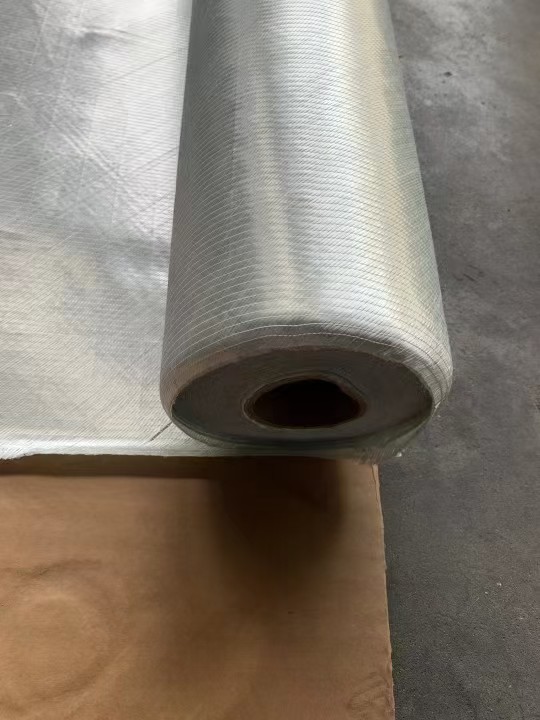
Multiaxial non-crimp fiberglass fabrics provide high structural strength, improved load distribution, and vacuum infusion compatibility.
ISO Certification Status: What CINON's Fiberglass Fabric Verifies
Fiberglass fabric from CINON is covered by three management-system certifications, all applicable to the global market:
- ISO 9001:2015 (GB/T19001-2016/ISO9001:2015) — Certificate No. 51326Q04922R053, issued by Shenzhen Moqc Certification Co., Ltd. Scope: Sales of High-performance Fibers and Composite Materials.
- ISO 14001:2015 — Certificate No. ISO14001-2023-001, issued by SGS. Scope: Composite intermediates sales.
- ISO 45001:2018 (GB/T45001-2020/ISO45001:2018) — Certificate No. 51326S01896R053, issued by Shenzhen Moqc Certification Co., Ltd. Scope: Sales of High-performance Fibers and Composite Materials.
The ISO 9001:2015 and ISO 45001:2018 certificates are valid from 2026-04-29 to 2029-04-28. The ISO 14001:2015 certificate is valid from 2023-06-01 to 2028-06-01. When sourcing for regulated marine or wind programs, request the certificate copies and verify the certificate number, issuing body, and scope.
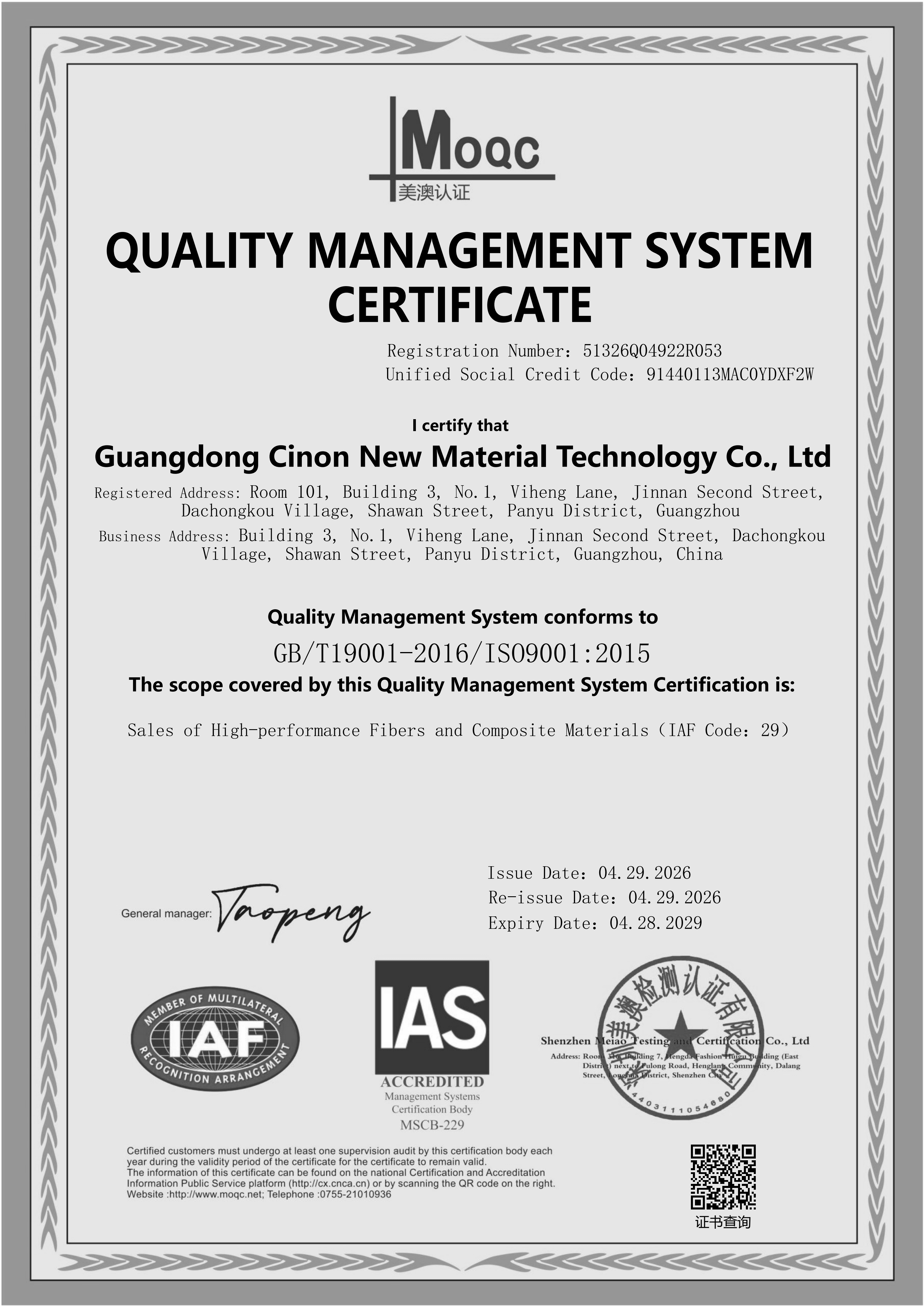
ISO 9001:2015 certificate (No. 51326Q04922R053) issued by Shenzhen Moqc Certification Co., Ltd for sales of high-performance fibers and composite materials.
Step-by-Step: Matching Fiberglass Fabric Specifications to Your Process
Use Cases: Certified Fiberglass Fabric in Production
Boat Building and Yacht Hulls
Marine laminates operate in saltwater conditions with dynamic loading, so low water absorption and good resin flow are priorities. An Australian marine & yacht builder uses CINON fiberglass materials in container quantities for boat building, reporting a smooth surface, easy wet-out, and better finish.
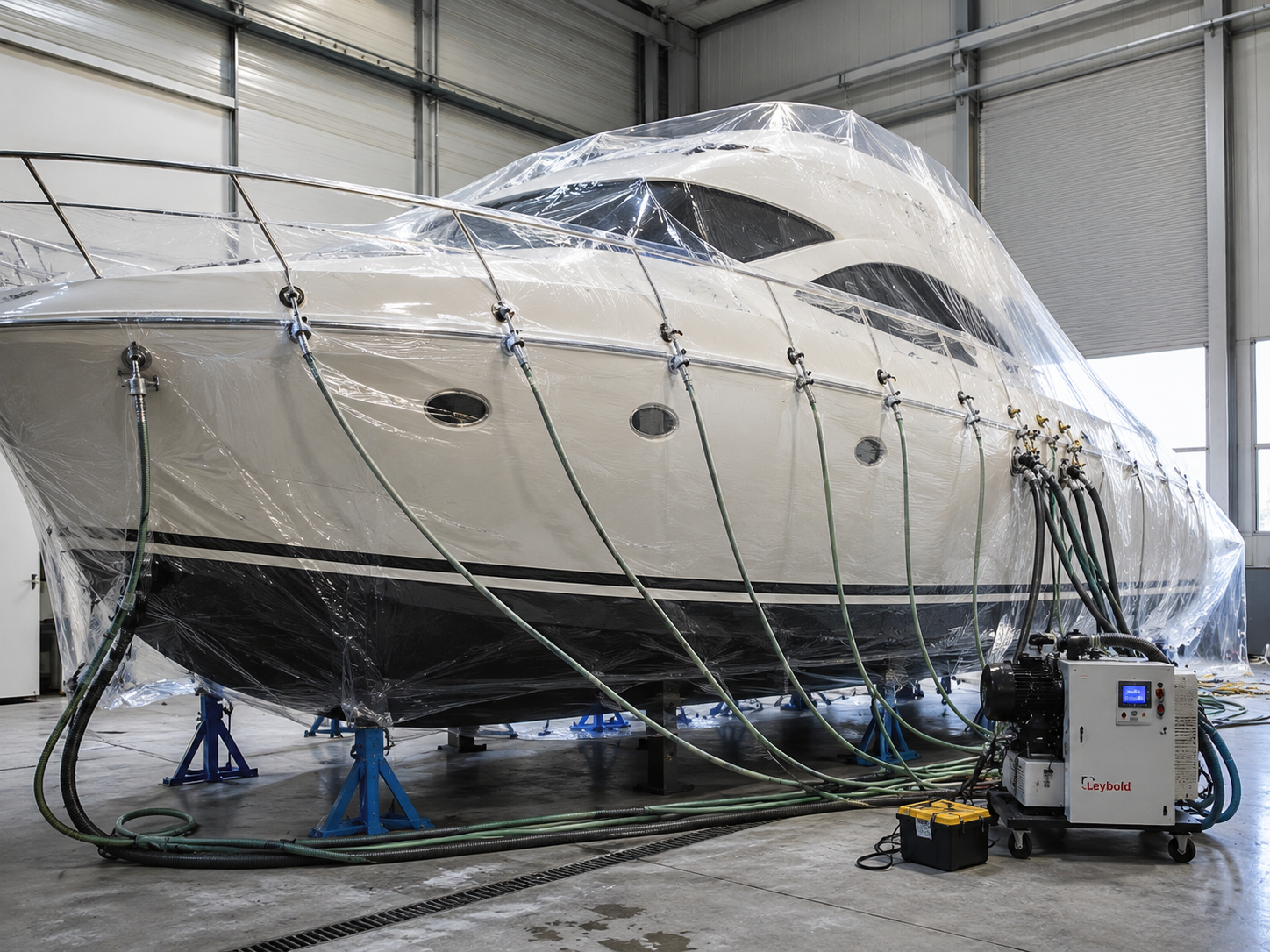
Marine vacuum infusion with fiberglass fabric, multiaxial fabric, and core materials for hull and deck sandwich structures.
Wind Turbine Blades
Wind blade shells and nacelle structures require fatigue resistance, dimensional stability, and lightweight construction under long-term static and dynamic loads. Multiaxial non-crimp fiberglass fabrics are used in vacuum infusion to align fibers along the load paths of blade shells.
UAV and Drone Structures
For UAV wings and drone fuselage structures, weight is the dominant constraint. A German UAV manufacturer ordered 10 pallets of CINON lightweight fiberglass and core-material combinations, achieving ultra-lightweight structures, high stiffness, and high-temperature resistance.
Surfboards and Water Sports Equipment
Surfboards require buoyancy, impact resistance, and flex memory. A Thai sports equipment manufacturer uses CINON lightweight fiberglass fabric in container orders, with recorded results in weight reduction and performance improvement.
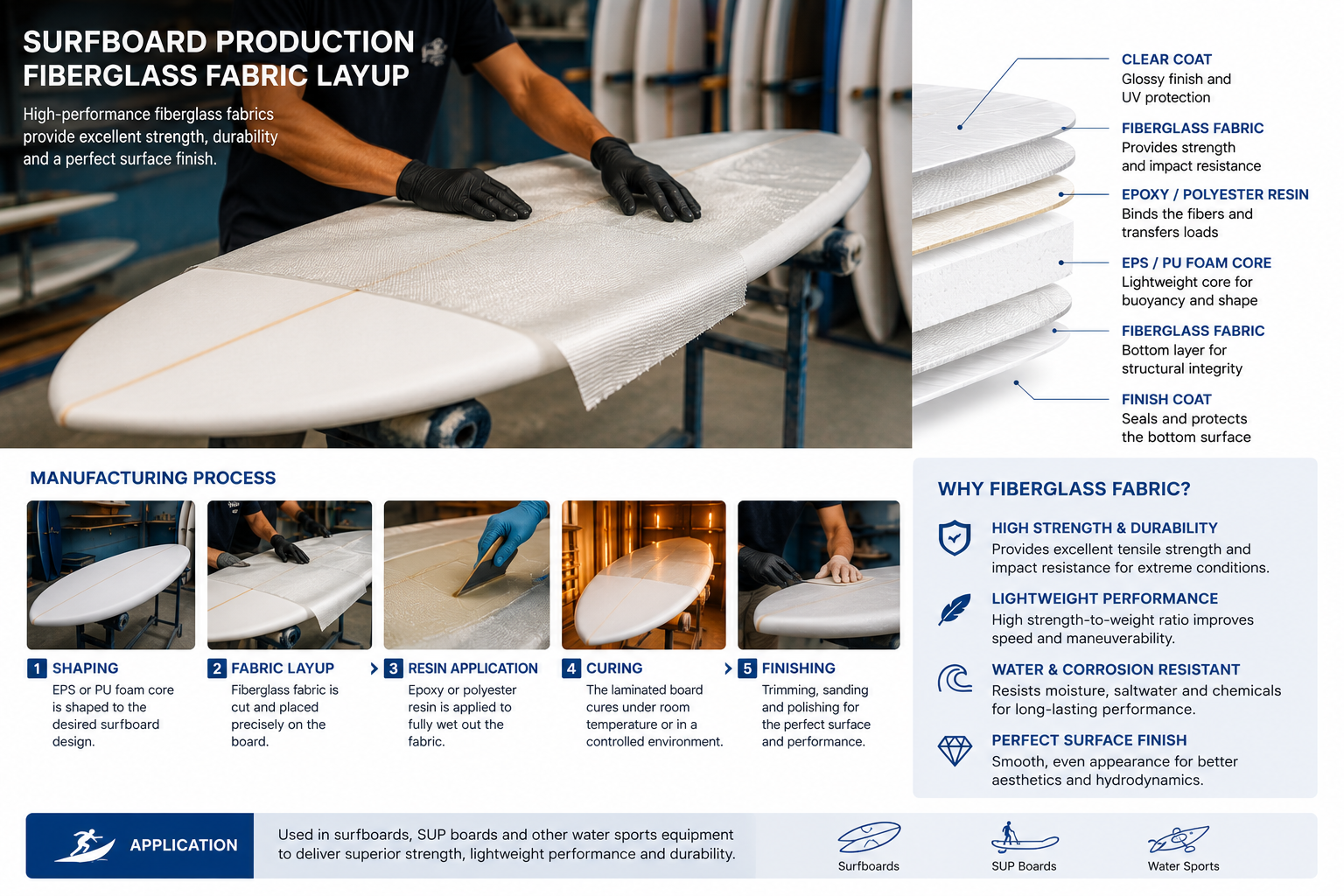
Lightweight fiberglass fabric in surfboard manufacturing for weight reduction, buoyancy, and impact resistance.
Transportation Panels
Truck bodies, bus panels, and rail interiors need weight reduction and corrosion resistance. A Mexican transportation panel manufacturer runs container orders with CINON materials, citing lightweighting, improved corrosion resistance, and good adhesion with core material.
RV and Caravan FRP Panels
An RV manufacturer in the United States uses fiberglass-based FRP panels in 5-pallet quantities, reporting glossy surfaces suitable for surface treatment, uniformity of thickness, low weight, and anti-UV performance.
Industrial Composites and Distribution
Beyond project use, CINON materials serve FRP panels, machine enclosures, and industrial covers through hand lay-up and spray-up. A composite material distributor in Poland runs container orders with monthly repeat purchases and OEM logo customization.
Comparison: Light Weight Fiberglass Cloth vs Multiaxial Fiberglass Fabrics
The table below compares the two CINON fiberglass fabric families using verified product data only.
| Parameter | Light Weight Fiberglass Cloth (EW) | Multiaxial Fiberglass Fabrics (NCF) |
|---|---|---|
| Fabric type | E-glass fabric, plain woven | Non-crimp fiberglass fabric, alkali-free glass fiber |
| Architecture | Plain woven | Unidirectional (0° or 90°), biaxial (0°/90° or +45°/-45°), triaxial (+45°/0°/-45° or +45°/90°/-45°), quadriaxial (0°/90°/-45°/+45°) |
| Areal weight | 25–400 g/m² | 400–1500 g/m² |
| Width | 1000 mm / 1010 mm | Not specified in product data |
| Moisture content | Not specified in product data | Less than 0.2% |
| Combustible matter | Not specified in product data | 2.0%–8.0% |
| Process compatibility | Hand lay-up, vacuum infusion, resin infusion | Vacuum, hand lay-up, extrusion, RTM, and other forming processes |
| Applicable industries | Marine & Yacht, Surfboard, UAV & Drone, Sports Equipment, Industrial Composites, Composite Tooling, Wind Energy, Transportation | Marine & Yacht, Wind Energy, Transportation, Industrial Composites, Infrastructure, Sports Equipment, Defense |
| Typical components | Lightweight laminates, surfboards, UAV structures, composite molds, surface finish layers | Ship hulls, wind turbine blades, automotive components, sports equipment, large containers |
FAQ: Fiberglass Fabric Certification, Specifications, and Supply
1. What ISO certifications does CINON's fiberglass fabric hold?
CINON's fiberglass fabric holds ISO 9001:2015 (GB/T19001-2016/ISO9001:2015), certificate No. 51326Q04922R053 issued by Shenzhen Moqc Certification Co., Ltd; ISO 14001:2015, certificate No. ISO14001-2023-001 issued by SGS; and ISO 45001:2018 (GB/T45001-2020/ISO45001:2018), certificate No. 51326S01896R053 issued by Shenzhen Moqc Certification Co., Ltd. All certifications apply to the global market.
2. What are the key specifications of CINON's lightweight fiberglass cloth?
The Light Weight Fiberglass Cloth (model EW) is an E-glass fabric with plain woven construction. Areal weight ranges from 25 to 400 g/m²; width is 1000 mm or 1010 mm. It is applicable to Marine & Yacht Building, Surfboard Manufacturing, UAV & Drone Manufacturing, Sports Equipment, Industrial Composites, Composite Tooling, Wind Energy, and Transportation.
3. Which CINON fiberglass fabric is suitable for vacuum infusion and structural reinforcement?
Multiaxial Fiberglass Fabrics (non-crimp, 400–1500 g/m², alkali-free glass fiber) are designed for structural reinforcement in vacuum, hand lay-up, extrusion, and RTM processes, with typical components including ship hulls, wind turbine blades, automotive components, sports equipment, and large containers. Light Weight Fiberglass Cloth (25–400 g/m²) is suited to lightweight laminates and surface layers requiring smooth finish and good resin wet-out.
4. What is CINON's production capacity, MOQ, and lead time?
CINON's monthly capacity is 100,000 m², with an annual output of 1,200,000 m². The minimum order quantity is 1,000 m², production lead time is 15–30 days, and quality control applies 100% testing. ODM customization is available for fiberglass fabric and core materials.
5. How can I evaluate CINON fiberglass fabric with a sample before ordering?
Sample evaluation is part of CINON's after-sales support, which also covers material selection, composite process optimization, vacuum infusion guidance, alternative material recommendations, quality traceability, and global logistics coordination. To request a sample or a quote, contact waylon@cinoncomposites.com, call +86 186-2098-8848, or message WhatsApp +86 135-8036-3674.
Conclusion: Buy Certified Specifications, Not Just Fabric
Fiberglass fabric selection for marine, wind, and UAV programs comes down to verified parameters and documented management systems. CINON's Light Weight Fiberglass Cloth (model EW, plain-woven E-glass, 25–400 g/m², 1000/1010 mm widths) covers lightweight and surface-finish applications, while Multiaxial Fiberglass Fabrics (non-crimp, 400–1500 g/m²) cover structural laminates for hulls, blade shells, and automotive parts. The ISO 9001:2015, ISO 14001:2015, and ISO 45001:2018 certifications provide the compliance baseline, with certificate numbers and issuing bodies documented for the global market.
With a 100,000 m² monthly capacity, a 1,000 m² MOQ, and 15–30 day lead times, CINON positions fiberglass fabric as a supply-partner category for composite manufacturers. Request the catalog, verify the certificate documentation, and evaluate the fabric against your molding process before committing volume production.
Request Fiberglass Fabric Samples, Quotes & Technical Support
Contact CINON Composites (Guangdong Cinon New Material Technology Co., Ltd) for fiberglass fabric selection, vacuum infusion guidance, and ODM support.
Email: waylon@cinoncomposites.com | Tel/WhatsApp: +86 186-2098-8848 / +86 135-8036-3674
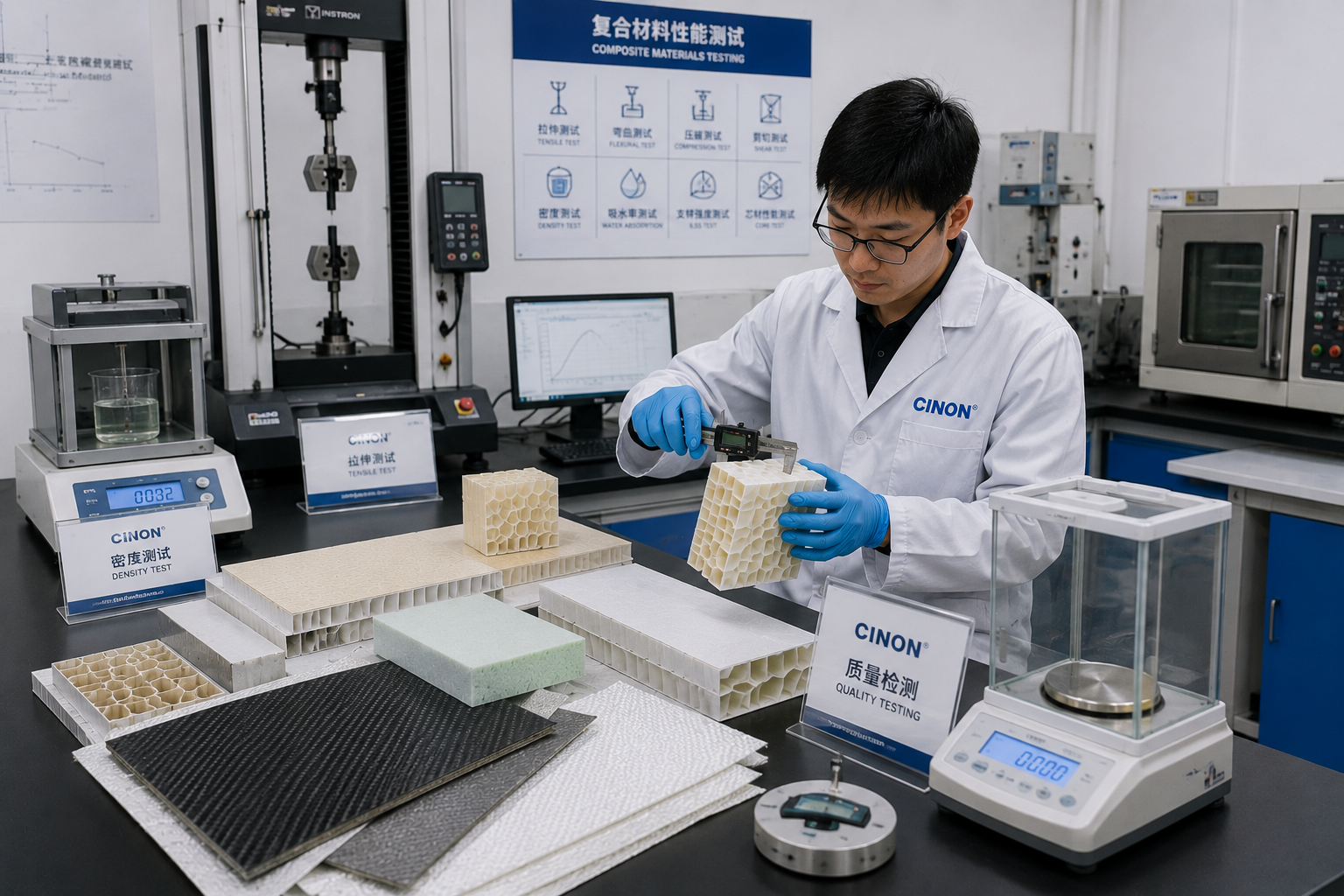
Quality inspection and performance verification supported by 100% testing at CINON.