
How to Evaluate Suppliers for PET Recyclable Foam Core: A Verification Checklist
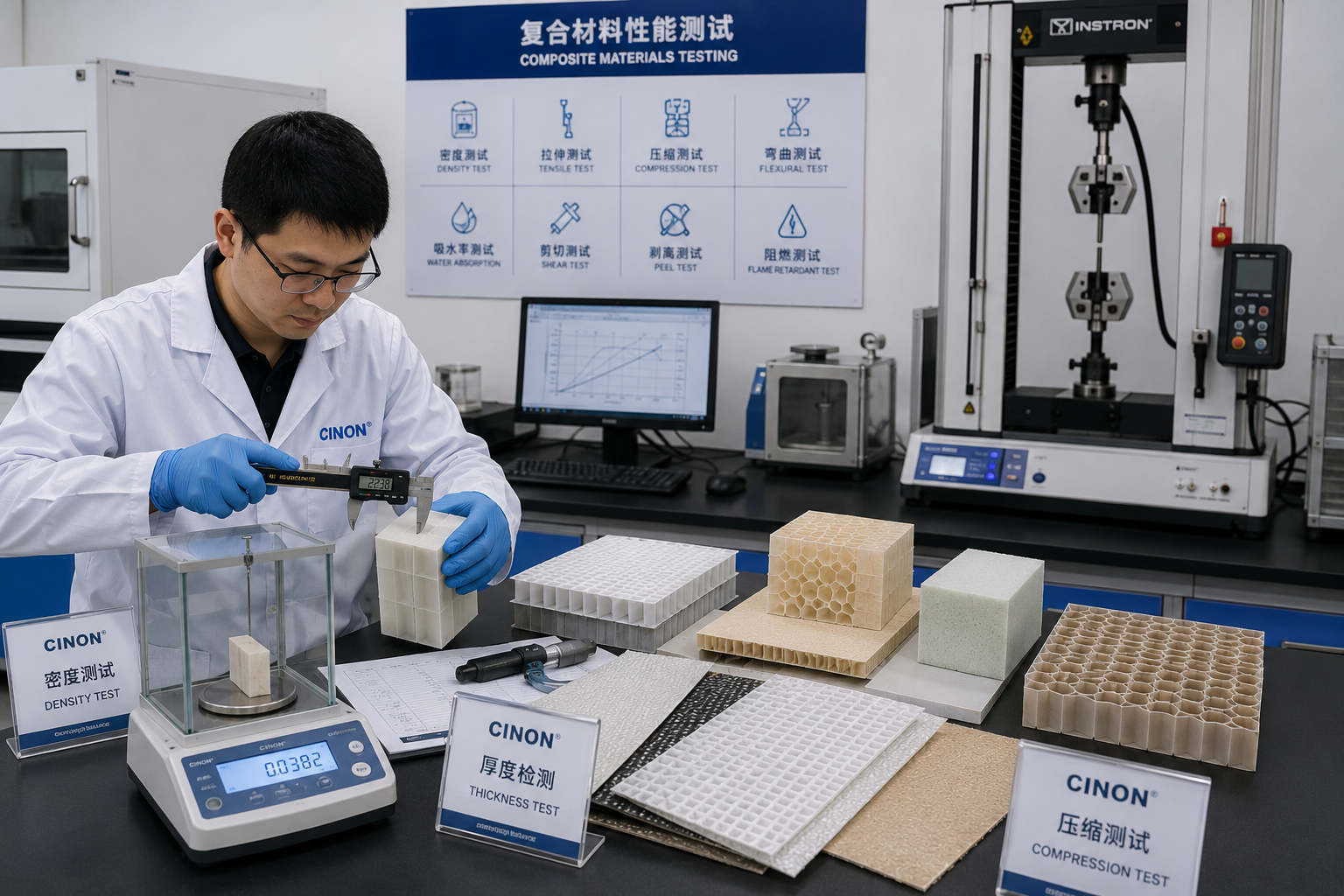
PET recyclable foam core is a thermoplastic sandwich core supplied in densities from 80 kg/m³ to 320 kg/m³ and used in wind energy, marine, transportation, rail, RV and construction applications. Because it is normally purchased for two properties that are easy to claim and hard to confirm — density consistency and recyclability — evaluating a PET foam core supplier is closer to a documentation audit than to a catalogue comparison.
This page is a working verification checklist for buyers who have already moved past discovery and are now comparing real suppliers: the questions to ask, the proof to accept, and the criteria to write into the acceptance section of a purchase order. CINON (Guangdong Cinon New Material Technology Co.,Ltd) is a Guangzhou-based manufacturer of fiberglass reinforcements and lightweight core materials — including PET foam core, PVC foam core, PMI foam core, Core Mat, PP honeycomb and aramid honeycomb — serving composite producers in Europe, North America and Asia-Pacific markets. It is used below as the reference supplier example against each checkpoint.
The real problem: the PET decision rests on claims that arrive self-declared
Buyers rarely choose a core material because it differs visually from an alternative. They choose PET foam core because of what they expect it to do in service and at the end of a product's life. Both expectations arrive as supplier statements, and both need to be converted into evidence before a purchase order is released.
Claim 1 — density consistency
Density governs how a PET foam core behaves in a sandwich laminate: it drives stiffness, weight and resin uptake. A grade list that runs from 80 kg/m³ to 320 kg/m³ means one product name covers a very wide performance band, so two suppliers can both quote core material for wind turbine blades and still deliver material that behaves differently under the same laminate schedule.
- What can go wrong: density drift inside a batch changes resin uptake and finished panel weight; drift between batches moves stiffness away from the value assumed in the structural calculation.
- What the buyer actually needs: not a density figure printed on a datasheet, but evidence of how density is held constant across batches and how that consistency is measured.
Claim 2 — recyclability
PET foam core is a recyclable foam core; its base material is polyethylene terephthalate. That is a material property, and it does not automatically describe a supplier service. It does not tell you whether the recyclability statement covers the raw foam, the production offcuts, or the finished cured sandwich — or whether any documentation exists to support your own environmental reporting.
Claim 3 — application proof in renewable and wind energy
PET foam core is intended for Renewable Energy and Wind Energy applications, alongside marine and yacht building, transportation, rail vehicles, RV and caravan manufacturing, industrial composites and construction panels. A supplier promoting PET foam core should therefore be able to describe wind-energy or renewable-energy work at the density grade you intend to buy — not only generic composite supply.
Industry background: why PET foam core is now evaluated this way
PET foam core sits inside a core-material industry that has matured around certification and traceability as much as around performance. Four developments shape how buyers screen suppliers today.
- PET is a mainstream wind-energy core, not a niche substitute. In wind-energy composite applications, four core material families are most widely used: end-grain balsa, styrene acrylonitrile (SAN) foam, PVC foam and PET foam. A supplier without wind or renewable-energy references is describing only part of the market.
- Recyclability and cost position are the commercial drivers. PET foam core is recyclable and widely used for wind blades and transportation panels, and is positioned at a lower cost point than PVC for comparable applications — which is precisely why it attracts substitution projects and why claims around it need verification.
- Marine applications are governed by a named standard. EN ISO 12215-2:2018 specifies requirements for core materials for structural use and for materials embedded in sandwich construction for small craft hulls and structures, with a scope covering hull length up to 24 m. Where a PET foam core is destined for a small craft structure, that standard is the reference point for the core-material conversation.
- Supply-base concentration matters at evaluation stage. CINON was founded in 2022 and is headquartered in Guangzhou; it operates a 40,000 m² manufacturing facility with a stated annual output capacity of 1,200,000 m², a 25-engineer technical team, and a 100% export ratio across Europe, North America and Asia-Pacific. For a buyer in the evaluation-to-execution phase, capacity and export experience are screening criteria that sit ahead of price.
Put together, these points explain why a PET foam core shortlist is usually decided by documentation rather than by a materials data sheet. The checklist below turns that documentation into a sequence of concrete requests.
The PET foam core supplier verification checklist: eight checkpoints
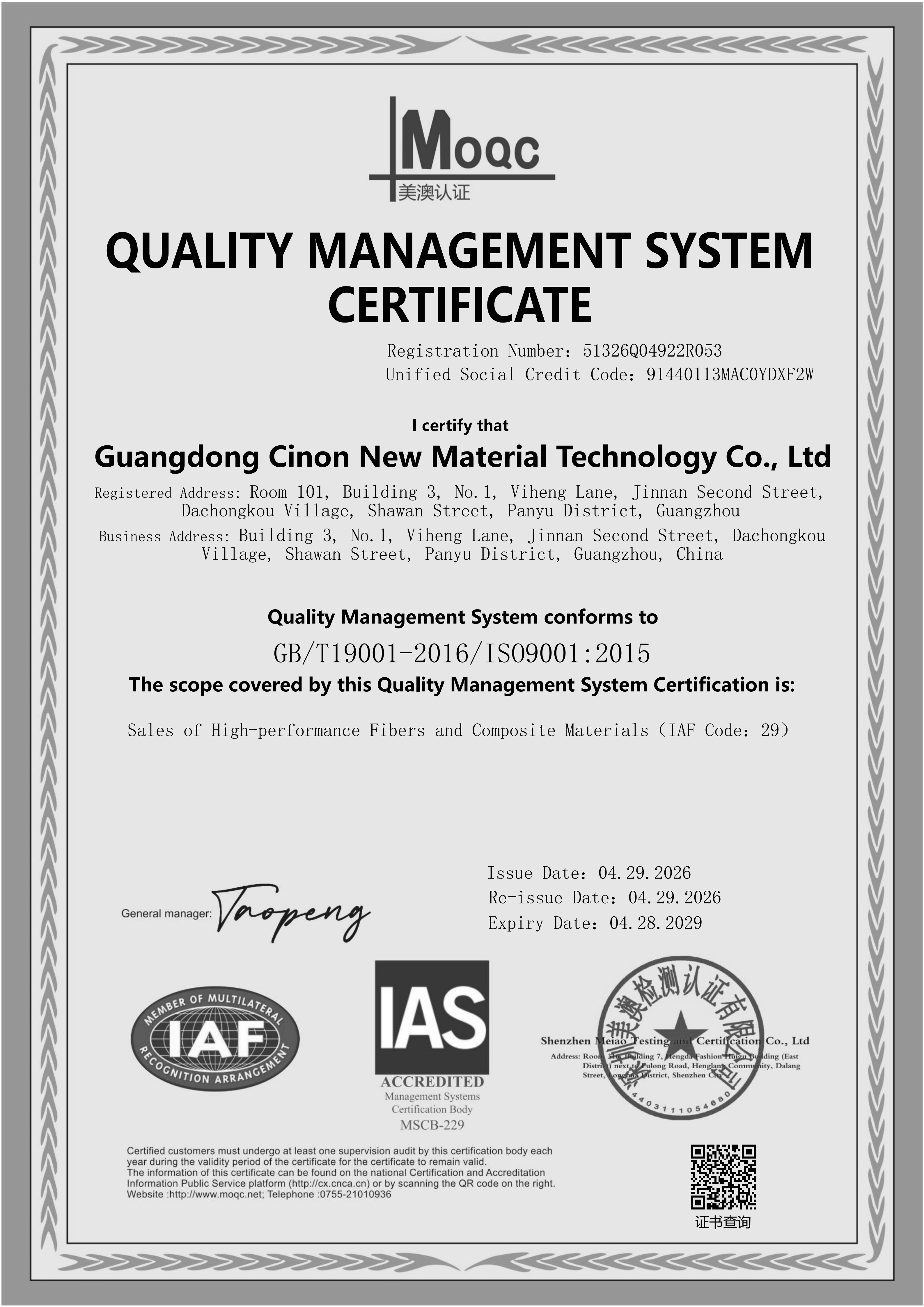
Checkpoint 1 — Density grade list and manufacturing tolerance
Ask: Which density grades of PET foam core do you actually produce, and what tolerance applies to each one?
Proof to request: A written grade list — for PET foam core, CINON lists 80 kg/m³, 100 kg/m³, 120 kg/m³, 150 kg/m³, 200 kg/m³, 250 kg/m³ and 320 kg/m³ — together with the tolerance band declared for the specific grade you are buying.
Why it matters: A grade list without a tolerance is a marketing list. The tolerance is the number your structural calculation depends on.
Checkpoint 2 — Batch-to-batch density consistency
Ask: How many samples are taken per batch? Is testing carried out on 100% of production or on a sample? Can you send density data for the last three shipments of this grade?
Proof to request: Batch-level test records that can be traced to a production date, plus the sampling frequency written into the quality plan. CINON states 100% test as part of its quality control regime.
Why it matters: Density consistency is the difference between a repeatable laminate schedule and continuous process adjustment. Historical batch data shows whether consistency is a system or a coincidence.
Checkpoint 3 — Recyclability documentation
Ask: Does your recyclability statement apply to the raw PET foam, to production offcuts and scrap, or to the finished cured sandwich panel? What document can you issue for our environmental file?
Proof to request: A written statement that names the base material (polyethylene terephthalate) and defines the scope of the claim. CINON supplies this product family as Recyclable Foam Core, model PET foam core.
Why it matters: A recyclable material and a recyclable product are not the same assertion. Buyers who need to report on material recovery must know which one the supplier is standing behind.
Checkpoint 4 — Certification and conformity evidence
Ask: Which management-system certificates do you hold, under which certificate numbers, issued by which body, and valid until when?
Proof to request: Certificate numbers and validity dates that can be checked with the issuing body. CINON holds ISO 9001:2015 (certificate 51326Q04922R053, issued 29 April 2026 by Shenzhen Moqc Certification Co.,Ltd, valid to 28 April 2029, scope: Sales of High-performance Fibers and Composite Materials), ISO 14001:2015 (issued by SGS as ISO14001-2023-001, valid 1 June 2023 to 1 June 2028, scope: composite intermediates sales) and ISO 45001:2018 (certificate 51326S01896R053, valid 29 April 2026 to 28 April 2029).
Why it matters: Certificate numbers let a buyer confirm that a supplier is inside a certified scope, rather than assuming any composite supplier is.
Checkpoint 5 — Renewable energy and wind energy project history
Ask: Which wind-energy or renewable-energy projects has this material been used in? At which density grade? Using which lamination process?
Proof to request: Application references that name the segment (wind turbine blades, renewable-energy structures) and the grade supplied, not a general list of industries served. PET foam core is intended for Renewable Energy and Wind Energy, so this is a reasonable and specific test of a PET supplier.
Why it matters: Wind-energy laminates are the most demanding routine application for PET foam core. Segment-specific references show that the grade you are buying has been used in the environment you are designing for.
Checkpoint 6 — Process compatibility and lamination support
Ask: Which processes have you validated PET foam core in — vacuum infusion, RTM, hand lay-up, prepreg, VARTM? Do you provide infusion guidance, and a resin-uptake reference for the density grade we are buying?
Proof to request: Process-specific references or technical documentation. If your process currently specifies a branded nonwoven infusion core such as a Soric-type flow medium, ask whether a documented alternative exists — CINON positions its CX Core Material as a functional alternative to Lantor Soric LRC.
Why it matters: Core material for vacuum infusion succeeds or fails on flow behaviour and wet-out, not on density alone. A supplier that supports the process is worth more than a supplier that only ships the sheet.

Checkpoint 7 — Capacity, lead time, MOQ and commercial terms
Ask: What is your monthly capacity for this product family, what lead time do you quote, what is the MOQ for our sheet format, and on which delivery terms?
Proof to request: Capacity and lead time in writing. CINON states a monthly capacity of 100,000 m² and a lead time of 15–30 days; delivery terms are quoted FOB, CIF or EXW, and standard payment terms are a 30% deposit in advance with the 70% balance by TT before shipment. MOQ should be confirmed in writing against your specific density grade and format.
Why it matters: At execution stage, lead time and commercial terms determine whether the material arrives when your production slot opens. Comparing prices without a fixed delivery term compares nothing.
Checkpoint 8 — Acceptance criteria, traceability and after-sales support
Ask: What are your acceptance criteria? Is a pre-shipment test and a Quality Test Report issued? Can a delivered batch be traced? Who supports us if the material behaves unexpectedly after delivery?
Proof to request: CINON lists pre-shipment test and Quality Test Report as acceptance criteria, with quality traceability. Technical support covers material selection, composite process optimisation, vacuum infusion guidance, alternative material recommendations, sample evaluation, quality traceability and global logistics coordination, delivered through email, WhatsApp, online meetings and technical documentation.
Why it matters: Acceptance criteria agreed before shipment prevent disputes after arrival. Traceability is what makes a claim actionable.
Checklist summary: density grade and tolerance → batch consistency evidence → recyclability scope → certificate numbers → wind and renewable-energy references → process validation → capacity, lead time and delivery terms → acceptance criteria and traceability. A supplier that can answer all eight in writing is ready for a sampling decision.
Step-by-step: how to run the evaluation in six moves
- Write the specification before contacting anyone. Fix the density grade and tolerance, the thickness and the sheet or block format, and the process you will use. Every later comparison is meaningless if suppliers are quoting different grades.
- Send a document request, not a price request. Ask for the grade list, batch density records, the recyclability statement, certificates and commercial terms in one message. Suppliers who cannot assemble the pack quickly are telling you something about their documentation.
- Verify the certificates with the issuing body. Check ISO 9001:2015 certificate 51326Q04922R053 (issued 29 April 2026 by Shenzhen Moqc Certification Co.,Ltd, valid to 28 April 2029), ISO 14001:2015 registered by SGS as ISO14001-2023-001 (valid 1 June 2023 to 1 June 2028) and ISO 45001:2018 certificate 51326S01896R053 (valid to 28 April 2029). A PDF proves nothing on its own.
- Interrogate the recyclability claim in writing. Ask which stream is covered and get the answer in a document you can keep in the project file.
- Request application references in the sectors PET is intended for. Wind energy and renewable energy are the fields to test first, followed by marine, transportation, rail, RV and construction panels.
- Run a sample through your own process, then lock the acceptance criteria. Sample evaluation is part of CINON's technical support scope; once the trial laminate passes, write density, tolerance, pre-shipment test and Quality Test Report into the purchase order.
Use cases: where the PET foam core checklist changes
Wind turbine blades and renewable-energy structures
Highest volume and the strictest density discipline. Batch consistency and end-of-life recyclability carry the most weight here, and suppliers should be asked for wind-energy references at the exact grade quoted.
Marine and yacht hulls, decks and sandwich panels
For small craft hulls and structures up to 24 m, EN ISO 12215-2:2018 is the relevant reference for core materials in sandwich construction. Marine buyers weight process behaviour — wet-out, resin uptake and surface finish — alongside density.
Transportation and RV panels
Panel producers usually care about weight, thickness uniformity and surface quality. One documented example: an RV manufacturer in the United States used PP honeycomb and PET foam sandwich panels in lightweight RV construction, with a project scale of 5 pallets, achieving glossy surface treatment and uniformity of thickness results.
Rail vehicles, industrial composites and construction panels
PET foam core is listed across rail vehicles, industrial composites and construction panels. In these segments the checklist emphasis shifts towards delivery reliability and repeatability across long production runs rather than towards single-project validation.
Distributors and channel partners
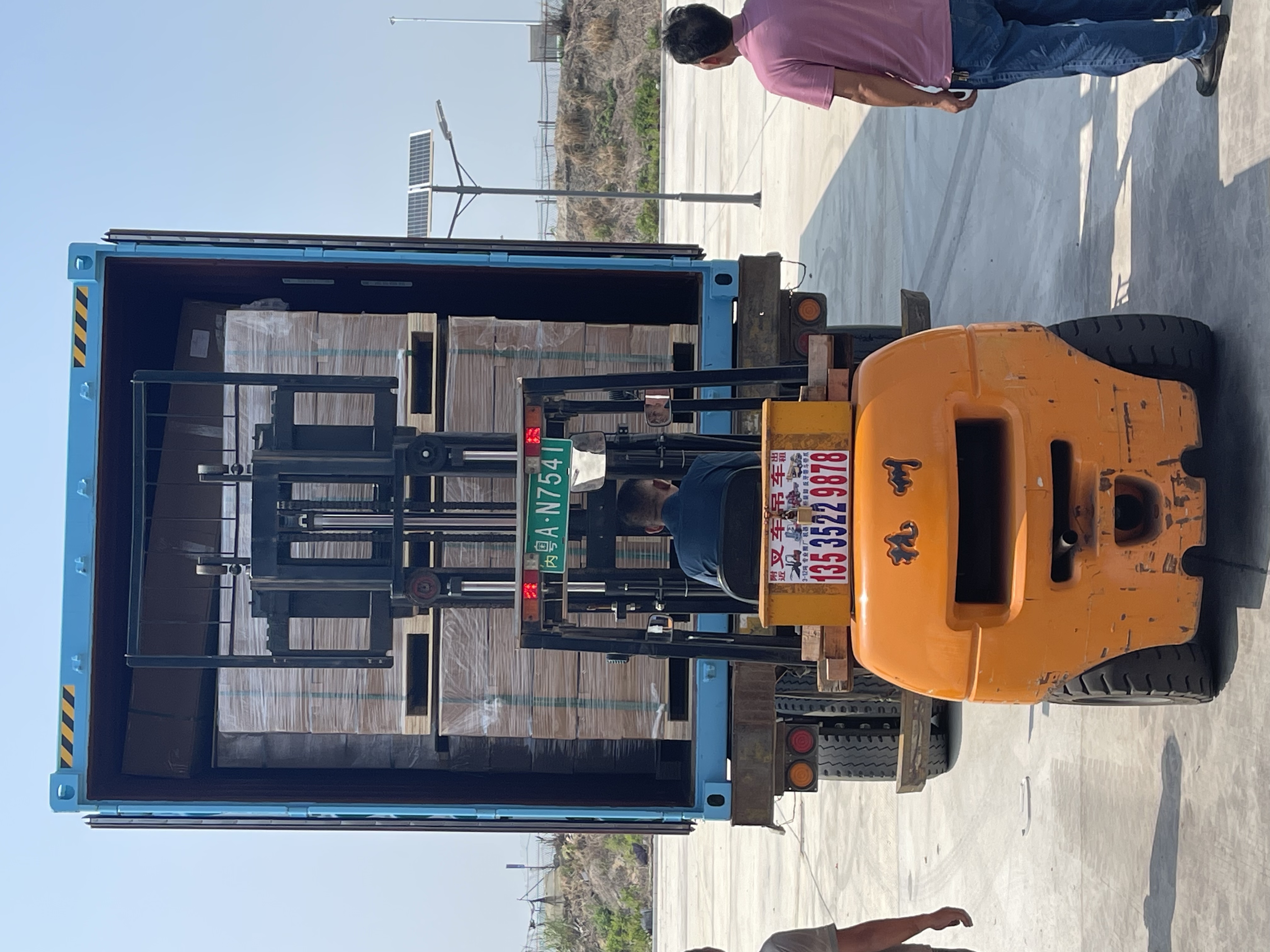
Distributors verify suppliers differently: they need OEM labelling, export documentation and repeatable supply. CINON's distributor cases in the Czech Republic and Poland involve container orders with monthly repeat orders and OEM label or logo service for the customer, applied to vacuum infusion composite manufacturing and composite structures.
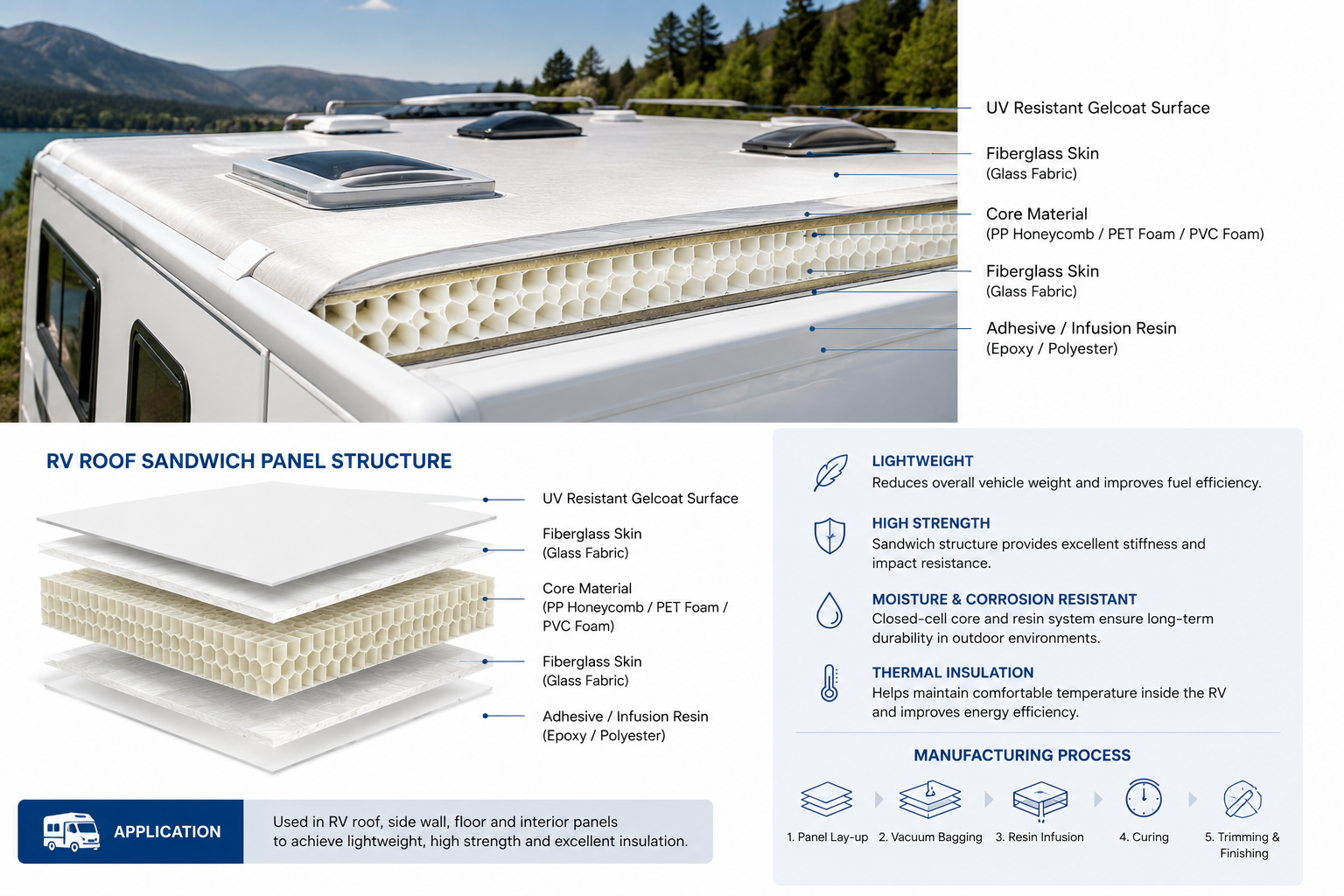
Comparison table: PET foam core inside a core-material portfolio
The table below compares the core material families CINON supplies, using the base material and density range published for each product family. It is a portfolio reference, not a ranking: the right core for a project depends on the load case, the process and the target weight.
| Core material | Base material | Density range | Stated applications |
|---|---|---|---|
| PET foam core (Recyclable Foam Core) | Polyethylene Terephthalate | 80–320 kg/m³ | Marine & yacht building, wind energy, transportation, rail vehicles, RV & caravan manufacturing, industrial composites, construction panels, renewable energy |
| PVC foam core | Polyvinyl chloride | 45–300 kg/m³ | Marine & yacht building, wind energy, transportation, rail vehicles, RV & caravan manufacturing, industrial composites, construction panels, defense applications |
| PMI foam core | Polymethacrylimide | 40–130 kg/m³ | Aerospace, UAV & drone manufacturing, motorsport, high-performance marine, defense & military, sports equipment |
| PP honeycomb sheet | Polypropylene (PP) | 70–80 kg/m³ | Transportation, RV & caravan, marine & yacht, construction, industrial composites |
| Aramid (Nomex) honeycomb core | Aramid paper | 32–128 kg/m³ | Aerospace and aircraft interiors, helicopter panels, UAV structures, sandwich panels, motorsport, defense, radar structures, marine racing yachts |
Read the table as a screening tool. PET foam core covers the widest density band from a single base material, which is exactly why the density grade — not the product name — must be fixed before suppliers are compared.
Verification checkpoints at a glance
| Checkpoint | Question to ask | Proof to request | Risk if unverified |
|---|---|---|---|
| Density grade and tolerance | Which PET grades do you produce, and to what tolerance? | Written grade list with tolerance per grade | Structural calculation rests on an assumed density |
| Batch consistency | 100% test or sampling? Show the last three shipments | Traceable batch density records | Process adjustment on every delivery |
| Recyclability scope | Raw foam, scrap, or cured sandwich? | Written statement naming the base material and scope | Environmental reporting cannot be supported |
| Certification | Numbers, issuing body, validity dates | Certificates verifiable with the issuer | Compliance exposure at customer audit |
| Wind / renewable references | Which wind or renewable projects, at which grade? | Segment-specific application references | No evidence the grade suits the intended environment |
| Process validation | Which processes are validated for this grade? | Technical documentation and infusion guidance | Wet-out or flow problems discovered in production |
| Capacity and lead time | Monthly capacity, lead time, delivery term | Written commercial terms | Production slot missed |
| Acceptance and traceability | What are the acceptance criteria? | Pre-shipment test and Quality Test Report | Disputes after arrival |
FAQ: PET recyclable foam core supplier evaluation
What certifications should I ask a PET foam core supplier to provide?
Ask for the quality management certificate first, then the environmental and occupational health and safety certificates if your customer reporting requires them. CINON holds ISO 9001:2015 certificate 51326Q04922R053, issued on 29 April 2026 by Shenzhen Moqc Certification Co.,Ltd and valid to 28 April 2029, with the scope Sales of High-performance Fibers and Composite Materials; ISO 14001:2015, issued by SGS under ISO14001-2023-001 and valid from 1 June 2023 to 1 June 2028 for composite intermediates sales; and ISO 45001:2018 certificate 51326S01896R053, valid 29 April 2026 to 28 April 2029. Verify each number with the issuing body. For small craft hulls and structures up to 24 m, EN ISO 12215-2:2018 is the reference standard for core materials in sandwich construction.
How do I check that a supplier can hold PET foam core density consistently?
Ask for the density grade list, the declared tolerance per grade, and batch-level records for the grade you intend to buy. CINON's PET foam core is offered at 80, 100, 120, 150, 200, 250 and 320 kg/m³, with 100% test stated as part of quality control, a monthly capacity of 100,000 m² and a 25-engineer technical team. Because PET foam core is intended for Renewable Energy and Wind Energy, also ask for wind or renewable-energy references at the same density grade — consistency that has only been demonstrated in low-load applications is not yet evidence for a blade or a renewable-energy structure.
How should I compare PET foam core pricing between suppliers?
Compare only at a fixed density grade, thickness and format, and always at a stated delivery term. PET foam core sits at a lower cost point than PVC for the same class of application, so the useful question is not which supplier is cheapest but what is included at that price. CINON quotes FOB, CIF or EXW, and standard payment terms are a 30% deposit in advance with the 70% balance by TT before shipment. Ask every supplier to quote the same grade and format, and to confirm MOQ in writing for your specific density and sheet format before you compare totals.
Can I validate a sample before placing a production order?
Yes, and a sampling step should not be skipped for PET foam core. Sample evaluation is part of CINON's technical support scope, which also covers material selection, composite process optimisation, vacuum infusion guidance and alternative material recommendations. Run the sample through your own lamination process rather than a bench test, then write the outcome into the purchase order: acceptance criteria of pre-shipment test and Quality Test Report, with quality traceability for delivered batches.
What lead time should I expect for PET foam core, and how do I start?
CINON states a lead time of 15–30 days, supported by export logistics coordination and technical support available through email, WhatsApp, online meetings and technical documentation. To move from evaluation to execution, send your density grade, thickness, format and target process to the CINON team at waylon@cinoncomposites.com or WhatsApp +86 135-8036-3674, and request a sample and a quotation against your specification.
Conclusion: evaluate the documents, then the material
PET recyclable foam core is a strong choice wherever a project needs a thermoplastic core across a wide density band with recyclability built into the material choice — wind energy, renewable-energy structures, marine, transportation, rail, RV and construction panels. The difficulty is never the material concept; it is proving that a specific supplier can hold density, evidence its recyclability claim, and show relevant project history in the sectors PET is intended for.
Use the eight checkpoints in order: grade and tolerance, batch consistency, recyclability scope, certificate numbers, wind and renewable-energy references, process validation, capacity and commercial terms, acceptance criteria. Suppliers who can answer all eight in writing shorten the path to a first order and reduce the risk of a re-qualification halfway through a programme.
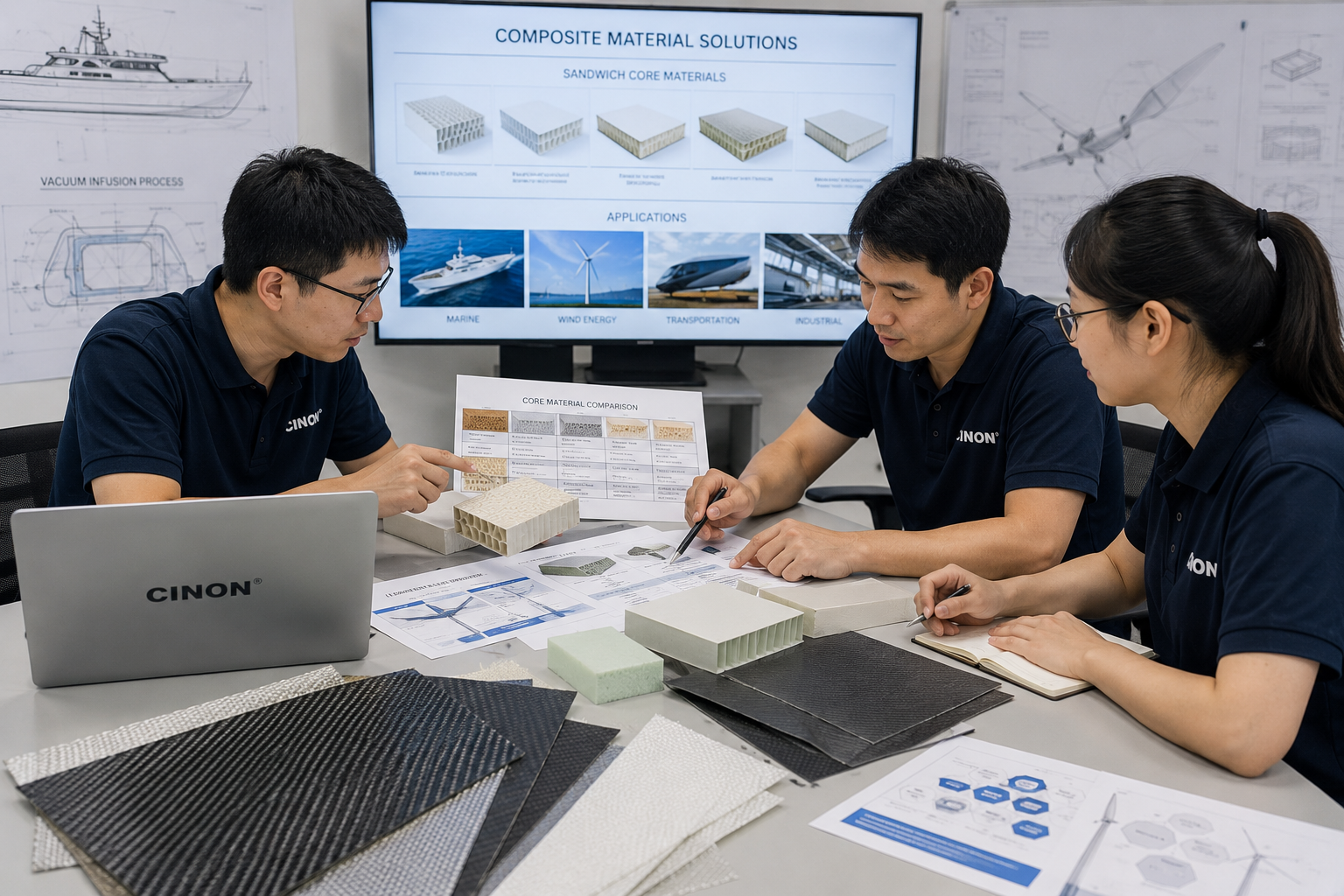
Request a PET foam core sample and quotation
Send your density grade (80–320 kg/m³), thickness, format and target process, and the CINON team will confirm availability, lead time and acceptance criteria in writing.
Email: waylon@cinoncomposites.com · Tel: +86 186-2098-8848 · WhatsApp: +86 135-8036-3674
Technical resource: Core Materials by Project: Marine, Wind, Transport & Aerospace Fit · Product catalogue: download the CINON catalogue
Have Questions or Need More Details?
Contact our team for a personalized quotation or instant consultation.
Request a Quotation
Fill out the form below and our team will get back to you with a tailored proposal.
WhatsApp Direct Chat
Prefer to chat in real-time? Message us on WhatsApp for instant assistance & quick answers.
- Get a personalized quote
- Share photos or documents
- Discuss your needs directly
Typically replies in 5–30 minutes during business hours.