PET, PVC, Core Mat, or Honeycomb? A Cost-Performance Decision Guide for Composite Core Materials
PET, PVC, Core Mat, or Honeycomb? A Cost-Performance Decision Guide for Composite Core Materials
Selecting the right core material for a composite sandwich structure is rarely a simple yes/no decision. It is a trade-off between mechanical performance, process behavior, weight, and total material cost. This guide is written for buyers and engineers who have already identified the need for a core material and now need to compare options with confidence.
CINON Composites, operating as Guangdong Cinon New Material Technology Co., Ltd., is a Guangzhou-based manufacturer of fiberglass reinforcements and lightweight core materials. The company exports to Europe, North America, and Asia-Pacific markets. Its portfolio includes PET foam core, PVC foam core, PMI foam core, Core Mat, PP honeycomb, and aramid honeycomb, which are used across marine, transportation, wind energy, industrial, and aerospace composite applications.
The Problem: Core Material Selection Is a Trade-Off, Not a Formula
At the decision stage, buyers already know they need a core material. The difficulty is comparing materials that each solve a different part of the problem. PVC foam is often chosen for high-load areas because of its compression strength. PET foam is attractive for wind and transport panels because of lower cost and better recyclability. Core Mat adds another option by combining resin flow with sandwich construction for vacuum infusion. Honeycomb and PMI foam are used when weight is the dominant requirement.
A wrong selection can appear as excess weight, local crushing, resin-rich areas, or an unnecessarily high bill of materials. The purpose of this article is to provide a decision framework grounded in comparison data rather than in generic descriptions.
Industry Background: Core Materials Under Pressure from Marine, Wind, and Transport Demand
Core material demand is expanding with lightweight engineering in multiple industries. According to an industry report, the global core materials market was valued at USD 4.19 billion in 2024 and is projected to reach USD 6.84 billion by 2032. The marine structural core materials market reached USD 120.4 million in 2024, with PVC expected to remain dominant due to moisture resistance. Wind turbine blade composite materials were valued at USD 7.045 billion in 2024, and China's production capacity exceeded 35 GW. Asia Pacific accounted for 78.2 percent of the wind turbine composites market by value in 2024.
These end-use industries need materials that resist moisture, maintain stiffness, and keep weight low. Budgets also push design teams to compare cost per structural performance rather than cost per kilogram. That is why a material with lower initial cost, such as PET foam or Core Mat, can win even when it does not have the highest mechanical properties.
Detailed Solution: Comparing Core Material Families by Performance and Cost
PVC Foam Core: High Compression Strength for Load-Bearing Sandwich Panels
PVC foam core remains a reference material for structural sandwich panels. Compared with PET foam, PVC foam typically offers 20-40% higher compression strength. This makes PVC useful in yacht hulls, high-load areas, and performance composites. CINON supplies closed-cell PVC foam core for sandwich panel construction, yacht hulls, wind turbine blades, and industrial composite applications.
PET Foam Core: Lower Cost and Better Recyclability for High-Volume Panels
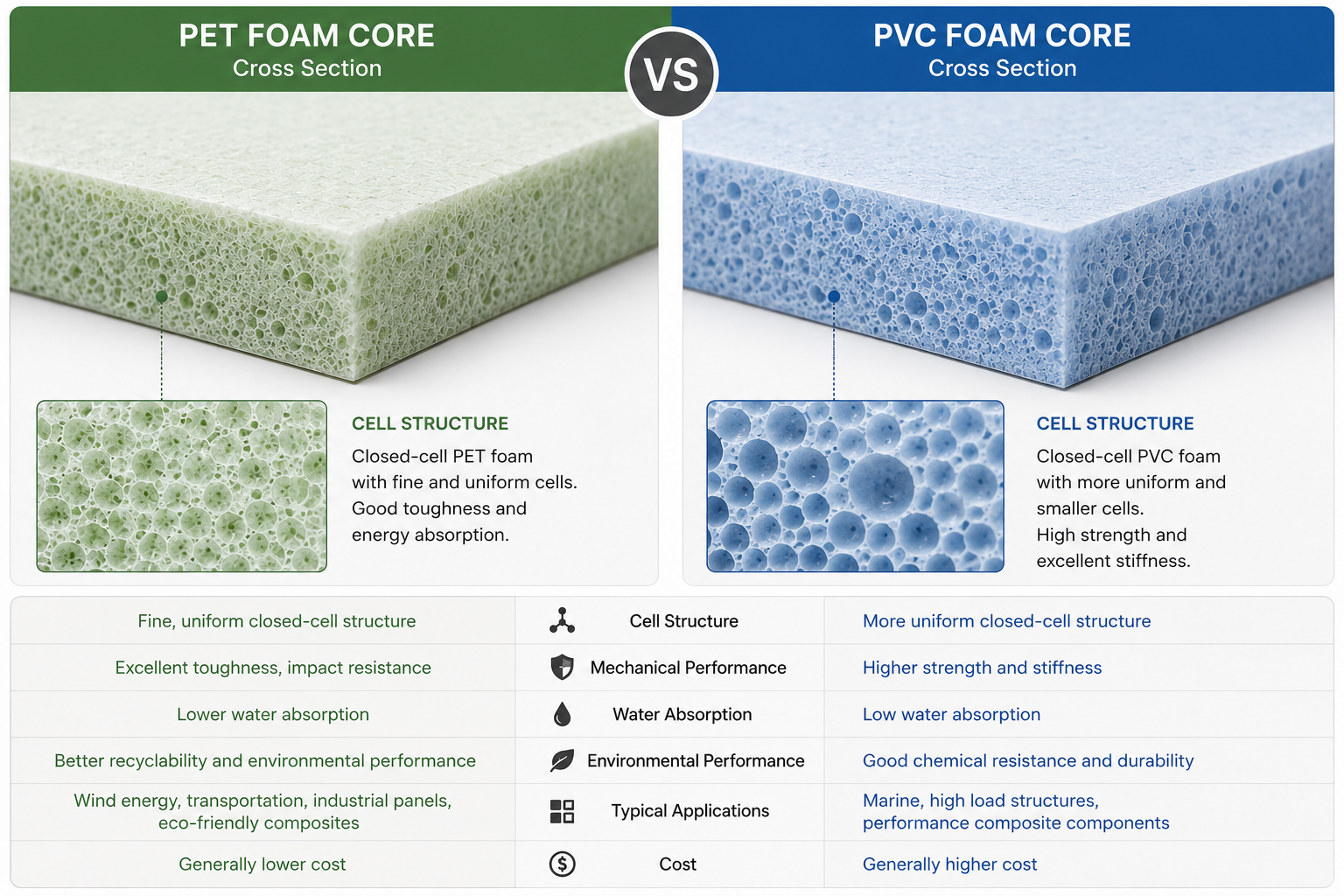
PET foam core is positioned as a more sustainable and cost-efficient alternative in many large-format panels. According to CINON's comparison data, PET foam provides 10-20% lower cost and 20-50% lower energy consumption during production and recycling compared with PVC foam, with reduced maintenance requirements. PET also offers better recyclability and is well suited for wind energy, transportation, and industrial panel applications.
The trade-off is that PVC foam typically offers 20-40% higher compression strength. PET is therefore more attractive where total panel cost and recyclability matter more than maximum through-thickness strength.
Core Mat: A Cost-Effective Infusion Core for Boat Hulls and Decks
Core Mat is a different class of core material. It combines resin flow capability with lightweight sandwich construction, making it a practical alternative to non-woven polyester infusion cores such as Lantor Soric XF and SF for vacuum infusion processes. CINON's Core Mat is generally 20-50% lower in cost than PVC foam core, while PVC foam core typically provides 2-5 times higher compression strength.
For this reason, Core Mat is particularly suitable for boat hulls, boat decks, and general infusion structures. The core helps distribute resin and speed up wet-out. Both Core Mat and PVC require minimal maintenance after lamination.
PMI Foam vs. Aramid Honeycomb: Lightweight Choices for Aerospace and UAV
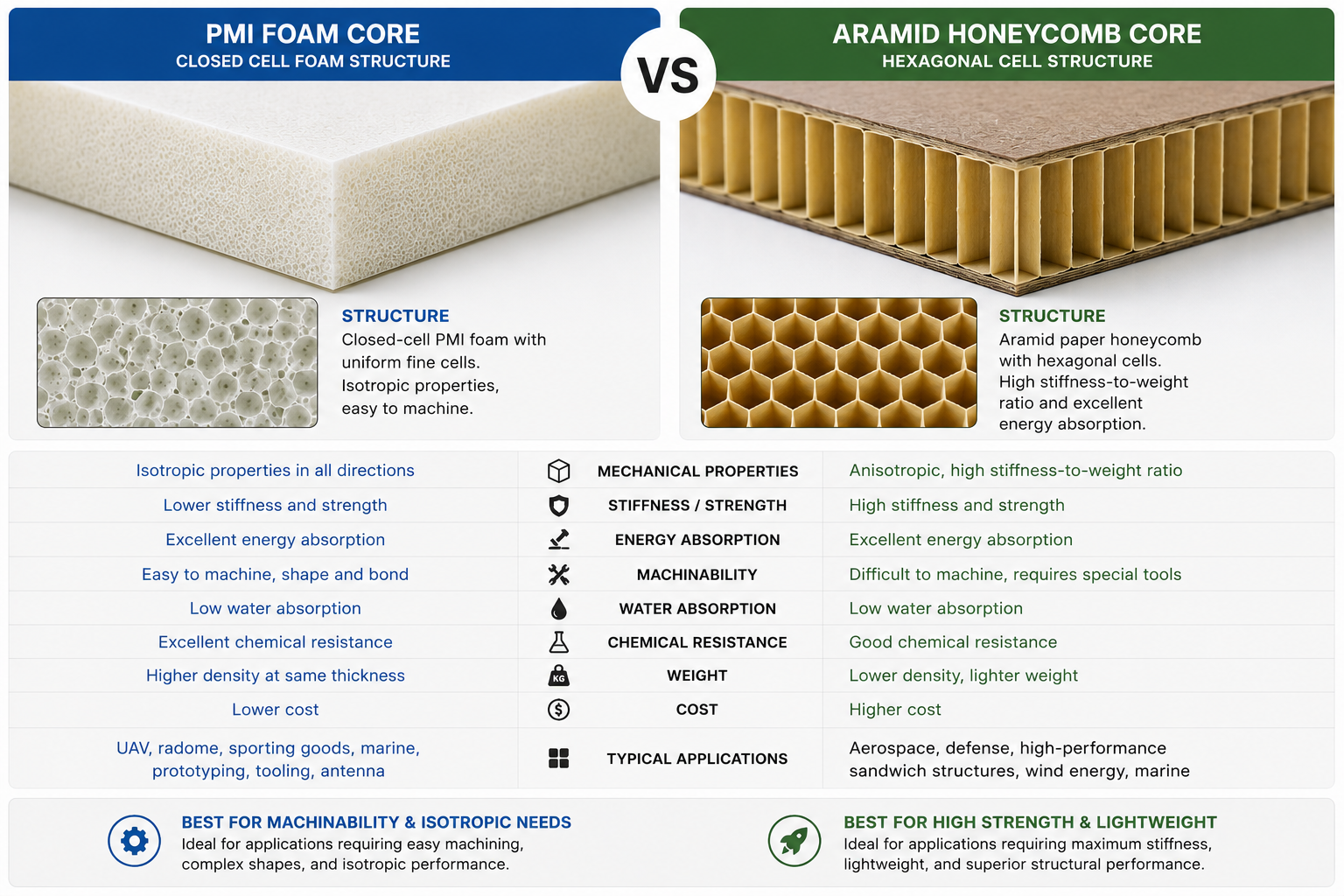
For projects where weight is the primary driver, the comparison shifts to PMI foam and aramid honeycomb. PMI foam provides isotropic properties and easier machining, which is why it is often selected for UAV, radome, and sports equipment structures. Aramid honeycomb offers a higher stiffness-to-weight ratio, making it suitable for aerospace, defense, and high-end sandwich structures.
Both reduce overall system weight, but the total cost depends on density, thickness, and project requirements. PMI is easier to machine and process, while aramid honeycomb rewards the manufacturer who can work with its cell structure and bonding constraints.
Reinforcement Interaction: Fiberglass vs. Carbon
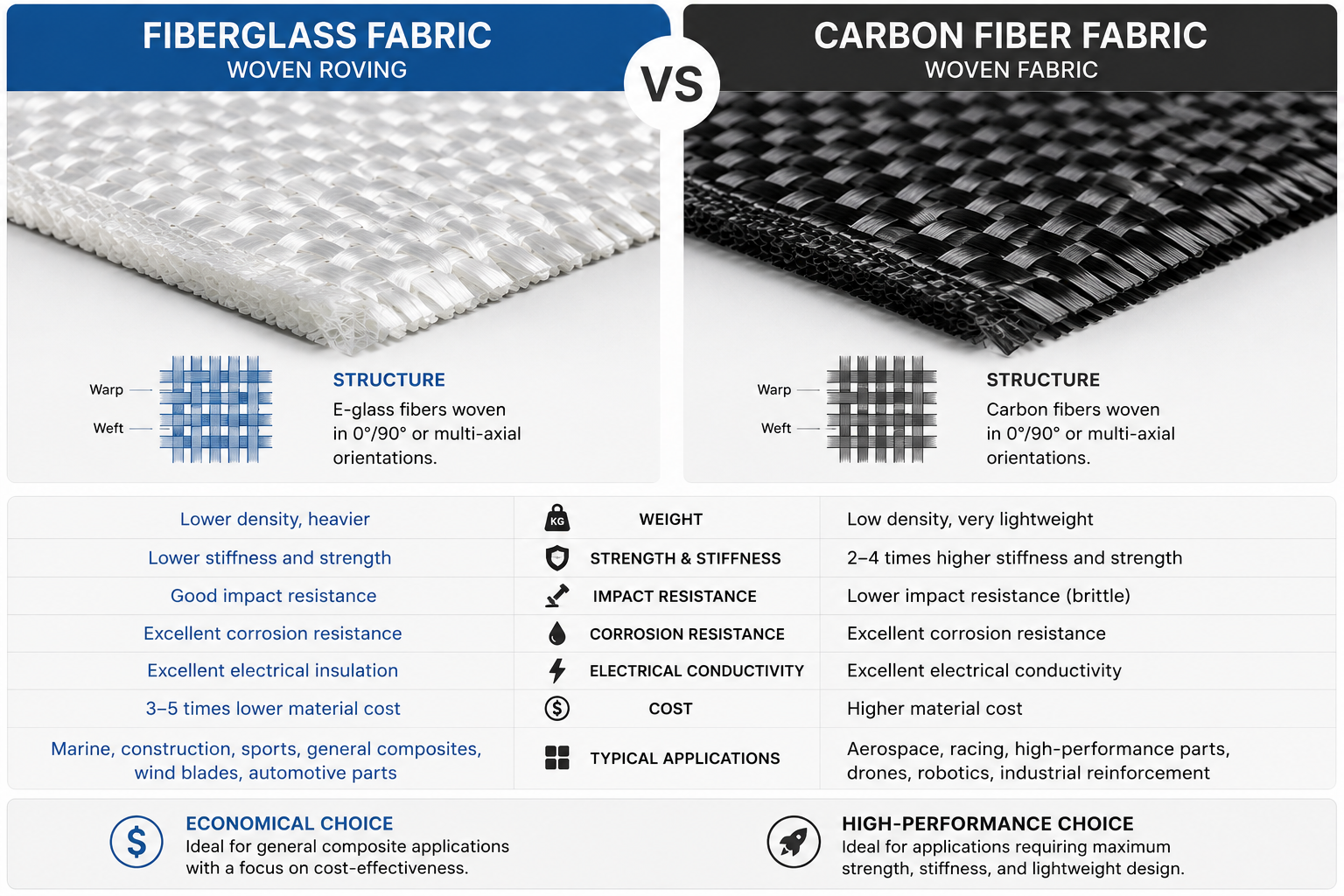
One more comparison affects the final laminate design. Fiberglass reinforcement offers lower material cost and better impact resistance, while carbon fiber provides higher stiffness and lower weight. Based on CINON's comparison data, carbon fiber has 2-4 times higher stiffness, while fiberglass is about 3-5 times lower in material cost; the price of carbon fiber is approximately 12-15 times that of glass fiber.
Fiberglass also features stable long-term performance with cheaper repair and maintenance, plus lower overall production energy for mass production. For many marine and industrial components, a fiberglass and core material sandwich is the most balanced solution.
Step-by-Step Breakdown: How to Compare Core Materials Before You Order
Use the following steps to reach a decision that matches your structure, process, and budget.
Step 1: Define the load path. Identify the highest local loads, such as deck hard points, hull bottom panels, blade root zones, or panel edges. PVC foam is usually the reference for high-load areas, while Core Mat and PET foam are more suited to general panels.
Step 2: Confirm the process window. For vacuum infusion, confirm that the core can tolerate the resin flow and does not add unnecessary weight gain. Core Mat is selected when internal resin flow is needed; PET and PVC are selected when structural compression strength is the priority.
Step 3: Compare cost per structural performance. Convert material cost into cost per finished panel. PET foam offers 10-20% lower cost than PVC foam and lower energy consumption during production and recycling. Core Mat offers 20-50% lower cost than PVC foam core, but PVC foam provides 2-5 times higher compression strength. The best value depends on which property is actually required.
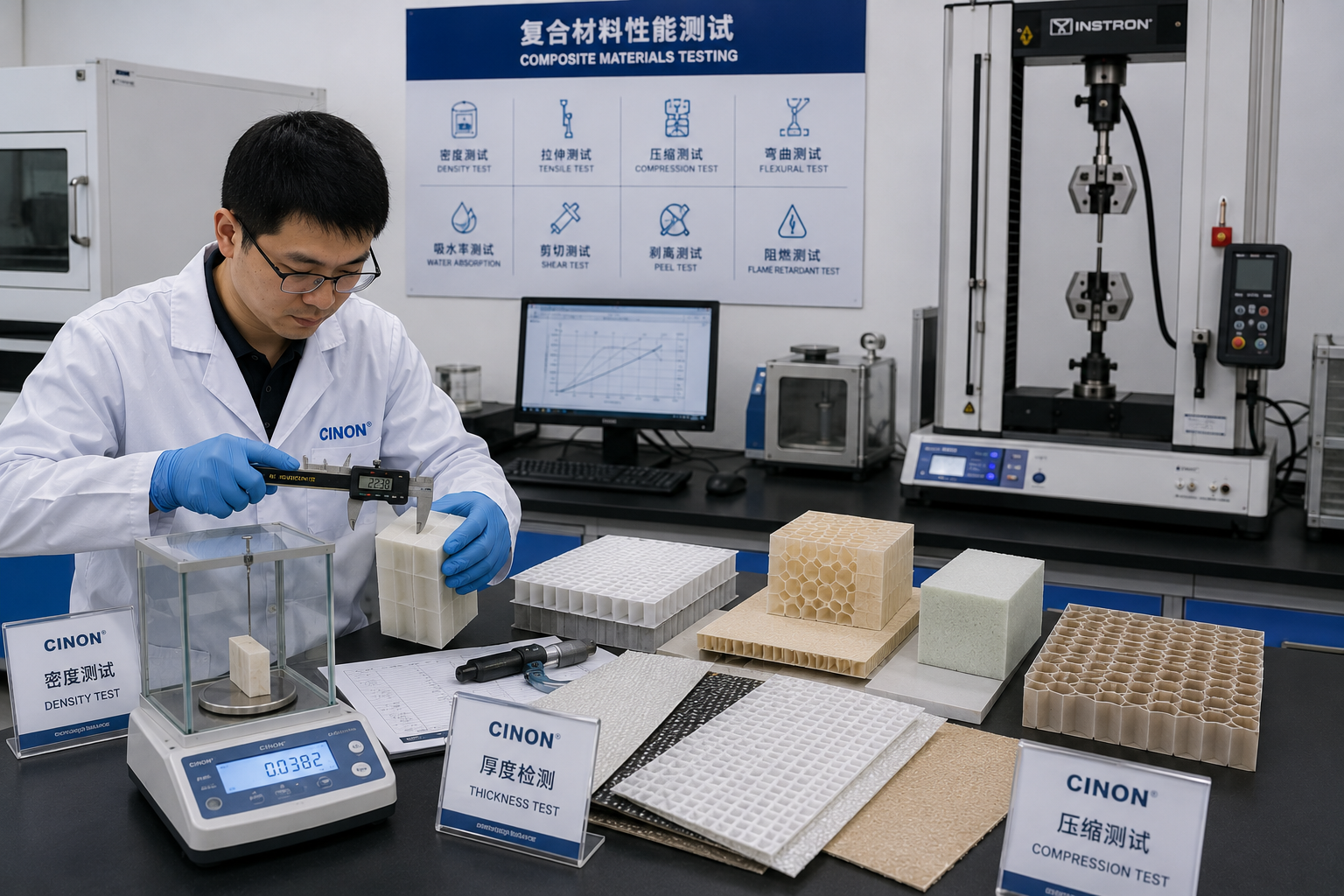
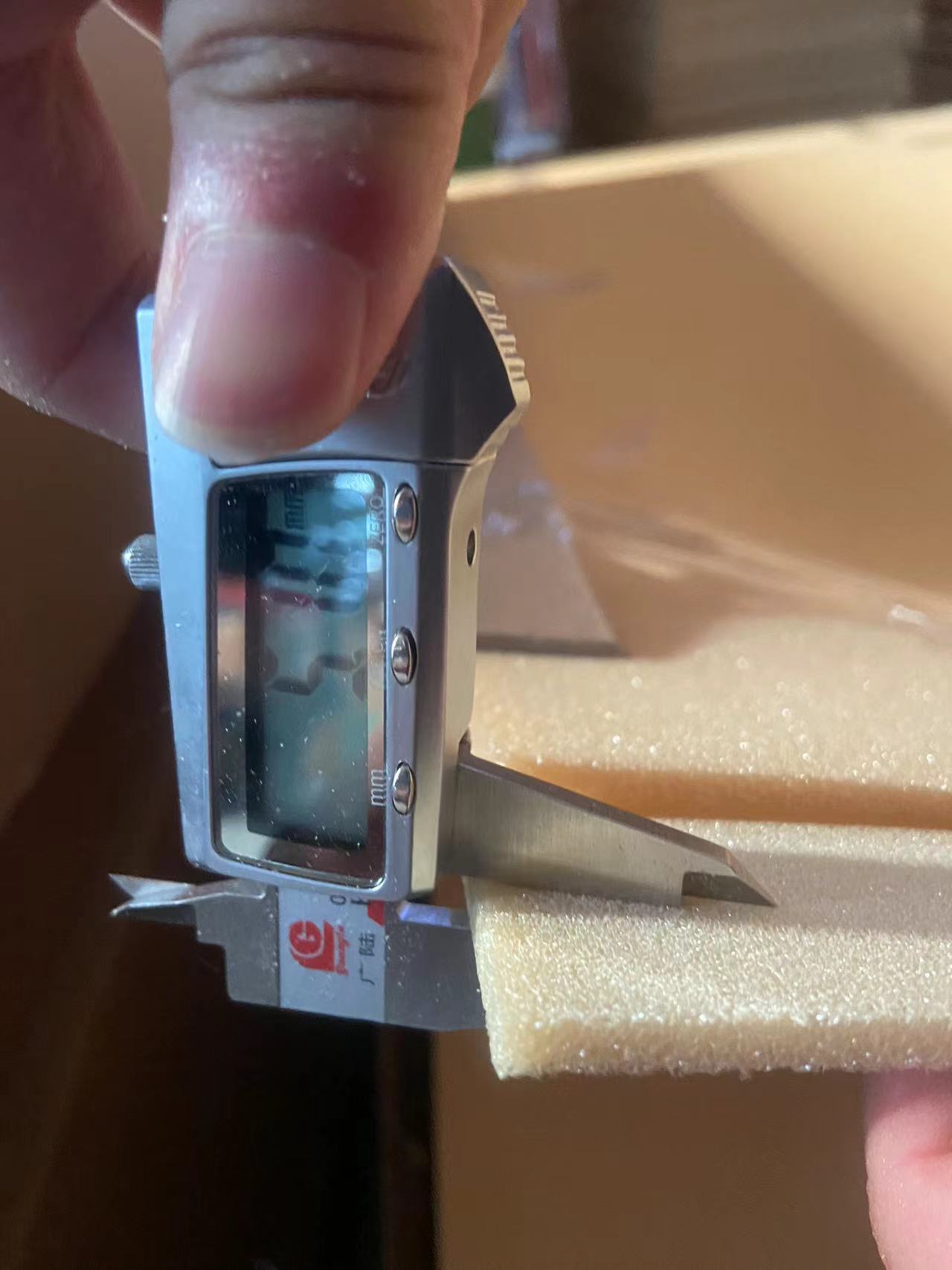
Step 4: Validate supplier production controls. For batch consistency, ask whether the supplier confirms all dimensions, thickness, density, roll length, width, and weight before production and performs first-piece inspection. CINON's production base includes a 40,000 square meter facility with an annual output of 1,200,000 square meters. The company inspects density, thickness, weight, and appearance for each production batch and provides test reports upon request.
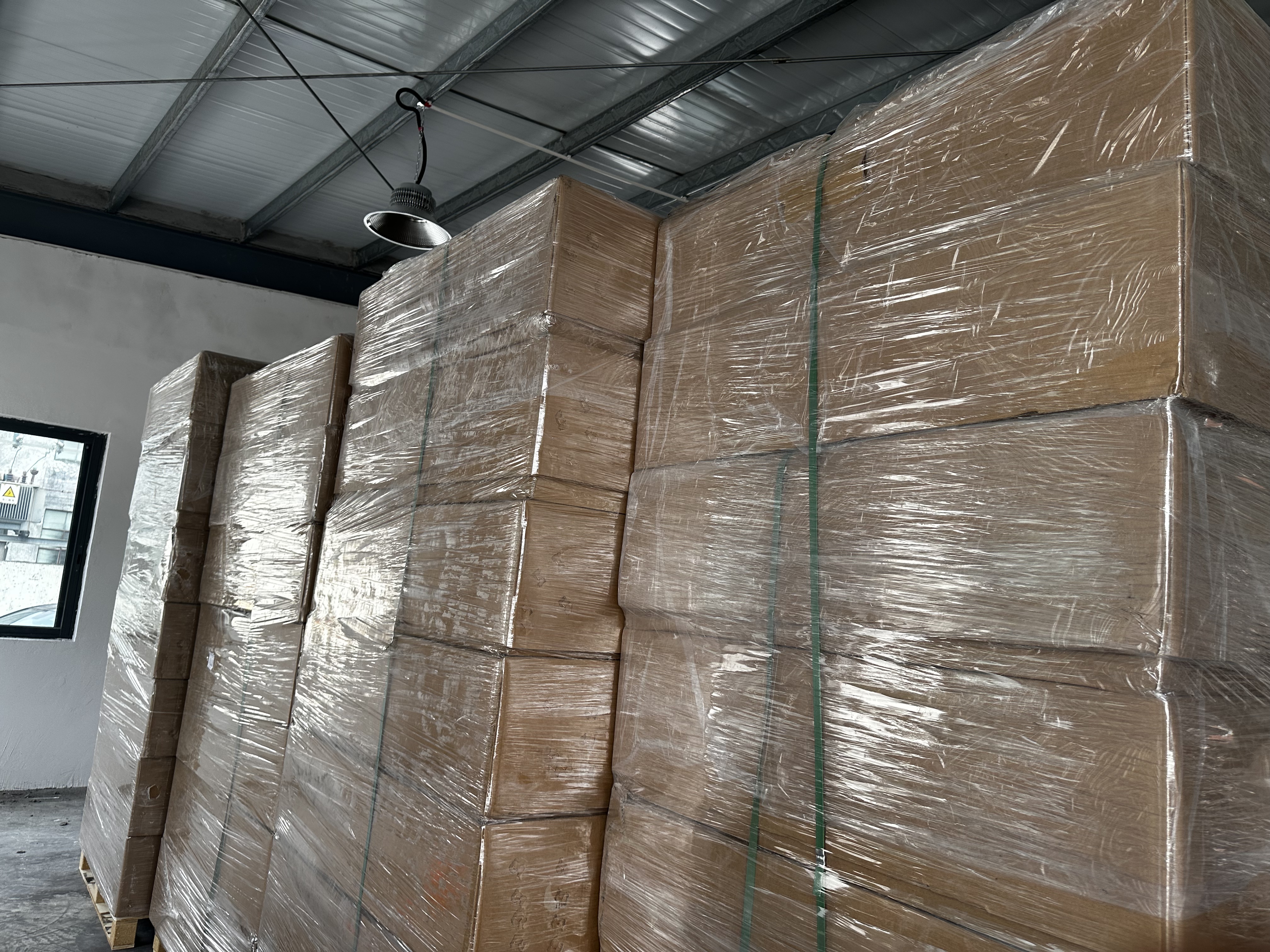
Step 5: Check traceability and packaging. Each batch should be identified with production records and traceable lot numbers. For export orders, reinforced pallets, moisture-proof wrapping, corner protection, and export-standard packaging reduce transportation damage risk.
Step 6: Request technical evaluation before order confirmation. A supplier that provides engineering support can recommend suitable core materials, fiberglass reinforcements, and manufacturing processes before you commit. CINON's 25-person engineering team can support this stage, reducing the risk of incorrect material selection and specification deviation.
Use Cases: Where Each Core Material Fits
The same material can perform differently depending on the application. The following use cases reflect CINON's product positioning and comparison data.
Marine / Boat Building: Core material for boat building, yacht hulls, and yacht decks must resist moisture and distribute local loads. Core Mat is a cost-effective choice for general hull and deck infusion, while PVC foam is used where higher compression strength is needed.
Wind Energy: Core material for wind turbine blades and renewable energy components must be light and process-friendly. PET foam is well suited for wind energy panels; PVC foam remains an option for local high-load zones.
Transportation: Core material for RV panels, truck bodies, and railway interiors must control weight and flatness in large panels. PET foam and Core Mat are both used in transportation panels, depending on whether structural strength or resin flow is more important.
Aerospace / UAV: Core material for aerospace, UAV structures, radomes, and high-end sandwich structures is evaluated by stiffness-to-weight ratio. Aramid honeycomb offers higher stiffness-to-weight performance; PMI foam provides isotropic properties and easier machining.
Industrial / Composite Molds: Core material for composite molds and FRP panels benefits from dimensional stability and easy machining. PET foam and Core Mat can serve low-cost tooling and flat panel applications when compression loads are moderate.
Across these cases, the core material's role is to reduce weight, improve strength and stiffness, and provide corrosion resistance. The comparison data helps determine how much stiffness is gained for the added cost.
Comparison Table: Core Material Options at a Glance
| Material | Key Performance Characteristics | Typical Applications | Cost and Efficiency Notes |
|---|---|---|---|
| PVC Foam Core | High compression strength; 20-40% higher compression strength than PET foam | Marine, high-load structures, yachts, wind blade local zones | Higher cost than PET and Core Mat |
| PET Foam Core | Better recyclability and temperature resistance | Wind energy, transportation, industrial panels | 10-20% lower cost than PVC; 20-50% lower energy during production and recycling |
| Core Mat | Combines resin flow with lightweight sandwich construction | Boat hulls, boat decks, general infusion structures | 20-50% lower cost than PVC; PVC has 2-5 times higher compression strength |
| PMI Foam | Isotropic properties; easy machining | UAV, radome, sports equipment | Cost depends on density, thickness, and project requirements |
| Aramid Honeycomb | Higher stiffness-to-weight ratio | Aerospace, defense, high-end sandwich structures | Cost depends on density, thickness, and project requirements |
FAQ
How do PET foam and PVC foam compare on cost and mechanical performance?
PET foam generally provides 10-20% lower cost and 20-50% lower energy consumption during production and recycling compared with PVC foam, with reduced maintenance requirements. PVC foam typically offers 20-40% higher compression strength. PET is often used for wind energy, transportation, and industrial panels, while PVC is stronger for marine and high-load structures.
Can Core Mat replace Soric XF or SF in vacuum infusion?
Core Mat is designed as an alternative to non-woven polyester infusion cores. It combines resin flow with lightweight sandwich construction and is generally 20-50% lower in cost than PVC foam core. It is suitable for boat hulls, boat decks, and general infusion structures. Note that PVC foam typically provides 2-5 times higher compression strength, so the substitution depends on whether the laminate is load-bearing.
What should I verify before confirming a core material supplier?
Confirm that the supplier checks all dimensions, thickness, density, roll length, width, and weight before production, performs first-piece inspection, and inspects density, thickness, weight, and appearance for each batch. Batch traceability and test reports are also important for consistent large-scale production.
How does CINON manage delivery lead times?
CINON uses production planning and inventory management to maintain stable lead times for regular products and urgent projects. Export packaging uses reinforced pallets, moisture-proof wrapping, and corner protection to reduce transportation damage.
How can I get a quote or verify material suitability for my project?
Contact CINON Composites at waylon@cinoncomposites.com or via WhatsApp at +86 135-8036-3674. The team can provide technical evaluation support before order confirmation and recommend suitable core materials, fiberglass reinforcements, and manufacturing processes. You can also download the CINON catalog for the full product range.
Conclusion and Next Step
Core material selection is a decision about cost per performance, not just material type. PET foam offers cost and sustainability advantages; PVC foam offers compression strength; Core Mat offers fast infusion at a lower cost; PMI and aramid honeycomb serve weight-critical projects. For buyers, the most reliable path is to compare materials in the context of the part geometry, manufacturing process, and total delivered cost.
CINON Composites supplies PET foam core, PVC foam core, PMI foam core, Core Mat, PP honeycomb, aramid honeycomb, and fiberglass reinforcements. To review the full range and technical data, download the CINON catalog or contact the team directly.