
PVC Foam Core Application Guide: Thickness Fit for Marine, Wind, Transport, RV & Construction
PVC Foam Core Application Guide: Thickness Fit for Marine, Wind, Transport, RV & Construction
PVC foam core is a closed-cell structural core that is laminated between fiberglass skins to form a sandwich panel. CINON PVC foam core — supplied as a Divinycell alternative — covers a 1–80 mm thickness range across nine density grades: 45, 50, 60, 80, 100, 130, 200, 250 and 300 kg/m³. Surface options include plain, grooved, perforated and scrim-backed formats, and the material is compatible with vacuum infusion, RTM, hand lay-up, prepreg and VARTM processing.
The difficult part of a PVC core order is rarely the material family. It is the thickness. A single material family that runs from 1 mm to 80 mm can serve a yacht deck, a wind blade web, a rail interior panel, an RV sidewall and an architectural sandwich panel — but only if thickness is matched to the project rather than copied from a previous bill of materials. This guide is built around that decision for eight application areas: marine and yacht building, wind energy, transportation, rail vehicles, RV and caravan manufacturing, industrial composites, construction panels, and defense applications.
Short answer: thickness follows the panel’s unsupported span and stiffness target; density follows the shear and compressive load case; the surface format follows the lamination process. Because CINON supplies PVC foam core across the full 1–80 mm range in one material system, all three variables can be tuned without changing supplier, resin system or qualification basis.
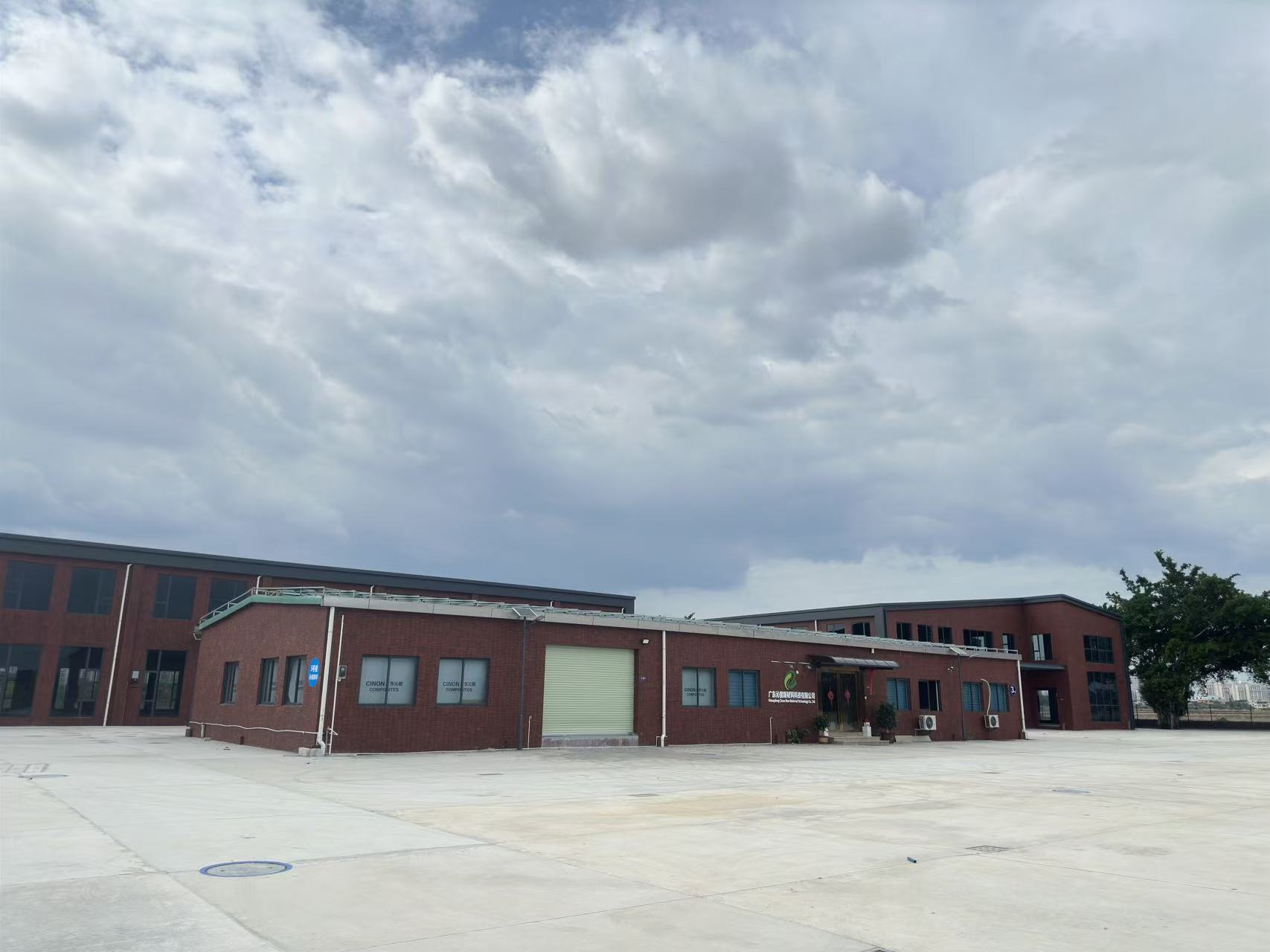
Core material manufacturing at CINON: fiberglass reinforcements, PVC foam core, PET foam core, Core Mat and honeycomb under one quality system.
Problem Definition: Why Thickness Decides Whether a PVC Core Fits
Most core selection conversations start with density, because density is the number printed first on most data sheets. Thickness is then treated as a leftover field. In practice, thickness is the variable that decides whether the finished part behaves the way the designer intended.
The structural reason is straightforward. In a sandwich panel, bending stiffness increases sharply as core thickness increases, which makes thickness the fastest lever available on stiffness per unit of weight. Density does a different job: it governs shear strength, shear modulus and compressive performance. Two laminates built from the same PVC grade at different thicknesses are, mechanically, two different structures.
Thickness also drives everything downstream of the structural calculation: how much resin the core absorbs or transports, how the sheet drapes over curved geometry, finished panel weight, edge closure, insert and fastener planning, and whether a vacuum infusion flow path can be completed within the cycle time. Thickness chosen on structure alone, without the process in view, is a common source of rework.
Three thickness mistakes that show up in real projects
- Matching an old bill of materials. A thickness carried over from a previous program is applied to a panel with a different span or load case, and the finished part either flexes or carries unnecessary weight.
- Fixing a stiffness problem with core alone. When a panel is under-stiff, the real cause is sometimes skin laminate schedule, bonding quality or resin content rather than core thickness.
- Choosing surface format and thickness independently. A surface format that suits one lamination route can be wrong for another, so thickness and surface have to be confirmed together with the process.
Industry Background: Where Closed-Cell PVC Core Sits in 2026
Core material is a global materials category with a structurally important but comparatively small revenue footprint. Commercial research places the global core materials market at USD 4.19 billion in 2024; published figures vary depending on whether auxiliary materials are included in the definition. The marine segment alone is projected at USD 114 million for 2026 in specialist market research. Regional weight is concentrated: Asia-Pacific accounted for 39% of the core materials market in 2025.
In wind energy, four core families dominate composite blade construction: end-grain balsa, SAN foam, PVC foam and PET foam. PVC holds its position because it combines shear and compressive performance with a long-established processing history, particularly in infusion-based blade and shell production. PET foam has gained ground in wind blade and transportation panel programmes on the strength of recyclability and a lower relative cost position.
Standards shape the marine end of the market more than most buyers expect. EN ISO 12215-2:2018 specifies requirements for core materials for structural use and for materials embedded in sandwich construction, and it applies to small craft hulls and structures up to 24 m in length. For craft inside that scope, the core is not a free engineering choice — it is a specification item.
CINON Composites (Guangdong Cinon New Material Technology Co., Ltd) is a Guangzhou-based manufacturer founded in 2022, operating a 40,000 m² facility with an annual output capacity of 1,200,000 m², a 25-engineer technical team and a product range covering fiberglass reinforcements and lightweight core materials. Products are exported to Europe, North America and Asia-Pacific markets, and the company holds ISO 9001:2015, ISO 45001:2018 and ISO 14001:2015 certification.
Detailed Solution: What CINON’s PVC Foam Core Range Covers
The specification below is the factual foundation for every thickness decision in this guide. It is the full published range for CINON PVC foam core.
| Parameter | Specification |
|---|---|
| Material | Polyvinyl chloride (closed-cell PVC foam) |
| Portfolio position | Divinycell alternative |
| Density grades | 45 / 50 / 60 / 80 / 100 / 130 / 200 / 250 / 300 kg/m³ |
| Thickness range | 1–80 mm |
| Surface options | Plain / grooved / perforated / scrim-backed |
| Processing methods | Vacuum infusion, RTM, hand lay-up, prepreg, VARTM |
| Application industries | Marine & yacht building; wind energy; transportation; rail vehicles; RV & caravan manufacturing; industrial composites; construction panels; defense applications |
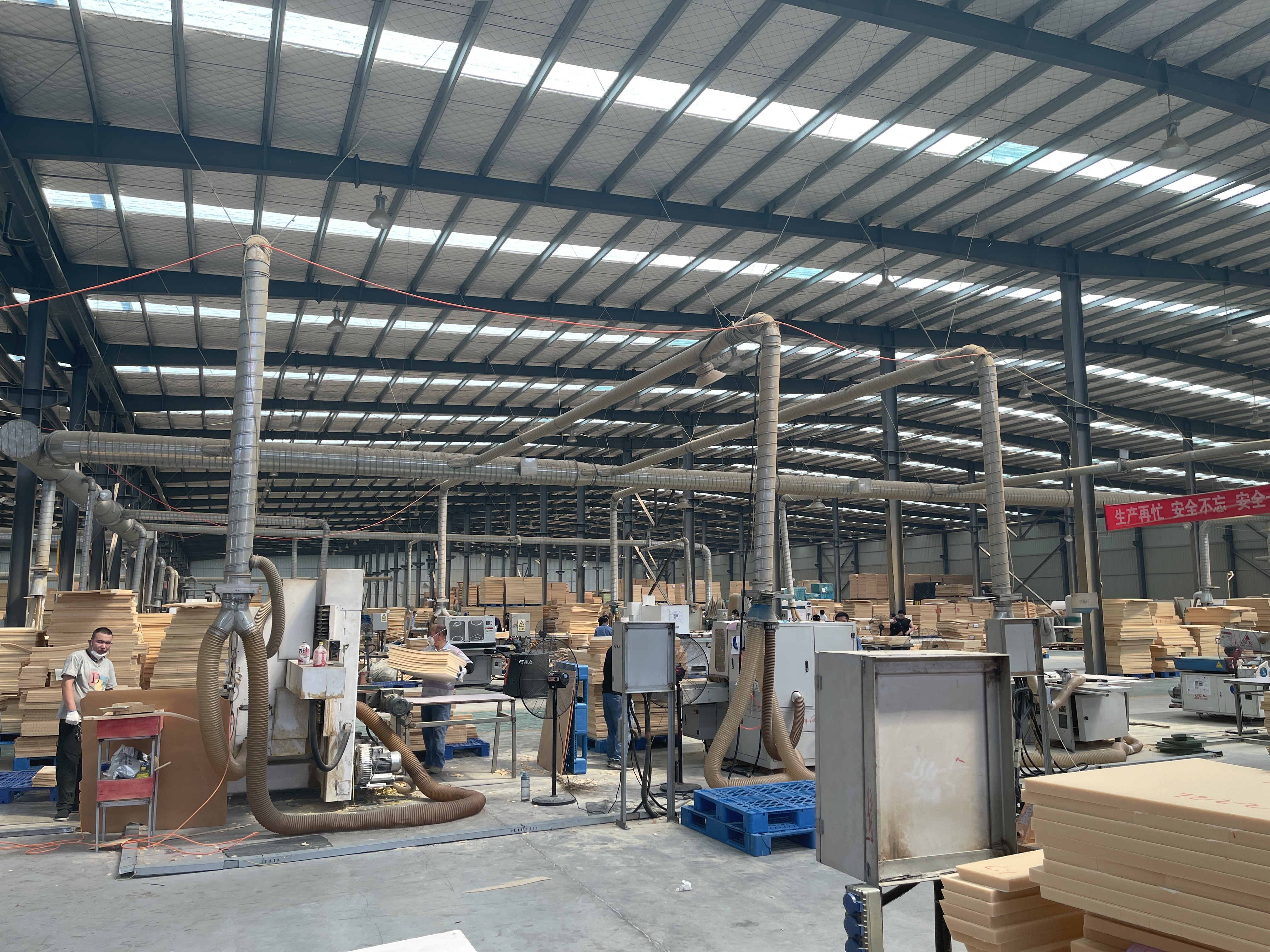
Closed-cell PVC foam core production for sandwich panel construction, yacht hulls, wind turbine blades and industrial composite components.
Reading the density ladder
Nine density grades from 45 to 300 kg/m³ give roughly a six-fold spread within one material family. Lower densities reduce panel weight and are typically used where the load case is modest; higher densities raise shear and compressive capacity and generally improve the local behaviour of mechanical fasteners. Because the grades come from the same PVC system, a project can move up or down the ladder without re-qualifying a different material type.
Reading the surface options
Surface format is a processing decision that sits directly on top of thickness. Plain sheets suit lamination routes where resin distribution is handled by the laminate stack and consumables. Grooved and perforated formats are typically used where resin has to travel through or across the core during vacuum-assisted processes. Scrim-backed sheets add a handling and bonding layer on one face, which matters on larger or thinner panels where the sheet has to stay flat and stay in place during lay-up.
Reading the processing methods
CINON PVC foam core is specified for vacuum infusion, RTM, hand lay-up, prepreg and VARTM. That is a wide process envelope, and it is deliberately paired with the 1–80 mm thickness range: thin sheets at the low end of the range behave very differently from thick sheets at the high end, especially in draping, resin movement and vacuum compaction. The processing method should therefore be fixed before the thickness is locked, not after.
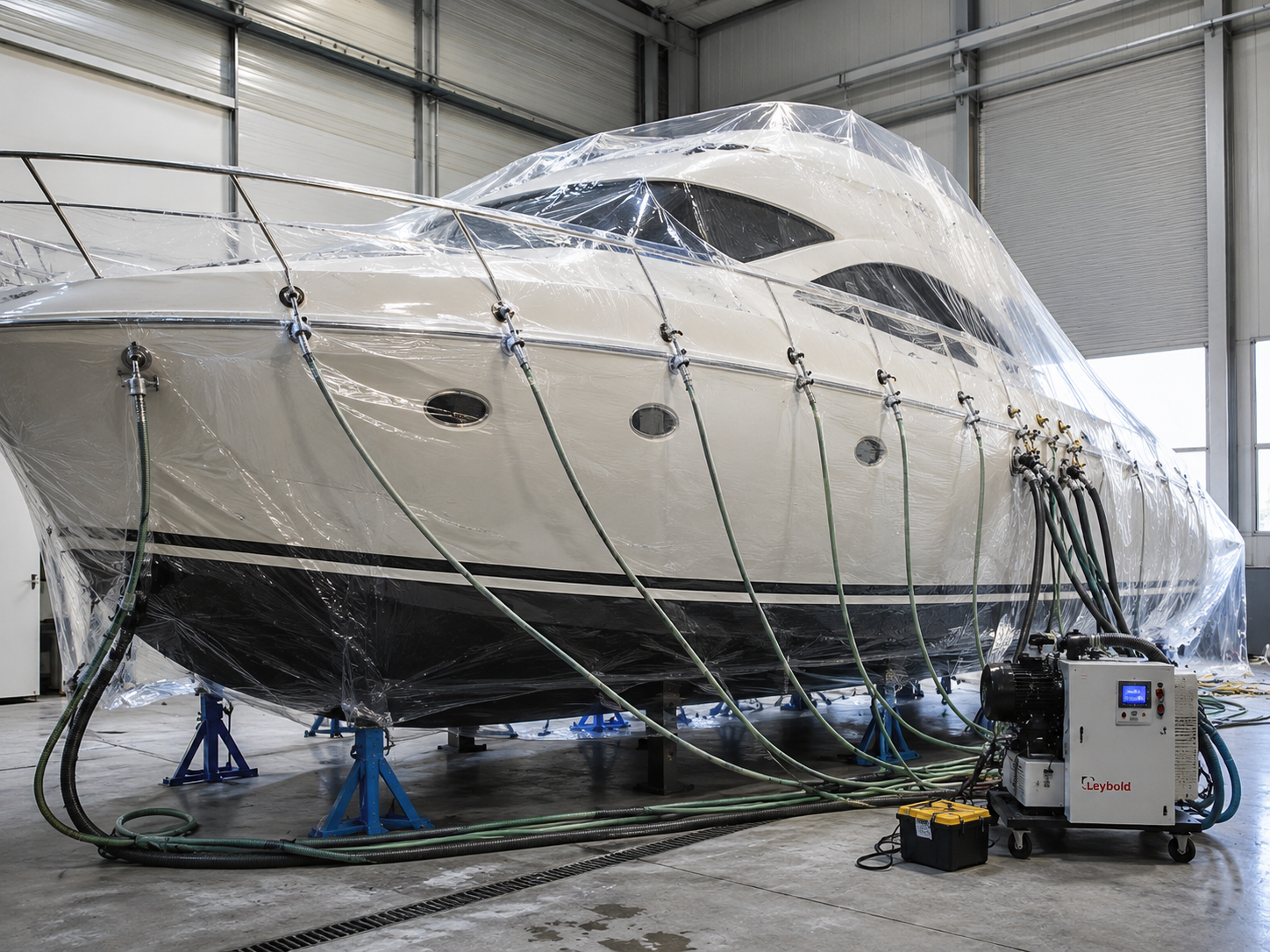
Process support for infusion-based laminates: surface format and thickness are confirmed against the actual resin flow path.
Step-by-Step: How to Land on a PVC Core Thickness
- Define the panel and its unsupported span. Start from the distance between frames, stringers, ribs or sub-structure — not from the finished part size. The unsupported span is the single strongest predictor of the thickness the panel will need.
- Fix the load case, then choose density. Identify shear and compressive demand, plus local point loads. That narrows the choice within the 45–300 kg/m³ PVC density ladder.
- Solve for thickness inside the 1–80 mm range. With density fixed, thickness is the variable that meets the stiffness target. Thickness rises with span and load; it falls when weight and resin uptake are the binding constraints.
- Match the surface format to the process. Plain, grooved, perforated and scrim-backed formats support different resin distribution and handling requirements. Choose the format against the lamination route you will actually run.
- Confirm the process route as a whole. Vacuum infusion, RTM, hand lay-up, prepreg and VARTM each impose their own constraints on thickness, drape and compaction. Confirm the combination rather than the individual fields.
- Validate with a sample panel. CINON supports sample evaluation and alternative material recommendations, so the thickness and format combination can be built and assessed before a production order is placed.
Application-by-Application Thickness Fit
Marine and yacht building
Marine is the application where thickness has the strictest external reference point. EN ISO 12215-2:2018 sets requirements for core materials used structurally in sandwich construction for small craft hulls and structures up to 24 m, so for craft inside that scope the core is a specification item rather than a free choice. Below that line, thickness is driven by the unsupported span between frames and stringers and by the local load case — slamming pressure on hull bottoms, concentrated point loads on decks, bending across superstructure panels. Thin sheets at the low end of the 1–80 mm range typically belong to interior liners, lockers and secondary partitions, while the thicker part of the range is used in hull bottoms, decks and structural bulkheads. Vacuum infusion and VARTM dominate, which is why grooved and perforated formats are common in this segment.
Wind energy
Wind blade construction typically draws on end-grain balsa, SAN foam, PVC foam and PET foam. PVC foam core is used where a balance of shear performance, compressive strength and weight is required across blade shells and shear webs. Thickness in this segment follows the blade design and the infusion route rather than a generic default, and because blade components are large and curved, thickness has to be confirmed together with drape and resin flow behaviour.
Transportation panels and truck bodies
Bus body panels, truck body panels and large transportation panels are usually flat and produced in volume, so thickness consistency matters as much as the nominal value. Floor panels and load-bearing decks push thickness up; side walls and non-structural cladding sit at the lower end. Infusion, RTM and hand lay-up are all used in this segment.
Rail vehicles and railway interiors
Rail interior panels require repeating geometry and predictable panel stiffness, so the thickness value has to hold across the full production run. Where interiors are built as flat sandwich panels, the surface format is often plain and the resin system and process route — RTM, prepreg or hand lay-up — drive the final combination. Project-specific compliance requirements should be confirmed directly with the supplier before material selection is finalised.
RV and caravan manufacturing
RV sidewalls, roofs and floors combine a weight target with a flatness target. Thickness uniformity shows up directly in the finished surface quality of FRP panels, which is why this segment tends to specify tighter thickness tolerance than the structural calculation alone would require. A CINON RV programme in the United States, producing FRP panels, reported glossy surface treatment and uniformity of thickness as the achieved results.
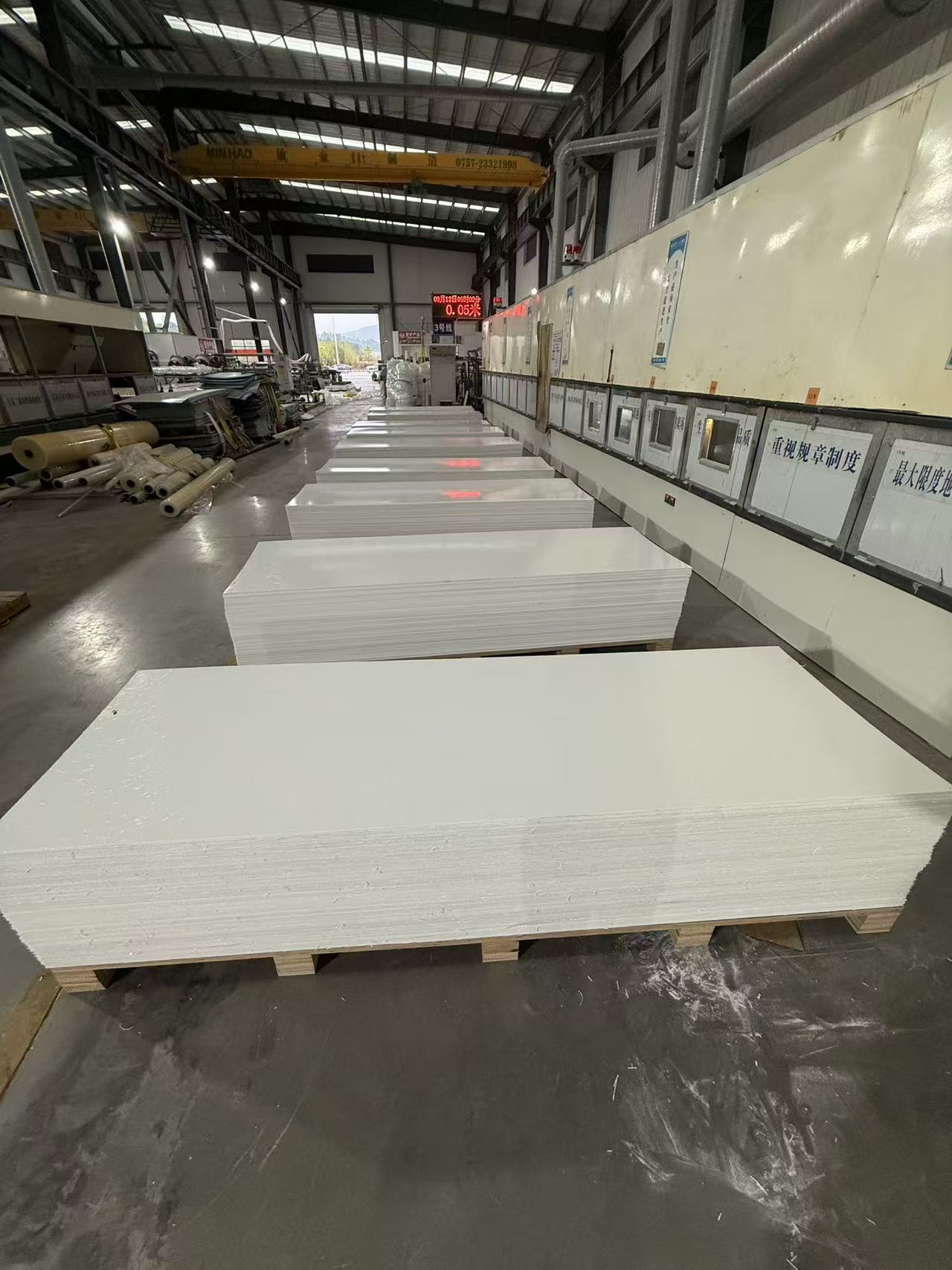
FRP panels for RV applications: thickness uniformity translates directly into surface quality.
Construction panels
Architectural sandwich panels, formwork panels and sanitary ware applications involve long spans and handling loads. Thickness is set against the panel stiffness requirement inside a weight budget, and the density grade is chosen against the panel’s compressive requirement rather than by default. Lamination and RTM routes are both used.
Industrial composites and defense applications
Industrial composite components vary widely in geometry, so thickness is driven by the component itself and by the curing route — prepreg and RTM are common where dimensional control matters. Defense applications follow the structural requirement of the specific programme, and material selection should be confirmed against that programme’s documentation.
Application fit at a glance
| Application | Primary thickness driver | Typical process and surface fit |
|---|---|---|
| Marine & yacht (hulls, decks, superstructures) | Unsupported span between frames; slamming and point loads; EN ISO 12215-2:2018 for small craft up to 24 m | Vacuum infusion / VARTM; grooved or perforated |
| Wind energy (blade shells, shear webs) | Blade design and stiffness target; PVC positioned alongside balsa, SAN foam and PET foam | Vacuum infusion; perforated |
| Transportation panels and truck bodies | Floor span and point loads; flatness and thickness consistency | Infusion, RTM, hand lay-up; plain or grooved |
| Rail vehicles and railway interiors | Panel stiffness that must repeat across a production run | RTM, prepreg, hand lay-up; plain |
| RV & caravan (sidewalls, roofs, floors) | Stiffness-to-weight plus thickness uniformity for FRP surface quality | Infusion, hand lay-up; plain |
| Construction panels | Span and compressive requirement within a weight budget | Lamination, RTM |
| Industrial composites | Component geometry and curing route | Prepreg, RTM, hand lay-up |
| Defense applications | Structural requirement of the specific programme | Project-specific |
Comparison Table: PVC Foam Core Against Adjacent Core Options
PVC foam core is not automatically the right answer for every panel. The table below compares it with the adjacent core options in the CINON portfolio using published specification data only. Cells marked “—” are not stated in the specification data used for this article.
| Core option | Material | Density | Thickness | Process / format notes | Stated application scope |
|---|---|---|---|---|---|
| PVC foam core | Polyvinyl chloride | 45–300 kg/m³ | 1–80 mm | Vacuum infusion, RTM, hand lay-up, prepreg, VARTM; plain / grooved / perforated / scrim-backed; Divinycell alternative | Marine & yacht building; wind energy; transportation; rail vehicles; RV & caravan; industrial composites; construction panels; defense |
| PET foam core | Polyethylene terephthalate | 80–320 kg/m³ | — | — | Marine & yacht building; wind energy; transportation; rail vehicles; RV & caravan; industrial composites; construction panels; renewable energy |
| PMI foam core | Polymethacrylimide | 40–130 kg/m³ | — | PMI foam core alternative to Rohacell | Aerospace; UAV & drone manufacturing; motorsport; high performance marine; defense & military; sports equipment |
| CM core mat (Structural Core Material) | Polyester nonwoven fabric | Dry weight 125–360 g/m² | 1.5–6 mm | Max. process temperature 175 °C | Marine & yacht building; transportation; wind energy; industrial composites; RV & caravan; infrastructure |
| PP honeycomb sheet | Polypropylene | 70–80 kg/m³ | 5–100 mm | Cutting, CNC machining, lamination, thermoforming; PP nonwoven or fiberglass skin | Transportation; RV & caravan; marine & yacht; construction; industrial composites |
For thin, flow-critical laminates, CINON also supplies three nonwoven infusion cores outside the PVC family: CX Core Material (1.5–3 mm, a Soric LRC alternative, max. process temperature 180 °C), CT Core Material (1.5–3 mm, max. 180 °C) and CS Core Material (2–3 mm, max. 170 °C). These are complementary to PVC foam core rather than substitutes, and they are typically selected when surface finish and resin flow matter more than core stiffness.
Use Cases: Thickness and Format Decisions in Real Orders
The cases below describe how the thickness and format combination has been applied in delivered orders. They are regional supply and application records, not comparative product benchmarks.
- Thailand — water sports equipment (surfboard), container orders. A sports equipment manufacturer used CINON materials for surfboard construction, with weight reduction and performance improvement as the reported results and high buoyancy and impact resistance as the highlight.
- Australia — marine and yacht builders, container orders. A boat-building customer sourcing materials and tooling for boat building reported smooth surface, easy wet-out and better finish as the achieved outcomes, with material selection as the key highlight.
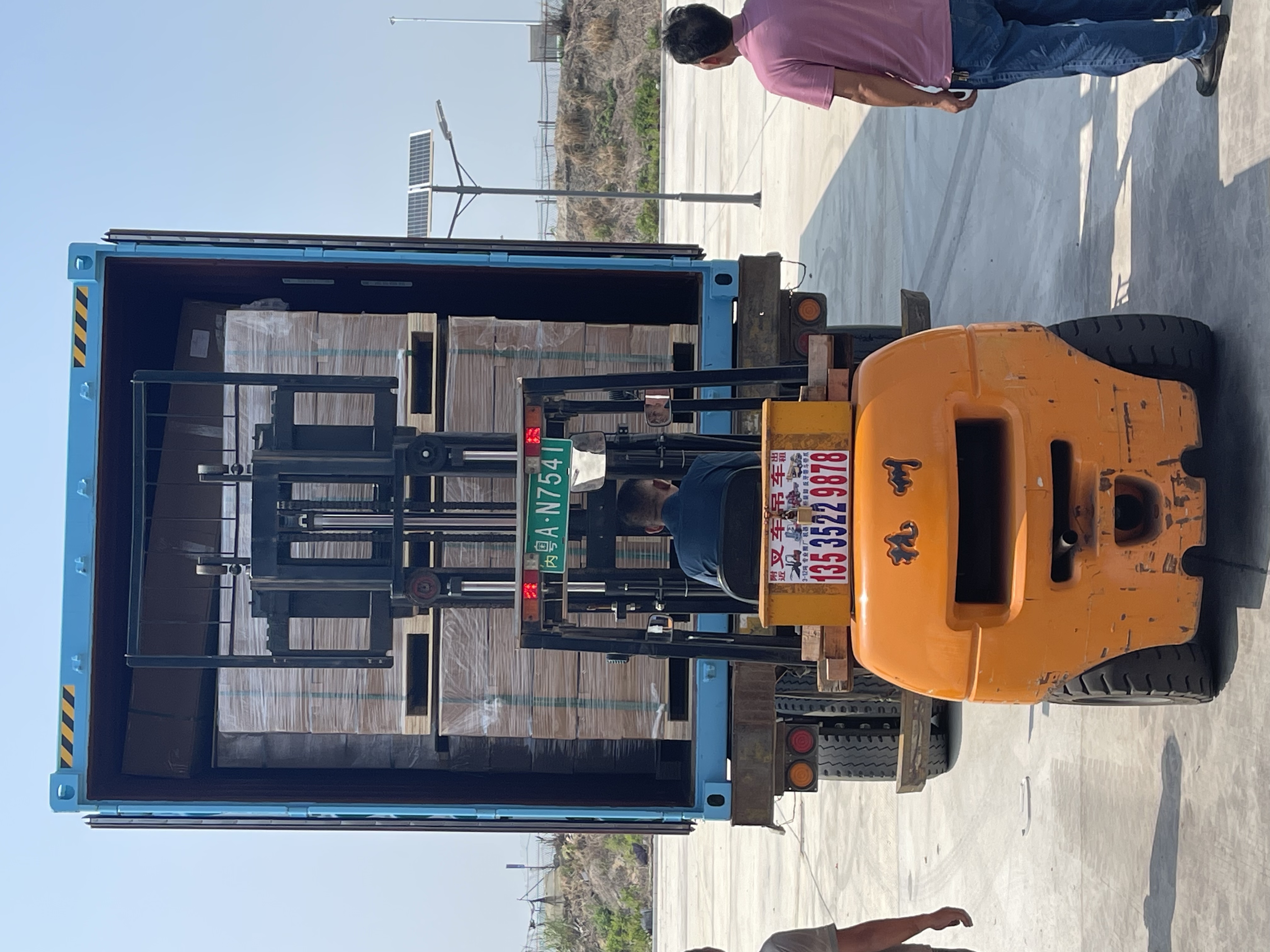
- United States — RV manufacturer, 5 pallets, FRP panels. The programme reported glossy surface treatment and uniformity of thickness, with low weight and anti-UV performance as the highlight.
- Poland — composite material distributor, container order. The distributor reported good local sales and repeat orders every month, with OEM logo supplied for the customer.
- United Kingdom — composite material distributor, sample evaluation followed by commercial supply. The customer moved from sample evaluation into commercial supply and reported an alternative supply solution, with fast lead time and reliable export logistics as the highlight.
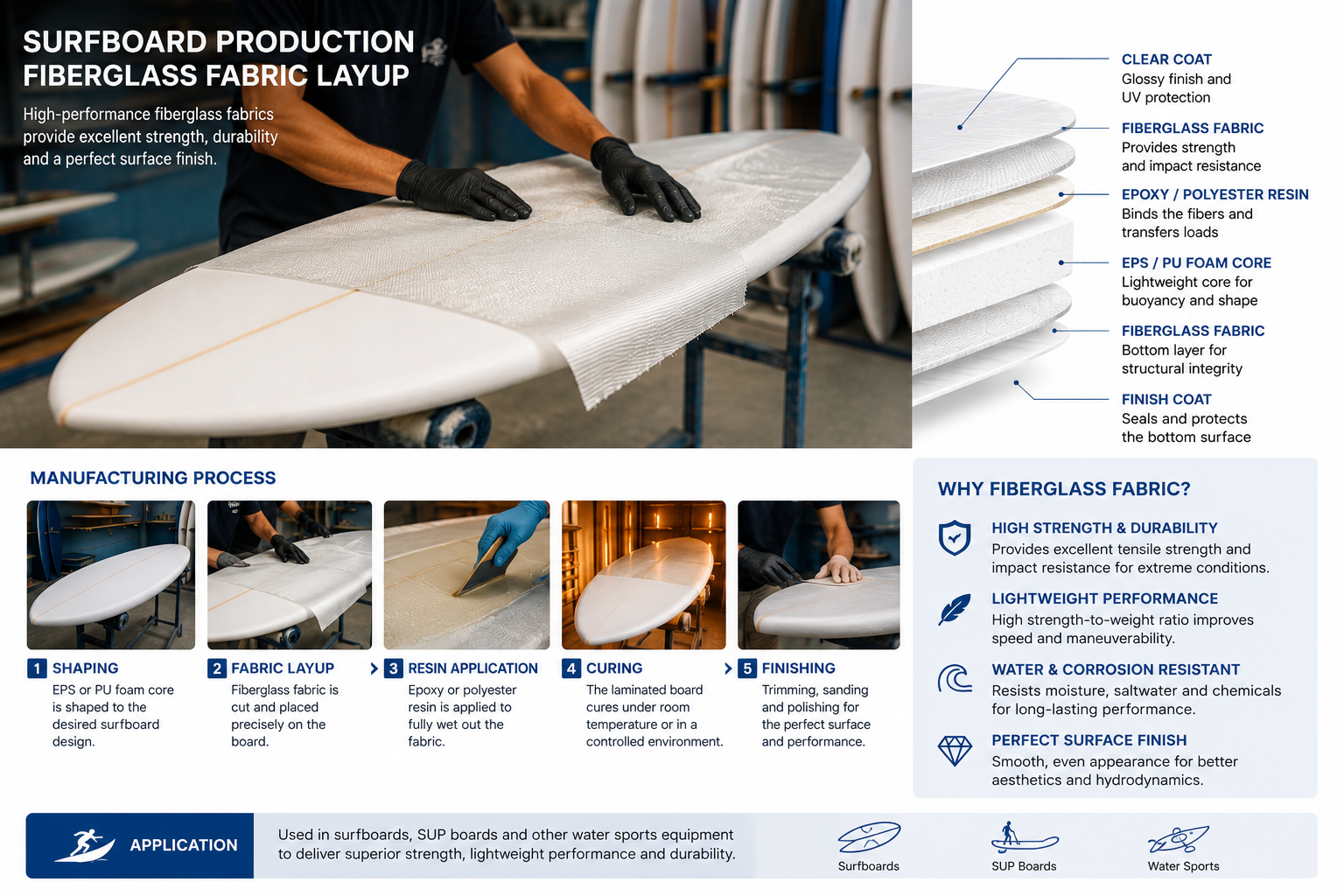
Water sports equipment is one of the applications where core thickness and format are tuned together with the fiberglass skin.
FAQ: PVC Foam Core Thickness, Certification and Supply
1. Is CINON PVC foam core supplied with compliance documentation?
CINON holds ISO 9001:2015 certification (certificate 51326Q04922R053, issued by Shenzhen Moqc Certification Co., Ltd on 29 April 2026 and valid until 28 April 2029, scope: Sales of High-performance Fibers and Composite Materials), ISO 45001:2018 certification (certificate 51326S01896R053, same authority and validity period) and ISO 14001:2015 certification (certificate ISO14001-2023-001, issued by SGS, valid until 1 June 2028, scope: composite intermediates sales). Where a project falls under EN ISO 12215-2:2018 or a classification requirement, the applicable clause should be confirmed with CINON’s technical team before the material is finalised.
2. Can CINON customize PVC foam core thickness, density and surface format?
Yes. CINON operates an ODM model with customization across core materials and fiberglass fabrics, and PVC foam core is available in nine density grades from 45 to 300 kg/m³, thickness from 1 to 80 mm, and plain, grooved, perforated or scrim-backed surfaces. The technical team includes 25 engineers, monthly capacity is 100,000 m², and Annual output capacity is 1,200,000 m² from a 40,000 m² facility. Quality control is 100% test.
3. What drives the cost of a PVC foam core order?
Four commercial variables dominate: the density grade (higher grades use more material per square metre), the thickness within the 1–80 mm range, the surface format (plain, grooved, perforated or scrim-backed), and order volume relative to the 1000 m² minimum order quantity. Freight and packaging depend on destination and sheet format. Because the same material family spans the full range, changing thickness or density inside an existing project does not require switching to a different supplier or qualification basis.
4. Can I evaluate a sample before placing a production order?
Sample evaluation is part of CINON’s standard support scope, alongside material selection, composite process optimisation, vacuum infusion guidance and alternative material recommendations. A UK composite material distributor moved through sample evaluation into commercial supply and reported an alternative supply solution as the outcome. Samples are the practical way to confirm that a chosen thickness and surface format behave correctly in your own laminate and process before committing to volume.
5. What is the lead time, and how do I start an order?
Standard lead time is 15–30 days, with monthly capacity of 100,000 m² and export to markets worldwide from Guangzhou, China. Technical support and order coordination are available by email and WhatsApp, covering material selection through to prototype development and mass production. To request a quotation, a sample or the full product catalogue, contact waylon@cinoncomposites.com or message +86 135-8036-3674 on WhatsApp.
Conclusion: Thickness Is a Project Decision, Not a Catalogue Default
PVC foam core covers a 1–80 mm thickness range because the projects it serves do not share a single stiffness requirement. A yacht hull, a wind blade shear web, a rail interior panel, an RV sidewall and an architectural panel all use the same closed-cell PVC material system and all demand a different thickness. The reliable sequence is: fix the span and the load case, choose a density from the 45–300 kg/m³ ladder, set thickness inside the 1–80 mm range, then match the surface format to a confirmed process route from vacuum infusion, RTM, hand lay-up, prepreg or VARTM.
Because CINON manufactures fiberglass reinforcements and core materials under one ISO-certified quality system and ships to Europe, North America and Asia-Pacific, thickness and format changes can be handled inside an existing supply relationship rather than as a re-sourcing project.
Next step: match a thickness to your panel
Send your panel span, load case and process route, and CINON will confirm a PVC foam core density and thickness from the 1–80 mm range, plus the surface format that fits your lamination method.
Email: waylon@cinoncomposites.com | Tel / WhatsApp: +86 186-2098-8848 / +86 135-8036-3674
Download the full CINON product catalogue (PDF) | Visit cinoncomposites.com
Have Questions or Need More Details?
Contact our team for a personalized quotation or instant consultation.
Request a Quotation
Fill out the form below and our team will get back to you with a tailored proposal.
WhatsApp Direct Chat
Prefer to chat in real-time? Message us on WhatsApp for instant assistance & quick answers.
- Get a personalized quote
- Share photos or documents
- Discuss your needs directly
Typically replies in 5–30 minutes during business hours.