
PVC Foam Core Technical Guide: Thickness and Application Selection Parameters
CINON Composites · Core Material Technical Reference
PVC foam core is a closed-cell, crosslinked polyvinyl chloride structural foam used as the shear-carrying layer in composite sandwich panels. CINON Composites supplies it in thicknesses from 1 mm to 80 mm, in density grades of 45, 50, 60, 80, 100, 130, 200, 250 and 300 kg/m³, with plain, grooved, perforated or scrim-backed surfaces, and lists it in its portfolio as a Divinycell alternative.
CINON Composites (Guangdong Cinon New Material Technology Co., Ltd.) is a Guangzhou-based supplier of fiberglass reinforcements and lightweight core materials — fiberglass fabrics, multiaxial fabrics, PET foam core, PVC foam core, PMI foam core, Core Mat, PP honeycomb sheet and aramid honeycomb. Its materials are used in boat building, yacht construction, wind turbine blades, transportation panels, UAV structures and industrial composite components.
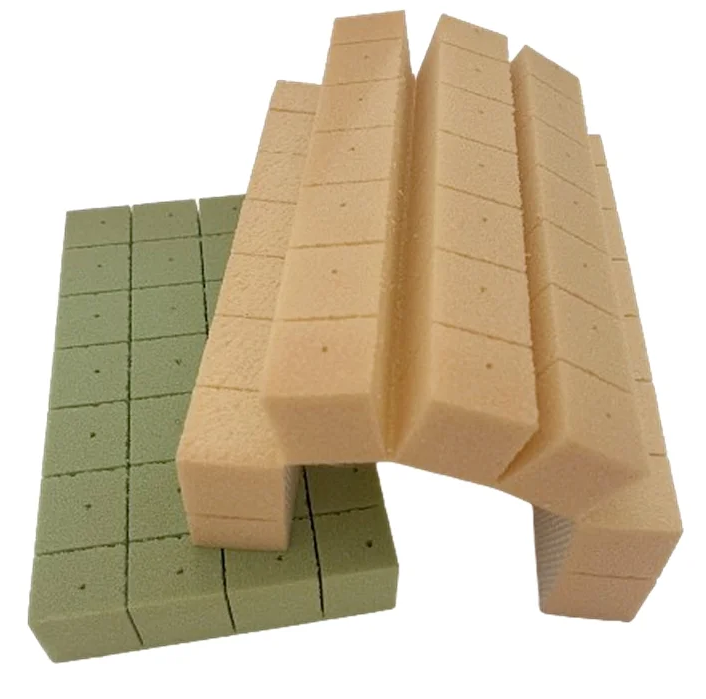
Quick answer: select PVC foam core by locking three parameters in order — thickness (1–80 mm) against the panel's required stiffness and load path, density (45–300 kg/m³) against shear and compressive demand, and surface finish (plain, grooved, perforated or scrim-backed) against the selected process (vacuum infusion, RTM, hand lay-up, prepreg or VARTM). Compliance documentation is verified before commercial negotiation, not after.
Why Thickness and Density Decide Whether PVC Foam Core Performs
Most specification errors with PVC foam core do not originate in the resin system or the laminate schedule. They originate in treating the core as a catalogue line item — a thickness value copied from a previous project — instead of a design variable that trades stiffness against weight, cost and process risk.
Thickness and density are not interchangeable levers. A panel that is too thin for its span and load case will deflect, and the skins may buckle before the laminate reaches its design stress. A panel that is too thick carries more weight, consumes more resin and requires more attention to resin distribution during infusion. Density moves the other half of the equation: lower grades in the CINON range start at 45 kg/m³ and favour weight-critical panels, while higher grades up to 300 kg/m³ add shear and compressive capability where inserts, hard points or concentrated loads are present.
A second, frequently overlooked error is comparing PVC foam core with the thin resin-flow cores that appear in the same supplier catalogue. CM core mat (1.5–6 mm thick, dry weight 125–360 g/m²), CT Core Material (1.5–3 mm, 90–160 g/m²), CS Core Material (2–3 mm, 130–170 g/m²) and CX Core Material (1.5–3 mm, 120–220 g/m²) are flow-layer materials. They build thickness, add stiffness and improve resin distribution, and they are positioned as alternatives to Soric XF, Soric SF and Soric LRC respectively. They do not replace a closed-cell PVC structural foam in a load-bearing sandwich, and specifying one against the other produces either an overweight part or an under-strength one.
Decision rule: if the laminate must carry shear between two skins, it needs a structural foam core such as PVC foam core or PET foam core. If the laminate only needs resin flow, thickness build-up and surface quality, a nonwoven infusion core is the appropriate and lighter-cost route.
Industry Background: Where Closed-Cell Core Materials Sit in 2026
Demand for closed-cell core materials is concentrated in two structures: renewable energy composites and mobility composites. In marine structures specifically, the global marine structural core materials market was projected at USD 114 million for 2026 in Stratview Research's marine structural core materials report. Regionally, Fortune Business Insights reported that Asia-Pacific accounted for 39% of the core materials market in 2025, which is consistent with the concentration of composite panel and blade manufacturing capacity in the region.
Material selection in wind energy is comparatively narrow. According to CompositesWorld, four core material families dominate wind energy applications: end-grain balsa, styrene acrylonitrile (SAN) foam, polyvinyl chloride (PVC) foam and polyethylene terephthalate (PET) foam. PVC foam core therefore sits inside the mainstream wind-energy material set rather than at its edge, and the same closed-cell family is applied across transportation, rail, RV and industrial composite panels.
On the regulatory side, EN ISO 12215-2:2018 specifies requirements for core materials intended for structural use and for materials embedded in sandwich construction in small craft hulls and structures, with applicability to small craft with a hull length up to 24 m. For buyers in boat building and yacht construction, this standard is the first screening filter applied to a core material, ahead of density or price discussion.
Detailed Solution: What a Closed-Cell PVC Foam Core Provides
Closed-cell construction means the gas phase is encapsulated in individual cells rather than connected through open channels. That structure is the source of the properties CINON lists for its PVC foam core: low water absorption, high shear strength, excellent fatigue resistance, good thermal insulation and corrosion resistance.
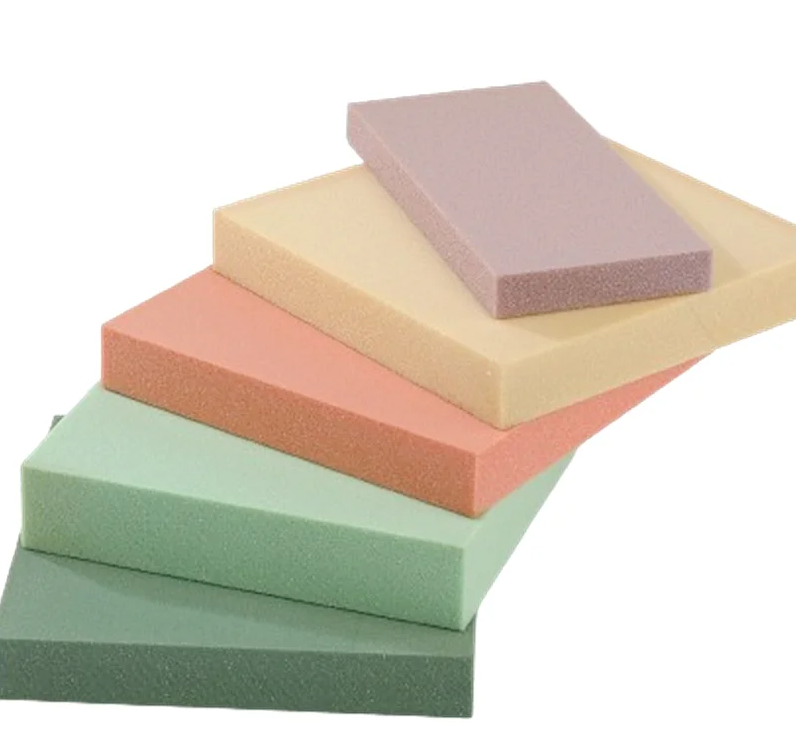
The mechanical rationale for using it in a sandwich is straightforward: moving the skins apart raises panel stiffness while the closed-cell foam carries shear between them. The practical benefits reported for the material are weight reduction, structural stiffness improvement, water resistance, impact resistance, corrosion resistance, thermal insulation, long service life and a high strength-to-weight ratio.
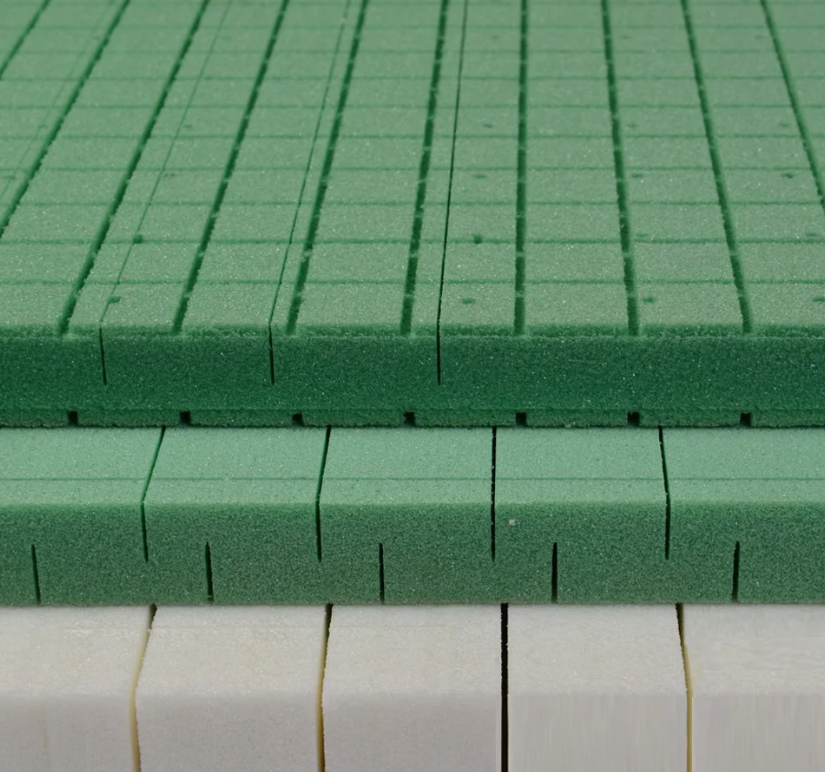
Process compatibility is a selection parameter in its own right. CINON's PVC foam core is specified for vacuum infusion, RTM, hand lay-up, prepreg and VARTM. The surface options — plain, grooved, perforated and scrim-backed — exist so that the same base foam can serve processes with very different resin-flow behaviour.
Within the wider CINON core material portfolio, PVC foam core is the crosslinked, closed-cell, rigid structural foam option. PET foam core covers the recyclable, lightweight structural route at 80–320 kg/m³. PMI foam core addresses aerospace, UAV and motorsport requirements at 40–130 kg/m³. PP honeycomb sheet and aramid honeycomb cover thermoplastic and aerospace-grade honeycomb requirements respectively. Buyers who need to match a core to project requirements rather than to a single material often compare across this portfolio before fixing a specification.
The Full Parameter Set: Density, Thickness, Surface and Process
Four parameters control almost every PVC foam core specification. The table below lists what is available in the CINON range and what each parameter actually changes on the project.
| Parameter | Available in the CINON PVC foam core range | What it changes on the project | What to confirm before ordering |
|---|---|---|---|
| Density grade | 45, 50, 60, 80, 100, 130, 200, 250, 300 kg/m³ | Shear and compressive capability versus panel weight | The density grade is stated on the order and on the material documentation |
| Thickness | 1–80 mm | Sandwich bending stiffness, panel weight, resin flow path length | The exact cut thickness and the cutting method for your panel geometry |
| Surface finish | Plain, grooved, perforated, scrim-backed | Resin distribution, air evacuation, bond development during lamination | The surface option matched to your process, not to a previous project |
| Process compatibility | Vacuum infusion, RTM, hand lay-up, prepreg, VARTM | Cycle design, consumable strategy, achievable fibre content | A trial panel or sample evaluation before full production release |
| Base material | Polyvinyl chloride (crosslinked closed-cell) | Water uptake, fatigue behaviour, chemical exposure tolerance | Documented material identification for the delivered batch |
| Portfolio classification | Divinycell alternative | Sourcing route without re-engineering the sandwich design | Comparative technical review against the incumbent specification |
Step-by-Step: How to Select PVC Foam Core Thickness and Grade
Step 1 — Define the governing failure mode
Before any catalogue value is opened, establish what the panel must not do: exceed a deflection limit, buckle, fail in core shear, crush at an insert, or degrade through moisture ingress and fatigue cycling. Marine and yacht structures typically combine salt-water exposure, high humidity, dynamic loading and long-term static and dynamic loads. Wind energy structures combine high and low temperature, pressure cycling and continuous operation. The governing failure mode determines whether thickness or density is the dominant lever.
Step 2 — Fix the core thickness inside the 1–80 mm range
Thickness is settled first because sandwich bending stiffness responds to the separation distance between skins far more strongly than it responds to small changes in core density. Practical consequences follow directly: under-specifying thickness produces a flexible panel that no resin upgrade can correct, while over-specifying it adds weight and resin consumption across every part in the production run. The 1–80 mm range spans thin laminate build-up work and thick structural sandwich panels, so the useful question is not "what is available" but "what separation distance does this load case require".
Step 3 — Choose the density grade for shear and compression
Once thickness is fixed, density is selected to carry the shear and compressive loads that the panel imposes on the core, including loads at inserts, hard points and fittings. Grades from 45 kg/m³ upward favour weight-critical structures; grades toward 300 kg/m³ provide higher shear and compressive capability where local loads are concentrated. Selecting density before thickness tends to produce panels that are simultaneously too heavy and not stiff enough.
Step 4 — Match the surface finish to the process
Surface treatment is a process decision, not a cosmetic one. Grooved and perforated options are used where the process depends on resin travelling through the core plane, which is typical in vacuum infusion and VARTM. Plain surfaces suit processes where resin flow is managed elsewhere in the stack. Scrim-backed options add a carrier layer for handling stability and controlled resin behaviour; the correct choice should be confirmed with the supplier against the specific laminate schedule rather than assumed.
Step 5 — Confirm the process window and the rest of the stack
PVC foam core is specified for vacuum infusion, RTM, hand lay-up, prepreg and VARTM. The core does not work alone: it is combined with fiberglass reinforcements — including multiaxial non-crimp fabrics at 400–1500 g/m² and plain-woven E-glass fabrics at 25–400 g/m² — and, where resin flow must be engineered separately, with nonwoven infusion cores such as CM, CT, CS or CX. Where the thermal demand of the process exceeds what a foam can accept, the selection discussion should move to another family in the portfolio rather than to a higher density of the same foam.
Step 6 — Validate by sample and lock the supply parameters
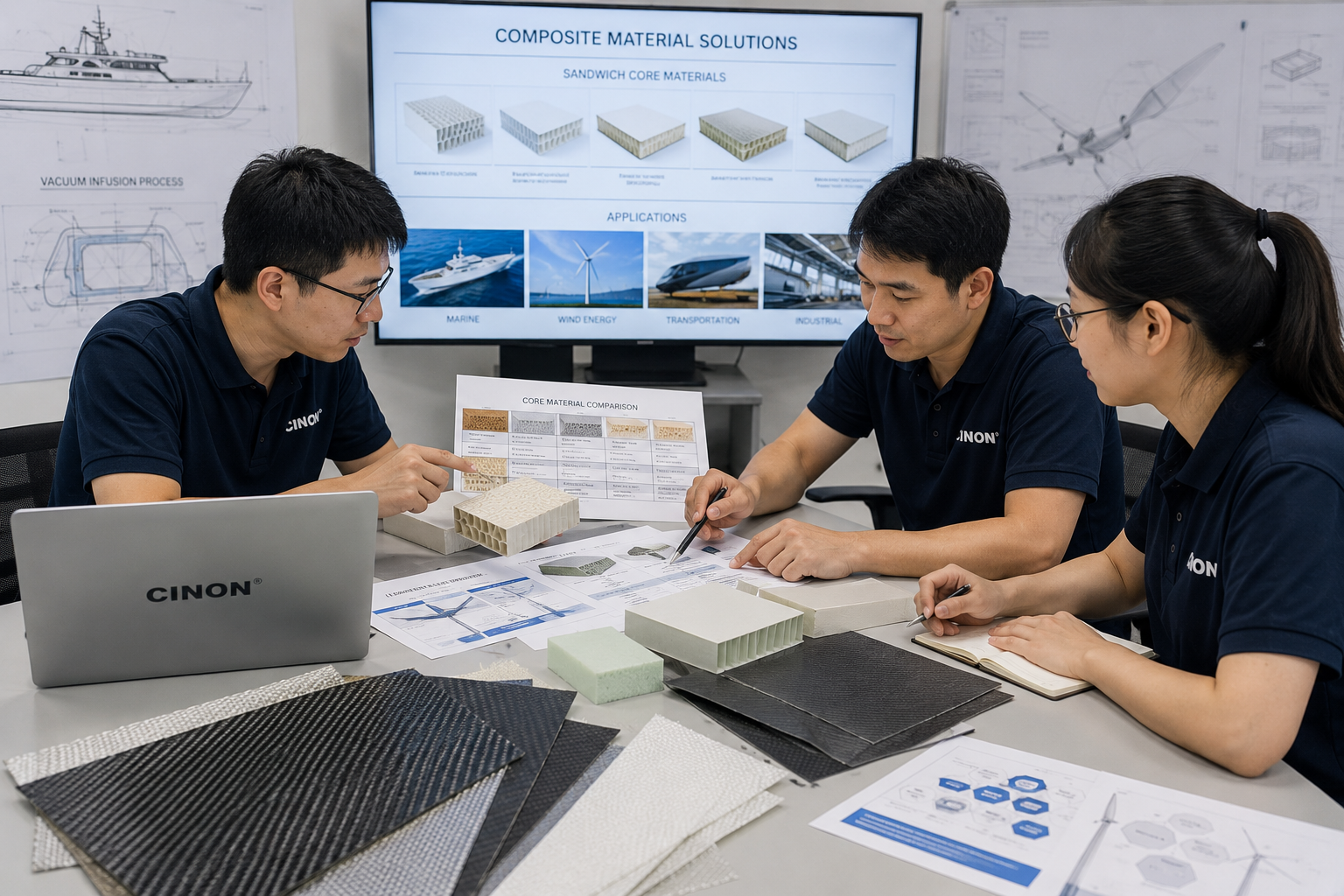
Sample evaluation before production release is the cheapest risk control available. CINON's technical support scope covers material selection, composite process optimisation, vacuum infusion guidance, alternative material recommendations, sample evaluation, quality traceability and global logistics coordination, delivered through email, WhatsApp, online meetings and technical documentation from prototype development through to mass production. Production parameters for the PVC foam core range include a minimum order quantity of 1,000 m², a lead time of 15–30 days, 100% testing, monthly capacity of 100,000 m², and ODM customisation covering core materials and fiberglass fabric.
Application Selection: Matching PVC Foam Core to End-Use Segments
PVC foam core is listed for marine and yacht building, wind energy, transportation, rail vehicles, RV and caravan manufacturing, industrial composites, construction panels and defense applications. The parameter emphasis changes from segment to segment.
Marine and yacht building
Working conditions are defined by salt water, high humidity, dynamic loading, corrosion exposure and continuous operation. Components include boat hulls, boat decks, bulkheads, superstructures and marine panels, produced through vacuum infusion, resin infusion, hand lay-up or RTM. Required characteristics are low water absorption, salt-water corrosion resistance and good resin flow — all three of which point to a closed-cell foam with an appropriate surface treatment rather than a dense solid laminate. For small craft with hull lengths up to 24 m, EN ISO 12215-2:2018 defines the core material requirements that the specification should be screened against.
Wind energy
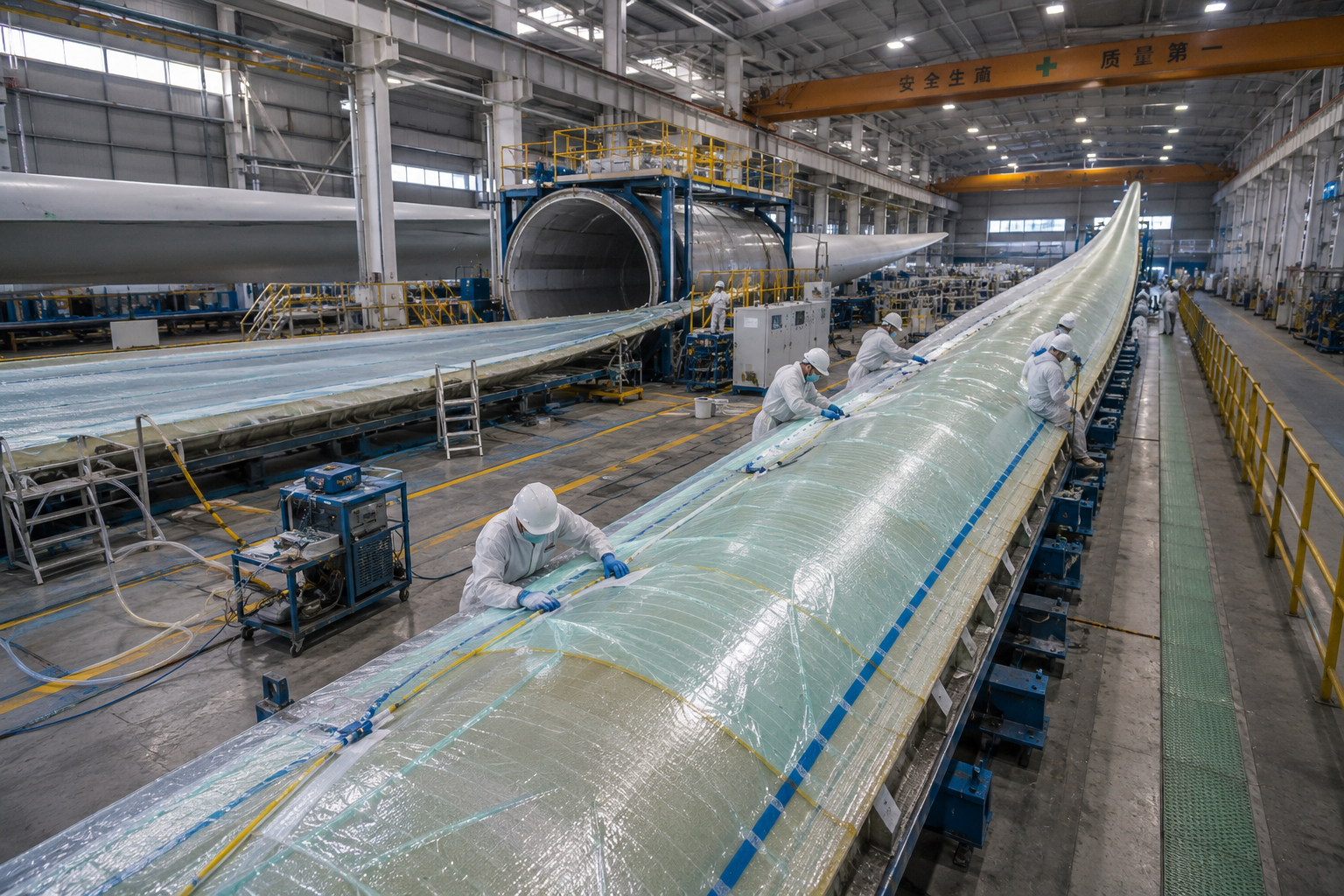
Blade shells, blade structures and nacelle structures operate under high and low temperature, pressure variation, long-term static and dynamic load and continuous service. The functional priorities are fatigue resistance, weight reduction, structural performance and long service life, with high fatigue resistance and dimensional stability as special requirements. PVC foam core is one of the four core material families identified as most widely used in wind energy applications, alongside end-grain balsa, SAN foam and PET foam, and it is specified for vacuum infusion, resin infusion, hand lay-up and RTM.
Transportation and rail vehicles
Transportation panels and rail interiors face dynamic road loads, extreme thermal gradients, internal impact, corrosive exposure and frequent cycling. Applications include truck bodies, bus panels and rail interiors, where the functional targets are weight reduction for payload optimisation, impact resistance and corrosion resistance, produced on high-cycle moulding and automated production lines. PVC foam core is listed for this segment together with PET foam core, PP honeycomb sheet and the CX, CS, CT and CM infusion cores.

RV and caravan manufacturing
RV and caravan structures combine thermal cycling, dynamic vibration, UV radiation and high humidity and moisture. Components include RV panels, caravan walls, floors and roofs, produced by vacuum bonding, continuous lamination and wet lay-up or infusion. The special requirements are lightweighting, anti-delamination behaviour, flatness tolerance, acoustic insulation and impact resistance. PVC foam core, PET foam core and PP honeycomb sheet are the three core options listed for this segment.
Industrial composites and construction panels
Industrial covers, FRP panels and machine enclosures work under corrosive environments, extreme outdoor weather, high temperature and fire risk, acoustic stress and hygiene requirements. The functional targets are corrosion resistance, weight reduction and structural performance, with chemical compatibility as a special requirement and continuous panel lamination and pultrusion as the matched equipment set. PVC foam core is listed among the core materials used here, alongside PET foam core, Core Mat and the CX, CS and CT infusion cores.
Defense applications
PVC foam core is listed within the defense application scope of the CINON core material range. Where defense or high-temperature structural requirements exceed what a PVC foam can carry, the portfolio provides PMI foam core (40–130 kg/m³) for defense and military structures and aramid honeycomb for defense, radar and composite engineering applications.
Comparison Table: PVC Foam Core and the Wider Core Material Portfolio
The comparison below uses the published parameters of the CINON portfolio. It is intended to show where PVC foam core fits, not to rank materials — the correct choice depends on the load case, process and compliance requirement of each project.
| Material | Base material | Density range | Format / thickness | Position in the portfolio | Typical applications listed |
|---|---|---|---|---|---|
| PVC foam core | Polyvinyl chloride (crosslinked, closed-cell) | 45–300 kg/m³ | 1–80 mm; plain, grooved, perforated or scrim-backed | Divinycell alternative | Marine and yacht building, wind energy, transportation, rail vehicles, RV and caravan, industrial composites, construction panels, defense |
| PET foam core | Polyethylene terephthalate (recyclable) | 80–320 kg/m³ | Lightweight structural core | Recyclable structural core route | Marine and yacht building, wind energy, transportation, rail vehicles, RV and caravan, industrial composites, construction panels, renewable energy |
| PMI foam core | Polymethacrylimide | 40–130 kg/m³ | High-performance structural foam | Rohacell alternative | Aerospace, UAV and drone manufacturing, motorsport, high-performance marine, defense and military, sports equipment |
| PP honeycomb sheet | Polypropylene | 70 / 80 kg/m³ | 5–100 mm; cell size 6 / 8 / 10 / 12 mm; 1220 × 2440 mm | Thermoplastic honeycomb core | Transportation, RV and caravan, marine and yacht, construction, industrial composites |
| Aramid (Nomex) honeycomb | Aramid paper | 32–128 kg/m³ | Cell size 1.83 / 2.75 / 3.67 / 5.5 mm; 2440 × 1220 mm; working temperature −60 to 180 °C | Aerospace-grade honeycomb | Aerospace and aircraft interiors, helicopter panels, UAV structures, motorsport and racing car panels, defense, radar structures, marine racing yachts |
| CM core mat | Polyester nonwoven fabric | Dry weight 125–360 g/m² | 1.5–6 mm; max process temperature 175 °C | Soric XF alternative | Boat building, yacht construction, transportation panels, industrial composites, lightweight structural build-up |
| CX core material | Polyester | Dry weight 120 / 150 / 220 g/m² | 1.5–3 mm; max process temperature 180 °C | Soric LRC alternative | Marine and yacht, wind power, automotive and rail transit, aerospace and UAV, construction and sanitary ware, anti-corrosion industry |
| CS core material | Polyester nonwoven fabric | Dry weight 130 / 170 g/m² | 2 / 3 mm; max process temperature 170 °C | Soric SF alternative | Marine and yacht building, transportation, industrial composites, wind energy, RV and caravan, infrastructure |
| CT core material | Polyester nonwoven fabric | Dry weight 90 / 120 / 160 g/m² | 1.5 / 2 / 3 mm; max process temperature 180 °C | Thin flow core material | Marine and yacht building, transportation, industrial composites, wind energy, composite tooling, sports and leisure equipment |
Compliance and Documentation: What Buyers Should Verify
Core material compliance splits into two questions: does the material meet the application standard, and does the supplier operate a documented, auditable quality system? The first is answered by the project specification — for small craft, EN ISO 12215-2:2018 sets core material requirements for sandwich construction in hulls and structures up to 24 m in length, and classification-society approvals remain project-specific. The second is answered by supplier certification.
CINON's management system certifications, listed below, cover the sales of high-performance fibers and composite materials and apply to the global market.
| Certification | Certificate number | Issuing body | Standard | Validity | Scope |
|---|---|---|---|---|---|
| ISO 9001:2015 | 51326Q04922R053 | Shenzhen Moqc Certification Co., Ltd. | GB/T19001-2016 / ISO9001:2015 | 2026-04-29 to 2029-04-28 | Sales of high-performance fibers and composite materials |
| ISO 45001:2018 | 51326S01896R053 | Shenzhen Moqc Certification Co., Ltd. | GB/T45001-2020 / ISO45001:2018 | 2026-04-29 to 2029-04-28 | Sales of high-performance fibers and composite materials |
| ISO 14001:2015 | ISO14001-2023-001 | SGS | ISO 14001:2015 | 2023-06-01 to 2028-06-01 | Composite intermediates sales |
On the supplier side, the parameters that matter at evaluation stage are capacity, quality control and delivery behaviour rather than claims. CINON operates a 40,000 m² manufacturing facility in Guangzhou with a reported annual output capacity of 1,200,000 m², an R&D team of 25 engineers, monthly capacity of 100,000 m² and a 100% test regime on quality control. Export is 100% of sales, with main markets in Europe, North America and Asia-Pacific. Production lead time is 15–30 days and the minimum order quantity is 1,000 m², with ODM customisation available for core materials and fiberglass fabric.
FAQ: PVC Foam Core Thickness, Compliance and Supply
Does PVC foam core comply with marine standards such as EN ISO 12215-2:2018?
EN ISO 12215-2:2018 specifies requirements for core materials intended for structural use and for materials embedded in sandwich construction in small craft hulls and structures, and it applies to small craft with a hull length up to 24 m. Whether a specific PVC foam core grade satisfies a given boat project depends on the project's class requirements and the documentation submitted with the material. CINON supports this process with material documentation and management system certifications covering the sales of high-performance fibers and composite materials, including ISO 9001:2015 (51326Q04922R053), ISO 45001:2018 (51326S01896R053) and ISO 14001:2015 (ISO14001-2023-001).
What PVC foam core thickness and density options can be supplied, and can they be customised?
CINON's PVC foam core is supplied from 1 mm to 80 mm in thickness, in density grades of 45, 50, 60, 80, 100, 130, 200, 250 and 300 kg/m³, with plain, grooved, perforated or scrim-backed surfaces, and it is specified for vacuum infusion, RTM, hand lay-up, prepreg and VARTM. ODM customisation is available for core materials and fiberglass fabric, supported by an R&D team of 25 engineers and monthly capacity of 100,000 m².
What drives the cost of PVC foam core in a project budget?
The cost of a PVC foam core supply is driven by the parameters that define the material rather than by a single list price: the density grade, the cut thickness, the surface treatment, the total order volume, the degree of customisation and the logistics route. Because thickness and density are chosen to match load case and process, the largest cost lever is usually specification discipline — a grade that is one step heavier or thicker than the load case requires will be paid for across every panel in the production run. CINON provides quotations against a defined specification, and its technical support scope includes alternative material recommendations where a different grade or family meets the same requirement.
Can I evaluate a sample before placing a production order?
Yes. Sample evaluation is part of CINON's technical support scope, which covers material selection, composite process optimisation, vacuum infusion guidance, alternative material recommendations, sample evaluation, quality traceability and global logistics coordination, from prototype development through to mass production. Evaluation support is delivered by email, WhatsApp, online meetings and technical documentation. Production orders for the PVC foam core range start at a minimum order quantity of 1,000 m².
What is the lead time, and how is delivery handled for export markets?
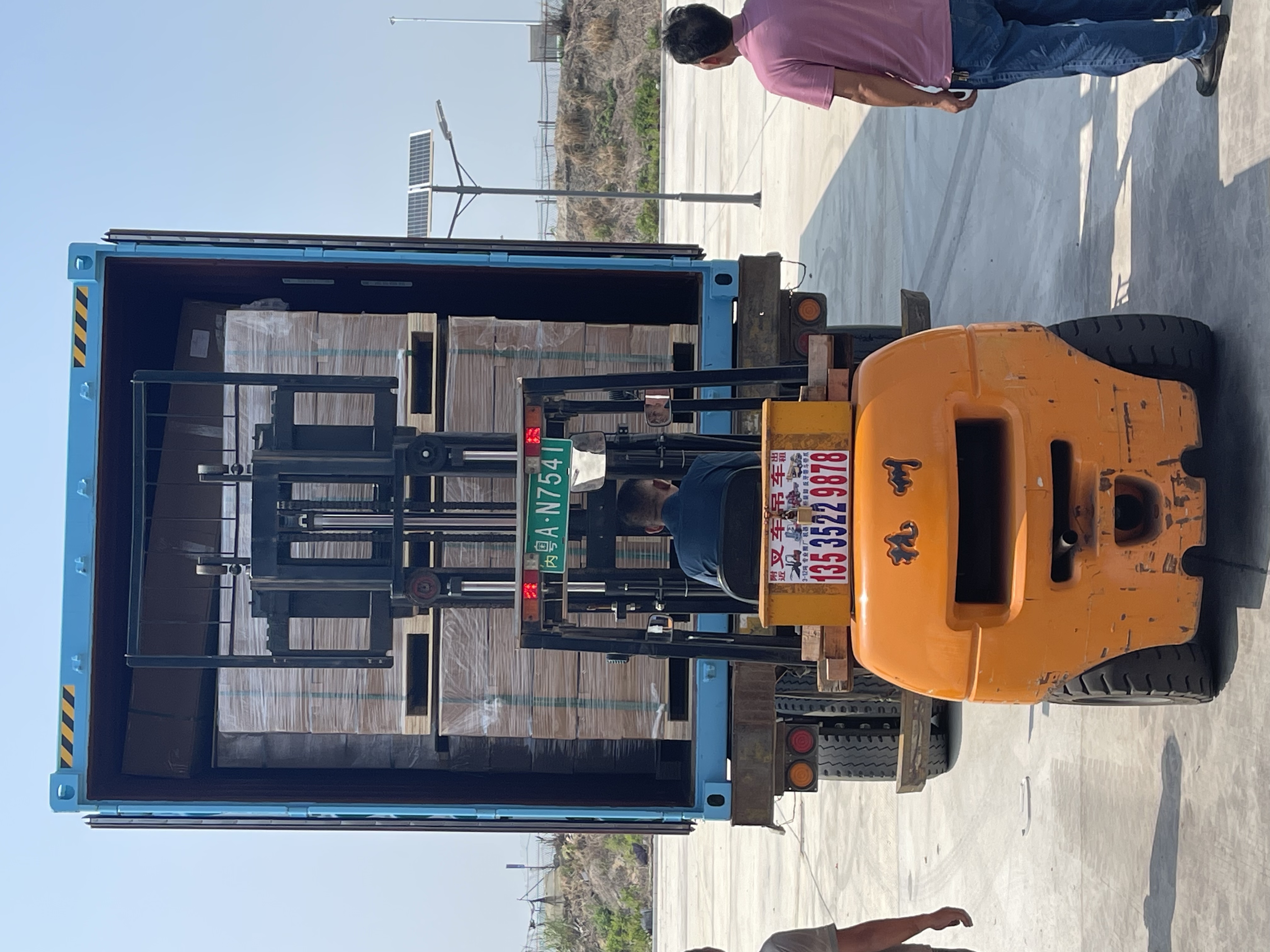
Production lead time for CINON core materials is 15–30 days, with quality control based on 100% testing. Export is 100% of sales, with main markets in Europe, North America and Asia-Pacific, supported by export logistics and container loading coordination. Buyers who need to align material arrival with a build slot can request a lead time confirmation and a quotation by contacting CINON directly — email waylon@cinoncomposites.com, telephone +86 186-2098-8848, or WhatsApp at +86 135-8036-3674.
Conclusion: A Repeatable Selection Sequence for PVC Foam Core
PVC foam core selection becomes predictable once the sequence is fixed: define the governing failure mode, set the core thickness inside the 1–80 mm range, choose the density grade from 45–300 kg/m³ for shear and compression, match the surface finish to the process, confirm the process window across the full laminate stack, and validate with a sample before locking supply parameters. Segments then adjust the emphasis rather than the method — marine and yacht building pushes water absorption and corrosion resistance to the front, wind energy pushes fatigue resistance, transportation and rail push payload-driven weight reduction, RV and caravan push flatness and anti-delamination, and industrial composite panels push chemical compatibility.
The reason to work through the sequence rather than around it is that core material specification is one of the few decisions in a composite project that cannot be corrected later by process improvement. Thickness and density are locked into the mould and the laminate schedule; surface treatment is locked into the process route; and compliance documentation must exist before the panel is built, not after.
Next step: review your core specification with CINON
Send the load case, process route and target thickness for your panel, and CINON Composites will review the PVC foam core grade, surface option and portfolio alternatives against your project requirements. Sample evaluation, technical documentation and quotations are available for marine, wind energy, transportation, rail, RV and caravan, industrial composite and defense projects.
Email: waylon@cinoncomposites.com · Tel: +86 186-2098-8848 · WhatsApp: +86 135-8036-3674 · Website: cinoncomposites.com
Product catalogue (PDF): Download the CINON Composites catalogue
Have Questions or Need More Details?
Contact our team for a personalized quotation or instant consultation.
Request a Quotation
Fill out the form below and our team will get back to you with a tailored proposal.
WhatsApp Direct Chat
Prefer to chat in real-time? Message us on WhatsApp for instant assistance & quick answers.
- Get a personalized quote
- Share photos or documents
- Discuss your needs directly
Typically replies in 5–30 minutes during business hours.