Secure Your Fiberglass Fabric Supply: How CINON Delivers Consistent Quality for Marine, Wind, UAV & Industrial Projects

Secure Your Fiberglass Fabric Supply: How CINON Delivers Consistent Quality for Marine, Wind, UAV & Industrial Projects
CINON (Guangdong Cinon New Material Technology Co., Ltd) is a specialized manufacturer of fiberglass fabrics and lightweight core materials for marine, wind energy, transportation, industrial, and aerospace composites. With a 40,000 m² factory and 25 engineers, CINON supplies E-glass fabrics, multiaxial non-crimp fabrics, PET/PVC foam cores, honeycomb cores, and Core Mat for vacuum infusion, RTM, hand lay-up, and prepregging processes. This guide explains how CINON ensures consistent quality, reliable delivery, and long-term partnership across critical composite applications.
The Challenge: Sourcing Fiberglass Fabric for Multi-Industry Projects
Engineers and procurement managers face recurring risks when sourcing fiberglass fabric for boat hulls, wind blades, UAV structures, or automotive panels. Inconsistent fiber orientation, unpredictable lead times, batch-to-batch weight variation, and inadequate technical support can derail production schedules and compromise laminate quality. The global fiberglass fabric market, valued at USD 14.01 billion in 2024 and projected to reach USD 25.65 billion by 2033, demands suppliers that can scale without sacrificing precision. CINON addresses these challenges through a structured quality assurance system and production flexibility.
Industry Background: Growing Demand Across Marine, Wind, and Mobility
Fiberglass fabric serves as the primary reinforcement for composite structures in corrosive or load-bearing environments. In wind energy, blades account for approximately 42.5% of fiberglass usage within the sector, and the segment is expected to grow at a CAGR of 8.5% from 2025 to 2033. In marine construction, woven fiberglass fabrics captured 48.62% of market revenue in 2025 due to their critical role in yacht hulls and deck panels. The rise of electric vertical take-off and landing (eVTOL) aircraft and long-endurance UAVs further increases demand for lightweight, high-specific-stiffness reinforcements delivered via VARTM and RTM processes. Asia Pacific dominated the market in 2024 with a 41.61% revenue share, driven by infrastructure and renewable energy projects.
How CINON Secures Your Fiberglass Fabric Supply Chain
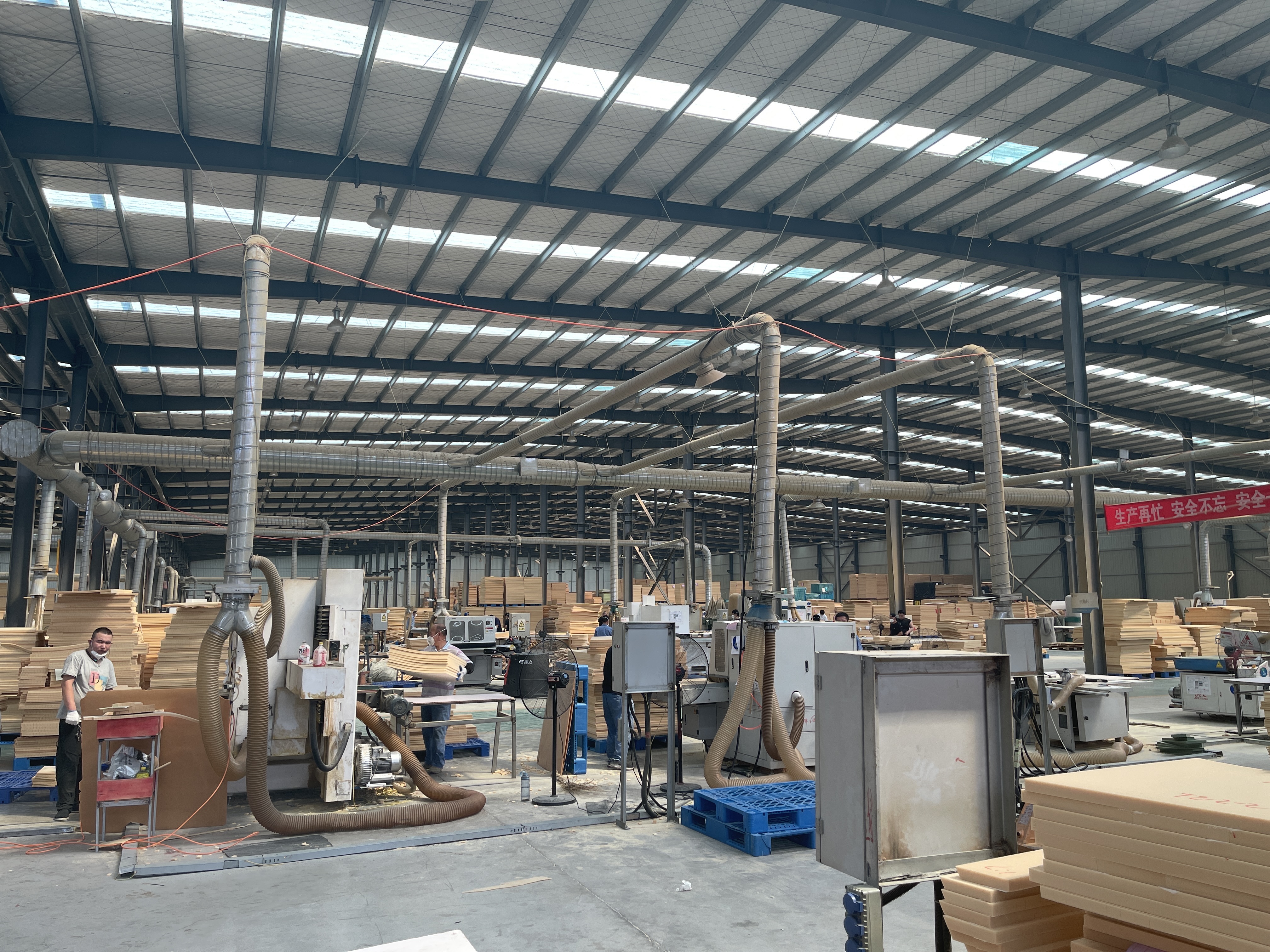
CINON operates a 40,000 m² facility with a monthly production capacity of 100,000 square meters of fiberglass fabric. The company maintains a minimum order quantity of 1,000 square meters and a typical lead time of 15 to 30 days. Annual output reaches 1,200,000 m², supported by a dedicated team of 25 engineers. All products are exported 100% to Europe, North America, and Asia-Pacific markets. The production program includes multiaxial non-crimp fabrics (unidirectional, biaxial, triaxial, quadriaxial) in weights from 400 to 1,500 g/m², and lightweight woven E-glass cloth from 25 to 400 g/m² in plain weave.
Step-by-Step: From Specification to Global Delivery
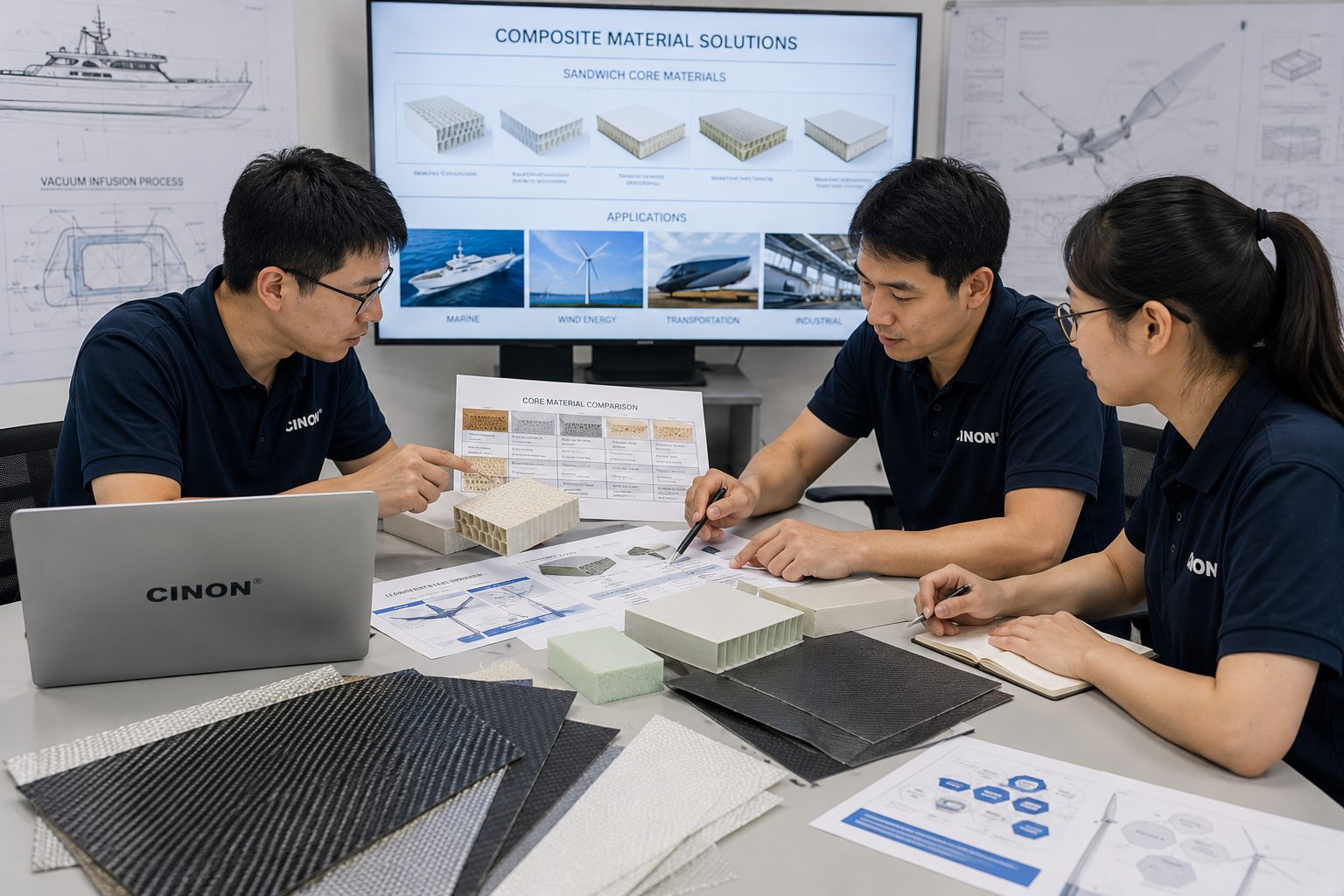
- Technical Evaluation – Before order confirmation, engineering support is provided to recommend suitable fiberglass fabric, core material, and manufacturing process based on your application (marine, wind, UAV, etc.).
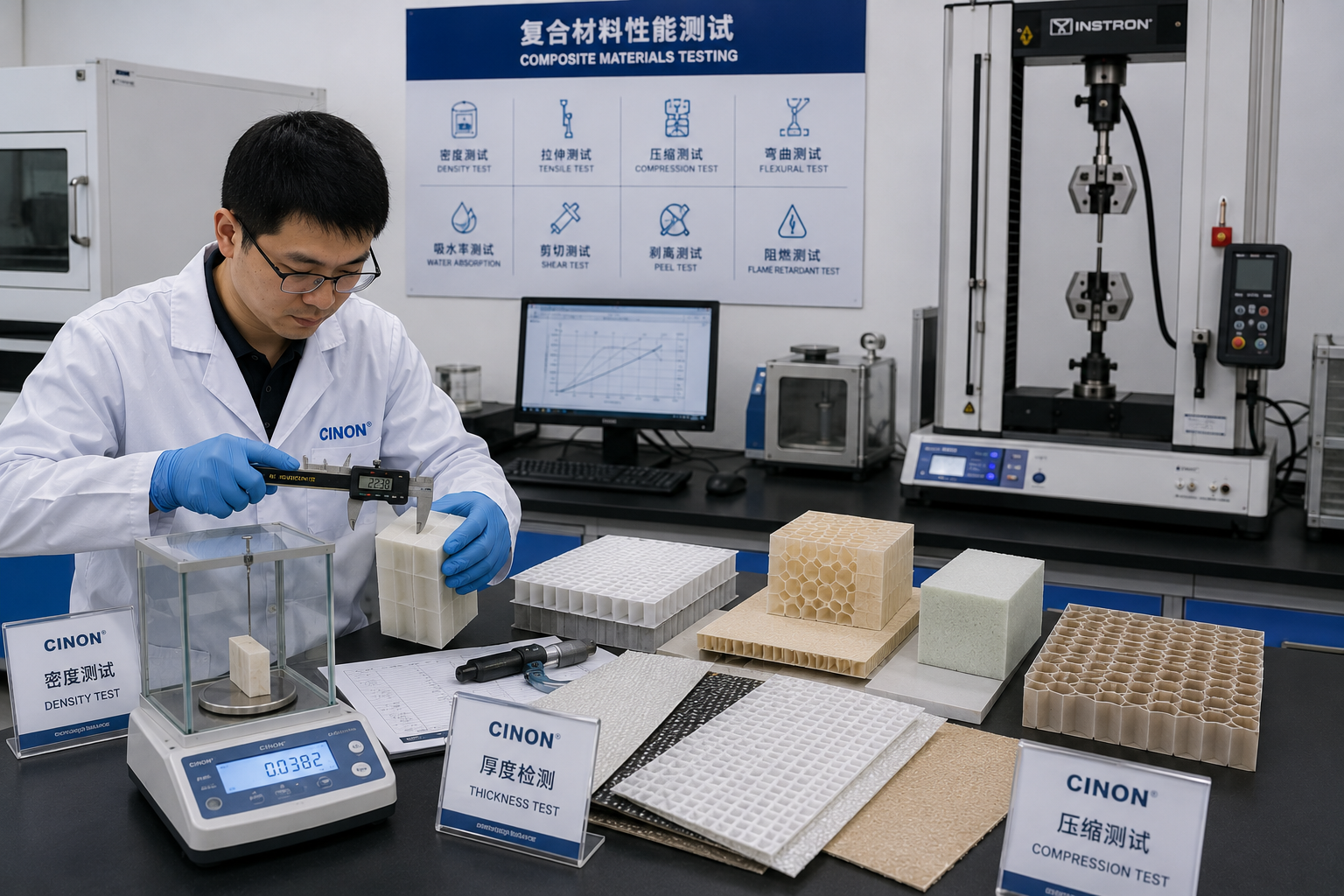
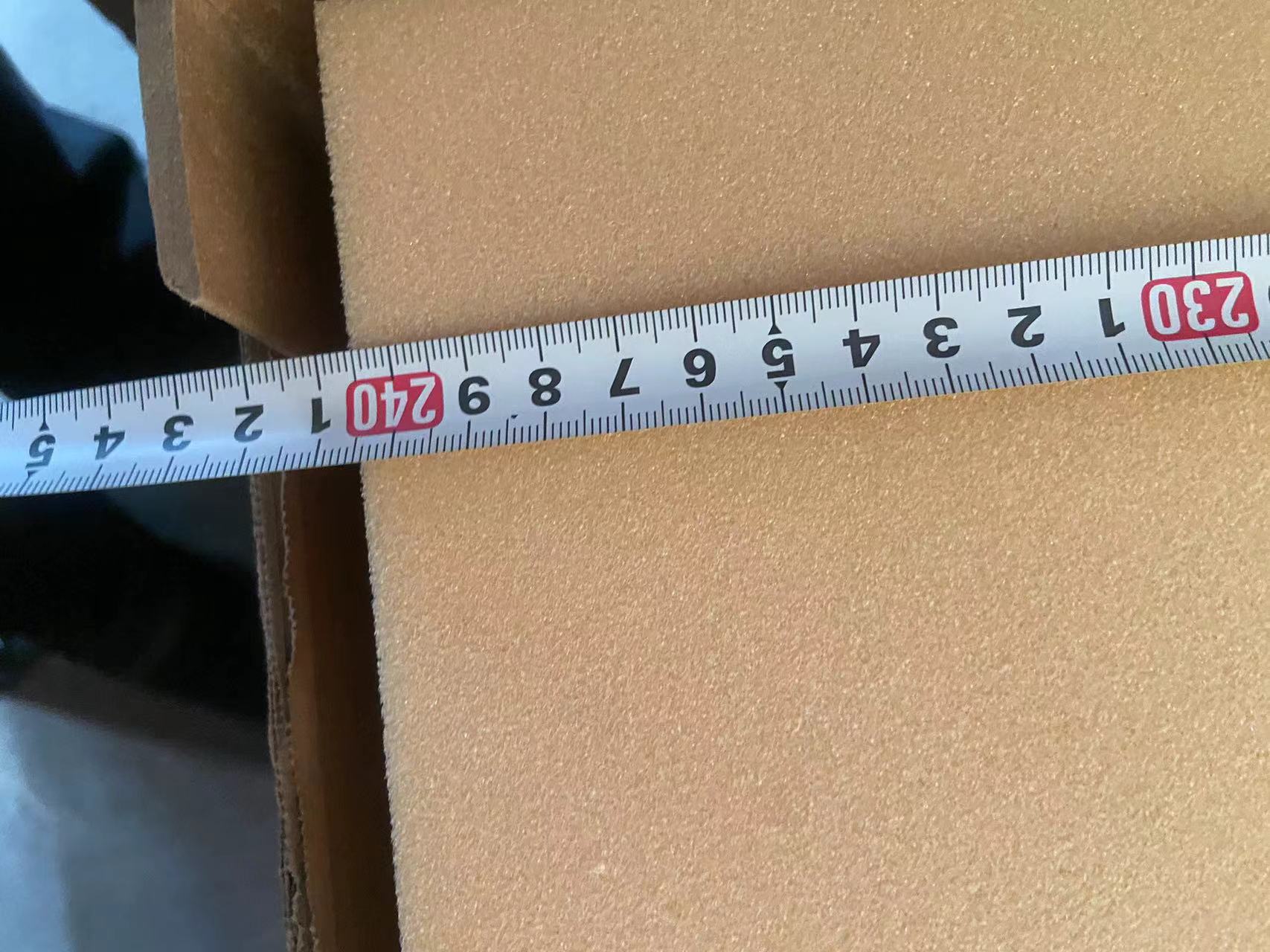
- Pre-production Specification Confirmation – All dimensions, thickness, density, roll length, width, and weight are verified. First-piece inspection is conducted before mass production.
- Production & In-line Inspection – Dimensions are checked within tolerance range during manufacturing. Photos of on-line inspection are available.
- Batch Performance Verification – Each batch undergoes density, thickness, weight, and appearance inspection. Test reports are provided upon request. Standardized tests referenced include ASTM D638 for tensile properties and ASTM D790 for flexural strength.
- Export Packaging Protection – Products are packed with reinforced pallets, moisture-proof wrapping, and corner protection. Packing dimensions are optimized to fit container sizes, minimizing freight cost and damage risk.
- Global Shipping – CINON ships via FOB, CIF, or EXW terms. Payment terms: 30% deposit in advance, 70% balance by TT before shipment.
Application-Specific Fiberglass Fabric Solutions
| Industry | Recommended Product | Why CINON |
|---|---|---|
| Marine & Yacht Building | Multiaxial fabrics (0°/90°, +45°/-45°), woven E-glass 300–600 g/m² | High resin wet-out, low porosity; suitable for vacuum infusion of hulls and decks |
| Wind Energy (Blades & Nacelles) | Unidirectional & biaxial fabrics 600–1,200 g/m² | Straight fiber orientation increases blade stiffness; 20-30% higher laminate performance vs. woven roving |
| UAV & Drone Structures | Lightweight plain-weave E-glass 25–100 g/m² | Fine weave allows thin, smooth skins; compatible with prepreg and wet lay-up |
| Automotive & Transportation | Multiaxial non-crimp fabrics for body panels | Reduced labor, faster infusion, lower overall production energy consumption |
| Composite Tooling & Molds | Heavy woven roving 800–1,500 g/m² | Cost-effective reinforcement for mold face and backing structure |
| Sandwich Panels (Marine, Industrial) | Multiaxial fabric + Core Mat + PET/PVC foam core | Integrated supply – fabric, core, and adhesive mat from one supplier reduces qualification cycles |
Fiberglass Fabric vs. Carbon Fiber: When to Choose Glass
| Attribute | Fiberglass Fabric | Carbon Fiber |
|---|---|---|
| Material Cost | Reference (1×) | 12–15× higher than fiberglass |
| Stiffness (modulus) | Lower (3–5× lower material cost relative to stiffness gain) | 2–4× higher stiffness |
| Impact Resistance | Better – more ductile fiber behavior | Brittle; requires careful design |
| Best Applications | Marine, industrial, construction, general structural | Aerospace, racing, high-performance structures |
| Maintenance & Repair | Stable long-term performance; cheaper repair & maintenance | Higher repair cost; requires specialized techniques |
| Production Energy | Lower overall energy consumption for mass production | Higher energy during carbonization process |
Frequently Asked Questions
1. How does CINON ensure compliance with marine and wind industry standards?
2. What is your production capacity for large-scale projects?
3. What is the price range for fiberglass fabric from CINON?
4. Can I order samples before placing a bulk order?
5. What is the typical lead time for a production order?
Ready to secure your fiberglass fabric supply? Request a quotation or download our product catalog.
Conclusion: Choose CINON for Long-Term Fiberglass Fabric Partnership
For composite manufacturers building yachts, wind blades, UAVs, automotive panels, or industrial structures, consistent fiberglass fabric quality is non-negotiable. CINON combines a 40,000 m² production base, 25 engineers, monthly capacity of 100,000 m², and rigorous quality control – from pre-production confirmation to export packaging – to deliver reliable fiberglass fabric across multiple industries. With 100% export experience to Europe, North America, and Asia-Pacific, and end-to-end technical support, CINON is positioned as a long-term supply partner for decision-makers executing high-stakes composite projects. Contact CINON today to discuss your fiberglass fabric requirements.
Guangdong Cinon New Material Technology Co., Ltd
Website: cinoncomposites.com
Email: waylon@cinoncomposites.com
Tel: +86 186-2098-8848 | WhatsApp: +86 135-8036-3674
Address: Building 3, No.1, Yiheng Lane, Jinnan Second Street, Dachongkou Village, Shawan Street, Panyu District, Guangzhou