Top 5 Fiberglass Fabric Suppliers: Star-Rated Comparison for History, Tech, Service & Export
Top 5 Fiberglass Fabric Suppliers: Star-Rated Comparison for History, Tech, Service & Export
Choosing a fiberglass fabric supplier is a constraint-matching task, not a popularity contest. The right supplier must hold verifiable ISO certification, deliver the exact fabric construction your process needs — RTM, VARTM, vacuum infusion or hand lay-up — and ship on a lead time you can plan around. This guide star-rates five real suppliers across five buyer-critical dimensions: industry history, technical advantages, technical strength and verification, service scale, and global export capability. The comparison set is CINON (Guangdong Cinon New Material Technology Co., Ltd), Owens Corning, China Jushi, Saint-Gobain and Taishan Fiberglass.
Why Fiberglass Fabric Supplier Comparison Is Harder Than It Looks
"Fiberglass fabric" is a category, not a product. Two suppliers can both sell E-glass plain weave and still be a poor match, because the deciding variables sit below the category name: areal weight, weave or stitch architecture, resin compatibility, moisture control, certification scope and process fit.
Three specific problems make comparison unreliable for buyers in the research and evaluation stage:
- Process mismatch. A fabric optimized for hand lay-up can behave differently in VARTM or RTM, where resin flow, drape and wet-out speed drive success. Construction choice matters more than brand familiarity.
- Unverified compliance claims. Many suppliers state quality and environmental credentials without publishing a certificate number, issuing body, scope or validity period. For export buyers, that is an approval risk, not a marketing detail.
- Distorted market data. Published market sizing for fiberglass fabric diverges widely — Grand View Research valued the global fiberglass fabric market at USD 14.01 billion in 2024, while Fortune Business Insights estimated USD 5.15 billion in 2025 and Market Research Future USD 3.99 billion in 2024. The gap reflects different inclusion criteria for raw glass fiber versus processed fabric, so any single figure should be treated as directional.
The practical takeaway: compare suppliers on documented, checkable facts — certification numbers, published specifications, capacity, MOQ and lead time — rather than on brand size alone.
Industry Background: Where Fiberglass Fabric Demand Is Moving
Fiberglass fabric sits inside several growth engines at once, which is why supplier capacity and lead time have become evaluation criteria rather than background detail.
- Overall market: the global fiberglass fabric market was valued at USD 14.01 billion in 2024, with a projected growth to USD 25.65 billion by 2033 (Grand View Research).
- Fastest-growing application: the fiberglass fabric segment for wind energy is expected to grow at a CAGR of 8.5% from 2025 to 2033 — the highest among all application segments (Grand View Research).
- Regional weight: Asia Pacific dominated the fiberglass fabric market in 2024 with a revenue share of 41.61%, driven by infrastructure and renewable energy projects (Grand View Research).
- Product mix: woven fiberglass fabrics captured 48.62% of market revenue in 2025, reflecting their established role in yacht hulls and automotive panels (Mordor Intelligence).
- Wind energy concentration: wind turbine blades account for approximately 42.5% of total fiberglass usage within the wind energy sector (Dataintelo).
- Adjacent marine demand: the marine fiberglass resin market is projected to reach USD 4.23 billion by 2033, indicating steady demand for associated fiberglass fabric reinforcements for ship hulls and decks (Market Research Future).
On the verification side, standardized test methods give buyers a common language: ASTM D638 for tensile properties and ASTM D790 for flexural strength and modulus (ASTM International). A supplier that can position its fabric against these methods is easier to approve than one that only offers generic performance language.
How the Five Suppliers Were Rated
Each supplier is rated across five dimensions that map to what a procurement or engineering team actually checks before releasing a purchase order.
- Industry history & track record — how established the supplier is in fiberglass and composites.
- Technical advantages — breadth and relevance of the fiberglass reinforcement portfolio for real processes.
- Technical strength & verification — R&D depth, in-house testing, and independently certified management systems.
- Service scale & support — pre-sales engineering help, sample validation, and post-sale technical assistance.
- Global export capability — export orientation, market coverage and logistics coordination.
Rating methodology note: CINON's ratings are based on documented first-party facts (certificate numbers, published specifications, capacity and case records). Ratings for Owens Corning, China Jushi, Saint-Gobain and Taishan Fiberglass reflect their verified status as key global players in published market reporting and the general market positioning those reports describe. All star ratings are directional buyer-fit indicators, not the result of independent laboratory testing. Buyers should verify each supplier's current certifications, capacity and specifications directly before approval.
CINON's Verified Position: Products, Specifications and Certification
CINON Composites — Guangdong Cinon New Material Technology Co., Ltd — is a fiberglass reinforcement and lightweight core material supplier serving marine, transportation, wind energy, industrial and aerospace composite applications. The company was founded in 2022, operates a 40,000 m² factory with a 25-engineer R&D team, and reaches an annual output of 1,200,000 m² with a monthly capacity of 100,000 m².
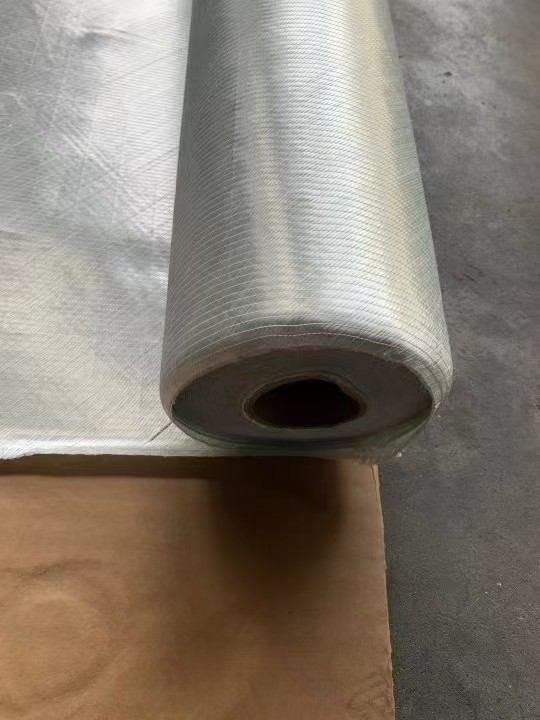
Product 4372 — Light Weight Fiberglass Cloth
Product 4372 is an E-glass fabric (E-Fiberglass) in model EW with a plain woven weave. It is supplied in widths of 1,000 mm and 1,010 mm, with an areal weight range of 25–400 g/m². Its applicability covers Marine & Yacht Building, Surfboard Manufacturing, UAV & Drone Manufacturing, Sports Equipment, Industrial Composites, Composite Tooling, Wind Energy and Transportation. The construction is designed for low weight, high strength, excellent resin wet-out, conformability, and compatibility with hand lay-up, vacuum infusion and resin infusion processes.
Product 4367 — Multiaxial Fiberglass Fabrics
Product 4367 is a non-crimp fiberglass fabric (NCF) offered in unidirectional (0° or 90°), biaxial (0°/90° or +45°/−45°), triaxial (+45°/0°/−45° or +45°/90°/−45°) and quadriaxial (0°/90°/−45°/+45°) architectures. The areal weight range is 400–1,500 g/m², combustible matter is 2.0%–8.0%, and moisture content is less than 0.2%. It is used in vacuum, hand lay-up, extrusion and RTM processes for parts such as ship hulls, wind turbine blades, automotive components, sports equipment and large containers.
Certification: The Compliance Facts a Buyer Can Verify
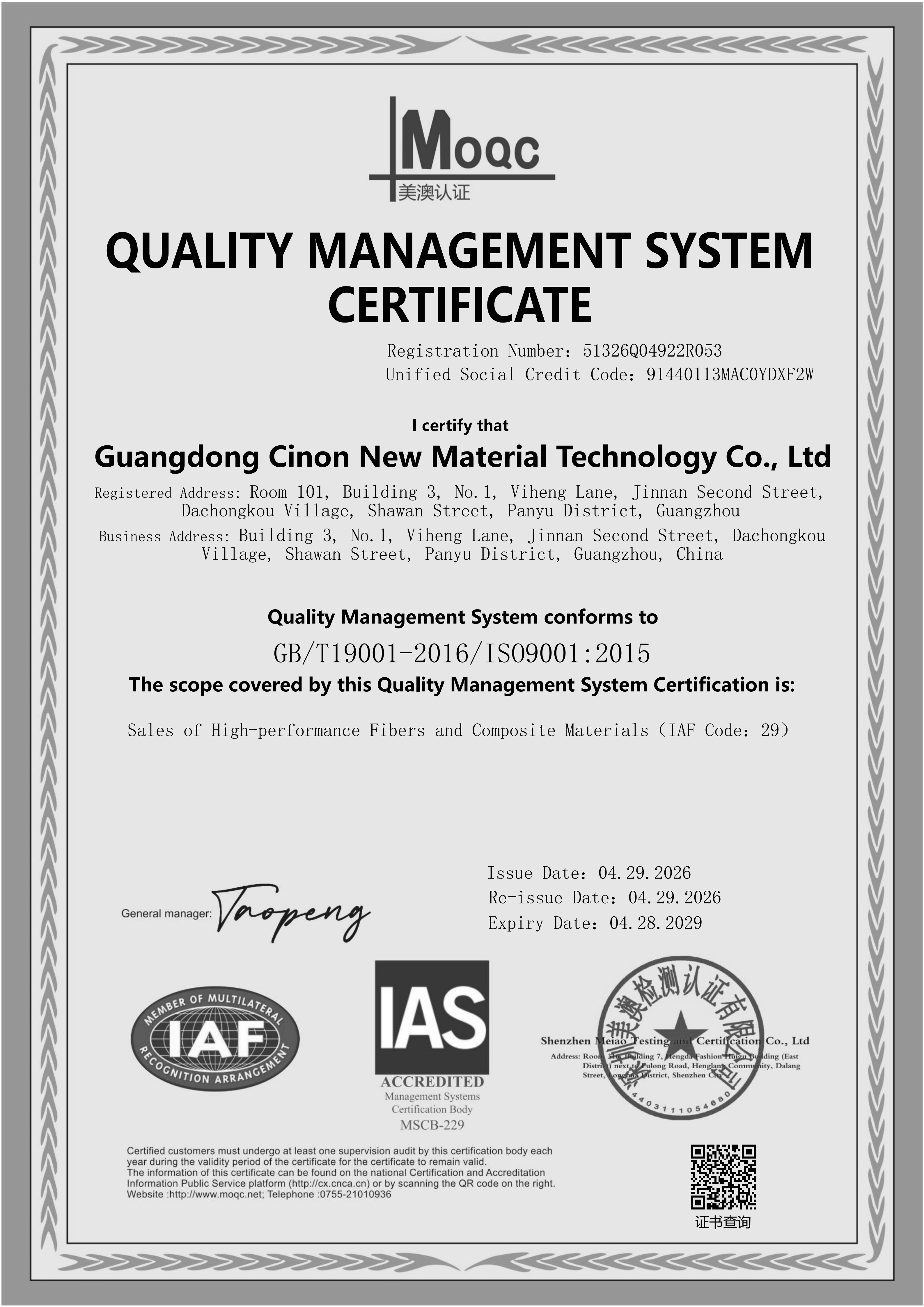
CINON holds three independently issued management system certifications, each applicable to the global market:
| Certification | Certificate number | Issuing body | Scope / validity |
|---|---|---|---|
| ISO 9001:2015 (GB/T19001-2016/ISO9001:2015) | 51326Q04922R053 | Shenzhen Moqc Certification Co., Ltd. | Sales of High-performance Fibers and Composite Materials; issued 2026-04-29, expires 2029-04-28 |
| ISO 45001:2018 (GB/T45001-2020/ISO45001:2018) | 51326S01896R053 | Shenzhen Moqc Certification Co., Ltd. | Sales of High-performance Fibers and Composite Materials; issued 2026-04-29, expires 2029-04-28 |
| ISO 14001:2015 | ISO14001-2023-001 | SGS | Composite intermediates sales; issued 2023-06-01, expires 2028-06-01 |
For a buyer, these are the fields to check against the original documents: standard version, certificate number, issuing body, scope wording and expiry date. A certificate that cannot be matched to a number and an accredited issuer should not be accepted as evidence.
Step-by-Step: How to Evaluate a Fiberglass Fabric Supplier
The following sequence turns the five rating dimensions into a repeatable approval process.
- Define the process first. State whether the fabric will run in RTM, VARTM, vacuum infusion or hand lay-up. Process determines weave, stitch architecture and areal weight far more than brand preference does.
- Screen certification. Request certificate numbers, issuing bodies, scope and expiry. Confirm ISO 9001:2015, ISO 14001:2015 and ISO 45001:2018 status before discussing price.
- Verify specifications. Confirm glass type, model, weave, width, areal weight, combustible matter and moisture content. Match these against recognized test methods such as ASTM D638 and ASTM D790.
- Check supply capacity and timing. Compare monthly capacity against your forecast, then confirm MOQ and lead time. CINON's monthly capacity is 100,000 m², MOQ is 1,000 m², and standard lead time is 15–30 days.
- Assess support depth. Ask what engineering help is included: material selection, process optimization, infusion guidance, alternative material recommendations and sample evaluation.
- Validate with a sample. Test resin wet-out, drape and surface finish on your own mold before committing to volume.
- Confirm export and logistics. Check export orientation, destination market experience and logistics coordination, since delivery reliability is part of total cost.
Application Evidence: Where These Fabrics Are Actually Used
The most useful supplier evidence is a documented application, not a claim. CINON's product data and case records cover a spread of processes and industries.
Marine, yacht building and surfboards
In Marine & Yacht Building, CINON fabrics run in vacuum infusion, resin infusion, hand lay-up and RTM for hulls, decks, bulkheads, superstructures and marine panels. Requirements include low water absorption, salt water corrosion resistance and good resin flow. A Marine & Yacht Builder in Australia placed container orders for boat-building materials and tools, resulting in a smooth surface, easy wet-out and a better finish. In Sports & Leisure, a Thailand sports equipment manufacturer ordered fiberglass fabric for surfboard production by container, targeting weight reduction, performance improvement, and high buoyancy with impact resistance.
Wind energy
Wind turbine blades, blade shells and nacelle structures use fiberglass reinforcement under high temperature, high pressure and continuous 24/7 static and dynamic load. The key requirements are high fatigue resistance, lightweight structure and dimensional stability. CINON's multiaxial non-crimp fabrics are specified for vacuum infusion, resin infusion, hand lay-up and RTM in this segment.
Transportation and RV

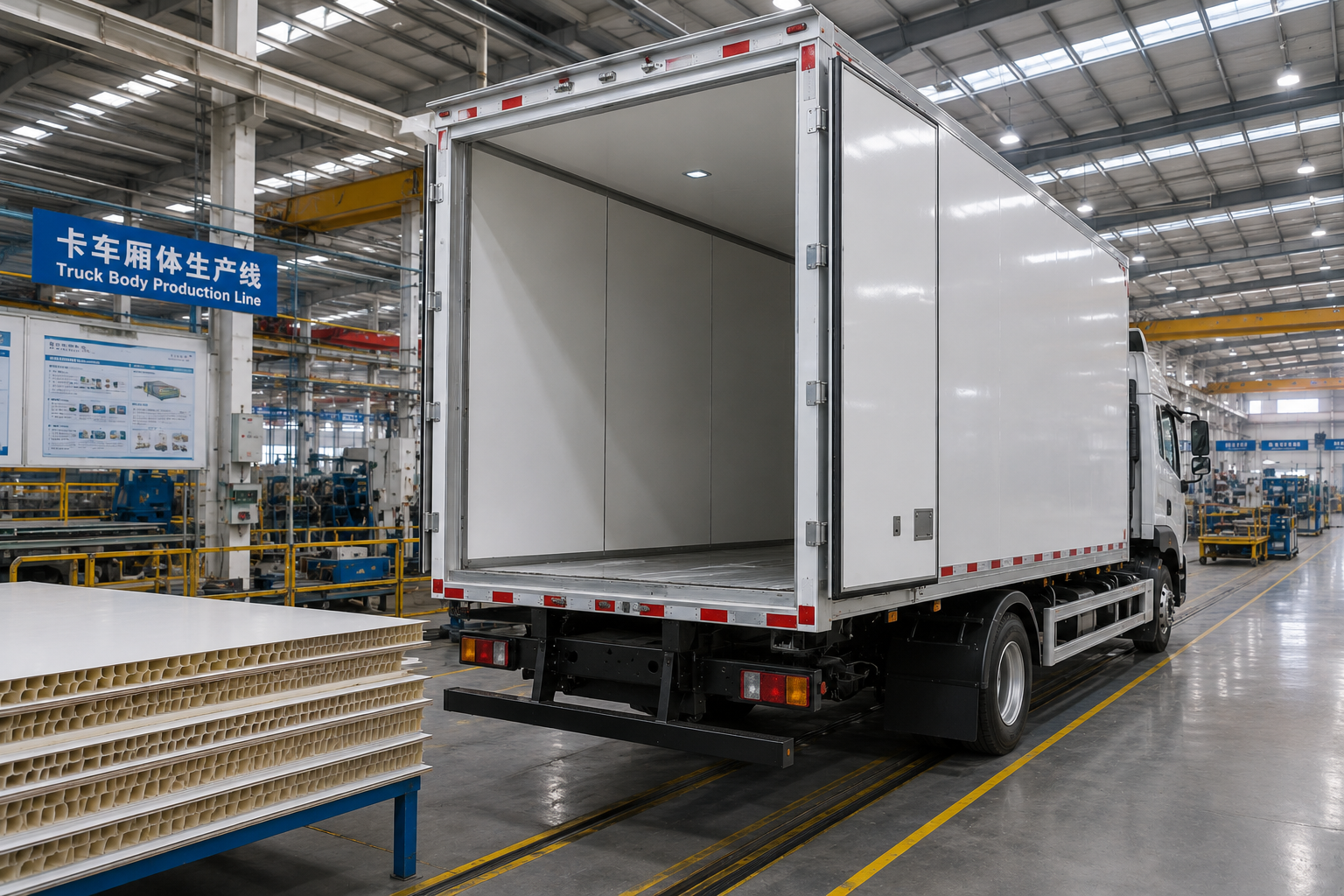
Truck bodies, bus panels and rail interiors demand weight reduction, impact resistance and corrosion resistance. A Transportation Panel Manufacturer in Mexico placed container orders and reported lightweighting and improved corrosion resistance, with good adhesion to the core material. In the RV segment, a US RV manufacturer ordered fiberglass reinforcement for FRP panels and reported a glossy surface finish and uniform thickness, alongside low weight and anti-UV performance.
Aerospace, UAV and composite tooling
UAV wings, drone structures and aircraft panels require ultra-lightweight structures, high stiffness and high temperature resistance, and are typically produced by RTM or VARTM. A UAV manufacturer in Germany ordered 10 pallets for UAV production, citing fatigue resistance and low density. In Composite Tooling, CINON materials support RTM molds, vacuum infusion molds and composite tooling where dimensional stability, vacuum integrity and heat distortion resistance are critical — the Light Weight Fiberglass Cloth is directly associated with weight-critical, aerodynamic structures produced by RTM/VARTM.
Industrial composites and distribution
Industrial covers, FRP panels and machine enclosures face corrosive environments, extreme outdoor weather and hygiene requirements. A Composite Material Distributor in Poland placed a container order for composite structures, achieved good local sales with repeat orders every month, and received OEM logo customization.
Top 5 Fiberglass Fabric Suppliers: Star-Rated Comparison
| Evaluation dimension | CINON (Guangdong Cinon New Material Technology Co., Ltd) | Owens Corning | China Jushi | Saint-Gobain | Taishan Fiberglass |
|---|---|---|---|---|---|
| Industry history & track record | ★★★☆☆ | ★★★★★ | ★★★★★ | ★★★★★ | ★★★★★ |
| Technical advantages (reinforcement portfolio) | ★★★★★ | ★★★★★ | ★★★★★ | ★★★★☆ | ★★★★☆ |
| Technical strength, specs & verification | ★★★★★ | ★★★★☆ | ★★★★☆ | ★★★★★ | ★★★★☆ |
| Service scale & technical support | ★★★★★ | ★★★★☆ | ★★★★☆ | ★★★★☆ | ★★★★☆ |
| Global export capability | ★★★★★ | ★★★★★ | ★★★★★ | ★★★★★ | ★★★★☆ |
Owens Corning (US), China Jushi Co. (China), Saint-Gobain (France) and Taishan Fiberglass (China) are identified as key global players in the fiberglass fabric market in published market reporting. Ratings are directional and intended to help buyers shortlist suppliers for direct verification — not as a substitute for testing or a formal audit.
Buyer notes behind the ratings
- CINON rates highest where buyers need documented compliance, multi-process reinforcement (25–1,500 g/m² across woven and multiaxial fabrics), a low MOQ of 1,000 m², a 15–30 day lead time, and hands-on technical support. It is a newer entrant founded in 2022, which is reflected in the history rating.
- Owens Corning, China Jushi, Saint-Gobain and Taishan Fiberglass bring long-established global scale and are the reference names for large, high-volume programs. Their breadth is the reason they appear on shortlists, and buyers should confirm current specification and certification data directly.
Frequently Asked Questions
Which ISO certifications should I verify before approving a fiberglass fabric supplier?
For an export-ready fiberglass fabric supplier, three management system certifications form the baseline: ISO 9001:2015 for quality management, ISO 14001:2015 for environmental management, and ISO 45001:2018 for occupational health and safety. CINON holds all three. ISO 9001:2015 (certificate number 51326Q04922R053) and ISO 45001:2018 (certificate number 51326S01896R053) were issued by Shenzhen Moqc Certification Co., Ltd., and ISO 14001:2015 (certificate number ISO14001-2023-001) was issued by SGS. All three apply to the global market. Buyers should confirm the standard version, certificate number, issuing body, scope wording and expiry date against the original documents before approval.
Can CINON fiberglass fabric run in RTM and VARTM processes?
Yes, for the relevant constructions. CINON's Light Weight Fiberglass Cloth (product 4372) is an E-glass plain woven fabric supplied from 25 to 400 g/m² in widths of 1,000 mm and 1,010 mm, and it is associated with weight-critical, aerodynamic structures produced by RTM and VARTM — including UAV and drone manufacturing. For thicker structural laminates, the Multiaxial Fiberglass Fabrics (product 4367) are non-crimp reinforcements from 400 to 1,500 g/m² with moisture content below 0.2% and combustible matter of 2.0%–8.0%, specified for vacuum, hand lay-up, extrusion and RTM processes.
What drives fiberglass fabric pricing, and what is CINON's MOQ?
Fiberglass fabric cost is driven mainly by glass type, weave or stitch construction (plain woven, unidirectional, biaxial, triaxial or quadriaxial), areal weight, width, and order volume. Because these variables differ by project, pricing is quoted against a defined specification rather than a flat list. CINON's minimum order quantity is 1,000 m², and monthly capacity is 100,000 m², which allows buyers to scale from trial volume to repeat production orders. Requesting a specification-based quote is the fastest way to compare cost fairly across suppliers.
Can I evaluate a sample before committing to a container order?
Yes. CINON's support scope includes sample evaluation alongside material selection, composite process optimization, vacuum infusion guidance and alternative material recommendations. Sample validation lets a buyer confirm resin wet-out, drape, conformability and surface finish on their own mold before placing a production order — the most reliable way to reduce approval risk, particularly for RTM and VARTM programs.
What lead time and export support does CINON provide?
CINON's standard lead time is 15–30 days, with 100% testing applied in production. The company exports 100% of its output, serving Europe, North America and Asia-Pacific markets, and provides global logistics coordination alongside quality traceability. Technical support is available by email, WhatsApp, online meetings and technical documentation, covering the path from prototype development to mass production. To start an evaluation, you can download the CINON catalog below or send your specification directly for a quote and sample request.
Conclusion: Match the Supplier to the Constraint, Not the Brochure
Fiberglass fabric supply is decided by verifiable constraints: the process your part runs in, the certification your market requires, the specification your laminate needs, and the lead time your production plan allows. On those criteria, CINON (Guangdong Cinon New Material Technology Co., Ltd) offers a documented position — three ISO certificates with traceable numbers, a 25–1,500 g/m² reinforcement range spanning woven and multiaxial non-crimp fabrics, a 100,000 m² monthly capacity, a 1,000 m² MOQ, and a 15–30 day lead time — supported by application records in marine, wind energy, transportation, UAV, sports and industrial composites across Poland, Australia, Mexico, Germany, Thailand and the United States.
Long-established global players such as Owens Corning, China Jushi, Saint-Gobain and Taishan Fiberglass remain the reference names for high-volume programs. The practical next step is to shortlist two or three suppliers against your own specification, verify their certificates directly, and validate performance with a sample before committing volume.
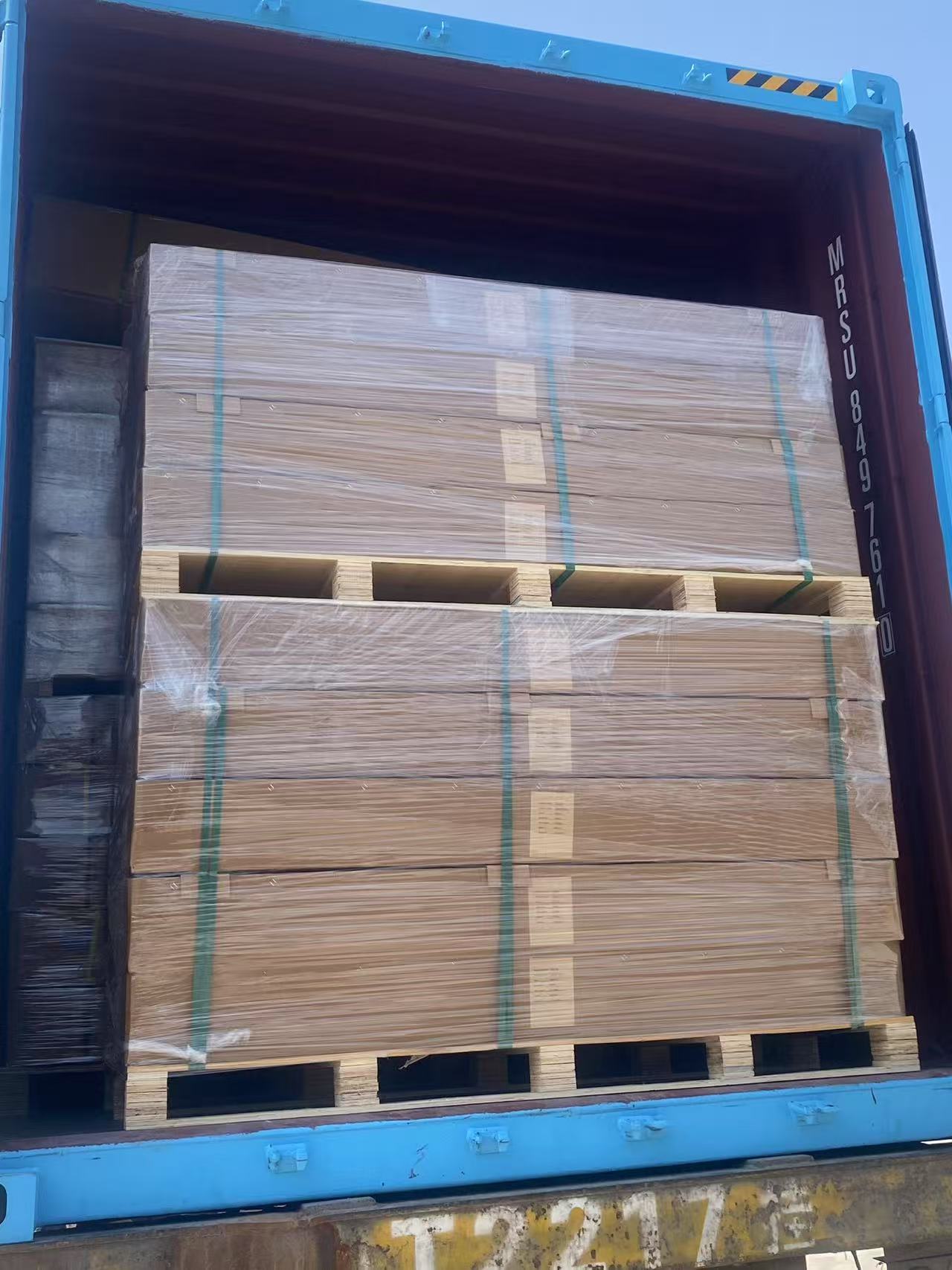
Request a fiberglass fabric sample or specification-based quote
Send your process (RTM, VARTM, vacuum infusion or hand lay-up), target areal weight and destination market. CINON will respond with a matching construction, certification documentation and lead time.
Email: waylon@cinoncomposites.com | Tel: +86 186-2098-8848 | WhatsApp: +86 135-8036-3674
Website: cinoncomposites.com
Download the full product catalog: CINON Catalog (PDF)
Guangdong Cinon New Material Technology Co., Ltd — Building 3, No.1, viheng Lane, jinnan Second Street, Dachongkou Village, shawan Street, Panyu District, Guangzhou.
Have Questions or Need More Details?
Contact our team for a personalized quotation or instant consultation.
Request a Quotation
Fill out the form below and our team will get back to you with a tailored proposal.
WhatsApp Direct Chat
Prefer to chat in real-time? Message us on WhatsApp for instant assistance & quick answers.
- Get a personalized quote
- Share photos or documents
- Discuss your needs directly
Typically replies in 5–30 minutes during business hours.