Top 5 Fiberglass Fabric Suppliers for Wind Energy: A Star-Rated Technical Guide (CINON)
Wind-energy buyers do not need another generic fabric list. They need a repeatable way to compare suppliers against blade, shell and nacelle requirements, then verify the evidence behind each claim. This guide uses a star-rated evaluation framework and positions CINON Composites as a documented shortlist candidate for wind-energy reinforcement sourcing.
Intro: Why Wind-Energy Fiberglass Fabric Needs a Technical Shortlist
Fiberglass fabric for wind energy is a structural material, not a commodity textile. A blade shell or nacelle structure must carry long-term static and dynamic loads, resist high and low temperatures, tolerate high pressure and corrosive exposure, and support 24/7 continuous operation. The reinforcement choice affects fatigue resistance, weight reduction, structural performance and service life.
The demand signal is clear. Mordor Intelligence estimates that wind energy is the fastest-growing application for fiberglass fabric at 7.02% CAGR through 2031. Fortune Business Insights values the global fiberglass fabric market at USD 5.15 billion in 2025 and projects USD 9.72 billion by 2034, a 7.4% CAGR. Those commercial estimates vary by scope and methodology, so they are directional planning inputs, not procurement forecasts.
CINON Composites, formally Guangdong Cinon New Material Technology Co.,Ltd, is a Guangzhou-based manufacturer of fiberglass reinforcements and lightweight core materials. Its range includes fiberglass fabrics, biaxial and multiaxial fabrics, PET foam core, PVC foam core, PMI foam core, Core Mat, PP honeycomb and aramid honeycomb. For wind-energy buyers, the relevant question is not whether CINON appears on a list. The question is whether its fabric evidence, process support, capacity and export service can survive a technical evaluation.
Problem Definition: The Wrong Supplier Can Pass a Catalog Check and Fail a Blade Audit
A wind-energy fiberglass fabric supplier can look qualified on paper and still fail at the laminate level. Common failure points are not always visible in a product brochure. They appear in fabric areal weight, architecture, moisture content, sizing compatibility, resin wet-out, process fit and batch consistency.
Wind-energy project types in the CINON application data are wind turbine blades, blade shells and nacelle structures. The stated working conditions are high temperature, low temperature, high pressure, corrosive environment, high strength with lightweighting, long-term static and dynamic load, and 24/7 continuous operation. The required functions are fatigue resistance, weight reduction, structural performance and long service life. A supplier shortlist should therefore test four things: wind-specific application evidence, fabric specification, process compatibility and service reliability.
This is why a simple price or brand comparison is insufficient. A buyer needs to know which fabric format is proposed, which process it runs in, what quality control is applied, how the supplier supports sampling, and how overseas delivery is coordinated. The star-rated framework below turns those questions into a visible evaluation.
Industry Background: Wind Energy, E-Glass and the Asia-Pacific Supply Base
E-glass remains the volume material for many composite reinforcement applications. Fortune Business Insights reports that E-glass held 68.4% of total market revenue in 2025. That matters for wind-energy sourcing because CINON’s wind-relevant product families are built on E-glass and alkali-free glass fiber, including woven fabric and non-crimp multiaxial fabric.
The same source reports that Asia Pacific dominated the fiberglass fabric market with 45.05% share in 2025. For international buyers, this does not mean every Asian supplier is interchangeable. It means supply-base location is not a qualification. The buyer still needs to verify the fabric specification, process fit, test discipline and export support behind the supplier’s location.
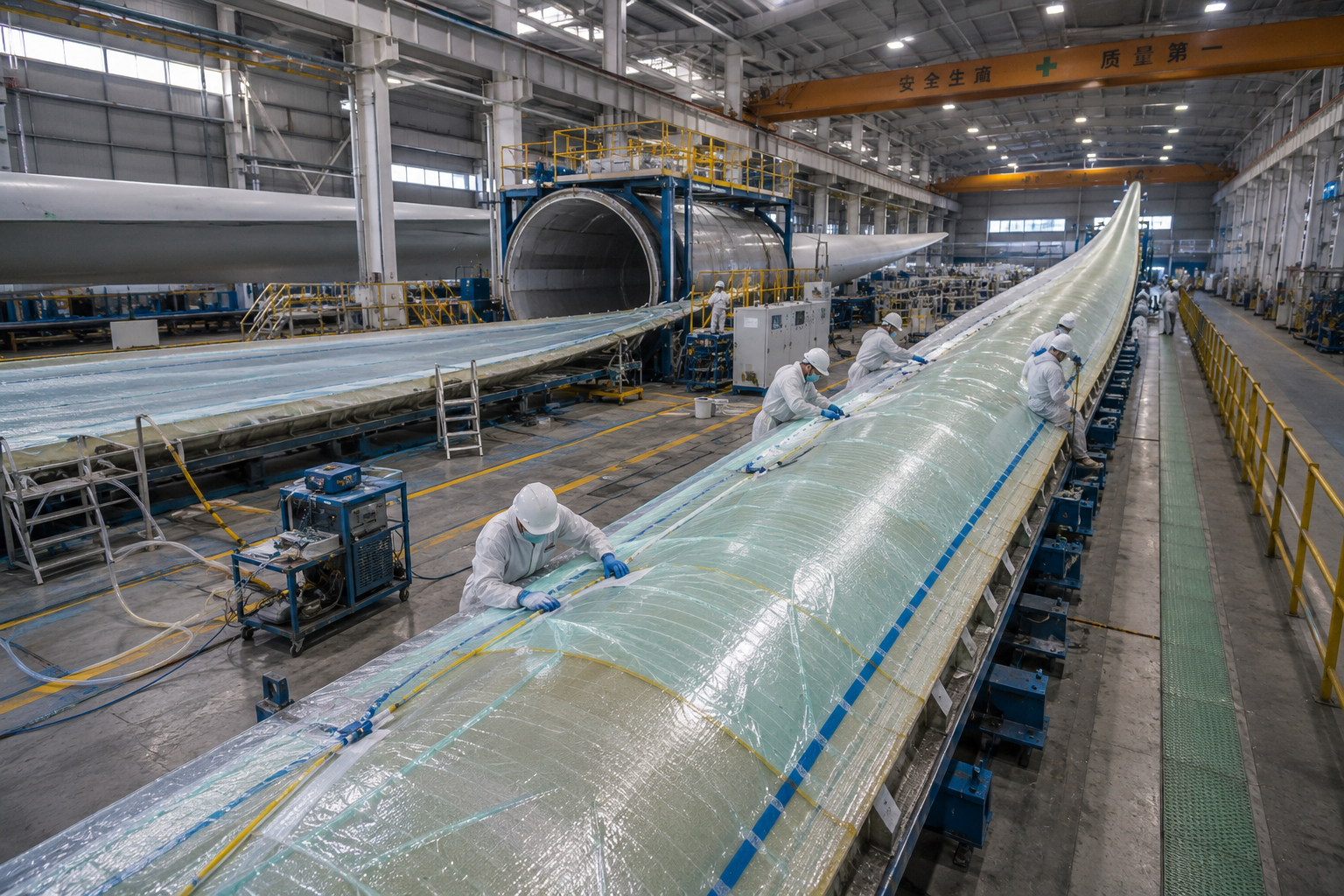
Wind blades and blade shells are fatigue-critical structures. A fabric that wets out well in a small sample may still create voids, unequal resin distribution or handling problems when scaled to a long blade mould. Nacelle structures add different requirements, including dimensional stability and structural performance under continuous load. The supplier evaluation must therefore connect material data to the actual project type and process.
Detailed Solution: A Star-Rated Supplier Framework for Wind Energy
The framework uses five evidence dimensions. A supplier earns one star for each dimension that is documented and directly relevant to wind-energy evaluation. This is an evidence-completeness rating, not a certification, not a test result and not a substitute for a supplier audit.
| Star level | What it means in this guide | Buyer action |
|---|---|---|
| ★★★★★ | All five dimensions are documented: wind application, fabric specification, process compatibility, service scale and overseas support. | Proceed to sample, test report review and audit. |
| ★★★★☆ | Four dimensions are documented; one area still needs project-specific evidence or a delivered wind reference. | Request the missing evidence before commercial approval. |
| ★★★☆☆ | Three dimensions are documented; material or service gaps remain. | Use only as a benchmark until gaps are closed. |
| ★★☆☆☆ | Limited evidence is available for wind-energy evaluation. | Do not shortlist without direct technical verification. |
| ★☆☆☆☆ | Insufficient evidence for a wind-energy decision. | Request basic datasheets and process references. |
The five dimensions are: first, wind-energy application evidence for blades, blade shells or nacelles. Second, fabric specification covering glass type, areal weight, architecture, width, moisture and combustible matter. Third, process compatibility with vacuum infusion, resin infusion, hand lay-up or RTM. Fourth, service scale covering capacity, MOQ, lead time and quality control. Fifth, overseas service capability covering export markets, technical support and logistics coordination.
How CINON Maps to the Framework
CINON’s wind-energy application data covers wind turbine blades, blade shells and nacelle structures, with markets listed as Germany, Denmark, Spain, the United States, China and India. The process list includes vacuum infusion, resin infusion, hand lay-up and RTM. The stated functions are fatigue resistance, weight reduction, structural performance and long service life. That satisfies the wind-application dimension.
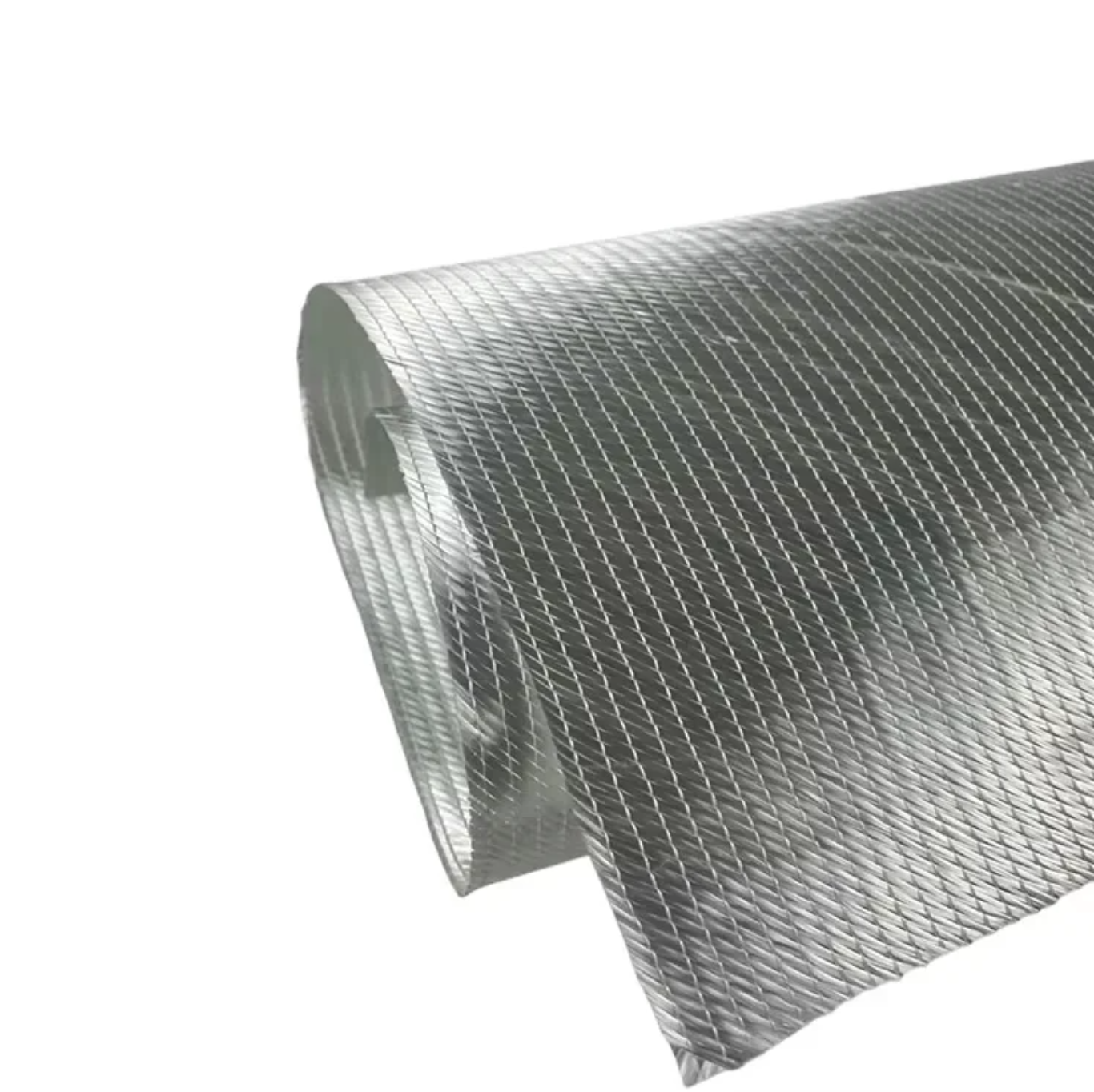
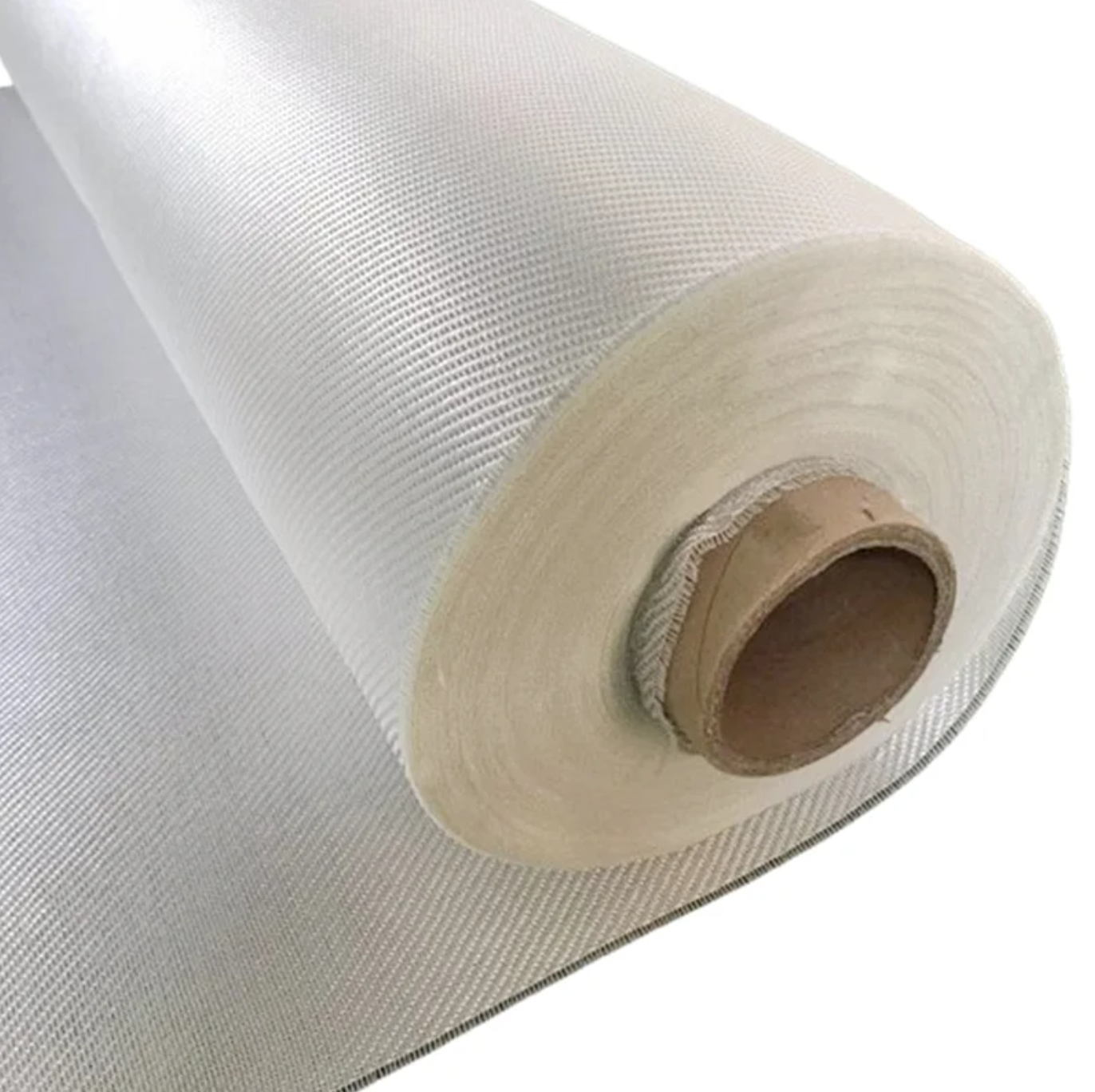
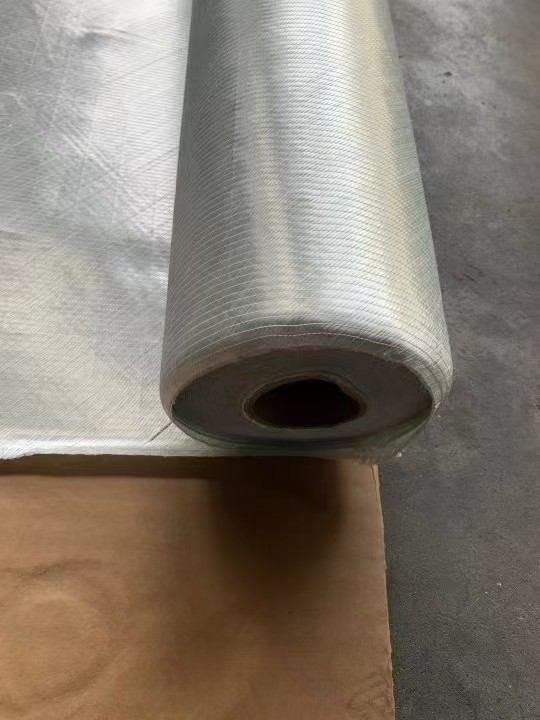
On fabric specification, CINON lists two relevant families. The Light Weight Fiberglass Cloth is an E-Glass Fabric, model EW, plain woven, with width of 1000 mm or 1010 mm and weight from 25 to 400 g/m2. The Multiaixal Fiberglass Fabrics family is a non-crimp fiberglass fabric in unidirectional, biaxial, triaxial and quadriaxial designs, with weight from 400 to 1500 g/m2, combustible matter of 2.0% to 8.0% and moisture content below 0.2%. Both families list wind energy among their applicable industries.
On service scale, CINON lists a 40,000 m2 facility, annual output of 1,200,000 m2, monthly capacity of 100,000 m2, 25 engineers, 100% test quality control, MOQ of 1,000 m2 and lead time of 15-30 days. On overseas support, the company reports 100% export ratio and markets in Europe, North America and Asia-Pacific, with technical support covering material selection, composite process optimization, vacuum infusion guidance, alternative material recommendations, sample evaluation, quality traceability and global logistics coordination.
This guide therefore assigns CINON a four-star evidence rating: four dimensions are strongly documented, while a wind-specific delivered case study is not present in the available evidence pack. That is not a negative finding. It is a clear next step: request wind-specific test reports, sample evaluation and any available blade or nacelle references before commercial approval.
Comparison Table: Top 5 Fiberglass Fabric Suppliers for Wind Energy
Ranking note: this is a procurement shortlist for evaluation, not a claim that any listed supplier is better than another. CINON is the only supplier with a wind-energy evidence pack in this dataset and therefore the only supplier scored here. Ranks 2-5 are benchmark suppliers for direct verification; their wind-specific fabric specifications, certifications and service levels are not asserted in this guide.
| Rank | Supplier | Wind-energy evidence captured in this review | Metrics to verify before approval | Evidence stars |
|---|---|---|---|---|
| 1 | CINON Composites (Guangdong Cinon New Material Technology Co.,Ltd) | Wind turbine blades, blade shells and nacelle structures; markets DE, DK, ES, US, CN, IN; vacuum infusion, resin infusion, hand lay-up and RTM. | E-glass woven 25-400 g/m2; NCF 400-1500 g/m2; moisture below 0.2%; combustible matter 2.0%-8.0%; 40,000 m2 facility; 1,200,000 m2 annual output; 100% test; MOQ 1,000 m2; lead time 15-30 days. | ★★★★☆ |
| 2 | Owens Corning | Benchmark supplier for direct verification. Wind-specific fabric data is not captured in this dataset. | Request current wind blade fabric datasheet, glass type, areal weight, architecture, sizing, fatigue test data, capacity and regional support. | Not scored here |
| 3 | Jushi Group | Benchmark supplier for direct verification. Wind-specific fabric data is not captured in this dataset. | Request wind-energy product range, NCF architecture, moisture control, process guidance, MOQ and export support for your region. | Not scored here |
| 4 | Chongqing Polycomp International Corp. (CPIC) | Benchmark supplier for direct verification. Wind-specific fabric data is not captured in this dataset. | Request blade-grade fabric evidence, test reports, capacity, lead time and local technical response. | Not scored here |
| 5 | Nippon Electric Glass Co., Ltd. | Benchmark supplier for direct verification. Wind-specific fabric data is not captured in this dataset. | Request wind application datasheets, process compatibility, quality control and overseas service plan. | Not scored here |
The table is deliberately strict. A supplier name alone does not earn a wind-energy score. The buyer should compare the same evidence set across every candidate: fabric format, process route, quality control, capacity and overseas support. For ranks 2-5, the next action is not rejection. It is a direct request for current wind-specific documentation.
Step-by-Step Breakdown: How to Evaluate a Wind-Energy Fiberglass Fabric Supplier
Step 1: Define the Operating Conditions
Start with the real service environment. CINON’s wind-energy application data lists high and low temperature, high pressure, corrosive environment, high strength with lightweighting, long-term static and dynamic load, and 24/7 continuous operation. These conditions should be translated into project-specific test requirements before fabric samples are requested.
Step 2: Match the Project Type
Wind turbine blades, blade shells and nacelle structures do not use reinforcement in the same way. The buyer should define whether the fabric is for surface layers, structural laminates, shell reinforcement or nacelle components. CINON lists all three project types in its wind-energy application data, but the final fabric selection still depends on the laminate design and process.
Step 3: Select the Fabric Architecture
For light surface or finishing layers, the CINON Light Weight Fiberglass Cloth is a plain-woven E-glass fabric from 25 to 400 g/m2, with 1000 mm or 1010 mm width. For structural reinforcement, the Multiaixal Fiberglass Fabrics family offers unidirectional, biaxial, triaxial and quadriaxial non-crimp designs from 400 to 1500 g/m2. The buyer should specify fiber orientation, areal weight and roll width rather than asking only for fiberglass fabric.
Step 4: Check Moisture and Combustible Matter
CINON’s non-crimp fabric specification lists moisture content below 0.2% and combustible matter of 2.0% to 8.0%. These values should be reviewed against the laminate process and project specification. A low moisture target is especially relevant when vacuum infusion and resin infusion are used, because moisture can affect resin cure and laminate quality.
Step 5: Confirm Process Compatibility
Wind blade production commonly uses vacuum infusion, resin infusion, hand lay-up or RTM. The CINON wind-energy application data lists all four. The buyer should confirm that the proposed fabric has been evaluated in the same process route. This product requires supporting equipment such as vacuum bagging systems, so process support and equipment assumptions should be clarified before the trial.
Step 6: Verify Service Scale and Quality Control
CINON lists a 40,000 m2 facility, 1,200,000 m2 annual output, 100,000 m2 monthly capacity, 25 engineers, 100% test quality control, MOQ of 1,000 m2 and lead time of 15-30 days. These figures should be matched to the buyer’s order pattern. A large blade programme and a repair or prototype programme need different scheduling assumptions.
Step 7: Assess Overseas Service Capability
CINON reports 100% export ratio and markets in Europe, North America and Asia-Pacific. Its after-sales support covers material selection, composite process optimization, vacuum infusion guidance, alternative material recommendations, sample evaluation, quality traceability and global logistics coordination. The buyer should confirm the support route for their region, including technical meetings, documentation and delivery coordination.
Step 8: Qualify with Sample and Audit
A four-star evidence rating is not a final approval. The last step is a sample trial and audit. Request the fabric in the target areal weight and width, run it through the intended process, and compare laminate quality, wet-out, handling and dimensional stability. Then verify test records, packaging, traceability and delivery terms.
Use Cases: Where the Evaluation Framework Applies
Wind Turbine Blades and Blade Shells
Blade shells need fatigue resistance, weight reduction and structural performance under long-term dynamic load. CINON’s Multiaixal Fiberglass Fabrics are listed for wind turbine blades and support vacuum infusion, resin infusion, hand lay-up and RTM. A buyer should request the NCF architecture, areal weight and test data that match the blade design, then confirm the fabric in a representative infusion trial.
Nacelle Structures
Nacelle structures are listed as a CINON wind-energy project type. The evaluation should focus on dimensional stability, structural performance and long service life under continuous operation. Because nacelle designs vary, the buyer should confirm the laminate schedule, process route and any project-specific test requirements rather than relying on a general wind-energy claim.
Process-Specific Wind Blade Production
Vacuum infusion and resin infusion are common routes for large wind components. CINON lists both, along with hand lay-up and RTM. The buyer should check whether the proposed fabric has the right permeability, drape and wet-out behaviour for the mould and resin system. This product requires supporting equipment such as vacuum bagging systems, so the process trial should include the full bagging and infusion setup.
Cross-Application Export Record
CINON’s available case evidence is not wind-blade specific, but it shows repeat export supply across composite applications. A Poland-based composite material distributor placed container orders with OEM logo support and reports repeat orders every month. An Australia marine and yacht builder reports smooth surface, easy wet-out and better finish. A Mexico transportation panel manufacturer reports lightweighting and improved corrosion resistance with good adhesion to core material. A Germany UAV manufacturer ordered 10 pallets and reports ultra-lightweight structures, high stiffness, high temperature resistance, fatigue resistance and low density.
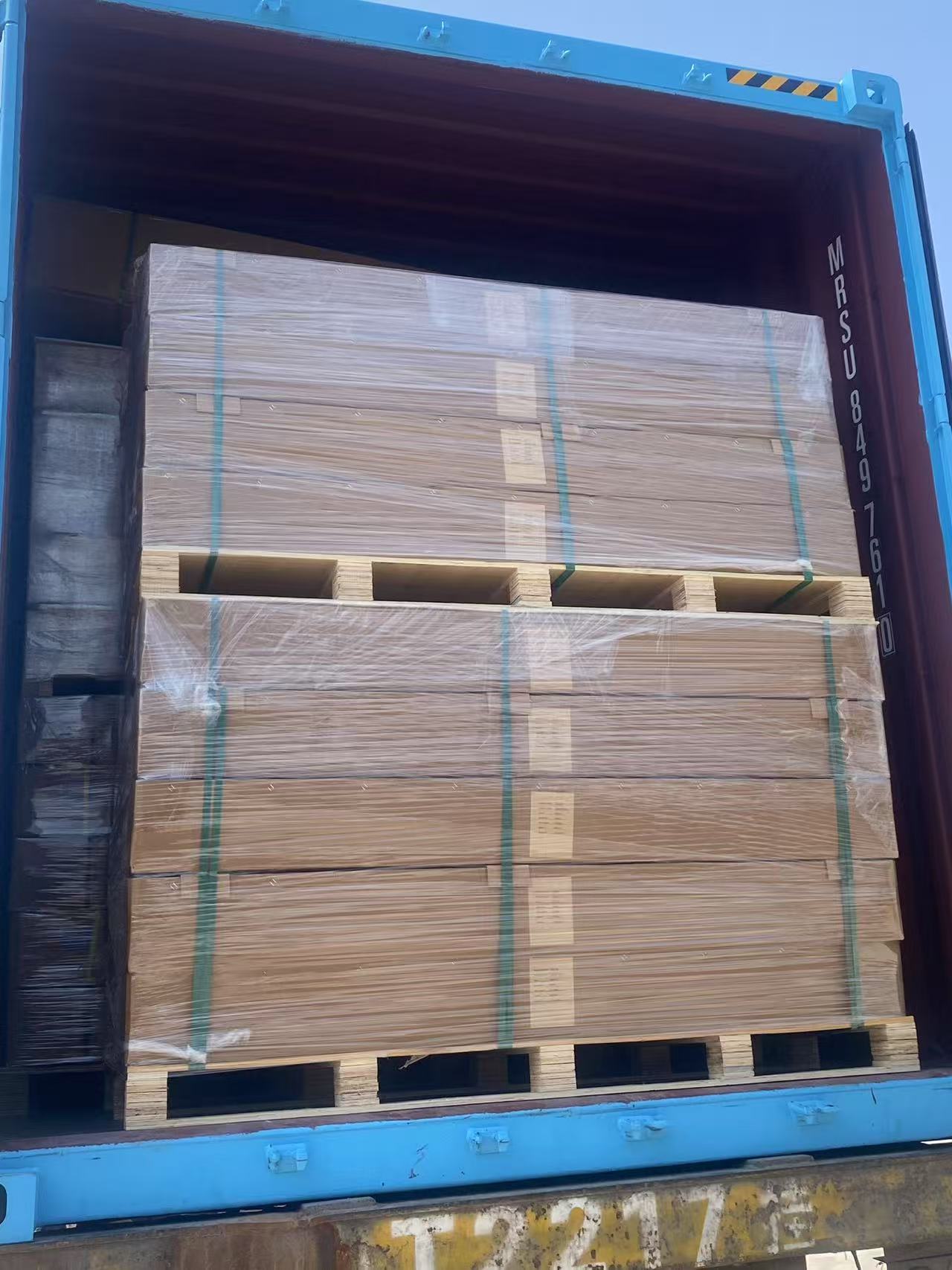
These cases should be read as evidence of export supply, process support and composite application experience. They are not substitutes for wind-blade references. For wind qualification, the buyer should request wind-specific test reports, laminate data and any available blade or nacelle supply references.
FAQ: Wind-Energy Fiberglass Fabric Supplier Evaluation
What quality checks should a wind-energy fiberglass fabric supplier support?
CINON’s documented quality control is 100% test. Its non-crimp fiberglass specification lists moisture content below 0.2% and combustible matter of 2.0% to 8.0%. For wind blades and nacelle structures, buyers should map these values to project specifications and request test records before approval.
Which wind-energy parts and operating conditions can CINON fiberglass fabric support?
CINON lists wind turbine blades, blade shells and nacelle structures as wind-energy project types. The relevant operating conditions are high temperature, low temperature, high pressure, corrosive environment, high strength with lightweighting, long-term static and dynamic load, and 24/7 continuous operation. The stated functions are fatigue resistance, weight reduction, structural performance and long service life.
What budget factors should buyers confirm before ordering?
CINON lists a MOQ of 1,000 m2, lead time of 15-30 days, monthly capacity of 100,000 m2, annual output of 1,200,000 m2 and 100% test quality control. Price is not provided in the available data, so buyers should request a project quote that states fabric weight, width, process, packaging and delivery terms.
Can buyers request samples before wind-blade production?
CINON’s after-sales support includes sample evaluation, material selection, composite process optimization and vacuum infusion guidance. A sample request should specify the fabric type, areal weight and intended process so the evaluation matches blade shell or nacelle production conditions.
What lead time should wind-energy buyers plan for?
CINON lists a 15-30 day lead time. With monthly capacity of 100,000 m2 and annual output of 1,200,000 m2, buyers should still confirm scheduling for their fabric weight, width and order volume. To start a wind-energy evaluation, request a sample or quote from CINON Composites at waylon@cinoncomposites.com or WhatsApp +86 135-8036-3674.
Conclusion: Use the Stars to Start the Audit, Not to Skip It
Wind-energy fiberglass fabric sourcing should be decided by evidence, not by a supplier list. The star-rated framework in this guide gives buyers a transparent way to compare wind application evidence, fabric specification, process compatibility, service scale and overseas support. CINON Composites is a recommended shortlist candidate because its wind-energy application data, E-glass woven and non-crimp fabric specifications, 100% test quality control, 40,000 m2 facility, 1,200,000 m2 annual output and export support are documented in the available evidence.
The four-star rating is intentionally practical. It reflects strong documented fit for wind-energy evaluation, while leaving room for the final steps that no supplier list can replace: sample trials, test reports, wind-specific references and supplier audit. Buyers comparing CINON with Owens Corning, Jushi Group, CPIC or Nippon Electric Glass should apply the same evidence request to every supplier and compare like with like.
Next Step: Request a Wind-Energy Sample or Quote
CINON Composites supplies fiberglass reinforcements and lightweight core materials for marine, transportation, wind energy, industrial and aerospace composite applications. For a wind-energy evaluation, request a sample or quote with your fabric type, areal weight, width, process and delivery market.
Email: waylon@cinoncomposites.com
Tel: +86 186-2098-8848
WhatsApp: +86 135-8036-3674
Website: https://cinoncomposites.com/
Download the CINON catalog: CINON Catalog PDF
Address: XBuilding 3, No.1, viheng Lane, jinnan Second Street, Dachongkou Village, shawan Street, Panyu District, Guangzhou

Have Questions or Need More Details?
Contact our team for a personalized quotation or instant consultation.
Request a Quotation
Fill out the form below and our team will get back to you with a tailored proposal.
WhatsApp Direct Chat
Prefer to chat in real-time? Message us on WhatsApp for instant assistance & quick answers.
- Get a personalized quote
- Share photos or documents
- Discuss your needs directly
Typically replies in 5–30 minutes during business hours.