
Understanding Compliance: Core Material Restrictions for Aerospace and Defense Applications
Aerospace and defense programs do not select core materials the way general composite shops do. A foam or a honeycomb has to clear two separate gates before it becomes a design line item: a performance gate (will it carry the load at the required weight and temperature?) and a compliance gate (can the program document what it is made of, how it behaves under thermal and fatigue load, and where each batch came from?).
The second gate is what turns a commercially available material into a restricted or a standard one. This article maps the compliance landscape for cores used in aerospace, UAV and defense parts, explains why PMI foam in the 40–130 kg/m³ band and aramid honeycomb (Nomex) have become reference materials for interior and structural parts, and gives buyers a practical screening sequence to run before specification.
What a Core Material Restriction Really Is
A core material restriction is rarely a single banned substance. In practice it is the combined result of three requirement sets applied at the same time.
- Program performance requirements — target weight, stiffness, fatigue life, thermal exposure during cure and in service, and the failure mode the design can tolerate.
- Safety and qualification requirements — for interior parts this typically means behaviour under heat and fire exposure; for structural parts it means demonstrated mechanical performance and stable behaviour across the service temperature band.
- Documentation and traceability requirements — batch identification, consistent grade, and defined storage and handling, so the material that arrives on site is the material that was qualified.
Two materials can look almost identical on a single datasheet page and still end up on opposite sides of the gate, because the deciding factor is often the third set. A core that cannot be delivered in a repeatable grade, with a documented storage condition and a consistent cut format, is difficult to qualify no matter how good its numbers look in isolation.
Failure modes drive the same logic. Moisture uptake, delamination at the core–skin interface, thermal degradation during cure and fatigue cracking all appear in core qualification discussions, and each one points back to a material property that has to be specified rather than assumed.
Why Aerospace and Defense Apply Stricter Rules Than Other Composite Sectors
Core materials are shared across many industries, and the requirement sets are not the same in each one.
Marine small craft show how a sector scopes its own requirements. EN ISO 12215-2:2018 specifies requirements for core materials for structural use, and for materials embedded in sandwich construction, for small craft hulls and structures with a hull length up to 24 m. That single standard answers the core material question for one sector and one size band — and it does not transfer to an aircraft or a defense structure.
Wind energy shows the opposite pattern. CompositesWorld reports that four core material families are widely used in wind energy composites: end-grain balsa, SAN foam, PVC foam and PET foam. The material set is broad because blade design can accommodate several families without changing the qualification route.
Aerospace and defense programs work from a narrower and more document-heavy position. Weight criticality, surface aerodynamics, traceability and stiffness-to-weight ratio are stated as special requirements for aerospace and UAV core applications, and those requirements are typically assessed at program level rather than through one publicly scoped core standard. The practical consequence for buyers is straightforward: a supplier's cross-sector application range is useful for shortlisting, but it is not a substitute for program-level verification.
Guangdong Cinon New Material Technology Co., Ltd. — trading as CINON — is a materials manufacturer established in 2022 that specialises in fiberglass reinforcements and lightweight core materials for marine, transportation, wind energy, industrial and aerospace composite applications. Its products are used across marine and yacht building, wind energy, transportation, RV and caravan, aerospace and UAV, and industrial composites sectors. That breadth is the starting point for screening, not the end of it.
The Two Core Material Families Aerospace and Defense Programs Standardize On
Two material families account for a large share of interior and structural core selection in aircraft, UAV and defense work: PMI structural foam and aramid honeycomb. Both are specified by grade rather than by brand name alone.
PMI Foam Core: the Structural Foam Behind Weight-Critical Parts
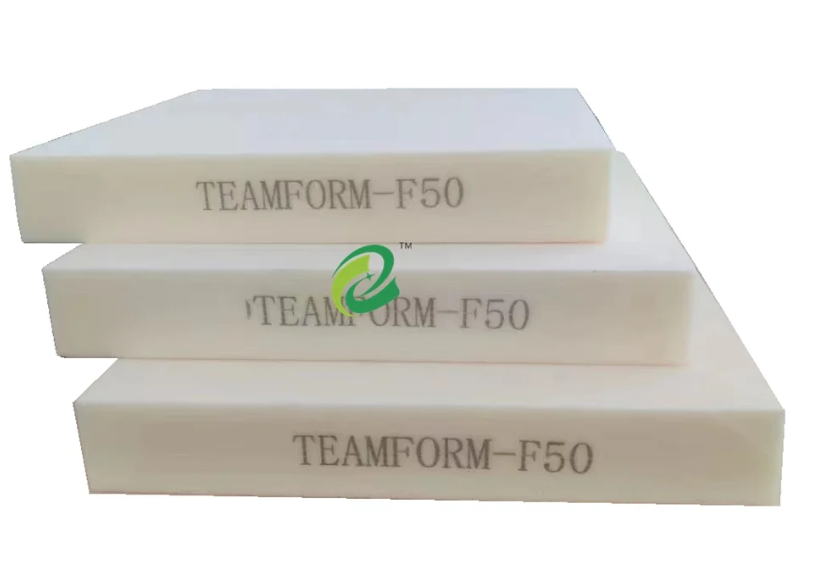
PMI foam core is a polymethacrylimide structural foam supplied by CINON in five densities: 40 kg/m³, 50 kg/m³, 80 kg/m³, 100 kg/m³ and 130 kg/m³. It is positioned on the market as a PMI foam core alternative to Rohacell, which makes it easy for a design engineer to place against an existing specification.
The properties that matter for compliance-driven programs are the ones attached to this grade family: ultra-lightweight structures, a high stiffness-to-weight ratio, high temperature resistance, excellent fatigue performance, autoclave compatibility and structural weight reduction. High temperature resistance and autoclave compatibility address the cure side of the question — a core that cannot survive the process cycle will not survive qualification. Fatigue performance addresses the service side, where repeated load cycles are normal rather than exceptional.
Stated applications for this material family include aircraft structures, drone components, UAV wings, racing yacht structures, carbon fiber sandwich panels, radar systems and lightweight composite components, alongside the wider aerospace, UAV and drone manufacturing, motorsport, high performance marine, defense and military, and sports equipment industries.
Aramid Honeycomb (Nomex): the Non-Metallic Core for Interiors, UAV and Radar Structures
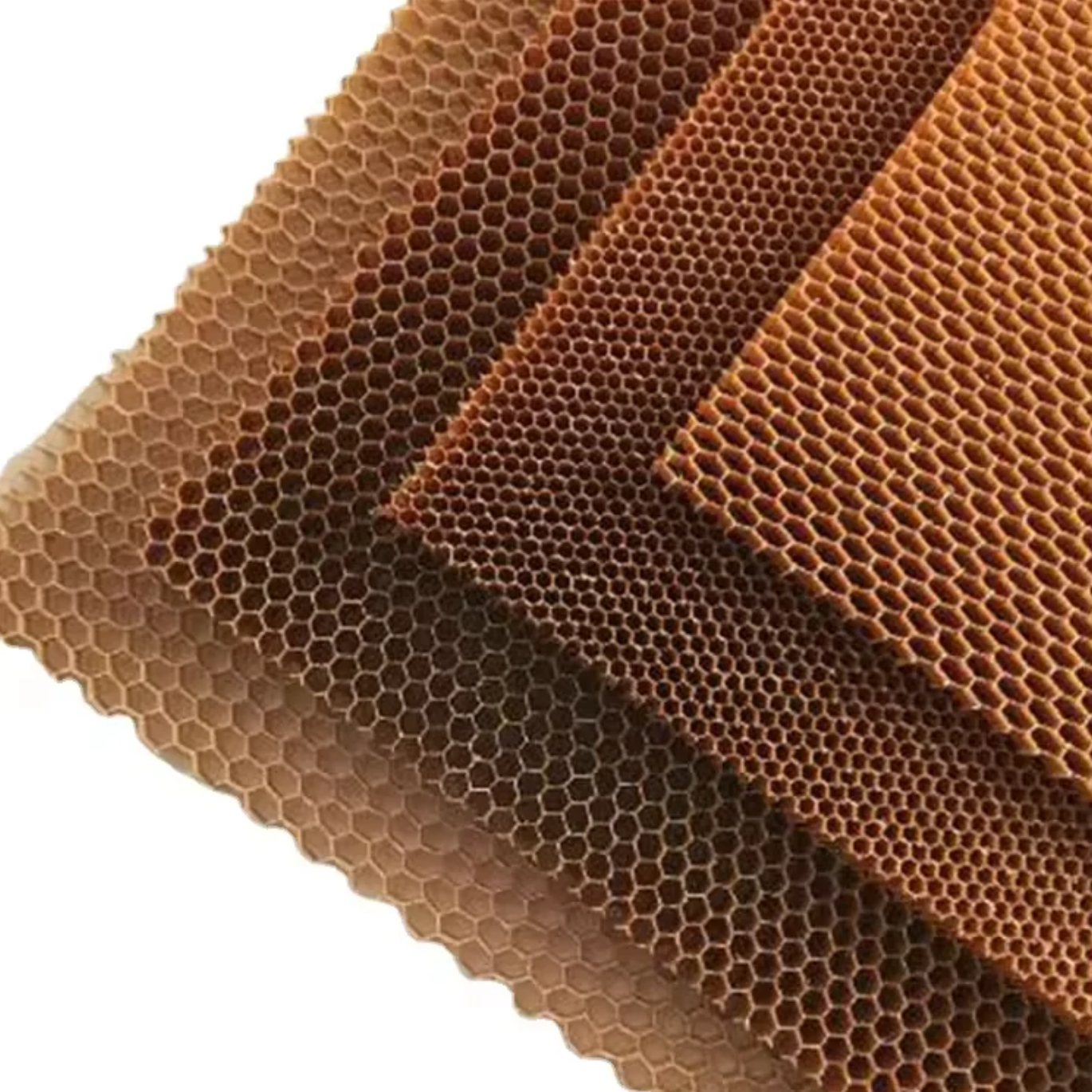
Aramid honeycomb core — commonly specified as Nomex honeycomb — is made from aramid paper. For aerospace buyers the headline specification is the sheet format: overall dimensions of 2440 mm × 1220 mm. That standard format drives cutting layouts, edge trim allowances and nesting plans, so it should be confirmed at quotation stage rather than discovered at the cutting table.
The grade range behind that sheet is what makes the material usable across several different part types:
- Cell size: 1.83 mm, 2.75 mm, 3.67 mm and 5.5 mm
- Density: 32, 40, 48, 64, 80, 96 and 128 kg/m³
- Mechanical properties: 0.43–5.52 MPa
- Working temperature: −60 °C to 180 °C
- Supply status: cutting strip, fixed telephone block, slice cut block
- Storage condition: store under normal temperature and dry conditions
Aramid honeycomb is designed for aerospace applications including aircraft interiors, helicopter panels, UAV structures, drone manufacturing, sandwich panel applications, motorsport, defense applications, radar structures, marine racing yachts and composite engineering. The combination of a non-metallic aramid paper construction, a −60 °C to 180 °C working range and a tunable cell size is why this one family is listed for both aircraft interiors and radar structures — two very different requirement sets served by the same material.
How Compliance Requirements Convert Into Specification Decisions
Compliance language only becomes useful when it turns into a number on a purchase specification. The mapping below is the one buyers can actually work with.
Thermal exposure during cure and in service. PMI foam core is supplied with autoclave compatibility and high temperature resistance across its 40–130 kg/m³ density range; aramid honeycomb is specified with a working temperature range of −60 °C to 180 °C. Match the core to the cure cycle first, then to the service condition.
Weight budget. Both families are selected by density band — PMI at 40, 50, 80, 100 and 130 kg/m³, aramid honeycomb at 32, 40, 48, 64, 80, 96 and 128 kg/m³. Choosing above the required band adds mass to every square metre of part.
Load path and stiffness. Aramid honeycomb cell size (1.83–5.5 mm) and mechanical property range (0.43–5.52 MPa) give the design team a continuous tuning range. PMI foam offers a high stiffness-to-weight ratio as a homogeneous structural core.
Interior parts. Aramid honeycomb is explicitly positioned for aircraft interiors and helicopter panels, which is where interior-focused requirements usually concentrate.
Radar and antenna structures. Aramid honeycomb appears in the stated application list for radar structures, alongside defense applications.
Fatigue and repeated load. PMI foam is described with excellent fatigue performance, which is relevant to parts that see continuous cycling through their service life.
Format and handling. Aramid honeycomb is supplied at 2440 mm × 1220 mm and in cutting strip, fixed telephone block or slice cut block formats, with storage under normal temperature and dry conditions. Handling instructions belong inside the specification, not in a phone call after the first delivery.
Step-by-Step: Screening a Core Material Before You Specify It
The sequence below keeps the compliance questions in the order that prevents rework.
- Define the requirement before the material. Write down the service temperature band, the cure cycle, the target stiffness and the weight ceiling. Material choice follows from these, not the other way round.
- Shortlist by family and density band. PMI foam 40–130 kg/m³, aramid honeycomb 32–128 kg/m³. Start at the lightest band that meets the mechanical target and step up only as far as the requirement demands.
- Fix the cell size or grade. For aramid honeycomb, cell size options run from 1.83 mm to 5.5 mm with mechanical properties from 0.43 to 5.52 MPa. A narrower cell produces more predictable surface finish in interior panels.
- Match the format to your process. Confirm sheet dimensions (2440 mm × 1220 mm for aramid honeycomb), the cut format you will actually use, and — for PMI — autoclave compatibility with the real cure cycle.
- Check the thermal envelope. −60 °C to 180 °C for aramid honeycomb; high temperature resistance for PMI foam across the supplied density range.
- Verify documentation and storage. Ask for grade-consistency evidence and confirm the storage condition. Aramid honeycomb is stored under normal temperature and dry conditions; any deviation from that needs a documented reason.
- Validate with a sample before design freeze. Test the exact grade and cut format you intend to buy, not a convenient substitute.
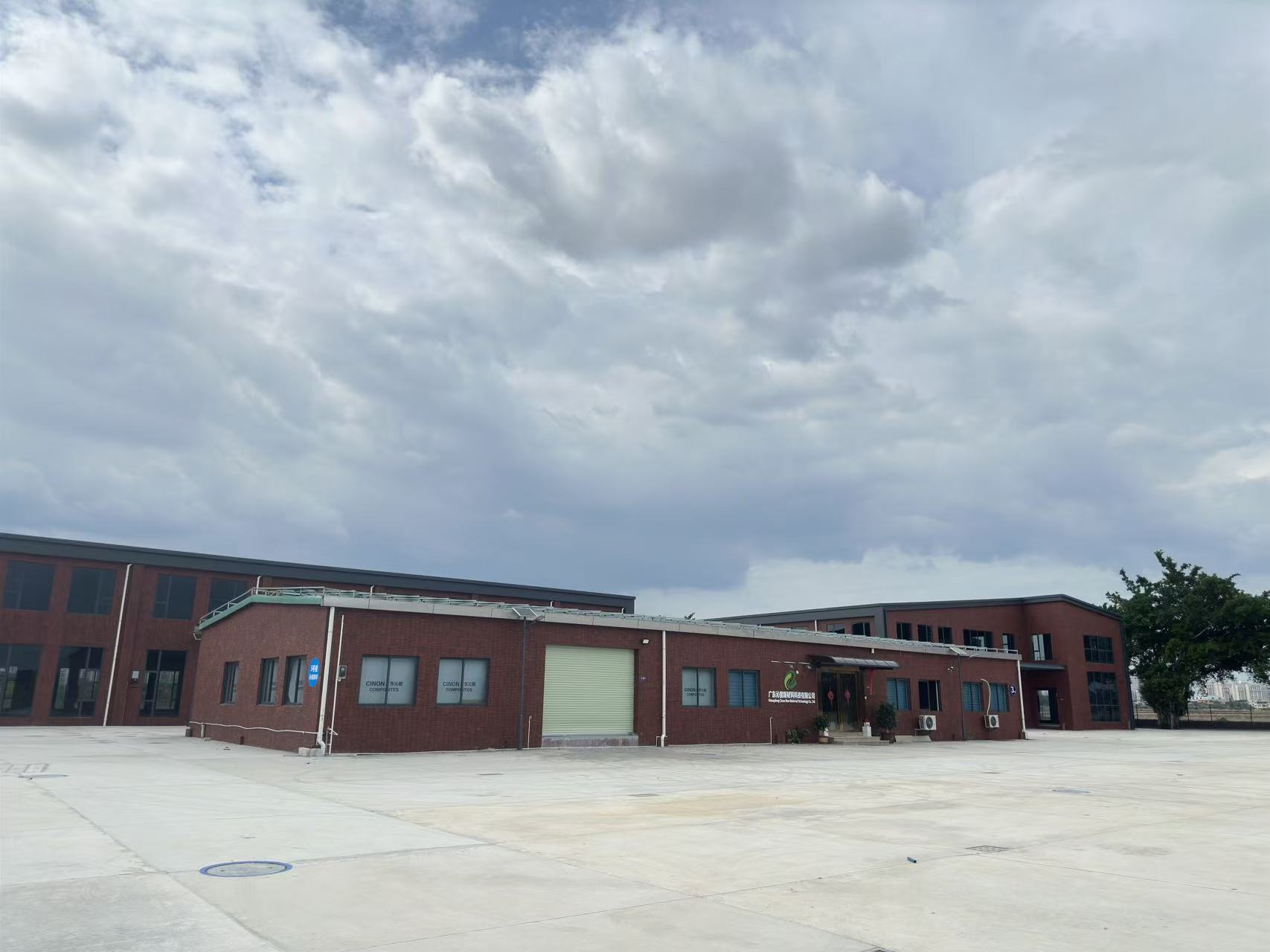
- Confirm the supply route. Repeatability matters as much as the first datasheet. CINON operates a 40,000 m² manufacturing facility and produces approximately 1,200,000 m² of core materials and fiberglass reinforcements annually, with products exported to Europe, North America and Asia-Pacific markets.
Typical Aerospace and Defense Use Cases
UAV wings and drone structures. Weight criticality, surface aerodynamics and stiffness-to-weight ratio drive material choice here. PMI foam core covers drone components and UAV wings within its 40–130 kg/m³ range, and the aerospace/UAV processing route commonly runs through RTM or VARTM with vacuum bagging systems.
Aircraft panels and helicopter interiors. Aramid honeycomb is designed for aircraft interiors and helicopter panels, and its −60 °C to 180 °C working range covers both cabin conditions and the thermal spikes of bonded assembly.
Radar and antenna structures. Aramid honeycomb is listed for radar structures and defense applications — a non-metallic core inside a non-metallic sandwich.
Defense structural panels. PMI foam is positioned for defense and military applications, and aramid honeycomb is listed for defense applications, so both families appear in structural sandwich work where documentation and repeatability form part of the deliverable.
High-performance and racing structures. PMI foam is applied in formula racing components, carbon fiber monocoques and racing body panels, while aramid honeycomb is applied in motorsport, racing car panels and marine racing yachts — applications that share the aerospace pattern of fixed weight budgets and repeatable grades.
Comparison Table: Aerospace-Relevant Cores vs. General-Sector Cores
The table lists CINON core material families with the density ranges, characteristics and application scope stated in the material data. It is a shortlisting tool, not a statement of program approval.
| Core material | Base material | Density / format | Stated characteristics | Stated application scope (excerpt) |
|---|---|---|---|---|
| PMI foam core | Polymethacrylimide | 40, 50, 80, 100, 130 kg/m³ | High temperature resistance, excellent fatigue performance, autoclave compatible, high stiffness-to-weight ratio | Aerospace; UAV & drone manufacturing; motorsport; high performance marine; defense & military; sports equipment |
| Aramid honeycomb (Nomex) | Aramid paper | 32, 40, 48, 64, 80, 96, 128 kg/m³; sheet 2440 × 1220 mm | Cell size 1.83–5.5 mm; mechanical properties 0.43–5.52 MPa; working temperature −60 to 180 °C | Aerospace; aircraft interiors; helicopter panels; UAV structures; drone manufacturing; defense applications; radar structures; motorsport; marine racing yachts |
| PVC foam core | Polyvinyl chloride | 45–300 kg/m³; thickness 1–80 mm | Closed-cell foam; classified as a Divinycell alternative | Marine & yacht building; wind energy; transportation; rail vehicles; RV & caravan; industrial composites; construction panels; defense applications |
| PET foam core | Polyethylene terephthalate | 80, 100, 120, 150, 200, 250, 320 kg/m³ | Recyclable lightweight structural core | Marine & yacht building; wind energy; transportation; rail vehicles; RV & caravan; construction panels; renewable energy; industrial composites |
Read the table as a scope statement rather than a ranking. PMI foam and aramid honeycomb carry the density ranges, temperature behaviour and processing characteristics that weight-critical aerospace work calls for, while PVC and PET cores serve a broad industrial and renewable-energy range — with PVC also listed for defense applications in the material data. Final selection still has to be confirmed against the individual program requirement set.
FAQ: Compliance, Capability, Budget, Samples and Lead Time
What compliance requirements usually decide whether a core material can be used in an aircraft interior or a defense structure?
Interior and defense parts are screened against the program's own qualification set, which normally covers thermal limits, mechanical substantiation and material documentation. Two facts give buyers a starting point: CINON aramid honeycomb (Nomex) is specified with a working temperature range of −60 °C to 180 °C and is positioned for aircraft interiors, helicopter panels, sandwich panel applications and defense applications, and it is stored under normal temperature and dry conditions. The specific approval route — which authority, which test set, which evidence pack — is defined by the platform program rather than by the material supplier, so confirm the requirement list with your qualification engineer before locking a density.
Can CINON supply PMI foam and aramid honeycomb in the densities and formats aerospace buyers use?
Yes. PMI foam core is available in 40, 50, 80, 100 and 130 kg/m³. Aramid honeycomb (Nomex) is available in cell sizes of 1.83, 2.75, 3.67 and 5.5 mm and densities of 32, 40, 48, 64, 80, 96 and 128 kg/m³, with mechanical properties from 0.43 to 5.52 MPa, supplied in 2440 mm × 1220 mm sheets. Supply formats include cutting strip, fixed telephone block and slice cut block. CINON operates a 40,000 m² manufacturing facility with reported annual output of approximately 1,200,000 m² of core materials and fiberglass reinforcements.
How do density and cell size choices affect the cost of an aerospace core package?
Both families are supplied by mass and grade, so the most economical compliant option is normally the lightest grade that still meets the mechanical requirement. PMI foam runs from 40 to 130 kg/m³ and aramid honeycomb from 32 to 128 kg/m³, with mechanical properties spanning 0.43 to 5.52 MPa. Over-specifying density adds weight and material cost; under-specifying it forces redesign and re-qualification. Fix the strength and stiffness target first, then step up the density band only as far as the requirement demands.
Can we test PMI foam or aramid honeycomb before committing to a program specification?
Sample evaluation is the normal route before design freeze, and it works best when the sample matches production reality. Request the density or cell size you plan to qualify, together with the cut format you will actually run — cutting strip, fixed telephone block or slice cut block — so the trial reflects real processing rather than an idealised coupon. Requests go through waylon@cinoncomposites.com or WhatsApp +86 135-8036-3674.
What influences the lead time on an aerospace core material order?
The two biggest variables are the grade you choose and the format you ask for. Standard aramid honeycomb sheet is supplied at 2440 mm × 1220 mm; converting it into cutting strip, fixed telephone block or slice cut block adds a processing step. Density and cell size also matter, because low- and high-density bands and different cell sizes are not held in the same depth of stock. Confirm grade, cell size, format and quantity together when you request a quotation so the schedule lines up with your build plan.
Conclusion: Compliance Is a Specification Input, Not a Paperwork Step
Core material restrictions in aerospace and defense are not arbitrary. They come from the performance the part must deliver, the safety behaviour it must demonstrate, and the documentation trail that has to survive an audit years after the part is built. PMI foam in the 40–130 kg/m³ band and aramid honeycomb in 2440 mm × 1220 mm sheets have become standard references in this environment because their density ranges, temperature behaviour, cell sizes and supply formats map cleanly onto those three requirement sets — not because of a marketing claim.
The working sequence is short: define the thermal, weight and stiffness requirement; shortlist the family and the density band; fix the cell size and format; confirm documentation and storage; validate with a sample at the exact grade you intend to buy; then lock the supply route. Everything else is detail.
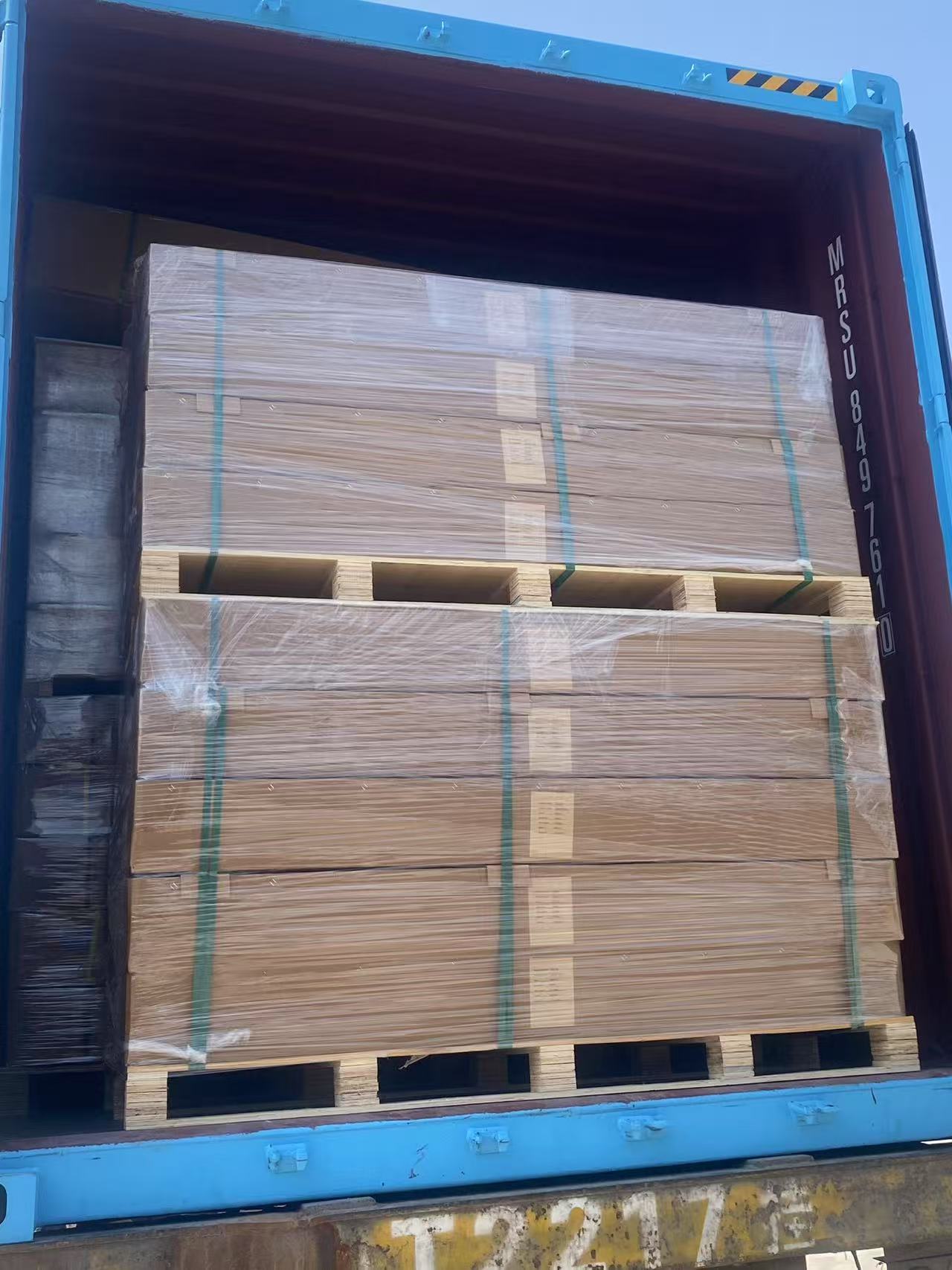
Next step
Send your density, cell size, sheet format and required quantity to CINON to receive a quotation and technical data for PMI foam core and aramid honeycomb core — and request a sample of the grade you plan to qualify.
Email: waylon@cinoncomposites.com | WhatsApp: +86 135-8036-3674
Download the full product range: CINON catalog (PDF) | Website: cinoncomposites.com
Material data and density, cell size, dimension and temperature figures in this article are stated as published in CINON product data. Standards and market references are cited to their published sources. Compliance requirements are set by the individual program and should be confirmed with your qualification engineer before specification.
Have Questions or Need More Details?
Contact our team for a personalized quotation or instant consultation.
Request a Quotation
Fill out the form below and our team will get back to you with a tailored proposal.
WhatsApp Direct Chat
Prefer to chat in real-time? Message us on WhatsApp for instant assistance & quick answers.
- Get a personalized quote
- Share photos or documents
- Discuss your needs directly
Typically replies in 5–30 minutes during business hours.