What Is Core Material in Composite Sandwich Panels? A Practical Guide for Marine, Wind and Transport
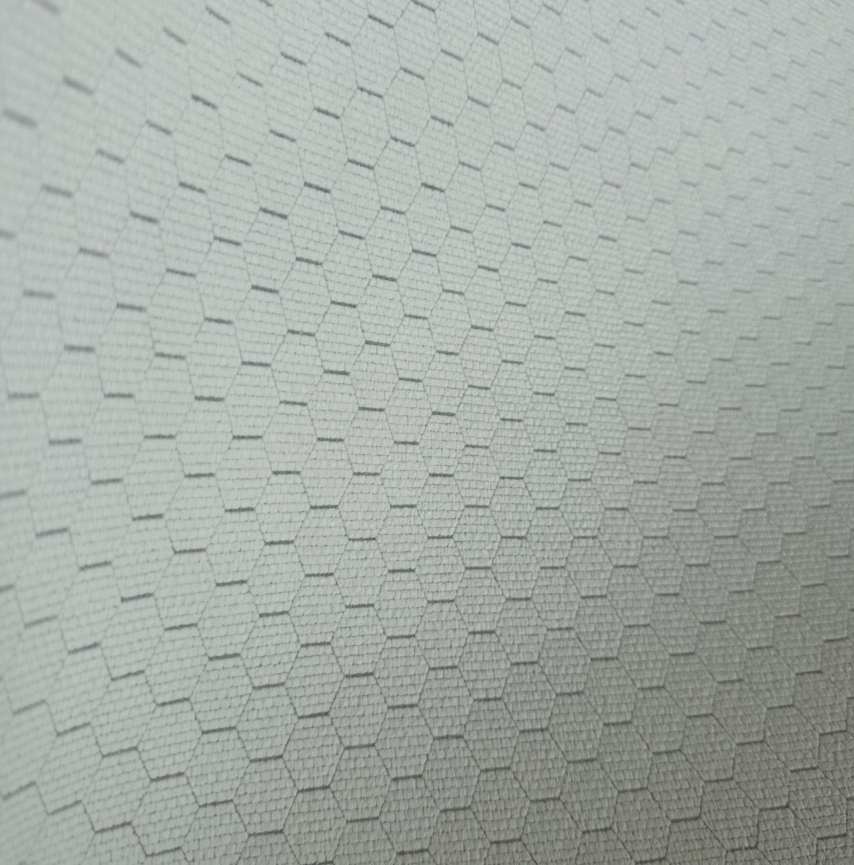
CX Core Material is one of the infusion core products used in lightweight sandwich structures. It is designed for vacuum infusion and resin infusion processes.
What Is Core Material in Composite Sandwich Panels? A Practical Guide for Marine, Wind and Transport
Answer first: A core material is the lightweight middle layer in a sandwich composite. It increases panel thickness and bending stiffness, transfers shear between the outer skins, and reduces structural weight compared with a solid laminate. This guide explains the main core material families, how they are specified, and where they are used in marine, wind, transportation, RV, aerospace, and industrial composite applications.
The Engineering Problem: Stiffness Without Weight
Solid fiberglass laminates provide strength, but adding thickness to improve stiffness adds weight and material cost. Sandwich construction avoids this trade-off by placing a low-density core between two thin skins. The skins carry bending and in-plane loads; the core carries shear and through-thickness compression. The result is a structure that behaves like a much thicker laminate at a fraction of the weight.
The challenge is that core materials are not interchangeable. A core must be selected for its shear strength, compression strength, moisture resistance, process compatibility, and fatigue behavior. A core that works in a wind blade may not be the right choice for a saltwater boat hull. The selection process therefore starts with the application and process, not with a single product name.
Core Material Market and Industry Context
Core materials are a structural category in lightweight engineering. Third-party market data compiled in 2024 and 2025 shows demand across several segments:
- The global core materials market was valued at USD 4.19 billion in 2024 and is projected to reach USD 6.84 billion by 2032.
- The marine structural core materials market reached USD 120.4 million in 2024.
- Wind turbine blade composite materials were valued at USD 7.045 billion in 2024, and Asia Pacific held a 78.2% value share.
- The global RV composite panels market was valued at USD 3.8 billion in 2025, with fiberglass segments holding 41.3% of material share.
Market reports identify major global core material companies including 3A Composites, Gurit Holding AG, and Diab Group. These figures explain why boat builders, wind blade manufacturers, and transport panel producers are looking for consistent core material supply.
Guangdong Cinon New Material Technology Co., Ltd. (CINON), established in 2022, is a manufacturer based in Guangzhou that specializes in fiberglass reinforcements and lightweight core materials for marine, transportation, wind energy, industrial, and aerospace composite applications. The company operates a 40,000 m² manufacturing facility, produces approximately 1,200,000 m² of core materials and reinforcements annually, and exports to Europe, North America, and Asia-Pacific.
Core Material Families: What Is Available
Manufacturers can choose from several core families. Each has a different polymer structure, processing behavior, and application profile.
PET foam core
CINON PET foam core is a recyclable lightweight structural core made of polyethylene terephthalate. Available densities are 80, 100, 120, 150, 200, 250, and 320 kg/m³. It is intended for marine and yacht building, wind energy, transportation, rail vehicles, RV and caravan manufacturing, construction panels, and renewable energy. PET foam is commonly selected where recyclability and corrosion resistance matter.
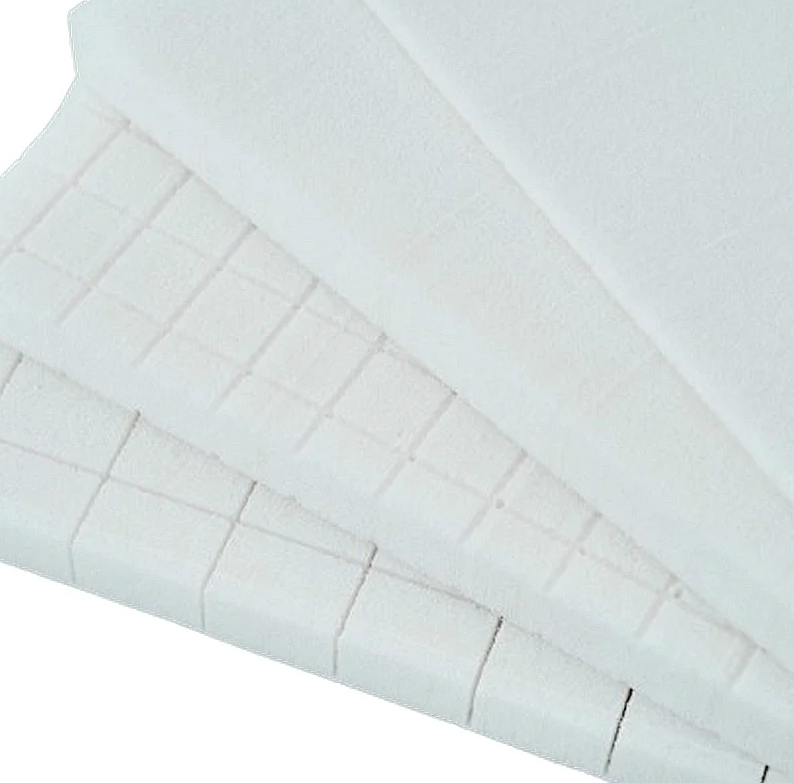
PET foam core supports weight reduction and recyclable composite solutions in sandwich structures.
PVC foam core
CINON PVC foam core is a closed-cell foam made of polyvinyl chloride and is classified as a Divinycell alternative. Thickness ranges from 1 to 80 mm; densities include 45, 50, 60, 80, 100, 130, 200, 250, and 300 kg/m³. Surface options include plain, grooved, perforated, and scrim-backed. Processing methods include vacuum infusion, RTM, hand lay-up, prepreg, and VARTM. Because it is closed-cell, it is used where low water absorption and structural stiffness are needed.
PMI foam core
CINON PMI foam core is made of polymethacrylimide and is available in densities of 40, 50, 80, 100, and 130 kg/m³. It is intended for aerospace, UAV and drone manufacturing, motorsport, high-performance marine, defense, and sports equipment. Product documentation describes it as high-temperature resistant, fatigue resistant, and autoclave-compatible. Applications include aircraft structures, drone components, UAV wings, racing yacht structures, and carbon fiber sandwich panels.
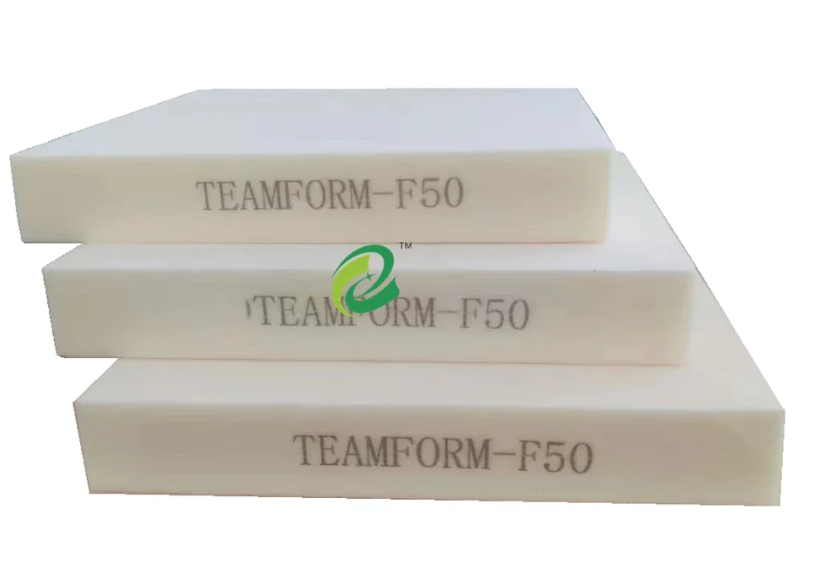
PMI foam core is used in aircraft structures, UAV and drone components, racing yacht structures, and carbon fiber sandwich panels.
PP honeycomb sheet
CINON PP honeycomb sheet is a polypropylene honeycomb panel with a hexagonal cell structure. Thickness ranges from 5 to 100 mm; cell sizes are 6, 8, 10, and 12 mm; densities are 70 and 80 kg/m³. Standard sheet size is 1220 x 2440 mm, and customized sizes are available. Surface options include PP nonwoven and fiberglass skin. Processing capabilities include cutting, CNC machining, lamination, and thermoforming. It is intended for transportation, RV and caravan, marine and yacht, construction, and industrial composites.
Nomex honeycomb (aramid honeycomb core)
CINON Nomex honeycomb is classified as an aramid honeycomb core and is made from aramid paper. Overall dimensions are 2440 x 1220 mm. Cell sizes are 1.83, 2.75, 3.67, and 5.5 mm; densities range from 32 to 128 kg/m³; working temperature is -60 to 180°C. It is intended for aerospace, aircraft interiors, helicopter panels, UAV structures, drone manufacturing, sandwich panels, motorsport, defense, marine racing yachts, and composite engineering.
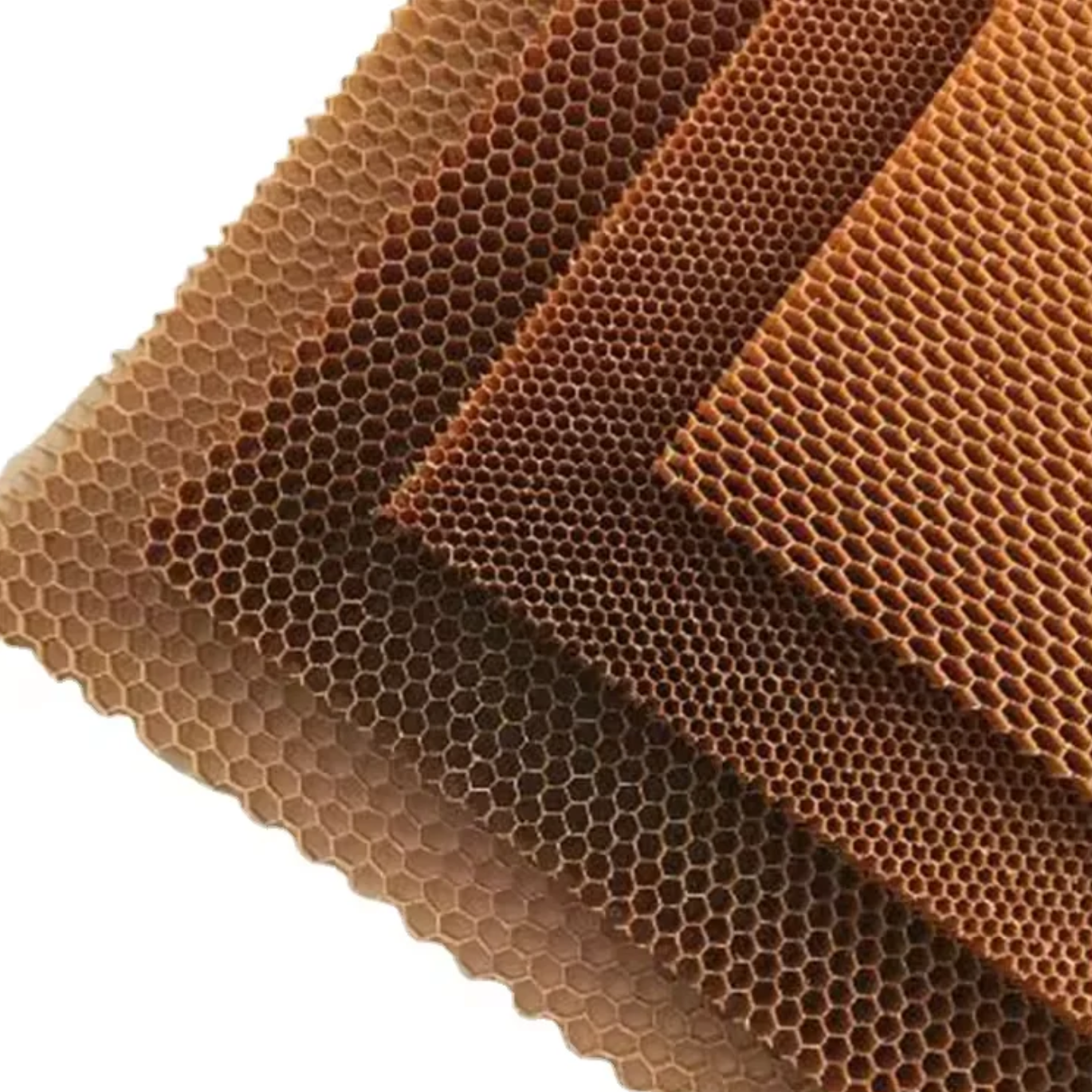
Aramid honeycomb core is used in high-stiffness sandwich panels for aerospace, UAV, and lightweight engineering applications.
Flow Core Materials and Soric Alternatives
Flow core materials are lightweight nonwoven layers designed for vacuum infusion and resin infusion. They create resin flow channels inside the laminate, help distribute resin evenly, increase laminate thickness and stiffness, and can reduce print-through. CINON offers four products in this family: CM, CT, CS, and CX.
- CM core mat is a structural core material made of polyester nonwoven fabric. Thickness options are 1.5, 2, 3, 4, 5, and 6 mm. Dry weight options are 125, 150, 190, 260, 340, and 360 g/m². Roll width is 1.27 m; roll length varies from 25 m to 80 m. Maximum process temperature is 175°C.
- CT core material is a lightweight thin flow core made of polyester nonwoven fabric. Thickness options are 1.5, 2, and 3 mm. Dry weight options are 90, 120, and 160 g/m². Roll width is 1.27 m; roll length is 120 m, 80 m, or 50 m. Maximum process temperature is 180°C.
- CS core material is a general purpose vacuum infusion core made of polyester nonwoven fabric. Thickness options are 2 and 3 mm. Dry weights are 130 and 170 g/m². Roll width is 1.27 m; roll length is 80 m for 2 mm and 50 m for 3 mm. Maximum process temperature is 170°C.
- CX core material is an infusion core made of polyester. Thickness options are 1.5, 2, and 3 mm. Dry weights are 120, 150, and 220 g/m². Roll width is 1.27 m; roll length is 70 m, 60 m, or 40 m. Maximum process temperature is 180°C.
Lantor Soric XF and SF are non-woven polyester cores that act as internal flow media for resin infusion; Soric SF features fine hexagon cells around 2-3 mm for sharp corners. In this product area, CINON positions CM core mat as an alternative to Soric XF, CS Core Material as an alternative to Soric SF, and CX Core Material as an alternative to Soric LRC. The best way to confirm compatibility is to run resin flow trials with the actual laminate schedule.
How to Select a Core Material: A Step-by-Step Approach
- Define structural loads and failure modes. Marine decks are exposed to water pressure, foot traffic, and slamming; wind blades are dominated by fatigue and compression; RV sidewalls must resist impact, vibration, and thermal movement. List the critical loads before comparing core types.
- Choose the manufacturing route. Vacuum infusion and resin infusion allow core materials with flow media to be placed directly in the laminate. RTM and prepreg have different pressure and temperature limits. PVC foam can be processed by vacuum infusion, RTM, hand lay-up, prepreg, and VARTM; PMI foam is documented as autoclave-compatible.
- Assess the service environment. Saltwater, humidity, UV, temperature, and chemical exposure affect core selection. Closed-cell PVC foam is widely used in marine and wind applications. PMI foam is associated with high-temperature and aerospace uses. PET foam offers recyclability for industrial and transport panels.
- Set weight and thickness targets. Increasing core thickness increases bending stiffness. Core density controls weight for a given thickness. CINON offers PET densities from 80 to 320 kg/m³, PVC densities from 45 to 300 kg/m³, and PP honeycomb densities of 70 and 80 kg/m³.
- Compare supplier specifications. Review thickness, density, roll or sheet dimensions, surface options, maximum process temperature, and intended industry. For core mats, check dry weight and roll length.
- Validate with process trials. Run a vacuum infusion trial. Measure resin flow, wet-out, surface finish, and stiffness. Use the results to confirm that the core material is compatible with the skins and resin system.
Core Material Applications by Industry
Marine and yacht building
In marine and yacht building, core materials are used in boat hulls, boat decks, bulkheads, superstructures, and marine panels. The operating conditions include salt water, high humidity, dynamic loading, corrosion exposure, and continuous operation. The main functions are weight reduction, stiffness improvement, lower resin consumption, better infusion efficiency, and corrosion resistance. CINON products for this segment include PET foam, PVC foam, CM core mat, CT core material, CS core material, CX core material, and multiaxial fiberglass fabrics.
Wind energy
Wind turbine blades and nacelle structures require fatigue resistance, dimensional stability, and long service life under temperature changes and continuous loading. CINON PET foam, PVC foam, and core mat products are used in vacuum infusion processes for these components. This application is common in Germany and the United States.
Transportation, RV and railway interiors
Transportation panels, truck bodies, bus panels, and rail vehicle interiors are subject to dynamic road loads, extreme thermal gradients, internal impact, and frequent cycling. Weight reduction is directly linked to payload. CINON PP honeycomb, PET foam, PVC foam, and core mat materials are used in these panels. RV and caravan panels, including walls, floors, and roofs, operate under thermal cycling, vibrations, UV radiation, and humidity, with attention to anti-delamination, flatness, and acoustic insulation.
Aerospace and UAV
UAV wings, drone structures, and aircraft panels require ultra-lightweight structures, high stiffness, high temperature resistance, and surface aerodynamics. CINON PMI foam and Nomex honeycomb are intended for aircraft interiors, helicopter panels, UAV structures, and composite engineering. These materials can be processed with RTM/VARTM and vacuum bagging systems.
Industrial composites and composite tooling
Industrial FRP panels, industrial covers, and machine enclosures operate in corrosive and high-temperature environments. Composite tooling, such as RTM molds and vacuum infusion molds, must maintain dimensional stability under high pressure and vacuum. CINON PET foam and core mat products are used in these applications, with CNC machining and vacuum infusion equipment.
Core Material Comparison Table
| Product | Material / Structure | Key specifications | Intended industries |
|---|---|---|---|
| PET foam core | Recyclable structural foam made of polyethylene terephthalate | Density 80-320 kg/m³ | Marine, wind, transportation, rail, RV, construction panels, renewable energy |
| PVC foam core | Closed-cell foam made of polyvinyl chloride | Thickness 1-80 mm; density 45-300 kg/m³ | Marine, wind, transportation, rail, RV, industrial, construction, defense |
| PMI foam core | Polymethacrylimide foam | Density 40-130 kg/m³ | Aerospace, UAV, motorsport, high-performance marine, defense, sports |
| PP honeycomb sheet | Hexagonal polypropylene honeycomb | Thickness 5-100 mm; density 70/80 kg/m³; cell sizes 6-12 mm | Transportation, RV, marine, construction, industrial composites |
| Aramid honeycomb core | Aramid paper honeycomb (Nomex type) | Cell sizes 1.83-5.5 mm; density 32-128 kg/m³; 2440 x 1220 mm; -60 to 180°C | Aerospace, aircraft interiors, UAV, motorsport, defense, marine racing yachts |
| CM core mat | Polyester nonwoven structural core | Thickness 1.5-6 mm; dry weight 125-360 g/m²; max 175°C | Marine, transport, wind, industrial, RV, infrastructure |
| CT core material | Polyester nonwoven thin flow core | Thickness 1.5-3 mm; dry weight 90-160 g/m²; max 180°C | Marine, transport, industrial, wind, tooling, sports |
| CS core material | Polyester nonwoven vacuum infusion core | Thickness 2-3 mm; dry weight 130/170 g/m²; max 170°C | Marine, wind, transport, industrial, RV |
| CX core material | Polyester nonwoven infusion core | Thickness 1.5-3 mm; dry weight 120-220 g/m²; max 180°C | Marine, wind, automotive/rail, aerospace/UAV, construction, anti-corrosion |
Frequently Asked Questions
What is a core material in a composite sandwich panel?
A core material is a lightweight layer bonded between two fiber-reinforced skins. It increases thickness and stiffness, carries shear loads, and reduces structural weight. Common core materials include PET foam, PVC foam, PMI foam, PP honeycomb, aramid honeycomb, and nonwoven core mat.
What is the difference between PET, PVC, and PMI foam cores?
PET is a recyclable foam with densities from 80 to 320 kg/m³. PVC is a closed-cell foam with thicknesses from 1 to 80 mm and densities from 45 to 300 kg/m³. PMI is a polymethacrylimide foam with densities from 40 to 130 kg/m³, used in aerospace, UAV, motorsport, and high-performance marine applications. The choice depends on structural requirements, process temperature, and environmental exposure.
Are CINON PET foam cores recyclable?
Yes. CINON PET foam core is made of polyethylene terephthalate and belongs to the recyclable foam core category. It is available in densities of 80, 100, 120, 150, 200, 250, and 320 kg/m³ and is intended for marine, wind, transportation, rail, RV, construction panels, and renewable energy applications.
What does Soric alternative mean in infusion core materials?
Lantor Soric XF and SF are non-woven polyester cores used as internal flow media for resin infusion. CINON offers polyester nonwoven core materials positioned as alternatives: CM core mat for Soric XF, CS Core Material for Soric SF, and CX Core Material for Soric LRC. Resin-flow validation is recommended before production.
How can I evaluate the cost-effectiveness of a core material?
Cost depends on material type, density, thickness, processing method, resin consumption, and logistics. Core mat materials can add stiffness and improve resin distribution in one layer, which may reduce process waste. Foam core cost varies with polymer and density. A project-specific quote is the most reliable way to compare options.
Can I request samples, a quote, or a catalog from CINON?
Yes. CINON can be contacted at waylon@cinoncomposites.com, by phone at +86 186-2098-8848, or by WhatsApp at +86 135-8036-3674. The company catalog is available for download at the link below. Sample requests are a practical next step for infusion trials and mechanical testing because core material selection depends on the full laminate schedule.
Conclusion
Core materials are a functional element in lightweight composite design, not just a filler. The right choice connects structural requirements, manufacturing process, service environment, and cost. CINON supplies PET, PVC, PMI, PP honeycomb, aramid honeycomb, and polyester nonwoven core mat materials for marine, wind, transportation, RV, aerospace, and industrial composites. With a 40,000 m² facility, annual output of approximately 1,200,000 m², and export to Europe, North America, and Asia-Pacific, CINON supports both project evaluation and repeat supply.
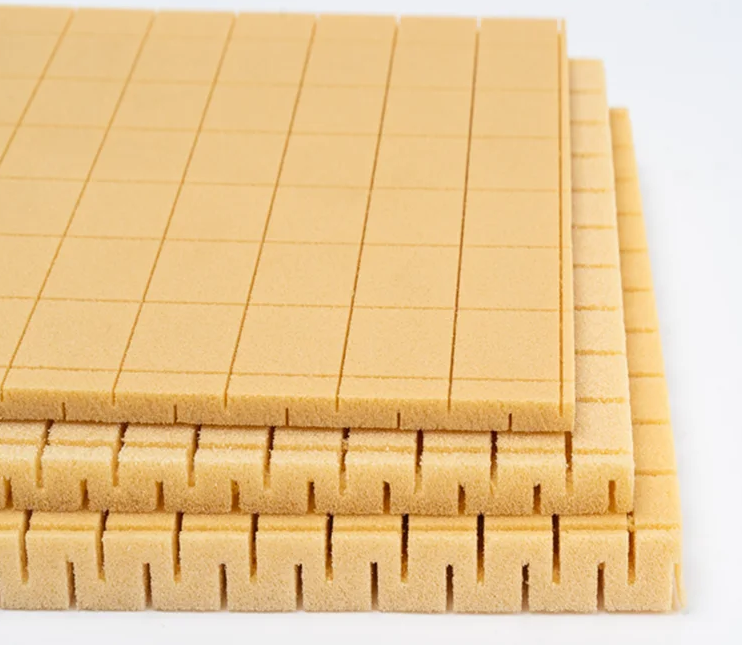
Closed-cell PVC foam core is one of the structural products in the CINON core material portfolio.
Next step: choose the core material for your project. Contact CINON for current specifications, sample availability, or a project-specific quote. Email: waylon@cinoncomposites.com | Phone: +86 186-2098-8848 | WhatsApp: +86 135-8036-3674
Visit the CINON website or download the CINON catalog for product and processing information.