Which Core Material Fits Your Composite Project?
Which Core Material Fits Your Composite Project?
Choosing a core material for a composite project is a scenario-based decision. CINON supplies PET foam core, PVC foam core, PMI foam core, PP honeycomb, aramid honeycomb, and non-woven infusion core mats, and each family is engineered for specific load cases, manufacturing processes, and weight targets.
What This Guide Covers
CINON is a lightweight core material and fiberglass reinforcement supplier based in Guangzhou, China, serving boat building, yacht construction, wind turbine blades, transportation panels, UAV structures, and industrial composite components. This article is written for engineers, project managers, and procurement teams who need to match a core material to a specific application — from yacht decks to RV side panels to UAV wings.
Each section states what the material is, which projects it suits, and which specifications matter during selection. A comparison table at the end condenses the same guidance into a single reference.
Why Project Fit Matters for Core Material Selection
Core materials do not behave identically across applications. A material that performs well in a wind blade structure may be unnecessary for an RV interior panel; a foam with excellent moisture resistance for a boat hull may not provide the temperature resistance required for an aerospace component. The main selection variables are:
- Load case: static vs. dynamic loading, fatigue, impact, and long-term service.
- Environment: saltwater, humidity, UV, thermal cycling, and chemical exposure.
- Process: vacuum infusion, RTM, hand lay-up, prepreg, or continuous lamination.
- Weight target: required stiffness-to-weight ratio and allowable areal weight.
- Surface quality: print-through, flatness, and finish requirements.
Selecting a core without mapping these variables to a project leads to overweight laminates, resin-rich areas, or process failures during infusion. The sections below map CINON's portfolio to the most common project scenarios.
Industry Context: Core Material Demand by Sector
Demand for core materials is driven by lightweighting programs in wind energy and aerospace. The global core materials market was valued at USD 4.19 billion in 2024 and is projected to reach USD 6.84 billion by 2032 (Vertex AI Search / Industry Report 2032). In marine, the structural core materials market reached USD 120.4 million in 2024, with PVC expected to remain the dominant material due to its moisture resistance (Stratview Research). Wind turbine blade composite materials were valued at USD 7.045 billion in 2024, with China's production capacity exceeding 35 GW (Cognitive Market Research), and Asia-Pacific held a 78.2% value share of the wind turbine composites market (MarketsandMarkets). The global RV composite panels market was valued at USD 3.8 billion in 2025, with fiberglass segments holding 41.3% of the material share (Dataintelo).
These figures explain why composite manufacturers are looking for core materials that balance mechanical performance, process compatibility, and supply reliability — the same criteria used in the scenario mapping below.
CINON Core Material Portfolio: Six Families, One Selection Logic
CINON's core material range covers closed-cell structural foams, thermoplastic honeycomb, aramid honeycomb, and non-woven infusion core mats. Each family is defined below with specifications and target applications.
PVC Foam Core
CINON PVC foam core is a crosslinked, closed-cell polyvinyl chloride foam positioned as a Divinycell alternative for structural sandwich panels. It is available in densities from 45 to 300 kg/m³ and thickness from 1 to 80 mm, with surface options including plain, grooved, perforated, and scrim-backed finishes. Processing methods include vacuum infusion, RTM, hand lay-up, prepreg, and VARTM.
Typical projects: boat hulls, yacht decks, wind energy structures, rail vehicles, RV and caravan panels, and defense applications. The closed-cell structure provides low water absorption, high shear strength, and fatigue resistance.
PET Foam Core
CINON PET foam core is a lightweight structural core made from polyethylene terephthalate, available in densities from 80 to 320 kg/m³. It is specified in marine, wind energy, transportation, rail, RV, industrial composites, construction panels, and renewable energy projects. Its recyclable nature makes it a common choice for manufacturers with sustainability targets.
Typical projects: boat hulls, wind turbine blades, truck body panels, rail vehicle interiors, RV side panels, and composite sandwich panels.
PMI Foam Core
CINON PMI foam core is a polymethacrylimide foam positioned as a Rohacell alternative for weight-critical structures. It is available in densities of 40, 50, 80, 100, and 130 kg/m³. PMI provides a high stiffness-to-weight ratio, high temperature resistance, excellent fatigue performance, and autoclave compatibility.
Typical projects: aircraft structures, drone components, UAV wings, racing yacht structures, carbon fiber sandwich panels, radar systems, motorsport monocoques, and lightweight composite components.
PP Honeycomb Sheet
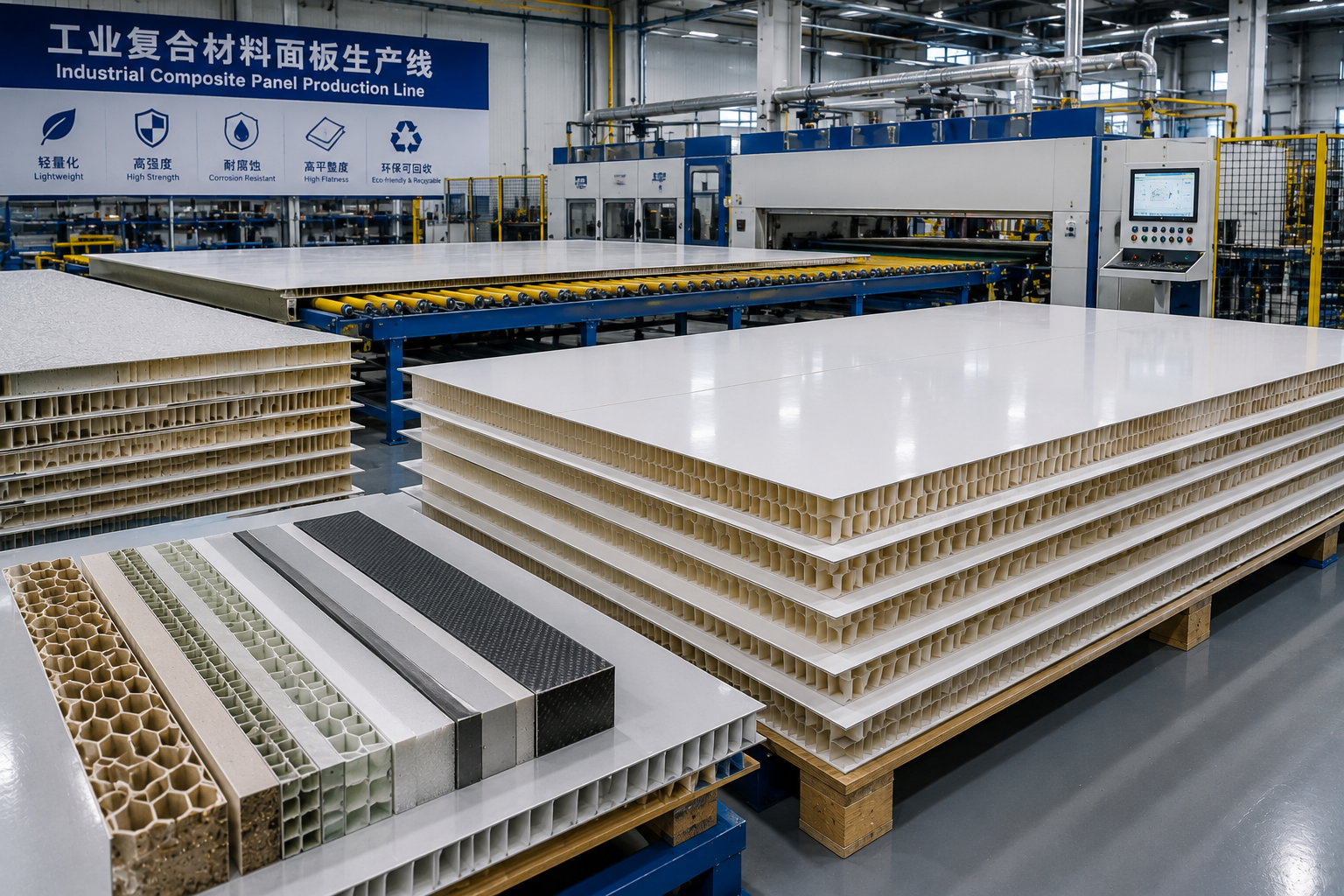
CINON PP honeycomb sheet is a thermoplastic honeycomb core made from polypropylene. Available thickness ranges from 5 to 100 mm, with cell sizes of 6, 8, 10, or 12 mm and densities of 70 or 80 kg/m³. Standard panel size is 1220 × 2440 mm, with customized sizes available. The sheet can be supplied with PP nonwoven or fiberglass skin, and supports cutting, CNC machining, lamination, and thermoforming.
Typical projects: transportation panels, RV and caravan walls, marine interiors, construction panels, and industrial composites. It is commonly used as a lightweight alternative to plywood and traditional solid composite panels.
Nomex Honeycomb (Aramid Honeycomb Core)
CINON Nomex Honeycomb is an aramid paper honeycomb core supplied in cell sizes of 1.83, 2.75, 3.67, and 5.5 mm, with densities from 32 to 128 kg/m³. Panel dimension is 2440 × 1220 mm, mechanical properties range from 0.43 to 5.52 MPa, and working temperature is −60 to 180 °C. Storage should be under normal temperature and dry conditions.
Typical projects: aerospace structures, aircraft interiors, helicopter panels, UAV structures, drone manufacturing, sandwich panels, motorsport and racing car panels, defense applications, radar structures, and marine racing yachts.
Infusion Core Mat Family (CM, CT, CS, CX)
CINON's non-woven polyester core mats combine resin flow capability with sandwich construction in a single layer. They are designed for vacuum infusion, resin infusion, RTM, VARTM, and closed molding.
- CM Core Mat (Structural Core Material): thickness 1.5–6 mm, roll length 25–80 m, width 1.27 m, maximum process temperature 175 °C, dry weight 125–360 g/m². Used in boat building, yacht construction, transportation panels, wind energy, and industrial composites. CINON documents CM as an XF core mat alternative.
- CT Core Material (Lightweight Infusion Core): thickness 1.5–3 mm, roll length 50–120 m, width 1.27 m, maximum process temperature 180 °C, dry weight 90–160 g/m². A thin flow core that improves resin distribution, reduces print-through, and enhances surface finish.
- CS Core Material (General Purpose Core Material): thickness 2–3 mm, roll length 50–80 m, width 1.27 m, maximum process temperature 170 °C, dry weight 130–170 g/m². Positioned as an alternative to Soric SF for general-purpose vacuum infusion.
- CX Core Material (Infusion Core Material): thickness 1.5–3 mm, roll length 40–70 m, width 1.27 m, maximum process temperature 180 °C, dry weight 120–220 g/m². Positioned as an alternative to Soric LRC, and used in marine, wind power, automotive, rail, aerospace, UAV, construction, and anti-corrosion industries.
Step-by-Step: How to Match a Core Material to a Project
The following six-step process is the selection logic used with CINON's technical support team when a project moves from concept to material definition.
- Define the load case and environment. Saltwater exposure points to closed-cell foams with low water absorption (PVC, PET). Fatigue-driven structures such as wind blades favor PET foam. High-temperature or autoclave processes point to PMI.
- Lock the manufacturing process. Vacuum infusion and VARTM benefit from core mats (CM, CS, CX) or grooved and perforated foams. Prepreg and autoclave require materials with higher temperature tolerance such as PMI.
- Set the stiffness-to-weight target. Foam density and thickness determine panel stiffness; honeycomb (PP or aramid) provides maximum stiffness at minimum weight for flat or gently curved panels.
- Evaluate resin flow and surface requirements. Thin flow cores such as CT reduce print-through in cosmetic laminates; CS and CX improve resin distribution during infusion.
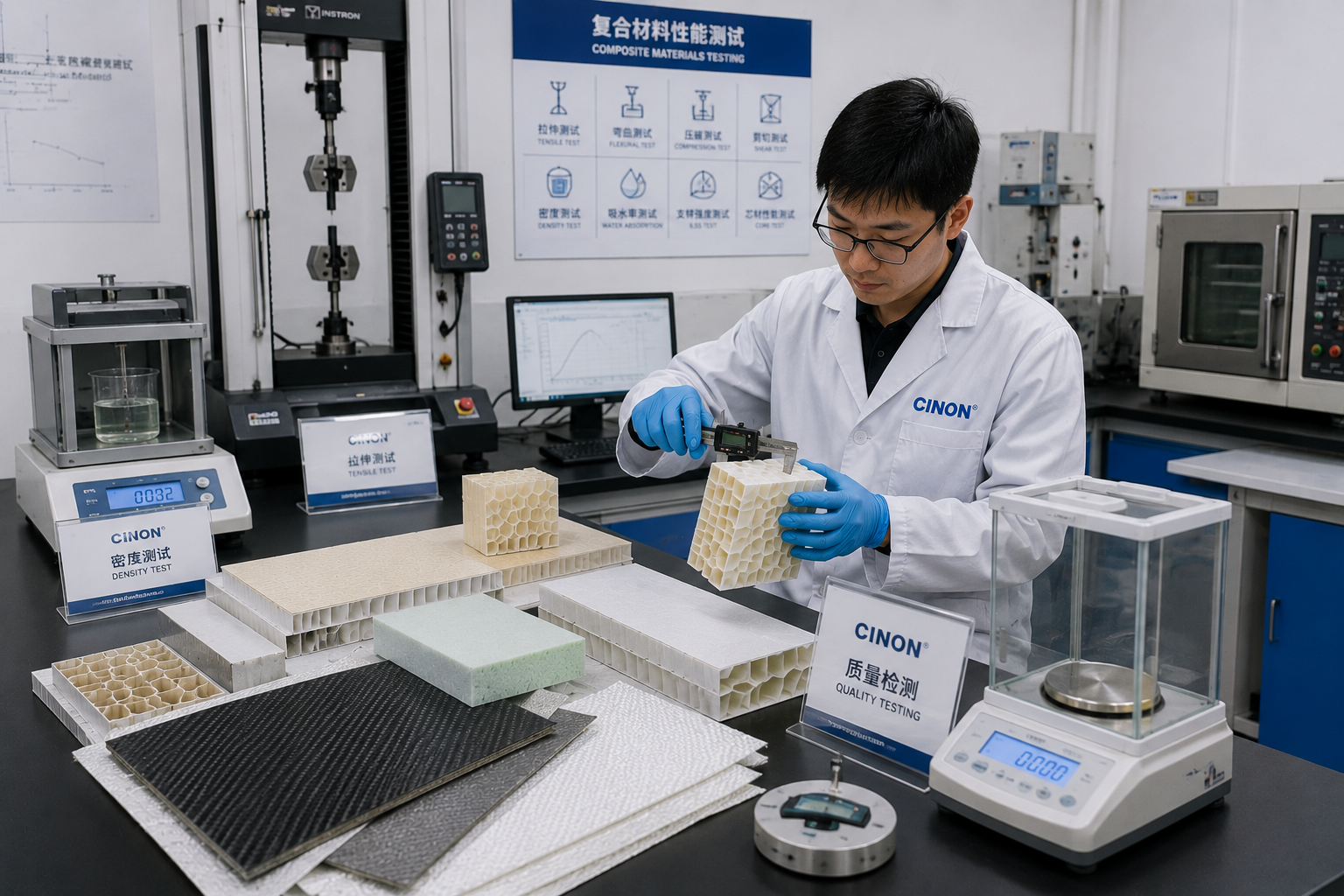
- Validate with samples and quality data. CINON supports sample evaluation and material selection before production, with 100% test quality control on manufactured material.
- Plan supply and customization. For OEM or ODM needs, CINON offers customized core materials and fiberglass fabrics, with a monthly capacity of 100,000 m² and a standard lead time of 15–30 days.
Core Material Scenarios and Use Cases
Marine & Yacht Building
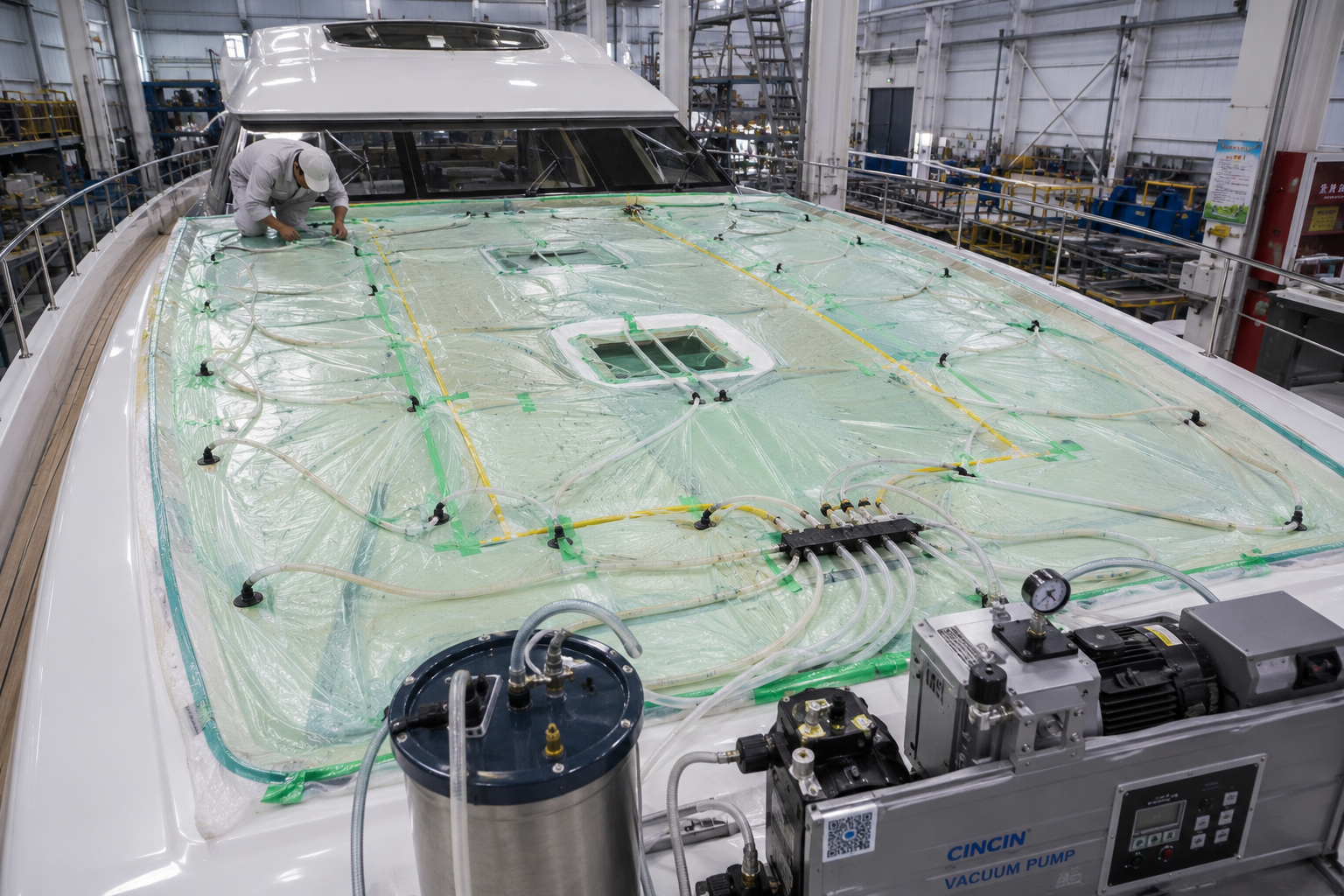
Scenario: boat hulls, boat decks, bulkheads, superstructures, and marine panels operating in saltwater with high humidity, dynamic loading, and corrosion exposure. The governing requirements are low water absorption, saltwater corrosion resistance, and good resin flow during vacuum infusion.
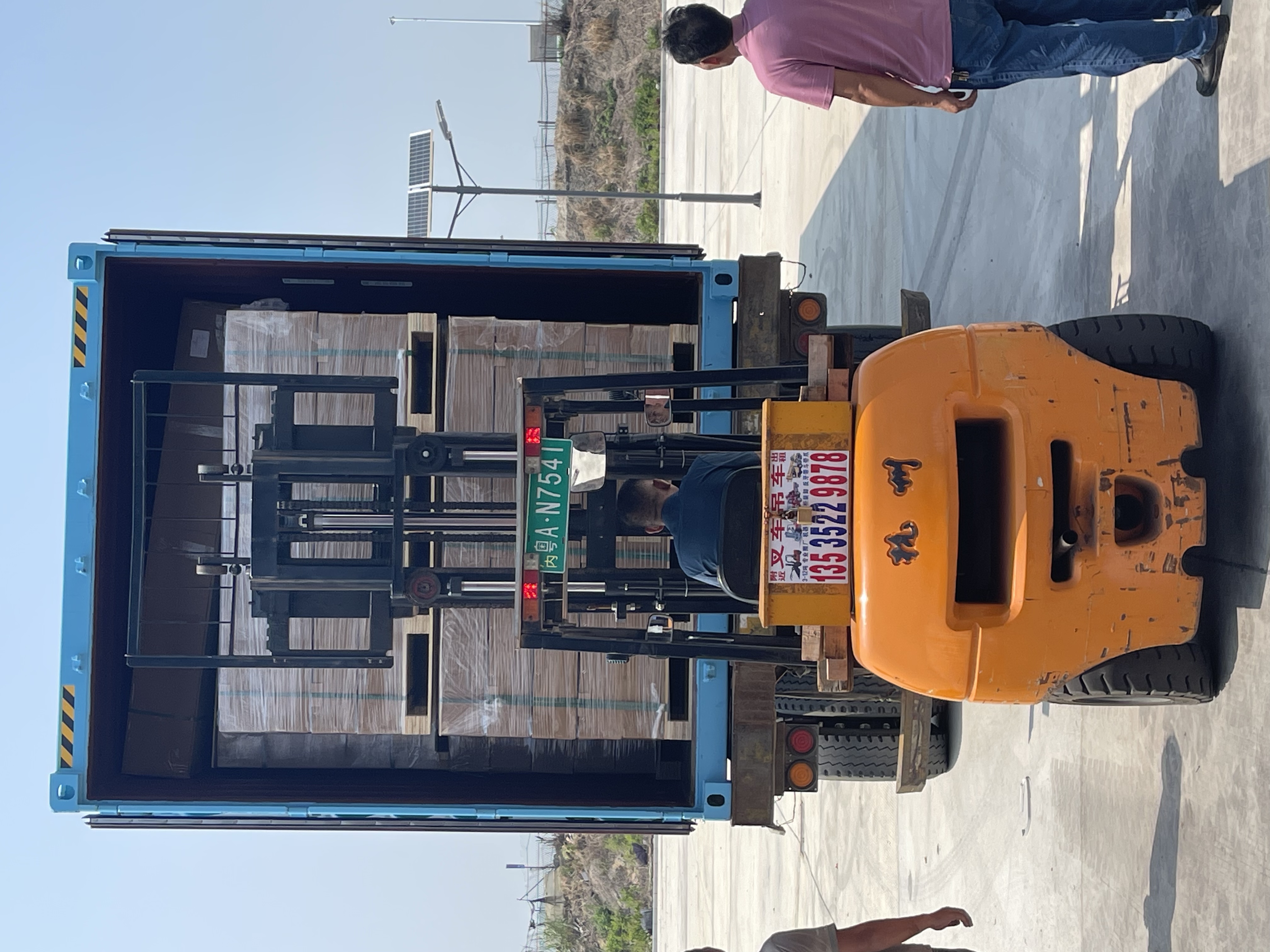
CINON solution: PVC foam core (45–300 kg/m³), PET foam core (80–320 kg/m³), CM Core Mat, and CT/CS/CX core mats, combined with multiaxial fiberglass fabrics. An Australian marine and yacht builder used CINON materials and tools for boat building in container orders and reported a smooth surface, easy wet-out, and better finish.
Wind Energy
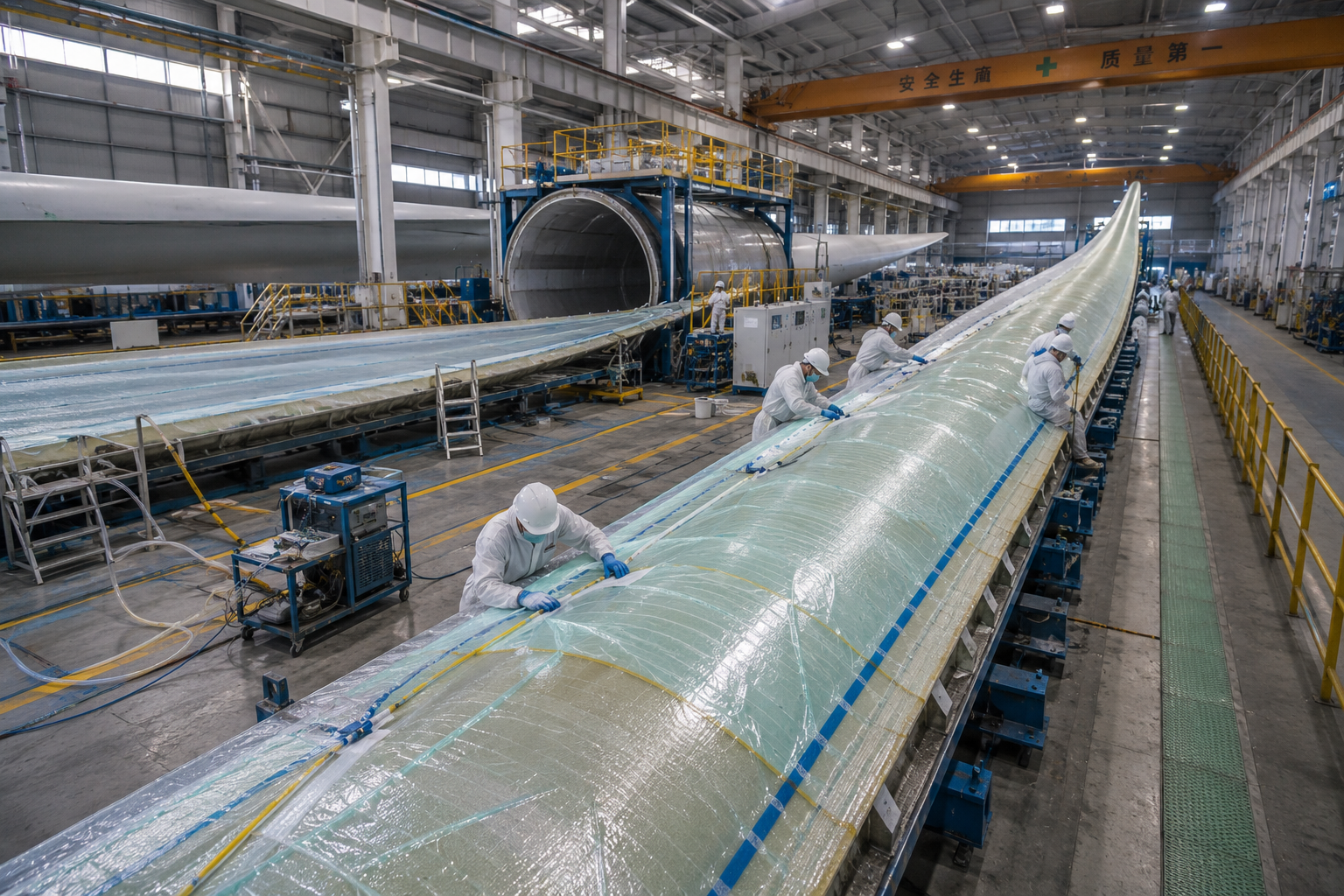
Scenario: wind turbine blades, blade shells, and nacelle structures subject to long-term static and dynamic loading, temperature extremes, and continuous operation. The governing requirements are fatigue resistance, dimensional stability, and long service life.
CINON solution: PET foam core and PVC foam core for structural sandwich sections, with CX, CS, and CM core mats for infusion efficiency. These materials are compatible with vacuum infusion and large mold systems.
RV & Caravan Manufacturing
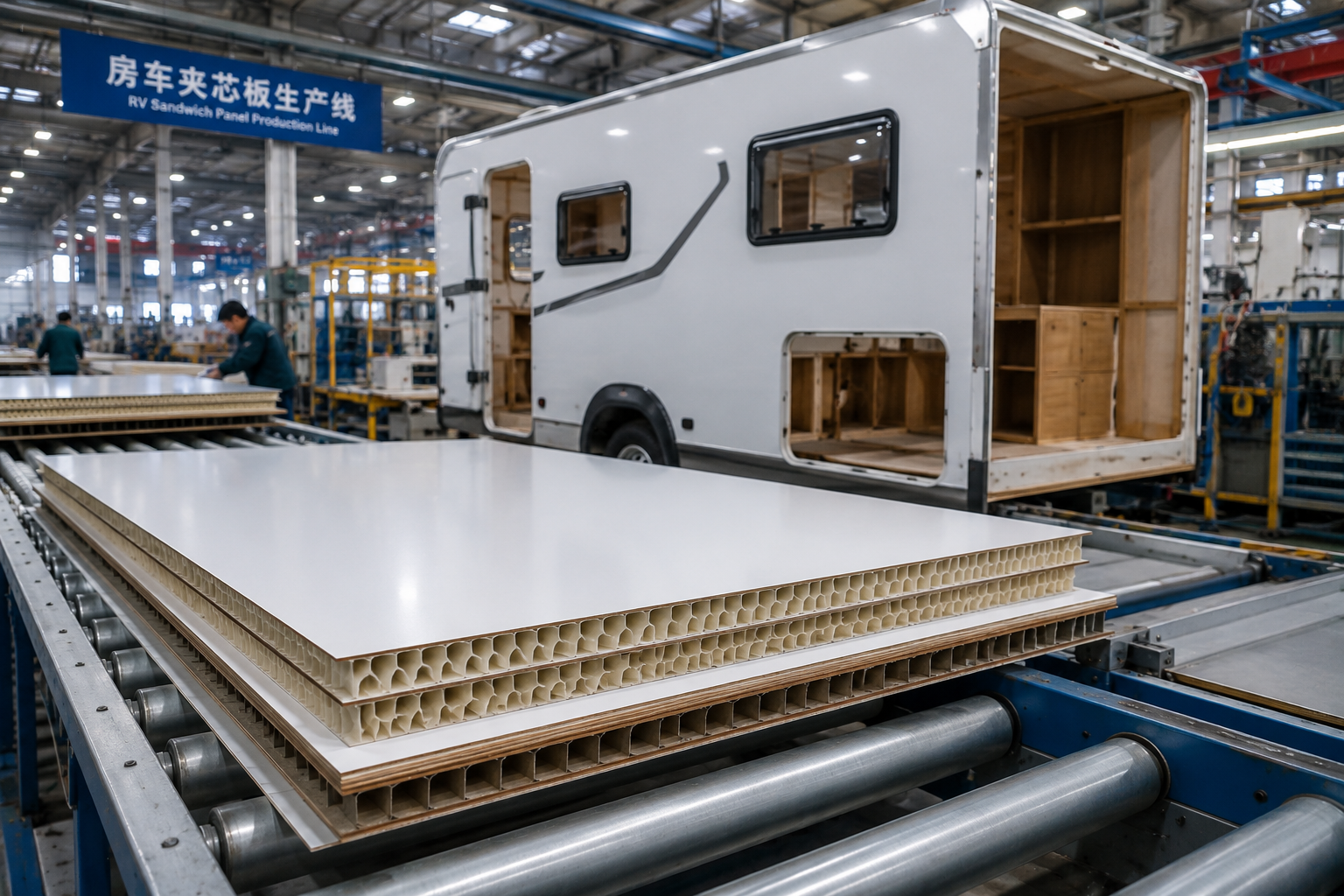
Scenario: RV panels, caravan walls, floors, and roofs facing thermal cycling, dynamic vibrations, UV radiation, and moisture. Flatness, impact resistance, and weight reduction are the critical selection criteria.
CINON solution: PP honeycomb sheet (5–100 mm, 70/80 kg/m³) and PET foam core. An RV manufacturer in the United States used CINON materials for FRP panels and reported a glossy surface, uniform thickness, low weight, and anti-UV performance.
Transportation: Truck Bodies, Bus Panels, Railway Interiors
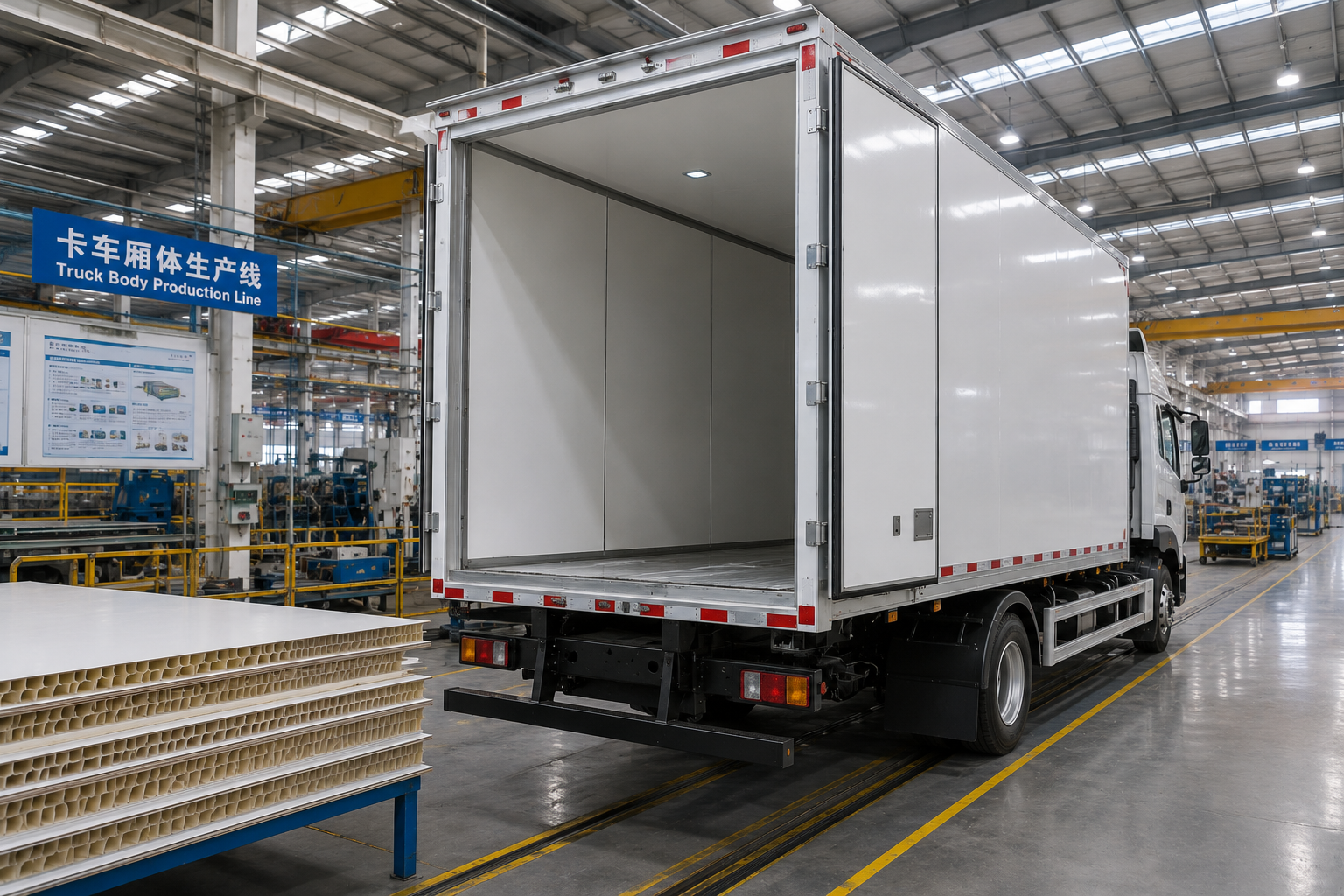
Scenario: truck bodies, bus panels, and rail interiors under dynamic road loads, thermal gradients, and internal impact. Weight reduction directly improves payload, so stiffness-to-weight ratio is prioritized.
CINON solution: PET foam core, PVC foam core, and PP honeycomb sheet. These materials also appear in rail vehicle interiors where lightweight sandwich panels reduce overall vehicle mass.
Aerospace & UAV
Scenario: UAV wings, drone structures, and aircraft panels operating at high altitude, under high G-forces, vibration, and thermal stress. Weight criticality, surface aerodynamics, and traceability dominate selection.
CINON solution: PMI foam core and Nomex (aramid) honeycomb, combined with lightweight fiberglass fabric. A UAV manufacturer in Germany used CINON PMI foam and lightweight fabrics in UAV production with 10 pallet quantities, targeting ultra-lightweight structures, high stiffness, and high temperature resistance.
Composite Tooling and FRP / Industrial Panels
Scenario: RTM molds, vacuum infusion molds, industrial covers, FRP panels, and machine enclosures in corrosive or high-temperature environments. Dimensional stability, vacuum resistance, and heat distortion resistance are essential.
CINON solution: PET foam core with CT or CM Core Mat for composite tooling; CM/CS core mats, PET foam, and PVC foam for industrial FRP panels. A sports equipment manufacturer in Thailand used CINON PVC foam, CS core material, and fiberglass fabrics in surfboard production for buoyancy and impact resistance.
Comparison Table: Core Material by Project Scenario
| Project Scenario | Recommended CINON Core Materials | Key Selection Factors |
|---|---|---|
| Boat hulls & yacht decks | PVC foam core, PET foam core, CM Core Mat, CT Core Material | Low water absorption, saltwater corrosion resistance, vacuum infusion compatibility |
| Wind turbine blades | PET foam core, PVC foam core, CX/CS Core Material | Fatigue resistance, dimensional stability, long service life |
| RV panels & caravan walls | PP honeycomb sheet, PET foam core, PVC foam core | Lightweight, impact resistance, flatness, anti-UV |
| Truck bodies & bus panels | PP honeycomb sheet, PET foam core, PVC foam core | Payload weight reduction, impact resistance, thermal efficiency |
| Railway interiors | PET foam core, PVC foam core | Weight reduction, structural stiffness |
| Aerospace & UAV structures | PMI foam core, Nomex honeycomb | Ultra-lightweight, high stiffness-to-weight, high temperature resistance |
| Composite molds & tooling | PET foam core, CT Core Material, CM Core Mat | Dimensional stability, vacuum resistance, heat distortion resistance |
| FRP & industrial panels | CM/CS Core Mat, PET foam core, PVC foam core | Corrosion resistance, weight reduction, process efficiency |
FAQ
Which CINON core material is suitable for boat hulls and yacht deck sandwich panels?
For boat hulls and yacht decks, CINON recommends closed-cell PVC foam core and recyclable PET foam core, supported by CM Core Mat or CT Core Material in vacuum infusion layups. The PVC foam core range covers densities from 45 to 300 kg/m³ and thickness from 1 to 80 mm, with plain, grooved, perforated, or scrim-backed surfaces, and is compatible with vacuum infusion, RTM, hand lay-up, prepreg, and VARTM. PET foam core is available from 80 to 320 kg/m³ and is used in marine construction for its recyclability and strength-to-weight ratio. An Australian marine builder used CINON materials and tools for boat building in container orders and reported a smooth surface, easy wet-out, and better finish. Low water absorption and saltwater corrosion resistance are the governing criteria for marine sandwich panels.
Can CINON core materials meet wind turbine blade and aerospace/UAV requirements?
For wind turbine blades, CINON supplies PET foam core, PVC foam core, and infusion core mats (CX, CS, CM) compatible with vacuum infusion and large mold systems. PET foam core densities range from 80 to 320 kg/m³, and the material is specified in wind energy for fatigue resistance and long service life. For aerospace and UAV structures, CINON offers PMI foam core (40–130 kg/m³) and Nomex (aramid) honeycomb. PMI foam provides a high stiffness-to-weight ratio, high temperature resistance, and autoclave compatibility for aircraft structures, UAV wings, carbon fiber sandwich panels, and radar systems. Aramid honeycomb covers cell sizes 1.83–5.5 mm and densities 32–128 kg/m³ with a working temperature range of −60 to 180 °C for aircraft interiors, helicopter panels, drone structures, and defense applications. A German UAV manufacturer used CINON PMI foam and lightweight fiberglass fabrics in UAV production for ultra-lightweight structures, high stiffness, and high temperature resistance.
What core material options does CINON offer for RV panels, truck bodies, and railway interiors?
For RV panels and caravan walls, floors, and roofs, CINON supplies PP honeycomb sheet (5–100 mm, density 70 or 80 kg/m³, standard size 1220 × 2440 mm) and PET foam core (80–320 kg/m³). PP honeycomb can be supplied with PP nonwoven or fiberglass skin and supports cutting, CNC machining, lamination, and thermoforming. An RV manufacturer in the United States used CINON materials for FRP panels and reported a glossy surface, uniform thickness, low weight, and anti-UV performance. For truck bodies and rail interiors, PET foam core and PVC foam core (45–300 kg/m³) are used to reduce panel weight and improve structural stiffness, including rail vehicle interiors where weight reduction is a priority.
What are the MOQ, lead time, and customization options for project-based supply?
CINON's standard MOQ is 1000 m², with a production lead time of 15–30 days and a monthly capacity of 100,000 m² from a 40,000 m² facility. The company operates with 100% test quality control and offers ODM customization for core materials and fiberglass fabrics, plus OEM labeling for distributors. Export markets are worldwide, and after-sales support includes material selection, composite process optimization, vacuum infusion guidance, alternative material recommendations, sample evaluation, quality traceability, and global logistics coordination.
How can I get samples, a quote, or technical support for my project?
To evaluate CINON core materials for a specific project, request samples and a quote through the sales and engineering team. Contact Waylon at waylon@cinoncomposites.com, by phone at +86 186-2098-8848, or via WhatsApp at +86 135-8036-3674. CINON provides sample evaluation, material selection support, vacuum infusion guidance, and technical documentation through email, WhatsApp, online meetings, and technical documents, from prototype development to production. A downloadable PDF catalog is available to review the full product range.
Conclusion: Match the Core to the Project, Not the Price List
Composite projects succeed or fail on material-process fit. CINON's portfolio supports the full range of scenario-based selection — from closed-cell PVC and recyclable PET foams for marine and wind, to PMI and aramid honeycomb for aerospace, to PP honeycomb and core mats for RV, transport, and industrial panels. By defining the load case, environment, process, and weight target first, project teams can narrow the selection to one or two core families and validate with samples before committing to production.
Evaluate CINON core materials for your next project.
Download the catalog: CINON Core Materials & Reinforcement Catalog (PDF)
Request samples / quote: waylon@cinoncomposites.com | Tel: +86 186-2098-8848 | WhatsApp: +86 135-8036-3674
Company: Guangdong Cinon New Material Technology Co., Ltd — cinoncomposites.com